Article
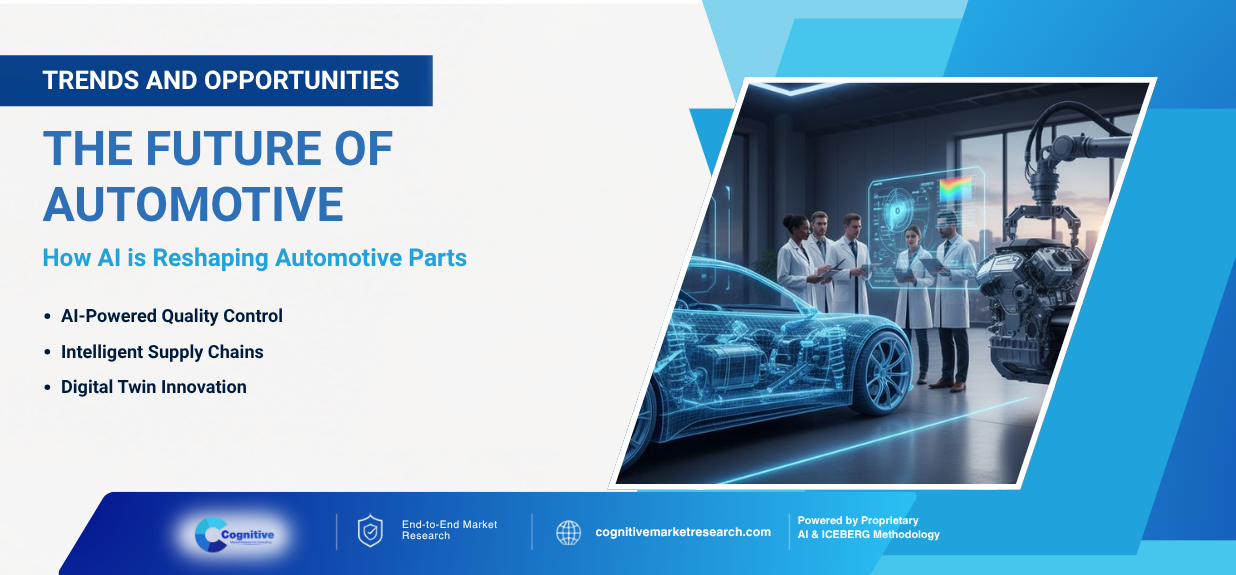
Automotive Industry Outlook 2026: How AI is Transforming the Future of Automotive Parts
The automotive industry has moved past the era of easy volume growth. In 2026, the sector is defined by a paradox: record-breaking technological potential driven by Software-Defined Vehicles (SDVs) colliding with persistent supply chain volatility. For manufacturers, the roadmap is clear: survival is no longer about making parts; it is about engineering intelligent, data-resilient systems.
The 2026 Automotive Landscape: Trends Shaping the Market
-
The Shift from Pure-EV to Pragmatic Electrification
The industry has moved beyond the singular obsession with pure BEVs. The current hybrid moment is a pragmatic response to consumer preference and infrastructure realities. Manufacturers must now maintain multi-powertrain flexibility. AI-driven simulations are now the industry standard for pivoting production lines between combustion, hybrid, and electric components without the multi-million dollar retooling delays of previous cycles.
-
Resilience as a Competitive Advantage
Just-in-case, logistics is no longer a temporary reaction; it is a structural necessity. To navigate tariff volatility and regional realignments, leaders are leveraging predictive analytics. By processing geopolitical and macroeconomic signals in real-time, these systems keep production pipelines fluid despite global disruptions.
-
The Software-Defined Vehicle (SDV) Impact
Hardware is being redefined. Today’s automotive parts are "mechatronic" physical components fused with sensors and microcontrollers. As automakers shift toward zonal E/E architectures, traditional parts makers must adopt software-first mentalities to ensure their hardware communicates effectively across the vehicle's central computing brain.
AI in Automotive Parts: Moving Beyond the Hype
-
Predictive Manufacturing vs. Reactive Maintenance
Reactive maintenance is a financial drain; unplanned downtime in this sector costs up to $2.3 million per hour. Modern AI models now detect micro-defects in real-time. By analyzing vibration, thermal profiles, and pressure, manufacturers are shifting from calendar-based maintenance to condition-based precision, cutting downtime by 30–50%.
-
Digital Twins and Part Design
The global Digital Twin market is projected to reach $28.7 billion by 2034. By creating virtual replicas of components, engineers simulate wear and functionality before a single physical unit is produced. This reduces prototyping expenses and accelerates time-to-market for complex systems like ADAS sensors and EV-powertrain components.
-
AI as the Supply Chain Brain
AI serves as the central nervous system for the modern supply chain. By integrating macro-geopolitical data with operational signals, AI systems trigger proactive procurement shifts, transforming the supply chain from a vulnerable link into a resilient network.
Overcoming the Implementation Gap: A Consultative Perspective
-
The Cost of Assumption
Relying on surface-level historical data is a primary cause of strategic missteps. At Cognitive Market Research & Consulting, our analysis shows that historical sales data often fails to explain why a pivot fails. Behavioral intelligence understanding the psychological and localized economic drivers behind market trends is the missing link that prevents expensive miscalculations.
-
Bridging the Intention-Action Gap
There is a significant discrepancy between a firm’s intention to be AI-native and its operational reality. While 47% of firms plan to deploy AI, successful adoption requires centralized governance ensuring that all departments speak the same data language to prevent silos.
-
Data Triangulation in Decision-Making
Data triangulation cross-referencing regional consumer sentiment, global manufacturing trends, and localized economic data is the definitive method to de-risk capital-intensive rollouts. By looking at a problem through multiple independent vectors, you isolate the full truth and remove the biases inherent in single-source public polling.
Future Outlook
- Autonomous Material Handling: Further automating factory floors to combat labor shortages.
- ISO/PAS 8800 Compliance: Mastering functional safety standards for AI-managed systems is now a non-negotiable barrier to entry.
Expose your behavioral blind spots before the market forces you to acknowledge them. Contact Cognitive Market Research & Consulting today to leverage our specialized methodologies and transform your market insights into definitive commercial confidence.

 X
X
Article Details
-
Author Kalyani Raje
-
Published 29 Jun 2026
-
Last Updated 29 Jun 2026
-
Reading Time~3 minutes
Related Reports
Get a Custom Report
Interested in a similar analysis for your market? Our experts can deliver a customized report.
Contact Our ExpertsMore Articles
Explore all published articles across 30+ industry verticals.
View All Articles