Article
Key Takeaways:
The global automotive industry is undergoing an unprecedented shift toward electrification, sustainability, and intelligent software integration.
Key emerging market participants are scaling EV production and building collaborative international ecosystems.
Companies from China, India, and traditional Western pioneers are driving advanced hybrid and battery innovations.
Strategic market intelligence empowers stakeholders to navigate supply chain complexities and identify high-growth opportunities.
Navigating Evolution: Emerging Players in Automotive Industry Dynamics
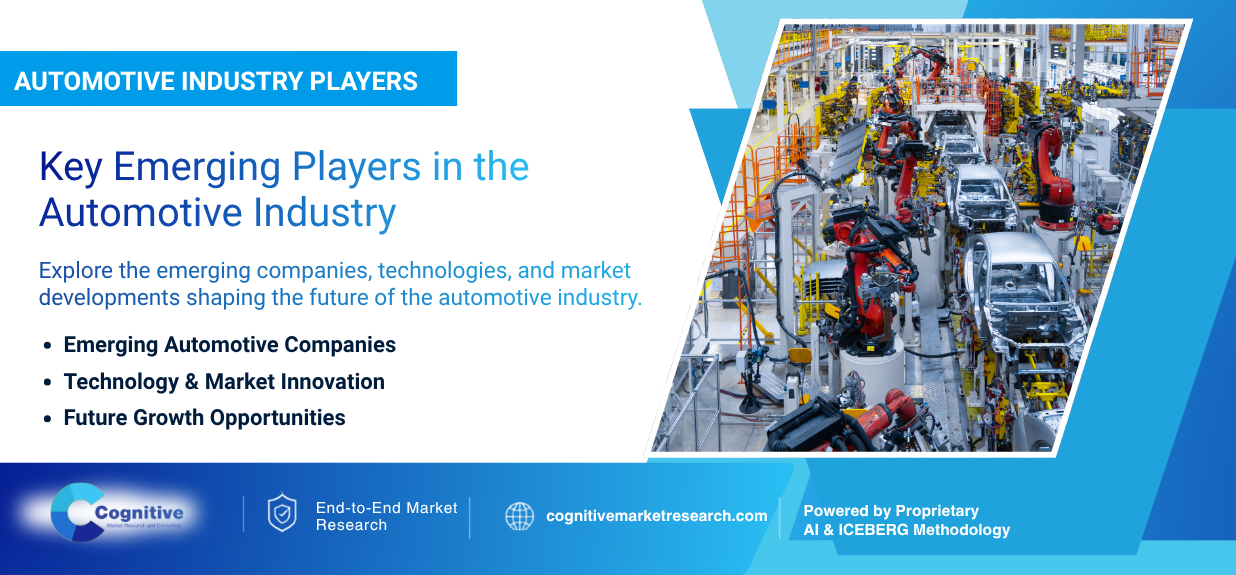
The modern global automotive landscape demands far much more than traditional internal combustion manufacturing or isolated vehicle assembly. Across worldwide markets, forward-thinking enterprises are actively redefining how personal and commercial transport is conceptualized, produced, and scaled. At the heart of this transformation lies the dynamic growth of emerging players in automotive industry segments, shifting from conventional production models into holistic enablers of digital, electrical, and industrial agility. By bridging the gap between legacy manufacturing constraints and next-generation mobility systems, key industry participants are empowering manufacturers, industrial producers, and everyday end-users to achieve unprecedented operational harmony.
The Modern Ecosystem Shift: From Fragmentation to Intelligent Mobility
For decades, deploying advanced automotive hardware meant managing siloed supply chains and discrete component standards that struggled to communicate efficiently. Today, the sector is experiencing a profound operational metamorphosis. Modern automotive frameworks combine energy-efficient battery architectures, Internet of Vehicles (IoV) connectivity, and advanced manufacturing automation into cohesive, high-performing ecosystems.
For manufacturers and industrial producers, this means streamlining complex component sourcing, reducing production downtime, and accelerating time-to-market. For end-users and buyers, these integrated ecosystems translate into reliable vehicle performance, enhanced energy efficiency, and accelerated technological maturity. Rather than viewing supply chain volatility as an insurmountable hurdle, innovative market participants treat adaptability and precision engineering as the foundational core of long-term enterprise resilience.
Key Global Innovators and Ecosystem Shapers
As the sector embraces multi-faceted production environments and global electrification demands, market strategies are expanding across diverse geographical corridors and technological domains:
BYD: A dominant Chinese manufacturer leading global electric and plug-in hybrid vehicle sales through vertically integrated battery technologies and cost-efficient scaling. Beyond vehicle assembly, BYD's comprehensive supply chain control enables rapid cost optimization and high-volume output, setting a new benchmark for global competitors navigating battery-electric production scaling.
SAIC Motor:China's largest automaker, known for revitalizing global heritage brands like MG and driving major advancements in electric mobility and connected software platforms. By combining traditional brand equity with modernized electric architectures, SAIC successfully bridges legacy consumer trust with next-generation digital cockpit capabilities.
Geely: A rapidly expanding Chinese group managing international brands like Volvo, Polestar, and Lotus, fostering cross-border engineering synergies. Geely leverages a multi-brand R&D network that allows subsidiaries to share modular vehicle platforms, drastically reducing development costs while accelerating international market penetration.
Tata Motors & Mahindra & Mahindra:Leading Indian multinational manufacturers rapidly scaling up domestic and international electric mobility infrastructure and affordable EV architectures. These companies are uniquely positioned to capture high-growth emerging economies by developing cost-effective battery platforms tailored to dense urban and rural driving environments.
Tesla: A pioneer in global electric vehicle market acceleration, influencing manufacturing efficiency, mega-casting techniques, and advanced software integration worldwide. Tesla’s continued emphasis on factory automation, over-the-air functional updates, and structural battery packaging forces traditional and emerging OEMs alike to completely rethink their foundational manufacturing lines.
Key Pillars of Automotive Evolution
To sustain this rapid momentum, market strategies focus on several core technical and operational domains:
- Advanced Battery and Powertrain Engineering: Designing high-density lithium-ion and solid-state cells that maximize driving range while minimizing charging times and thermal footprints.
- Smart Software and Autonomous Integration: Embedding real-time data sensors, over-the-air (OTA) updates, and intelligent driver-assistance automation directly into modern vehicle architecture.
- Collaborative Alliance Networks: Leveraging strategic partnerships across global R&D hubs to deliver multi-platform mobility solutions tailored to specific regional requirements.
Empowering Enterprise Transformation Through Strategic Collaboration
Thriving within an increasingly automated and competitive global market requires absolute clarity, robust partnerships, and structured foresight. Organizations navigating this landscape benefit greatly from comprehensive market intelligence and strategic advisory frameworks.
At Cognitive Market Research and Consulting, we empower organizations and new business ventures to navigate market uncertainties through research-driven intelligence, competitive analysis, and strategic consulting. Our industry experts evaluate emerging market trends, technology shifts, and enterprise transformation strategies to help businesses make informed investment decisions and capitalize on new market opportunities.
Ready to optimize your enterprise technology strategy? Explore our latest market research, industry insights, and consulting solutions to understand how advanced developments among emerging players in automotive industry ecosystems can support smarter decision-making and sustainable business growth. Schedule a Strategic Consultation with Cognitive Market Research and Consulting today to align your corporate strategy with the data-driven future.

 X
X
Article Details
-
Author Pratik Shirsath
-
Published 28 Aug 2026
-
Last Updated 28 Aug 2026
-
Reading Time~3 minutes
Related Reports
Get a Custom Report
Interested in a similar analysis for your market? Our experts can deliver a customized report.
Contact Our ExpertsMore Articles
Explore all published articles across 30+ industry verticals.
View All Articles