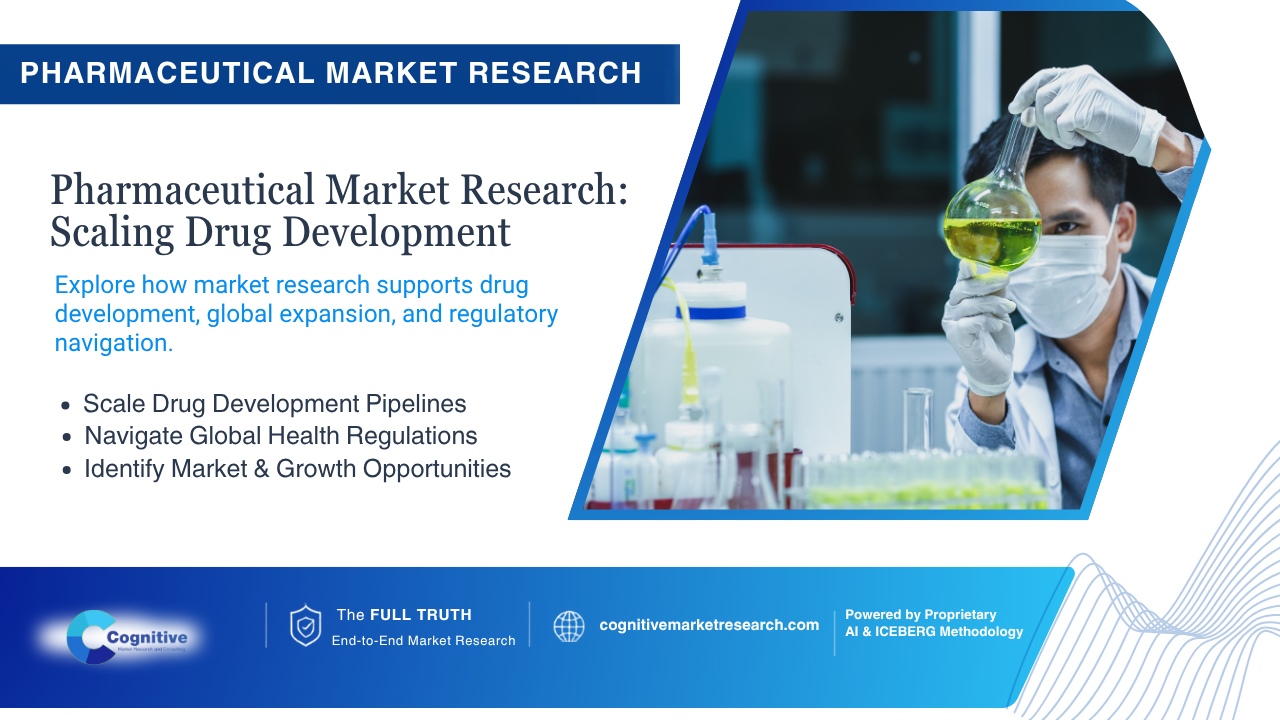
Blog Content
Why Pharmaceutical Market Research is Important: The Ultimate Guide to Scaling Drug Development and Commercialization
Navigating the modern life sciences ecosystem requires absolute precision. With the global drug marketplace expanding past USD 1.83 trillion, manufacturing executives, biotechnology firms, and clinical investors face unprecedented complexities. Regulatory shifts, patent cliffs, and escalating R&D overhead mean that intuition alone can no longer guide product pipelines. This is why pharmaceutical market research has become the foundational cornerstone for modern drug developers and healthcare manufacturers aiming to secure high market valuation and long-term viability. Robust intelligence frameworks allow organizations to decode complex clinical demands, forecast therapeutic adoption rates, and mitigate multi-million-dollar capital misallocations. By integrating rigorous data analytics with actionable commercial strategies, stakeholders can transform volatile market uncertainties into predictable growth trajectories.
The Strategic Imperative of Pharmaceutical Market Research
Modern drug commercialization is fraught with high attrition rates and stringent compliance hurdles. Comprehensive pharmaceutical market research acts as an empirical compass, bridging the gap between raw laboratory science and commercial market entry.
Through systematic data collection, competitor benchmarking, and physician-patient sentiment analysis, organizations gain deep visibility into shifting therapeutic landscapes. Whether evaluating the commercial viability of monoclonal antibodies or assessing generic erosion following major patent expirations, targeted research minimizes strategic blind spots.
Furthermore, as healthcare systems increasingly prioritize value-based care and cost-efficiency, manufacturers must leverage granular insights to justify pricing structures and secure favorable formulary placements across global markets.
Core Components of Advanced Pharmaceutical Intelligence
To outpace industry competitors, stakeholders rely on multifaceted intelligence methodologies that cover every stage of the product life cycle.
1. Pre-Clinical and Clinical Pipeline Evaluation
Before a molecule enters clinical phases, foundational feasibility studies are vital. Analyzing target patient populations, disease epidemiology, and competitive trial densities ensures that R&D investments target areas with genuine unmet medical needs.
2. Regulatory and Reimbursement Mapping
Navigating stringent pathways enforced by bodies like the FDA or EMA requires up-to-date compliance tracking. Market intelligence maps out evolving reimbursement criteria, health technology assessments (HTA), and pricing controls, safeguarding commercial assets against unexpected policy shocks.
3. Physician and Patient Voice Analytics
Understanding how healthcare professionals (HCPs) perceive safety profiles, administration routes, and therapeutic efficacy shapes effective positioning. Concurrently, patient journey mapping uncovers adherence bottlenecks, direct-to-consumer digital preferences, and accessibility barriers.
Key Industry Drivers Shaping Modern Research Paradigms
The life sciences sector is experiencing rapid technological and epidemiological transformations. Understanding these trends is vital for manufacturers planning mid-to-long-term portfolio expansions.
Rise of Biologics and Precision Medicine: High-value targeted therapies, cell and gene treatments, and personalized oncology regimens require niche segment analysis rather than broad-brush commercial strategies.
Artificial Intelligence and Big Data Integration: Advanced machine learning algorithms now process vast electronic health records (EHR) and real-world data (RWD), dramatically compressing timelines for competitor analysis and clinical trial recruitment.
Supply Chain Localization: Geopolitical shifts and post-pandemic resilience strategies have forced manufacturing networks to re-evaluate raw material sourcing, active pharmaceutical ingredient (API) dependencies, and nearshoring logistics.
Partnering with Industry Experts for Actionable Growth
Translating raw market data into high-yield commercial strategies demands specialized domain expertise. Leading market intelligence providers combine advanced quantitative modeling with qualitative physician interviews to decode intricate therapeutic segments.
Organizations seeking customized market entry strategies, competitive intelligence matrices, and comprehensive pipeline forecasts frequently collaborate with specialized authorities. Industry leaders such as Cognitive Market Research and Consulting deliver end-to-end analytical solutions that empower manufacturers to optimize supply chains, streamline regulatory submissions, and capture expanding market shares across North America, Europe, and Asia-Pacific.
Conclusion
The intersection of escalating chronic disease burdens and breakthrough biotechnology innovations creates vast commercial opportunities for agile manufacturers. However, capturing sustainable value requires moving beyond superficial metrics and adopting deeply integrated intelligence frameworks. By prioritizing systematic pharmaceutical market research, stakeholders can navigate regulatory volatility, optimize clinical development timelines, and ensure that life-saving therapeutics successfully reach the patients who need them most. Ready to optimize your product pipeline and outpace market competitors? Leverage expert-backed intelligence today to secure your organization's leadership position in the global healthcare economy.