Article
Introduction
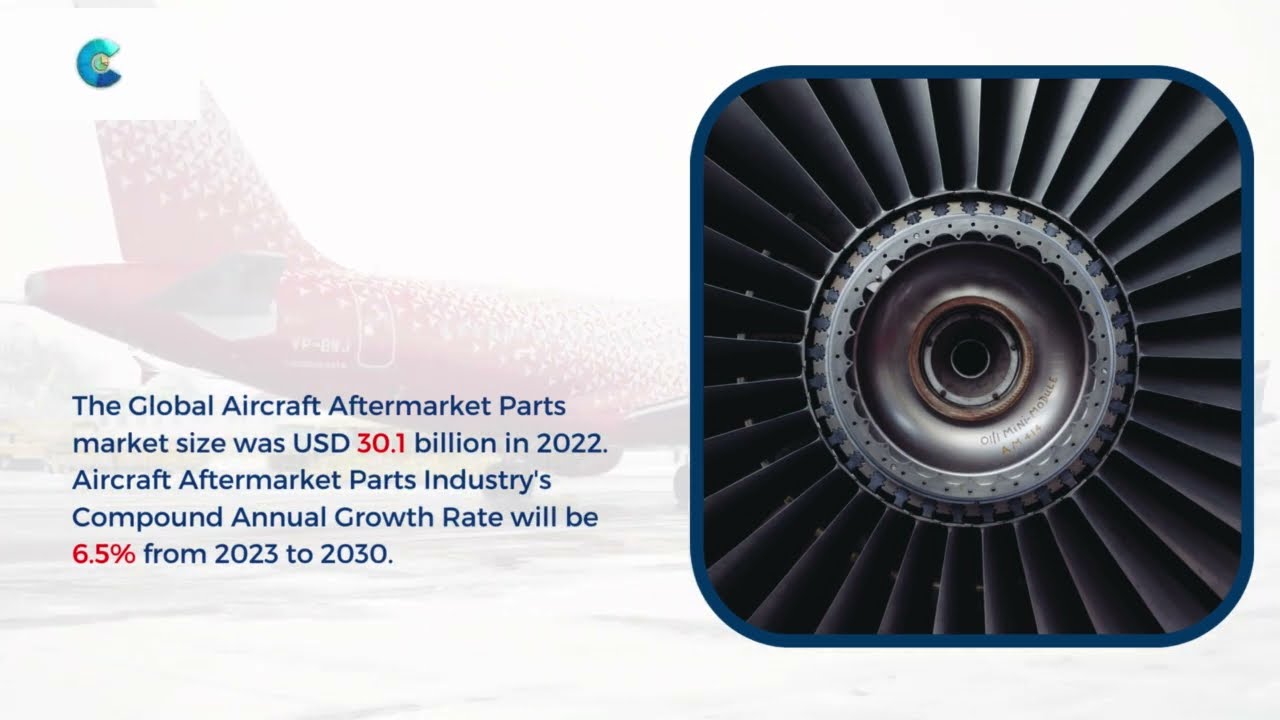
Diverse factors, such as the expanding global aviation industry, aging aircraft fleets requiring maintenance and replacement, cost-effective alternatives to new purchases, and regulatory requirements for safety and compliance, drive the global aircraft aftermarket parts market. The need to optimize operational efficiency, improve aircraft performance, and reduce downtime also drives the demand for aftermarket parts. Furthermore, the expansion of air travel, the rising demand for air cargo, and the emergence of low-cost carriers all contribute to the expansion of the market.
Technological Advancements and Performance Enhancements to Aid Aircraft Aftermarket Parts Market Growth
Aircraft manufacturers and suppliers of aftermarket parts continuously innovate to enhance aircraft performance and resolve emerging challenges. For instance, using sophisticated composite materials in structures reduces weight, thereby increasing fuel efficiency and range. Avionics system upgrades improve navigational accuracy and communication capabilities. In addition, developing more efficient and reliable engines reduces operational costs. Operators pursue aftermarket components that permit the retrofitting of existing aircraft with these cutting-edge technologies. Modernizing components allows airlines to optimize fuel consumption, reduce emissions, improve safety, and adhere to evolving environmental regulations. In addition to noise reduction, performance enhancements contribute to quieter and more environmentally favorable flight operations.
Conclusion
As per our analysis, technological advancements and performance enhancements in the aviation industry is pivotal for driving Aircraft Aftermarket Parts Market growth and ensuring its long-term sustainability. The continuous evolution of aircraft design and technology not only propels market growth.

 X
X
Article Details
-
Author Anjali Lawand
-
Published 08 Sep 2023
-
Last Updated 08 Sep 2023
-
Reading Time~3 minutes
Related Reports
Get a Custom Report
Interested in a similar analysis for your market? Our experts can deliver a customized report.
Contact Our ExpertsMore Articles
Explore all published articles across 30+ industry verticals.
View All Articles