Article
Introduction of Airborne Optronics
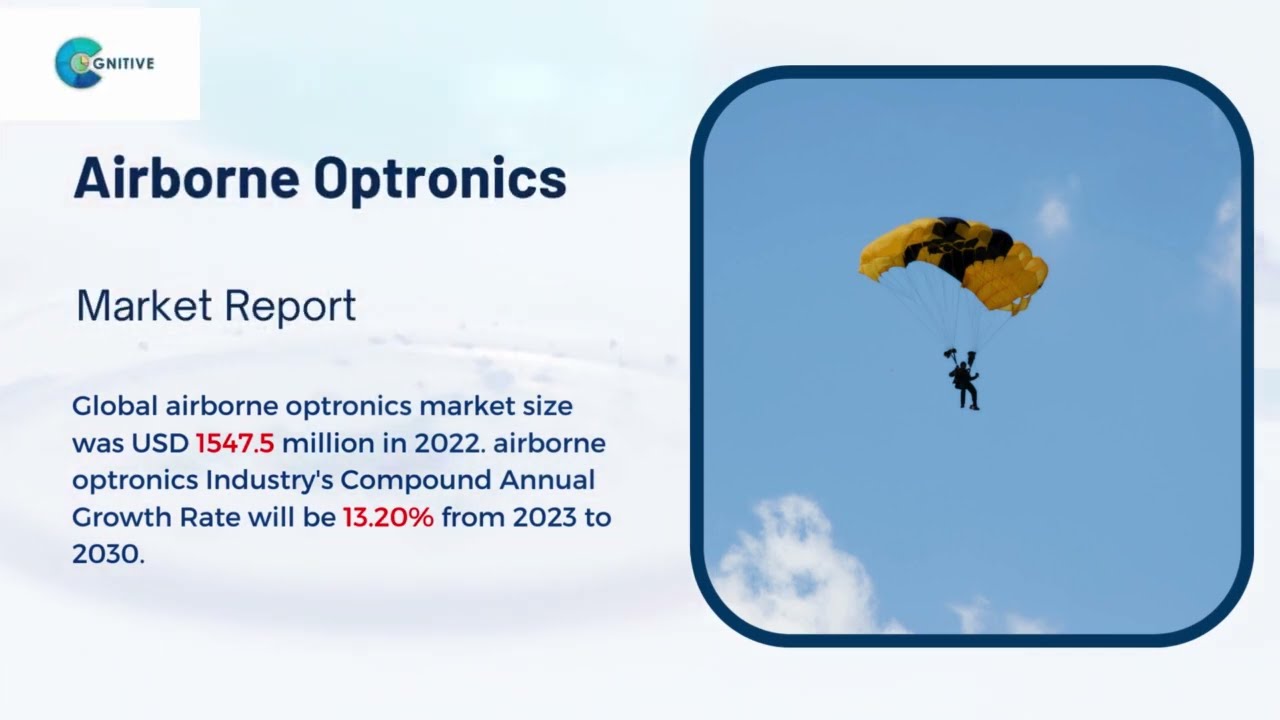
The market for airborne optronics is fueled by a variety of elements from the commercial, military, and technological spheres. The necessity for target acquisition, surveillance, and reconnaissance drives demand in the military. Applications in forestry, agriculture, and environmental monitoring are what drive growth commercially.
How the Civil Applications and Commercial UAVs are Airborne Optronics Market
A new era of technological potential has begun using UAVs for civil purposes. Airborne optronics devices are essential to utilize these platforms to their maximum extent. For instance, UAVs with multispectral cameras and sensors may monitor crop health in agriculture, identify disease outbreaks, and optimize pesticide use, resulting in higher yields and more effective use of resources. UAVs with high-resolution cameras and LiDAR sensors have also changed infrastructure inspection. Without time-consuming and expensive manual inspections, damage or wear and tear to power lines, pipelines, bridges, and other important structures can be evaluated. This increases operational uptime reduction and safety.
Conclusion
The integration of Unmanned Aerial Vehicles (UAVs) for civil purposes, coupled with the use of airborne optronics devices, marks the dawn of a new technological era with far-reaching benefits. These advanced technologies have enabled groundbreaking applications in agriculture and infrastructure inspection, transforming the way we approach critical tasks. In agriculture, the deployment of UAVs equipped with multispectral cameras and sensors has ushered in precision farming practices.

 X
X
Article Details
-
Author Anjali Lawand
-
Published 09 Sep 2023
-
Last Updated 09 Sep 2023
-
Reading Time~3 minutes
Related Reports
Get a Custom Report
Interested in a similar analysis for your market? Our experts can deliver a customized report.
Contact Our ExpertsMore Articles
Explore all published articles across 30+ industry verticals.
View All Articles