Article
Introduction to the Glass Ceramics Market
The Glass Ceramics market is set for steady growth, driven by its versatile applications across various industries, including home appliances, healthcare, automotive, and electronics. Glass ceramics are materials known for their combination of the properties of glass and ceramics, offering high durability, resistance to heat, and excellent mechanical properties, which make them ideal for a wide range of applications. According to Cognitive Market Research, the Glass Ceramics market is projected to grow from USD 1,624.8 million in 2024 to USD 2,689.0 million by 2032, reflecting a compound annual growth rate (CAGR) of 6.50%. This market expansion is attributed to the growing demand for advanced materials in high-tech applications, particularly in sectors that require materials with enhanced thermal resistance and electrical properties. Key drivers of market growth include the rising demand for glass ceramics in cookware, such as cooktops and baking dishes, where their ability to withstand high temperatures and provide uniform heat distribution is essential. Additionally, glass ceramics are increasingly used in the automotive industry for components like gas burners, engine components, and even windows, where their resistance to thermal shock and excellent dimensional stability under extreme conditions make them a preferred choice. The electronics industry also relies on glass ceramics for high-performance substrates and insulating materials in devices such as smartphones, televisions, and computers. As technological innovations continue to push the boundaries of product performance, the use of glass ceramics in cutting-edge applications, including in the medical field for bioactive ceramics used in implants, is also becoming more prominent. As more industries recognize the benefits of these materials, demand is expected to rise, driving the market’s growth trajectory.
Top Companies Operating in the Glass Ceramics Industry Worldwide
- Corning Inc.
- Schott AG
- Nippon Electric Glass Co., Ltd.
- Saint-Gobain
- Kyocera Corporation
- CoorsTek Inc.
- Morgan Advanced Materials plc
- Kedi Glass-Ceramic Industrial
- Ohara Corporation
- Kanger Glass-ceramic Co., Ltd.
Criteria for Comparing Companies in the Glass Ceramics Market
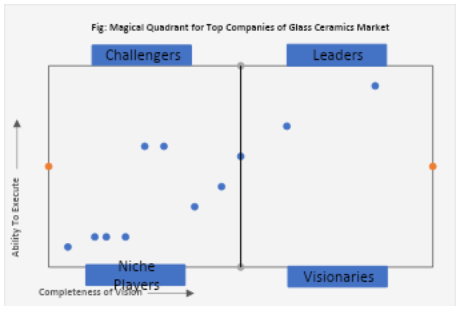
Cognitive Market Research assesses companies operating in the Glass Ceramics market based on several key parameters, including product innovation, material quality, market presence, and research and development (R&D) capabilities. One of the most critical success factors in this industry is a company’s ability to consistently produce high-performance glass ceramics that meet the complex and evolving requirements of a broad range of end-use sectors namely cookware, automotive, electronics, and healthcare. Companies that offer application-specific solutions featuring varying formulations and enhanced characteristics such as superior thermal resistance, high mechanical strength, and improved transparency are better positioned to gain a competitive edge and maintain leadership in this dynamic and growing market. The level of technological innovation is another key factor. Businesses that leverage advanced manufacturing techniques, such as precision molding and advanced coating processes, are able to create products that meet the growing demand for durable, cost-effective, and high-performance glass ceramics. Furthermore, companies with strong research and development (R&D) capabilities are likely to stay ahead by innovating new products and improving existing ones to meet evolving consumer needs. Market presence is also vital companies with a wide geographical footprint, particularly those who have expanded into emerging markets, are poised to capitalize on the increasing demand for advanced materials across regions. Sustainability and the adoption of eco-friendly manufacturing practices, as well as a commitment to reducing environmental impact, are becoming increasingly important in the Glass Ceramics market. Companies that align with sustainability trends and introduce recyclable and energy-efficient products are likely to strengthen their competitive edge.
Top Manufacturing Companies of Glass Ceramics:
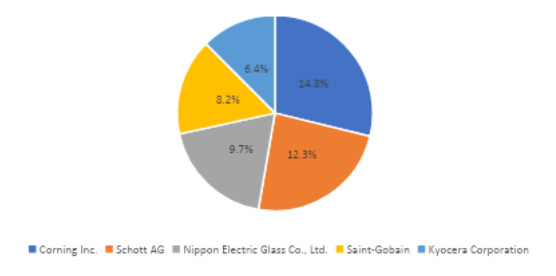
Corning Inc., Schott AG, Nippon Electric Glass Co., Ltd., Saint-Gobain, and Kyocera Corporation are the key players in the Glass Ceramics Market
Corning Inc.
Corning Inc. holds the leading position in the global glass ceramics market with a 14.8% share, backed by its long-standing expertise in specialty glass and advanced materials. The company is widely recognized for its innovative glass-ceramic solutions used in a diverse range of applications including cooktops, optical systems, high-performance electronics, and aerospace components. Corning’s proprietary glass-ceramic technologies, such as those used in its Corning Gorilla Glass and PYROCERAM products, are valued for their high thermal shock resistance, mechanical strength, and optical clarity.
Schott AG
Schott AG captures a strong 12.3% share of the glass ceramics market, underpinned by its German engineering legacy and pioneering role in developing specialty glass-ceramic materials. The company is globally renowned for its CERAN® cooktop panels, which dominate the premium segment of the kitchen appliance industry, as well as for its contributions to photonics, medical devices, and space applications. Schott’s glass-ceramics are celebrated for their exceptional thermal resistance, chemical durability, and surface aesthetics, making them the material of choice for high-demand environments.
Nippon Electric Glass Co., Ltd.
Nippon Electric Glass Co., Ltd. commands a 9.7% share in the glass ceramics market, leveraging its advanced production technologies and deep materials science expertise. Based in Japan, the company is a key supplier of glass-ceramic substrates and components used in applications ranging from semiconductor processing equipment and medical instruments to heat-resistant cookware and industrial optics. Known for its high-precision manufacturing and rigorous performance standards, Nippon Electric Glass meets the demands of clients requiring durability, thermal stability, and dimensional accuracy.
Saint-Gobain
Saint-Gobain holds an 8.2% market share in the global glass ceramics space, driven by its diversified materials portfolio and global manufacturing capabilities. The company produces a range of glass-ceramic materials for construction, energy, electronics, and consumer products, positioning itself as a solutions provider across multiple end-use sectors. Saint-Gobain’s offerings stand out for their environmental performance, thermal insulation properties, and adaptability to both functional and aesthetic requirements in modern architecture and engineering.
Kyocera Corporation
Kyocera Corporation maintains a 6.4% share of the glass ceramics market, largely supported by its leadership in advanced ceramics, semiconductor packaging, and electronic components. The company’s glass-ceramic materials are engineered for high-precision and high-reliability applications, particularly in automotive sensors, industrial equipment, defense systems, and communication infrastructure.
Potential Threats to Top Five Players in the Glass Ceramics Market
CMR found that several emerging companies such as CoorsTek Inc., Morgan Advanced Materials plc, Kedi Glass-Ceramic Industrial, Ohara Corporation, and Kanger Glass-ceramic Co., Ltd. are rising as notable threats to the dominant players in the global glass ceramics market. U.S.-based CoorsTek Inc. has gained significant traction with its advanced technical ceramics and engineered materials used across electronics, energy, and medical sectors. The company’s focus on materials innovation and precision manufacturing processes has enabled it to offer high-performance glass ceramics tailored for high-stress and high-temperature applications, making it a strong challenger to established industry leaders. Meanwhile, Morgan Advanced Materials plc, headquartered in the UK, specializes in high-specification glass ceramic solutions for sectors like aerospace, defense, and healthcare. Their continuous investments in R&D, along with a broad product portfolio and commitment to sustainability, have enabled them to penetrate specialized market segments that demand technical sophistication and reliability.
China-based Kedi Glass-Ceramic Industrial is rapidly expanding with its cost-effective and diverse range of glass-ceramic materials designed for both commercial and industrial purposes. The company's aggressive market expansion strategy, especially in Asia and Eastern Europe, is positioning it as a formidable competitor in regions with fast-growing demand. Ohara Corporation of Japan brings deep expertise in precision glass manufacturing, with a strong emphasis on high-purity optical and glass ceramic materials. Its specialization in scientific and semiconductor applications provides it a unique edge in high-value markets, posing a challenge to incumbents focused primarily on mass applications. Another major Chinese player, Kanger Glass-ceramic Co., Ltd., is leveraging its vertically integrated production capabilities and strategic partnerships with regional appliance and electronics manufacturers to grow its global footprint. Their focus on delivering thermally stable, aesthetically appealing, and sustainable glass ceramics has helped them secure strong demand in domestic and export markets. Collectively, these emerging companies are reshaping the competitive landscape by emphasizing materials innovation, application specialization, and geographic reach, gradually chipping away at the dominance of long-standing global players.
Conclusion
Sustainability, Innovation, and Global Partnerships Driving Growth in the Glass Ceramics Market
The global glass ceramics market is set for robust expansion, growing from USD 1,624.8 million in 2024 to USD 2,689.0 million by 2032, at a CAGR of 6.5%. This growth is fueled by the increasing demand for high-performance materials in electronics, home appliances, automotive, and healthcare sectors. As manufacturers seek materials that offer exceptional thermal, mechanical, and aesthetic properties, glass ceramics are becoming integral to product innovation across industries. Established players such as Corning Incorporated, Schott AG, Nippon Electric Glass Co., Ltd., ILVA Glass SpA, and Kyocera Corporation continue to drive the market through investments in R&D, strategic partnerships, and broad application coverage. Their global distribution networks and brand reputation provide them with resilience in the face of market fluctuations. However, emerging companies such as CoorsTek Inc., Morgan Advanced Materials plc, Kedi Glass-Ceramic Industrial, Ohara Corporation, and Kanger Glass-ceramic Co., Ltd. are presenting real challenges to these incumbents by leveraging innovation, cost-effective production, and regional specialization. Their focus on sustainable materials, coupled with the ability to cater to custom specifications, enables them to address both volume demand and niche markets with precision. For new entrants and smaller players, the keys to success will lie in material innovation, entering underserved markets, and forming agile partnerships across the value chain. The future of the glass ceramics industry will increasingly be shaped by how well companies can align their technological capabilities with the growing global emphasis on sustainability and customization. In this dynamic market environment, proactive collaboration between established leaders and emerging innovators will be critical to addressing the next generation of material challenges while driving sustainable industrial growth.
Related Reports:
Glass-Ceramic Materials Market
Technical Glass Ceramics Market
Glass Ceramics for Cookware Market
Glass Ceramics in Medical Applications Market
Glass Ceramics for Electronics Market
Lithium Silicate Glass Ceramics Market

 X
X
Article Details
-
Author Sneha Mali
-
Published 23 May 2025
-
Last Updated 16 Jun 2025
-
Reading Time~3 minutes
Related Reports
Get a Custom Report
Interested in a similar analysis for your market? Our experts can deliver a customized report.
Contact Our ExpertsMore Articles
Explore all published articles across 30+ industry verticals.
View All Articles