Article
Introduction to the Instant Tea Powder Market
The Instant Tea Powder market is experiencing significant growth, driven by rising consumer demand for convenient, health-focused beverages and an increasing preference for ready-to-drink tea solutions. According to Cognitive Market Research, the instant tea powder market is valued at USD 1,524.8 million in 2024 and is projected to grow at a CAGR of 7.00%, reaching USD 2,619.89 million by 2032. Instant tea powder, known for its ease of preparation and extended shelf life, has gained popularity among consumers seeking a quick and flavorful tea experience without the need for traditional brewing methods. The market is benefiting from evolving lifestyles, where busy consumers prioritize convenience while still desiring natural, refreshing beverages. Several key factors are fueling the expansion of the instant tea powder market, including increasing health consciousness, the rising popularity of herbal and functional teas, and a growing preference for sugar-free and organic options. The shift toward healthier lifestyles has encouraged manufacturers to introduce instant tea variants infused with antioxidants, herbal extracts, and immunity-boosting ingredients to appeal to health-conscious consumers. Furthermore, rapid urbanization and expanding retail channels, including e-commerce platforms, have made instant tea products more accessible to a global audience. The Asia-Pacific region, particularly countries like China, India, and Japan, continues to dominate the market due to the deep-rooted tea-drinking culture and the increasing adoption of instant beverage solutions. Meanwhile, North America and Europe are witnessing growing demand for premium and specialty instant tea powders, especially among consumers seeking wellness-focused alternatives to sugary carbonated drinks.
Criteria for Comparing Companies in the Instant Tea Powder Market
Market Research evaluates companies in the instant tea powder market based on several critical parameters that define their competitive positioning, product innovation, and market strength. Revenue and market share serve as primary indicators of a company's financial performance and ability to capture consumer demand. Companies with strong revenue growth demonstrate a solid brand presence, extensive customer reach, and a well-established distribution network. Additionally, the diversity of product offerings plays a crucial role in market differentiation. Companies that provide a broad range of instant tea powders, including flavored, herbal, organic, and sugar-free variants, are better positioned to attract a wider consumer base. Technological advancements in processing, formulation, and packaging are key determinants of success in this market. Businesses that leverage spray-drying and freeze-drying techniques to preserve the flavor, aroma, and nutritional benefits of tea stand out in terms of quality. Furthermore, sustainability is becoming a crucial factor, with companies emphasizing eco-friendly packaging and ethically sourced tea leaves to align with evolving consumer preferences. Global market reach is another essential parameter, as companies with extensive distribution networks across retail, foodservice, and e-commerce channels have a significant competitive advantage. Expanding into high-growth regions, particularly in emerging economies where tea consumption is high, is a critical strategy for leading players.
Investment in research and development (R&D) is a key metric, showcasing a company’s commitment to innovation and its ability to introduce new and improved tea powder formulations. Market leaders actively engage in R&D to enhance product taste, nutritional value, and solubility while catering to specific dietary trends such as low-caffeine, organic, or herbal-infused tea. Additionally, strategic partnerships and collaborations with retailers, beverage brands, and foodservice providers contribute to greater market penetration and brand visibility. Companies that integrate digital marketing strategies, such as personalized recommendations and interactive consumer engagement, further strengthen their position in the competitive landscape.
Prominent players in the instant tea powder market differentiate themselves through a combination of innovation, product quality, sustainability initiatives, and global outreach. As consumer preferences shift toward natural and health-driven beverage options, companies that can adapt to these trends while maintaining high-quality offerings are expected to thrive in this evolving market. By prioritizing convenience, wellness, and sustainability, leading brands are well-positioned to capture the growing demand for instant tea solutions worldwide.
Top Companies Operating in the Instant Tea Powder Industry Worldwide
- Ajinomoto General Foods Inc.
- C. B. Shah & Co. (Tweak)
- Ito En Ltd.
- Dunkin Brands Group Inc.
- Girnar Food & Beverages Pvt. Ltd.
- Tata Global Beverages Ltd.
- Nestlé S.A.
- The Coca-Cola Company (Honest Tea)
- Unilever (Lipton)
- Twinings (Associated British Foods)
Top Manufacturing Companies of Instant Tea Powder:
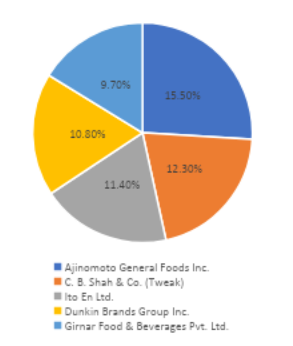
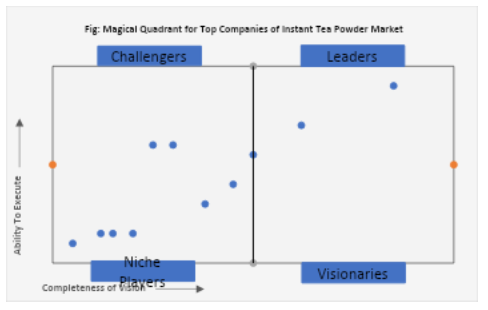
Ajinomoto General Foods Inc., C. B. Shah & Co. (Tweak), Ito En Ltd., Dunkin Brands Group Inc., and Girnar Food & Beverages Pvt. Ltd. are the key players in the Instant Tea Powder Market
Ajinomoto General Foods Inc.
Ajinomoto General Foods Inc. (AGF) leads the global instant tea powder market with a substantial 15.5% market share. Headquartered in Japan, AGF is a joint venture between Ajinomoto Co. and Kraft Foods, known for its extensive portfolio of instant beverages, including tea and coffee. Over the years, the company has successfully expanded beyond its home market, establishing a strong presence across Asia, particularly in Japan, China, and Southeast Asia, while also making significant inroads into North America and Europe. In 2023, AGF generated an estimated revenue of USD 3.2 billion, with its instant tea segment playing a vital role in this success.
C. B. Shah & Co. (Tweak)
C. B. Shah & Co., operating under its widely recognized brand Tweak, holds a notable 12.3% share of the global instant tea powder market. Based in India, the company has built a strong reputation for manufacturing and exporting high-quality tea products, particularly catering to the rising demand for premium instant tea blends. Over time, Tweak has expanded its footprint beyond India, establishing itself as a key player in international markets such as the Middle East, Europe, and North America. In 2023, the company reported an estimated total revenue of USD 1.1 billion, with instant tea powder accounting for a significant portion of its earnings.
Ito En Ltd.
Ito En Ltd., a renowned Japanese beverage company, commands an impressive 11.4% share in the global instant tea powder market. With decades of expertise in tea production, the company has become a leader in both the ready-to-drink (RTD) and instant tea powder segments, offering products that appeal to health-conscious consumers. Ito En’s stronghold extends beyond Japan, with significant market penetration in the U.S., Southeast Asia, and parts of Europe. In 2023, Ito En’s total revenue exceeded USD 3.8 billion, with its instant tea segment contributing significantly to its growth.
Dunkin' Brands Group Inc.
Dunkin' Brands Group Inc., the parent company of Dunkin’ Donuts and Baskin-Robbins, has successfully secured a 10.8% market share in the instant tea powder segment. While primarily known for its coffee and baked goods, Dunkin' has expanded into the instant tea market to capitalize on the growing consumer preference for convenient, high-quality tea products. The brand has gained significant popularity, particularly in North America, where its instant tea powders are available in various flavors, such as classic black tea, iced tea blends, and herbal infusions. In 2023, Dunkin' Brands reported a total revenue of USD 1.6 billion, with steady growth in its tea segment.
Girnar Food & Beverages Pvt. Ltd.
Girnar Food & Beverages Pvt. Ltd., an established Indian tea brand, holds a 9.7% share in the global instant tea powder market. The company is widely known for its authentic Indian tea blends, which have gained immense popularity both domestically and internationally, particularly in Asia, the Middle East, and North America. Over the years, Girnar has successfully catered to consumers looking for premium, flavorful, and traditional tea products, leading to a steady increase in its market presence. In 2023, Girnar’s revenue surpassed USD 850 million, with its instant tea segment playing a crucial role in its overall growth.
Girnar differentiates itself through its unique product offerings, particularly its masala chai, Ayurvedic herbal teas, and spiced tea blends, which are made using traditional Indian recipes.
Potential Challenges for Leading Companies in the Instant Tea Powder Market
CMR found that the instant tea powder market is dominated by established global players, including Tata Global Beverages Ltd., Nestlé S.A., The Coca-Cola Company (Honest Tea), Unilever (Lipton), and Twinings (Associated British Foods). These companies benefit from strong brand recognition, extensive distribution networks, and loyal customer bases. However, despite their market dominance, they face multiple challenges that could impact their growth. Rising consumer demand for natural and organic alternatives, increasing health consciousness, and shifting preferences toward freshly brewed tea options pose significant threats. Additionally, competition from regional and artisanal brands offering unique blends and premium-quality tea powders is intensifying, pushing established players to innovate continuously to maintain their market share.
Another growing challenge is the push for sustainability and ethical sourcing. As consumers become more aware of environmental concerns, they are seeking products that are not only convenient but also ethically sourced and packaged sustainably. Large companies must adapt by investing in eco-friendly production methods, biodegradable packaging, and fair-trade sourcing to meet these expectations. Moreover, the increasing popularity of direct-to-consumer (DTC) channels, e-commerce, and subscription-based tea services is shifting the retail landscape. Traditional brands that primarily rely on brick-and-mortar distribution must enhance their digital presence and adopt innovative online sales strategies to stay relevant in the evolving marketplace.
New players entering the instant tea powder market must differentiate themselves through innovation, premium offerings, and targeted marketing strategies. One of the most effective ways to stand out is by focusing on high-quality ingredients and emphasizing authenticity in tea sourcing. Consumers today seek transparency in product origins, favoring teas that are sourced from renowned tea-growing regions with minimal processing and no artificial additives. By capitalizing on this trend, new entrants can position themselves as premium, health-conscious brands catering to a discerning audience.
Furthermore, leveraging digital platforms and e-commerce can be a game-changer for new players. The rise of online shopping has opened direct channels to consumers, allowing brands to engage with their audience more effectively and create personalized experiences. Social media marketing, influencer collaborations, and storytelling around tea origins can help build brand credibility and foster customer loyalty. Additionally, offering unique product variations such as functional tea blends infused with herbs, adaptogens, or vitamins can attract health-conscious consumers looking for added wellness benefits in their beverages. Strategic partnerships and collaborations with cafes, health-conscious eateries, and premium supermarkets can also help new entrants gain visibility in competitive markets. Rather than competing head-to-head with industry giants, smaller brands can carve out niche segments by targeting specific demographics, such as wellness-focused consumers or tea connoisseurs looking for artisanal blends. By emphasizing quality, sustainability, and innovation, new brands can establish a loyal customer base and gradually expand their presence in the market.
Conclusion
Investments in Premiumization, Health-Focused Variants, and Digital Marketing Will Define Long-Term Success in the Instant Tea Powder Market
The instant tea powder market is evolving rapidly, driven by changing consumer preferences, advancements in product formulations, and the rising importance of sustainability. While major players like Tata Global Beverages, Nestlé, The Coca-Cola Company (Honest Tea), Unilever (Lipton), and Twinings hold strong market positions, new entrants have the opportunity to disrupt the market by focusing on quality, innovation, and digital engagement. The increasing demand for premium, organic, and health-boosting tea products presents a significant opportunity for brands willing to invest in differentiated offerings that cater to modern consumers’ expectations. To succeed, companies must embrace a multifaceted approach that includes sourcing high-quality ingredients, developing unique flavor profiles, and offering functional tea variants with health benefits. Additionally, prioritizing sustainability in both production and packaging will be crucial, as environmentally conscious consumers favor brands that demonstrate a commitment to ethical and green practices. Another key factor for long-term success will be digital marketing and direct-to-consumer strategies, which allow brands to establish a strong online presence and connect with consumers more effectively. By leveraging e-commerce, social media engagement, and influencer marketing, brands can create a compelling narrative around their products and build lasting customer relationships.
Furthermore, geographic expansion into high-growth regions, including Asia-Pacific, North America, and the Middle East, will provide ample opportunities for companies to scale their businesses. Adapting product offerings to local tastes and preferences while maintaining core brand values will help companies establish a global footprint. Ultimately, success in the instant tea powder market will depend on a company’s ability to combine innovation, sustainability, and strategic market positioning. Those who invest in these key areas will be well-positioned to thrive in the evolving tea industry and gain a competitive edge in the years ahead.
 X
X
Article Details
-
Author Anushka Gore
-
Published 07 May 2025
-
Last Updated 16 Jun 2025
-
Reading Time~3 minutes
Related Reports
Get a Custom Report
Interested in a similar analysis for your market? Our experts can deliver a customized report.
Contact Our ExpertsMore Articles
Explore all published articles across 30+ industry verticals.
View All Articles