Article
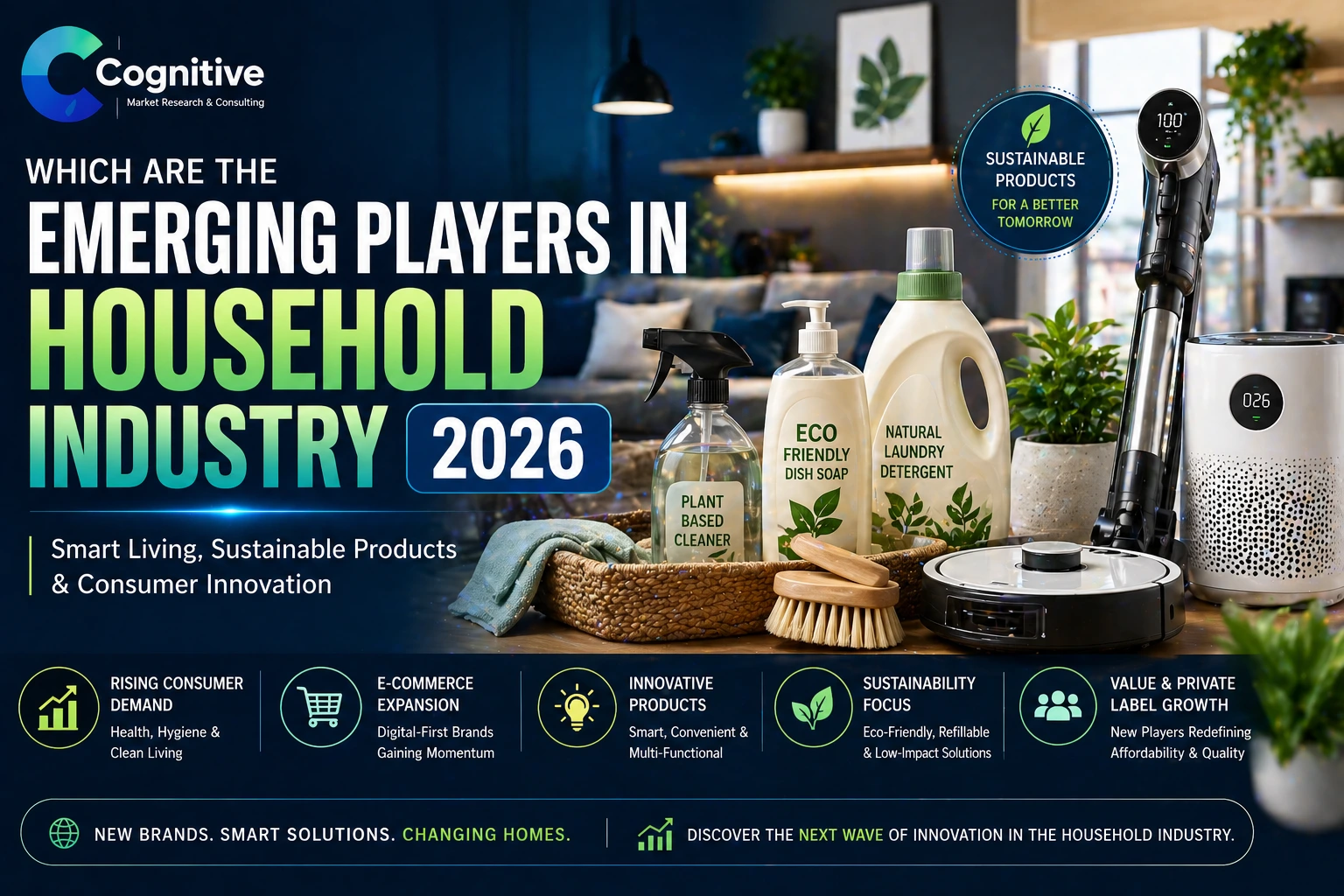
The 2026 Household Industry: Emerging Players and Strategic Disruption
In 2026, the household industry has moved beyond simple smart connectivity. We are seeing the rise of Agentic Households, where appliances and systems no longer just wait for a command but proactively manage energy, waste, and maintenance. For manufacturers, the competition is no longer just about who can build a better washing machine, but who can integrate most seamlessly into an automated, sustainable lifestyle.
1. The Energy Revolutionaries: Modular and Off-Grid Specialists
With global energy costs remaining volatile, the most impactful emerging players in 2026 are those bridging the gap between home appliances and renewable energy storage.
EcoFlow & Jackery (Expansion Phase): These firms have transitioned from portable power stations to integrated home energy ecosystems. In 2026, they are emerging as direct competitors to traditional HVAC and large appliance brands by offering DC-coupled appliances that run directly off home battery arrays, bypassing inefficient AC conversion.
Arcadia: While not a traditional manufacturer, Arcadia’s platform is becoming a gatekeeper for household OEMs. By integrating utility data with smart appliances, they are enabling Demand Response capabilities. Manufacturers partnering with Arcadia are gaining a competitive edge by offering appliances that pay for themselves through automated energy trading.
2. Robotic Specialization: Beyond the Vacuum
The Robotic Butler is no longer a trope. In 2026, specialized robotics companies are moving into complex labor-saving categories that legacy brands have historically struggled to automate.
Tovala: By blending hardware (smart steam ovens) with a recurring service model, Tovala has carved out a Smart Kitchen niche that traditional oven manufacturers are now rushing to emulate. Their success in 2026 is driven by their proprietary Scan-to-Cook technology, which is now being licensed to third-party food producers.
Ecovacs & Dreame (High-End Pivot): These players have moved upmarket. In 2026, they aren't just selling vacuums; they are selling Whole-Home Maintenance Systems. Their latest units feature AI-driven edge-aware sensors that can detect plumbing leaks or glass breakage, effectively merging home security with domestic cleaning.
Suvie: As a Cool-to-Cook kitchen robot specialist, Suvie is capturing the premium urban demographic. Their multi-zone appliances allow for automated, restaurant-quality meal preparation, a high-growth segment for manufacturers focusing on time-as-a-luxury consumers.
3. Circular Economy Challengers: The Waste-to-Value Tier
Sustainability in 2026 has evolved from recyclable packagin to closed-loop hardware. Emerging players are gaining market share by designing for repairability and resource recovery.
Mill: In the waste management sector, Mill has revolutionized the household bin. By turning kitchen scraps into a shelf-stable chicken feed through a subscription-based appliance, they have created a new category of Resource Recovery appliances. Manufacturers should note the high consumer stickiness of this hardware + logistics model.
Ceragem: This player is leading the AI Wellness Home trend. Their AI-integrated shower systems and furniture analyze biometric data (skin hydration, posture) to adjust home environments. In 2026, Ceragem is an emerging threat to traditional bathroom and bedroom furniture manufacturers.
Strategic Insights for B2B Manufacturers
The Rise of Agentic Commerce
By mid-2026, we estimate that 31% of household purchases are influenced or executed by AI agents rather than human shoppers. Emerging players like Knit and Quantilope are providing the AI-driven market research tools that allow manufacturers to understand these machine-to-machine transactions. If your product isn't discoverable by a smart refrigerator’s replenishment algorithm, it effectively doesn't exist for a growing segment of the market.
Hardware-as-a-Service (HaaS)
Emerging players are increasingly moving away from one-time sales. The 2026 trend is toward Functional Reliability. Brands like SimpliSafe and Ring proved this in security; now, companies in the laundry and kitchen sectors are offering high-end appliances for a monthly fee that includes all repairs and consumables. For manufacturers, this requires a pivot toward Durability-First Engineering over planned obsolescence.
Material Innovation: The Bio-Household
We are tracking a surge in players like Deepscent AI and various zero-waste personal care brands that are forcing traditional household chemical manufacturers to rethink their delivery systems. The Refill Revolution is now a mainstream manufacturing requirement, with emerging brands capturing the Gen Z and Millennial cohorts who prioritize minimalist and toxin-free home environments.
Conclusion
The household industry in 2026 is being won by those who provide frictionless automation and measurable sustainability. The emerging players listed above are successful because they don't just sell a product they sell a managed outcome. For our manufacturing clients, the recommendation is clear: seek partnerships with these energy-agile and AI-integrated firms. The goal is to move from being a supplier of dumb hardware to becoming a vital node in the 2026 Autonomous Home Ecosystem.
 X
X
Article Details
-
Author Anushka Gore
-
Published 16 Apr 2026
-
Last Updated 29 Apr 2026
-
Reading Time~3 minutes
Get a Custom Report
Interested in a similar analysis for your market? Our experts can deliver a customized report.
Contact Our ExpertsMore Articles
Explore all published articles across 30+ industry verticals.
View All Articles