Article
future outlook and market valuation of the impact of artificial intelligence in agriculture
If you think artificial intelligence belongs exclusively in tech startup hubs or automated logistics warehouses, look toward the horizon of modern farmland. The traditional tractor and the old guesswork of seasonal weather patterns are undergoing an incredible technological evolution.
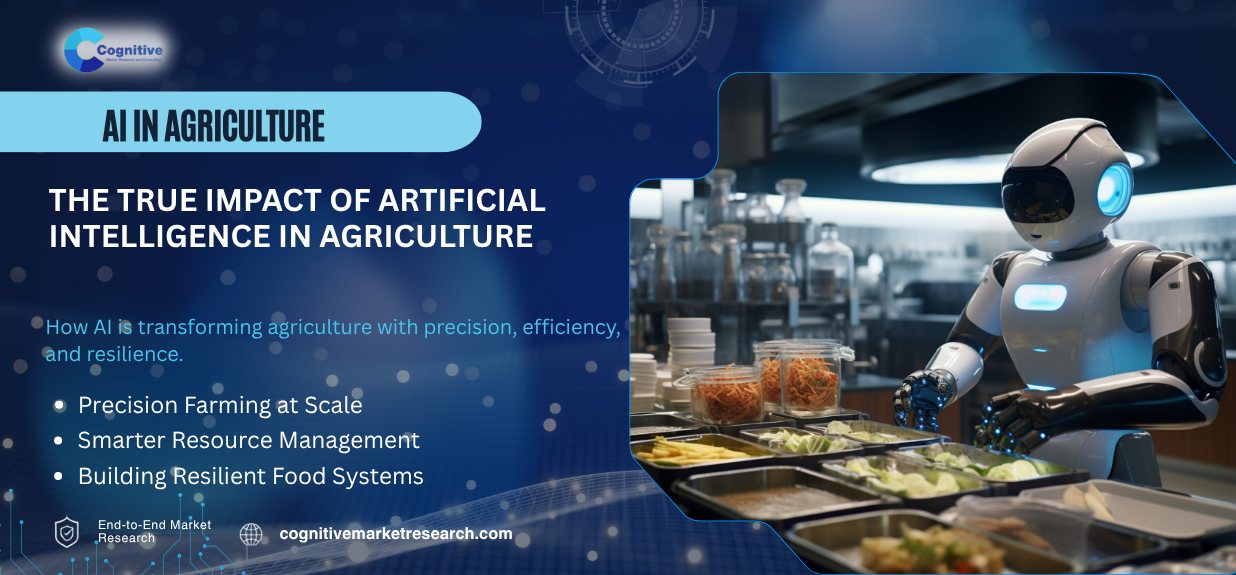
The impact of artificial intelligence in agriculture is no longer a futuristic concept confined to science fiction; it is a multi-billion-dollar economic reality scaling rapidly across global markets. With the global market scaling toward an impressive compound annual growth rate (CAGR) exceeding 22% to 26%, machine learning, predictive analytics, and computer vision are completely transforming how food is grown, harvested, and moved from dirt to dinner tables.
The Core Drivers Behind the Impact of Artificial Intelligence in Agriculture
Surging Global Food Demand and Climate Volatility
Agriculture is humanity’s oldest enterprise, yet it faces some of its most modern challenges. With the global population marching steadily toward nearly 10 billion people, food production systems face severe simultaneous pressures: unpredictable climate patterns, water scarcity, degraded topsoil, and escalating labor shortages.
The Shift from General Farming to Hyper-Precision Agronomy
The impact of artificial intelligence in agriculture acts as a vital bridge across these challenges. By processing massive datasets derived from satellite imagery, drone scans, weather stations, and soil sensors, machine learning algorithms transform raw data into precise, field-level recommendations. Instead of applying fertilizers uniformly across an entire field which wastes money and harms local ecosystems AI allows farmers to treat individual square meters based on exact nutrient requirements.
How AI Manifests on the Ground and in the Factory
Computer Vision and Autonomous Spraying Systems
To truly understand this technological leap, look at how practical innovations are changing daily farming operations. Modern smart sprayers utilize high-speed computer vision cameras mounted on heavy-duty tractors. As they roll across fields at operational speeds, they distinguish between crops and weeds in milliseconds, delivering targeted micro-doses of herbicide only where needed. This reduces chemical usage by up to 80% while safeguarding overall crop health.
Predictive Soil Analytics and IoT Sensor Integration
By correlating historical harvest metrics with live satellite tracking of canopy health and IoT soil metrics, AI platforms give agricultural cooperatives and food manufacturers accurate yield predictions weeks before harvest. This prevents supply chain bottlenecks and stabilizes market pricing.
Why Manufacturers and Decision-Makers Must Pay Attention
Computer Vision and Autonomous Spraying Systems
For agricultural machinery manufacturers and tech developers, the impact of artificial intelligence in agriculture dictates product roadmaps. Traditional tractor manufacturing is rapidly evolving into integrated software-hardware engineering. Equipping heavy machinery with autonomous steering, real-time telemetry, and edge-computing diagnostic tools is no longer a luxury feature; it is an industry baseline.
Solving Labor Shortages Through Robotics and Automation
Furthermore, because skilled farm labor is increasingly scarce, autonomous robotic harvesters and automated weeding systems represent the fastest-growing segment of agricultural capital expenditure. Manufacturers who fail to bake AI connectivity into their product designs risk losing market share to agile, tech-forward competitors.
Bridging Data Gaps: How Cognitive Market Research and Consulting Delivers Solutions
Custom Market Research Engagements for Agribusiness
Navigating the financial and operational complexities of smart farming requires absolute clarity. General reports and surface-level data are insufficient when millions of dollars in manufacturing or farming capital are on the line. This is where Cognitive Market Research and Cognsulting provides definitive solutions. Whether you are an equipment manufacturer seeking granular consumer adoption metrics or an agribusiness enterprise mapping out a multi-year automation strategy, our tailored research engagements deliver verified, decision-grade intelligence.
Actionable Intelligence Backed by Rigorous Validation Protocols
By leveraging our specialized industrial research databases and primary validation channels, enterprise leaders can avoid costly miscalculations. Aligning investments with rigorous market metrics ensures that capital allocation targets high-growth segments across agricultural hardware, predictive analytics platforms, and automated cloud systems.
Leading Agricultural Firms Innovating with AI
John Deere & Blue River Technology: John Deere utilizes advanced machine learning and computer vision through its subsidiary Blue River Technology. Their See & Spray technology uses boom-mounted cameras and deep neural networks to scan fields in real-time, distinguishing crops from weeds at a pixel level. This allows farmers to apply targeted micro-doses of herbicide precisely where needed, dramatically reducing chemical usage while protecting overall crop health. Additionally, John Deere incorporates AI to power autonomous tractors, helping operations run efficiently and addressing labor challenges.
Syngenta Group: Syngenta applies machine learning and data analytics through platforms like Cropwise. Their systems analyze decades of historical data, real-time satellite imagery, and weather patterns to forecast crop growth, predict pest and disease threats, and optimize soil management. This gives growers actionable, field-level insights to apply treatments accurately, ensuring sustainable resource allocation and stable yields.
Trimble Inc.: Trimble specializes in precision agriculture solutions that blend artificial intelligence with advanced data analytics. Their technology helps farmers optimize machinery usage, manage field water systems, and track precise planting paths. By converting complex spatial data into clear recommendations, Trimble empowers farms to improve operational efficiency and maximize output.
AGCO Corporation : AGCO integrates smart farming equipment embedded with AI and data analytics. Their machinery and digital platforms assist growers with precise seed placement, real-time crop monitoring, and streamlined fleet management, ensuring that every pass across the field contributes to sustainable and profitable farm execution.
Conclusion
The integration of advanced machine learning and automation is no longer optional for modern food systems. it is the core engine driving global agricultural productivity. As market evaluations scale aggressively through the decade ahead, early adoption and strategic foresight will separate category leaders from legacy laggards.
 X
X
Article Details
-
Author Sneha Mali
-
Published 29 Jul 2026
-
Last Updated 29 Jul 2026
-
Reading Time~3 minutes
Related Reports
Get a Custom Report
Interested in a similar analysis for your market? Our experts can deliver a customized report.
Contact Our ExpertsMore Articles
Explore all published articles across 30+ industry verticals.
View All Articles