Article
Blue Transformation in the Global Aquaculture Industry
The global food system is undergoing a massive, structural reorientation, and the ultimate frontier isn't on land, it is underwater. Long regarded as a traditional sub-industry of agriculture, the global aquaculture industry has formally decoupled from its legacy constraints. As we progress through the 2026–2030 window, aquaculture is transitioning from a supplementary food source into the primary engine of global animal protein production.
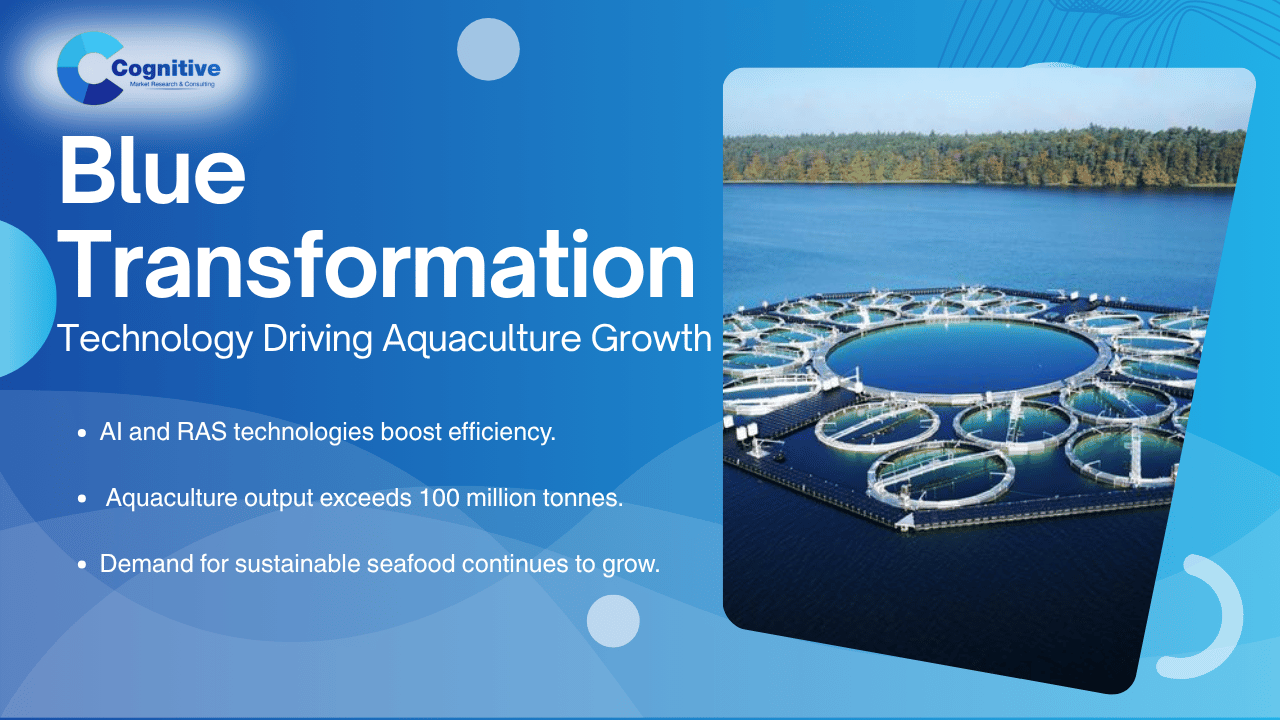
According to the groundbreaking SOFIA 2026 (The State of World Fisheries and Aquaculture) report published by the Food and Agriculture Organization (FAO) of the United Nations, global aquaculture production has crossed a monumental milestone, officially exceeding 100 million tonnes of aquatic animals for the first time. For the everyday consumer browsing the supermarket aisle, this means that more than half of the seafood on our dinner plates is now sustainably cultivated rather than wild-caught.
Standing at this economic inflection point, senior market research analysts from top-tier professional services networks drawing on methodologies from firms like EY, PwC, and Deloitte view aquaculture not merely as an investment sector, but as a critical stabilizer for global food security, climate resilience, and consumer health.
Why is the World Looking Below the Surface for the Future of Food?
To understand why the aquaculture industry is experiencing an unprecedented surge in capital and innovation, one must look at the constraints facing traditional land-based agriculture and wild marine environments. Terrestrial agriculture is fighting an uphill battle against soil degradation, severe freshwater scarcity, and unpredictable weather anomalies driven by climate change. Concurrently, our oceans have hit an absolute ecological ceiling. Wild-capture fisheries have plateaued for decades, revealing the hard limits of what nature can provide without human intervention.
Recent supply chain disruptions illustrate this tension perfectly. For example, severe cod quota slashes in traditional European fishing grounds highlight how rapidly wild stocks can contract under regulatory and environmental pressures. As a result, governments and institutional investors are executing a structural Blue Transformation. This policy framework focuses on scaling up climate-smart, controlled-environment food production.
Public-sector capital is moving rapidly to de-risk the sector. From the Middle East expanding its desert-based aquafarms to India’s massive financial injections via provincial initiatives like the Pond Fisheries Development Scheme, public money is paving the way. The primary objective driving these shifts is clear: to feed a global population hungry for clean, lean, and highly predictable protein options.
Industry 4.0 Infrastructure and the Rise of Precision Aquaculture
Historically, fish farming was a game of variables and high risks. Farmers stocked open ponds, fed the organisms manually, and hoped that disease or poor water quality wouldn’t wipe out an entire generation overnight. Today, this traditional landscape is being dismantled by Industry 4.0 innovations. The contemporary aquaculture industry relies on data analytics, artificial intelligence (AI), and automated infrastructure.
A primary example is the rapid adoption of AI-driven precision monitoring. Instead of guessing how much feed to distribute, modern shrimp and fish farms deploy underwater computer-vision cameras and automated shrimp counting systems.
How does AI-driven precision monitoring optimize operations?
These AI algorithms monitor the exact movement, biomass, and behavioral patterns of the aquatic species in real time. If a school of salmon or a pond of white-leg shrimp shows signs of lethargy, the system instantly flags it as a potential water-quality issue or early disease indicator, adjusting the nutrient mix automatically. This drastically optimizes the Feed Conversion Ratio (FCR), which is crucial considering that commercial feed accounts for roughly 40 percent of total aquaculture operational expenses.
Furthermore, compliance and corporate reporting have gone digital. Maritime validation firms have rolled out specialized, AI-based compliance solutions that automate environmental monitoring. These platforms continuously trace metrics like dissolved oxygen levels, salinity, and temperature, ensuring that commercial entities can prove their sustainability credentials to regulatory bodies and eco-conscious shoppers alike without drowning in manual paperwork.
The Commercial Scale of Recirculating Aquaculture Systems (RAS)
Perhaps the most exciting technological shift for both manufacturers and urban consumers is the commercial scaling of Recirculating Aquaculture Systems (RAS) and industrial-scale aquaponics. Traditional aquaculture relies on open-water cages or coastal ponds, leaving operations vulnerable to microplastic pollution, toxic algae blooms, and unpredictable ocean temperatures.
RAS flips this paradigm by bringing the entire ecosystem indoors into biosecure, closed-loop facilities. Water is continuously filtered, purified, and recycled within a controlled environment, reducing external water dependency by up to 99 percent. The market for RAS and high-value fish is exhibiting an accelerated growth rate, projected to nearly triple in value over the next decade. This isn't just a corporate win; it completely alters the consumer supply chain.
How does peri-urban farming eliminate logistical carbon footprints?
Historically, if you lived in a landlocked metropolis or a peri-urban area, eating premium Atlantic salmon or yellowtail kingfish meant relying on high-emission air freight that degraded the quality and freshness of the product. Today, industrial-scale land-based RAS facilities are being constructed directly on the outskirts of major urban hubs.
A prominent real-world example is Great Northern Salmon’s state-of-the-art land-based facility in Maine, which secured significant institutional funding to scale clean salmon production. By placing the source of production a short drive away from major consumer centers, the industry is dramatically shortening supply chains, slashing logistical carbon footprints, and delivering ultra-fresh, traceable seafood to local grocery shelves.
Moreover, operators are solving the energy challenge inherent to indoor farming. The latest facility designs are actively integrating photovoltaic solar generation directly into their operational RAS infrastructure, converting sunlit roof spaces into clean energy to run water filtration pumps, making the entire ecosystem truly circular.
Consumer Paradigms and the Transparency Mandate
While manufacturers focus on asset optimization and biotechnology, the true success of the aquaculture industry hinges on the evolving mindset of the everyday consumer. The modern shopper is no longer looking merely at the price tag; they are looking at the story behind their food. There is a booming global demand for protein-rich diets that support long-term wellness, immune function, and lean muscle maintenance. Concurrently, consumers want to know that their meal did not contribute to ocean overexploitation or unethical labor practices.
This shift has propelled Traceability from a corporate buzzword into a baseline retail expectation. Thanks to blockchain integrations and smart labeling, a shopper at a local supermarket can scan a QR code on a piece of tilapia or carp filet and immediately view its entire life cycle.
Consumers can see everything from the hatchery it was born in and the specific organic, probiotic-rich feed it consumed, all the way to its harvest date and transit path. This high level of transparency builds immense executive confidence and brand loyalty, creating a direct connection between the consumer and the producer.
Species Diversification and Global Market Stability
Additionally, the variety of choices available to the consumer is expanding rapidly. For a long time, commercial aquaculture was synonymous with just a few dominant species like salmon, trout, and shrimp. Cultivating a single species, however, exposes the market to immense biosecurity vulnerabilities; if a pathogen targets that specific species, the entire supply chain fractures.
To mitigate this risk, the global market is showcasing a vast diversification of cultivated species. Consumers are now discovering high-nutrient, delicious alternatives at their local fish counters, such as barramundi, cobia, pompano, and organically certified freshwater catfish. This diversification not only protects farms from catastrophic disease losses but also delights the culinary world, offering diverse textures and flavors that were previously unavailable or prohibitively expensive as wild-caught luxuries.
The Seaweed and Algae Renaissance as a Superfood Disruptor
No holistic analysis of the modern aquaculture industry is complete without highlighting the quiet revolution occurring in seaweed and algae cultivation. While fish and crustaceans capture the mainstream headlines, marine macroalgae have emerged as the ultimate multi-industry crop of the modern era.
For the health-conscious consumer, seaweed is cementing its status as a foundational superfood, packed with essential micronutrients, iodine, and plant-based omega-3 fatty acids. But its utility extends far beyond the salad bowl or sushi roll. Seaweed farming requires zero freshwater, zero synthetic fertilizers, and zero arable land, making it one of the most environmentally restorative agricultural activities on Earth. It acts as a natural carbon sink, actively drawing down dissolved carbon dioxide and combating local ocean acidification.
From a manufacturing perspective, the commercial applications are scaling exponentially. Seaweed extracts are being processed into biodegradable alternatives to single-use plastics, incorporated into cosmetic formulations, and utilized as organic bio-stimulants for land-based farming. Crucially, the aquafeed industry itself is using processed algae to replace wild-caught fishmeal in aquaculture diets. By feeding farmed fish with nutrient-dense algae, the industry is creating a truly self-sustaining loop, completely breaking the historical paradox of needing to catch wild fish to feed farmed fish.
Overcoming Systemic Obstacles and Biosecurity Challenges
Despite the robust growth and incredible opportunities, market research analysts emphasize that the aquaculture industry must navigate several systemic challenges to unlock its full potential.
Building a highly automated, biosecure RAS facility or an offshore, open-ocean automated cage network requires immense upfront investment. Specialized water filtration machinery, continuous backup power systems, and highly trained personnel command a premium. While these investments yield immense efficiency gains and dramatically lower operating costs in the long run, small-scale producers in developing economies who still comprise a vast portion of the global industry often face steep financial barriers to entry. This is where modern ESG-linked financing and targeted government subsidies are stepping in, creating accessible pathways for traditional farmers to upgrade their operations safely.
How is the industry shifting from reactive antibiotics to preventative biotech?
The second primary challenge is disease management. When aquatic species are reared in high-density, intensive environments, the risk of pathogenic transmission escalates. A single undetected outbreak can cause billions of dollars in losses globally and destabilize regional food supplies.
To counter this, the industry is shifting heavily away from reactive antibiotics and moving toward preventative biotechnology. The current trend focuses on formulation science integrating functional ingredients like natural prebiotics, organic trace minerals, and immune-support additives directly into the daily feed, reinforcing the natural biological defenses of the organisms from day one.
Strategic Horizons for Sustainable Blue Growth
The aquaculture industry is firmly positioned as a cornerstone of the global bio-economy. What was once seen as a simple farming alternative has evolved into a high-tech, data-driven discipline that seamlessly blends environmental stewardship with corporate profitability.
For manufacturers and global brands, the directive is clear: invest heavily in automation, embrace alternative feed formulations, and prioritize absolute supply chain transparency. For the everyday consumer, the message is incredibly empowering. Every time you choose sustainably farmed seafood, purchase a seaweed-based product, or opt for a locally raised RAS fish, you are actively participating in the stabilization of our planet's oceans.
The Blue Transformation is no longer a distant projection. It is happening right now, reshaping our global food infrastructure, restoring our marine ecosystems, and ensuring that delicious, nutrient-dense, and highly ethical food choices remain abundant for generations to come.
 X
X
Article Details
-
Author Sneha Mali
-
Published 23 Jun 2026
-
Last Updated 23 Jun 2026
-
Reading Time~3 minutes
Related Reports
Get a Custom Report
Interested in a similar analysis for your market? Our experts can deliver a customized report.
Contact Our ExpertsMore Articles
Explore all published articles across 30+ industry verticals.
View All Articles