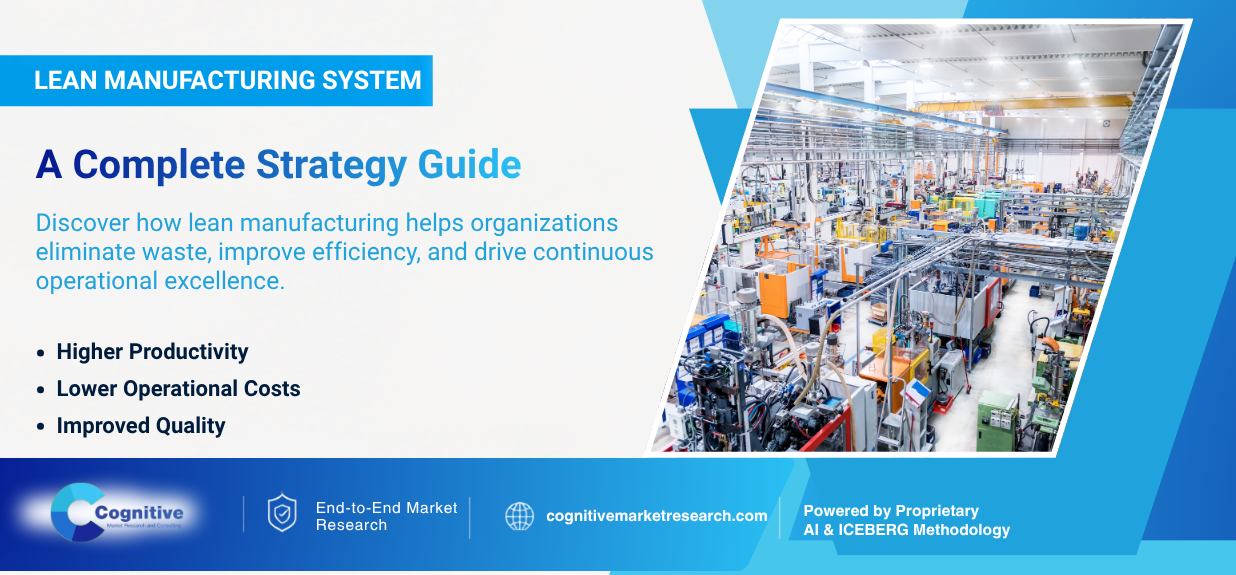
Article
Optimizing Operations: The Ultimate Guide to the Lean Manufacturing System
In today’s hyper-competitive industrial landscape, operational efficiency dictates market survival. Modern organizations face relentless pressure to reduce costs, shorten lead times, and elevate product quality without inflating overhead. Traditional mass production models characterized by heavy stockpiles, rigid workflows, and reactive problem-solving—frequently fail to meet these demands.
Enter the lean manufacturing system. Rooted in the Toyota Production System (TPS), lean methodology provides a systematic framework designed to maximize customer value while minimizing waste. This guide examines the core pillars of lean manufacturing, explores how organizations implement these principles to achieve peak performance, and highlights the transformative impact of expert advisory support.
Understanding the Core Philosophy
At its heart, a lean manufacturing system shifts the operational focus from mass production efficiency to value-stream optimization. Instead of pushing products through a factory based on forecasting, lean systems pull production based on actual customer demand.
The philosophy relies on continuous improvement, commonly known as Kaizen, and empowers front-line workers to identify inefficiencies and propose solutions instantly. By respecting people and relentlessly pursuing perfection, companies transform their shop floors into agile, adaptable ecosystems.
The 7 Wastes of Lean Manufacturing
At its heart, a lean manufacturing system shifts the operational focus from mass production efficiency to value-stream optimization. Instead of pushing products through a factory based on forecasting, lean systems pull production based on actual customer demand.
The philosophy relies on continuous improvement, commonly known as Kaizen, and empowers front-line workers to identify inefficiencies and propose solutions instantly. By respecting people and relentlessly pursuing perfection, companies transform their shop floors into agile, adaptable ecosystems.
The 7 Wastes of Lean Manufacturing
To successfully implement a lean system, organizations must first learn to recognize and eliminate waste, or Muda. Every activity within a facility falls into one of two categories: value-added or non-value-added. Lean targets the removal of the following seven primary forms of waste:
- Transportation: Unnecessary movement of materials or products between processes, which increases handling risks and operational costs.
- Inventory: Raw materials, work-in-progress (WIP), or finished goods held in excess of immediate customer requirements, tying up capital and masking underlying production issues.
- Motion: Ergonomic inefficiencies or unnecessary physical movements by workers during production.
- Waiting: Idle time caused by bottlenecks, equipment downtime, stockouts, or unbalanced workflows.
- Overproduction: Manufacturing items before they are needed, which is widely considered the deadliest form of waste because it triggers downstream accumulation of other wastes.
- Over-processing: Performing more work on a product than what the customer actually values or requires.
- Defects: Production errors, scrap, and rework that drain resources and degrade customer satisfaction.
Core Pillars of the Lean Framework
1. 5S Workplace Organization
The foundation of any lean facility begins with the 5S framework: Sort, Set in Order, Shine, Standardize, and Sustain. This methodology establishes visual order, cleanliness, and standardization, reducing the time wasted searching for tools, materials, or documentation.
2. Value Stream Mapping (VSM)
Value Stream Mapping is a visual tool that tracks the lifecycle of a product from initial raw material to final delivery. By mapping every process, inventory queue, and information flow, leadership teams can pinpoint bottlenecks and design an optimized future-state value stream.
3. Just-in-Time (JIT) Production
JIT synchronizes production output with demand. Components and materials arrive precisely when needed in the manufacturing process, drastically shrinking inventory holding costs and improving cash flow.
4. Total Productive Maintenance (TPM)
Equipment failures derail production schedules. TPM involves operators in routine equipment maintenance and proactive upkeep, maximizing Overall Equipment Effectiveness (OEE) and preventing unexpected downtime.
The Role of Strategic Guidance in Implementation
While the theoretical concepts of lean manufacturing are straightforward, execution presents complex operational challenges. Cultural resistance, poor change management, and misaligned metrics frequently cause lean initiatives to stall.
Partnering with seasoned specialists helps organizations navigate these hurdles. For instance, engagements with Cognitive Market Research and Consulting provide enterprises with rigorous data analysis, customized value-stream blueprints, and tailored change management strategies. Expert advisors ensure that lean transformations align with broader enterprise goals, accelerating time-to-value and securing long-term operational resilience.
Conclusion
Adopting a lean manufacturing system is not merely a tactical upgrade; it is a fundamental cultural evolution. By systematically eliminating waste, optimizing workflows, and empowering employees to drive continuous improvement, industrial enterprises can achieve sustainable competitive advantage.
Are you ready to transform your operational workflows and eliminate hidden inefficiencies? Contact Cognitive Market Research and Consulting today to schedule your comprehensive lean manufacturing audit and start building a high-performance value stream.

 X
X
Article Details
-
Author Pratik Shirsath
-
Published 21 Jul 2026
-
Last Updated 21 Jul 2026
-
Reading Time~3 minutes
Related Reports
Get a Custom Report
Interested in a similar analysis for your market? Our experts can deliver a customized report.
Contact Our ExpertsMore Articles
Explore all published articles across 30+ industry verticals.
View All Articles