Article
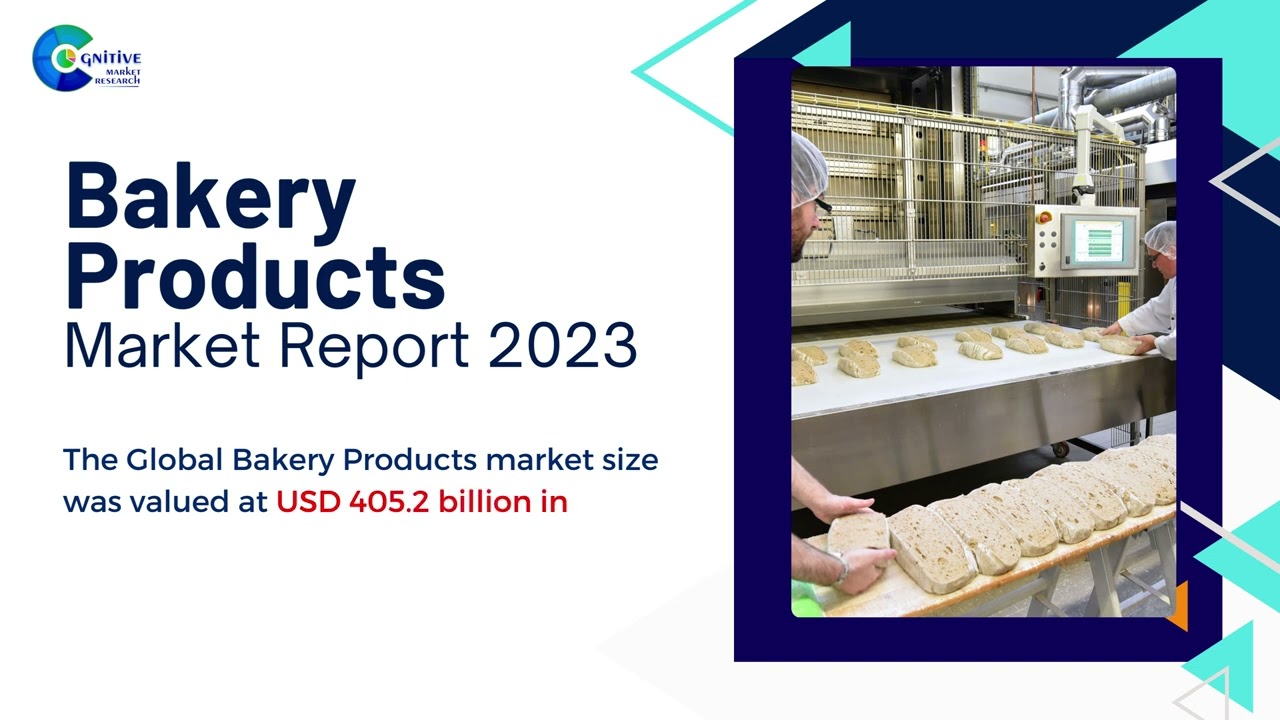
Bakery Products Market: Convenience Drives $713.3B by 2033
Europe still buys more bakery goods than any other region, holding 37.11% of the global bakery products market in 2025. Yet the fastest growth sits in Asia Pacific, where India is projected to grow at 7.063% a year.
Our latest Bakery Products report values the bakery products market at USD 486.5 billion in the 2025 base year. It projects USD 713.324 billion by 2033, a compound annual growth rate of 4.9%.
That is a steady, mature climb rather than a surge. Convenience, urban living, health demand, premiumisation and wider retail reach explain most of it, and the sections below break each one down.
How Convenience and Urban Living Drive the Bakery Products Market
In our analysis of the 2025 base-year data, five demand drivers carry the bakery products market. We rank them by how consistently the report cites them and how directly they convert into revenue.
Ready-to-Eat Convenience: Packaged Bread, Single-Serve Pastries and Frozen Lines
Convenience is the strongest of the growth drivers. It tops both of the report’s global driver lists. Hectic lifestyles push households away from daily fresh baking and toward packaged breads, single-serving pastries and frozen bakery products that remove preparation time.
North America, which holds 30.7% of the global market, shows this clearly. The report points to on-the-go breakfast items such as bagels, muffins and breakfast sandwiches. In Asia Pacific, rising disposable incomes are lifting spending on processed and convenience foods.
Our analysis identifies convenience-focused, ready-to-eat demand as the market’s main pull. Manufacturers with strong packaged and frozen portfolios benefit most.
Urbanisation and Westernising Diets Across Asia Pacific
Urbanisation changes where and how people eat, and that makes it the second engine. Rapid urbanisation and a rising middle class are behind Asia Pacific’s 6.059% annual growth, from $90 billion in 2025 to $144.09 billion in 2033.
China holds a 6.68% share of the global market and India 2.13%. India posts the region’s highest growth at 7.063%. Westernised diets introduce younger consumers to bread, pastries and cakes, while bakery cafes in large cities give those products a visible home.
Africa shows the same logic at an earlier stage. Urbanisation and Western-style diets make bread a first-step adoption, though regional growth stays at 2.716%. The report advises a “glocal” approach, pairing global quality standards with local flavours.
Health and Wellness Demand for Gluten-Free, Organic and Low-Sugar Lines
Health awareness adds a quality-led layer of demand. The report tracks five specialty types: gluten-free, fortified, organic, low-calorie and sugar-free. Its executive summary calls healthier alternatives a primary growth driver, with whole-grain, reduced-sugar and fortified products gaining traction across all major regions.
The mechanism is reformulation. Each healthier variant is a new product that can carry a premium and win back shoppers who might otherwise cut baked goods.
In Europe, the report links organic and free-from demand to health and environmental concerns. In North America, it cites organic, non-GMO and gluten-free options. Brands with strong reformulation capability benefit most.
Premiumisation and Innovation Lift Value, Not Just Volume
The report names premiumisation as a significant driver of value growth. Consumers who pay more for artisanal, high-quality or unusual items raise revenue per unit sold.
The evidence appears region by region. North America cites growing interest in craft bakeries. Europe sees a revival of sourdough and heritage grains. The Middle East shows a surge in luxury and gourmet products, from custom cakes to French patisserie, backed by high disposable income and a thriving hospitality sector.
Manufacturers that keep launching new flavours, formats and ingredients capture this gain, as do premium bakeries that sell experience.
Wider Retail and Online Reach, From Hypermarkets to Delivery Apps
Distribution is the fifth driver. In Asia Pacific, supermarkets and hypermarkets improve access to packaged bakery goods, and online and mobile ordering of cakes and pastries is growing strongly.
Globally, direct-to-consumer websites and third-party delivery apps matter more each year for artisanal bakeries and large manufacturers alike. In South America, better cold chain logistics extends the reach of frozen bakery products. In Africa, mobile money supports transactions in both formal and informal retail.
Each new channel puts bakery products in front of buyers they could not previously reach.
Bakery Products Market Climbs 4.9% a Year, but Africa Lags at 2.7%
Our report calls the market mature yet dynamic, and the figures agree. Cognitive Market Research and Consulting tracked growth from $401.773 billion in 2021 to $486.5 billion in 2025, with a projection of $713.324 billion by 2033. That is steady expansion, not an explosion.
Europe is the largest region. It grows from $180.54 billion in 2025 to $252.52 billion in 2033 at 4.283% a year, and our 2026 estimate puts it at $188.27 billion. North America moves from $149.36 billion to $217.56 billion at 4.814%. The United States grows at 4.484%, while Canada reaches 5.406% and Mexico 5.696%.
Growth concentrates in emerging and Asian markets. India is projected to grow at 7.063% a year and China at 6.951%, while the United Kingdom grows at 3.81%, Germany at 3.845% and France at 3.741%. Luxembourg manages only 1.187%. Within Europe, Spain at 5.681% and Rest of Europe at 6.705% are the exceptions.
South America grows at 5.596%, led by Brazil at 6.136%. The Middle East grows at 5.387%, led by Saudi Arabia at 6.336%.
Africa is the laggard. It grows from $10.36 billion to $12.84 billion at 2.716%, and South Africa grows at 2.995%. Mature Western markets are slowing toward the global average, and Asia and the Gulf are pulling ahead.
For wider context, bakery sits inside the grain based food market, where our research identifies baking as the dominant category.
Is Plant-Based, Clean-Label or Online Reshaping the Bakery Products Market?
A driver creates demand, while a trend changes its shape. Three shifts are changing how bakery products are made, labelled and sold.
The first is reformulation. Plant-based and vegan bakery is on the rise, pushing manufacturers to replace eggs, butter and milk. Clean-label expectations favour short, natural and recognisable ingredient lists. The report also tracks the popularity of health-conscious and functional products.
The second is channel and technology change. Digital transformation and tailored offerings are spreading. North American manufacturers invest in automation and robotics to cut labour cost and improve consistency. European players focus on energy-efficient ovens, plastic-free packaging and blockchain traceability.
The third is regional flavour. Asia Pacific is blending local tastes with Western formats, such as matcha croissants and red bean buns. North America is mainstreaming ethnic flavours and growing private-label and in-store bakery offers. Europe’s coffee shop chains are pulling sweet bakery sales along with them.
From Biscuits to Sourdough: How Bakery Buyers Weigh Convenience, Health and Craft
The report’s exposed signals sketch a buyer who wants speed, proof and value in different measures depending on region. The detailed buyer data sits in the full report, including its chapters on purchase decisions, pricing and value perception, and vendor selection.
Biscuits Lead, Cakes and Pastries Follow: What Gets Bought
Our segmentation analysis finds that biscuits are the most frequently used product type, covering cookies and crackers. Cakes and pastries rank second, from celebration cakes to croissants and éclairs. Bread and rolls, pizza crusts and rusks complete the range.
Households, Cafes and Hotels: Who Is Buying
Buyers split between private households and commercial users. Coffee shops drive sweet bakery sales in Europe. Hotels and tourism underpin demand in the Middle East and South America. The report tracks direct and indirect sales channels.
Private Label for Value, Luxury for Occasions: How Price Shapes the Basket
Price sensitivity varies sharply. North American retailers offer private-label bakery as a value option. Gulf shoppers trade up to luxury cakes and patisserie. In Africa, limited disposable income and high price sensitivity hold back premium products.
Clean Labels, Gluten Claims and Traceable Ingredients as Proof of Quality
Shoppers increasingly want ingredient transparency, which favours simple labels and visible health credentials. Regulation reinforces this: the report cites stringent food safety and labelling requirements in North America and strict EU rules on additives and health claims.
Padarias, In-Store Ovens and Delivery Apps: Where Baked Goods Are Bought
In Brazil, local padarias act as social hubs. North American supermarkets use in-store bakeries to offer fresh-baked goods. Asian cities have a bakery-cafe boom, and online and mobile ordering is growing across regions.
Two pain points recur. Carbohydrate and gluten concerns lead some consumers to reduce bread, and short shelf life frustrates both buyers and sellers. In Asia Pacific, rice-based diets remain a cultural barrier to daily bread. Compared with before, buyers are more health-aware, more digital and more willing to pay for authenticity.
Sugar, Gluten and Wheat Costs: What Bakery Manufacturers Must Watch Next
The first watch-point is that health demand cuts both ways. The same sugar and gluten worries that fuel healthier lines are listed among the restraints. In North America, carbohydrate concerns are already leading some shoppers to buy less bread. If reformulation lags behind consumer expectations, a driver becomes a drag.
The second is input cost. Bakery depends on wheat, sugar and dairy, and price swings squeeze margins. Our flour market report ties wheat prices to weather, geopolitics and trade policy. The Middle East relies heavily on imported raw materials, and Africa on imported wheat, which leaves both exposed to global price shocks.
The third is supply chain and compliance. Short shelf life demands efficient logistics and waste control. Extreme heat in the Gulf raises cold-chain costs, and unreliable power and roads add friction in Africa. Regulation adds expense in the EU and North America.
The fourth is competition. The landscape mixes multinationals, regional players and many small local bakeries, which drives price pressure. Key players include Grupo Bimbo, Mondelez International, General Mills, Associated British Foods and Kellogg, alongside Yamazaki Baking, Britannia Industries, Campbell Soup, Dunkin’ Donuts and Flowers Foods.
In Asia Pacific and South America, unorganised local players add to the fragmentation. The report’s advice is to invest in healthier ranges, strengthen e-commerce and localise flavours.
Four Facts to Carry Into Your Next Bakery Planning Meeting
- The bakery products market is projected to grow from USD 486.5 billion in 2025 to USD 713.324 billion by 2033, a 4.9% compound annual growth rate.
- Convenience leads the demand drivers, followed by urbanization, health and wellness, premiumisation and wider retail reach.
- Europe holds 37.11% of 2025 revenue, but Asia Pacific grows fastest at 6.059%, led by India at 7.063%.
- Sugar, gluten concerns, wheat costs and fierce competition are the main risks to watch.
Take the Bakery Numbers Further: Free Sample, Full Report or a Custom Brief
The bakery products market rewards players who pair convenience with credible health and premium credentials, and who localise for fast-growing regions. The free sample unlocks country and segment detail, and the full report adds the buyer-behaviour chapters and company profiles. Our analysts can also build a custom consultation around your region, product type or channel.
Explore the full Bakery Products Market report, then pair it with our flour market and grain based food market reports. Request your free sample today.
 X
Article Details
-
Author Sneha Mali
-
Published 29 Oct 2026
-
Last Updated 29 Oct 2026
-
Reading Time~3 minutes
Related Reports
Get a Custom Report
Interested in a similar analysis for your market? Our experts can deliver a customized report.
Contact Our ExpertsMore Articles
Explore all published articles across 30+ industry verticals.
View All Articles