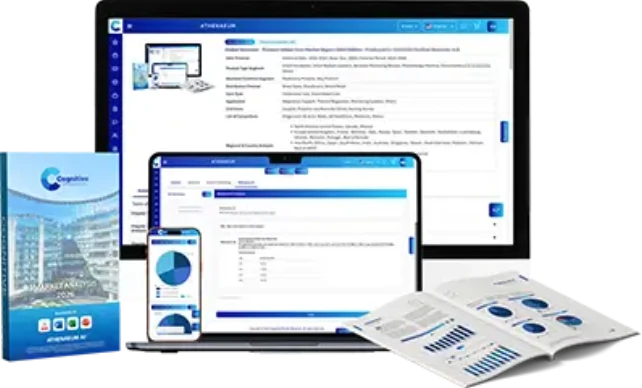
Voice Training Software Market Analysis from 2022 to 2034 Containing Market Size, Share along with its CAGR, Forecast and Trends
Top Countries — Revenue
Market Dynamics of Voice Training Software Market Analysis
Growth Drivers
- Growing demand for personal voice improvement tools
- Increased use of voice assistants and AI-driven technologies
- Rise in online education and remote learning
Restraints
- Limited awareness about voice training software
- Complexity in using advanced voice training software for beginners
Trends
- Growth of AI-powered voice training solutions
- Increased use of wearables for real-time voice analysis
Access the full forecast model.
Country-level data · Company profiles · Editable dataset · Analyst consultation included.
Voice Training Software Market Analysis — Presence
Geographical Analysis
Click countries to exploreRegional and Country Analysis
Global Voice Training Software Market Analysis 2026
| Region / Country | 2021 (A) | 2025 (A) | 2033 (P) | CAGR |
|---|---|---|---|---|
| Global | xxxx | xxxx | xxxx | 16.2% |
| North America | xxxx | xxxx | xxxx | 14.4% |
| United States | xxxx | xxxx | xxxx | 14.2% |
| Canada | xxxx | xxxx | xxxx | 15.2% |
| Mexico | xxxx | xxxx | xxxx | 14.9% |
| Europe | xxxx | xxxx | xxxx | 14.7% |
| United Kingdom | xxxx | xxxx | xxxx | 15.5% |
| France | xxxx | xxxx | xxxx | 13.9% |
| Germany | xxxx | xxxx | xxxx | 14.9% |
| Italy | xxxx | xxxx | xxxx | 14.1% |
| Russia | xxxx | xxxx | xxxx | 13.7% |
| Spain | xxxx | xxxx | xxxx | 13.8% |
| Sweden | xxxx | xxxx | xxxx | xxxx |
| Denmark | xxxx | xxxx | xxxx | xxxx |
| Switzerland | xxxx | xxxx | xxxx | xxxx |
| Luxembourg | xxxx | xxxx | xxxx | xxxx |
| Rest of Europe | xxxx | xxxx | xxxx | 13.4% |
| Asia Pacific | xxxx | xxxx | xxxx | 18.2% |
| China | xxxx | xxxx | xxxx | 17.7% |
| Japan | xxxx | xxxx | xxxx | 16.7% |
| South Korea | xxxx | xxxx | xxxx | 17.3% |
| India | xxxx | xxxx | xxxx | 20% |
| Australia | xxxx | xxxx | xxxx | 17.9% |
| Singapore | xxxx | xxxx | xxxx | xxxx |
| Taiwan | xxxx | xxxx | xxxx | xxxx |
| South East Asia | xxxx | xxxx | xxxx | xxxx |
| Rest of APAC | xxxx | xxxx | xxxx | 18% |
| South America | xxxx | xxxx | xxxx | 15.6% |
| Brazil | xxxx | xxxx | xxxx | 16.2% |
| Argentina | xxxx | xxxx | xxxx | 16.5% |
| Colombia | xxxx | xxxx | xxxx | 15.4% |
| Peru | xxxx | xxxx | xxxx | 15.8% |
| Chile | xxxx | xxxx | xxxx | 15.9% |
| Rest of South America | xxxx | xxxx | xxxx | 14.7% |
| Middle East | xxxx | xxxx | xxxx | 15.9% |
| Saudi Arabia | xxxx | xxxx | xxxx | xxxx |
| Turkey | xxxx | xxxx | xxxx | 15.4% |
| UAE | xxxx | xxxx | xxxx | xxxx |
| Egypt | xxxx | xxxx | xxxx | 16.2% |
| Qatar | xxxx | xxxx | xxxx | xxxx |
| Rest of Middle East | xxxx | xxxx | xxxx | 14.9% |
| Africa | xxxx | xxxx | xxxx | xxxx |
| East Africa | xxxx | xxxx | xxxx | xxxx |
| West Africa | xxxx | xxxx | xxxx | xxxx |
| North Africa | xxxx | xxxx | xxxx | xxxx |
| South Africa | xxxx | xxxx | xxxx | xxxx |
A = Actual · E = Estimated · P = Projected · 🔒 Locked values require full access. Click headers to sort.
Unlock full regional dataset →Segmentation Analysis
Voice Training Software Market Product/Type Segment Analysis According to Cognitive Market Research, software are likely to dominate the voice training software market over the forecast period due to its affordability, accessibility, and ease of use across devices like smartphones and computers. With the growing demand for remote learning, online speech therapy, and self-improvement tools, software solutions offer scalable and flexible options for both individuals and businesses. The rise of AI-driven personalization and cloud-based platforms further enhances software adoption. The hardware is the fastest-growing segment in the voice training software market as advanced voice training tools like smart headsets, microphones, and wearable devices become more accessible. As voice training becomes more integrated into professional settings, including customer service and content creation, the need for specialized hardware rises. Innovations in voice recognition and real-time feedback technologies are also driving demand for these devices.
Disclaimer: The charts and graphs are for illustrative purposes only and do not represent actual market values. To access accurate quantitative data, please request a paid report or request free sample.
To learn more about market share and segmentation, request the free sample pages.
Competitor Analysis
Competitive Landscape of the Voice Training Software Market
The competitive landscape of the voice training software market is characterized by a mix of established software developers and emerging startups. Companies are differentiating through advanced features like AI-driven feedback, personalized training programs, and integration with smart devices. The market is evolving rapidly, with players focusing on user-friendly interfaces, scalability, and cross-platform compatibility to attract a wide range of users.
In July 2024, Voiceitt introduced advanced speech recognition technology tailored for non-standard speech, making voice technology more accessible to individuals with speech disabilities, older adults, and accented speakers. Voiceitt is a standalone web app that facilitates communication between people and technology. Its seamless and customizable API integrations ensure that voice-based products can be made accessible for all users, improving inclusivity and enhancing user experience. (Source: https://www.voiceitt.com/) In February 2024, SiriusXM Voice unveiled the launch of synthetic voice ads on AudioGO, marking the first tool in AdsWizz’s new suite, known as AdsWizz’s AI Ad Tools. Available through AudioGO’s Ad Creative Suite, this innovative tool aims to provide cost-effective and efficient advertising solutions. The suite is designed to enhance AdsWizz’s broader ad offerings, with a primary focus on making audio advertising more accessible and affordable for small and medium-sized businesses (SMBs). (Source: https://investor.siriusxm.com/news-events/press-releases/detail/2037/adswizz-announces-launch-of-synthetic-voice-ads-on-audiogo)
| Top Companies (In no particular order) | 2022 (A) | 2023 (A) | 2024 (A) | 2025 (A) |
|---|---|---|---|---|
| Vocalizer | ••• | ••• | ••• | ••• |
| Singscope | ••• | ••• | ••• | ••• |
| VoCo Vocal Coach | ••• | ••• | ••• | ••• |
| VoxCoach | ••• | ••• | ••• | ••• |
| MyVocalCoach | ••• | ••• | ••• | ••• |
| Pro Metronome | ••• | ••• | ••• | ••• |
| SING&SEE | ••• | ••• | ••• | ••• |
| SINGPRO | ••• | ••• | ••• | ••• |
| Public Speaking Simulator | ••• | ••• | ••• | ••• |
| Others | ••• | ••• | ••• | ••• |
We Provide Regional Breakdown of this Companies and Company specific to any Country, Region, Product/ service as well. We cover market share analysis for publicly listed companies as well as privately held companies, subject to data availability.
Request company profile for validation →Report Scope & Analysis
According to Cognitive Market Research, the global voice training software market size was USD 23514.2 million in 2024. It will expand at a compound annual growth rate (CAGR) of 16.20% from 2024 to 2031.
- North America held the major market share for more than 40% of the global revenue with a market size of USD 9405.68 million in 2024 and will grow at a compound annual growth rate (CAGR) of 14.4% from 2024 to 2031.
- Europe accounted for a market share of over 30% of the global revenue with a market size of USD 7054.26 million.
- Asia Pacific held a market share of around 23% of the global revenue with a market size of USD 5408.27 million in 2024 and will grow at a compound annual growth rate (CAGR) of 18.2% from 2024 to 2031.
- Latin America had a market share of more than 5% of the global revenue with a market size of USD 1175.71 million in 2024 and will grow at a compound annual growth rate (CAGR) of 15.6% from 2024 to 2031.
- Middle East and Africa had a market share of around 2% of the global revenue and was estimated at a market size of USD 470.28 million in 2024 and will grow at a compound annual growth rate (CAGR) of 15.9% from 2024 to 2031.
- The hardware is the fastest growing segment of the voice training software industry
Introduction of the Voice Training Software Market
Voice training software is a specialized tool designed to help individuals improve their vocal skills through guided exercises and feedback. It is used by singers, public speakers, actors, and anyone seeking to enhance their voice control, pitch, tone, and clarity. The software typically includes features such as pitch detection, vocal range analysis, breath control exercises, and real-time performance tracking. It may also provide customized lessons, tutorials, and interactive elements that cater to different learning styles. With the integration of AI and machine learning, these tools can adapt to the user’s progress, offering personalized recommendations for vocal improvement.
In April 2021, Voximplant announced plans to launch a Series C funding round, aiming to raise at least USD 30 million. The proceeds will primarily be used to expand its geographic presence in the US. The company expects a 60% growth rate this year, although Aylarov noted that faster expansion was hindered by challenges in hiring during the pandemic. The demand for its cloud-based contact center platform soared, particularly among companies that shifted to remote operations but still required robust contact center solutions. (Source: https://voximplant.com/blog/Voximplant-plans-2022-Series-C-to-support-cloud-communication-platform)
Analyst Conclusion
Our study will explain complete manufacturing process along with major raw materials required to manufacture end-product. This report helps to make effective decisions determining product position and will assist you to understand opportunities and threats around the globe.
The Voice Training Software Market Analysis is witnessing significant growth in the near future.
In 2023, the App-based software segment accounted for a notable share of the Voice Training Software Market Analysis.

Driven by a passion for transforming complex digital and business data into actionable market intelligence, Aarti Bagekari focuses her research expertise on the Services & Software and Internet & Communication sectors. Her professional interests lie in analyzing evolving technology ecosystems, digital business models, software innovation, communication infrastructure, and emerging trends that are reshaping the global digital economy.
By leveraging a combination of primary and secondary research methodologies, Aarti develops comprehensive market perspectives that enable organizations to make informed strategic decisions in highly dynamic and competitive environments. Her work involves engaging with industry experts, technology providers, service operators, and key stakeholders while conducting extensive analysis of market data, industry developments, regulatory landscapes, and competitive dynamics. This balanced research approach allows her to uncover meaningful market patterns and identify opportunities that support long-term business growth.
Aarti possesses strong capabilities in market sizing and forecasting, competitive benchmarking, customer and stakeholder research, technology trend analysis, and strategic market assessment. She regularly evaluates developments across software solutions, cloud computing, digital services, telecommunications, internet platforms, enterprise technologies, and next-generation communication networks. Her ability to synthesize large volumes of information into clear and actionable insights helps organizations better understand market shifts, customer expectations, and emerging business opportunities.
At Cognitive Market Research & Consulting, Aarti contributes to market research reports, custom consulting engagements, and survey-based studies that support technology vendors, service providers, investors, and enterprise decision-makers. Her analytical mindset, attention to detail, and commitment to research excellence enable clients to navigate rapidly evolving digital markets, strengthen competitive positioning, and develop sustainable growth strategies in an increasingly connected world.
Purchase & Support
What you get, what it costs, and how we stand behind it
Every licence includes two years of analyst access, not just a document. Below: the decisions this research supports, what is included, what is charged separately, and the checks every figure passes before release.
What our consultation helps you decide
If you are deciding…
- Whether to enter or expand in a market
- Where to invest across the portfolio
- Which customer groups to target
- Where to direct product development
- How to position against competitors
- How your performance compares to the market
- Whether to acquire, partner or divest
- Whether to invest or fund
- How to plan budgets and targets
- Which route to market to build
- How to assess supply and sourcing risk
These are the decisions clients bring us most often — but they are not the limit. Most engagements surface questions the data alone does not answer, and that is where the consultation does the work. Tell us what you are deciding, and our analyst will tell you what the research can support.
Included in your purchase
A licence is a two-year relationship, not a one-time download. Everything below is included at no additional cost.
Access & formats
- Multi-format delivery
- Cloud/HTML with master and team access, PDF, Excel data models, board-ready PPT, and the Athenaeum AI consultant.
- Interactive dashboard
- Toggle the dataset across global currencies and languages in real time.
- Portfolio-level insight
- Three-year country-level market sizing across your entire product range, not a single line.
Updates & editions
- 8 quarterly refreshes
- Complimentary data updates every quarter for two years, so your figures track the market rather than the publication date.
- Next two annual editions
- The following two yearly editions are added to your account automatically.
- Dated at source
- Every deliverable carries a visible “data updated” date so recency is never in question.
Advisory & support
- 6 hours analyst consultation
- One-to-one time with the lead analyst for Q&A, walkthroughs, or to join an internal executive discussion as an independent adviser.
- Two-year strategic advisory
- Continuing support on assumptions, methodology and evolving requirements for the full licence period.
- 24/7 client support
- Round-the-clock account support for ad-hoc queries and new requests.
How delivery works
From first enquiry to dispatch, with a named analyst attached at every stage. Standard delivery is 5–7 business days from scope confirmation.
Before you buy
Complimentary preview. The full data structure and table of contents, so you can judge scope before committing.
Scope tailored to your question. Share your use case and problem statement and we shape the research around it.
Modular purchasing. Buy specific chapters, sections or graphs at nominal rates without the full dataset.
Confidentiality from first contact
Your proprietary requirements and personal information are safeguarded under GDPR (EU/UK), CCPA (USA) and the DPDP Act (India).
All project parameters are bound by a non-disclosure agreement from your first enquiry — not from the point of purchase.
Delivery execution
- 01Scope confirmationReview the preview with your dedicated analyst to agree variables, structure and formats.
- 02Extraction & customisationWe isolate the precise segments and parameters you need from the core database.
- 03Current-market validationFigures are refreshed and cross-checked against current-quarter market conditions.
- 04Expert QASenior specialists run qualitative checks and resolve overlaps and discrepancies.
- 05Dispatch & walkthroughDelivered in 5–7 business days, followed by an analyst-led walkthrough and Q&A.
Scope, timeline and price are confirmed in writing before any work starts. Customised datasets follow the same validation method and quality review as the standard report.
Available at additional cost
Outside the standard licence, but available on request. Scope and price are confirmed in writing before any work begins.
How we assure quality
Before any dataset is released, it passes a five-stage review carried out by senior analysts and independent industry specialists.
- Senior analyst reviewEvery headline figure — market size, forecast, growth rate — is checked by a senior analyst before publication.
- Independent expert verificationEach data point is reviewed by at least two industry specialists with 15+ years in the category.
- Arithmetic and reconciliationCountry and regional figures are reconciled to their totals and cross-checked against observable market conditions.
- Divergence resolutionWhere sources conflict, we trace the cause rather than averaging it away, and record the basis for the figure we publish.
- Dated releaseEach deliverable ships with an explicit data-updated date and the edition it belongs to.
By combining statistical validation with qualitative vetting by practitioners, we release figures that are structurally sound and ready to carry into a board paper, an investment memo or a regulatory filing.
Need something outside this scope? Share your use case and we will confirm feasibility, timeline and price in writing before work starts.
Frequently Asked Questions
★ Reviews
Rate this report
Voice Training Software Market Analysis — Table of Contents
- This is just a redacted sample pages of the actual deliverable report and only for representative purposes
- Charts/Graphs/Numbers/data are only for Representative purposes and do not depict actual statistics.
- The table of Contents differs according to the user License selection. Current Displayed TOC is for the Corporate User License Report Edition. TOC Customization options: Add or Remove section/s Or chapter/s from the report.
- Specific Tables, Graphs, Sections, and Chapters can be ordered at a discounted price.
- If applicable; On Request Volume Data will also be provided (at an Additional Cost).
Report Scope
| Product/Type | App-based software, Desktop/laptop software |
|---|---|
| Deployment Type | Cloud-Based, On-Premises |
| End User | Educational Institutions, Corporates, Voice Coaches/Trainers, Therapists & Clinicians, Others |
| Application | Professional singers & musicians, Public speakers & presenters, Language learners, Corporate training & customer service, Rehabilitation & speech therapy |
| Technology | AI-Powered Voice Analysis, Real-Time Feedback Systems, Machine Learning for Personalization, Speech Recognition & Synthesis, Gamification Features |
| Pricing Model | Free/Freemium, Subscription-Based, One-Time Purchase, Enterprise Licensing |
| List of Competitors | Vocalizer, Singscope, VoCo Vocal Coach, VoxCoach, MyVocalCoach, Pro Metronome, SING&SEE, SINGPRO, Public Speaking Simulator, Others |
Chapter 1. Competitor Analysis (Subject to Data Availability (Private Players))
- 1.1 Top Competitors Analysis
- 1.1.1 Global Voice Training Software Market Analysis by Key Players
- 1.1.2 Segment Market Analysis by Key Players
- 1.1.3 Top Players Ranking 2024
- 1.1.4 New Product Launch Analysis
- 1.1.5 Industry Mergers and Acquisition Analysis
- 1.2 Company Profile (Data Subject to Availability) Sample Format
- 1.2.1 Vocalizer
- 1.2.1.1 Company Basic Information, Manufacturing Base, Sales Area, and Competitors
- 1.2.1.2 Business Overview
- 1.2.1.3 Financials (Subject to data availability)
- 1.2.1.4 R&D Investment (Subject to data availability)
- 1.2.1.5 Product Types Specification
- 1.2.1.6 Business Strategy
- 1.2.1.7 Recent Developments
- 1.2.1.8 Management Change
- 1.2.1.9 S.W.O.T Analysis
- 1.2.2 Singscope
- 1.2.2.1 Company Basic Information, Manufacturing Base, Sales Area, and Competitors
- 1.2.2.2 Business Overview
- 1.2.2.3 Financials (Subject to data availability)
- 1.2.2.4 R&D Investment (Subject to data availability)
- 1.2.2.5 Product Types Specification
- 1.2.2.6 Business Strategy
- 1.2.2.7 Recent Developments
- 1.2.2.8 Management Change
- 1.2.2.9 S.W.O.T Analysis
- 1.2.3 VoCo Vocal Coach
- 1.2.3.1 Company Basic Information, Manufacturing Base, Sales Area, and Competitors
- 1.2.3.2 Business Overview
- 1.2.3.3 Financials (Subject to data availability)
- 1.2.3.4 R&D Investment (Subject to data availability)
- 1.2.3.5 Product Types Specification
- 1.2.3.6 Business Strategy
- 1.2.3.7 Recent Developments
- 1.2.3.8 Management Change
- 1.2.3.9 S.W.O.T Analysis
- 1.2.4 VoxCoach
- 1.2.4.1 Company Basic Information, Manufacturing Base, Sales Area, and Competitors
- 1.2.4.2 Business Overview
- 1.2.4.3 Financials (Subject to data availability)
- 1.2.4.4 R&D Investment (Subject to data availability)
- 1.2.4.5 Product Types Specification
- 1.2.4.6 Business Strategy
- 1.2.4.7 Recent Developments
- 1.2.4.8 Management Change
- 1.2.4.9 S.W.O.T Analysis
- 1.2.5 MyVocalCoach
- 1.2.5.1 Company Basic Information, Manufacturing Base, Sales Area, and Competitors
- 1.2.5.2 Business Overview
- 1.2.5.3 Financials (Subject to data availability)
- 1.2.5.4 R&D Investment (Subject to data availability)
- 1.2.5.5 Product Types Specification
- 1.2.5.6 Business Strategy
- 1.2.5.7 Recent Developments
- 1.2.5.8 Management Change
- 1.2.5.9 S.W.O.T Analysis
- 1.2.6 Pro Metronome
- 1.2.6.1 Company Basic Information, Manufacturing Base, Sales Area, and Competitors
- 1.2.6.2 Business Overview
- 1.2.6.3 Financials (Subject to data availability)
- 1.2.6.4 R&D Investment (Subject to data availability)
- 1.2.6.5 Product Types Specification
- 1.2.6.6 Business Strategy
- 1.2.6.7 Recent Developments
- 1.2.6.8 Management Change
- 1.2.6.9 S.W.O.T Analysis
- 1.2.7 SING&SEE
- 1.2.7.1 Company Basic Information, Manufacturing Base, Sales Area, and Competitors
- 1.2.7.2 Business Overview
- 1.2.7.3 Financials (Subject to data availability)
- 1.2.7.4 R&D Investment (Subject to data availability)
- 1.2.7.5 Product Types Specification
- 1.2.7.6 Business Strategy
- 1.2.7.7 Recent Developments
- 1.2.7.8 Management Change
- 1.2.7.9 S.W.O.T Analysis
- 1.2.8 SINGPRO
- 1.2.8.1 Company Basic Information, Manufacturing Base, Sales Area, and Competitors
- 1.2.8.2 Business Overview
- 1.2.8.3 Financials (Subject to data availability)
- 1.2.8.4 R&D Investment (Subject to data availability)
- 1.2.8.5 Product Types Specification
- 1.2.8.6 Business Strategy
- 1.2.8.7 Recent Developments
- 1.2.8.8 Management Change
- 1.2.8.9 S.W.O.T Analysis
- 1.2.9 Public Speaking Simulator
- 1.2.9.1 Company Basic Information, Manufacturing Base, Sales Area, and Competitors
- 1.2.9.2 Business Overview
- 1.2.9.3 Financials (Subject to data availability)
- 1.2.9.4 R&D Investment (Subject to data availability)
- 1.2.9.5 Product Types Specification
- 1.2.9.6 Business Strategy
- 1.2.9.7 Recent Developments
- 1.2.9.8 Management Change
- 1.2.9.9 S.W.O.T Analysis
- 1.2.10 Others
- 1.2.10.1 Company Basic Information, Manufacturing Base, Sales Area, and Competitors
- 1.2.10.2 Business Overview
- 1.2.10.3 Financials (Subject to data availability)
- 1.2.10.4 R&D Investment (Subject to data availability)
- 1.2.10.5 Product Types Specification
- 1.2.10.6 Business Strategy
- 1.2.10.7 Recent Developments
- 1.2.10.8 Management Change
- 1.2.10.9 S.W.O.T Analysis
- 1.2.1 Vocalizer
- 1.1 Top Competitors Analysis
Chapter 2. Global Voice Training Software Market Analysis
- 2.1 Global Voice Training Software Market Analysis
- 2.2 Global Voice Training Software Market Analysis by Region
- 2.3 Global Voice Training Software Market Analysis by Product/Type
- 2.4 Global Voice Training Software Market Analysis by Deployment Type
- 2.5 Global Voice Training Software Market Analysis by End User
- 2.6 Global Voice Training Software Market Analysis by Application
- 2.7 Global Voice Training Software Market Analysis by Technology
- 2.8 Global Voice Training Software Market Analysis by Pricing Model
- 2.9 Global Voice Training Software Market Analysis by Key Players
Chapter 3. North America Voice Training Software Market Analysis
- 3.1 North America Voice Training Software Market Analysis
- 3.2 North America Voice Training Software Market Analysis by Country
- 3.3 North America Voice Training Software Market Analysis by Product/Type
- 3.4 North America Voice Training Software Market Analysis by Deployment Type
- 3.5 North America Voice Training Software Market Analysis by End User
- 3.6 North America Voice Training Software Market Analysis by Application
- 3.7 North America Voice Training Software Market Analysis by Technology
- 3.8 North America Voice Training Software Market Analysis by Pricing Model
- 3.9 North America Voice Training Software Market Analysis by Key Players
Chapter 4. Europe Voice Training Software Market Analysis
- 4.1 Europe Voice Training Software Market Analysis
- 4.2 Europe Voice Training Software Market Analysis by Country
- 4.3 Europe Voice Training Software Market Analysis by Product/Type
- 4.4 Europe Voice Training Software Market Analysis by Deployment Type
- 4.5 Europe Voice Training Software Market Analysis by End User
- 4.6 Europe Voice Training Software Market Analysis by Application
- 4.7 Europe Voice Training Software Market Analysis by Technology
- 4.8 Europe Voice Training Software Market Analysis by Pricing Model
- 4.9 Europe Voice Training Software Market Analysis by Key Players
Chapter 5. Asia Pacific Voice Training Software Market Analysis
- 5.1 Asia Pacific Voice Training Software Market Analysis
- 5.2 Asia Pacific Voice Training Software Market Analysis by Country
- 5.3 Asia Pacific Voice Training Software Market Analysis by Product/Type
- 5.4 Asia Pacific Voice Training Software Market Analysis by Deployment Type
- 5.5 Asia Pacific Voice Training Software Market Analysis by End User
- 5.6 Asia Pacific Voice Training Software Market Analysis by Application
- 5.7 Asia Pacific Voice Training Software Market Analysis by Technology
- 5.8 Asia Pacific Voice Training Software Market Analysis by Pricing Model
- 5.9 Asia Pacific Voice Training Software Market Analysis by Key Players
Chapter 6. South America Voice Training Software Market Analysis
- 6.1 South America Voice Training Software Market Analysis
- 6.2 South America Voice Training Software Market Analysis by Country
- 6.3 South America Voice Training Software Market Analysis by Product/Type
- 6.4 South America Voice Training Software Market Analysis by Deployment Type
- 6.5 South America Voice Training Software Market Analysis by End User
- 6.6 South America Voice Training Software Market Analysis by Application
- 6.7 South America Voice Training Software Market Analysis by Technology
- 6.8 South America Voice Training Software Market Analysis by Pricing Model
- 6.9 South America Voice Training Software Market Analysis by Key Players
Chapter 7. Middle East Voice Training Software Market Analysis
- 7.1 Middle East Voice Training Software Market Analysis
- 7.2 Middle East Voice Training Software Market Analysis by Country
- 7.3 Middle East Voice Training Software Market Analysis by Product/Type
- 7.4 Middle East Voice Training Software Market Analysis by Deployment Type
- 7.5 Middle East Voice Training Software Market Analysis by End User
- 7.6 Middle East Voice Training Software Market Analysis by Application
- 7.7 Middle East Voice Training Software Market Analysis by Technology
- 7.8 Middle East Voice Training Software Market Analysis by Pricing Model
- 7.9 Middle East Voice Training Software Market Analysis by Key Players
Chapter 8. Africa Voice Training Software Market Analysis
- 8.1 Africa Voice Training Software Market Analysis
- 8.2 Africa Voice Training Software Market Analysis by Country
- 8.3 Africa Voice Training Software Market Analysis by Product/Type
- 8.4 Africa Voice Training Software Market Analysis by Deployment Type
- 8.5 Africa Voice Training Software Market Analysis by End User
- 8.6 Africa Voice Training Software Market Analysis by Application
- 8.7 Africa Voice Training Software Market Analysis by Technology
- 8.8 Africa Voice Training Software Market Analysis by Pricing Model
- 8.9 Africa Voice Training Software Market Analysis by Key Players
Chapter 9. Product/Type Analysis
- 9.1 App-based software
- 9.1.1 Global App-based software Market
- 9.1.2 Global App-based software Market by Region
- 9.2 Desktop/laptop software
- 9.2.1 Global Desktop/laptop software Market
- 9.2.2 Global Desktop/laptop software Market by Region
- 9.1 App-based software
Chapter 10. Deployment Type Analysis
- 10.1 Cloud-Based
- 10.1.1 Global Cloud-Based Market
- 10.1.2 Global Cloud-Based Market by Region
- 10.2 On-Premises
- 10.2.1 Global On-Premises Market
- 10.2.2 Global On-Premises Market by Region
- 10.1 Cloud-Based
Chapter 11. End User Analysis
- 11.1 Educational Institutions
- 11.1.1 Global Educational Institutions Market
- 11.1.2 Global Educational Institutions Market by Region
- 11.2 Corporates
- 11.2.1 Global Corporates Market
- 11.2.2 Global Corporates Market by Region
- 11.3 Voice Coaches/Trainers
- 11.3.1 Global Voice Coaches/Trainers Market
- 11.3.2 Global Voice Coaches/Trainers Market by Region
- 11.4 Therapists & Clinicians
- 11.4.1 Global Therapists & Clinicians Market
- 11.4.2 Global Therapists & Clinicians Market by Region
- 11.5 Others
- 11.5.1 Global Others Market
- 11.5.2 Global Others Market by Region
- 11.1 Educational Institutions
Chapter 12. Application Analysis
- 12.1 Professional singers & musicians
- 12.1.1 Global Professional singers & musicians Market
- 12.1.2 Global Professional singers & musicians Market by Region
- 12.2 Public speakers & presenters
- 12.2.1 Global Public speakers & presenters Market
- 12.2.2 Global Public speakers & presenters Market by Region
- 12.3 Language learners
- 12.3.1 Global Language learners Market
- 12.3.2 Global Language learners Market by Region
- 12.4 Corporate training & customer service
- 12.4.1 Global Corporate training & customer service Market
- 12.4.2 Global Corporate training & customer service Market by Region
- 12.5 Rehabilitation & speech therapy
- 12.5.1 Global Rehabilitation & speech therapy Market
- 12.5.2 Global Rehabilitation & speech therapy Market by Region
- 12.1 Professional singers & musicians
Chapter 13. Technology Analysis
- 13.1 AI-Powered Voice Analysis
- 13.1.1 Global AI-Powered Voice Analysis Market
- 13.1.2 Global AI-Powered Voice Analysis Market by Region
- 13.2 Real-Time Feedback Systems
- 13.2.1 Global Real-Time Feedback Systems Market
- 13.2.2 Global Real-Time Feedback Systems Market by Region
- 13.3 Machine Learning for Personalization
- 13.3.1 Global Machine Learning for Personalization Market
- 13.3.2 Global Machine Learning for Personalization Market by Region
- 13.4 Speech Recognition & Synthesis
- 13.4.1 Global Speech Recognition & Synthesis Market
- 13.4.2 Global Speech Recognition & Synthesis Market by Region
- 13.5 Gamification Features
- 13.5.1 Global Gamification Features Market
- 13.5.2 Global Gamification Features Market by Region
- 13.1 AI-Powered Voice Analysis
Chapter 14. Pricing Model Analysis
- 14.1 Free/Freemium
- 14.1.1 Global Free/Freemium Market
- 14.1.2 Global Free/Freemium Market by Region
- 14.2 Subscription-Based
- 14.2.1 Global Subscription-Based Market
- 14.2.2 Global Subscription-Based Market by Region
- 14.3 One-Time Purchase
- 14.3.1 Global One-Time Purchase Market
- 14.3.2 Global One-Time Purchase Market by Region
- 14.4 Enterprise Licensing
- 14.4.1 Global Enterprise Licensing Market
- 14.4.2 Global Enterprise Licensing Market by Region
- 14.1 Free/Freemium
Chapter 15. Qualitative Analysis (Subject to Data Availability)
- 15.1 Market Drivers
- 15.2 Market Restraints
- 15.3 Market Trends
- 15.4 Market Opportunity
- 15.5 Technological Road Map (Subject to Data Availability)
- 15.6 Product Life Cycle (Subject to Data Availability)
- 15.7 Customer and Buyer Behavior Analysis
- 15.7.1 Digital Engagement, Customer Experience & Relationship Analysis
- 15.7.2 Customer Buying Behavior & Purchase Decision Analysis
- 15.7.3 Vendor Selection, Supplier Preferences & Future Demand Trends
- 15.7.4 Pricing, Affordability & Value Perception Analysis
- 15.7.5 Customer Segmentation & Demand Pattern Analysis
- 15.8 PESTEL Analysis
- 15.8.1 Political Factors
- 15.8.2 Economic Factors
- 15.8.3 Social Factors
- 15.8.4 Technological Factors
- 15.8.5 Legal Factors
- 15.8.6 Environmental Factors
- 15.9 Industrial Chain Analysis (Subject to Data Availability)
- 15.9.1 Industry Chain Analysis
- 15.9.2 Manufacturing Cost Analysis
- 15.9.3 Supply Side Analysis
- 15.9.3.1 Raw Material Analysis
- 15.9.3.2 Raw Material Procurement Analysis
- 15.9.3.3 Raw Material Price Trend Analysis
- 15.10 Porter’s Five Forces Analysis
- 15.10.1 Bargaining Power of Suppliers
- 15.10.2 Bargaining Power of Buyers
- 15.10.3 Threat of New Entrants
- 15.10.4 Threat of Substitutes
- 15.10.5 Degree of Competition
- 15.11 Patent Analysis (Subject to Data Availability)
- 15.12 ESG Analysis
- 15.13 Geopolitical Outlook
- 15.13.1 Global Power Realignment & Strategic Alliances
- 15.13.2 Geopolitical Risk Landscape & Conflict Hotspots
- 15.13.3 International Trade Relations & Market Access Environment
- 15.13.4 Regulatory & Policy Shifts Impacting Cross-Border Operations
- 15.13.5 Supply Chain Resilience, Localization & Resource Nationalism
- 15.13.6 Technology Sovereignty & Digital Geopolitics
- 15.13.7 Strategic Implications for Investment, Growth & Market Entry
- 15.14 AI & Market Transformation
- 15.14.1 Competitive Landscape Disruption & Strategic Shifts
- 15.14.2 AI-Driven Transformation of Industry Value Chain
- 15.14.3 Evolution of Business Models & Revenue Streams
- 15.14.4 AI-Driven Product, Service & Innovation Transformation
- 15.14.5 Customer Behavior, AI Adoption & Future Market Evolution
Chapter 16. TOP 10 Country Analysis
- 16.1 Country 1
- 16.2 Country 2
- 16.3 Country 3
- 16.4 Country 4
- 16.5 Country 5
- 16.6 Country 6
- 16.7 Country 7
- 16.8 Country 8
- 16.9 Country 9
- 16.10 Country 10
Chapter 17. Research Findings
- 17.1 Key Takeaways
- 17.2 Analyst Point of View
- 17.3 Assumptions and Acronyms
Chapter 18. Research Methodology and Sources
- 18.1 Primary Data Collection
- 18.1.1 Steps for Primary Data Collection
- 18.1.1.1 Identification of KOL
- 18.1.2 Backward Integration
- 18.1.3 Forward Integration
- 18.1.4 How Primary Research Help Us
- 18.1.5 Modes of Primary Research
- 18.1.1 Steps for Primary Data Collection
- 18.2 Secondary Research
- 18.2.1 How Secondary Research Help Us
- 18.2.2 Sources of Secondary Research
- 18.3 Data Validation
- 18.3.1 Data Triangulation
- 18.4 Data Representation
- 18.1 Primary Data Collection
Athenaeum AI Dashboard
Our Proprietary Methodology
Cognitive Market Research and Consulting "The Full Truth" methodology — a rigorous triangulation process that combines primary research, secondary validation, and expert calibration. Implemented by Aarti Bagekari and team for the Voice Training Software Market Analysis Market analysis.
Primary Intelligence Gathering
Direct interviews with 50+ industry stakeholders including manufacturers, distributors, end-users, and regulatory bodies across all six regions.
Secondary Data Triangulation
Cross-referencing against trade databases, customs records, financial filings, patent databases, and verified industry publications.
Expert Validation Protocol
Each data point undergoes validation by minimum two independent domain experts with 15+ years of industry experience.
Athenaeum AI Processing
Our proprietary AI platform aggregates, normalizes, and identifies patterns across 10,000+ data points to surface non-obvious insights.
Editorial & QA Review
Final review by senior analysts ensures accuracy, coherence, and actionability of all insights and recommendations.
Data Assurance Metrics
Analytical Coverage
To maintain the integrity of our proprietary methodology and protect our elite expert network, specific source disclosures are reserved for full-access partners. Our research framework is anchored by a 70:30 primary-to-secondary ratio, ensuring your strategy is driven by real-time market intelligence rather than recycled, publicly available, or AI-generated data. Every deliverable includes an exhaustive source directory and grants direct analyst access.
Sources from the Service and Software Industry
The Three Pillars of End-to-End Market Research Services
We don't just hand over data. We partner with your team across three integrated service lines — each designed to give you decision-grade intelligence on the Voice Training Software Market Analysis market.
Market Survey
Structured primary research across both B2B and B2C channels. We design and execute custom surveys targeting manufacturers, distributors, procurement heads, and end-consumers in the voice training software market analysis ecosystem — validated by our global panel of 10,000+ industrial respondents.
- Buyer intent & sentiment analysis
- Purchase cycle mapping
- Price sensitivity research
- Channel preference profiling
- Competitive perception study
Customized Market Data & Reports
Choose from our ready-to-access 8th Edition report or commission a fully customized dataset tailored to your exact strategic questions. Cross-splits, custom geographies, proprietary segmentation — we build the intelligence asset your board actually needs.
- Ready syndicate report
- Custom data scope & segmentation
- Excel quantitative models
- Board-ready PPT with key findings
- Secure cloud portal access
Strategic Consultation
Every survey and every report comes with dedicated analyst consultation. Our senior research team walks your leadership through findings, answers strategic questions in real-time, and helps translate data into your next board presentation or investment thesis.
- Dedicated analyst assigned to you
- Live walkthrough of findings
- Strategic Q&A sessions
- Go-to-market recommendations
- NDA-protected engagement
Customize This Report
Tell us the specific segments, regions, or companies you need — and we will tailor the deliverable to your requirements.