We value your privacy
We use cookies to improve your experience and analyze traffic. By continuing, you consent to our use of cookies under GDPR, CCPA and other applicable laws. Privacy Policy
Cookie preferences
Choose which categories of cookies you allow. Strictly necessary cookies are always on.
Strictly necessary
Required for core site functionality, security and your session. Always active.
Analytics
Help us understand how visitors use the site (e.g. Google Analytics) so we can improve it.
Marketing
Used to measure campaigns and show you relevant ads on other sites (e.g. LinkedIn, Google Ads).
Tuberculosis TB Detection Market Analysis size 2021 was recorded $1325.54 Million whereas by the end of 2026 it will reach $1742.23 Million. According to the author, by 2033 Tuberculosis TB Detection market size will become $2554.75 Million. Tuberculosis TB Detection market will be growing at a CAGR of 5.62% during 2026 to 2033. Download a free sample with data verified by Supriya Yadav
Global Tuberculosis TB Detection Market Analysis 2026
Country-level values are locked in this preview.
Request a free sample
to unlock the full breakdown.
Region / Country
2021 (A)
2025 (A)
2033 (P)
CAGR
Global
$ 1325.54 Million
$ 1649.6 Million
$ 2554.75 Million
5.62%
North America
$ 348.62 Million
$ 423.12 Million
$ 623.36 Million
4.962%
United States
$ 283.08 Million
$ 342.14 Million
$ 499.5 Million
4.844%
Canada
$ 43.23 Million
$ 53.69 Million
$ 82.97 Million
5.59%
Mexico
$ 22.31 Million
$ 27.29 Million
$ 40.89 Million
5.185%
Europe
$ 284.99 Million
$ 346.42 Million
$ 518.61 Million
5.173%
United Kingdom
$ 38.47 Million
$ 47.46 Million
$ 72.97 Million
5.524%
France
$ 34.09 Million
$ 40.57 Million
$ 57.88 Million
4.543%
Germany
$ 57.8 Million
$ 71.64 Million
$ 112.95 Million
5.857%
Italy
$ 31.41 Million
$ 37.76 Million
$ 55.18 Million
4.856%
Russia
$ 17.21 Million
$ 19.88 Million
$ 26.92 Million
3.857%
Spain
$ 25.14 Million
$ 30.87 Million
$ 47.19 Million
5.451%
Sweden
$ 17.16 Million
$ 21.03 Million
$ 31.92 Million
5.356%
Denmark
$ 13.11 Million
$ 15.76 Million
$ 23.13 Million
4.911%
Switzerland
$ 14.62 Million
$ 17.39 Million
$ 24.84 Million
4.559%
Luxembourg
$ 3.42 Million
$ 4 Million
$ 5.52 Million
4.1%
Rest of Europe
$ 32.58 Million
$ 40.06 Million
$ 60.11 Million
5.203%
Asia Pacific
$ 477.2 Million
$ 607.88 Million
$ 988.69 Million
6.269%
China
$ 130.27 Million
$ 167.17 Million
$ 276.34 Million
6.485%
Japan
$ 78.58 Million
$ 97.97 Million
$ 151.53 Million
5.603%
South Korea
$ 44.06 Million
$ 54.85 Million
$ 85.26 Million
5.668%
India
$ 55.04 Million
$ 72.84 Million
$ 127.87 Million
7.287%
Australia
$ 35.47 Million
$ 43.61 Million
$ 66.47 Million
5.412%
Singapore
$ 15.91 Million
$ 20.63 Million
$ 34.44 Million
6.617%
Taiwan
$ 21.63 Million
$ 27.01 Million
$ 42.61 Million
5.863%
South East Asia
$ 43.9 Million
$ 57.08 Million
$ 96.2 Million
6.742%
Rest of APAC
xxxx
xxxx
xxxx
xxxx
South America
$ 98.09 Million
$ 123.39 Million
$ 194.72 Million
5.869%
Brazil
$ 35.61 Million
$ 44.54 Million
$ 69.56 Million
5.729%
Argentina
$ 17.95 Million
$ 22.99 Million
$ 37.72 Million
6.385%
Colombia
$ 14.22 Million
$ 17.86 Million
$ 27.07 Million
5.338%
Peru
$ 7.06 Million
$ 8.82 Million
$ 13.69 Million
5.645%
Chile
$ 10.01 Million
$ 12.67 Million
$ 20.31 Million
6.073%
Rest of South America
$ 13.24 Million
$ 16.51 Million
$ 26.38 Million
6.036%
Middle East
$ 70.25 Million
$ 88.17 Million
$ 138.39 Million
5.797%
Saudi Arabia
$ 17.42 Million
$ 21.95 Million
$ 34.68 Million
5.887%
Turkey
$ 13.42 Million
$ 17.01 Million
$ 27.36 Million
6.122%
UAE
$ 10.82 Million
$ 13.92 Million
$ 23.03 Million
6.492%
Egypt
$ 10.54 Million
$ 13.06 Million
$ 19.82 Million
5.353%
Qatar
$ 6.6 Million
$ 8.19 Million
$ 12.61 Million
5.538%
Rest of Middle East
$ 11.45 Million
$ 14.05 Million
$ 20.9 Million
5.091%
Africa
$ 46.39 Million
$ 60.62 Million
$ 90.98 Million
5.205%
East Africa
xxxx
xxxx
xxxx
xxxx
West Africa
xxxx
xxxx
xxxx
xxxx
North Africa
xxxx
xxxx
xxxx
xxxx
South Africa
$ 16.05 Million
$ 21.44 Million
$ 33.86 Million
5.881%
The global Tuberculosis TB Detection market is on a steady upward trajectory, driven by the persistent global burden of TB and concerted efforts to combat it. The market is characterized by a dynamic interplay of factors, including the urgent need for early and accurate diagnosis to prevent transmission and manage drug-resistant strains. Technological innovation is a core catalyst, with molecular diagnostics gaining prominence over traditional methods. While high-burden, developing regions represent the largest patient pools, developed regions lead in the adoption of advanced, high-cost technologies, creating a diverse and multi-faceted market landscape.
Global Tuberculosis TB Detection Market Drivers
Increasing Global Incidence of TB: The rising prevalence of tuberculosis, including challenging multi-drug-resistant (MDR-TB) and extensively drug-resistant (XDR-TB) strains, is the primary driver. This necessitates more effective, rapid, and accurate diagnostic tools to ensure timely treatment and control the spread of the disease.
Growing Funding from Government and Global Health Organizations: Increased financial commitment and strategic initiatives from bodies like the World Health Organization (WHO), The Global Fund, and national governments to fight TB are expanding access to diagnostic services and supporting the procurement of advanced testing technologies, especially in high-burden countries.
Technological Advancements in Diagnostic Methods: The continuous innovation in diagnostic technologies, particularly the development and adoption of Nucleic Acid Amplification Tests (NAATs) like the GeneXpert system, provides faster and more sensitive results compared to traditional methods like microscopy, significantly improving diagnostic efficiency and patient outcomes.
Global Tuberculosis TB Detection Market Trends
Shift Towards Molecular Diagnostics: There is a clear and accelerating trend of moving away from conventional sputum smear microscopy towards highly sensitive and specific molecular tests. These tests not only detect the presence of M. tuberculosis but can also identify genetic mutations associated with drug resistance, guiding appropriate treatment regimens from the outset.
Emphasis on Point-of-Care (POC) Testing: The development and deployment of portable, easy-to-use POC diagnostic tests are gaining momentum. These solutions are critical for extending diagnostic reach to decentralized and remote settings with limited laboratory infrastructure, enabling earlier detection and linkage to care.
Integration of Artificial Intelligence (AI): AI and machine learning algorithms are increasingly being integrated into TB diagnostics, particularly for the automated analysis of digital chest X-rays and molecular test data. This trend promises to enhance the speed, accuracy, and accessibility of TB screening and diagnosis.
Global Tuberculosis TB Detection Market Restraints
High Cost of Advanced Diagnostic Tools: The substantial cost associated with modern molecular diagnostic platforms and their requisite cartridges can be a significant barrier to widespread adoption, particularly in low and middle-income countries where the TB burden is highest but healthcare budgets are constrained.
Inadequate Healthcare Infrastructure and Access: In many high-burden regions, a lack of well-equipped laboratories, unreliable electricity supply, and a shortage of trained healthcare professionals and technicians hinder the effective implementation and utilization of advanced TB diagnostic technologies.
Social Stigma and Lack of Awareness: The social stigma attached to tuberculosis and insufficient public awareness about its symptoms and the importance of early testing can lead to delays in diagnosis. This not only affects individual patient outcomes but also contributes to the continued community transmission of the disease.
Market Size: $ 348.618 Million (2021) -> $ 423.122 Million (2025) -> $ 623.358 Million (2033)
CAGR (2021-2033): 4.962%
Country-Specific Insight: The United States dominates the regional market, holding approximately 20.74% of the global Tuberculosis TB Detection market share in 2025, driven by its advanced healthcare system and high adoption of molecular diagnostics. Canada follows, accounting for about 3.25% of the global market in the same year, with strong public health screening programs.
Regional Dynamics:
Key Drivers
High adoption rate of technologically advanced diagnostic products like NAATs.
Strong government support for TB control and elimination programs.
Presence of key market players and robust R&D infrastructure.
Key Trends
Increasing focus on screening high-risk populations, including immigrants and immunocompromised individuals.
Integration of diagnostic platforms with laboratory information systems (LIS) for streamlined data management.
Growing use of interferon-gamma release assays (IGRAs) for latent TB infection (LTBI) testing.
Key Restraints
Relatively low incidence of active TB compared to other regions, limiting market volume.
Stringent and lengthy regulatory approval processes for new diagnostic tests.
High cost of diagnostics leading to consolidation in testing laboratories.
Technology Focus
The region heavily relies on advanced molecular diagnostics, particularly Nucleic Acid Amplification Tests (NAATs) such as Cepheid's GeneXpert, for rapid and accurate diagnosis. Interferon-Gamma Release Assays (IGRAs) are the standard for latent TB testing, largely replacing traditional tuberculin skin tests.
Market Size: $ 284.992 Million (2021) -> $ 346.416 Million (2025) -> $ 518.614 Million (2033)
CAGR (2021-2033): 5.173%
Country-Specific Insight: Germany is the leading market in Europe, representing about 4.34% of the global market in 2025, followed by the United Kingdom, which holds a share of approximately 2.88%. These countries benefit from well-established healthcare systems and national TB screening programs, particularly for migrant populations.
Regional Dynamics:
Key Drivers
Increasing TB cases among immigrant and refugee populations from high-burden countries.
Strong public healthcare systems with comprehensive reimbursement policies for TB diagnostics.
Mandates from health authorities to use rapid molecular tests for initial diagnosis.
Key Trends
Focus on contact tracing and screening of close contacts using modern diagnostics.
Adoption of whole-genome sequencing (WGS) for detailed drug-resistance profiling and outbreak investigation.
Decentralization of testing services to primary care settings in some countries.
Key Restraints
Decreasing TB incidence in the native population of Western European countries.
Pricing pressures and budget constraints within national health services.
Market fragmentation with varying diagnostic guidelines across different countries.
Technology Focus
Europe mirrors North America in its preference for NAATs and IGRAs as primary diagnostic tools. There is also a growing interest and utilization of whole-genome sequencing (WGS) in reference laboratories for comprehensive surveillance and understanding transmission dynamics.
Market Size: $ 477.196 Million (2021) -> $ 607.878 Million (2025) -> $ 988.687 Million (2033)
CAGR (2021-2033): 6.269%
Country-Specific Insight: The APAC region is a critical hub, with China constituting about 10.13% of the global market in 2025. India, with the world's highest TB burden, represents a significant and rapidly growing segment, holding around 4.42% of the global market share in 2025, while Japan accounts for approximately 5.94%.
Regional Dynamics:
Key Drivers
Extremely high prevalence and incidence of TB, making it the largest market by volume.
Strong commitment from governments (e.g., India's National TB Elimination Program) to eradicate TB.
Increasing international funding and partnerships to improve diagnostic capacity.
Key Trends
Rapid scale-up of molecular diagnostics like GeneXpert through public health programs.
Growing private diagnostic laboratory sector offering a range of TB tests.
Use of mobile vans and portable diagnostic equipment to reach rural and remote populations.
Key Restraints
Significant gaps in healthcare infrastructure and a shortage of trained personnel.
High out-of-pocket expenditure for patients in many countries.
Persistence of traditional, less accurate diagnostic methods in peripheral areas.
Technology Focus
The technology landscape is mixed. While urban centers and public programs are rapidly adopting NAATs, traditional sputum smear microscopy and chest X-rays remain widely used due to cost and infrastructure limitations. There's a strong push for affordable, "true" point-of-care solutions suitable for this region.
Market Size: $ 98.09 Million (2021) -> $ 123.39 Million (2025) -> $ 194.723 Million (2033)
CAGR (2021-2033): 5.869%
Country-Specific Insight: Brazil is the key market in this region, contributing approximately 2.70% to the global Tuberculosis TB Detection market size in 2025. The country's unified public health system facilitates the implementation of national diagnostic strategies and procurement of tests.
Regional Dynamics:
Key Drivers
Moderate to high TB burden in several countries, including Brazil and Peru.
Pan American Health Organization (PAHO) initiatives to strengthen TB control efforts.
Improving healthcare infrastructure and growing public health spending.
Key Trends
Gradual replacement of smear microscopy with molecular testing in public laboratories.
Increased focus on diagnosing TB in vulnerable populations, such as indigenous communities and prison inmates.
Strengthening of laboratory networks for better quality control and surveillance.
Key Restraints
Economic instability and political challenges affecting healthcare funding in some nations.
Logistical difficulties in reaching remote populations in areas like the Amazon basin.
High dependence on imported diagnostic technologies and reagents.
Technology Focus
The region is in a transitional phase, moving from traditional methods towards molecular diagnostics. Brazil's public health system has been proactive in adopting newer technologies like NAATs, but access varies across the continent, with microscopy still prevalent in many areas.
Market Size: $ 70.254 Million (2021) -> $ 88.171 Million (2025) -> $ 138.391 Million (2033)
CAGR (2021-2033): 5.797%
Country-Specific Insight: Wealthier Gulf nations lead the market in this region, with Saudi Arabia holding about 1.33% of the global market share in 2025. These countries invest heavily in modern healthcare infrastructure and mandate TB screening for their large expatriate workforce.
Regional Dynamics:
Key Drivers
Mandatory TB screening for expatriate workers and visa applicants in Gulf Cooperation Council (GCC) countries.
High healthcare spending and investment in state-of-the-art laboratory facilities.
Geopolitical instability in neighboring areas leading to refugee influx and increased screening needs.
Key Trends
Adoption of fully automated, high-throughput diagnostic systems in central laboratories.
Emphasis on quality assurance and laboratory accreditation.
Growing medical tourism sector driving demand for high-quality diagnostic services.
Key Restraints
Relatively low TB incidence in the local populations of affluent countries.
Varied healthcare standards and economic conditions across the region.
Complex import regulations and distribution channels in some countries.
Technology Focus
The technology landscape is split. Affluent GCC countries have adopted the most advanced diagnostic technologies, including NAATs and IGRAs, as a standard of care. In contrast, less affluent and conflict-affected nations in the region still rely heavily on conventional and more affordable methods.
Market Size: $ 46.394 Million (2021) -> $ 60.623 Million (2025) -> $ 90.975 Million (2033)
CAGR (2021-2033): 5.205%
Country-Specific Insight: South Africa, with its high co-infection rate of TB and HIV, is a major market, accounting for roughly 1.30% of the global market in 2025. The country has been an early and large-scale adopter of GeneXpert technology. Nigeria also represents a significant market due to its large population and high TB burden.
Regional Dynamics:
Key Drivers
Very high burden of TB and TB/HIV co-infection, creating immense diagnostic demand.
Substantial support from international donors and programs like PEPFAR and The Global Fund.
Government focus on strengthening laboratory services as part of broader health system improvements.
Key Trends
Widespread deployment of GeneXpert as the primary diagnostic tool in many countries.
Efforts to establish integrated diagnostic networks for TB, HIV, and other diseases.
Implementation of novel sample collection methods, such as urine-based testing (e.g., LAM test) for advanced HIV patients.
Key Restraints
Severe lack of infrastructure, including stable power and supply chain logistics.
Critical shortage of skilled laboratory professionals.
Extreme reliance on external funding, making programs vulnerable to changes in donor priorities.
Technology Focus
The market is heavily influenced by donor-funded programs, which have facilitated the widespread adoption of NAATs (specifically GeneXpert). The urine lateral flow lipoarabinomannan (LF-LAM) assay is also a key technology used for diagnosing TB in people living with advanced HIV.
A = Actual · E = Estimated · P = Projected · 🔒 Locked values require full access. Click headers to sort.
Disclaimer: The charts and graphs are for illustrative purposes only and do not represent actual market values. To access accurate quantitative data, please request a paid report or request free sample.
To learn more about market share and segmentation, request the free sample pages.
Competitor Analysis
The Tuberculosis TB Detection Market Analysis market is highly competitive, with players expanding through new product launches, M&A, partnerships, and regulatory approvals for advanced technologies. The report covers financials (revenue, margin, market share 2021–2033) and SWOT analysis, while also highlighting company responses to tariff challenges via supply chain shifts, production changes, and digital healthcare investments.
Click any bar or cell to request the full company profile
Top Companies (In no particular order)
2022 (A)
2023 (A)
2024 (A)
2025 (A)
F. Hoffmann-La Roche Ltd (Switzerland)
•••
•••
•••
•••
bioMérieux SA (France)
•••
•••
•••
•••
QIAGEN (Netherlands)
•••
•••
•••
•••
BD (U.S.)
•••
•••
•••
•••
Cepheid (Danaher) (U.S.)
•••
•••
•••
•••
Thermo Fisher Scientific Inc. (U.S.)
•••
•••
•••
•••
Abbott Laboratories (U.S.)
•••
•••
•••
•••
Hologic
•••
•••
•••
•••
Inc. (U.S.)
•••
•••
•••
•••
Hain Lifescience GmbH (Germany)
•••
•••
•••
•••
Oxford Immunotec USA
•••
•••
•••
•••
Inc. (U.K.)
•••
•••
•••
•••
We Provide Regional Breakdown of this Companies and Company specific to any Country, Region, Product/ service as well. We cover market share analysis for publicly listed companies as well as privately held companies, subject to data availability.
Executive Summary of Tuberculosis TB Detection Market
The global Tuberculosis (TB) Detection market is poised for significant growth, projected to expand from $1325.54 million in 2021 to $2554.75 million by 2033, reflecting a compound annual growth rate (CAGR) of 5.62%. This expansion is primarily fueled by the increasing global prevalence of tuberculosis, particularly multi-drug resistant (MDR-TB) strains, which necessitates more accurate and rapid diagnostic solutions. Global health initiatives, spearheaded by organizations like the WHO, are intensifying efforts and funding for TB eradication, further boosting market demand. Technological advancements, especially the shift from traditional microscopy to advanced molecular diagnostic tests like Nucleic Acid Amplification Tests (NAATs), are revolutionizing detection speeds and accuracy. The Asia Pacific region stands as the largest market, driven by its high disease burden, while North America and Europe contribute significantly through technological adoption and robust healthcare infrastructure. However, challenges such as the high cost of advanced diagnostics and inadequate healthcare access in low-income regions remain significant restraints.
Key strategic insights from our comprehensive analysis reveal:
The market is experiencing a significant paradigm shift from conventional diagnostic methods, such as sputum smear microscopy, towards more rapid and accurate molecular diagnostics like NAATs, which offer improved sensitivity and the ability to detect drug resistance.
The Asia Pacific region dominates the market, driven by high TB prevalence in countries like India and China, coupled with increasing government initiatives and healthcare expenditure aimed at curbing the disease's spread.
Point-of-care (POC) testing is an escalating trend, addressing the need for decentralized diagnostics in remote and resource-limited settings, thereby improving early detection and timely treatment initiation.
Strategic Recommendations for Manufacturers
Manufacturers should prioritize the development of cost-effective and robust point-of-care (POC) molecular diagnostic solutions to penetrate high-burden, resource-limited markets. Strategic partnerships with governments, NGOs, and global health organizations like The Global Fund are crucial for navigating public health procurement processes and ensuring wider distribution. Furthermore, investment in AI-integrated diagnostic platforms for automated analysis can create a competitive advantage. Expanding service and training programs in developing regions will be essential to overcome infrastructure-related challenges and ensure the effective utilization of advanced diagnostic systems.
The medical devices and consumables industry is growing rapidly, driven by aging populations, rising healthcare spending, and supportive regulations, boosting demand for implants, assistive tech, and home monitoring. Challenges include strict regulations, high R&D costs, and supply chain risks, but opportunities lie in emerging markets, health-tech partnerships, and eco-friendly devices. Key trends such as AI, precision medicine, and sustainable innovations are transforming healthcare and accelerating market growth.
Analyst Conclusion
As per Cognitive's Research Analyst, Tuberculosis TB Detection are critical diagnostic tools within the global healthcare system for identifying the presence of Mycobacterium tuberculosis. They play an essential role in enabling early and precise diagnosis to prevent disease transmission, manage drug-resistant strains, and improve patient outcomes through timely treatment initiation.
Looking at the Historical Growth The global market expanded from $1325.54 million in 2021 to an estimated $1742.23 million in 2026 due to the rising prevalence of tuberculosis, including multi-drug-resistant strains, driving demand for rapid diagnostic solutions. Regionally, Asia Pacific grew from $477.196 million in 2021 to $645.97 million in 2026, while North America progressed from $348.618 million to $444.12 million over the same period.
Currently in 2026, Asia Pacific holds a commanding 37.08% of the global market, driven by its extremely high disease prevalence and strong government commitment to eradication efforts. The molecular diagnostics segment remains the primary consumer of Tuberculosis TB Detection. This region is also set to remain the fastest-growing market, exhibiting the highest CAGR of 6.269%, fueled by the rapid scale-up of molecular diagnostic tools in public health programs and expanded private sector offerings.
The market is witnessing a definitive shift towards accessible point-of-care (POC) testing solutions, driven by the critical need to extend diagnostic reach to remote, resource-limited settings and facilitate earlier detection. Ongoing innovation in diagnostic technology is also leading, focusing on integrating artificial intelligence for automated analysis of digital chest X-rays and molecular test data.
In the future, The global Tuberculosis TB Detection market will reach to $2554.75 million by 2033, expanding at a compound annual growth rate of 5.62% from 2021, primarily driven by the persistent global burden of tuberculosis and intensified international efforts to eradicate the disease. Ongoing innovation in diagnostic methodologies and the strong trend towards highly accurate and accessible solutions will also contribute significantly.
Supriya is a Team Lead at Cognitive Market Research & Consulting, leading research initiatives and strategic intelligence projects across the Healthcare, Pharmaceuticals, and Medical Devices & Consumables sectors. With more than two years of experience in market research and data analysis, she plays a key role in helping organizations navigate complex healthcare ecosystems, identify emerging opportunities, and make informed business decisions through data-driven insights and market intelligence.
Combining expertise in both primary and secondary research methodologies with a strong academic foundation in Marketing and Finance, Supriya oversees the execution of market assessments, competitive intelligence studies, forecasting models, stakeholder interviews, trend analysis, and custom consulting engagements. She collaborates with healthcare providers, pharmaceutical manufacturers, medical device companies, industry experts, and other key stakeholders to gather firsthand market perspectives while validating findings through extensive research. Her ability to interpret clinical, commercial, and market data enables clients to better understand industry developments, regulatory influences, innovation trends, and competitive dynamics.
In her leadership role, she manages end-to-end research projects and guides cross-functional teams in delivering high-quality market reports, consulting solutions, and strategic studies. Her expertise in market estimation, forecasting, and analytical modeling helps organizations evaluate market potential, assess growth opportunities, strengthen competitive positioning, and support strategic planning initiatives. By transforming complex healthcare and life sciences data into actionable business intelligence, she enables clients to make confident decisions in rapidly evolving market environments.
Driven by a passion for healthcare innovation and continuous professional development, Supriya remains committed to staying ahead of industry trends, technological advancements, and changing market conditions. Her leadership, analytical mindset, and dedication to research excellence help organizations mitigate risks, capitalize on emerging opportunities, and achieve sustainable growth across the global healthcare and life sciences landscape.
Tuberculosis TB Detection Market Analysis market size and growth rate is provided in the report covering 2021-2025 historical and 2025-2033 forecast data.
Major factors including drivers, restraints, opportunities and challenges are analyzed with detailed insights.
Top manufacturers F. Hoffmann-La Roche Ltd (Switzerland), bioMérieux SA (France), QIAGEN (Netherlands), BD (U.S.), Cepheid (Danaher) (U.S.), Thermo Fisher Scientific Inc. (U.S.), Abbott Laboratories (U.S.), Hologic, Inc. (U.S.), Hain Lifescience GmbH (Germany), Oxford Immunotec USA, Inc. (U.K.) and others are profiled in the report.
Segments include Type, End User and additional sub-segments.
Regional analysis covers all major markets. The report identifies the dominant region and provides country-level data.
Sample pages can be obtained on demand from the website. 24/7 chat support and direct call services are available.
★ Reviews
Rate this report
Tuberculosis TB Detection Market Analysis — Table of Contents
Disclaimer:
This is just a redacted sample pages of the actual deliverable report and only for representative purposes
Charts/Graphs/Numbers/data are only for Representative purposes and do not depict actual statistics.
The table of Contents differs according to the user License selection. Current Displayed TOC is for the Corporate User License Report Edition. TOC Customization options: Add or Remove section/s Or chapter/s from the report.
Specific Tables, Graphs, Sections, and Chapters can be ordered at a discounted price.
If applicable; On Request Volume Data will also be provided (at an Additional Cost).
F. Hoffmann-La Roche Ltd (Switzerland), bioMérieux SA (France), QIAGEN (Netherlands), BD (U.S.), Cepheid (Danaher) (U.S.), Thermo Fisher Scientific Inc. (U.S.), Abbott Laboratories (U.S.), Hologic, Inc. (U.S.), Hain Lifescience GmbH (Germany), Oxford Immunotec USA, Inc. (U.K.)
Chapter 1. Competitor Analysis (Subject to Data Availability (Private Players))
1.1 Top Competitors Analysis
1.1.1 Global Tuberculosis TB Detection Market Analysis by Key Players
1.1.2 Segment Market Analysis by Key Players
1.1.3 Top Players Ranking 2024
1.1.4 New Product Launch Analysis
1.1.5 Industry Mergers and Acquisition Analysis
1.2 Company Profile (Data Subject to Availability) Sample Format
1.2.1 F. Hoffmann-La Roche Ltd (Switzerland)
1.2.1.1 Company Basic Information, Manufacturing Base, Sales Area, and Competitors
1.2.1.2 Business Overview
1.2.1.3 Financials (Subject to data availability)
1.2.1.4 R&D Investment (Subject to data availability)
1.2.1.5 Product Types Specification
1.2.1.6 Business Strategy
1.2.1.7 Recent Developments
1.2.1.8 Management Change
1.2.1.9 S.W.O.T Analysis
1.2.2 bioMérieux SA (France)
1.2.2.1 Company Basic Information, Manufacturing Base, Sales Area, and Competitors
1.2.2.2 Business Overview
1.2.2.3 Financials (Subject to data availability)
1.2.2.4 R&D Investment (Subject to data availability)
1.2.2.5 Product Types Specification
1.2.2.6 Business Strategy
1.2.2.7 Recent Developments
1.2.2.8 Management Change
1.2.2.9 S.W.O.T Analysis
1.2.3 QIAGEN (Netherlands)
1.2.3.1 Company Basic Information, Manufacturing Base, Sales Area, and Competitors
1.2.3.2 Business Overview
1.2.3.3 Financials (Subject to data availability)
1.2.3.4 R&D Investment (Subject to data availability)
1.2.3.5 Product Types Specification
1.2.3.6 Business Strategy
1.2.3.7 Recent Developments
1.2.3.8 Management Change
1.2.3.9 S.W.O.T Analysis
1.2.4 BD (U.S.)
1.2.4.1 Company Basic Information, Manufacturing Base, Sales Area, and Competitors
1.2.4.2 Business Overview
1.2.4.3 Financials (Subject to data availability)
1.2.4.4 R&D Investment (Subject to data availability)
1.2.4.5 Product Types Specification
1.2.4.6 Business Strategy
1.2.4.7 Recent Developments
1.2.4.8 Management Change
1.2.4.9 S.W.O.T Analysis
1.2.5 Cepheid (Danaher) (U.S.)
1.2.5.1 Company Basic Information, Manufacturing Base, Sales Area, and Competitors
1.2.5.2 Business Overview
1.2.5.3 Financials (Subject to data availability)
1.2.5.4 R&D Investment (Subject to data availability)
1.2.5.5 Product Types Specification
1.2.5.6 Business Strategy
1.2.5.7 Recent Developments
1.2.5.8 Management Change
1.2.5.9 S.W.O.T Analysis
1.2.6 Thermo Fisher Scientific Inc. (U.S.)
1.2.6.1 Company Basic Information, Manufacturing Base, Sales Area, and Competitors
1.2.6.2 Business Overview
1.2.6.3 Financials (Subject to data availability)
1.2.6.4 R&D Investment (Subject to data availability)
1.2.6.5 Product Types Specification
1.2.6.6 Business Strategy
1.2.6.7 Recent Developments
1.2.6.8 Management Change
1.2.6.9 S.W.O.T Analysis
1.2.7 Abbott Laboratories (U.S.)
1.2.7.1 Company Basic Information, Manufacturing Base, Sales Area, and Competitors
1.2.7.2 Business Overview
1.2.7.3 Financials (Subject to data availability)
1.2.7.4 R&D Investment (Subject to data availability)
1.2.7.5 Product Types Specification
1.2.7.6 Business Strategy
1.2.7.7 Recent Developments
1.2.7.8 Management Change
1.2.7.9 S.W.O.T Analysis
1.2.8 Hologic
1.2.8.1 Company Basic Information, Manufacturing Base, Sales Area, and Competitors
1.2.8.2 Business Overview
1.2.8.3 Financials (Subject to data availability)
1.2.8.4 R&D Investment (Subject to data availability)
1.2.8.5 Product Types Specification
1.2.8.6 Business Strategy
1.2.8.7 Recent Developments
1.2.8.8 Management Change
1.2.8.9 S.W.O.T Analysis
1.2.9 Inc. (U.S.)
1.2.9.1 Company Basic Information, Manufacturing Base, Sales Area, and Competitors
1.2.9.2 Business Overview
1.2.9.3 Financials (Subject to data availability)
1.2.9.4 R&D Investment (Subject to data availability)
1.2.9.5 Product Types Specification
1.2.9.6 Business Strategy
1.2.9.7 Recent Developments
1.2.9.8 Management Change
1.2.9.9 S.W.O.T Analysis
1.2.10 Hain Lifescience GmbH (Germany)
1.2.10.1 Company Basic Information, Manufacturing Base, Sales Area, and Competitors
1.2.10.2 Business Overview
1.2.10.3 Financials (Subject to data availability)
1.2.10.4 R&D Investment (Subject to data availability)
1.2.10.5 Product Types Specification
1.2.10.6 Business Strategy
1.2.10.7 Recent Developments
1.2.10.8 Management Change
1.2.10.9 S.W.O.T Analysis
1.2.11 Oxford Immunotec USA
1.2.11.1 Company Basic Information, Manufacturing Base, Sales Area, and Competitors
1.2.11.2 Business Overview
1.2.11.3 Financials (Subject to data availability)
1.2.11.4 R&D Investment (Subject to data availability)
1.2.11.5 Product Types Specification
1.2.11.6 Business Strategy
1.2.11.7 Recent Developments
1.2.11.8 Management Change
1.2.11.9 S.W.O.T Analysis
1.2.12 Inc. (U.K.)
1.2.12.1 Company Basic Information, Manufacturing Base, Sales Area, and Competitors
1.2.12.2 Business Overview
1.2.12.3 Financials (Subject to data availability)
1.2.12.4 R&D Investment (Subject to data availability)
1.2.12.5 Product Types Specification
1.2.12.6 Business Strategy
1.2.12.7 Recent Developments
1.2.12.8 Management Change
1.2.12.9 S.W.O.T Analysis
Chapter 2. Global Tuberculosis TB Detection Market Analysis
2.1 Global Tuberculosis TB Detection Market Analysis
2.2 Global Tuberculosis TB Detection Market Analysis by Region
2.3 Global Tuberculosis TB Detection Market Analysis by Type
2.4 Global Tuberculosis TB Detection Market Analysis by End User
2.5 Global Tuberculosis TB Detection Market Analysis by Key Players
Chapter 3. North America Tuberculosis TB Detection Market Analysis
3.1 North America Tuberculosis TB Detection Market Analysis
3.2 North America Tuberculosis TB Detection Market Analysis by Country
3.3 North America Tuberculosis TB Detection Market Analysis by Type
3.4 North America Tuberculosis TB Detection Market Analysis by End User
3.5 North America Tuberculosis TB Detection Market Analysis by Key Players
Chapter 4. Europe Tuberculosis TB Detection Market Analysis
4.1 Europe Tuberculosis TB Detection Market Analysis
4.2 Europe Tuberculosis TB Detection Market Analysis by Country
4.3 Europe Tuberculosis TB Detection Market Analysis by Type
4.4 Europe Tuberculosis TB Detection Market Analysis by End User
4.5 Europe Tuberculosis TB Detection Market Analysis by Key Players
Chapter 5. Asia Pacific Tuberculosis TB Detection Market Analysis
5.1 Asia Pacific Tuberculosis TB Detection Market Analysis
5.2 Asia Pacific Tuberculosis TB Detection Market Analysis by Country
5.3 Asia Pacific Tuberculosis TB Detection Market Analysis by Type
5.4 Asia Pacific Tuberculosis TB Detection Market Analysis by End User
5.5 Asia Pacific Tuberculosis TB Detection Market Analysis by Key Players
Chapter 6. South America Tuberculosis TB Detection Market Analysis
6.1 South America Tuberculosis TB Detection Market Analysis
6.2 South America Tuberculosis TB Detection Market Analysis by Country
6.3 South America Tuberculosis TB Detection Market Analysis by Type
6.4 South America Tuberculosis TB Detection Market Analysis by End User
6.5 South America Tuberculosis TB Detection Market Analysis by Key Players
Chapter 7. Middle East Tuberculosis TB Detection Market Analysis
7.1 Middle East Tuberculosis TB Detection Market Analysis
7.2 Middle East Tuberculosis TB Detection Market Analysis by Country
7.3 Middle East Tuberculosis TB Detection Market Analysis by Type
7.4 Middle East Tuberculosis TB Detection Market Analysis by End User
7.5 Middle East Tuberculosis TB Detection Market Analysis by Key Players
Chapter 8. Africa Tuberculosis TB Detection Market Analysis
8.1 Africa Tuberculosis TB Detection Market Analysis
8.2 Africa Tuberculosis TB Detection Market Analysis by Country
8.3 Africa Tuberculosis TB Detection Market Analysis by Type
8.4 Africa Tuberculosis TB Detection Market Analysis by End User
8.5 Africa Tuberculosis TB Detection Market Analysis by Key Players
Chapter 9. Type Analysis
9.1 Culture-based Diagnostics
9.1.1 Global Culture-based Diagnostics Market
9.1.2 Global Culture-based Diagnostics Market by Region
9.2 Sputum Smear Microscopy
9.2.1 Global Sputum Smear Microscopy Market
9.2.2 Global Sputum Smear Microscopy Market by Region
9.3 Rapid Molecular Diagnostics
9.3.1 Global Rapid Molecular Diagnostics Market
9.3.2 Global Rapid Molecular Diagnostics Market by Region
9.4 Others
9.4.1 Global Others Market
9.4.2 Global Others Market by Region
Chapter 10. End User Analysis
10.1 Diagnostic Laboratories
10.1.1 Global Diagnostic Laboratories Market
10.1.2 Global Diagnostic Laboratories Market by Region
10.2 Hospitals
10.2.1 Global Hospitals Market
10.2.2 Global Hospitals Market by Region
Chapter 11. Qualitative Analysis (Subject to Data Availability)
11.1 Market Drivers
11.2 Market Restraints
11.3 Market Trends
11.4 Market Opportunity
11.5 Technological Road Map (Subject to Data Availability)
11.6 Product Life Cycle (Subject to Data Availability)
11.7 Customer and Buyer Behavior Analysis
11.7.1 Digital Engagement, Customer Experience & Relationship Analysis
11.14.2 AI-Driven Transformation of Industry Value Chain
11.14.3 Evolution of Business Models & Revenue Streams
11.14.4 AI-Driven Product, Service & Innovation Transformation
11.14.5 Customer Behavior, AI Adoption & Future Market Evolution
Chapter 12. TOP 10 Country Analysis
12.1 Country 1
12.2 Country 2
12.3 Country 3
12.4 Country 4
12.5 Country 5
12.6 Country 6
12.7 Country 7
12.8 Country 8
12.9 Country 9
12.10 Country 10
Chapter 13. Research Findings
13.1 Key Takeaways
13.2 Analyst Point of View
13.3 Assumptions and Acronyms
Chapter 14. Research Methodology and Sources
14.1 Primary Data Collection
14.1.1 Steps for Primary Data Collection
14.1.1.1 Identification of KOL
14.1.2 Backward Integration
14.1.3 Forward Integration
14.1.4 How Primary Research Help Us
14.1.5 Modes of Primary Research
14.2 Secondary Research
14.2.1 How Secondary Research Help Us
14.2.2 Sources of Secondary Research
14.3 Data Validation
14.3.1 Data Triangulation
14.4 Data Representation
Athenaeum AI Dashboard
Research Framework · 70:30 Primary:Secondary
Our Proprietary Methodology
Cognitive Market Research and Consulting "The Full Truth" methodology — a rigorous triangulation process that combines primary research, secondary validation, and expert calibration. Implemented by Supriya Yadav and team for the Tuberculosis TB Detection Market Analysis Market analysis.
01
Primary Intelligence Gathering
Direct interviews with 50+ industry stakeholders including manufacturers, distributors, end-users, and regulatory bodies across all six regions.
02
Secondary Data Triangulation
Cross-referencing against trade databases, customs records, financial filings, patent databases, and verified industry publications.
03
Expert Validation Protocol
Each data point undergoes validation by minimum two independent domain experts with 15+ years of industry experience.
04
Athenaeum AI Processing
Our proprietary AI platform aggregates, normalizes, and identifies patterns across 10,000+ data points to surface non-obvious insights.
05
Editorial & QA Review
Final review by senior analysts ensures accuracy, coherence, and actionability of all insights and recommendations.
To maintain the integrity of our proprietary methodology and protect our elite expert network, specific source disclosures are reserved for full-access partners. Our research framework is anchored by a 70:30 primary-to-secondary ratio, ensuring your strategy is driven by real-time market intelligence rather than recycled, publicly available, or AI-generated data. Every deliverable includes an exhaustive source directory and grants direct analyst access.
Latest News about Tuberculosis TB Detection Market
10 Apr 2024financialexpress.com
MedGenome partners with Darshan GIVA Foundation to transform TB diagnosis using whole genome sequencing
A South Asian genomics business called MedGenome has teamed up with the Darshan GIVA Foundation to create a revolutionary method of diagnosing and treating tuberculosis (TB). The collaboration intends to provide free Whole Genome Sequencing (WGS) testing to patients in India who have been pre-diagnosed with drug-resistant tuberculosis (DRTB). The intention is to include WGS in WHO standard diagnosis criteria as well as India's National Tuberculosis Elimination programme. The study will compare the accuracy of WGS diagnostic results to gold standard diagnostic techniques such as Line Probe Assay 1 & Line Probe Assay 2 (LPA 1 & LPA 2) and Liquid culture Drug Susceptibility Testing (LCDST).
The access intervention pilot is being led by the Darshan GIVA Foundation in partnership with Mylan Pharmaceuticals, MedGenome, and government organisations. By providing doctors with evidence-based advice for the use of WGS, expediting testing phases, and facilitating individualised and successful treatment for DRTB patients, the project seeks to help India's 2025 TB elimination targets. Although WGS is now mostly utilised for surveillance in India, it may also be able to provide more information about the susceptibility of 18 different medications. By producing data-based evidence to evaluate the concordance between MedGenome's WGS test, SPIT SEQ, and currently used gold standard diagnostic assays, the initiative seeks to close this gap. This fast-tracks strategy has the potential to reduce the high rate of tuberculosis, especially in high-risk areas and situations when paucibacillary illnesses prevent standard phenotypic testing from producing positive results.
The Three Pillars of End-to-End Market Research Services
We don't just hand over data. We partner with your team across three integrated service lines — each designed to give you decision-grade intelligence on the Tuberculosis TB Detection Market Analysis market.
Service 01
Market Survey
B2BB2C
Structured primary research across both B2B and B2C channels. We design and execute custom surveys targeting manufacturers, distributors, procurement heads, and end-consumers in the tuberculosis tb detection market analysis ecosystem — validated by our global panel of 10,000+ industrial respondents.
What's Included
Buyer intent & sentiment analysis
Purchase cycle mapping
Price sensitivity research
Channel preference profiling
Competitive perception study
Most Requested
Service 02
Customized Market Data & Reports
CustomReady Report
Choose from our ready-to-access 8th Edition report or commission a fully customized dataset tailored to your exact strategic questions. Cross-splits, custom geographies, proprietary segmentation — we build the intelligence asset your board actually needs.
What's Included
Ready syndicate report
Custom data scope & segmentation
Excel quantitative models
Board-ready PPT with key findings
Secure cloud portal access
Service 03
Strategic Consultation
With SurveyWith Report
Every survey and every report comes with dedicated analyst consultation. Our senior research team walks your leadership through findings, answers strategic questions in real-time, and helps translate data into your next board presentation or investment thesis.
Tell us the specific segments, regions, or companies you need — and we will tailor the deliverable to your requirements.
Why Trust Us
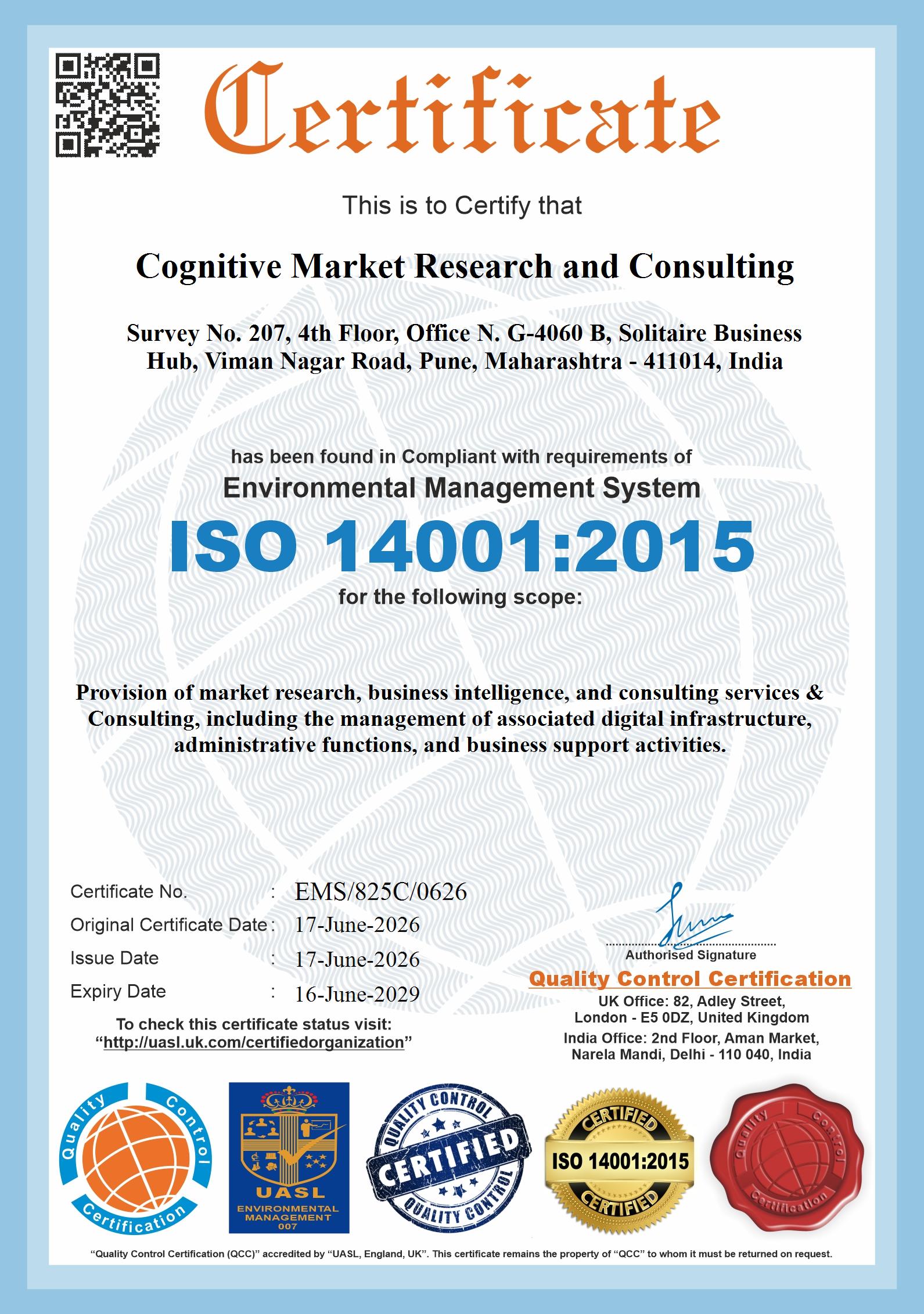
What these certifications mean to usA market figure is only as reliable as the system that produced it. That is why our accreditations cover the whole chain, not just the research step. ESOMAR and MRSI membership binds us to the professional codes that govern how respondents are recruited and how findings may be represented. ISO 20252 governs the research process itself; ISO 9001 and our quality control certification govern how consistently we repeat it. ISO 27001 and ISO 27701, alongside our GDPR, CCPA and DPDP compliance, govern what happens to your brief and your data once it reaches us; because a confidential scope is often more sensitive than the deliverable. ISO 14001, our D-U-N-S registration, Chamber of Commerce membership and DMCA protection speak to how the company itself is run and how its work is safeguarded.Our Clutch and Trustpilot profiles are deliberately listed next to them. They are the only signals on this page we do not issue ourselves, and they are the ones we would check first if we were you.
CMR has worked professionally at all times, enabling clear presentation of the results to identify key trends and areas for growth and improvement of the I…
The global TB detection market is projected to grow robustly at a 5.62% CAGR, driven by the persistent global disease burden and a universal push towards early, accurate diagnosis.
The Asia Pacific region, holding the largest market share, will also exhibit the fastest growth (6.269% CAGR), underscoring its critical role as both a high-need and high-opportunity market.
A definitive technological shift is underway, with molecular diagnostics (NAATs) becoming the new standard, displacing traditional methods and enabling simultaneous detection of drug resistance.
Despite technological progress, significant restraints like high costs and inadequate infrastructure in low-income regions highlight the urgent need for affordable, accessible point-of-care solutions to achieve global TB elimination goals.