We value your privacy
We use cookies to improve your experience and analyze traffic. By continuing, you consent to our use of cookies under GDPR, CCPA and other applicable laws. Privacy Policy
Cookie preferences
Choose which categories of cookies you allow. Strictly necessary cookies are always on.
Strictly necessary
Required for core site functionality, security and your session. Always active.
Analytics
Help us understand how visitors use the site (e.g. Google Analytics) so we can improve it.
Marketing
Used to measure campaigns and show you relevant ads on other sites (e.g. LinkedIn, Google Ads).
Smart Device Market Analysis size 2021 was recorded $32592 Million whereas by the end of 2026 it will reach $66400 Million. According to the author, by 2033 Smart Device market size will become $179911 Million. Smart Device market will be growing at a CAGR of 15.3% during 2026 to 2033. Download a free sample with data verified by Kalyani Raje
Smart Device Market Analysis from 2022 to 2034 Containing Market Size, Share along with its CAGR, Forecast and Trends
Top Countries — Revenue
Billion
Access the full forecast model.
Country-level data · Company profiles · Editable dataset · Analyst consultation included.
Smart Device Market Analysis — Presence
Geographical Analysis
Click countries to explore
Loading map…
Regional and Country Analysis
Global Smart Device Market Analysis 2026
Country-level values are locked in this preview.
Request a free sample
to unlock the full breakdown.
Region / Country
2021 (A)
2025 (A)
2033 (P)
CAGR
Global
$ 32.59 Billion
$ 57.6 Billion
$ 179.91 Billion
15.3%
North America
$ 13.72 Billion
$ 23.73 Billion
$ 71.6 Billion
14.803%
United States
$ 9.47 Billion
$ 16.14 Billion
$ 47.19 Billion
14.354%
Canada
$ 3.21 Billion
$ 5.67 Billion
$ 17.76 Billion
15.335%
Mexico
$ 1.04 Billion
$ 1.92 Billion
$ 6.66 Billion
16.803%
Europe
$ 6.13 Billion
$ 10.6 Billion
$ 31.84 Billion
14.742%
United Kingdom
$ 1.23 Billion
$ 2.08 Billion
$ 6.02 Billion
14.222%
France
$ 0.92 Billion
$ 1.56 Billion
$ 4.49 Billion
14.146%
Germany
$ 1.13 Billion
$ 1.92 Billion
$ 5.57 Billion
14.26%
Italy
$ 0.68 Billion
$ 1.18 Billion
$ 3.5 Billion
14.613%
Russia
$ 0.26 Billion
$ 0.46 Billion
$ 1.45 Billion
15.556%
Spain
$ 0.52 Billion
$ 0.94 Billion
$ 3.15 Billion
16.28%
Sweden
$ 0.34 Billion
$ 0.58 Billion
$ 1.66 Billion
13.941%
Denmark
$ 0.25 Billion
$ 0.45 Billion
$ 1.43 Billion
15.736%
Switzerland
$ 0.37 Billion
$ 0.64 Billion
$ 1.85 Billion
14.257%
Luxembourg
$ 0.09 Billion
$ 0.15 Billion
$ 0.35 Billion
11.335%
Rest of Europe
$ 0.34 Billion
$ 0.66 Billion
$ 2.37 Billion
17.407%
Asia Pacific
$ 9 Billion
$ 16.47 Billion
$ 55.05 Billion
16.278%
China
$ 3.35 Billion
$ 6.34 Billion
$ 22.35 Billion
17.053%
Japan
$ 1.91 Billion
$ 3.28 Billion
$ 9.69 Billion
14.507%
South Korea
$ 1.13 Billion
$ 2.06 Billion
$ 6.77 Billion
16.044%
India
$ 1 Billion
$ 1.94 Billion
$ 7.38 Billion
18.141%
Australia
$ 0.42 Billion
$ 0.74 Billion
$ 2.2 Billion
14.579%
Singapore
$ 0.26 Billion
$ 0.45 Billion
$ 1.21 Billion
13.339%
Taiwan
$ 0.29 Billion
$ 0.49 Billion
$ 1.54 Billion
15.28%
South East Asia
$ 0.42 Billion
$ 0.76 Billion
$ 2.42 Billion
15.634%
Rest of APAC
xxxx
xxxx
xxxx
xxxx
South America
$ 1.66 Billion
$ 3 Billion
$ 9.54 Billion
15.575%
Brazil
$ 0.74 Billion
$ 1.33 Billion
$ 4.18 Billion
15.346%
Argentina
$ 0.3 Billion
$ 0.53 Billion
$ 1.63 Billion
15.078%
Colombia
$ 0.14 Billion
$ 0.27 Billion
$ 0.95 Billion
17.271%
Peru
$ 0.1 Billion
$ 0.18 Billion
$ 0.62 Billion
16.737%
Chile
$ 0.18 Billion
$ 0.33 Billion
$ 1.09 Billion
15.961%
Rest of South America
$ 0.2 Billion
$ 0.35 Billion
$ 1.07 Billion
14.823%
Middle East
$ 1.24 Billion
$ 2.25 Billion
$ 7.38 Billion
16.023%
Saudi Arabia
$ 0.49 Billion
$ 0.91 Billion
$ 3.14 Billion
16.723%
Turkey
$ 0.25 Billion
$ 0.46 Billion
$ 1.47 Billion
15.735%
UAE
$ 0.2 Billion
$ 0.37 Billion
$ 1.22 Billion
16.111%
Egypt
$ 0.13 Billion
$ 0.24 Billion
$ 0.76 Billion
15.607%
Qatar
$ 0.07 Billion
$ 0.11 Billion
$ 0.32 Billion
13.856%
Rest of Middle East
$ 0.09 Billion
$ 0.16 Billion
$ 0.47 Billion
14.505%
Africa
$ 0.85 Billion
$ 1.56 Billion
$ 4.5 Billion
14.196%
East Africa
xxxx
xxxx
xxxx
xxxx
West Africa
xxxx
xxxx
xxxx
xxxx
North Africa
xxxx
xxxx
xxxx
xxxx
South Africa
$ 0.31 Billion
$ 0.55 Billion
$ 1.49 Billion
13.324%
The global smart device market is undergoing a significant transformation, moving from standalone gadgets to a deeply interconnected ecosystem of devices that manage our homes, health, and daily routines. This dynamic shift is underpinned by powerful technological advancements and evolving consumer expectations for seamless connectivity. The market's robust double-digit growth reflects a worldwide trend towards digitalization and automation in both personal and professional spheres.
Global Smart Device Market Drivers
Increasing Internet Penetration and 5G Rollout: The expanding global access to high-speed internet and the deployment of 5G networks provide the low-latency, high-bandwidth connectivity essential for the real-time operation and communication of smart devices, enhancing their performance and utility.
Rising Consumer Demand for Convenience and Automation: Modern lifestyles are driving the adoption of smart devices that offer convenience, energy efficiency, and remote control over home appliances, security systems, and entertainment, simplifying daily tasks.
Advancements in AI and IoT Technology: The integration of Artificial Intelligence (AI), machine learning, and the Internet of Things (IoT) is making devices smarter and more intuitive. This enables features like predictive maintenance, personalized user experiences, and voice-activated control, which are major purchasing drivers.
Global Smart Device Market Trends
Focus on Creating Integrated Ecosystems: Manufacturers are shifting from selling individual products to building comprehensive ecosystems (e.g., smart home, connected health) where devices work together seamlessly, increasing customer loyalty and the value proposition.
Emphasis on Sustainability and Energy Efficiency: There is a growing consumer and regulatory demand for energy-efficient smart devices. Features like smart thermostats and lighting that optimize energy consumption are becoming key selling points, aligning with global sustainability goals.
Integration of Health and Wellness Monitoring: Wearables and other smart devices are increasingly incorporating sophisticated sensors for health and wellness tracking. This trend has accelerated as consumers become more health-conscious, driving demand for devices that monitor everything from heart rate to sleep patterns.
Global Smart Device Market Restraints
Significant Data Privacy and Security Concerns: The constant collection of personal data by smart devices raises major concerns about privacy and vulnerability to cyberattacks. High-profile data breaches can erode consumer trust and lead to stricter regulations, hindering market growth.
Lack of Interoperability and Standardization: Many smart devices operate on proprietary platforms, leading to a fragmented market where devices from different manufacturers cannot communicate with each other. This lack of a universal standard frustrates consumers and complicates the creation of a truly integrated smart home.
High Initial Cost and Perceived Complexity: The premium price of many smart devices can be a significant barrier to entry for a large segment of consumers. Additionally, the perceived complexity of setting up and managing a network of smart devices can deter less tech-savvy individuals.
Country-Specific Insight: North America, which holds approximately 41.2% of the global market in 2025, is dominated by the United States, projected to account for 28.01% of the total global market share in 2025. Canada and Mexico follow, holding a global share of 9.85% and 3.34% respectively, both demonstrating very strong growth potential and increasing adoption rates.
Regional Dynamics:
Key Drivers
High consumer disposable income and tech-savviness.
Widespread availability of high-speed internet and robust Wi-Fi infrastructure.
Strong presence of major technology companies and a culture of early adoption.
Key Trends
Deep integration of smart home hubs and voice assistants (e.g., Alexa, Google Assistant).
Growing demand for smart security systems, including video doorbells and connected cameras.
Increasing adoption of smart appliances for energy management and convenience.
Key Restraints
Market saturation in certain product categories like smart speakers.
Heightened consumer concerns regarding data privacy and surveillance.
Replacement cycles for durable goods slowing down new purchases.
Technology Focus
The primary technology focus in North America is on AI-powered software and services that create a more unified and intelligent user experience within the smart home ecosystem. Emphasis is placed on ambient computing, where technology seamlessly integrates into the user's environment.
Country-Specific Insight: Europe accounts for roughly 18.4% of the global market. The United Kingdom (3.61% of global market in 2025) and Germany (3.33% of global market in 2025) are the leading markets, followed closely by France. Strong growth is also observed in Spain and the Nordic countries, driven by strong economies and high internet penetration.
Regional Dynamics:
Key Drivers
Strong government regulations and incentives promoting energy efficiency (e.g., smart meters).
High consumer awareness regarding environmental sustainability.
Robust data protection laws like GDPR, which are fostering consumer trust in secure devices.
Key Trends
Significant demand for smart energy management devices, such as smart thermostats and plugs.
Adoption of smart devices related to health and assisted living for an aging population.
Integration of smart technology in automotive and transportation sectors.
Key Restraints
Complex regulatory landscape (GDPR) can increase development costs and complexity for manufacturers.
Market fragmentation with diverse consumer preferences and languages across countries.
Economic uncertainties in some parts of the region affecting consumer spending on non-essential goods.
Technology Focus
The technology focus in Europe is heavily skewed towards developing secure, privacy-compliant devices. There is a strong emphasis on AI and data processing that adheres to GDPR principles, alongside a drive for energy-efficient hardware and software solutions.
Country-Specific Insight: As the fastest-growing region, APAC represents about 28.6% of the global market. China is the dominant force, holding an estimated 11.01% of the global market in 2025. India is the fastest-growing major market with a projected 3.38% global share, while developed markets like Japan (5.69%) and South Korea (global share of 3.58%) are key innovation hubs.
Regional Dynamics:
Key Drivers
Rapid urbanization and a massive, growing middle class with increasing disposable income.
Extensive government investment in 5G and smart city infrastructure.
A mobile-first consumer base that readily adopts new connected technologies.
Key Trends
High adoption of smart wearables and mobile-centric smart devices.
Proliferation of region-specific apps and ecosystems from local tech giants.
Strong demand for smart air purifiers and water purifiers due to environmental concerns.
Key Restraints
Significant price sensitivity among a large portion of the consumer base.
A highly fragmented market with numerous local and international players.
Inconsistent internet infrastructure and connectivity in rural areas.
Technology Focus
The technology focus in APAC is centered on 5G-enabled IoT and mobile-first integration. There is also a strong emphasis on cost-effective manufacturing and developing AI solutions tailored to local languages and cultural contexts.
Country-Specific Insight: Representing around 5.2% of the global market, South America is a promising growth frontier. Brazil is the largest market, accounting for an estimated 2.31% of the global share in 2025. Countries like Colombia and Peru are exhibiting some of the highest growth rates in the region, driven by expanding digital literacy.
Regional Dynamics:
Key Drivers
Increasing smartphone penetration and access to mobile internet.
A growing young, tech-curious population.
Rising demand for smart security devices due to safety concerns.
Key Trends
Adoption of affordable smart devices, particularly from Chinese brands.
Growth in smart entertainment devices like smart TVs and streaming sticks.
Emerging interest in smart speakers with Portuguese and Spanish language support.
Key Restraints
Economic instability and currency fluctuations affecting purchasing power.
High import tariffs and taxes on electronic goods.
Logistical and infrastructural challenges outside major urban centers.
Technology Focus
The technology focus is on providing cost-effective and accessible smart solutions. Emphasis is placed on devices that offer clear value in security and entertainment, which are the primary entry points for consumers in the region.
Country-Specific Insight: The Middle East, with about 3.9% of the global market, is characterized by high-spending consumers in the GCC countries. Saudi Arabia (1.58% global share in 2025) and the UAE (global share of 0.64%) lead the market, fueled by ambitious smart city projects and high disposable incomes.
Regional Dynamics:
Key Drivers
Government-led initiatives and massive investments in smart cities (e.g., NEOM, Dubai Smart City).
High disposable income and a strong appetite for premium and luxury technology.
A large, youthful, and highly connected population.
Key Trends
Strong demand for high-end, fully integrated smart home automation systems.
Adoption of smart devices for luxury retail and hospitality sectors.
Growing interest in connected cars and smart mobility solutions.
Key Restraints
Geopolitical instability in parts of the region can impact market confidence.
A reliance on expatriate populations, which can lead to transient demand.
Extreme climate conditions requiring more robust and durable hardware.
Technology Focus
Technology in the Middle East is focused on large-scale, integrated infrastructure for smart buildings and cities. There is a strong emphasis on premium, high-performance devices and AI-driven services for luxury and convenience applications.
Country-Specific Insight: Africa is a nascent market with significant long-term potential, accounting for about 2.7% of the global share in 2025. South Africa (0.95% global share) and Nigeria are the two primary markets, driven by an expanding urban population and increasing mobile connectivity. The market is in its early stages of adoption.
Regional Dynamics:
Key Drivers
Rapidly expanding mobile network coverage across the continent.
A youthful demographic that is leapfrogging traditional technologies.
Increasing investment in tech hubs and digital infrastructure.
Key Trends
Dominance of mobile-centric smart devices as the primary connected hub.
Demand for smart solutions related to energy, particularly off-grid solar power management.
Growth in affordable smart feature phones and entry-level smartphones.
Key Restraints
Low average disposable income and high price sensitivity.
Unreliable power grids and internet connectivity in many areas.
Challenges in distribution and after-sales service infrastructure.
Technology Focus
The technology focus in Africa is on developing durable, low-cost, and energy-efficient devices. Solutions that can operate effectively in off-grid or unstable power environments, often with a mobile-first interface, are critical for market success.
A = Actual · E = Estimated · P = Projected · 🔒 Locked values require full access. Click headers to sort.
Disclaimer: The charts and graphs are for illustrative purposes only and do not represent actual market values. To access accurate quantitative data, please request a paid report or request free sample.
To learn more about market share and segmentation, request the free sample pages.
Competitor Analysis
Competitive Intelligence & Strategic Benchmarking
Master the competitive dynamics of the Electronics and Electrical Market market with our in-depth intelligence report. We provide a 360-degree view of the competitive landscape, empowering you to identify threats, capitalize on competitor weaknesses, and refine your market positioning strategy on both a global and regional scale.
Our strategic benchmarking section dissects the performance of key market players. This includes:
Multi-Year Financial Analysis: A four-year review of financial health and revenue streams.
Market Share Evolution: Tracking the positioning and influence of top manufacturers.
Product Portfolio Assessment: A granular look at product offerings, innovations, and gaps.
SWOT Analysis: Revealing the core strengths, weaknesses, opportunities, and threats for each major competitor.
Beyond static data, we decode competitor strategy by chronicling pivotal movements such as M&A activities, joint ventures, technological alliances, and recent product innovations. We also analyze how industry leaders have navigated market volatility, providing a playbook for building resilience against global disruptions.
Unlock this complete competitive playbook to gain a decisive market advantage. To explore the specific insights relevant to your business, connect with our expert analysts for a personalized consultation today.
Click any bar or cell to request the full company profile
Top Companies (In no particular order)
2022 (A)
2023 (A)
2024 (A)
2025 (A)
Xiaomi Inc.
•••
•••
•••
•••
LG Electronics
•••
•••
•••
•••
Panosonic
•••
•••
•••
•••
Samsung Electronics Co.
•••
•••
•••
•••
Ltd.
•••
•••
•••
•••
Electrolux AB
•••
•••
•••
•••
Koninklijke Philips NV (Philips)
•••
•••
•••
•••
BSH Hausgerate GmbH
•••
•••
•••
•••
Haier Smart Home Co.
•••
•••
•••
•••
LTD
•••
•••
•••
•••
Miele & Cie. KG
•••
•••
•••
•••
Whirlpool
•••
•••
•••
•••
We Provide Regional Breakdown of this Companies and Company specific to any Country, Region, Product/ service as well. We cover market share analysis for publicly listed companies as well as privately held companies, subject to data availability.
The global smart device market is experiencing a period of explosive growth, projected to expand from $32.592 billion in 2021 to $179.911 billion by 2033, driven by a robust CAGR of 15.3%. This expansion is fueled by the increasing consumer demand for connected, convenient, and automated lifestyles. The proliferation of high-speed internet, particularly the rollout of 5G, and advancements in Artificial Intelligence (AI) and the Internet of Things (IoT) are fundamental pillars supporting this trajectory. While North America currently holds the largest market share, the Asia Pacific region is emerging as the fastest-growing market, presenting immense opportunities. Key challenges that require strategic attention across the industry include ensuring data privacy, improving device interoperability, and addressing the high initial cost of premium devices. The market's future will be shaped by the ability of manufacturers to innovate and deliver secure, integrated, and user-friendly solutions.
Key strategic insights from our comprehensive analysis reveal:
The Asia Pacific region is set to become a powerhouse in the smart device market, demonstrating the highest regional CAGR of 16.278%, driven by rapid urbanization, a burgeoning middle class, and massive investments in 5G infrastructure.
North America maintains its market leadership in terms of revenue, but manufacturers must innovate beyond current offerings to counter potential market saturation and maintain growth momentum in a mature market.
Interoperability and data security are no longer optional features but critical success factors. Consumers are demanding seamless integration across different brands and robust protection against data breaches, making these areas key strategic priorities.
Strategic Recommendations for Manufacturers
To capitalize on the market's growth, manufacturers should prioritize several key strategies. Firstly, invest heavily in creating open and interoperable ecosystems by adopting universal standards like Matter to ensure seamless connectivity between devices, regardless of the brand. Secondly, make data security a core design principle, employing end-to-end encryption and offering transparent data policies to build consumer trust. Thirdly, develop tiered product lines that include affordable, entry-level devices to penetrate price-sensitive emerging markets. Finally, focus on user-centric design to simplify the setup and management process, making smart technology accessible and appealing to a broader audience.
Key Market Drivers & Growth Catalysts
The trajectory of the Electronics and Electrical Market market is shaped by a confluence of powerful global and regional drivers. Our analysis dissects the primary macroeconomic, technological, and consumer-led factors that are fueling market expansion. We examine how specific dynamics in key regions like North America, Europe, and Asia-Pacific contribute to the global growth narrative, providing stakeholders with a forward-looking perspective on market acceleration and investment opportunities.
Market Restraints & Strategic Challenges
Successfully navigating the Electronics and Electrical Market market requires a clear understanding of potential headwinds and competitive pressures. This section scrutinizes significant challenges, from stringent international regulatory frameworks and geopolitical supply chain volatility to the rapid evolution of consumer expectations. We provide critical insights into these restraining factors, including the long-term impact of global disruptions, enabling companies to formulate robust strategies that mitigate risk and ensure sustainable growth.
Growth Opportunities & Untapped Potential
The dynamic Electronics and Electrical Market landscape presents a wealth of strategic growth opportunities for forward-thinking organizations. We identify and evaluate emerging avenues, including white-space market segments, disruptive technological innovations, and strategic entry points into high-growth developing economies. This analysis serves as a comprehensive roadmap for stakeholders looking to capitalize on the next wave of industry growth and secure a competitive edge.
Current & Emerging Market Trends
The Electronics and Electrical Market industry is in constant evolution, driven by disruptive technologies and shifting end-user behaviors. Our trends analysis offers a deep dive into the pivotal movements shaping the industry's competitive landscape. Understanding these paradigm shifts is essential for product innovation, strategic investment, and maintaining market relevance. Gain unparalleled access to these actionable insights by exploring the data-rich analysis within our complete market intelligence report.
Analyst Conclusion
As per Cognitive's Research Analyst, Smart Device are integral components within the broader Internet of Things and connected technology landscape. They play an essential role in managing homes, health, and daily routines, facilitating digitalization and automation across personal and professional environments.
Looking at the Historical Growth The global market expanded from $32592 million in 2021 to an estimated $66400 million in 2026 due to growing consumer desire for enhanced convenience and automated living, alongside the foundational expansion of online access and initial progress in intelligent device functionalities. Regionally, North America grew from $13721 million in 2021 to $27250 million in 2026, while Asia Pacific progressed from $8995 million to $19160 million over the same period.
Currently in 2026, North America holds a commanding 41.04% of the global market, driven by high consumer purchasing power, well-developed digital infrastructure, and a robust culture of rapid technology adoption. Smart home applications remains the primary consumer of Smart Device. Additionally Asia Pacific is set to be the fastest-growing region, exhibiting the highest CAGR of 16.278%, fueled by swift urbanization, a burgeoning middle class, and significant government investments in advanced network deployment.
The market is witnessing a definitive shift towards developing integrated device ecosystems, driven by the industry's concerted effort to create comprehensive, seamlessly connected smart solutions. Ongoing innovation in artificial intelligence and advanced sensor technology is also leading, focusing on optimizing user interaction, safeguarding data integrity, and achieving universal device compatibility.
In the future, The global Smart Device market will reach to $179911 million by 2033, expanding at a compound annual growth rate of 15.3% from 2021, primarily driven by the ongoing evolution of AI and machine learning capabilities, coupled with the global proliferation of high-performance broadband, and the considerable growth opportunities in emerging economies. Ongoing innovation in achieving seamless interoperability and the strong trend towards strengthening digital security protocols will also contribute significantly.
Senior Research Analyst at Cognitive Market Research
Kalyani Raje is a distinguished research leader and the Co-Founder & Chief Research Officer at Cognitive Market Research and Consulting, a global market research and consulting firm specializing in data-driven intelligence and strategic business insights. With over a decade of experience in market research, competitive intelligence, and analytical consulting, she has played a pivotal role in helping organizations understand evolving market landscapes and make informed strategic decisions across industries including FMCG, IT, Telecom, Automotive, Electronics, Healthcare, and Consumer Goods.
As a research professional, Kalyani is recognized for her expertise in developing rigorous research methodologies, interpreting complex market data, and transforming insights into actionable business strategies. Her analytical approach, combined with a strong understanding of global industry trends and consumer behavior, has enabled enterprises, manufacturers, investors, and business leaders to navigate competitive environments with greater confidence and clarity.
Kalyani is an active member of ESOMAR and the Market Research Society of India (MRSI), reflecting her commitment to maintaining ethical, transparent, and internationally recognized research standards. She strongly advocates adherence to the ICC/ESOMAR International Code on Market and Social Research, reinforcing her dedication to research integrity, data quality, and responsible business practices within the global insights industry.
In 2026, Kalyani was invited as a Speaker at ESOMAR Africa 2026, where she shared her expertise on Africa’s Youthquake: Decoding the Continent’s Largest Generation and Its Transformative Impact. Her participation highlighted her thought leadership in understanding demographic shifts, emerging markets, and the evolving role of data and analytics in shaping future business opportunities.
Throughout her professional journey, Kalyani has been instrumental in driving research excellence, mentoring analytical teams, and building scalable research frameworks that deliver high-value intelligence to global clients. Her passion for innovation, strategic thinking, and evidence-based decision-making continues to strengthen Cognitive Market Research’s position as a trusted global insights partner for businesses worldwide.
Smart Device Market Analysis market size and growth rate is provided in the report covering 2021-2025 historical and 2025-2033 forecast data.
Major factors including drivers, restraints, opportunities and challenges are analyzed with detailed insights.
Top manufacturers Xiaomi Inc., LG Electronics, Panosonic, Samsung Electronics Co., Ltd., Electrolux AB, Koninklijke Philips NV (Philips), BSH Hausgerate GmbH, Haier Smart Home Co., LTD, Miele & Cie. KG, Whirlpool and others are profiled in the report.
Segments include Product, Technology and additional sub-segments.
Regional analysis covers all major markets. The report identifies the dominant region and provides country-level data.
Sample pages can be obtained on demand from the website. 24/7 chat support and direct call services are available.
★ Reviews
Rate this report
Smart Device Market Analysis — Table of Contents
Disclaimer:
This is just a redacted sample pages of the actual deliverable report and only for representative purposes
Charts/Graphs/Numbers/data are only for Representative purposes and do not depict actual statistics.
The table of Contents differs according to the user License selection. Current Displayed TOC is for the Corporate User License Report Edition. TOC Customization options: Add or Remove section/s Or chapter/s from the report.
Specific Tables, Graphs, Sections, and Chapters can be ordered at a discounted price.
If applicable; On Request Volume Data will also be provided (at an Additional Cost).
12.14.2 AI-Driven Transformation of Industry Value Chain
12.14.3 Evolution of Business Models & Revenue Streams
12.14.4 AI-Driven Product, Service & Innovation Transformation
12.14.5 Customer Behavior, AI Adoption & Future Market Evolution
Chapter 13. TOP 10 Country Analysis
13.1 Country 1
13.2 Country 2
13.3 Country 3
13.4 Country 4
13.5 Country 5
13.6 Country 6
13.7 Country 7
13.8 Country 8
13.9 Country 9
13.10 Country 10
Chapter 14. Research Findings
14.1 Key Takeaways
14.2 Analyst Point of View
14.3 Assumptions and Acronyms
Chapter 15. Research Methodology and Sources
15.1 Primary Data Collection
15.1.1 Steps for Primary Data Collection
15.1.1.1 Identification of KOL
15.1.2 Backward Integration
15.1.3 Forward Integration
15.1.4 How Primary Research Help Us
15.1.5 Modes of Primary Research
15.2 Secondary Research
15.2.1 How Secondary Research Help Us
15.2.2 Sources of Secondary Research
15.3 Data Validation
15.3.1 Data Triangulation
15.4 Data Representation
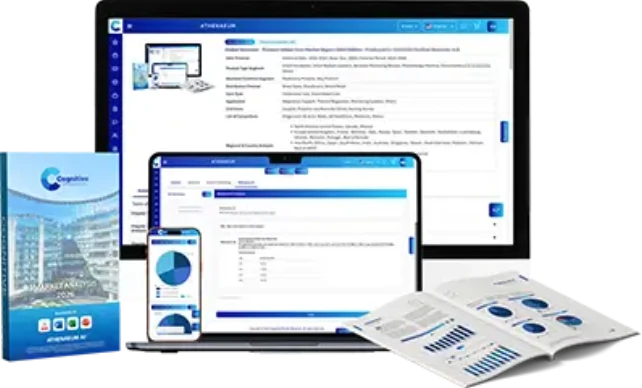
Athenaeum AI Dashboard
Research Framework · 70:30 Primary:Secondary
Our Proprietary Methodology
Cognitive Market Research and Consulting "The Full Truth" methodology — a rigorous triangulation process that combines primary research, secondary validation, and expert calibration. Implemented by Kalyani Raje and team for the Smart Device Market Analysis Market analysis.
01
Primary Intelligence Gathering
Direct interviews with 50+ industry stakeholders including manufacturers, distributors, end-users, and regulatory bodies across all six regions.
02
Secondary Data Triangulation
Cross-referencing against trade databases, customs records, financial filings, patent databases, and verified industry publications.
03
Expert Validation Protocol
Each data point undergoes validation by minimum two independent domain experts with 15+ years of industry experience.
04
Athenaeum AI Processing
Our proprietary AI platform aggregates, normalizes, and identifies patterns across 10,000+ data points to surface non-obvious insights.
05
Editorial & QA Review
Final review by senior analysts ensures accuracy, coherence, and actionability of all insights and recommendations.
To maintain the integrity of our proprietary methodology and protect our elite expert network, specific source disclosures are reserved for full-access partners. Our research framework is anchored by a 70:30 primary-to-secondary ratio, ensuring your strategy is driven by real-time market intelligence rather than recycled, publicly available, or AI-generated data. Every deliverable includes an exhaustive source directory and grants direct analyst access.
Latest News about Smart Device Market
24 Apr 2024reuters.com
China's Huawei launches new brand for intelligent driving
The launch of a new brand for intelligent driving by Chinese tech giant Huawei Jin Yuzhi, CEO of Huawei's Intelligent Automotive Solution (IAS) business unit, stated at a pre-auto show event that the new brand Qiankun aims to empower intelligence in the driving chassis, audio system, and driver's seat while providing the best possible user experience."2024 will be the first year for mass commercialization of smart driving and the cumulative number of cars on road equipped with the Huawei self-driving system will top 500,000 by the year-end," Jin added.
The Three Pillars of End-to-End Market Research Services
We don't just hand over data. We partner with your team across three integrated service lines — each designed to give you decision-grade intelligence on the Smart Device Market Analysis market.
Service 01
Market Survey
B2BB2C
Structured primary research across both B2B and B2C channels. We design and execute custom surveys targeting manufacturers, distributors, procurement heads, and end-consumers in the smart device market analysis ecosystem — validated by our global panel of 10,000+ industrial respondents.
What's Included
Buyer intent & sentiment analysis
Purchase cycle mapping
Price sensitivity research
Channel preference profiling
Competitive perception study
Most Requested
Service 02
Customized Market Data & Reports
CustomReady Report
Choose from our ready-to-access 8th Edition report or commission a fully customized dataset tailored to your exact strategic questions. Cross-splits, custom geographies, proprietary segmentation — we build the intelligence asset your board actually needs.
What's Included
Ready syndicate report
Custom data scope & segmentation
Excel quantitative models
Board-ready PPT with key findings
Secure cloud portal access
Service 03
Strategic Consultation
With SurveyWith Report
Every survey and every report comes with dedicated analyst consultation. Our senior research team walks your leadership through findings, answers strategic questions in real-time, and helps translate data into your next board presentation or investment thesis.
Tell us the specific segments, regions, or companies you need — and we will tailor the deliverable to your requirements.
Why Trust Us
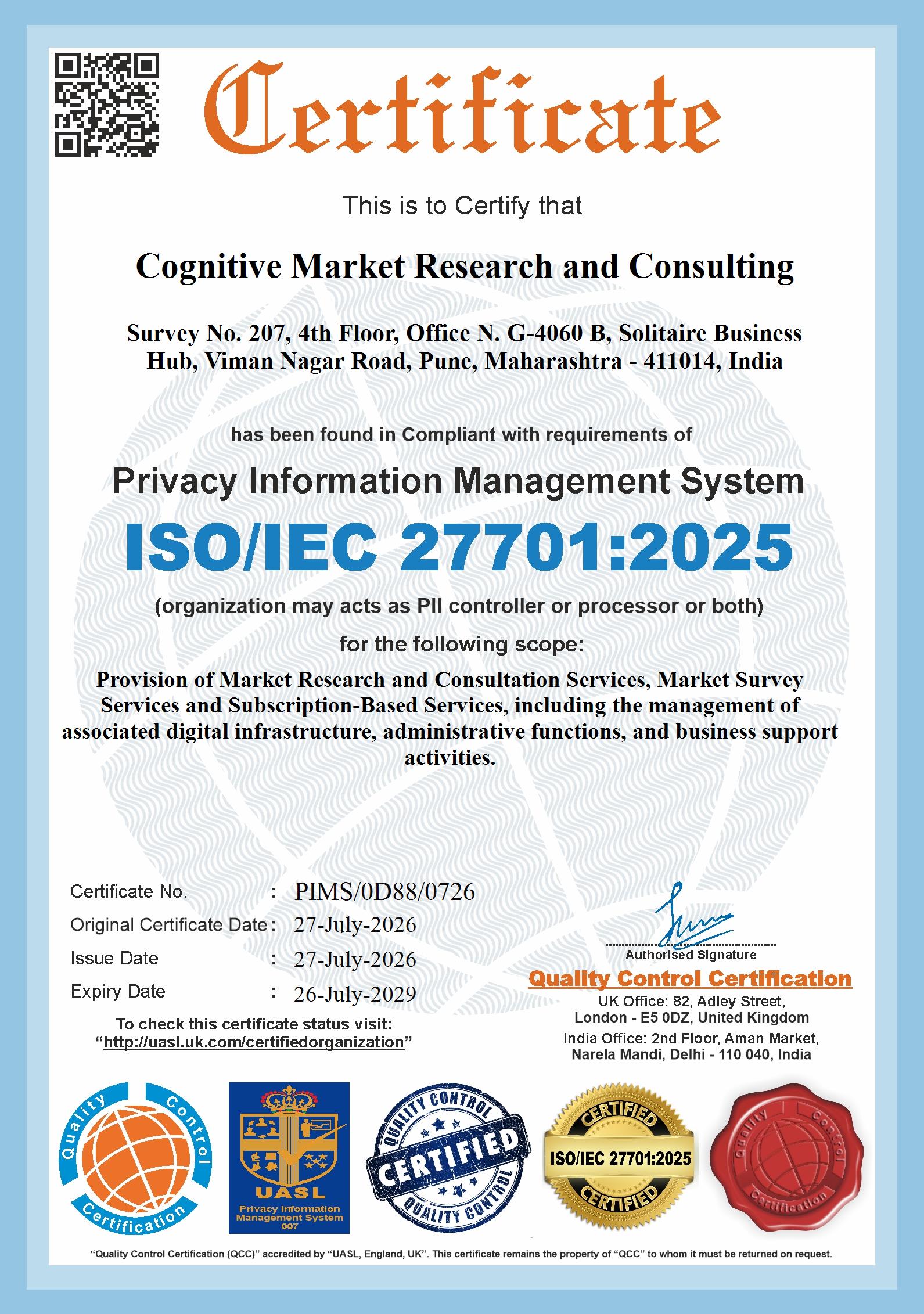
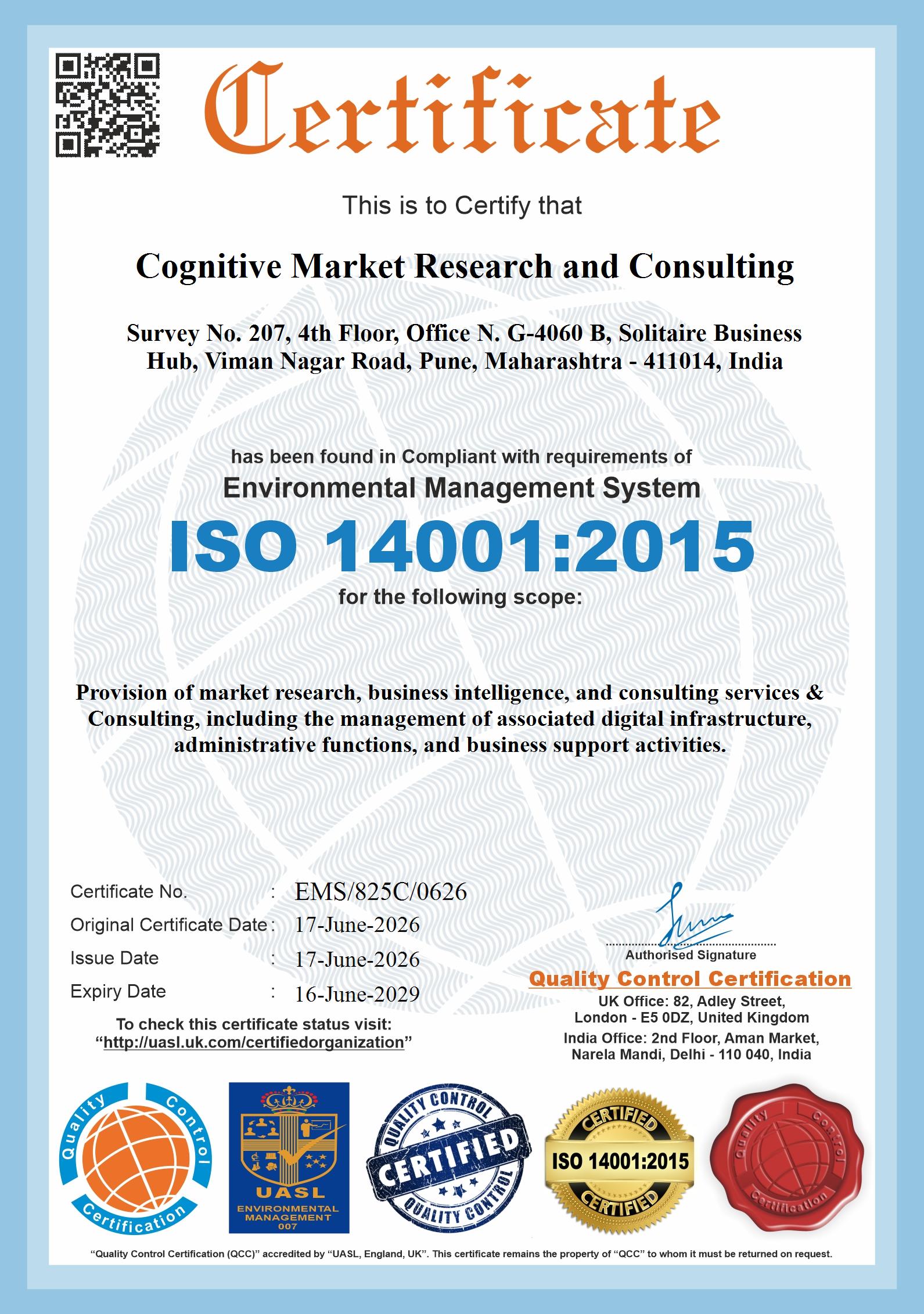
What these certifications mean to usA market figure is only as reliable as the system that produced it. That is why our accreditations cover the whole chain, not just the research step. ESOMAR and MRSI membership binds us to the professional codes that govern how respondents are recruited and how findings may be represented. ISO 20252 governs the research process itself; ISO 9001 and our quality control certification govern how consistently we repeat it. ISO 27001 and ISO 27701, alongside our GDPR, CCPA and DPDP compliance, govern what happens to your brief and your data once it reaches us; because a confidential scope is often more sensitive than the deliverable. ISO 14001, our D-U-N-S registration, Chamber of Commerce membership and DMCA protection speak to how the company itself is run and how its work is safeguarded.Our Clutch and Trustpilot profiles are deliberately listed next to them. They are the only signals on this page we do not issue ourselves, and they are the ones we would check first if we were you.
I would like to appreciate your efforts ni this complete sales cycle. You have been very helpful in giving al the possible details, transparent, getting yo…
The global smart device market is poised for exceptional growth, with a projected CAGR of 15.3% from 2021 to 2033, creating a nearly $180 billion industry.
While North America currently leads in market value, the Asia-Pacific region is the engine of future growth, boasting the highest regional CAGR and driven by powerhouses like China and India.
Success for manufacturers hinges on addressing the core challenges of interoperability and data security; adopting universal standards and prioritizing user privacy are no longer optional but essential for consumer trust.
Emerging markets in South America, the Middle East, and Africa, though smaller, offer significant untapped potential with high growth rates, requiring strategies focused on affordability, durability, and localized value propositions.