South America Polyacrylamide Market Analysis from 2022 to 2034 Containing Market Size, Share along with its CAGR, Forecast and Trends
Top Countries — Revenue
Access the full forecast model.
Country-level data · Company profiles · Editable dataset · Analyst consultation included.
South America Polyacrylamide Market Analysis — Presence
Geographical Analysis
Click countries to exploreCountry Analysis
South America Polyacrylamide Market Analysis 2026
| Region / Country | 2021 (A) | 2025 (A) | 2033 (P) | CAGR |
|---|---|---|---|---|
| South America Polyacrylamide Total | xxxx | xxxx | xxxx | 6.4% |
| Brazil | xxxx | xxxx | xxxx | 7% |
| Argentina | xxxx | xxxx | xxxx | 7.3% |
| Colombia | xxxx | xxxx | xxxx | 6.2% |
| Peru | xxxx | xxxx | xxxx | 6.6% |
| Chile | xxxx | xxxx | xxxx | 6.7% |
| Rest of South America | xxxx | xxxx | xxxx | 5.5% |
A = Actual · E = Estimated · P = Projected · 🔒 Locked values require full access. Click headers to sort.
Unlock full regional dataset →Segmentation Analysis
Product Type breakdown · Illustrative 2025 shares shown free · Full-period forecast in paid report.
Disclaimer: The charts and graphs are for illustrative purposes only and do not represent actual market values. To access accurate quantitative data, please request a paid report or request free sample.
To learn more about market share and segmentation, request the free sample pages.
Competitor Analysis
Competitive Landscape of the Polyacrylamide Market
The polyacrylamide industry is highly competitive due to the existence of multiple major competitors, which span from specialist regional manufacturers to huge international organizations. These businesses compete with one another based on things like product quality, pricing, technical innovation, and geographic reach.
June 2023: American polymer maker Avient collaborated with German chemical giant BASF to launch colorful versions of Ultrason high-performance polymers on the global market. (Source: https://www.basf.com/global/en/media/news-releases/2023/06/p-23-243)
| Top Companies (In no particular order) | 2022 (A) | 2023 (A) | 2024 (A) | 2025 (A) |
|---|---|---|---|---|
| SNF Group | ••• | ••• | ••• | ••• |
| BASF SE | ••• | ••• | ••• | ••• |
| Kemira Oyj | ••• | ••• | ••• | ••• |
| Ashland Inc. | ••• | ••• | ••• | ••• |
| Solenis LLC | ••• | ••• | ••• | ••• |
| Solvay S.A. | ••• | ••• | ••• | ••• |
| Others | ••• | ••• | ••• | ••• |
We Provide Regional Breakdown of this Companies and Company specific to any Country, Region, Product/ service as well. We cover market share analysis for publicly listed companies as well as privately held companies, subject to data availability.
Request company profile for validation →Report Scope & Analysis
According to Cognitive Market Research, the global Polyacrylamide market size was estimated at USD 5864.6 Million, out of which the Latin America market has more than 5% share of the global revenue with a market size of USD 293.23 million in 2024 and will grow at a compound annual growth rate (CAGR) of 6.4% from 2024 to 2031. .
- According to Cognitive Market Research, the Brazil Polyacrylamide market size was valued at USD 125.50 million in 2024 and is projected to grow at a CAGR of 7.0% during the forecast period. Polyacrylamide flourished in Brazil due to the rising water treatment sector.
- Argentina's Polyacrylamide market had a market share of USD 49.26 million in 2024 and is projected to grow at a CAGR of 7.3% during the forecast period. Argentina's technological advancements augment the demand.
- Colombia Polyacrylamide market is projected to witness growth at a CAGR of 6.2% during the forecast period, with a market size of USD 26.10 million in 2024.
- Peru Polyacrylamide market is projected to witness growth at a CAGR of 6.6% during the forecast period, with a market size of USD 24.04 million in 2024.
- Chile Polyacrylamide market is projected to witness growth at a CAGR of 6.7% during the forecast period, with a market size of USD 21.11 million in 2024.
- The Rest of Latin America's Polyacrylamide market is projected to witness growth at a CAGR of 5.5% during the forecast period, with a market size of USD 47.21 million in 2024.
With nations like Brazil, Chile, and Peru leading the world in the production of gold, copper, and other minerals, Latin America is a significant player in the global mining sector. In the mineral processing industry, polyacrylamide is used to improve tailings management, promote solid-liquid separation, and lessen environmental impact. The need for polyacrylamide in the area is driven by the mining industry's large water consumption in ore processing as well as the necessity for water reuse and treatment. PAM aids in processing water clarity and the flocculation of tiny particles.
Analyst Conclusion
Our study will explain complete manufacturing process along with major raw materials required to manufacture end-product. This report helps to make effective decisions determining product position and will assist you to understand opportunities and threats around the globe.
The South America Polyacrylamide Market Analysis is witnessing significant growth in the near future.
In 2023, the Anionic Polyacrylamide (APAM) segment accounted for a notable share of the South America Polyacrylamide Market Analysis.

Chidanand Bilagi is a Senior Research Associate at Cognitive Market Research and Consulting, specializing in the chemical and materials industry. With a strong focus on global chemical markets, advanced materials, specialty chemicals, sustainable materials, and emerging industrial innovations, he delivers in-depth market intelligence and strategic insights to support informed decision-making.
His expertise includes analyzing industry trends, competitive landscapes, supply chain dynamics, regulatory developments, raw material pricing patterns, and technological advancements shaping the future of the chemical and materials sector. Through rigorous research and data-driven analysis, Chidanand contributes to the development of comprehensive market reports, helping businesses, investors, and industry stakeholders identify opportunities and address challenges in an evolving global market landscape.
Frequently Asked Questions
★ Reviews
Rate this report
South America Polyacrylamide Market Analysis — Table of Contents
- This is just a redacted sample pages of the actual deliverable report and only for representative purposes
- Charts/Graphs/Numbers/data are only for Representative purposes and do not depict actual statistics.
- The table of Contents differs according to the user License selection. Current Displayed TOC is for the Corporate User License Report Edition. TOC Customization options: Add or Remove section/s Or chapter/s from the report.
- Specific Tables, Graphs, Sections, and Chapters can be ordered at a discounted price.
- If applicable; On Request Volume Data will also be provided (at an Additional Cost).
Report Scope
| Product Type | Non-ionic Polyacrylamide (NPAM), Anionic Polyacrylamide (APAM), Cationic Polyacrylamide (CPAM), Amphoteric Polyacrylamide, High Molecular Weight Polyacrylamide, Cross-linked Polyacrylamide |
|---|---|
| Form | Powder/granular, Emulsion, Liquid |
| Application | Water treatment, Enhanced oil recovery (EOR), Papermaking, Mining and Mineral Processing, Personal Care, Food Processing, Others |
| End-user Industry | Water Treatment, Oil and Gas, Pulp and Paper, Mining, Others |
| List of Competitors | Anhui Jucheng Fine Chemical Co, Ltd. (CJCC), Ashland Inc., BASF SE, Kemira, SNF Group, Black Rose Industries Ltd., Shandong Polymer Bio-Chemicals Co., Ltd., Xitao Polymer Co., Ltd., ZL EOR Chemicals Ltd., Dongying Kechuang Biochemical Industrial Co., Ltd. |
Polyacrylamide Value Chain & Industry Structure
-
Acrylonitrile and monomer production
-
Polymerization processes (solution, emulsion, gel)
-
Downstream formulation and blending
-
Distribution through chemical suppliers and direct contracts
-
Value addition and margin distribution across the chain
Raw Material & Feedstock Analysis
-
Acrylamide monomer production and sourcing
-
Propylene and ammonia price trends
-
Impact of petrochemical feedstock volatility
-
Regional feedstock availability and cost advantages
-
Supply-demand balance of key raw materials
Manufacturing Process & Technology Assessment
-
Solution polymerization vs emulsion polymerization
-
Powder vs liquid production processes
-
Energy consumption and process efficiency
-
Automation and scale advantages
-
Waste management and by-product handling
Product Performance & Technical Specifications
-
Molecular weight and charge density variations
-
Flocculation efficiency and settling performance
-
Solubility and viscosity characteristics
-
Performance comparison across applications
-
Customization based on end-use requirements
Application-Wise Demand Analysis
-
Municipal and industrial water treatment
-
Oil & gas (EOR, drilling fluids, fracturing)
-
Mining and mineral processing
-
Pulp & paper retention and drainage
-
Agriculture and soil conditioning
Water Treatment Industry Dynamics
-
Growth of municipal wastewater treatment plants
-
Industrial effluent treatment requirements
-
Regulatory pressure on water discharge
-
Role of PAM in sludge dewatering
-
Adoption trends in developing regions
Oil & Gas Sector Impact Analysis
-
Use of PAM in enhanced oil recovery (EOR)
-
Demand linked to crude oil prices
-
Shale gas and hydraulic fracturing applications
-
Offshore vs onshore demand differences
-
Impact of energy transition on demand
Pricing, Cost Structure & Margin Analysis
-
Raw material cost impact on pricing
-
Price variation by product type and grade
-
Regional price differences
-
Contract pricing vs spot market
-
Margin analysis across value chain
Regulatory & Environmental Compliance
-
Environmental regulations on acrylamide toxicity
-
Water treatment standards and compliance
-
Chemical handling and safety regulations
-
Restrictions in food-grade and agricultural applications
-
Regional regulatory differences
Sustainability & Environmental Impact
-
Development of eco-friendly and biodegradable polymers
-
Reduction of residual monomer content
-
Wastewater treatment and emissions control
-
Circular economy initiatives
-
Role in environmental protection applications
Distribution Channel & Supply Chain Analysis
-
Direct industrial supply vs distributor networks
-
Bulk logistics and storage requirements
-
Regional supply chain challenges
-
Export-import dynamics
-
Inventory and lead time management
Regional Demand & Industrial Activity
-
Asia-Pacific dominance due to industrial growth
-
North America and Europe regulatory-driven demand
-
Emerging market opportunities
-
Infrastructure and water treatment investments
-
Industrialization and mining activity trends
Risk Factors & Market Constraints
-
Volatility in petrochemical feedstock prices
-
Environmental and health concerns
-
Regulatory restrictions on acrylamide
-
Competition from alternative flocculants
-
Dependence on cyclical industries
Chapter 1. Competitor Analysis (Subject to Data Availability (Private Players))
- 1.1 Top Competitors Analysis
- 1.1.1 Top Players Ranking 2024
- 1.1.2 New Product Launch Analysis
- 1.2 Company Profile (Data Subject to Availability) Sample Format
- 1.2.1 Anhui Jucheng Fine Chemical Co
- 1.2.1.1 Company Basic Information, Manufacturing Base, Sales Area, and Competitors
- 1.2.1.2 Business Overview
- 1.2.1.3 R&D Investment (Subject to data availability)
- 1.2.1.4 Financials (Subject to data availability)
- 1.2.1.5 Product Types Specification
- 1.2.1.6 Business Strategy
- 1.2.1.7 Recent Developments
- 1.2.1.8 Management Change
- 1.2.1.9 S.W.O.T Analysis
- 1.2.2 Ltd. (CJCC)
- 1.2.2.1 Company Basic Information, Manufacturing Base, Sales Area, and Competitors
- 1.2.2.2 Business Overview
- 1.2.2.3 R&D Investment (Subject to data availability)
- 1.2.2.4 Financials (Subject to data availability)
- 1.2.2.5 Product Types Specification
- 1.2.2.6 Business Strategy
- 1.2.2.7 Recent Developments
- 1.2.2.8 Management Change
- 1.2.2.9 S.W.O.T Analysis
- 1.2.3 Ashland Inc.
- 1.2.3.1 Company Basic Information, Manufacturing Base, Sales Area, and Competitors
- 1.2.3.2 Business Overview
- 1.2.3.3 R&D Investment (Subject to data availability)
- 1.2.3.4 Financials (Subject to data availability)
- 1.2.3.5 Product Types Specification
- 1.2.3.6 Business Strategy
- 1.2.3.7 Recent Developments
- 1.2.3.8 Management Change
- 1.2.3.9 S.W.O.T Analysis
- 1.2.4 BASF SE
- 1.2.4.1 Company Basic Information, Manufacturing Base, Sales Area, and Competitors
- 1.2.4.2 Business Overview
- 1.2.4.3 R&D Investment (Subject to data availability)
- 1.2.4.4 Financials (Subject to data availability)
- 1.2.4.5 Product Types Specification
- 1.2.4.6 Business Strategy
- 1.2.4.7 Recent Developments
- 1.2.4.8 Management Change
- 1.2.4.9 S.W.O.T Analysis
- 1.2.5 Kemira
- 1.2.5.1 Company Basic Information, Manufacturing Base, Sales Area, and Competitors
- 1.2.5.2 Business Overview
- 1.2.5.3 R&D Investment (Subject to data availability)
- 1.2.5.4 Financials (Subject to data availability)
- 1.2.5.5 Product Types Specification
- 1.2.5.6 Business Strategy
- 1.2.5.7 Recent Developments
- 1.2.5.8 Management Change
- 1.2.5.9 S.W.O.T Analysis
- 1.2.6 SNF Group
- 1.2.6.1 Company Basic Information, Manufacturing Base, Sales Area, and Competitors
- 1.2.6.2 Business Overview
- 1.2.6.3 R&D Investment (Subject to data availability)
- 1.2.6.4 Financials (Subject to data availability)
- 1.2.6.5 Product Types Specification
- 1.2.6.6 Business Strategy
- 1.2.6.7 Recent Developments
- 1.2.6.8 Management Change
- 1.2.6.9 S.W.O.T Analysis
- 1.2.7 Black Rose Industries Ltd.
- 1.2.7.1 Company Basic Information, Manufacturing Base, Sales Area, and Competitors
- 1.2.7.2 Business Overview
- 1.2.7.3 R&D Investment (Subject to data availability)
- 1.2.7.4 Financials (Subject to data availability)
- 1.2.7.5 Product Types Specification
- 1.2.7.6 Business Strategy
- 1.2.7.7 Recent Developments
- 1.2.7.8 Management Change
- 1.2.7.9 S.W.O.T Analysis
- 1.2.8 Shandong Polymer Bio-Chemicals Co.
- 1.2.8.1 Company Basic Information, Manufacturing Base, Sales Area, and Competitors
- 1.2.8.2 Business Overview
- 1.2.8.3 R&D Investment (Subject to data availability)
- 1.2.8.4 Financials (Subject to data availability)
- 1.2.8.5 Product Types Specification
- 1.2.8.6 Business Strategy
- 1.2.8.7 Recent Developments
- 1.2.8.8 Management Change
- 1.2.8.9 S.W.O.T Analysis
- 1.2.9 Ltd.
- 1.2.9.1 Company Basic Information, Manufacturing Base, Sales Area, and Competitors
- 1.2.9.2 Business Overview
- 1.2.9.3 R&D Investment (Subject to data availability)
- 1.2.9.4 Financials (Subject to data availability)
- 1.2.9.5 Product Types Specification
- 1.2.9.6 Business Strategy
- 1.2.9.7 Recent Developments
- 1.2.9.8 Management Change
- 1.2.9.9 S.W.O.T Analysis
- 1.2.10 Xitao Polymer Co.
- 1.2.10.1 Company Basic Information, Manufacturing Base, Sales Area, and Competitors
- 1.2.10.2 Business Overview
- 1.2.10.3 R&D Investment (Subject to data availability)
- 1.2.10.4 Financials (Subject to data availability)
- 1.2.10.5 Product Types Specification
- 1.2.10.6 Business Strategy
- 1.2.10.7 Recent Developments
- 1.2.10.8 Management Change
- 1.2.10.9 S.W.O.T Analysis
- 1.2.11 Ltd.
- 1.2.11.1 Company Basic Information, Manufacturing Base, Sales Area, and Competitors
- 1.2.11.2 Business Overview
- 1.2.11.3 R&D Investment (Subject to data availability)
- 1.2.11.4 Financials (Subject to data availability)
- 1.2.11.5 Product Types Specification
- 1.2.11.6 Business Strategy
- 1.2.11.7 Recent Developments
- 1.2.11.8 Management Change
- 1.2.11.9 S.W.O.T Analysis
- 1.2.12 ZL EOR Chemicals Ltd.
- 1.2.12.1 Company Basic Information, Manufacturing Base, Sales Area, and Competitors
- 1.2.12.2 Business Overview
- 1.2.12.3 R&D Investment (Subject to data availability)
- 1.2.12.4 Financials (Subject to data availability)
- 1.2.12.5 Product Types Specification
- 1.2.12.6 Business Strategy
- 1.2.12.7 Recent Developments
- 1.2.12.8 Management Change
- 1.2.12.9 S.W.O.T Analysis
- 1.2.13 Dongying Kechuang Biochemical Industrial Co.
- 1.2.13.1 Company Basic Information, Manufacturing Base, Sales Area, and Competitors
- 1.2.13.2 Business Overview
- 1.2.13.3 R&D Investment (Subject to data availability)
- 1.2.13.4 Financials (Subject to data availability)
- 1.2.13.5 Product Types Specification
- 1.2.13.6 Business Strategy
- 1.2.13.7 Recent Developments
- 1.2.13.8 Management Change
- 1.2.13.9 S.W.O.T Analysis
- 1.2.14 Ltd.
- 1.2.14.1 Company Basic Information, Manufacturing Base, Sales Area, and Competitors
- 1.2.14.2 Business Overview
- 1.2.14.3 R&D Investment (Subject to data availability)
- 1.2.14.4 Financials (Subject to data availability)
- 1.2.14.5 Product Types Specification
- 1.2.14.6 Business Strategy
- 1.2.14.7 Recent Developments
- 1.2.14.8 Management Change
- 1.2.14.9 S.W.O.T Analysis
- 1.2.1 Anhui Jucheng Fine Chemical Co
- 1.1 Top Competitors Analysis
Chapter 2. Global Polyacrylamide Market Analysis
- 2.1 Global Polyacrylamide Market Analysis
- 2.2 Global Polyacrylamide Market Analysis by Product Type
- 2.3 Global Polyacrylamide Market Analysis by Form
- 2.4 Global Polyacrylamide Market Analysis by Application
- 2.5 Global Polyacrylamide Market Analysis by End-user Industry
Chapter 3. South America Polyacrylamide Market Analysis
- 3.1 South America Polyacrylamide Market Analysis
- 3.2 South America Polyacrylamide Market Analysis by Country
- 3.3 South America Polyacrylamide Market Analysis by Product Type
- 3.4 South America Polyacrylamide Market Analysis by Form
- 3.5 South America Polyacrylamide Market Analysis by Application
- 3.6 South America Polyacrylamide Market Analysis by End-user Industry
- 3.7 South America Polyacrylamide Market Analysis by Key Players
Chapter 4. Brazil Polyacrylamide Market Analysis
- 4.1 Brazil Polyacrylamide Market Analysis
- 4.2 Brazil Polyacrylamide Market Analysis by Product Type
- 4.3 Brazil Polyacrylamide Market Analysis by Form
- 4.4 Brazil Polyacrylamide Market Analysis by Application
- 4.5 Brazil Polyacrylamide Market Analysis by End-user Industry
- 4.6 Brazil Polyacrylamide Market Analysis by Key Players
Chapter 5. Argentina Polyacrylamide Market Analysis
- 5.1 Argentina Polyacrylamide Market Analysis
- 5.2 Argentina Polyacrylamide Market Analysis by Product Type
- 5.3 Argentina Polyacrylamide Market Analysis by Form
- 5.4 Argentina Polyacrylamide Market Analysis by Application
- 5.5 Argentina Polyacrylamide Market Analysis by End-user Industry
- 5.6 Argentina Polyacrylamide Market Analysis by Key Players
Chapter 6. Colombia Polyacrylamide Market Analysis
- 6.1 Colombia Polyacrylamide Market Analysis
- 6.2 Colombia Polyacrylamide Market Analysis by Product Type
- 6.3 Colombia Polyacrylamide Market Analysis by Form
- 6.4 Colombia Polyacrylamide Market Analysis by Application
- 6.5 Colombia Polyacrylamide Market Analysis by End-user Industry
- 6.6 Colombia Polyacrylamide Market Analysis by Key Players
Chapter 7. Peru Polyacrylamide Market Analysis
- 7.1 Peru Polyacrylamide Market Analysis
- 7.2 Peru Polyacrylamide Market Analysis by Product Type
- 7.3 Peru Polyacrylamide Market Analysis by Form
- 7.4 Peru Polyacrylamide Market Analysis by Application
- 7.5 Peru Polyacrylamide Market Analysis by End-user Industry
- 7.6 Peru Polyacrylamide Market Analysis by Key Players
Chapter 8. Chile Polyacrylamide Market Analysis
- 8.1 Chile Polyacrylamide Market Analysis
- 8.2 Chile Polyacrylamide Market Analysis by Product Type
- 8.3 Chile Polyacrylamide Market Analysis by Form
- 8.4 Chile Polyacrylamide Market Analysis by Application
- 8.5 Chile Polyacrylamide Market Analysis by End-user Industry
- 8.6 Chile Polyacrylamide Market Analysis by Key Players
Chapter 9. Rest of South America Polyacrylamide Market Analysis
- 9.1 Rest of South America Polyacrylamide Market Analysis
- 9.2 Rest of South America Polyacrylamide Market Analysis by Product Type
- 9.3 Rest of South America Polyacrylamide Market Analysis by Form
- 9.4 Rest of South America Polyacrylamide Market Analysis by Application
- 9.5 Rest of South America Polyacrylamide Market Analysis by End-user Industry
- 9.6 Rest of South America Polyacrylamide Market Analysis by Key Players
Chapter 10. Product Type Analysis
- 10.1 Non-ionic Polyacrylamide (NPAM)
- 10.2 Anionic Polyacrylamide (APAM)
- 10.3 Cationic Polyacrylamide (CPAM)
- 10.4 Amphoteric Polyacrylamide
- 10.5 High Molecular Weight Polyacrylamide
- 10.6 Cross-linked Polyacrylamide
Chapter 11. Form Analysis
- 11.1 Powder/granular
- 11.2 Emulsion
- 11.3 Liquid
Chapter 12. Application Analysis
- 12.1 Water treatment
- 12.2 Enhanced oil recovery (EOR)
- 12.3 Papermaking
- 12.4 Mining and Mineral Processing
- 12.5 Personal Care
- 12.6 Food Processing
- 12.7 Others
Chapter 13. End-user Industry Analysis
- 13.1 Water Treatment
- 13.2 Oil and Gas
- 13.3 Pulp and Paper
- 13.4 Mining
- 13.5 Others
Chapter 14. Qualitative Analysis (Subject to Data Availability)
- 14.1 Market Drivers
- 14.2 Market Restraints
- 14.3 Market Trends
- 14.4 Market Opportunity
- 14.5 Technological Road Map (Subject to Data Availability)
- 14.6 Product Life Cycle (Subject to Data Availability)
- 14.7 Customer and Buyer Behavior Analysis
- 14.7.1 Digital Engagement, Customer Experience & Relationship Analysis
- 14.7.2 Customer Buying Behavior & Purchase Decision Analysis
- 14.7.3 Vendor Selection, Supplier Preferences & Future Demand Trends
- 14.7.4 Pricing, Affordability & Value Perception Analysis
- 14.7.5 Customer Segmentation & Demand Pattern Analysis
- 14.8 Industrial Chain Analysis (Subject to Data Availability)
- 14.8.1 Industry Chain Analysis
- 14.8.2 Manufacturing Cost Analysis
- 14.8.3 Supply Side Analysis
- 14.8.3.1 Raw Material Analysis
- 14.8.3.2 Raw Material Procurement Analysis
- 14.8.3.3 Raw Material Price Trend Analysis
- 14.9 PESTEL Analysis
- 14.9.1 Environmental Factors
- 14.9.2 Legal Factors
- 14.9.3 Technological Factors
- 14.9.4 Economic Factors
- 14.9.5 Political Factors
- 14.9.6 Social Factors
- 14.10 Porter’s Five Forces Analysis
- 14.10.1 Degree of Competition
- 14.10.2 Threat of Substitutes
- 14.10.3 Threat of New Entrants
- 14.10.4 Bargaining Power of Buyers
- 14.10.5 Bargaining Power of Suppliers
- 14.11 Patent Analysis (Subject to Data Availability)
- 14.12 ESG Analysis
- 14.13 Geopolitical Outlook
- 14.13.1 Global Power Realignment & Strategic Alliances
- 14.13.2 Geopolitical Risk Landscape & Conflict Hotspots
- 14.13.3 International Trade Relations & Market Access Environment
- 14.13.4 Regulatory & Policy Shifts Impacting Cross-Border Operations
- 14.13.5 Supply Chain Resilience, Localization & Resource Nationalism
- 14.13.6 Technology Sovereignty & Digital Geopolitics
- 14.13.7 Strategic Implications for Investment, Growth & Market Entry
- 14.14 AI & Market Transformation
- 14.14.1 Competitive Landscape Disruption & Strategic Shifts
- 14.14.2 AI-Driven Transformation of Industry Value Chain
- 14.14.3 Evolution of Business Models & Revenue Streams
- 14.14.4 AI-Driven Product, Service & Innovation Transformation
- 14.14.5 Customer Behavior, AI Adoption & Future Market Evolution
Chapter 15. Research Findings
- 15.1 Key Takeaways
- 15.2 Analyst Point of View
- 15.3 Assumptions and Acronyms
Chapter 16. Research Methodology and Sources
- 16.1 Primary Data Collection
- 16.1.1 Steps for Primary Data Collection
- 16.1.1.1 Identification of KOL
- 16.1.2 Backward Integration
- 16.1.3 Forward Integration
- 16.1.4 How Primary Research Help Us
- 16.1.5 Modes of Primary Research
- 16.1.1 Steps for Primary Data Collection
- 16.2 Secondary Research
- 16.2.1 How Secondary Research Help Us
- 16.2.2 Sources of Secondary Research
- 16.3 Data Validation
- 16.3.1 Data Triangulation
- 16.4 Data Representation
- 16.1 Primary Data Collection
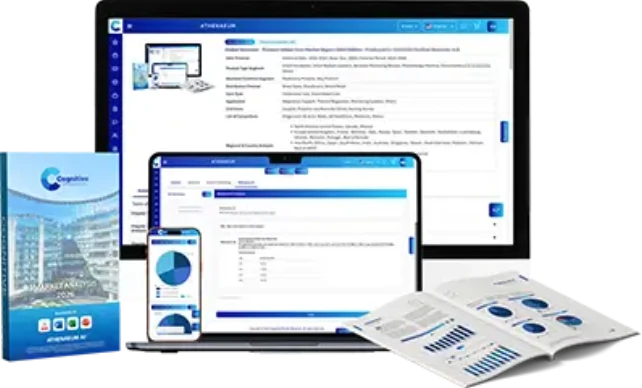
Athenaeum AI Dashboard
Our Proprietary Methodology
Cognitive Market Research and Consulting "The Full Truth" methodology — a rigorous triangulation process that combines primary research, secondary validation, and expert calibration. Implemented by Chidanand Bilagi and team for the South America Polyacrylamide Market Analysis Market analysis.
Primary Intelligence Gathering
Direct interviews with 50+ industry stakeholders including manufacturers, distributors, end-users, and regulatory bodies across all six regions.
Secondary Data Triangulation
Cross-referencing against trade databases, customs records, financial filings, patent databases, and verified industry publications.
Expert Validation Protocol
Each data point undergoes validation by minimum two independent domain experts with 15+ years of industry experience.
Athenaeum AI Processing
Our proprietary AI platform aggregates, normalizes, and identifies patterns across 10,000+ data points to surface non-obvious insights.
Editorial & QA Review
Final review by senior analysts ensures accuracy, coherence, and actionability of all insights and recommendations.
Data Assurance Metrics
Analytical Coverage
To maintain the integrity of our proprietary methodology and protect our elite expert network, specific source disclosures are reserved for full-access partners. Our research framework is anchored by a 70:30 primary-to-secondary ratio, ensuring your strategy is driven by real-time market intelligence rather than recycled, publicly available, or AI-generated data. Every deliverable includes an exhaustive source directory and grants direct analyst access.
Sources from the Chemical and Materials Industry
The Three Pillars of End-to-End Market Research Services
We don't just hand over data. We partner with your team across three integrated service lines — each designed to give you decision-grade intelligence on the South America Polyacrylamide Market Analysis market.
Market Survey
Structured primary research across both B2B and B2C channels. We design and execute custom surveys targeting manufacturers, distributors, procurement heads, and end-consumers in the south america polyacrylamide market analysis ecosystem — validated by our global panel of 10,000+ industrial respondents.
- Buyer intent & sentiment analysis
- Purchase cycle mapping
- Price sensitivity research
- Channel preference profiling
- Competitive perception study
Customized Market Data & Reports
Choose from our ready-to-access 8th Edition report or commission a fully customized dataset tailored to your exact strategic questions. Cross-splits, custom geographies, proprietary segmentation — we build the intelligence asset your board actually needs.
- Ready syndicate report
- Custom data scope & segmentation
- Excel quantitative models
- Board-ready PPT with key findings
- Secure cloud portal access
Strategic Consultation
Every survey and every report comes with dedicated analyst consultation. Our senior research team walks your leadership through findings, answers strategic questions in real-time, and helps translate data into your next board presentation or investment thesis.
- Dedicated analyst assigned to you
- Live walkthrough of findings
- Strategic Q&A sessions
- Go-to-market recommendations
- NDA-protected engagement
Customize This Report
Tell us the specific segments, regions, or companies you need — and we will tailor the deliverable to your requirements.