Europe Semantic Knowledge Graphing Market Analysis from 2022 to 2034 Containing Market Size, Share along with its CAGR, Forecast and Trends
Top Countries — Revenue
Access the full forecast model.
Country-level data · Company profiles · Editable dataset · Analyst consultation included.
Europe Semantic Knowledge Graphing Market Analysis — Presence
Geographical Analysis
Click countries to exploreCountry Analysis
Europe Semantic Knowledge Graphing Market Analysis 2026
| Region / Country | 2021 (A) | 2025 (A) | 2033 (P) | CAGR |
|---|---|---|---|---|
| Europe Semantic Knowledge Graphing Total | xxxx | xxxx | xxxx | 13.3% |
| United Kingdom | xxxx | xxxx | xxxx | xxxx |
| France | xxxx | xxxx | xxxx | xxxx |
| Germany | xxxx | xxxx | xxxx | xxxx |
| Italy | xxxx | xxxx | xxxx | xxxx |
| Russia | xxxx | xxxx | xxxx | xxxx |
| Spain | xxxx | xxxx | xxxx | xxxx |
| Sweden | xxxx | xxxx | xxxx | xxxx |
| Denmark | xxxx | xxxx | xxxx | xxxx |
| Switzerland | xxxx | xxxx | xxxx | xxxx |
| Luxembourg | xxxx | xxxx | xxxx | xxxx |
| Rest of Europe | xxxx | xxxx | xxxx | xxxx |
A = Actual · E = Estimated · P = Projected · 🔒 Locked values require full access. Click headers to sort.
Unlock full regional dataset →Segmentation Analysis
Types breakdown · Illustrative 2025 shares shown free · Full-period forecast in paid report.
Disclaimer: The charts and graphs are for illustrative purposes only and do not represent actual market values. To access accurate quantitative data, please request a paid report or request free sample.
To learn more about market share and segmentation, request the free sample pages.
Competitor Analysis
Competitive Landscape of the Semantic Knowledge Graphing Market
The competitive landscape of the Semantic Knowledge Graphing market is characterized by intense rivalry among players striving to innovate and differentiate their offerings. Key factors include technological advancements, pricing strategies, service quality, and market penetration, influencing market share and positioning within the industry.
Semantic Knowledge Graphing Industry News
In July 2022, Mitsubishi Electric released a new technology leveraging its Maisart AI technology. This innovation automatically builds knowledge graphs by extracting key phrases, authors, citation relationships, and whole-part relationships from diverse materials, including figures and tables. The resulting visualization highlights the relevance of information, enabling users to swiftly and intuitively identify crucial insights. With this advancement, users are poised to significantly decrease the time spent on information gathering, streamlining their workflows and enhancing productivity.
(Source: https://www.mitsubishielectric.com/our-stories/articles/xx_ww_x_in2207_02/)
| Top Companies (In no particular order) | 2022 (A) | 2023 (A) | 2024 (A) | 2025 (A) |
|---|---|---|---|---|
| Company 1 | ••• | ••• | ••• | ••• |
| Company 2 | ••• | ••• | ••• | ••• |
| Company 3 | ••• | ••• | ••• | ••• |
| Company 4 | ••• | ••• | ••• | ••• |
| Company 5 | ••• | ••• | ••• | ••• |
We Provide Regional Breakdown of this Companies and Company specific to any Country, Region, Product/ service as well. We cover market share analysis for publicly listed companies as well as privately held companies, subject to data availability.
Request company profile for validation →Report Scope & Analysis
According to Cognitive Market Research, with a market value of USD 1512.2 million in 2024 and projected to expand at a compound annual growth rate (CAGR) of 13.3% from 2024 to 2031. Europe accounted for a share of around 30% of the global market size of USD 453.66 million. Semantic knowledge graphing sales in Europe are poised for growth owing to various factors. Firstly, the region's diverse industries, from finance to healthcare, seek advanced data analytics solutions for competitive advantage. Additionally, GDPR compliance mandates robust data management tools, fuelling adoption. Furthermore, Europe's rich history in semantic technologies fosters innovation and expertise. Moreover, growing awareness of the importance of context-rich knowledge graphing drives demand. Lastly, in Europe, structured graphing holds the highest market share, driven by the need for effective organization and analysis of structured data, crucial for industries like banking and manufacturing.
- The United Kingdom semantic knowledge graphing market had a market share of USD 76.21 million in 2024 and is projected to grow at a CAGR of 14.1% during the forecast period. The UK market expects sales growth propelled by GDPR compliance requirements, a culture of innovation in semantic technologies, and rising demand for structured graphing to effectively manage and analyse structured data.
- The France semantic knowledge graphing market had a market share of USD 41.74 million in 2024 and is projected to grow at a CAGR of 12.5% during the forecast period.
- The Germany semantic knowledge graphing market had a market share of USD 89.82 million in 2024 and is projected to grow at a CAGR of 13.5% during the forecast period. Germany foresees sales growth owing to its strong industrial base, emphasis on innovation and digitization, and the adoption of natural language processing knowledge graphing to enhance language-specific insights and decision-making capabilities.
- The Italy semantic knowledge graphing market had a market share of USD 39.01 million in 2024 and is projected to grow at a CAGR of 12.7% during the forecast period.
- The Russia semantic knowledge graphing market had a market share of USD 70.32 million in 2024 and is projected to grow at a CAGR of 12.3% during the forecast period.
- The Spain semantic knowledge graphing market had a market share of USD 37.20 million in 2024 and is projected to grow at a CAGR of 12.4% during the forecast period.
- The Luxembourg semantic knowledge graphing market had a market share of USD 14.06 million in 2024 and is projected to grow at a CAGR of 13.4% during the forecast period.
- The Portugal semantic knowledge graphing market had a market share of USD 9.53 million in 2024 and is projected to grow at a CAGR of 13.1% during the forecast period.
- The Greece semantic knowledge graphing market had a market share of USD 5.44 million in 2024 and is projected to grow at a CAGR of 13.6% during the forecast period.
- The Rest of Europe semantic knowledge graphing market had a market share of USD 70.32 million in 2024 and is projected to grow at a CAGR of 12.0% during the forecast period.
The Food & Beverage industry is fueled by demand for sustainable, organic, and health-conscious products, supported by innovations in supply chain and e-commerce. Challenges include rising raw material costs, supply chain disruptions, regulatory hurdles, and labor shortages. Growth opportunities center on plant-based proteins, sustainable packaging, functional foods, and personalized nutrition, making strategic adaptation essential for success.
Analyst Conclusion
- Author Say's: Europe accounted for a share of around 30% of the global market size of USD 453.66 million.and projected to expand at a compound annual growth rate (CAGR) of 13.3% from 2024 to 2031.
- The sales of semantic search graphing are expected to increase due to growing demand for intelligent search solutions that deliver more accurate, contextually relevant results, enhancing user experience and productivity.
- The sales of BFSI solutions are poised to rise as financial institutions increasingly adopt advanced technologies for enhanced security, streamlined processes, personalized services, and improved customer experiences.

Sneha Mali serves as a Team Lead at Cognitive Market Research & Consulting, overseeing research initiatives and delivering strategic market intelligence across the Food & Beverages and Agriculture sectors. With extensive experience in market analysis and team management, she plays a critical role in guiding research projects that help organizations understand evolving market dynamics, supply chain developments, consumer trends, and emerging growth opportunities within global agribusiness and food markets.
Leveraging both primary and secondary research methodologies, Sneha leads the execution of market assessments, competitive intelligence studies, stakeholder interviews, trend analysis, forecasting exercises, and custom consulting engagements. She works closely with agricultural producers, food manufacturers, distributors, industry experts, and other key stakeholders to gather firsthand market insights while validating findings through comprehensive secondary research. Her ability to analyze complex datasets enables clients to gain a deeper understanding of agricultural production trends, commodity movements, consumer demand patterns, and competitive landscapes.
In her leadership role, she manages cross-functional research teams, ensuring the successful delivery of high-quality market reports, consulting projects, and strategic studies. Her expertise in data mining, market evaluation, and analytical problem-solving allows her to transform large volumes of structured and unstructured information into actionable business intelligence. Through her guidance, organizations are better equipped to identify market opportunities, evaluate business risks, optimize growth strategies, and strengthen their competitive positioning.
Passionate about agricultural innovation, sustainability, and the future of global food systems, Sneha remains committed to continuous learning and research excellence. By staying informed about emerging agri-tech developments, changing market conditions, and evolving research methodologies, she helps clients navigate industry challenges and make informed decisions that support long-term growth and business success in an increasingly dynamic marketplace.
Frequently Asked Questions
★ Reviews
Rate this report
Europe Semantic Knowledge Graphing Market Analysis — Table of Contents
- This is just a redacted sample pages of the actual deliverable report and only for representative purposes
- Charts/Graphs/Numbers/data are only for Representative purposes and do not depict actual statistics.
- The table of Contents differs according to the user License selection. Current Displayed TOC is for the Corporate User License Report Edition. TOC Customization options: Add or Remove section/s Or chapter/s from the report.
- Specific Tables, Graphs, Sections, and Chapters can be ordered at a discounted price.
- If applicable; On Request Volume Data will also be provided (at an Additional Cost).
Report Scope
| Types | Semantic Search Graphing, Semantic Question and Answer Machine Graphing, Semantic Information Retrieval Graphing, Semantic Electronic Reading Graphing, Semantic Online Learning Graphing |
|---|---|
| Verticals | Banking Financial Service And Insurance (BFSI), Manufacturing, E-Commerce, Healthcare, Government, Others |
| Tasks | Link Prediction Semantic Graphing, Entity Resolution Semantic Graphing, Link-Based Clustering Semantic Graphing |
| Knowledge Graphs | Context-Rich Knowledge Graphing, External-Sensing Knowledge Graphing, Natural Language Processing Knowledge Graphing |
| Data Sources | Unstructured Graphing, Structured Graphing, Semi-Structured Graphing |
| List of Competitors | Amazon.com Inc., Baidu Inc., Facebook Inc, Google LLC, Microsoft Corporation, Mitsubishi Electric Corporation, NELL, Semantic Web Company, YAGO, Yandex |
Chapter 1. Competitor Analysis (Subject to Data Availability (Private Players))
- 1.1 Top Competitors Analysis
- 1.1.1 Top Players Ranking 2024
- 1.1.2 New Product Launch Analysis
- 1.2 Company Profile (Data Subject to Availability) Sample Format
- 1.2.1 Amazon.com Inc.
- 1.2.1.1 Company Basic Information, Manufacturing Base, Sales Area, and Competitors
- 1.2.1.2 Business Overview
- 1.2.1.3 R&D Investment (Subject to data availability)
- 1.2.1.4 Financials (Subject to data availability)
- 1.2.1.5 Product Types Specification
- 1.2.1.6 Business Strategy
- 1.2.1.7 Recent Developments
- 1.2.1.8 Management Change
- 1.2.1.9 S.W.O.T Analysis
- 1.2.2 Baidu Inc.
- 1.2.2.1 Company Basic Information, Manufacturing Base, Sales Area, and Competitors
- 1.2.2.2 Business Overview
- 1.2.2.3 R&D Investment (Subject to data availability)
- 1.2.2.4 Financials (Subject to data availability)
- 1.2.2.5 Product Types Specification
- 1.2.2.6 Business Strategy
- 1.2.2.7 Recent Developments
- 1.2.2.8 Management Change
- 1.2.2.9 S.W.O.T Analysis
- 1.2.3 Facebook Inc
- 1.2.3.1 Company Basic Information, Manufacturing Base, Sales Area, and Competitors
- 1.2.3.2 Business Overview
- 1.2.3.3 R&D Investment (Subject to data availability)
- 1.2.3.4 Financials (Subject to data availability)
- 1.2.3.5 Product Types Specification
- 1.2.3.6 Business Strategy
- 1.2.3.7 Recent Developments
- 1.2.3.8 Management Change
- 1.2.3.9 S.W.O.T Analysis
- 1.2.4 Google LLC
- 1.2.4.1 Company Basic Information, Manufacturing Base, Sales Area, and Competitors
- 1.2.4.2 Business Overview
- 1.2.4.3 R&D Investment (Subject to data availability)
- 1.2.4.4 Financials (Subject to data availability)
- 1.2.4.5 Product Types Specification
- 1.2.4.6 Business Strategy
- 1.2.4.7 Recent Developments
- 1.2.4.8 Management Change
- 1.2.4.9 S.W.O.T Analysis
- 1.2.5 Microsoft Corporation
- 1.2.5.1 Company Basic Information, Manufacturing Base, Sales Area, and Competitors
- 1.2.5.2 Business Overview
- 1.2.5.3 R&D Investment (Subject to data availability)
- 1.2.5.4 Financials (Subject to data availability)
- 1.2.5.5 Product Types Specification
- 1.2.5.6 Business Strategy
- 1.2.5.7 Recent Developments
- 1.2.5.8 Management Change
- 1.2.5.9 S.W.O.T Analysis
- 1.2.6 Mitsubishi Electric Corporation
- 1.2.6.1 Company Basic Information, Manufacturing Base, Sales Area, and Competitors
- 1.2.6.2 Business Overview
- 1.2.6.3 R&D Investment (Subject to data availability)
- 1.2.6.4 Financials (Subject to data availability)
- 1.2.6.5 Product Types Specification
- 1.2.6.6 Business Strategy
- 1.2.6.7 Recent Developments
- 1.2.6.8 Management Change
- 1.2.6.9 S.W.O.T Analysis
- 1.2.7 NELL
- 1.2.7.1 Company Basic Information, Manufacturing Base, Sales Area, and Competitors
- 1.2.7.2 Business Overview
- 1.2.7.3 R&D Investment (Subject to data availability)
- 1.2.7.4 Financials (Subject to data availability)
- 1.2.7.5 Product Types Specification
- 1.2.7.6 Business Strategy
- 1.2.7.7 Recent Developments
- 1.2.7.8 Management Change
- 1.2.7.9 S.W.O.T Analysis
- 1.2.8 Semantic Web Company
- 1.2.8.1 Company Basic Information, Manufacturing Base, Sales Area, and Competitors
- 1.2.8.2 Business Overview
- 1.2.8.3 R&D Investment (Subject to data availability)
- 1.2.8.4 Financials (Subject to data availability)
- 1.2.8.5 Product Types Specification
- 1.2.8.6 Business Strategy
- 1.2.8.7 Recent Developments
- 1.2.8.8 Management Change
- 1.2.8.9 S.W.O.T Analysis
- 1.2.9 YAGO
- 1.2.9.1 Company Basic Information, Manufacturing Base, Sales Area, and Competitors
- 1.2.9.2 Business Overview
- 1.2.9.3 R&D Investment (Subject to data availability)
- 1.2.9.4 Financials (Subject to data availability)
- 1.2.9.5 Product Types Specification
- 1.2.9.6 Business Strategy
- 1.2.9.7 Recent Developments
- 1.2.9.8 Management Change
- 1.2.9.9 S.W.O.T Analysis
- 1.2.10 Yandex
- 1.2.10.1 Company Basic Information, Manufacturing Base, Sales Area, and Competitors
- 1.2.10.2 Business Overview
- 1.2.10.3 R&D Investment (Subject to data availability)
- 1.2.10.4 Financials (Subject to data availability)
- 1.2.10.5 Product Types Specification
- 1.2.10.6 Business Strategy
- 1.2.10.7 Recent Developments
- 1.2.10.8 Management Change
- 1.2.10.9 S.W.O.T Analysis
- 1.2.1 Amazon.com Inc.
- 1.1 Top Competitors Analysis
Chapter 2. Global Semantic Knowledge Graphing Market Analysis
- 2.1 Global Semantic Knowledge Graphing Market Analysis
- 2.2 Global Semantic Knowledge Graphing Market Analysis by Types
- 2.3 Global Semantic Knowledge Graphing Market Analysis by Verticals
- 2.4 Global Semantic Knowledge Graphing Market Analysis by Tasks
- 2.5 Global Semantic Knowledge Graphing Market Analysis by Knowledge Graphs
- 2.6 Global Semantic Knowledge Graphing Market Analysis by Data Sources
Chapter 3. Europe Semantic Knowledge Graphing Market Analysis
- 3.1 Europe Semantic Knowledge Graphing Market Analysis
- 3.2 Europe Semantic Knowledge Graphing Market Analysis by Country
- 3.3 Europe Semantic Knowledge Graphing Market Analysis by Types
- 3.4 Europe Semantic Knowledge Graphing Market Analysis by Verticals
- 3.5 Europe Semantic Knowledge Graphing Market Analysis by Tasks
- 3.6 Europe Semantic Knowledge Graphing Market Analysis by Knowledge Graphs
- 3.7 Europe Semantic Knowledge Graphing Market Analysis by Data Sources
- 3.8 Europe Semantic Knowledge Graphing Market Analysis by Key Players
Chapter 4. United Kingdom Semantic Knowledge Graphing Market Analysis
- 4.1 United Kingdom Semantic Knowledge Graphing Market Analysis
- 4.2 United Kingdom Semantic Knowledge Graphing Market Analysis by Types
- 4.3 United Kingdom Semantic Knowledge Graphing Market Analysis by Verticals
- 4.4 United Kingdom Semantic Knowledge Graphing Market Analysis by Tasks
- 4.5 United Kingdom Semantic Knowledge Graphing Market Analysis by Knowledge Graphs
- 4.6 United Kingdom Semantic Knowledge Graphing Market Analysis by Data Sources
- 4.7 United Kingdom Semantic Knowledge Graphing Market Analysis by Key Players
Chapter 5. France Semantic Knowledge Graphing Market Analysis
- 5.1 France Semantic Knowledge Graphing Market Analysis
- 5.2 France Semantic Knowledge Graphing Market Analysis by Types
- 5.3 France Semantic Knowledge Graphing Market Analysis by Verticals
- 5.4 France Semantic Knowledge Graphing Market Analysis by Tasks
- 5.5 France Semantic Knowledge Graphing Market Analysis by Knowledge Graphs
- 5.6 France Semantic Knowledge Graphing Market Analysis by Data Sources
- 5.7 France Semantic Knowledge Graphing Market Analysis by Key Players
Chapter 6. Germany Semantic Knowledge Graphing Market Analysis
- 6.1 Germany Semantic Knowledge Graphing Market Analysis
- 6.2 Germany Semantic Knowledge Graphing Market Analysis by Types
- 6.3 Germany Semantic Knowledge Graphing Market Analysis by Verticals
- 6.4 Germany Semantic Knowledge Graphing Market Analysis by Tasks
- 6.5 Germany Semantic Knowledge Graphing Market Analysis by Knowledge Graphs
- 6.6 Germany Semantic Knowledge Graphing Market Analysis by Data Sources
- 6.7 Germany Semantic Knowledge Graphing Market Analysis by Key Players
Chapter 7. Italy Semantic Knowledge Graphing Market Analysis
- 7.1 Italy Semantic Knowledge Graphing Market Analysis
- 7.2 Italy Semantic Knowledge Graphing Market Analysis by Types
- 7.3 Italy Semantic Knowledge Graphing Market Analysis by Verticals
- 7.4 Italy Semantic Knowledge Graphing Market Analysis by Tasks
- 7.5 Italy Semantic Knowledge Graphing Market Analysis by Knowledge Graphs
- 7.6 Italy Semantic Knowledge Graphing Market Analysis by Data Sources
- 7.7 Italy Semantic Knowledge Graphing Market Analysis by Key Players
Chapter 8. Russia Semantic Knowledge Graphing Market Analysis
- 8.1 Russia Semantic Knowledge Graphing Market Analysis
- 8.2 Russia Semantic Knowledge Graphing Market Analysis by Types
- 8.3 Russia Semantic Knowledge Graphing Market Analysis by Verticals
- 8.4 Russia Semantic Knowledge Graphing Market Analysis by Tasks
- 8.5 Russia Semantic Knowledge Graphing Market Analysis by Knowledge Graphs
- 8.6 Russia Semantic Knowledge Graphing Market Analysis by Data Sources
- 8.7 Russia Semantic Knowledge Graphing Market Analysis by Key Players
Chapter 9. Spain Semantic Knowledge Graphing Market Analysis
- 9.1 Spain Semantic Knowledge Graphing Market Analysis
- 9.2 Spain Semantic Knowledge Graphing Market Analysis by Types
- 9.3 Spain Semantic Knowledge Graphing Market Analysis by Verticals
- 9.4 Spain Semantic Knowledge Graphing Market Analysis by Tasks
- 9.5 Spain Semantic Knowledge Graphing Market Analysis by Knowledge Graphs
- 9.6 Spain Semantic Knowledge Graphing Market Analysis by Data Sources
- 9.7 Spain Semantic Knowledge Graphing Market Analysis by Key Players
Chapter 10. Sweden Semantic Knowledge Graphing Market Analysis
- 10.1 Sweden Semantic Knowledge Graphing Market Analysis
- 10.2 Sweden Semantic Knowledge Graphing Market Analysis by Types
- 10.3 Sweden Semantic Knowledge Graphing Market Analysis by Verticals
- 10.4 Sweden Semantic Knowledge Graphing Market Analysis by Tasks
- 10.5 Sweden Semantic Knowledge Graphing Market Analysis by Knowledge Graphs
- 10.6 Sweden Semantic Knowledge Graphing Market Analysis by Data Sources
- 10.7 Sweden Semantic Knowledge Graphing Market Analysis by Key Players
Chapter 11. Denmark Semantic Knowledge Graphing Market Analysis
- 11.1 Denmark Semantic Knowledge Graphing Market Analysis
- 11.2 Denmark Semantic Knowledge Graphing Market Analysis by Types
- 11.3 Denmark Semantic Knowledge Graphing Market Analysis by Verticals
- 11.4 Denmark Semantic Knowledge Graphing Market Analysis by Tasks
- 11.5 Denmark Semantic Knowledge Graphing Market Analysis by Knowledge Graphs
- 11.6 Denmark Semantic Knowledge Graphing Market Analysis by Data Sources
- 11.7 Denmark Semantic Knowledge Graphing Market Analysis by Key Players
Chapter 12. Switzerland Semantic Knowledge Graphing Market Analysis
- 12.1 Switzerland Semantic Knowledge Graphing Market Analysis
- 12.2 Switzerland Semantic Knowledge Graphing Market Analysis by Types
- 12.3 Switzerland Semantic Knowledge Graphing Market Analysis by Verticals
- 12.4 Switzerland Semantic Knowledge Graphing Market Analysis by Tasks
- 12.5 Switzerland Semantic Knowledge Graphing Market Analysis by Knowledge Graphs
- 12.6 Switzerland Semantic Knowledge Graphing Market Analysis by Data Sources
- 12.7 Switzerland Semantic Knowledge Graphing Market Analysis by Key Players
Chapter 13. Luxembourg Semantic Knowledge Graphing Market Analysis
- 13.1 Luxembourg Semantic Knowledge Graphing Market Analysis
- 13.2 Luxembourg Semantic Knowledge Graphing Market Analysis by Types
- 13.3 Luxembourg Semantic Knowledge Graphing Market Analysis by Verticals
- 13.4 Luxembourg Semantic Knowledge Graphing Market Analysis by Tasks
- 13.5 Luxembourg Semantic Knowledge Graphing Market Analysis by Knowledge Graphs
- 13.6 Luxembourg Semantic Knowledge Graphing Market Analysis by Data Sources
- 13.7 Luxembourg Semantic Knowledge Graphing Market Analysis by Key Players
Chapter 14. Rest of Europe Semantic Knowledge Graphing Market Analysis
- 14.1 Rest of Europe Semantic Knowledge Graphing Market Analysis
- 14.2 Rest of Europe Semantic Knowledge Graphing Market Analysis by Types
- 14.3 Rest of Europe Semantic Knowledge Graphing Market Analysis by Verticals
- 14.4 Rest of Europe Semantic Knowledge Graphing Market Analysis by Tasks
- 14.5 Rest of Europe Semantic Knowledge Graphing Market Analysis by Knowledge Graphs
- 14.6 Rest of Europe Semantic Knowledge Graphing Market Analysis by Data Sources
- 14.7 Rest of Europe Semantic Knowledge Graphing Market Analysis by Key Players
Chapter 15. Types Analysis
- 15.1 Semantic Search Graphing
- 15.2 Semantic Question and Answer Machine Graphing
- 15.3 Semantic Information Retrieval Graphing
- 15.4 Semantic Electronic Reading Graphing
- 15.5 Semantic Online Learning Graphing
Chapter 16. Verticals Analysis
- 16.1 Banking Financial Service And Insurance (BFSI)
- 16.2 Manufacturing
- 16.3 E-Commerce
- 16.4 Healthcare
- 16.5 Government
- 16.6 Others
Chapter 17. Tasks Analysis
- 17.1 Link Prediction Semantic Graphing
- 17.2 Entity Resolution Semantic Graphing
- 17.3 Link-Based Clustering Semantic Graphing
Chapter 18. Knowledge Graphs Analysis
- 18.1 Context-Rich Knowledge Graphing
- 18.2 External-Sensing Knowledge Graphing
- 18.3 Natural Language Processing Knowledge Graphing
Chapter 19. Data Sources Analysis
- 19.1 Unstructured Graphing
- 19.2 Structured Graphing
- 19.3 Semi-Structured Graphing
Chapter 20. Qualitative Analysis (Subject to Data Availability)
- 20.1 Market Drivers
- 20.2 Market Restraints
- 20.3 Market Trends
- 20.4 Market Opportunity
- 20.5 Technological Road Map (Subject to Data Availability)
- 20.6 Product Life Cycle (Subject to Data Availability)
- 20.7 Customer and Buyer Behavior Analysis
- 20.7.1 Digital Engagement, Customer Experience & Relationship Analysis
- 20.7.2 Customer Buying Behavior & Purchase Decision Analysis
- 20.7.3 Vendor Selection, Supplier Preferences & Future Demand Trends
- 20.7.4 Pricing, Affordability & Value Perception Analysis
- 20.7.5 Customer Segmentation & Demand Pattern Analysis
- 20.8 Industrial Chain Analysis (Subject to Data Availability)
- 20.8.1 Industry Chain Analysis
- 20.8.2 Manufacturing Cost Analysis
- 20.8.3 Supply Side Analysis
- 20.8.3.1 Raw Material Analysis
- 20.8.3.2 Raw Material Procurement Analysis
- 20.8.3.3 Raw Material Price Trend Analysis
- 20.9 PESTEL Analysis
- 20.9.1 Environmental Factors
- 20.9.2 Legal Factors
- 20.9.3 Technological Factors
- 20.9.4 Economic Factors
- 20.9.5 Political Factors
- 20.9.6 Social Factors
- 20.10 Porter’s Five Forces Analysis
- 20.10.1 Degree of Competition
- 20.10.2 Threat of Substitutes
- 20.10.3 Threat of New Entrants
- 20.10.4 Bargaining Power of Buyers
- 20.10.5 Bargaining Power of Suppliers
- 20.11 Patent Analysis (Subject to Data Availability)
- 20.12 ESG Analysis
- 20.13 Geopolitical Outlook
- 20.13.1 Global Power Realignment & Strategic Alliances
- 20.13.2 Geopolitical Risk Landscape & Conflict Hotspots
- 20.13.3 International Trade Relations & Market Access Environment
- 20.13.4 Regulatory & Policy Shifts Impacting Cross-Border Operations
- 20.13.5 Supply Chain Resilience, Localization & Resource Nationalism
- 20.13.6 Technology Sovereignty & Digital Geopolitics
- 20.13.7 Strategic Implications for Investment, Growth & Market Entry
- 20.14 AI & Market Transformation
- 20.14.1 Competitive Landscape Disruption & Strategic Shifts
- 20.14.2 AI-Driven Transformation of Industry Value Chain
- 20.14.3 Evolution of Business Models & Revenue Streams
- 20.14.4 AI-Driven Product, Service & Innovation Transformation
- 20.14.5 Customer Behavior, AI Adoption & Future Market Evolution
Chapter 21. Research Findings
- 21.1 Key Takeaways
- 21.2 Analyst Point of View
- 21.3 Assumptions and Acronyms
Chapter 22. Research Methodology and Sources
- 22.1 Primary Data Collection
- 22.1.1 Steps for Primary Data Collection
- 22.1.1.1 Identification of KOL
- 22.1.2 Backward Integration
- 22.1.3 Forward Integration
- 22.1.4 How Primary Research Help Us
- 22.1.5 Modes of Primary Research
- 22.1.1 Steps for Primary Data Collection
- 22.2 Secondary Research
- 22.2.1 How Secondary Research Help Us
- 22.2.2 Sources of Secondary Research
- 22.3 Data Validation
- 22.3.1 Data Triangulation
- 22.4 Data Representation
- 22.1 Primary Data Collection
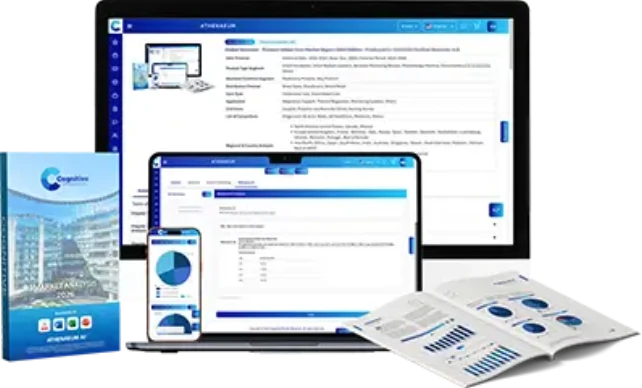
Athenaeum AI Dashboard
Our Proprietary Methodology
Cognitive Market Research and Consulting "The Full Truth" methodology — a rigorous triangulation process that combines primary research, secondary validation, and expert calibration. Implemented by Sneha Mali and team for the Europe Semantic Knowledge Graphing Market Analysis Market analysis.
Primary Intelligence Gathering
Direct interviews with 50+ industry stakeholders including manufacturers, distributors, end-users, and regulatory bodies across all six regions.
Secondary Data Triangulation
Cross-referencing against trade databases, customs records, financial filings, patent databases, and verified industry publications.
Expert Validation Protocol
Each data point undergoes validation by minimum two independent domain experts with 15+ years of industry experience.
Athenaeum AI Processing
Our proprietary AI platform aggregates, normalizes, and identifies patterns across 10,000+ data points to surface non-obvious insights.
Editorial & QA Review
Final review by senior analysts ensures accuracy, coherence, and actionability of all insights and recommendations.
Data Assurance Metrics
Analytical Coverage
To maintain the integrity of our proprietary methodology and protect our elite expert network, specific source disclosures are reserved for full-access partners. Our research framework is anchored by a 70:30 primary-to-secondary ratio, ensuring your strategy is driven by real-time market intelligence rather than recycled, publicly available, or AI-generated data. Every deliverable includes an exhaustive source directory and grants direct analyst access.
Sources from the Food and Beverages Industry
The Three Pillars of End-to-End Market Research Services
We don't just hand over data. We partner with your team across three integrated service lines — each designed to give you decision-grade intelligence on the Europe Semantic Knowledge Graphing Market Analysis market.
Market Survey
Structured primary research across both B2B and B2C channels. We design and execute custom surveys targeting manufacturers, distributors, procurement heads, and end-consumers in the europe semantic knowledge graphing market analysis ecosystem — validated by our global panel of 10,000+ industrial respondents.
- Buyer intent & sentiment analysis
- Purchase cycle mapping
- Price sensitivity research
- Channel preference profiling
- Competitive perception study
Customized Market Data & Reports
Choose from our ready-to-access 8th Edition report or commission a fully customized dataset tailored to your exact strategic questions. Cross-splits, custom geographies, proprietary segmentation — we build the intelligence asset your board actually needs.
- Ready syndicate report
- Custom data scope & segmentation
- Excel quantitative models
- Board-ready PPT with key findings
- Secure cloud portal access
Strategic Consultation
Every survey and every report comes with dedicated analyst consultation. Our senior research team walks your leadership through findings, answers strategic questions in real-time, and helps translate data into your next board presentation or investment thesis.
- Dedicated analyst assigned to you
- Live walkthrough of findings
- Strategic Q&A sessions
- Go-to-market recommendations
- NDA-protected engagement
Customize This Report
Tell us the specific segments, regions, or companies you need — and we will tailor the deliverable to your requirements.