Asia Pacific Water Dispenser Market Analysis from 2022 to 2034 Containing Market Size, Share along with its CAGR, Forecast and Trends
Top Countries — Revenue
Market Dynamics of Asia Pacific Water Dispenser Market Analysis
Growth Drivers
- Rising health awareness drives growth in the Asia Pacific water dispenser market, fueled by demand for clean, safe, and eco-friendly drinking solutions
Restraints
- High power consumption and maintenance costs act as a major constraint, limiting the widespread adoption of the water dispenser in the region.
Access the full forecast model.
Country-level data · Company profiles · Editable dataset · Analyst consultation included.
Asia Pacific Water Dispenser Market Analysis — Presence
Geographical Analysis
Click countries to exploreCountry Analysis
Asia Pacific Water Dispenser Market Analysis 2026
| Region / Country | 2021 (A) | 2025 (A) | 2033 (P) | CAGR |
|---|---|---|---|---|
| Asia Pacific Water Dispenser Total | $ 997.1 Million | $ 1218.67 Million | $ 1889.57 Million | 5.635% |
| China | $ 395.85 Million | $ 487.47 Million | $ 767.17 Million | 5.832% |
| Japan | $ 110.28 Million | $ 129.91 Million | $ 193.87 Million | 5.132% |
| South Korea | $ 53.84 Million | $ 59.72 Million | $ 81.25 Million | 3.925% |
| India | $ 182.47 Million | $ 230.33 Million | $ 370.36 Million | 6.117% |
| Australia | $ 25.23 Million | $ 28.4 Million | $ 40.25 Million | 4.457% |
| Singapore | $ 29.91 Million | $ 34.12 Million | $ 49.13 Million | 4.661% |
| Taiwan | $ 31.91 Million | $ 36.56 Million | $ 52.91 Million | 4.728% |
| South East Asia | $ 151.26 Million | $ 187.31 Million | $ 274.74 Million | 4.905% |
| Rest of APAC | xxxx | xxxx | xxxx | xxxx |
A = Actual · E = Estimated · P = Projected · 🔒 Locked values require full access. Click headers to sort.
Unlock full regional dataset →Segmentation Analysis
Water Dispenser Market Segmentation Analysis by Type According to Cognitive Market Research, based on the type, the bottled water dispensers segment accounted for a share of xx% in 2024. The popularity across homes, offices, gyms, schools, and other settings where access to safe and convenient drinking water is essential. These dispensers typically use large, refillable water bottles—commonly 3 or 5 gallons—placed upside down on a base, allowing gravity-fed dispensing. Available in both manual and advanced push-button or sensor-based models, some units also feature cooling and heating functions for added versatility. For instance, Panasonic’s Thermo Pot NC-EG3000 offers hot water ideal for beverages like tea or drip-brewed coffee, showcasing how these dispensers cater to varied user preferences. The widespread appeal of bottled water dispensers lies in their convenience, safety, and versatility. They offer a reliable supply of clean water without constant refills and are portable enough to be used in multiple environments. Since the water is sealed in the bottle until use, it remains fresh and uncontaminated, making it a trusted option in areas with questionable tap water quality. Additionally, these dispensers are cost-effective in high-traffic locations and support sustainability by reducing reliance on single-use plastic bottles through the use of refillable containers. Their ability to provide both hot and cold water further enhances their practicality for everyday use.
Disclaimer: The charts and graphs are for illustrative purposes only and do not represent actual market values. To access accurate quantitative data, please request a paid report or request free sample.
To learn more about market share and segmentation, request the free sample pages.
Competitor Analysis
Competitive Landscape of the Water Dispenser Market
Key players deploy strategic initiatives such as product innovations, partnerships, and mergers. Companies prioritize R&D to introduce cutting-edge reagents, ensuring a competitive edge. Robust distribution networks and adherence to quality standards amplify market presence, fostering an environment where agility and innovation define industry leaders.
Water Dispenser industry news
In March, 2024 the Voltas Limited introduced its portfolio of energy efficient commercial refrigeration products at AAHAR 2024.
Voltas Limited launched its new range of 5-star Glass Top models and Hard Top Deep freezers & Convertible models, New Floor Standing Water Dispenser Models in the Spring Series with a choice of hot, normal, cold water. The Company is also expanding its Visi Cooler line-up with additions of 4 new models. Minibar 50 Lt, Large Single Door in550 ltrs and two Large Double Door models in 750 & 1000 ltrs at this event in 2024.
| Top Companies (In no particular order) | 2022 (A) | 2023 (A) | 2024 (A) | 2025 (A) |
|---|---|---|---|---|
| Midea Group Co. | ••• | ••• | ••• | ••• |
| Ltd. | ••• | ••• | ••• | ••• |
| TOSHIBA LIFESTYLE PH | ••• | ••• | ••• | ••• |
| Koninklijke Philips N.V. | ••• | ••• | ••• | ••• |
| Panasonic Holdings Corporation | ••• | ••• | ••• | ••• |
| Coway Mega | ••• | ••• | ••• | ••• |
| Others | ••• | ••• | ••• | ••• |
We Provide Regional Breakdown of this Companies and Company specific to any Country, Region, Product/ service as well. We cover market share analysis for publicly listed companies as well as privately held companies, subject to data availability.
Request company profile for validation →Report Scope & Analysis
The Global Water Dispenser Market was valued at USD xx Million in 2021 and is expected to reach USD xx Million by the end of 2033, growing at a CAGR of xx% between 2025 to 2033.
- North America held largest share of xx% in the year 2024
- Europe held share of xx% in the year 2024
- Asia-Pacific held significant share of xx% in the year 2024
- South America held significant share of xx% in the year 2024
- Middle East and Africa held significant share of xx% in the year 2024
Water dispensers, widely used in homes, offices, and public spaces across the Asia Pacific (APAC) region, have become essential appliances due to growing health consciousness and concerns over water quality. These devices offer water at various temperatures—hot, cold, or room temperature—and are available in bottled and bottle-less models. While bottled dispensers remain popular for their convenience, especially in residential settings, point-of-use (bottle-less) dispensers are gaining traction in commercial environments due to their sustainability and continuous water supply. The market is also seeing a surge in filtration-based dispensers utilizing technologies like reverse osmosis (RO) and UV purification to eliminate contaminants and ensure safe drinking water, addressing increasing concerns over pollution and unsafe tap water.
Driven by rising environmental awareness, demand is also growing for customizable, high-capacity, and tech-enabled water dispensers. Innovations such as Xiaomi's Mijia Instant Hot Water Dispenser and Angel’s 7-stage RO Countertop model highlight consumer preference for features like temperature control, sterilization, app integration, and multi-stage filtration. Moreover, initiatives like Muji’s in-store refill stations and Fukuoka City’s public water refill projects reflect a broader shift toward reducing plastic waste and promoting eco-friendly practices. Combined with the rise of e-commerce as a major distribution channel, these trends point to a rapidly expanding APAC water dispenser market fueled by health, sustainability, and technological advancement.
Analyst Conclusion
The water dispenser market is poised for strong growth, driven by demographic shifts, rising urbanization, economic development, and changing consumer preferences. As urban populations expand in countries like China, India, and across Southeast Asia, there is increasing demand for modern appliances that offer convenience, health benefits, and energy efficiency. Health-conscious consumers are increasingly prioritizing access to clean, purified water, fueling the adoption of advanced dispenser technologies such as reverse osmosis (RO), UV purification, and multi-stage filtration. Additionally, the growth of the middle class and rising disposable incomes are encouraging consumers to invest in premium, durable, and eco-friendly water dispensers, further propelling market expansion.
Technological innovations are playing a key role in transforming the market landscape. Features like real-time water quality monitoring, remote control access, and energy-saving modes are gaining traction, especially among tech-savvy urban consumers. At the same time, environmental awareness and stricter regulations around plastic waste are prompting a shift toward sustainable, recyclable, and energy-efficient models. Despite challenges such as global supply chain disruptions, regulatory hurdles, and intense competition, demand remains strong due to the rising need for safe, convenient drinking water solutions.

Pratik Shirsath serves as a Research Analyst at Cognitive Market Research & Consulting, where he focuses on the Machinery & Equipment, Manufacturing, and Construction sectors. His work centers on delivering strategic market intelligence that helps organizations understand evolving industry dynamics, technological advancements, and emerging growth opportunities across industrial and infrastructure markets. By combining primary research with extensive secondary analysis, he develops data-driven insights that support informed business decision-making.
Drawing on experience across industrial value chains, Pratik conducts market assessments, competitive evaluations, trend analysis, stakeholder research, and opportunity mapping for clients operating in complex engineering and manufacturing environments. He regularly engages with manufacturers, equipment suppliers, industry experts, contractors, distributors, and other market participants to gather firsthand perspectives while validating findings through comprehensive secondary research. His ability to interpret technical and commercial data enables organizations to gain a clearer understanding of market conditions, investment trends, and competitive developments.
As part of his role, Pratik contributes to syndicated research studies, custom consulting projects, and strategic market reports covering industrial machinery, factory automation, manufacturing technologies, construction equipment, building materials, and infrastructure-related markets. His analytical approach helps clients evaluate market potential, identify expansion opportunities, assess competitive positioning, and navigate industry challenges with greater confidence.
Known for transforming complex datasets and technical information into actionable business intelligence, Pratik supports organizations in developing effective growth strategies and operational plans. His continued focus on industrial innovation, automation technologies, sustainable manufacturing practices, and evolving construction trends enables him to deliver valuable research that helps businesses adapt to changing market environments and achieve long-term success.
Frequently Asked Questions
★ Reviews
Rate this report
Asia Pacific Water Dispenser Market Analysis — Table of Contents
- This is just a redacted sample pages of the actual deliverable report and only for representative purposes
- Charts/Graphs/Numbers/data are only for Representative purposes and do not depict actual statistics.
- The table of Contents differs according to the user License selection. Current Displayed TOC is for the Corporate User License Report Edition. TOC Customization options: Add or Remove section/s Or chapter/s from the report.
- Specific Tables, Graphs, Sections, and Chapters can be ordered at a discounted price.
- If applicable; On Request Volume Data will also be provided (at an Additional Cost).
Report Scope
| Type | Direct Piping/Point Of Use, Bottled Water Dispensers |
|---|---|
| Dispenser Type | Wall Mounted, Bottom Load Water Dispenser, Table Top Water Dispenser, Direct Piping Water Dispenser, Freestanding, Others |
| Compartment-Type Water Cooler | With Refrigerated Compartment, Without Refrigerated Compartment |
| Technology | Filter-Free, Filtered |
| Storage Capacity | 20 liters, 40 liters, 80 liters, 120 liters, 150 liters, 380 liters, Others |
| End User | Commercial, Residential, Industrial |
| Distribution Channel | Direct, Supermarkets/Hypermarkets, Specialty Stores, E-Commerce, Others |
| List of Competitors | Whirlpool Corporation, Brio Water Technology Inc., Primo Water Corporation, Honeywell International Inc., Culligan International Company, Clover Co. Ltd., Waterlogic Holdings Limited, Midea Group Co. Ltd., A.O. Smith Corporation, Edgar’s Water. |
Chapter 1. Competitor Analysis (Subject to Data Availability (Private Players))
- 1.1 Top Competitors Analysis
- 1.1.1 Top Players Ranking 2024
- 1.1.2 New Product Launch Analysis
- 1.2 Company Profile (Data Subject to Availability) Sample Format
- 1.2.1 Whirlpool Corporation
- 1.2.1.1 Company Basic Information, Manufacturing Base, Sales Area, and Competitors
- 1.2.1.2 Business Overview
- 1.2.1.3 R&D Investment (Subject to data availability)
- 1.2.1.4 Financials (Subject to data availability)
- 1.2.1.5 Product Types Specification
- 1.2.1.6 Business Strategy
- 1.2.1.7 Recent Developments
- 1.2.1.8 Management Change
- 1.2.1.9 S.W.O.T Analysis
- 1.2.2 Brio Water Technology Inc.
- 1.2.2.1 Company Basic Information, Manufacturing Base, Sales Area, and Competitors
- 1.2.2.2 Business Overview
- 1.2.2.3 R&D Investment (Subject to data availability)
- 1.2.2.4 Financials (Subject to data availability)
- 1.2.2.5 Product Types Specification
- 1.2.2.6 Business Strategy
- 1.2.2.7 Recent Developments
- 1.2.2.8 Management Change
- 1.2.2.9 S.W.O.T Analysis
- 1.2.3 Primo Water Corporation
- 1.2.3.1 Company Basic Information, Manufacturing Base, Sales Area, and Competitors
- 1.2.3.2 Business Overview
- 1.2.3.3 R&D Investment (Subject to data availability)
- 1.2.3.4 Financials (Subject to data availability)
- 1.2.3.5 Product Types Specification
- 1.2.3.6 Business Strategy
- 1.2.3.7 Recent Developments
- 1.2.3.8 Management Change
- 1.2.3.9 S.W.O.T Analysis
- 1.2.4 Honeywell International Inc.
- 1.2.4.1 Company Basic Information, Manufacturing Base, Sales Area, and Competitors
- 1.2.4.2 Business Overview
- 1.2.4.3 R&D Investment (Subject to data availability)
- 1.2.4.4 Financials (Subject to data availability)
- 1.2.4.5 Product Types Specification
- 1.2.4.6 Business Strategy
- 1.2.4.7 Recent Developments
- 1.2.4.8 Management Change
- 1.2.4.9 S.W.O.T Analysis
- 1.2.5 Culligan International Company
- 1.2.5.1 Company Basic Information, Manufacturing Base, Sales Area, and Competitors
- 1.2.5.2 Business Overview
- 1.2.5.3 R&D Investment (Subject to data availability)
- 1.2.5.4 Financials (Subject to data availability)
- 1.2.5.5 Product Types Specification
- 1.2.5.6 Business Strategy
- 1.2.5.7 Recent Developments
- 1.2.5.8 Management Change
- 1.2.5.9 S.W.O.T Analysis
- 1.2.6 Clover Co. Ltd.
- 1.2.6.1 Company Basic Information, Manufacturing Base, Sales Area, and Competitors
- 1.2.6.2 Business Overview
- 1.2.6.3 R&D Investment (Subject to data availability)
- 1.2.6.4 Financials (Subject to data availability)
- 1.2.6.5 Product Types Specification
- 1.2.6.6 Business Strategy
- 1.2.6.7 Recent Developments
- 1.2.6.8 Management Change
- 1.2.6.9 S.W.O.T Analysis
- 1.2.7 Waterlogic Holdings Limited
- 1.2.7.1 Company Basic Information, Manufacturing Base, Sales Area, and Competitors
- 1.2.7.2 Business Overview
- 1.2.7.3 R&D Investment (Subject to data availability)
- 1.2.7.4 Financials (Subject to data availability)
- 1.2.7.5 Product Types Specification
- 1.2.7.6 Business Strategy
- 1.2.7.7 Recent Developments
- 1.2.7.8 Management Change
- 1.2.7.9 S.W.O.T Analysis
- 1.2.8 Midea Group Co. Ltd.
- 1.2.8.1 Company Basic Information, Manufacturing Base, Sales Area, and Competitors
- 1.2.8.2 Business Overview
- 1.2.8.3 R&D Investment (Subject to data availability)
- 1.2.8.4 Financials (Subject to data availability)
- 1.2.8.5 Product Types Specification
- 1.2.8.6 Business Strategy
- 1.2.8.7 Recent Developments
- 1.2.8.8 Management Change
- 1.2.8.9 S.W.O.T Analysis
- 1.2.9 A.O. Smith Corporation
- 1.2.9.1 Company Basic Information, Manufacturing Base, Sales Area, and Competitors
- 1.2.9.2 Business Overview
- 1.2.9.3 R&D Investment (Subject to data availability)
- 1.2.9.4 Financials (Subject to data availability)
- 1.2.9.5 Product Types Specification
- 1.2.9.6 Business Strategy
- 1.2.9.7 Recent Developments
- 1.2.9.8 Management Change
- 1.2.9.9 S.W.O.T Analysis
- 1.2.10 Edgar’s Water.
- 1.2.10.1 Company Basic Information, Manufacturing Base, Sales Area, and Competitors
- 1.2.10.2 Business Overview
- 1.2.10.3 R&D Investment (Subject to data availability)
- 1.2.10.4 Financials (Subject to data availability)
- 1.2.10.5 Product Types Specification
- 1.2.10.6 Business Strategy
- 1.2.10.7 Recent Developments
- 1.2.10.8 Management Change
- 1.2.10.9 S.W.O.T Analysis
- 1.2.1 Whirlpool Corporation
- 1.1 Top Competitors Analysis
Chapter 2. Global Water Dispenser Market Analysis
- 2.1 Global Water Dispenser Market Analysis
- 2.2 Global Water Dispenser Market Analysis by Region
- 2.3 Global Water Dispenser Market Analysis by Type
- 2.4 Global Water Dispenser Market Analysis by Dispenser Type
- 2.5 Global Water Dispenser Market Analysis by Compartment-Type Water Cooler
- 2.6 Global Water Dispenser Market Analysis by Technology
- 2.7 Global Water Dispenser Market Analysis by Storage Capacity
- 2.8 Global Water Dispenser Market Analysis by End User
- 2.9 Global Water Dispenser Market Analysis by Distribution Channel
Chapter 3. Asia Pacific Water Dispenser Market Analysis
- 3.1 Asia Pacific Water Dispenser Market Analysis
- 3.2 Asia Pacific Water Dispenser Market Analysis by Country
- 3.3 Asia Pacific Water Dispenser Market Analysis by Type
- 3.4 Asia Pacific Water Dispenser Market Analysis by Dispenser Type
- 3.5 Asia Pacific Water Dispenser Market Analysis by Compartment-Type Water Cooler
- 3.6 Asia Pacific Water Dispenser Market Analysis by Technology
- 3.7 Asia Pacific Water Dispenser Market Analysis by Storage Capacity
- 3.8 Asia Pacific Water Dispenser Market Analysis by End User
- 3.9 Asia Pacific Water Dispenser Market Analysis by Distribution Channel
- 3.10 Asia Pacific Water Dispenser Market Analysis by Key Players
Chapter 4. China Water Dispenser Market Analysis
- 4.1 China Water Dispenser Market Analysis
- 4.2 China Water Dispenser Market Analysis by Type
- 4.3 China Water Dispenser Market Analysis by Dispenser Type
- 4.4 China Water Dispenser Market Analysis by Compartment-Type Water Cooler
- 4.5 China Water Dispenser Market Analysis by Technology
- 4.6 China Water Dispenser Market Analysis by Storage Capacity
- 4.7 China Water Dispenser Market Analysis by End User
- 4.8 China Water Dispenser Market Analysis by Distribution Channel
- 4.9 China Water Dispenser Market Analysis by Key Players
Chapter 5. Japan Water Dispenser Market Analysis
- 5.1 Japan Water Dispenser Market Analysis
- 5.2 Japan Water Dispenser Market Analysis by Type
- 5.3 Japan Water Dispenser Market Analysis by Dispenser Type
- 5.4 Japan Water Dispenser Market Analysis by Compartment-Type Water Cooler
- 5.5 Japan Water Dispenser Market Analysis by Technology
- 5.6 Japan Water Dispenser Market Analysis by Storage Capacity
- 5.7 Japan Water Dispenser Market Analysis by End User
- 5.8 Japan Water Dispenser Market Analysis by Distribution Channel
- 5.9 Japan Water Dispenser Market Analysis by Key Players
Chapter 6. South Korea Water Dispenser Market Analysis
- 6.1 South Korea Water Dispenser Market Analysis
- 6.2 South Korea Water Dispenser Market Analysis by Type
- 6.3 South Korea Water Dispenser Market Analysis by Dispenser Type
- 6.4 South Korea Water Dispenser Market Analysis by Compartment-Type Water Cooler
- 6.5 South Korea Water Dispenser Market Analysis by Technology
- 6.6 South Korea Water Dispenser Market Analysis by Storage Capacity
- 6.7 South Korea Water Dispenser Market Analysis by End User
- 6.8 South Korea Water Dispenser Market Analysis by Distribution Channel
- 6.9 South Korea Water Dispenser Market Analysis by Key Players
Chapter 7. India Water Dispenser Market Analysis
- 7.1 India Water Dispenser Market Analysis
- 7.2 India Water Dispenser Market Analysis by Type
- 7.3 India Water Dispenser Market Analysis by Dispenser Type
- 7.4 India Water Dispenser Market Analysis by Compartment-Type Water Cooler
- 7.5 India Water Dispenser Market Analysis by Technology
- 7.6 India Water Dispenser Market Analysis by Storage Capacity
- 7.7 India Water Dispenser Market Analysis by End User
- 7.8 India Water Dispenser Market Analysis by Distribution Channel
- 7.9 India Water Dispenser Market Analysis by Key Players
Chapter 8. Australia Water Dispenser Market Analysis
- 8.1 Australia Water Dispenser Market Analysis
- 8.2 Australia Water Dispenser Market Analysis by Type
- 8.3 Australia Water Dispenser Market Analysis by Dispenser Type
- 8.4 Australia Water Dispenser Market Analysis by Compartment-Type Water Cooler
- 8.5 Australia Water Dispenser Market Analysis by Technology
- 8.6 Australia Water Dispenser Market Analysis by Storage Capacity
- 8.7 Australia Water Dispenser Market Analysis by End User
- 8.8 Australia Water Dispenser Market Analysis by Distribution Channel
- 8.9 Australia Water Dispenser Market Analysis by Key Players
Chapter 9. Singapore Water Dispenser Market Analysis
- 9.1 Singapore Water Dispenser Market Analysis
- 9.2 Singapore Water Dispenser Market Analysis by Type
- 9.3 Singapore Water Dispenser Market Analysis by Dispenser Type
- 9.4 Singapore Water Dispenser Market Analysis by Compartment-Type Water Cooler
- 9.5 Singapore Water Dispenser Market Analysis by Technology
- 9.6 Singapore Water Dispenser Market Analysis by Storage Capacity
- 9.7 Singapore Water Dispenser Market Analysis by End User
- 9.8 Singapore Water Dispenser Market Analysis by Distribution Channel
- 9.9 Singapore Water Dispenser Market Analysis by Key Players
Chapter 10. Taiwan Water Dispenser Market Analysis
- 10.1 Taiwan Water Dispenser Market Analysis
- 10.2 Taiwan Water Dispenser Market Analysis by Type
- 10.3 Taiwan Water Dispenser Market Analysis by Dispenser Type
- 10.4 Taiwan Water Dispenser Market Analysis by Compartment-Type Water Cooler
- 10.5 Taiwan Water Dispenser Market Analysis by Technology
- 10.6 Taiwan Water Dispenser Market Analysis by Storage Capacity
- 10.7 Taiwan Water Dispenser Market Analysis by End User
- 10.8 Taiwan Water Dispenser Market Analysis by Distribution Channel
- 10.9 Taiwan Water Dispenser Market Analysis by Key Players
Chapter 11. South East Asia Water Dispenser Market Analysis
- 11.1 South East Asia Water Dispenser Market Analysis
- 11.2 South East Asia Water Dispenser Market Analysis by Type
- 11.3 South East Asia Water Dispenser Market Analysis by Dispenser Type
- 11.4 South East Asia Water Dispenser Market Analysis by Compartment-Type Water Cooler
- 11.5 South East Asia Water Dispenser Market Analysis by Technology
- 11.6 South East Asia Water Dispenser Market Analysis by Storage Capacity
- 11.7 South East Asia Water Dispenser Market Analysis by End User
- 11.8 South East Asia Water Dispenser Market Analysis by Distribution Channel
- 11.9 South East Asia Water Dispenser Market Analysis by Key Players
Chapter 12. Rest of APAC Water Dispenser Market Analysis
- 12.1 Rest of APAC Water Dispenser Market Analysis
- 12.2 Rest of APAC Water Dispenser Market Analysis by Type
- 12.3 Rest of APAC Water Dispenser Market Analysis by Dispenser Type
- 12.4 Rest of APAC Water Dispenser Market Analysis by Compartment-Type Water Cooler
- 12.5 Rest of APAC Water Dispenser Market Analysis by Technology
- 12.6 Rest of APAC Water Dispenser Market Analysis by Storage Capacity
- 12.7 Rest of APAC Water Dispenser Market Analysis by End User
- 12.8 Rest of APAC Water Dispenser Market Analysis by Distribution Channel
- 12.9 Rest of APAC Water Dispenser Market Analysis by Key Players
Chapter 13. Type Analysis
- 13.1 Direct Piping/Point Of Use
- 13.2 Bottled Water Dispensers
Chapter 14. Dispenser Type Analysis
- 14.1 Wall Mounted
- 14.2 Bottom Load Water Dispenser
- 14.3 Table Top Water Dispenser
- 14.4 Direct Piping Water Dispenser
- 14.5 Freestanding
- 14.6 Others
Chapter 15. Compartment-Type Water Cooler Analysis
- 15.1 With Refrigerated Compartment
- 15.2 Without Refrigerated Compartment
Chapter 16. Technology Analysis
- 16.1 Filter-Free
- 16.2 Filtered
Chapter 17. Storage Capacity Analysis
- 17.1 20 liters
- 17.2 40 liters
- 17.3 80 liters
- 17.4 120 liters
- 17.5 150 liters
- 17.6 380 liters
- 17.7 Others
Chapter 18. End User Analysis
- 18.1 Commercial
- 18.2 Residential
- 18.3 Industrial
Chapter 19. Distribution Channel Analysis
- 19.1 Direct
- 19.2 Supermarkets/Hypermarkets
- 19.3 Specialty Stores
- 19.4 E-Commerce
- 19.5 Others
Chapter 20. Qualitative Analysis (Subject to Data Availability)
- 20.1 Market Drivers
- 20.2 Market Restraints
- 20.3 Market Trends
- 20.4 Market Opportunity
- 20.5 Technological Road Map (Subject to Data Availability)
- 20.6 Product Life Cycle (Subject to Data Availability)
- 20.7 Customer and Buyer Behavior Analysis
- 20.7.1 Digital Engagement, Customer Experience & Relationship Analysis
- 20.7.2 Customer Buying Behavior & Purchase Decision Analysis
- 20.7.3 Vendor Selection, Supplier Preferences & Future Demand Trends
- 20.7.4 Pricing, Affordability & Value Perception Analysis
- 20.7.5 Customer Segmentation & Demand Pattern Analysis
- 20.8 PESTEL Analysis
- 20.8.1 Environmental Factors
- 20.8.2 Legal Factors
- 20.8.3 Technological Factors
- 20.8.4 Economic Factors
- 20.8.5 Political Factors
- 20.8.6 Social Factors
- 20.9 Industrial Chain Analysis (Subject to Data Availability)
- 20.9.1 Industry Chain Analysis
- 20.9.2 Manufacturing Cost Analysis
- 20.9.3 Supply Side Analysis
- 20.9.3.1 Raw Material Analysis
- 20.9.3.2 Raw Material Procurement Analysis
- 20.9.3.3 Raw Material Price Trend Analysis
- 20.10 ESG Analysis
- 20.11 Patent Analysis (Subject to Data Availability)
- 20.12 Porter’s Five Forces Analysis
- 20.12.1 Bargaining Power of Suppliers
- 20.12.2 Degree of Competition
- 20.12.3 Threat of Substitutes
- 20.12.4 Threat of New Entrants
- 20.12.5 Bargaining Power of Buyers
- 20.13 Geopolitical Outlook
- 20.13.1 Global Power Realignment & Strategic Alliances
- 20.13.2 Geopolitical Risk Landscape & Conflict Hotspots
- 20.13.3 International Trade Relations & Market Access Environment
- 20.13.4 Regulatory & Policy Shifts Impacting Cross-Border Operations
- 20.13.5 Supply Chain Resilience, Localization & Resource Nationalism
- 20.13.6 Technology Sovereignty & Digital Geopolitics
- 20.13.7 Strategic Implications for Investment, Growth & Market Entry
- 20.14 AI & Market Transformation
- 20.14.1 Competitive Landscape Disruption & Strategic Shifts
- 20.14.2 AI-Driven Transformation of Industry Value Chain
- 20.14.3 Evolution of Business Models & Revenue Streams
- 20.14.4 AI-Driven Product, Service & Innovation Transformation
- 20.14.5 Customer Behavior, AI Adoption & Future Market Evolution
Chapter 21. Research Findings
- 21.1 Key Takeaways
- 21.2 Analyst Point of View
- 21.3 Assumptions and Acronyms
Chapter 22. Research Methodology and Sources
- 22.1 Primary Data Collection
- 22.1.1 Steps for Primary Data Collection
- 22.1.1.1 Identification of KOL
- 22.1.2 Backward Integration
- 22.1.3 Forward Integration
- 22.1.4 How Primary Research Help Us
- 22.1.5 Modes of Primary Research
- 22.1.1 Steps for Primary Data Collection
- 22.2 Secondary Research
- 22.2.1 How Secondary Research Help Us
- 22.2.2 Sources of Secondary Research
- 22.3 Data Validation
- 22.3.1 Data Triangulation
- 22.4 Data Representation
- 22.1 Primary Data Collection
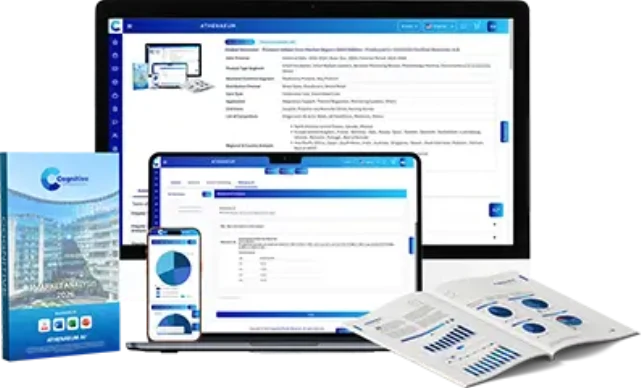
Athenaeum AI Dashboard
Our Proprietary Methodology
Cognitive Market Research and Consulting "The Full Truth" methodology — a rigorous triangulation process that combines primary research, secondary validation, and expert calibration. Implemented by Pratik Shirsath and team for the Asia Pacific Water Dispenser Market Analysis Market analysis.
Primary Intelligence Gathering
Direct interviews with 50+ industry stakeholders including manufacturers, distributors, end-users, and regulatory bodies across all six regions.
Secondary Data Triangulation
Cross-referencing against trade databases, customs records, financial filings, patent databases, and verified industry publications.
Expert Validation Protocol
Each data point undergoes validation by minimum two independent domain experts with 15+ years of industry experience.
Athenaeum AI Processing
Our proprietary AI platform aggregates, normalizes, and identifies patterns across 10,000+ data points to surface non-obvious insights.
Editorial & QA Review
Final review by senior analysts ensures accuracy, coherence, and actionability of all insights and recommendations.
Data Assurance Metrics
Analytical Coverage
To maintain the integrity of our proprietary methodology and protect our elite expert network, specific source disclosures are reserved for full-access partners. Our research framework is anchored by a 70:30 primary-to-secondary ratio, ensuring your strategy is driven by real-time market intelligence rather than recycled, publicly available, or AI-generated data. Every deliverable includes an exhaustive source directory and grants direct analyst access.
Sources from the Machinery & Equipment Industry
The Three Pillars of End-to-End Market Research Services
We don't just hand over data. We partner with your team across three integrated service lines — each designed to give you decision-grade intelligence on the Asia Pacific Water Dispenser Market Analysis market.
Market Survey
Structured primary research across both B2B and B2C channels. We design and execute custom surveys targeting manufacturers, distributors, procurement heads, and end-consumers in the asia pacific water dispenser market analysis ecosystem — validated by our global panel of 10,000+ industrial respondents.
- Buyer intent & sentiment analysis
- Purchase cycle mapping
- Price sensitivity research
- Channel preference profiling
- Competitive perception study
Customized Market Data & Reports
Choose from our ready-to-access 8th Edition report or commission a fully customized dataset tailored to your exact strategic questions. Cross-splits, custom geographies, proprietary segmentation — we build the intelligence asset your board actually needs.
- Ready syndicate report (250+ pages)
- Custom data scope & segmentation
- Excel quantitative models
- Board-ready PPT with key findings
- Secure cloud portal access
Strategic Consultation
Every survey and every report comes with dedicated analyst consultation. Our senior research team walks your leadership through findings, answers strategic questions in real-time, and helps translate data into your next board presentation or investment thesis.
- Dedicated analyst assigned to you
- Live walkthrough of findings
- Strategic Q&A sessions
- Go-to-market recommendations
- NDA-protected engagement
Customize This Report
Tell us the specific segments, regions, or companies you need — and we will tailor the deliverable to your requirements.