Quantitative Structure Activity Relationship Qsar Market Analysis from 2022 to 2034 Containing Market Size, Share along with its CAGR, Forecast and Trends
Top Countries — Revenue
Market Dynamics of Quantitative Structure Activity Relationship Qsar Market Analysis
Growth Drivers
- Increasing investment in pharmaceutical R&D
- Increased demand for improved computational techniques in drug discovery
- Growth of the biotechnology and healthcare industries
- Concentrate on individualized medicine.
- Need for efficient and cost-effective drug design solutions
Restraints
- Stringent regulatory requirements
- Lack of skilled professionals in computational chemistry
Trends
- Integration of artificial intelligence and machine learning technologies
- Increasing adoption of molecular modelling techniques
Access the full forecast model.
Country-level data · Company profiles · Editable dataset · Analyst consultation included.
Quantitative Structure Activity Relationship Qsar Market Analysis — Presence
Geographical Analysis
Click countries to exploreRegional and Country Analysis
Global Quantitative Structure Activity Relationship Qsar Market Analysis 2026
| Region / Country | 2021 (A) | 2025 (A) | 2033 (P) | CAGR |
|---|---|---|---|---|
| Global | xxxx | xxxx | xxxx | 6% |
| North America | xxxx | xxxx | xxxx | 4.2% |
| United States | xxxx | xxxx | xxxx | xxxx |
| Canada | xxxx | xxxx | xxxx | xxxx |
| Mexico | xxxx | xxxx | xxxx | xxxx |
| Europe | xxxx | xxxx | xxxx | 4.5% |
| United Kingdom | xxxx | xxxx | xxxx | xxxx |
| France | xxxx | xxxx | xxxx | xxxx |
| Germany | xxxx | xxxx | xxxx | xxxx |
| Italy | xxxx | xxxx | xxxx | xxxx |
| Russia | xxxx | xxxx | xxxx | xxxx |
| Spain | xxxx | xxxx | xxxx | xxxx |
| Sweden | xxxx | xxxx | xxxx | xxxx |
| Denmark | xxxx | xxxx | xxxx | xxxx |
| Switzerland | xxxx | xxxx | xxxx | xxxx |
| Luxembourg | xxxx | xxxx | xxxx | xxxx |
| Rest of Europe | xxxx | xxxx | xxxx | xxxx |
| Asia Pacific | xxxx | xxxx | xxxx | 8% |
| China | xxxx | xxxx | xxxx | xxxx |
| Japan | xxxx | xxxx | xxxx | xxxx |
| South Korea | xxxx | xxxx | xxxx | xxxx |
| India | xxxx | xxxx | xxxx | xxxx |
| Australia | xxxx | xxxx | xxxx | xxxx |
| Singapore | xxxx | xxxx | xxxx | xxxx |
| Taiwan | xxxx | xxxx | xxxx | xxxx |
| South East Asia | xxxx | xxxx | xxxx | xxxx |
| Rest of APAC | xxxx | xxxx | xxxx | xxxx |
| South America | xxxx | xxxx | xxxx | 5.4% |
| Brazil | xxxx | xxxx | xxxx | xxxx |
| Argentina | xxxx | xxxx | xxxx | xxxx |
| Colombia | xxxx | xxxx | xxxx | xxxx |
| Peru | xxxx | xxxx | xxxx | xxxx |
| Chile | xxxx | xxxx | xxxx | xxxx |
| Rest of South America | xxxx | xxxx | xxxx | xxxx |
| Middle East | xxxx | xxxx | xxxx | 5.7% |
| Saudi Arabia | xxxx | xxxx | xxxx | xxxx |
| Turkey | xxxx | xxxx | xxxx | xxxx |
| UAE | xxxx | xxxx | xxxx | xxxx |
| Egypt | xxxx | xxxx | xxxx | xxxx |
| Qatar | xxxx | xxxx | xxxx | xxxx |
| Rest of Middle East | xxxx | xxxx | xxxx | xxxx |
| Africa | xxxx | xxxx | xxxx | xxxx |
| East Africa | xxxx | xxxx | xxxx | xxxx |
| West Africa | xxxx | xxxx | xxxx | xxxx |
| North Africa | xxxx | xxxx | xxxx | xxxx |
| South Africa | xxxx | xxxx | xxxx | xxxx |
A = Actual · E = Estimated · P = Projected · 🔒 Locked values require full access. Click headers to sort.
Unlock full regional dataset →Segmentation Analysis
How are Segments Performing in the Global Quantitative Structure-Activity Relationship Market? Quantitative Structure-Activity Relationship Market Application Segment Analysis According to Cognitive Market Research, the main sector is Drug Discovery. Drug discovery relies heavily on QSAR models to predict the biological activity of new chemical compounds, allowing pharmaceutical companies to design more effective and safer drugs. The need for QSAR services and software solutions in drug discovery is consistently high due to the pivotal role of computational tools in speeding up drug development and cutting costs. The segment experiencing the most rapid growth in the QSAR market is Molecular Modelling. Molecular modeling involves simulating and predicting how molecules behave, which is crucial for comprehending how molecules interact and creating new compounds. The increasing use of molecular modeling methods in drug design, material science, and various medical sectors is propelling the growth of this sector within the QSAR industry.
Disclaimer: The charts and graphs are for illustrative purposes only and do not represent actual market values. To access accurate quantitative data, please request a paid report or request free sample.
To learn more about market share and segmentation, request the free sample pages.
Competitor Analysis
Competitive Landscape of the Quantitative Structure-Activity Relationship Market
In the QSAR market's competitive landscape, many influential players are providing QSAR services and software solutions. Schrödinger, Accelrys (now owned by Dassault Systèmes), Biovia, and Chemical Computing Group are leading companies in the QSAR market, providing advanced computational tools for drug discovery and chemical modeling. These organizations provide diverse software solutions that enable researchers to predict molecular properties and biological activities of compounds, assisting in the drug development process.
May 2021, Intertek bought SAI Global's Assurance and Standards Business Units
(Source: https://www.intertek.com/news/2021/05-13-intertek-acquires-sai-global-assurance/)
November 2024: The Royal Free London NHS Foundation Trust formed a five-year relationship with DeepMind Technologies (Google), with the idea that the latter would assist the former in developing treatments for acute kidney injury. The 100,000 Genomes Project of the United Kingdom is an international project that leverages Al and data from individuals with rare diseases in the National Health Service. Roche, Merck, and Biogen are also participating in the program.
(Source: https://www.digitalhealth.net/2016/11/google-deepmind-and-royal-free-in-five-year-deal/)
| Top Companies (In no particular order) | 2022 (A) | 2023 (A) | 2024 (A) | 2025 (A) |
|---|---|---|---|---|
| ProtoQSAR SL | ••• | ••• | ••• | ••• |
| Intertek Group Plc | ••• | ••• | ••• | ••• |
| Dassault Systems SE | ••• | ••• | ••• | ••• |
| Bibra Toxicology Advice & Consulting Ltd | ••• | ••• | ••• | ••• |
| Laboratory Corporation of America Holdings | ••• | ••• | ••• | ••• |
| LATHAM BIOPHARM GROUP | ••• | ••• | ••• | ••• |
| NSF INTERNATIONAL | ••• | ••• | ••• | ••• |
| Creative Biolabs | ••• | ••• | ••• | ••• |
| QSAR LAB SP. Z O | ••• | ••• | ••• | ••• |
| Covance Inc. | ••• | ••• | ••• | ••• |
We Provide Regional Breakdown of this Companies and Company specific to any Country, Region, Product/ service as well. We cover market share analysis for publicly listed companies as well as privately held companies, subject to data availability.
Request company profile for validation →Report Scope & Analysis
According to Cognitive Market Research, the global Quantitative Structure-Activity Relationship market size is USD 1658.6 million in 2024. It will expand at a compound annual growth rate (CAGR) of 6.00% from 2024 to 2031.
- North America held the major market share for more than 40% of the global revenue with a market size of USD 663.44 million in 2024 and will grow at a compound annual growth rate (CAGR) of 4.2% from 2024 to 2031.
- Europe accounted for a market share of over 30% of the global revenue with a market size of USD 497.58 million.
- Asia Pacific held a market share of around 23% of the global revenue with a market size of USD 381.48 million in 2024 and will grow at a compound annual growth rate (CAGR) of 8.0% from 2024 to 2031.
- Latin America had a market share for more than 5% of the global revenue with a market size of USD 82.93 million in 2024 and will grow at a compound annual growth rate (CAGR) of 5.4% from 2024 to 2031.
- Middle East and Africa had a market share of around 2% of the global revenue and was estimated at a market size of USD 33.17 million in 2024 and will grow at a compound annual growth rate (CAGR) of 5.7% from 2024 to 2031.
- Drug Discovery is the dominant segment in the Quantitative Structure-Activity Relationship market in 2024.
Introduction of the Quantitative Structure-Activity Relationship Market
A quantitative Structure-Activity relationship (QSAR) is a computer or mathematical modeling approach that identifies relationships between biological activities and structural features of chemical substances. It aims to coerce chemical structure with an activity utilizing statist techniques. The QbAll models are useful for a variety of purposes, including predicting the impacts of untested compounds. They also aid in the prioritization of desired biological activities as an in silico methodology, reducing the number of candidate chemicals that must be evaluated in vivo. In the QSAR market, various factors contribute to its growth. The increasing focus on drug discovery and development in the pharmaceutical industry is a major driver for the QSAR market. QSAR models are crucial for predicting the biological activity of new compounds, assisting in the development of more effective and safer drugs. Furthermore, the increasing use of computational techniques in pharmaceutical research and the need for cost-effective and time-saving solutions also drive the demand for QSAR services and software.
For instance, in May 2024, Cresset collaborated with Enamine, a prominent producer of chemical building blocks and drug discovery services, to create novel solutions for the early drug development process.
Analyst Conclusion
Our study will explain complete manufacturing process along with major raw materials required to manufacture end-product. This report helps to make effective decisions determining product position and will assist you to understand opportunities and threats around the globe.
The Quantitative Structure Activity Relationship Qsar Market Analysis is witnessing significant growth in the near future.
In 2023, the Drug Discovery segment accounted for a notable share of the Quantitative Structure Activity Relationship Qsar Market Analysis.

Supriya is a Team Lead at Cognitive Market Research & Consulting, leading research initiatives and strategic intelligence projects across the Healthcare, Pharmaceuticals, and Medical Devices & Consumables sectors. With more than two years of experience in market research and data analysis, she plays a key role in helping organizations navigate complex healthcare ecosystems, identify emerging opportunities, and make informed business decisions through data-driven insights and market intelligence.
Combining expertise in both primary and secondary research methodologies with a strong academic foundation in Marketing and Finance, Supriya oversees the execution of market assessments, competitive intelligence studies, forecasting models, stakeholder interviews, trend analysis, and custom consulting engagements. She collaborates with healthcare providers, pharmaceutical manufacturers, medical device companies, industry experts, and other key stakeholders to gather firsthand market perspectives while validating findings through extensive research. Her ability to interpret clinical, commercial, and market data enables clients to better understand industry developments, regulatory influences, innovation trends, and competitive dynamics.
In her leadership role, she manages end-to-end research projects and guides cross-functional teams in delivering high-quality market reports, consulting solutions, and strategic studies. Her expertise in market estimation, forecasting, and analytical modeling helps organizations evaluate market potential, assess growth opportunities, strengthen competitive positioning, and support strategic planning initiatives. By transforming complex healthcare and life sciences data into actionable business intelligence, she enables clients to make confident decisions in rapidly evolving market environments.
Driven by a passion for healthcare innovation and continuous professional development, Supriya remains committed to staying ahead of industry trends, technological advancements, and changing market conditions. Her leadership, analytical mindset, and dedication to research excellence help organizations mitigate risks, capitalize on emerging opportunities, and achieve sustainable growth across the global healthcare and life sciences landscape.
Frequently Asked Questions
★ Reviews
Rate this report
Quantitative Structure Activity Relationship Qsar Market Analysis — Table of Contents
- This is just a redacted sample pages of the actual deliverable report and only for representative purposes
- Charts/Graphs/Numbers/data are only for Representative purposes and do not depict actual statistics.
- The table of Contents differs according to the user License selection. Current Displayed TOC is for the Corporate User License Report Edition. TOC Customization options: Add or Remove section/s Or chapter/s from the report.
- Specific Tables, Graphs, Sections, and Chapters can be ordered at a discounted price.
- If applicable; On Request Volume Data will also be provided (at an Additional Cost).
Report Scope
| Application | Drug Discovery, Molecular Modelling, Chemical Screening, Regulatory and Decision-Making, Other Applications |
|---|---|
| Industry | Pharmaceuticals, Cosmetics, Environmental, Food and Beverages |
| List of Competitors | ProtoQSAR SL, Intertek Group Plc, Dassault Systems SE, Bibra Toxicology Advice & Consulting Ltd, Laboratory Corporation of America Holdings, LATHAM BIOPHARM GROUP, NSF INTERNATIONAL, Creative Biolabs, QSAR LAB SP. Z O, Covance Inc. |
Chapter 1. Competitor Analysis (Subject to Data Availability (Private Players))
- 1.1 Top Competitors Analysis
- 1.1.1 Global Quantitative Structure Activity Relationship Qsar Market Analysis by Key Players
- 1.1.2 Segment Market Analysis by Key Players
- 1.1.3 Top Players Ranking 2024
- 1.1.4 New Product Launch Analysis
- 1.1.5 Industry Mergers and Acquisition Analysis
- 1.2 Company Profile (Data Subject to Availability) Sample Format
- 1.2.1 ProtoQSAR SL
- 1.2.1.1 Company Basic Information, Manufacturing Base, Sales Area, and Competitors
- 1.2.1.2 Business Overview
- 1.2.1.3 Financials (Subject to data availability)
- 1.2.1.4 R&D Investment (Subject to data availability)
- 1.2.1.5 Product Types Specification
- 1.2.1.6 Business Strategy
- 1.2.1.7 Recent Developments
- 1.2.1.8 Management Change
- 1.2.1.9 S.W.O.T Analysis
- 1.2.2 Intertek Group Plc
- 1.2.2.1 Company Basic Information, Manufacturing Base, Sales Area, and Competitors
- 1.2.2.2 Business Overview
- 1.2.2.3 Financials (Subject to data availability)
- 1.2.2.4 R&D Investment (Subject to data availability)
- 1.2.2.5 Product Types Specification
- 1.2.2.6 Business Strategy
- 1.2.2.7 Recent Developments
- 1.2.2.8 Management Change
- 1.2.2.9 S.W.O.T Analysis
- 1.2.3 Dassault Systems SE
- 1.2.3.1 Company Basic Information, Manufacturing Base, Sales Area, and Competitors
- 1.2.3.2 Business Overview
- 1.2.3.3 Financials (Subject to data availability)
- 1.2.3.4 R&D Investment (Subject to data availability)
- 1.2.3.5 Product Types Specification
- 1.2.3.6 Business Strategy
- 1.2.3.7 Recent Developments
- 1.2.3.8 Management Change
- 1.2.3.9 S.W.O.T Analysis
- 1.2.4 Bibra Toxicology Advice & Consulting Ltd
- 1.2.4.1 Company Basic Information, Manufacturing Base, Sales Area, and Competitors
- 1.2.4.2 Business Overview
- 1.2.4.3 Financials (Subject to data availability)
- 1.2.4.4 R&D Investment (Subject to data availability)
- 1.2.4.5 Product Types Specification
- 1.2.4.6 Business Strategy
- 1.2.4.7 Recent Developments
- 1.2.4.8 Management Change
- 1.2.4.9 S.W.O.T Analysis
- 1.2.5 Laboratory Corporation of America Holdings
- 1.2.5.1 Company Basic Information, Manufacturing Base, Sales Area, and Competitors
- 1.2.5.2 Business Overview
- 1.2.5.3 Financials (Subject to data availability)
- 1.2.5.4 R&D Investment (Subject to data availability)
- 1.2.5.5 Product Types Specification
- 1.2.5.6 Business Strategy
- 1.2.5.7 Recent Developments
- 1.2.5.8 Management Change
- 1.2.5.9 S.W.O.T Analysis
- 1.2.6 LATHAM BIOPHARM GROUP
- 1.2.6.1 Company Basic Information, Manufacturing Base, Sales Area, and Competitors
- 1.2.6.2 Business Overview
- 1.2.6.3 Financials (Subject to data availability)
- 1.2.6.4 R&D Investment (Subject to data availability)
- 1.2.6.5 Product Types Specification
- 1.2.6.6 Business Strategy
- 1.2.6.7 Recent Developments
- 1.2.6.8 Management Change
- 1.2.6.9 S.W.O.T Analysis
- 1.2.7 NSF INTERNATIONAL
- 1.2.7.1 Company Basic Information, Manufacturing Base, Sales Area, and Competitors
- 1.2.7.2 Business Overview
- 1.2.7.3 Financials (Subject to data availability)
- 1.2.7.4 R&D Investment (Subject to data availability)
- 1.2.7.5 Product Types Specification
- 1.2.7.6 Business Strategy
- 1.2.7.7 Recent Developments
- 1.2.7.8 Management Change
- 1.2.7.9 S.W.O.T Analysis
- 1.2.8 Creative Biolabs
- 1.2.8.1 Company Basic Information, Manufacturing Base, Sales Area, and Competitors
- 1.2.8.2 Business Overview
- 1.2.8.3 Financials (Subject to data availability)
- 1.2.8.4 R&D Investment (Subject to data availability)
- 1.2.8.5 Product Types Specification
- 1.2.8.6 Business Strategy
- 1.2.8.7 Recent Developments
- 1.2.8.8 Management Change
- 1.2.8.9 S.W.O.T Analysis
- 1.2.9 QSAR LAB SP. Z O
- 1.2.9.1 Company Basic Information, Manufacturing Base, Sales Area, and Competitors
- 1.2.9.2 Business Overview
- 1.2.9.3 Financials (Subject to data availability)
- 1.2.9.4 R&D Investment (Subject to data availability)
- 1.2.9.5 Product Types Specification
- 1.2.9.6 Business Strategy
- 1.2.9.7 Recent Developments
- 1.2.9.8 Management Change
- 1.2.9.9 S.W.O.T Analysis
- 1.2.10 Covance Inc.
- 1.2.10.1 Company Basic Information, Manufacturing Base, Sales Area, and Competitors
- 1.2.10.2 Business Overview
- 1.2.10.3 Financials (Subject to data availability)
- 1.2.10.4 R&D Investment (Subject to data availability)
- 1.2.10.5 Product Types Specification
- 1.2.10.6 Business Strategy
- 1.2.10.7 Recent Developments
- 1.2.10.8 Management Change
- 1.2.10.9 S.W.O.T Analysis
- 1.2.1 ProtoQSAR SL
- 1.1 Top Competitors Analysis
Chapter 2. Global Quantitative Structure Activity Relationship Qsar Market Analysis
- 2.1 Global Quantitative Structure Activity Relationship Qsar Market Analysis
- 2.2 Global Quantitative Structure Activity Relationship Qsar Market Analysis by Region
- 2.3 Global Quantitative Structure Activity Relationship Qsar Market Analysis by Application
- 2.4 Global Quantitative Structure Activity Relationship Qsar Market Analysis by Industry
- 2.5 Global Quantitative Structure Activity Relationship Qsar Market Analysis by Key Players
Chapter 3. North America Quantitative Structure Activity Relationship Qsar Market Analysis
- 3.1 North America Quantitative Structure Activity Relationship Qsar Market Analysis
- 3.2 North America Quantitative Structure Activity Relationship Qsar Market Analysis by Country
- 3.3 North America Quantitative Structure Activity Relationship Qsar Market Analysis by Application
- 3.4 North America Quantitative Structure Activity Relationship Qsar Market Analysis by Industry
- 3.5 North America Quantitative Structure Activity Relationship Qsar Market Analysis by Key Players
Chapter 4. Europe Quantitative Structure Activity Relationship Qsar Market Analysis
- 4.1 Europe Quantitative Structure Activity Relationship Qsar Market Analysis
- 4.2 Europe Quantitative Structure Activity Relationship Qsar Market Analysis by Country
- 4.3 Europe Quantitative Structure Activity Relationship Qsar Market Analysis by Application
- 4.4 Europe Quantitative Structure Activity Relationship Qsar Market Analysis by Industry
- 4.5 Europe Quantitative Structure Activity Relationship Qsar Market Analysis by Key Players
Chapter 5. Asia Pacific Quantitative Structure Activity Relationship Qsar Market Analysis
- 5.1 Asia Pacific Quantitative Structure Activity Relationship Qsar Market Analysis
- 5.2 Asia Pacific Quantitative Structure Activity Relationship Qsar Market Analysis by Country
- 5.3 Asia Pacific Quantitative Structure Activity Relationship Qsar Market Analysis by Application
- 5.4 Asia Pacific Quantitative Structure Activity Relationship Qsar Market Analysis by Industry
- 5.5 Asia Pacific Quantitative Structure Activity Relationship Qsar Market Analysis by Key Players
Chapter 6. South America Quantitative Structure Activity Relationship Qsar Market Analysis
- 6.1 South America Quantitative Structure Activity Relationship Qsar Market Analysis
- 6.2 South America Quantitative Structure Activity Relationship Qsar Market Analysis by Country
- 6.3 South America Quantitative Structure Activity Relationship Qsar Market Analysis by Application
- 6.4 South America Quantitative Structure Activity Relationship Qsar Market Analysis by Industry
- 6.5 South America Quantitative Structure Activity Relationship Qsar Market Analysis by Key Players
Chapter 7. Middle East Quantitative Structure Activity Relationship Qsar Market Analysis
- 7.1 Middle East Quantitative Structure Activity Relationship Qsar Market Analysis
- 7.2 Middle East Quantitative Structure Activity Relationship Qsar Market Analysis by Country
- 7.3 Middle East Quantitative Structure Activity Relationship Qsar Market Analysis by Application
- 7.4 Middle East Quantitative Structure Activity Relationship Qsar Market Analysis by Industry
- 7.5 Middle East Quantitative Structure Activity Relationship Qsar Market Analysis by Key Players
Chapter 8. Africa Quantitative Structure Activity Relationship Qsar Market Analysis
- 8.1 Africa Quantitative Structure Activity Relationship Qsar Market Analysis
- 8.2 Africa Quantitative Structure Activity Relationship Qsar Market Analysis by Country
- 8.3 Africa Quantitative Structure Activity Relationship Qsar Market Analysis by Application
- 8.4 Africa Quantitative Structure Activity Relationship Qsar Market Analysis by Industry
- 8.5 Africa Quantitative Structure Activity Relationship Qsar Market Analysis by Key Players
Chapter 9. Application Analysis
- 9.1 Drug Discovery
- 9.1.1 Global Drug Discovery Market
- 9.1.2 Global Drug Discovery Market by Region
- 9.2 Molecular Modelling
- 9.2.1 Global Molecular Modelling Market
- 9.2.2 Global Molecular Modelling Market by Region
- 9.3 Chemical Screening
- 9.3.1 Global Chemical Screening Market
- 9.3.2 Global Chemical Screening Market by Region
- 9.4 Regulatory and Decision-Making
- 9.4.1 Global Regulatory and Decision-Making Market
- 9.4.2 Global Regulatory and Decision-Making Market by Region
- 9.5 Other Applications
- 9.5.1 Global Other Applications Market
- 9.5.2 Global Other Applications Market by Region
- 9.1 Drug Discovery
Chapter 10. Industry Analysis
- 10.1 Pharmaceuticals
- 10.1.1 Global Pharmaceuticals Market
- 10.1.2 Global Pharmaceuticals Market by Region
- 10.2 Cosmetics
- 10.2.1 Global Cosmetics Market
- 10.2.2 Global Cosmetics Market by Region
- 10.3 Environmental
- 10.3.1 Global Environmental Market
- 10.3.2 Global Environmental Market by Region
- 10.4 Food and Beverages
- 10.4.1 Global Food and Beverages Market
- 10.4.2 Global Food and Beverages Market by Region
- 10.1 Pharmaceuticals
Chapter 11. Qualitative Analysis (Subject to Data Availability)
- 11.1 Market Drivers
- 11.2 Market Restraints
- 11.3 Market Trends
- 11.4 Market Opportunity
- 11.5 Technological Road Map (Subject to Data Availability)
- 11.6 Product Life Cycle (Subject to Data Availability)
- 11.7 Customer and Buyer Behavior Analysis
- 11.7.1 Digital Engagement, Customer Experience & Relationship Analysis
- 11.7.2 Customer Buying Behavior & Purchase Decision Analysis
- 11.7.3 Vendor Selection, Supplier Preferences & Future Demand Trends
- 11.7.4 Pricing, Affordability & Value Perception Analysis
- 11.7.5 Customer Segmentation & Demand Pattern Analysis
- 11.8 PESTEL Analysis
- 11.8.1 Political Factors
- 11.8.2 Economic Factors
- 11.8.3 Social Factors
- 11.8.4 Technological Factors
- 11.8.5 Legal Factors
- 11.8.6 Environmental Factors
- 11.9 Industrial Chain Analysis (Subject to Data Availability)
- 11.9.1 Industry Chain Analysis
- 11.9.2 Manufacturing Cost Analysis
- 11.9.3 Supply Side Analysis
- 11.9.3.1 Raw Material Analysis
- 11.9.3.2 Raw Material Procurement Analysis
- 11.9.3.3 Raw Material Price Trend Analysis
- 11.10 Porter’s Five Forces Analysis
- 11.10.1 Bargaining Power of Suppliers
- 11.10.2 Bargaining Power of Buyers
- 11.10.3 Threat of New Entrants
- 11.10.4 Threat of Substitutes
- 11.10.5 Degree of Competition
- 11.11 Patent Analysis (Subject to Data Availability)
- 11.12 ESG Analysis
- 11.13 Geopolitical Outlook
- 11.13.1 Global Power Realignment & Strategic Alliances
- 11.13.2 Geopolitical Risk Landscape & Conflict Hotspots
- 11.13.3 International Trade Relations & Market Access Environment
- 11.13.4 Regulatory & Policy Shifts Impacting Cross-Border Operations
- 11.13.5 Supply Chain Resilience, Localization & Resource Nationalism
- 11.13.6 Technology Sovereignty & Digital Geopolitics
- 11.13.7 Strategic Implications for Investment, Growth & Market Entry
- 11.14 AI & Market Transformation
- 11.14.1 Competitive Landscape Disruption & Strategic Shifts
- 11.14.2 AI-Driven Transformation of Industry Value Chain
- 11.14.3 Evolution of Business Models & Revenue Streams
- 11.14.4 AI-Driven Product, Service & Innovation Transformation
- 11.14.5 Customer Behavior, AI Adoption & Future Market Evolution
Chapter 12. TOP 10 Country Analysis
- 12.1 Country 1
- 12.2 Country 2
- 12.3 Country 3
- 12.4 Country 4
- 12.5 Country 5
- 12.6 Country 6
- 12.7 Country 7
- 12.8 Country 8
- 12.9 Country 9
- 12.10 Country 10
Chapter 13. Research Findings
- 13.1 Key Takeaways
- 13.2 Analyst Point of View
- 13.3 Assumptions and Acronyms
Chapter 14. Research Methodology and Sources
- 14.1 Primary Data Collection
- 14.1.1 Steps for Primary Data Collection
- 14.1.1.1 Identification of KOL
- 14.1.2 Backward Integration
- 14.1.3 Forward Integration
- 14.1.4 How Primary Research Help Us
- 14.1.5 Modes of Primary Research
- 14.1.1 Steps for Primary Data Collection
- 14.2 Secondary Research
- 14.2.1 How Secondary Research Help Us
- 14.2.2 Sources of Secondary Research
- 14.3 Data Validation
- 14.3.1 Data Triangulation
- 14.4 Data Representation
- 14.1 Primary Data Collection
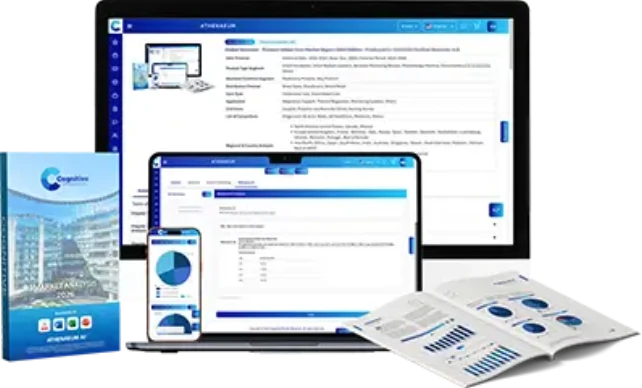
Athenaeum AI Dashboard
Our Proprietary Methodology
Cognitive Market Research and Consulting "The Full Truth" methodology — a rigorous triangulation process that combines primary research, secondary validation, and expert calibration. Implemented by Supriya Yadav and team for the Quantitative Structure Activity Relationship Qsar Market Analysis Market analysis.
Primary Intelligence Gathering
Direct interviews with 50+ industry stakeholders including manufacturers, distributors, end-users, and regulatory bodies across all six regions.
Secondary Data Triangulation
Cross-referencing against trade databases, customs records, financial filings, patent databases, and verified industry publications.
Expert Validation Protocol
Each data point undergoes validation by minimum two independent domain experts with 15+ years of industry experience.
Athenaeum AI Processing
Our proprietary AI platform aggregates, normalizes, and identifies patterns across 10,000+ data points to surface non-obvious insights.
Editorial & QA Review
Final review by senior analysts ensures accuracy, coherence, and actionability of all insights and recommendations.
Data Assurance Metrics
Analytical Coverage
To maintain the integrity of our proprietary methodology and protect our elite expert network, specific source disclosures are reserved for full-access partners. Our research framework is anchored by a 70:30 primary-to-secondary ratio, ensuring your strategy is driven by real-time market intelligence rather than recycled, publicly available, or AI-generated data. Every deliverable includes an exhaustive source directory and grants direct analyst access.
Sources from the Pharma and Healthcare Industry
The Three Pillars of End-to-End Market Research Services
We don't just hand over data. We partner with your team across three integrated service lines — each designed to give you decision-grade intelligence on the Quantitative Structure Activity Relationship Qsar Market Analysis market.
Market Survey
Structured primary research across both B2B and B2C channels. We design and execute custom surveys targeting manufacturers, distributors, procurement heads, and end-consumers in the quantitative structure activity relationship qsar market analysis ecosystem — validated by our global panel of 10,000+ industrial respondents.
- Buyer intent & sentiment analysis
- Purchase cycle mapping
- Price sensitivity research
- Channel preference profiling
- Competitive perception study
Customized Market Data & Reports
Choose from our ready-to-access 8th Edition report or commission a fully customized dataset tailored to your exact strategic questions. Cross-splits, custom geographies, proprietary segmentation — we build the intelligence asset your board actually needs.
- Ready syndicate report
- Custom data scope & segmentation
- Excel quantitative models
- Board-ready PPT with key findings
- Secure cloud portal access
Strategic Consultation
Every survey and every report comes with dedicated analyst consultation. Our senior research team walks your leadership through findings, answers strategic questions in real-time, and helps translate data into your next board presentation or investment thesis.
- Dedicated analyst assigned to you
- Live walkthrough of findings
- Strategic Q&A sessions
- Go-to-market recommendations
- NDA-protected engagement
Customize This Report
Tell us the specific segments, regions, or companies you need — and we will tailor the deliverable to your requirements.