We value your privacy
We use cookies to improve your experience and analyze traffic. By continuing, you consent to our use of cookies under GDPR, CCPA and other applicable laws. Privacy Policy
Cookie preferences
Choose which categories of cookies you allow. Strictly necessary cookies are always on.
Strictly necessary
Required for core site functionality, security and your session. Always active.
Analytics
Help us understand how visitors use the site (e.g. Google Analytics) so we can improve it.
Marketing
Used to measure campaigns and show you relevant ads on other sites (e.g. LinkedIn, Google Ads).
As per Cognitive Market Research's latest published report, the Global Plastic Free Smart Food Packaging market size was $7.28 Billion in 2022 and it is forecasted to reach $13.59 Billion by 2030. Plastic Free Smart Food Packaging Industry's Compound Annual Growth Rate will be 8.6% from 2023 to 2030. Download a free sample with data verified by Chidanand Bilagi
By Type, recyclable segment held maximum share of 34.89% in total Plastic Free Smart Food Packaging market:
Demand for recycling the packaging materials is rising across the globe accredited by the fact that various manufacturers by the initiatives taken by various companies in promoting sustainable ways of packaging.
Recycling is the best solution in reducing packaging wastes and pollution. Recycling process of packaging reduces carbon footprints and it also uses less energy. Companies are getting subsidies from the government to use eco-friendly packaging which further increasing the adoption of recyclable packaging solutions.
Disclaimer: The charts and graphs are for illustrative purposes only and do not represent actual market values. To access accurate quantitative data, please request a paid report or request free sample.
To learn more about market share and segmentation, request the free sample pages.
Competitor Analysis
Recent Developments:
December 2022
BASF and StePac has announced chemically recycled flexible packaging set to preserve fresh produce:
BASF and StePac has created a contact-sensitive packaging solution for the preservation of fresh produce by using ChemCycling technology to facilitate the production of Ultramid Ccyled polyamide 6 for StePac’s Xgo Circular series.
February 2021
Amcor has invested $250,000 into circolution
With an aim to reduce carbon footprints, circolution offers a pay-per-cycle service for FMCG brands as an addition to the existing bottle-deposit system in Germany. Amcor is actively working towards reducing packaging waste and thus is passionate about supporting the development of a circular economy.
January 2022
Smurfit Kappa has extended Better Planet Packaging product portfolio with innovative new solution for fast food
Smurfit Kappa has developed a new sustainable packaging solution for fast food following close collaboration with independent Packaging Consultant Juozas Baranauskas. It is made up of Smurfit Kappa’s Twin Kraft Solid Board, which is a paper-based mono-material specifically designed for food packaging. Company has integrated MB12 technology, owing to which the recyclable material can adsorb mineral oils, keeping food safe whilst simultaneously protecting aroma and taste.
July 2022
Mondi Group has expanded its capacity in sustainable pet food packaging solutions
The company has invested approximately €65 million to meet customers’ growing demand for sustainable packaging solutions. It has also invested in new, advanced machinery at Mondi Halle and Mondi Steinfeld in Germany, to increase production capacity of sustainable pre-made bag solutions for pet food, as well as home and personal care.
April 2022
PaperFoam along with Max Solutions formed a joint venture to sell sustainable packaging in US
The joint venture uses PaperFoam’s existing facility to increase the sales of 100% compostable packaging in the North American market. This has increased the sales of sustainable packaging in the US.
November 2021
Tetra Pak has introduced smart packaging network for southern Europe:
Tetra Pak has introduced the Iberia linked experience, developed in collaboration with Appetite Creative, to engage customers through smart packaging that supports QR codes.
Click any bar or cell to request the full company profile
Top Companies (In no particular order)
2022 (A)
2023 (A)
2024 (A)
2025 (A)
BASF
•••
•••
•••
•••
Amcor
•••
•••
•••
•••
Smurfi Kappa
•••
•••
•••
•••
Mondi Group
•••
•••
•••
•••
Elopak
•••
•••
•••
•••
Paperfoam
•••
•••
•••
•••
Prinkpak
•••
•••
•••
•••
Tetra Pak
•••
•••
•••
•••
Sealed Air Corporation
•••
•••
•••
•••
Avery Dennison Corporation
•••
•••
•••
•••
Algramo
•••
•••
•••
•••
Nanolike
•••
•••
•••
•••
Others
•••
•••
•••
•••
We Provide Regional Breakdown of this Companies and Company specific to any Country, Region, Product/ service as well. We cover market share analysis for publicly listed companies as well as privately held companies, subject to data availability.
As per Cognitive Market Research's latest published report, the Global Plastic Free Smart Food Packaging market size was $7.28 Billion in 2022 and it is forecasted to reach $13.59 Billion by 2030. Plastic Free Smart Food Packaging Industry's Compound Annual Growth Rate will be 8.6% from 2023 to 2030.
Introduction of Plastic Free Smart Food Packaging:
Packaging of food and beverage products is the most integral part of the industry. To meet the growing requirement from food industry, adoption of smart packaging can enhance the safety of food in a sustainable way. Plastic has dominated the packaging industry since ages. However, large consumption of plastic makes up an extensive part of the world’s consumption. It is altering natural habitats and processes. Thus, rising awareness regarding the plastic pollution is driving the adoption of alternative and smart solutions in food packaging industry.
Analyst Conclusion
Our study will explain complete manufacturing process along with major raw materials required to manufacture end-product. This report helps to make effective decisions determining product position and will assist you to understand opportunities and threats around the globe.
The Plastic Free Smart Food Packaging Market Analysis is witnessing significant growth in the near future.
In 2023, the Biodegradable segment accounted for a notable share of the Plastic Free Smart Food Packaging Market Analysis.
Senior Research Associate at Cognitive Market Research
Chidanand Bilagi is a Senior Research Associate at Cognitive Market Research and Consulting, specializing in the chemical and materials industry. With a strong focus on global chemical markets, advanced materials, specialty chemicals, sustainable materials, and emerging industrial innovations, he delivers in-depth market intelligence and strategic insights to support informed decision-making.
His expertise includes analyzing industry trends, competitive landscapes, supply chain dynamics, regulatory developments, raw material pricing patterns, and technological advancements shaping the future of the chemical and materials sector. Through rigorous research and data-driven analysis, Chidanand contributes to the development of comprehensive market reports, helping businesses, investors, and industry stakeholders identify opportunities and address challenges in an evolving global market landscape.
Intensifying concern in association with plastic waste generation is driving the growth of plastic free smart food packaging market.
Europe is dominating the Plastic Free Smart Food Packaging market in year 2022
Study involved in-depth qualitative and quantitative analyses of the market. Moreover, research study involves the use of secondary sources and databases such as key companies’ annual reports, paid & public database, Bloomberg, and Factiva to identify and collect information useful for a technical and market-oriented study of the global Plastic Free Smart Food Packaging market. Market value evaluation is done by using top-down as well as bottom-up analysis
Yes, the report includes a COVID-19 impact analysis.
The report has been analyzed from year 2018 to 2030 in which
• 2018-2022: Historic Period
• 2023: Base Year
• 2023-2030: Forecast Period
Recyclable segment accounts for highest revenue market share in year 2022
Asia Pacific Plastic Free Smart Food Packaging Market is growing at a CAGR of 9.2% during the forecast period
This is just a redacted sample pages of the actual deliverable report and only for representative purposes
Charts/Graphs/Numbers/data are only for Representative purposes and do not depict actual statistics.
The table of Contents differs according to the user License selection. Current Displayed TOC is for the Corporate User License Report Edition. TOC Customization options: Add or Remove section/s Or chapter/s from the report.
Specific Tables, Graphs, Sections, and Chapters can be ordered at a discounted price.
If applicable; On Request Volume Data will also be provided (at an Additional Cost).
Report Scope
Type
Biodegradable, Reusable, Recyclable, Others
Application
Food, Beverage
Material Type
Paper and Paperboard, Metal, Glass, Bioplastics
Concept
Active Packaging, Intelligent Packaging, Modified Atmosphere Packaging
List of Competitors
BASF, Amcor, Smurfi Kappa, Mondi Group, Elopak, Paperfoam, Prinkpak, Tetra Pak, Sealed Air Corporation, Avery Dennison Corporation, Algramo, Nanolike, Others
Chapter 1. Competitor Analysis (Subject to Data Availability (Private Players))
1.1 Top Competitors Analysis
1.1.1 Global Plastic Free Smart Food Packaging Market Analysis by Key Players
1.1.2 Segment Market Analysis by Key Players
1.1.3 Top Players Ranking 2024
1.1.4 New Product Launch Analysis
1.1.5 Industry Mergers and Acquisition Analysis
1.2 Company Profile (Data Subject to Availability) Sample Format
1.2.1 BASF
1.2.1.1 Company Basic Information, Manufacturing Base, Sales Area, and Competitors
1.2.1.2 Business Overview
1.2.1.3 Financials (Subject to data availability)
1.2.1.4 R&D Investment (Subject to data availability)
1.2.1.5 Product Types Specification
1.2.1.6 Business Strategy
1.2.1.7 Recent Developments
1.2.1.8 Management Change
1.2.1.9 S.W.O.T Analysis
1.2.2 Amcor
1.2.2.1 Company Basic Information, Manufacturing Base, Sales Area, and Competitors
1.2.2.2 Business Overview
1.2.2.3 Financials (Subject to data availability)
1.2.2.4 R&D Investment (Subject to data availability)
1.2.2.5 Product Types Specification
1.2.2.6 Business Strategy
1.2.2.7 Recent Developments
1.2.2.8 Management Change
1.2.2.9 S.W.O.T Analysis
1.2.3 Smurfi Kappa
1.2.3.1 Company Basic Information, Manufacturing Base, Sales Area, and Competitors
1.2.3.2 Business Overview
1.2.3.3 Financials (Subject to data availability)
1.2.3.4 R&D Investment (Subject to data availability)
1.2.3.5 Product Types Specification
1.2.3.6 Business Strategy
1.2.3.7 Recent Developments
1.2.3.8 Management Change
1.2.3.9 S.W.O.T Analysis
1.2.4 Mondi Group
1.2.4.1 Company Basic Information, Manufacturing Base, Sales Area, and Competitors
1.2.4.2 Business Overview
1.2.4.3 Financials (Subject to data availability)
1.2.4.4 R&D Investment (Subject to data availability)
1.2.4.5 Product Types Specification
1.2.4.6 Business Strategy
1.2.4.7 Recent Developments
1.2.4.8 Management Change
1.2.4.9 S.W.O.T Analysis
1.2.5 Elopak
1.2.5.1 Company Basic Information, Manufacturing Base, Sales Area, and Competitors
1.2.5.2 Business Overview
1.2.5.3 Financials (Subject to data availability)
1.2.5.4 R&D Investment (Subject to data availability)
1.2.5.5 Product Types Specification
1.2.5.6 Business Strategy
1.2.5.7 Recent Developments
1.2.5.8 Management Change
1.2.5.9 S.W.O.T Analysis
1.2.6 Paperfoam
1.2.6.1 Company Basic Information, Manufacturing Base, Sales Area, and Competitors
1.2.6.2 Business Overview
1.2.6.3 Financials (Subject to data availability)
1.2.6.4 R&D Investment (Subject to data availability)
1.2.6.5 Product Types Specification
1.2.6.6 Business Strategy
1.2.6.7 Recent Developments
1.2.6.8 Management Change
1.2.6.9 S.W.O.T Analysis
1.2.7 Prinkpak
1.2.7.1 Company Basic Information, Manufacturing Base, Sales Area, and Competitors
1.2.7.2 Business Overview
1.2.7.3 Financials (Subject to data availability)
1.2.7.4 R&D Investment (Subject to data availability)
1.2.7.5 Product Types Specification
1.2.7.6 Business Strategy
1.2.7.7 Recent Developments
1.2.7.8 Management Change
1.2.7.9 S.W.O.T Analysis
1.2.8 Tetra Pak
1.2.8.1 Company Basic Information, Manufacturing Base, Sales Area, and Competitors
1.2.8.2 Business Overview
1.2.8.3 Financials (Subject to data availability)
1.2.8.4 R&D Investment (Subject to data availability)
1.2.8.5 Product Types Specification
1.2.8.6 Business Strategy
1.2.8.7 Recent Developments
1.2.8.8 Management Change
1.2.8.9 S.W.O.T Analysis
1.2.9 Sealed Air Corporation
1.2.9.1 Company Basic Information, Manufacturing Base, Sales Area, and Competitors
1.2.9.2 Business Overview
1.2.9.3 Financials (Subject to data availability)
1.2.9.4 R&D Investment (Subject to data availability)
1.2.9.5 Product Types Specification
1.2.9.6 Business Strategy
1.2.9.7 Recent Developments
1.2.9.8 Management Change
1.2.9.9 S.W.O.T Analysis
1.2.10 Avery Dennison Corporation
1.2.10.1 Company Basic Information, Manufacturing Base, Sales Area, and Competitors
1.2.10.2 Business Overview
1.2.10.3 Financials (Subject to data availability)
1.2.10.4 R&D Investment (Subject to data availability)
1.2.10.5 Product Types Specification
1.2.10.6 Business Strategy
1.2.10.7 Recent Developments
1.2.10.8 Management Change
1.2.10.9 S.W.O.T Analysis
1.2.11 Algramo
1.2.11.1 Company Basic Information, Manufacturing Base, Sales Area, and Competitors
1.2.11.2 Business Overview
1.2.11.3 Financials (Subject to data availability)
1.2.11.4 R&D Investment (Subject to data availability)
1.2.11.5 Product Types Specification
1.2.11.6 Business Strategy
1.2.11.7 Recent Developments
1.2.11.8 Management Change
1.2.11.9 S.W.O.T Analysis
1.2.12 Nanolike
1.2.12.1 Company Basic Information, Manufacturing Base, Sales Area, and Competitors
1.2.12.2 Business Overview
1.2.12.3 Financials (Subject to data availability)
1.2.12.4 R&D Investment (Subject to data availability)
1.2.12.5 Product Types Specification
1.2.12.6 Business Strategy
1.2.12.7 Recent Developments
1.2.12.8 Management Change
1.2.12.9 S.W.O.T Analysis
1.2.13 Others
1.2.13.1 Company Basic Information, Manufacturing Base, Sales Area, and Competitors
1.2.13.2 Business Overview
1.2.13.3 Financials (Subject to data availability)
1.2.13.4 R&D Investment (Subject to data availability)
1.2.13.5 Product Types Specification
1.2.13.6 Business Strategy
1.2.13.7 Recent Developments
1.2.13.8 Management Change
1.2.13.9 S.W.O.T Analysis
Chapter 2. Global Plastic Free Smart Food Packaging Market Analysis
2.1 Global Plastic Free Smart Food Packaging Market Analysis
2.2 Global Plastic Free Smart Food Packaging Market Analysis by Region
2.3 Global Plastic Free Smart Food Packaging Market Analysis by Type
2.4 Global Plastic Free Smart Food Packaging Market Analysis by Application
2.5 Global Plastic Free Smart Food Packaging Market Analysis by Material Type
2.6 Global Plastic Free Smart Food Packaging Market Analysis by Concept
2.7 Global Plastic Free Smart Food Packaging Market Analysis by Key Players
Chapter 3. North America Plastic Free Smart Food Packaging Market Analysis
3.1 North America Plastic Free Smart Food Packaging Market Analysis
3.2 North America Plastic Free Smart Food Packaging Market Analysis by Country
3.3 North America Plastic Free Smart Food Packaging Market Analysis by Type
3.4 North America Plastic Free Smart Food Packaging Market Analysis by Application
3.5 North America Plastic Free Smart Food Packaging Market Analysis by Material Type
3.6 North America Plastic Free Smart Food Packaging Market Analysis by Concept
3.7 North America Plastic Free Smart Food Packaging Market Analysis by Key Players
Chapter 4. Europe Plastic Free Smart Food Packaging Market Analysis
4.1 Europe Plastic Free Smart Food Packaging Market Analysis
4.2 Europe Plastic Free Smart Food Packaging Market Analysis by Country
4.3 Europe Plastic Free Smart Food Packaging Market Analysis by Type
4.4 Europe Plastic Free Smart Food Packaging Market Analysis by Application
4.5 Europe Plastic Free Smart Food Packaging Market Analysis by Material Type
4.6 Europe Plastic Free Smart Food Packaging Market Analysis by Concept
4.7 Europe Plastic Free Smart Food Packaging Market Analysis by Key Players
13.14.2 AI-Driven Transformation of Industry Value Chain
13.14.3 Evolution of Business Models & Revenue Streams
13.14.4 AI-Driven Product, Service & Innovation Transformation
13.14.5 Customer Behavior, AI Adoption & Future Market Evolution
Chapter 14. TOP 10 Country Analysis
14.1 Country 1
14.2 Country 2
14.3 Country 3
14.4 Country 4
14.5 Country 5
14.6 Country 6
14.7 Country 7
14.8 Country 8
14.9 Country 9
14.10 Country 10
Chapter 15. Research Findings
15.1 Key Takeaways
15.2 Analyst Point of View
15.3 Assumptions and Acronyms
Chapter 16. Research Methodology and Sources
16.1 Primary Data Collection
16.1.1 Steps for Primary Data Collection
16.1.1.1 Identification of KOL
16.1.2 Backward Integration
16.1.3 Forward Integration
16.1.4 How Primary Research Help Us
16.1.5 Modes of Primary Research
16.2 Secondary Research
16.2.1 How Secondary Research Help Us
16.2.2 Sources of Secondary Research
16.3 Data Validation
16.3.1 Data Triangulation
16.4 Data Representation
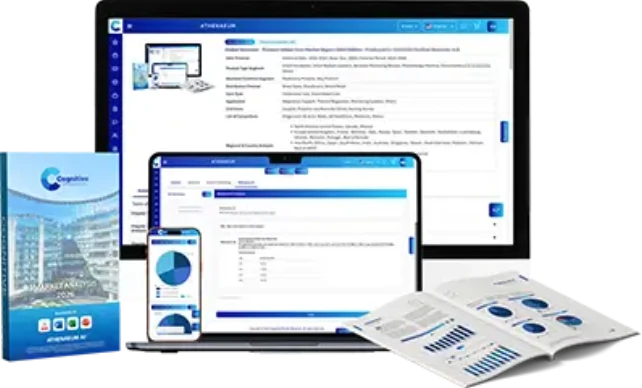
Athenaeum AI Dashboard
Research Framework · 70:30 Primary:Secondary
Our Proprietary Methodology
Cognitive Market Research and Consulting "The Full Truth" methodology — a rigorous triangulation process that combines primary research, secondary validation, and expert calibration. Implemented by Chidanand Bilagi and team for the Plastic Free Smart Food Packaging Market Analysis Market analysis.
01
Primary Intelligence Gathering
Direct interviews with 50+ industry stakeholders including manufacturers, distributors, end-users, and regulatory bodies across all six regions.
02
Secondary Data Triangulation
Cross-referencing against trade databases, customs records, financial filings, patent databases, and verified industry publications.
03
Expert Validation Protocol
Each data point undergoes validation by minimum two independent domain experts with 15+ years of industry experience.
04
Athenaeum AI Processing
Our proprietary AI platform aggregates, normalizes, and identifies patterns across 10,000+ data points to surface non-obvious insights.
05
Editorial & QA Review
Final review by senior analysts ensures accuracy, coherence, and actionability of all insights and recommendations.
To maintain the integrity of our proprietary methodology and protect our elite expert network, specific source disclosures are reserved for full-access partners. Our research framework is anchored by a 70:30 primary-to-secondary ratio, ensuring your strategy is driven by real-time market intelligence rather than recycled, publicly available, or AI-generated data. Every deliverable includes an exhaustive source directory and grants direct analyst access.
Latest Articles about Plastic Free Smart Food Packaging Market
This packaging is an innovative and eco-friendly solution to the environmental concerns of plastic pollution. It is biodegradable and helps reduce waste, conserve resources, and provide an effective food storage solution.
The Three Pillars of End-to-End Market Research Services
We don't just hand over data. We partner with your team across three integrated service lines — each designed to give you decision-grade intelligence on the Plastic Free Smart Food Packaging Market Analysis market.
Service 01
Market Survey
B2BB2C
Structured primary research across both B2B and B2C channels. We design and execute custom surveys targeting manufacturers, distributors, procurement heads, and end-consumers in the plastic free smart food packaging market analysis ecosystem — validated by our global panel of 10,000+ industrial respondents.
What's Included
Buyer intent & sentiment analysis
Purchase cycle mapping
Price sensitivity research
Channel preference profiling
Competitive perception study
Most Requested
Service 02
Customized Market Data & Reports
CustomReady Report
Choose from our ready-to-access 8th Edition report or commission a fully customized dataset tailored to your exact strategic questions. Cross-splits, custom geographies, proprietary segmentation — we build the intelligence asset your board actually needs.
What's Included
Ready syndicate report
Custom data scope & segmentation
Excel quantitative models
Board-ready PPT with key findings
Secure cloud portal access
Service 03
Strategic Consultation
With SurveyWith Report
Every survey and every report comes with dedicated analyst consultation. Our senior research team walks your leadership through findings, answers strategic questions in real-time, and helps translate data into your next board presentation or investment thesis.
What's Included
Dedicated analyst assigned to you
Live walkthrough of findings
Strategic Q&A sessions
Go-to-market recommendations
NDA-protected engagement
Plastic Free Smart Food Packaging Market Related Reports
Tell us the specific segments, regions, or companies you need — and we will tailor the deliverable to your requirements.
Why Trust Us
What these certifications mean to usA market figure is only as reliable as the system that produced it. That is why our accreditations cover the whole chain, not just the research step. ESOMAR and MRSI membership binds us to the professional codes that govern how respondents are recruited and how findings may be represented. ISO 20252 governs the research process itself; ISO 9001 and our quality control certification govern how consistently we repeat it. ISO 27001 and ISO 27701, alongside our GDPR, CCPA and DPDP compliance, govern what happens to your brief and your data once it reaches us; because a confidential scope is often more sensitive than the deliverable. ISO 14001, our D-U-N-S registration, Chamber of Commerce membership and DMCA protection speak to how the company itself is run and how its work is safeguarded.Our Clutch and Trustpilot profiles are deliberately listed next to them. They are the only signals on this page we do not issue ourselves, and they are the ones we would check first if we were you.