Pest Control Market Analysis from 2022 to 2034 Containing Market Size, Share along with its CAGR, Forecast and Trends
Top Countries — Revenue
Market Dynamics of Pest Control Market Analysis
Growth Drivers
- Increasing the number of residential and commercial sector to boosts the need for advanced Pest Control
- Increase in the number of diseases spread by insects to drive market growth
- Rise in cleanliness and hygiene for market expansion
Restraints
- Growth in pest resistance against chemical compounds of Pest Control limit market growth
- High registration costs and interminable time for product approval in Pest Control designs can hinder market adoption
Trends
- Growing use of technology and digital applications
- Growing adoption of Smart and Sustainable Pest Control Measures
Access the full forecast model.
Country-level data · Company profiles · Editable dataset · Analyst consultation included.
Pest Control Market Analysis — Presence
Geographical Analysis
Click countries to exploreRegional and Country Analysis
Global Pest Control Market Analysis 2026
| Region / Country | 2021 (A) | 2025 (A) | 2033 (P) | CAGR |
|---|---|---|---|---|
| Global | xxxx | $ 25621.8 Million | $ 42404 Million | 6.5% |
| North America | xxxx | $ 9480.07 Million | $ 13276.6 Million | 4.3% |
| United States | xxxx | $ 7479.77 Million | xxxx | 4.1% |
| Canada | xxxx | $ 1137.61 Million | xxxx | 5.1% |
| Mexico | xxxx | $ 862.69 Million | xxxx | 4.8% |
| Europe | xxxx | $ 7430.32 Million | $ 10811.8 Million | 4.8% |
| United Kingdom | xxxx | $ 1248.29 Million | xxxx | 5.6% |
| France | xxxx | $ 683.59 Million | xxxx | 4% |
| Germany | xxxx | $ 1471.2 Million | xxxx | 5% |
| Italy | xxxx | $ 639.01 Million | xxxx | 4.2% |
| Russia | xxxx | $ 1151.7 Million | xxxx | 3.8% |
| Spain | xxxx | $ 609.29 Million | xxxx | 3.9% |
| Sweden | xxxx | $ 230.34 Million | xxxx | 4.9% |
| Denmark | xxxx | $ 156.04 Million | xxxx | 4.6% |
| Switzerland | xxxx | $ 111.45 Million | xxxx | 4.5% |
| Luxembourg | xxxx | $ 89.16 Million | xxxx | 5.1% |
| Rest of Europe | xxxx | $ 1040.25 Million | xxxx | 3.5% |
| Asia Pacific | xxxx | $ 6149.23 Million | $ 11810.2 Million | 8.5% |
| China | xxxx | $ 2582.68 Million | xxxx | 8% |
| Japan | xxxx | $ 848.59 Million | xxxx | 7% |
| South Korea | xxxx | $ 737.91 Million | xxxx | 7.6% |
| India | xxxx | $ 614.92 Million | xxxx | 10.4% |
| Australia | xxxx | $ 319.76 Million | xxxx | 7.8% |
| Singapore | xxxx | $ 122.98 Million | xxxx | 8.8% |
| Taiwan | xxxx | $ 239.82 Million | xxxx | 8.3% |
| South East Asia | xxxx | $ 405.85 Million | xxxx | 9.3% |
| Rest of APAC | xxxx | $ 276.72 Million | xxxx | 8.3% |
| South America | xxxx | $ 973.63 Million | $ 1494.2 Million | 5.5% |
| Brazil | xxxx | $ 416.71 Million | xxxx | 6.1% |
| Argentina | xxxx | $ 163.57 Million | xxxx | 6.4% |
| Colombia | xxxx | $ 86.65 Million | xxxx | 5.3% |
| Peru | xxxx | $ 79.84 Million | xxxx | 5.7% |
| Chile | xxxx | $ 70.1 Million | xxxx | 5.8% |
| Rest of South America | xxxx | $ 156.75 Million | xxxx | 4.6% |
| Middle East | xxxx | $ 1024.87 Million | $ 1609 Million | 5.8% |
| Saudi Arabia | xxxx | $ 360.75 Million | xxxx | 6.1% |
| Turkey | xxxx | $ 81.99 Million | xxxx | 6.4% |
| UAE | xxxx | $ 211.12 Million | xxxx | 6.3% |
| Egypt | xxxx | $ 61.49 Million | xxxx | 5.6% |
| Qatar | xxxx | $ 81.99 Million | xxxx | 5.3% |
| Rest of Middle East | xxxx | $ 227.52 Million | xxxx | 5% |
| Africa | xxxx | $ 563.68 Million | $ 912.1 Million | 6.2% |
| East Africa | xxxx | xxxx | xxxx | xxxx |
| West Africa | xxxx | xxxx | xxxx | xxxx |
| North Africa | xxxx | xxxx | xxxx | xxxx |
| South Africa | xxxx | $ 198.42 Million | xxxx | 7.1% |
A = Actual · E = Estimated · P = Projected · 🔒 Locked values require full access. Click headers to sort.
Unlock full regional dataset →Segmentation Analysis
Pest Type breakdown · Illustrative 2025 shares shown free · Full-period forecast in paid report.
Disclaimer: The charts and graphs are for illustrative purposes only and do not represent actual market values. To access accurate quantitative data, please request a paid report or request free sample.
To learn more about market share and segmentation, request the free sample pages.
Competitor Analysis
Competitive Landscape of the Pest Control Market
The Pest Control Market is highly competitive, characterized by the presence of several global and regional players offering a wide range of products. Key companies in the market, such as Bayer AG (Germany), Corteva Agriscience (US), BASF SE (Germany), and Syngenta AG (Switzerland), dominate through their extensive product portfolios, strong distribution networks, and focus on innovation.
In June 2023, In Eschbach, Germany, Corteva Agriscience established a joint crop protection and seed research facility. This research facility would assist the business in fostering innovation and providing farmers with long-term solutions. Additionally, the expansion would allow the company to carry out cutting-edge crop protection research in order to assist in the development of solutions that shield crops from pests and diseases, thereby increasing the market for pest control. https://news.agropages.com/News/NewsDetail---38465.htm In September 2022, Syngenta Crop Protection and Gamaya SA, a Swiss agricultural company, worked together to create and introduce a digital tool that uses satellite imagery to identify dangerous nematodes. This is a for-profit computerized mapping and diagnosis tool for dangerous nematode pests. https://www.startupticker.ch/en/news/gamaya-unveiling%20-world-s-first-digital-tool-using-satelite-imagesl-to-fight-pests-unveiled
| Top Companies (In no particular order) | 2022 (A) | 2023 (A) | 2024 (A) | 2025 (A) |
|---|---|---|---|---|
| Rentokil Initial | ••• | ••• | ••• | ••• |
| Rollins Inc. | ••• | ••• | ••• | ••• |
| Anticimex | ••• | ••• | ••• | ••• |
| Ecolab | ••• | ••• | ••• | ••• |
| Massey Services | ••• | ••• | ••• | ••• |
| Arrow Exterminators | ••• | ••• | ••• | ••• |
| Truly Nolen | ••• | ••• | ••• | ••• |
| Pelsis | ••• | ••• | ••• | ••• |
| BASF | ••• | ••• | ••• | ••• |
| Envu | ••• | ••• | ••• | ••• |
| Syngenta | ••• | ••• | ••• | ••• |
| Others | ••• | ••• | ••• | ••• |
We Provide Regional Breakdown of this Companies and Company specific to any Country, Region, Product/ service as well. We cover market share analysis for publicly listed companies as well as privately held companies, subject to data availability.
Request company profile for validation →Report Scope & Analysis
According to Cognitive Market Research, the global Pest Control Market size will be USD 25621.8 million in 2025. It will expand at a compound annual growth rate (CAGR) of 6.50% from 2025 to 2033.
- North America held the major market share for more than 37% of the global revenue with a market size of USD 9480.07 million in 2025 and will grow at a compound annual growth rate (CAGR) of 4.3% from 2025 to 2033.
- Europe accounted for a market share of over 29% of the global revenue with a market size of USD 7430.32 million.
- APAC held a market share of around 24% of the global revenue with a market size of USD 6149.23 million in 2025 and will grow at a compound annual growth rate (CAGR) of 8.5% from 2025 to 2033.
- South America has a market share of more than 3.8% of the global revenue with a market size of USD 973.63 million in 2025 and will grow at a compound annual growth rate (CAGR) of 5.5% from 2025 to 2033.
- Middle East had a market share of around 4.00% of the global revenue and was estimated at a market size of USD 1024.87 million in 2025 and will grow at a compound annual growth rate (CAGR) of 5.8% from 2025 to 2033.
- Africa had a market share of around 2.20% of the global revenue and was estimated at a market size of USD 563.68 million in 2025 and will grow at a compound annual growth rate (CAGR) of 6.2% from 2025 to 2033.
- Termites category is the fastest growing segment of the Pest Control industry.
Introduction of the Pest Control Market
The industry devoted to the prevention, control, and elimination of pests that endanger property, agriculture, and human health is known as the pest control market. It covers a broad spectrum of pest management techniques, including mechanical traps, biological solutions, chemical treatments, and integrated pest management plans. While biological management uses microbial agents or natural predators to control pest populations, chemical pest control uses pesticides and insecticides to eradicate infestations. For pest control, mechanical techniques like barriers and traps offer non-chemical alternatives. Growing urbanization, climate change, and growing worries about food security and hygiene are some of the drivers driving the industry. The pest control industry is still shaped by regulatory frameworks and environmental factors, which have an impact on product development and uptake in a variety of industries.
In June 2023, In order to help paddy farmers all throughout India, Bayer AG's agricultural division Bayer CropScience teamed up with Crystal Crop Protection Ltd. to create and introduce innovative pest management products. This collaboration marks a significant turning point in India's efforts to increase rice farmer yields and crop protection methods. https://www.business-standard.com/article/pti-stories/bayer-crystal-crop-partner-to-find-solution-for-brown-plant-hopper-pest-in-paddy-crop-118092000697_1.html
Analyst Conclusion

Sneha Mali serves as a Team Lead at Cognitive Market Research & Consulting, overseeing research initiatives and delivering strategic market intelligence across the Food & Beverages and Agriculture sectors. With extensive experience in market analysis and team management, she plays a critical role in guiding research projects that help organizations understand evolving market dynamics, supply chain developments, consumer trends, and emerging growth opportunities within global agribusiness and food markets.
Leveraging both primary and secondary research methodologies, Sneha leads the execution of market assessments, competitive intelligence studies, stakeholder interviews, trend analysis, forecasting exercises, and custom consulting engagements. She works closely with agricultural producers, food manufacturers, distributors, industry experts, and other key stakeholders to gather firsthand market insights while validating findings through comprehensive secondary research. Her ability to analyze complex datasets enables clients to gain a deeper understanding of agricultural production trends, commodity movements, consumer demand patterns, and competitive landscapes.
In her leadership role, she manages cross-functional research teams, ensuring the successful delivery of high-quality market reports, consulting projects, and strategic studies. Her expertise in data mining, market evaluation, and analytical problem-solving allows her to transform large volumes of structured and unstructured information into actionable business intelligence. Through her guidance, organizations are better equipped to identify market opportunities, evaluate business risks, optimize growth strategies, and strengthen their competitive positioning.
Passionate about agricultural innovation, sustainability, and the future of global food systems, Sneha remains committed to continuous learning and research excellence. By staying informed about emerging agri-tech developments, changing market conditions, and evolving research methodologies, she helps clients navigate industry challenges and make informed decisions that support long-term growth and business success in an increasingly dynamic marketplace.
Purchase & Support
What you get, what it costs, and how we stand behind it
Every licence includes two years of analyst access, not just a document. Below: the decisions this research supports, what is included, what is charged separately, and the checks every figure passes before release.
What our consultation helps you decide
If you are deciding…
- Whether to enter or expand in a market
- Where to invest across the portfolio
- Which customer groups to target
- Where to direct product development
- How to position against competitors
- How your performance compares to the market
- Whether to acquire, partner or divest
- Whether to invest or fund
- How to plan budgets and targets
- Which route to market to build
- How to assess supply and sourcing risk
These are the decisions clients bring us most often — but they are not the limit. Most engagements surface questions the data alone does not answer, and that is where the consultation does the work. Tell us what you are deciding, and our analyst will tell you what the research can support.
Included in your purchase
A licence is a two-year relationship, not a one-time download. Everything below is included at no additional cost.
Access & formats
- Multi-format delivery
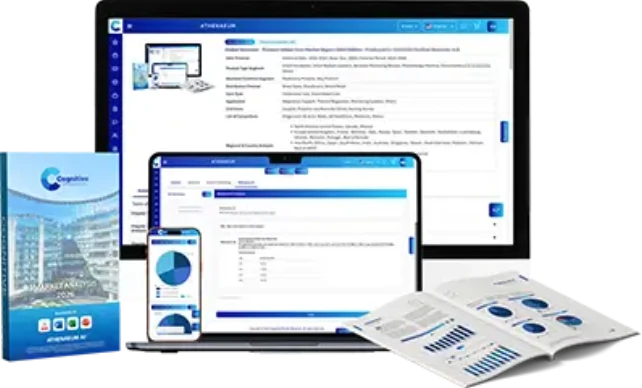
- Cloud/HTML with master and team access, PDF, Excel data models, board-ready PPT, and the Athenaeum AI consultant.
- Interactive dashboard
- Toggle the dataset across global currencies and languages in real time.
- Portfolio-level insight
- Three-year country-level market sizing across your entire product range, not a single line.
Updates & editions
- 8 quarterly refreshes
- Complimentary data updates every quarter for two years, so your figures track the market rather than the publication date.
- Next two annual editions
- The following two yearly editions are added to your account automatically.
- Dated at source
- Every deliverable carries a visible “data updated” date so recency is never in question.
Advisory & support
- 6 hours analyst consultation
- One-to-one time with the lead analyst for Q&A, walkthroughs, or to join an internal executive discussion as an independent adviser.
- Two-year strategic advisory
- Continuing support on assumptions, methodology and evolving requirements for the full licence period.
- 24/7 client support
- Round-the-clock account support for ad-hoc queries and new requests.
How delivery works
From first enquiry to dispatch, with a named analyst attached at every stage. Standard delivery is 5–7 business days from scope confirmation.
Before you buy
Complimentary preview. The full data structure and table of contents, so you can judge scope before committing.
Scope tailored to your question. Share your use case and problem statement and we shape the research around it.
Modular purchasing. Buy specific chapters, sections or graphs at nominal rates without the full dataset.
Confidentiality from first contact
Your proprietary requirements and personal information are safeguarded under GDPR (EU/UK), CCPA (USA) and the DPDP Act (India).
All project parameters are bound by a non-disclosure agreement from your first enquiry — not from the point of purchase.
Delivery execution
- 01Scope confirmationReview the preview with your dedicated analyst to agree variables, structure and formats.
- 02Extraction & customisationWe isolate the precise segments and parameters you need from the core database.
- 03Current-market validationFigures are refreshed and cross-checked against current-quarter market conditions.
- 04Expert QASenior specialists run qualitative checks and resolve overlaps and discrepancies.
- 05Dispatch & walkthroughDelivered in 5–7 business days, followed by an analyst-led walkthrough and Q&A.
Scope, timeline and price are confirmed in writing before any work starts. Customised datasets follow the same validation method and quality review as the standard report.
Available at additional cost
Outside the standard licence, but available on request. Scope and price are confirmed in writing before any work begins.
How we assure quality
Before any dataset is released, it passes a five-stage review carried out by senior analysts and independent industry specialists.
- Senior analyst reviewEvery headline figure — market size, forecast, growth rate — is checked by a senior analyst before publication.
- Independent expert verificationEach data point is reviewed by at least two industry specialists with 15+ years in the category.
- Arithmetic and reconciliationCountry and regional figures are reconciled to their totals and cross-checked against observable market conditions.
- Divergence resolutionWhere sources conflict, we trace the cause rather than averaging it away, and record the basis for the figure we publish.
- Dated releaseEach deliverable ships with an explicit data-updated date and the edition it belongs to.
By combining statistical validation with qualitative vetting by practitioners, we release figures that are structurally sound and ready to carry into a board paper, an investment memo or a regulatory filing.
Need something outside this scope? Share your use case and we will confirm feasibility, timeline and price in writing before work starts.
Frequently Asked Questions
★ Reviews
Rate this report
Pest Control Market Analysis — Table of Contents
- This is just a redacted sample pages of the actual deliverable report and only for representative purposes
- Charts/Graphs/Numbers/data are only for Representative purposes and do not depict actual statistics.
- The table of Contents differs according to the user License selection. Current Displayed TOC is for the Corporate User License Report Edition. TOC Customization options: Add or Remove section/s Or chapter/s from the report.
- Specific Tables, Graphs, Sections, and Chapters can be ordered at a discounted price.
- If applicable; On Request Volume Data will also be provided (at an Additional Cost).
Report Scope
| Pest Type | Insects, Rodents, Termites, Mites, Others |
|---|---|
| Control Method | Chemical control, Biological control, Mechanical and physical control, Others |
| Product Type | Insecticides, Rodenticides, Termiticides, Fumigants, Repellents, Others |
| Formulation | Liquid concentrates, Ready-to-use sprays, Aerosols, Granules, Wettable powders, Others |
| Application | Residential, Commercial, Industrial, Agricultural |
| Sales Channel | Direct sales, Indirect Sales |
| List of Competitors | Rentokil Initial, Rollins Inc., Anticimex, Ecolab, Massey Services, Arrow Exterminators, Truly Nolen, Pelsis, BASF, Envu, Syngenta, Others |
1. Pest Control Industry Ecosystem and Value Chain
-
Map manufacturers, distributors, service providers, technology vendors and end users.
-
Analyze value creation across formulation, registration, distribution, application and monitoring.
-
Assess value capture and partnership opportunities across the supply chain.
2. Pest Prevalence, Biology and Demand Drivers
-
Analyze prevalence and seasonality of insects, rodents, termites and other pests.
-
Assess the impact of climate, urbanization, sanitation and land-use changes.
-
Evaluate pest-related health risks, food contamination and structural damage.
3. Pest Control Products and Formulation Technology
-
Benchmark insecticides, rodenticides, termiticides, baits, gels and biological formulations.
-
Compare efficacy, residual performance, application requirements and formulation costs.
-
Assess innovation in controlled-release, targeted-delivery and reduced-residue products.
4. Integrated Pest Management and Non-Chemical Alternatives
-
Analyze IPM adoption across residential, commercial, industrial and public-health applications.
-
Compare chemical treatments with trapping, exclusion, sanitation, heat and biological methods.
-
Evaluate demand for prevention-led programmes and reduced-chemical approaches.
5. Professional Pest Control Services and Contract Economics
-
Assess one-time treatments, emergency services, recurring contracts and specialist remediation.
-
Compare residential route-based services with commercial and industrial accounts.
-
Analyze pricing, customer retention, technician productivity and contract profitability.
6. Residential Pest Control Market
-
Analyze demand across detached homes, apartments, rental properties and residential communities.
-
Examine common pests, seasonal treatment requirements and preventive service adoption.
-
Assess recurring plans, customer acquisition, digital bookings and retention.
7. Commercial and Institutional Pest Control
-
Assess demand across offices, hospitality, retail, education, healthcare and public buildings.
-
Examine multi-site contracts, scheduled inspections, documentation and service-level agreements.
-
Compare outsourced services with in-house pest management.
8. Food Processing, Storage and Supply Chain Pest Management
-
Analyze demand across food manufacturing, grain storage, cold storage and distribution facilities.
-
Assess fumigation, stored-product insect management, sanitation and pest monitoring.
-
Examine food safety audits, traceability, contamination prevention and compliance requirements.
9. Agricultural Pest Control and Crop Protection
-
Analyze demand across field crops, horticulture, plantations, greenhouses and post-harvest operations.
-
Compare chemical, biological and integrated crop pest management practices.
-
Assess crop cycles, pest pressure, farm economics and pesticide regulations.
10. Termite Management and Structural Protection
-
Analyze pre-construction treatment, soil barriers, baiting systems and post-construction services.
-
Compare control requirements for subterranean, drywood and other termite types.
-
Assess construction activity, inspection requirements, warranties and recurring monitoring.
11. Rodent Management and Exclusion Solutions
-
Assess rodent control demand across homes, food facilities, warehouses and municipalities.
-
Compare rodenticides, traps, exclusion, sanitation and monitoring technologies.
-
Examine resistance management, non-target risks and prevention-led service economics.
12. Vector Control and Public Health
-
Analyze mosquito, tick, flea and other disease-vector management programmes.
-
Assess public-sector expenditure, surveillance, community interventions and emergency response.
-
Compare larval control, targeted spraying and integrated vector management approaches.
13. Biological Pest Control and Sustainable Solutions
-
Map microbial agents, beneficial organisms, parasitoids, botanical products and other alternatives.
-
Compare efficacy, application requirements, storage stability and field performance.
-
Assess commercialization barriers, registration requirements and production economics.
14. Pest Control Equipment and Application Technologies
-
Benchmark sprayers, foggers, bait stations, traps, insect light traps and fumigation equipment.
-
Examine precision application, automated trapping and remote monitoring innovations.
-
Assess equipment replacement cycles, maintenance, consumables and distribution channels.
15. Digital Pest Monitoring, AI and Predictive Analytics
-
Analyze connected traps, sensors, image-based detection and remote monitoring platforms.
-
Assess AI-assisted identification, automated alerts and treatment prioritization.
-
Evaluate integration with technician scheduling, reporting and compliance systems.
Chapter 1. Competitor Analysis (Subject to Data Availability (Private Players))
- 1.1 Top Competitors Analysis
- 1.1.1 Global Pest Control Market Analysis by Key Players
- 1.1.2 Segment Market Analysis by Key Players
- 1.1.3 Top Players Ranking 2024
- 1.1.4 New Product Launch Analysis
- 1.1.5 Industry Mergers and Acquisition Analysis
- 1.2 Company Profile (Data Subject to Availability) Sample Format
- 1.2.1 Rentokil Initial
- 1.2.1.1 Company Snapshot
- 1.2.1.2 Business Overview
- 1.2.1.3 Financials (Subject to data availability)
- 1.2.1.4 R&D Investment (Subject to data availability)
- 1.2.1.5 Product Types Specification
- 1.2.1.6 Business Strategy
- 1.2.1.7 Recent Developments
- 1.2.1.8 Management Change
- 1.2.1.9 S.W.O.T Analysis
- 1.2.2 Rollins Inc.
- 1.2.2.1 Company Snapshot
- 1.2.2.2 Business Overview
- 1.2.2.3 Financials (Subject to data availability)
- 1.2.2.4 R&D Investment (Subject to data availability)
- 1.2.2.5 Product Types Specification
- 1.2.2.6 Business Strategy
- 1.2.2.7 Recent Developments
- 1.2.2.8 Management Change
- 1.2.2.9 S.W.O.T Analysis
- 1.2.3 Anticimex
- 1.2.3.1 Company Snapshot
- 1.2.3.2 Business Overview
- 1.2.3.3 Financials (Subject to data availability)
- 1.2.3.4 R&D Investment (Subject to data availability)
- 1.2.3.5 Product Types Specification
- 1.2.3.6 Business Strategy
- 1.2.3.7 Recent Developments
- 1.2.3.8 Management Change
- 1.2.3.9 S.W.O.T Analysis
- 1.2.4 Ecolab
- 1.2.4.1 Company Snapshot
- 1.2.4.2 Business Overview
- 1.2.4.3 Financials (Subject to data availability)
- 1.2.4.4 R&D Investment (Subject to data availability)
- 1.2.4.5 Product Types Specification
- 1.2.4.6 Business Strategy
- 1.2.4.7 Recent Developments
- 1.2.4.8 Management Change
- 1.2.4.9 S.W.O.T Analysis
- 1.2.5 Massey Services
- 1.2.5.1 Company Snapshot
- 1.2.5.2 Business Overview
- 1.2.5.3 Financials (Subject to data availability)
- 1.2.5.4 R&D Investment (Subject to data availability)
- 1.2.5.5 Product Types Specification
- 1.2.5.6 Business Strategy
- 1.2.5.7 Recent Developments
- 1.2.5.8 Management Change
- 1.2.5.9 S.W.O.T Analysis
- 1.2.6 Arrow Exterminators
- 1.2.6.1 Company Snapshot
- 1.2.6.2 Business Overview
- 1.2.6.3 Financials (Subject to data availability)
- 1.2.6.4 R&D Investment (Subject to data availability)
- 1.2.6.5 Product Types Specification
- 1.2.6.6 Business Strategy
- 1.2.6.7 Recent Developments
- 1.2.6.8 Management Change
- 1.2.6.9 S.W.O.T Analysis
- 1.2.7 Truly Nolen
- 1.2.7.1 Company Snapshot
- 1.2.7.2 Business Overview
- 1.2.7.3 Financials (Subject to data availability)
- 1.2.7.4 R&D Investment (Subject to data availability)
- 1.2.7.5 Product Types Specification
- 1.2.7.6 Business Strategy
- 1.2.7.7 Recent Developments
- 1.2.7.8 Management Change
- 1.2.7.9 S.W.O.T Analysis
- 1.2.8 Pelsis
- 1.2.8.1 Company Snapshot
- 1.2.8.2 Business Overview
- 1.2.8.3 Financials (Subject to data availability)
- 1.2.8.4 R&D Investment (Subject to data availability)
- 1.2.8.5 Product Types Specification
- 1.2.8.6 Business Strategy
- 1.2.8.7 Recent Developments
- 1.2.8.8 Management Change
- 1.2.8.9 S.W.O.T Analysis
- 1.2.9 BASF
- 1.2.9.1 Company Snapshot
- 1.2.9.2 Business Overview
- 1.2.9.3 Financials (Subject to data availability)
- 1.2.9.4 R&D Investment (Subject to data availability)
- 1.2.9.5 Product Types Specification
- 1.2.9.6 Business Strategy
- 1.2.9.7 Recent Developments
- 1.2.9.8 Management Change
- 1.2.9.9 S.W.O.T Analysis
- 1.2.10 Envu
- 1.2.10.1 Company Snapshot
- 1.2.10.2 Business Overview
- 1.2.10.3 Financials (Subject to data availability)
- 1.2.10.4 R&D Investment (Subject to data availability)
- 1.2.10.5 Product Types Specification
- 1.2.10.6 Business Strategy
- 1.2.10.7 Recent Developments
- 1.2.10.8 Management Change
- 1.2.10.9 S.W.O.T Analysis
- 1.2.11 Syngenta
- 1.2.11.1 Company Snapshot
- 1.2.11.2 Business Overview
- 1.2.11.3 Financials (Subject to data availability)
- 1.2.11.4 R&D Investment (Subject to data availability)
- 1.2.11.5 Product Types Specification
- 1.2.11.6 Business Strategy
- 1.2.11.7 Recent Developments
- 1.2.11.8 Management Change
- 1.2.11.9 S.W.O.T Analysis
- 1.2.12 Others
- 1.2.12.1 Company Snapshot
- 1.2.12.2 Business Overview
- 1.2.12.3 Financials (Subject to data availability)
- 1.2.12.4 R&D Investment (Subject to data availability)
- 1.2.12.5 Product Types Specification
- 1.2.12.6 Business Strategy
- 1.2.12.7 Recent Developments
- 1.2.12.8 Management Change
- 1.2.12.9 S.W.O.T Analysis
- 1.2.1 Rentokil Initial
- 1.1 Top Competitors Analysis
Chapter 2. Global Pest Control Market Analysis
- 2.1 Global Pest Control Market Analysis
- 2.2 Global Pest Control Market Analysis by Region
- 2.3 Global Pest Control Market Analysis by Pest Type
- 2.4 Global Pest Control Market Analysis by Control Method
- 2.5 Global Pest Control Market Analysis by Product Type
- 2.6 Global Pest Control Market Analysis by Formulation
- 2.7 Global Pest Control Market Analysis by Application
- 2.8 Global Pest Control Market Analysis by Sales Channel
- 2.9 Global Pest Control Market Analysis by Key Players
Chapter 3. North America Pest Control Market Analysis
- 3.1 North America Pest Control Market Analysis
- 3.2 North America Pest Control Market Analysis by Country
- 3.3 North America Pest Control Market Analysis by Pest Type
- 3.4 North America Pest Control Market Analysis by Control Method
- 3.5 North America Pest Control Market Analysis by Product Type
- 3.6 North America Pest Control Market Analysis by Formulation
- 3.7 North America Pest Control Market Analysis by Application
- 3.8 North America Pest Control Market Analysis by Sales Channel
- 3.9 North America Pest Control Market Analysis by Key Players
Chapter 4. Europe Pest Control Market Analysis
- 4.1 Europe Pest Control Market Analysis
- 4.2 Europe Pest Control Market Analysis by Country
- 4.3 Europe Pest Control Market Analysis by Pest Type
- 4.4 Europe Pest Control Market Analysis by Control Method
- 4.5 Europe Pest Control Market Analysis by Product Type
- 4.6 Europe Pest Control Market Analysis by Formulation
- 4.7 Europe Pest Control Market Analysis by Application
- 4.8 Europe Pest Control Market Analysis by Sales Channel
- 4.9 Europe Pest Control Market Analysis by Key Players
Chapter 5. Asia Pacific Pest Control Market Analysis
- 5.1 Asia Pacific Pest Control Market Analysis
- 5.2 Asia Pacific Pest Control Market Analysis by Country
- 5.3 Asia Pacific Pest Control Market Analysis by Pest Type
- 5.4 Asia Pacific Pest Control Market Analysis by Control Method
- 5.5 Asia Pacific Pest Control Market Analysis by Product Type
- 5.6 Asia Pacific Pest Control Market Analysis by Formulation
- 5.7 Asia Pacific Pest Control Market Analysis by Application
- 5.8 Asia Pacific Pest Control Market Analysis by Sales Channel
- 5.9 Asia Pacific Pest Control Market Analysis by Key Players
Chapter 6. South America Pest Control Market Analysis
- 6.1 South America Pest Control Market Analysis
- 6.2 South America Pest Control Market Analysis by Country
- 6.3 South America Pest Control Market Analysis by Pest Type
- 6.4 South America Pest Control Market Analysis by Control Method
- 6.5 South America Pest Control Market Analysis by Product Type
- 6.6 South America Pest Control Market Analysis by Formulation
- 6.7 South America Pest Control Market Analysis by Application
- 6.8 South America Pest Control Market Analysis by Sales Channel
- 6.9 South America Pest Control Market Analysis by Key Players
Chapter 7. Middle East Pest Control Market Analysis
- 7.1 Middle East Pest Control Market Analysis
- 7.2 Middle East Pest Control Market Analysis by Country
- 7.3 Middle East Pest Control Market Analysis by Pest Type
- 7.4 Middle East Pest Control Market Analysis by Control Method
- 7.5 Middle East Pest Control Market Analysis by Product Type
- 7.6 Middle East Pest Control Market Analysis by Formulation
- 7.7 Middle East Pest Control Market Analysis by Application
- 7.8 Middle East Pest Control Market Analysis by Sales Channel
- 7.9 Middle East Pest Control Market Analysis by Key Players
Chapter 8. Africa Pest Control Market Analysis
- 8.1 Africa Pest Control Market Analysis
- 8.2 Africa Pest Control Market Analysis by Country
- 8.3 Africa Pest Control Market Analysis by Pest Type
- 8.4 Africa Pest Control Market Analysis by Control Method
- 8.5 Africa Pest Control Market Analysis by Product Type
- 8.6 Africa Pest Control Market Analysis by Formulation
- 8.7 Africa Pest Control Market Analysis by Application
- 8.8 Africa Pest Control Market Analysis by Sales Channel
- 8.9 Africa Pest Control Market Analysis by Key Players
Chapter 9. Pest Type Analysis
- 9.1 Insects
- 9.1.1 Global Insects Market
- 9.1.2 Global Insects Market by Region
- 9.2 Rodents
- 9.2.1 Global Rodents Market
- 9.2.2 Global Rodents Market by Region
- 9.3 Termites
- 9.3.1 Global Termites Market
- 9.3.2 Global Termites Market by Region
- 9.4 Mites
- 9.4.1 Global Mites Market
- 9.4.2 Global Mites Market by Region
- 9.5 Others
- 9.5.1 Global Others Market
- 9.5.2 Global Others Market by Region
- 9.1 Insects
Chapter 10. Control Method Analysis
- 10.1 Chemical control
- 10.1.1 Global Chemical control Market
- 10.1.2 Global Chemical control Market by Region
- 10.2 Biological control
- 10.2.1 Global Biological control Market
- 10.2.2 Global Biological control Market by Region
- 10.3 Mechanical and physical control
- 10.3.1 Global Mechanical and physical control Market
- 10.3.2 Global Mechanical and physical control Market by Region
- 10.4 Others
- 10.4.1 Global Others Market
- 10.4.2 Global Others Market by Region
- 10.1 Chemical control
Chapter 11. Product Type Analysis
- 11.1 Insecticides
- 11.1.1 Global Insecticides Market
- 11.1.2 Global Insecticides Market by Region
- 11.2 Rodenticides
- 11.2.1 Global Rodenticides Market
- 11.2.2 Global Rodenticides Market by Region
- 11.3 Termiticides
- 11.3.1 Global Termiticides Market
- 11.3.2 Global Termiticides Market by Region
- 11.4 Fumigants
- 11.4.1 Global Fumigants Market
- 11.4.2 Global Fumigants Market by Region
- 11.5 Repellents
- 11.5.1 Global Repellents Market
- 11.5.2 Global Repellents Market by Region
- 11.6 Others
- 11.6.1 Global Others Market
- 11.6.2 Global Others Market by Region
- 11.1 Insecticides
Chapter 12. Formulation Analysis
- 12.1 Liquid concentrates
- 12.1.1 Global Liquid concentrates Market
- 12.1.2 Global Liquid concentrates Market by Region
- 12.2 Ready-to-use sprays
- 12.2.1 Global Ready-to-use sprays Market
- 12.2.2 Global Ready-to-use sprays Market by Region
- 12.3 Aerosols
- 12.3.1 Global Aerosols Market
- 12.3.2 Global Aerosols Market by Region
- 12.4 Granules
- 12.4.1 Global Granules Market
- 12.4.2 Global Granules Market by Region
- 12.5 Wettable powders
- 12.5.1 Global Wettable powders Market
- 12.5.2 Global Wettable powders Market by Region
- 12.6 Others
- 12.6.1 Global Others Market
- 12.6.2 Global Others Market by Region
- 12.1 Liquid concentrates
Chapter 13. Application Analysis
- 13.1 Residential
- 13.1.1 Global Residential Market
- 13.1.2 Global Residential Market by Region
- 13.2 Commercial
- 13.2.1 Global Commercial Market
- 13.2.2 Global Commercial Market by Region
- 13.3 Industrial
- 13.3.1 Global Industrial Market
- 13.3.2 Global Industrial Market by Region
- 13.4 Agricultural
- 13.4.1 Global Agricultural Market
- 13.4.2 Global Agricultural Market by Region
- 13.1 Residential
Chapter 14. Sales Channel Analysis
- 14.1 Direct sales
- 14.1.1 Global Direct sales Market
- 14.1.2 Global Direct sales Market by Region
- 14.2 Indirect Sales
- 14.2.1 Global Indirect Sales Market
- 14.2.2 Global Indirect Sales Market by Region
- 14.1 Direct sales
Chapter 15. Qualitative Analysis (Subject to Data Availability)
- 15.1 Market Drivers
- 15.2 Market Restraints
- 15.3 Market Trends
- 15.4 Market Opportunity
- 15.5 Technological Road Map (Subject to Data Availability)
- 15.6 Product Life Cycle (Subject to Data Availability)
- 15.7 Customer and Buyer Behavior Analysis
- 15.7.1 Digital Engagement, Customer Experience & Relationship Analysis
- 15.7.2 Customer Buying Behavior & Purchase Decision Analysis
- 15.7.3 Vendor Selection, Supplier Preferences & Future Demand Trends
- 15.7.4 Pricing, Affordability & Value Perception Analysis
- 15.7.5 Customer Segmentation & Demand Pattern Analysis
- 15.8 PESTEL Analysis
- 15.8.1 Political Factors
- 15.8.2 Economic Factors
- 15.8.3 Social Factors
- 15.8.4 Technological Factors
- 15.8.5 Legal Factors
- 15.8.6 Environmental Factors
- 15.9 Industrial Chain Analysis (Subject to Data Availability)
- 15.9.1 Industry Chain Analysis
- 15.9.2 Manufacturing Cost Analysis
- 15.9.3 Supply Side Analysis
- 15.9.3.1 Raw Material Analysis
- 15.9.3.2 Raw Material Procurement Analysis
- 15.9.3.3 Raw Material Price Trend Analysis
- 15.10 Porter’s Five Forces Analysis
- 15.10.1 Bargaining Power of Suppliers
- 15.10.2 Bargaining Power of Buyers
- 15.10.3 Threat of New Entrants
- 15.10.4 Threat of Substitutes
- 15.10.5 Degree of Competition
- 15.11 Patent Analysis (Subject to Data Availability)
- 15.12 ESG Analysis
- 15.13 Geopolitical Outlook
- 15.13.1 Global Power Realignment & Strategic Alliances
- 15.13.2 Geopolitical Risk Landscape & Conflict Hotspots
- 15.13.3 International Trade Relations & Market Access Environment
- 15.13.4 Regulatory & Policy Shifts Impacting Cross-Border Operations
- 15.13.5 Supply Chain Resilience, Localization & Resource Nationalism
- 15.13.6 Technology Sovereignty & Digital Geopolitics
- 15.13.7 Strategic Implications for Investment, Growth & Market Entry
- 15.14 AI & Market Transformation
- 15.14.1 Competitive Landscape Disruption & Strategic Shifts
- 15.14.2 AI-Driven Transformation of Industry Value Chain
- 15.14.3 Evolution of Business Models & Revenue Streams
- 15.14.4 AI-Driven Product, Service & Innovation Transformation
- 15.14.5 Customer Behavior, AI Adoption & Future Market Evolution
Chapter 16. TOP 10 Country Analysis
- 16.1 Country 1
- 16.2 Country 2
- 16.3 Country 3
- 16.4 Country 4
- 16.5 Country 5
- 16.6 Country 6
- 16.7 Country 7
- 16.8 Country 8
- 16.9 Country 9
- 16.10 Country 10
Chapter 17. Research Findings
- 17.1 Key Takeaways
- 17.2 Analyst Point of View
- 17.3 Assumptions and Acronyms
Chapter 18. Research Methodology and Sources
- 18.1 Primary Data Collection
- 18.1.1 Steps for Primary Data Collection
- 18.1.1.1 Identification of KOL
- 18.1.2 Backward Integration
- 18.1.3 Forward Integration
- 18.1.4 How Primary Research Help Us
- 18.1.5 Modes of Primary Research
- 18.1.1 Steps for Primary Data Collection
- 18.2 Secondary Research
- 18.2.1 How Secondary Research Help Us
- 18.2.2 Sources of Secondary Research
- 18.3 Data Validation
- 18.3.1 Data Triangulation
- 18.4 Data Representation
- 18.1 Primary Data Collection
Athenaeum AI Dashboard
Our Proprietary Methodology
Cognitive Market Research and Consulting "The Full Truth" methodology — a rigorous triangulation process that combines primary research, secondary validation, and expert calibration. Implemented by Sneha Mali and team for the Pest Control Market Analysis Market analysis.
Primary Intelligence Gathering
Direct interviews with 50+ industry stakeholders including manufacturers, distributors, end-users, and regulatory bodies across all six regions.
Secondary Data Triangulation
Cross-referencing against trade databases, customs records, financial filings, patent databases, and verified industry publications.
Expert Validation Protocol
Each data point undergoes validation by minimum two independent domain experts with 15+ years of industry experience.
Athenaeum AI Processing
Our proprietary AI platform aggregates, normalizes, and identifies patterns across 10,000+ data points to surface non-obvious insights.
Editorial & QA Review
Final review by senior analysts ensures accuracy, coherence, and actionability of all insights and recommendations.
Data Assurance Metrics
Analytical Coverage
To maintain the integrity of our proprietary methodology and protect our elite expert network, specific source disclosures are reserved for full-access partners. Our research framework is anchored by a 70:30 primary-to-secondary ratio, ensuring your strategy is driven by real-time market intelligence rather than recycled, publicly available, or AI-generated data. Every deliverable includes an exhaustive source directory and grants direct analyst access.
Sources from the Agriculture Industry
The Three Pillars of End-to-End Market Research Services
We don't just hand over data. We partner with your team across three integrated service lines — each designed to give you decision-grade intelligence on the Pest Control Market Analysis market.
Market Survey
Structured primary research across both B2B and B2C channels. We design and execute custom surveys targeting manufacturers, distributors, procurement heads, and end-consumers in the pest control market analysis ecosystem — validated by our global panel of 10,000+ industrial respondents.
- Buyer intent & sentiment analysis
- Purchase cycle mapping
- Price sensitivity research
- Channel preference profiling
- Competitive perception study
Customized Market Data & Reports
Choose from our ready-to-access 8th Edition report or commission a fully customized dataset tailored to your exact strategic questions. Cross-splits, custom geographies, proprietary segmentation — we build the intelligence asset your board actually needs.
- Ready syndicate report
- Custom data scope & segmentation
- Excel quantitative models
- Board-ready PPT with key findings
- Secure cloud portal access
Strategic Consultation
Every survey and every report comes with dedicated analyst consultation. Our senior research team walks your leadership through findings, answers strategic questions in real-time, and helps translate data into your next board presentation or investment thesis.
- Dedicated analyst assigned to you
- Live walkthrough of findings
- Strategic Q&A sessions
- Go-to-market recommendations
- NDA-protected engagement
Customize This Report
Tell us the specific segments, regions, or companies you need — and we will tailor the deliverable to your requirements.