We value your privacy
We use cookies to improve your experience and analyze traffic. By continuing, you consent to our use of cookies under GDPR, CCPA and other applicable laws. Privacy Policy
Cookie preferences
Choose which categories of cookies you allow. Strictly necessary cookies are always on.
Strictly necessary
Required for core site functionality, security and your session. Always active.
Analytics
Help us understand how visitors use the site (e.g. Google Analytics) so we can improve it.
Marketing
Used to measure campaigns and show you relevant ads on other sites (e.g. LinkedIn, Google Ads).
Lithium-ion Batteries for Automotive Market Analysis 2026
Lithium-ion Batteries for Automotive Market Analysis size 2021 was recorded $35856 Million whereas by the end of 2026 it will reach $76583.80 Million. According to the author, by 2033 Lithium-ion Batteries for Automotive market size will become $221591 Million. Lithium-ion Batteries for Automotive market will be growing at a CAGR of 16.39% during 2026 to 2033. Download a free sample with data verified by Sneha Singh
Lithium-ion Batteries for Automotive Market Analysis from 2022 to 2034 Containing Market Size, Share along with its CAGR, Forecast and Trends
Top Countries — Revenue
Billion
Market Dynamics of Lithium-ion Batteries for Automotive Market Analysis
Growth Drivers
EV market growth:
Government regulations:
Improvements in energy density:
Restraints
Volatility in raw material prices:
Risks of thermal runaway:
Challenges in recycling:
Trends
Chemistries without cobalt:
Scaling of gigafactories:
Applications for second-life batteries:
Access the full forecast model.
Country-level data · Company profiles · Editable dataset · Analyst consultation included.
Lithium-ion Batteries for Automotive Market Analysis — Presence
Geographical Analysis
Click countries to explore
Loading map…
Regional and Country Analysis
Global Lithium-ion Batteries for Automotive Market Analysis 2026
Country-level values are locked in this preview.
Request a free sample
to unlock the full breakdown.
Region / Country
2021 (A)
2025 (A)
2033 (P)
CAGR
Global
$ 35.86 Billion
$ 65.8 Billion
$ 221.59 Billion
16.39%
North America
$ 10.29 Billion
$ 18.75 Billion
$ 60.12 Billion
15.681%
United States
$ 8.38 Billion
$ 14.59 Billion
$ 46.06 Billion
15.46%
Canada
$ 1.19 Billion
$ 2.18 Billion
$ 7.73 Billion
17.143%
Mexico
$ 0.72 Billion
$ 1.98 Billion
$ 6.32 Billion
15.612%
Europe
$ 6.78 Billion
$ 12.3 Billion
$ 39.73 Billion
15.788%
United Kingdom
$ 0.81 Billion
$ 1.34 Billion
$ 4.12 Billion
15.029%
France
$ 0.96 Billion
$ 1.75 Billion
$ 6.06 Billion
16.824%
Germany
$ 1.47 Billion
$ 2.66 Billion
$ 8.18 Billion
15.07%
Italy
$ 0.63 Billion
$ 1.15 Billion
$ 4.12 Billion
17.345%
Russia
$ 0.28 Billion
$ 0.45 Billion
$ 1.14 Billion
12.283%
Spain
$ 0.36 Billion
$ 0.61 Billion
$ 2.09 Billion
16.727%
Sweden
$ 0.37 Billion
$ 0.62 Billion
$ 1.7 Billion
13.329%
Denmark
$ 0.33 Billion
$ 0.54 Billion
$ 1.48 Billion
13.421%
Switzerland
$ 0.25 Billion
$ 0.41 Billion
$ 1.01 Billion
11.878%
Luxembourg
$ 0.09 Billion
$ 0.15 Billion
$ 0.43 Billion
14.15%
Rest of Europe
$ 1.23 Billion
$ 2.62 Billion
$ 9.41 Billion
17.331%
Asia Pacific
$ 14.24 Billion
$ 26.26 Billion
$ 92.56 Billion
17.055%
China
$ 4.14 Billion
$ 7.43 Billion
$ 26.1 Billion
17.003%
Japan
$ 2.14 Billion
$ 3.73 Billion
$ 11.94 Billion
15.658%
South Korea
$ 1.61 Billion
$ 3.07 Billion
$ 11.29 Billion
17.669%
India
$ 2.26 Billion
$ 4.14 Billion
$ 15.41 Billion
17.871%
Australia
$ 0.79 Billion
$ 1.27 Billion
$ 3.47 Billion
13.351%
Singapore
$ 0.49 Billion
$ 0.93 Billion
$ 3.71 Billion
18.851%
Taiwan
$ 0.28 Billion
$ 0.49 Billion
$ 1.43 Billion
14.172%
South East Asia
$ 1.07 Billion
$ 2.01 Billion
$ 7.82 Billion
18.51%
Rest of APAC
$ 1.47 Billion
$ 3.18 Billion
$ 11.39 Billion
17.276%
South America
$ 2.51 Billion
$ 4.74 Billion
$ 17.15 Billion
17.427%
Brazil
$ 0.96 Billion
$ 1.83 Billion
$ 6.45 Billion
17.023%
Argentina
$ 0.21 Billion
$ 0.38 Billion
$ 1.3 Billion
16.585%
Colombia
$ 0.22 Billion
$ 0.43 Billion
$ 1.54 Billion
17.264%
Peru
$ 0.11 Billion
$ 0.18 Billion
$ 0.46 Billion
12.169%
Chile
$ 0.04 Billion
$ 0.07 Billion
$ 0.18 Billion
11.623%
Rest of South America
$ 0.97 Billion
$ 1.84 Billion
$ 7.22 Billion
18.629%
Middle East
$ 1.36 Billion
$ 2.36 Billion
$ 7.22 Billion
14.996%
Saudi Arabia
$ 0.49 Billion
$ 0.86 Billion
$ 2.67 Billion
15.291%
Turkey
$ 0.16 Billion
$ 0.26 Billion
$ 0.73 Billion
13.97%
UAE
$ 0.17 Billion
$ 0.31 Billion
$ 0.93 Billion
14.796%
Egypt
$ 0.09 Billion
$ 0.16 Billion
$ 0.74 Billion
21.325%
Qatar
$ 0.11 Billion
$ 0.18 Billion
$ 0.54 Billion
14.429%
Rest of Middle East
$ 0.36 Billion
$ 0.6 Billion
$ 1.62 Billion
13.146%
Africa
$ 0.68 Billion
$ 1.39 Billion
$ 4.81 Billion
16.799%
East Africa
xxxx
xxxx
xxxx
xxxx
West Africa
xxxx
xxxx
xxxx
xxxx
North Africa
xxxx
xxxx
xxxx
xxxx
South Africa
$ 0.24 Billion
$ 0.47 Billion
$ 1.55 Billion
16.063%
The lithium-ion battery market for automotive applications is at the core of the global transition to sustainable transportation. This dynamic market is characterized by rapid technological evolution, significant capital investment, and an increasingly complex geopolitical and supply chain landscape. As automakers phase out internal combustion engines, the demand for high-performance, cost-effective, and safe batteries is surging, making this sector one of the most critical and competitive in the modern industrial economy.
Global Lithium-ion Batteries for Automotive Market Drivers
Government Regulations and Subsidies: Governments worldwide are implementing stringent emission standards and offering substantial subsidies, tax credits, and rebates for consumers and manufacturers of electric vehicles. These policies directly accelerate the demand for automotive lithium-ion batteries by making EVs more financially attractive and compelling automakers to shift production.
Decreasing Battery Costs and Improving Technology: Continuous research and development, coupled with economies of scale in manufacturing, have led to a significant reduction in the cost of lithium-ion batteries (per kWh). Simultaneously, advancements in battery chemistry and engineering are improving energy density, charging speeds, and operational lifespan, making EVs more practical and appealing to a broader consumer base.
Surging Electric Vehicle Adoption: Growing consumer awareness regarding environmental issues, coupled with rising fuel prices and the appeal of superior EV performance, is driving a massive surge in global demand for electric cars, buses, and trucks. This direct demand from automotive OEMs is the primary engine propelling the growth of the battery market.
Global Lithium-ion Batteries for Automotive Market Trends
Focus on Vertical Integration and Supply Chain Localization: Major automakers and battery manufacturers are increasingly investing in vertical integration—from raw material mining and refining to cell and pack manufacturing. This trend is driven by a desire to secure supply, control costs, and reduce geopolitical risks, leading to a wave of new "gigafactory" constructions in North America and Europe.
Development of Next-Generation Battery Technologies: The industry is heavily investing in R&D for technologies beyond conventional lithium-ion, such as solid-state batteries. These next-gen solutions promise higher energy density, improved safety (non-flammable electrolytes), and faster charging, representing the next frontier of market competition.
Rise of Battery Recycling and a Circular Economy: With the first wave of EV batteries approaching end-of-life, there is a strong and growing emphasis on developing efficient and scalable recycling processes. Creating a circular economy is crucial for mitigating raw material scarcity, reducing environmental impact, and complying with upcoming regulations on battery lifecycle management.
Global Lithium-ion Batteries for Automotive Market Restraints
Raw Material Supply Chain Volatility: The supply of key raw materials like lithium, cobalt, nickel, and manganese is concentrated in a few geographic regions, making the supply chain vulnerable to geopolitical tensions, price volatility, and mining capacity constraints. This poses a significant risk to production scalability and cost stability.
Safety and Thermal Management Concerns: Incidents of thermal runaway, leading to battery fires, remain a significant concern for consumers and regulators. Ensuring battery safety requires sophisticated battery management systems (BMS) and thermal management solutions, which add complexity and cost to the final product.
High Capital Investment and Infrastructure Deficits: Establishing battery manufacturing facilities (gigafactories) requires massive upfront capital investment. Furthermore, the widespread adoption of EVs is dependent on the parallel build-out of a robust and accessible charging infrastructure, which is still lacking in many regions, potentially slowing down market growth.
Country-Specific Insight: The region is a major consumption hub, led by the United States, which is projected to hold approximately 22.2% of the global market share in 2025. Canada is set to account for around 3.3% and Mexico for 3.0% of the global market in the same year, driven by integrated automotive supply chains and new battery plant investments.
Regional Dynamics:
Key Drivers
Strong government support through legislation like the Inflation Reduction Act (IRA), offering significant tax credits for locally produced EVs and batteries.
Presence of major EV pioneers and legacy automakers heavily investing in electrification and domestic gigafactories.
High consumer purchasing power and growing environmental consciousness driving strong demand for electric vehicles.
Key Trends
A massive wave of investment in building a localized battery supply chain, from mining to cell and pack manufacturing.
Collaboration between automotive OEMs and battery technology companies to accelerate innovation.
Growing adoption of larger battery packs for electric trucks and SUVs, a dominant segment in the North American auto market.
Key Restraints
Dependence on imported raw materials and processed battery components, which new policies aim to address.
Workforce shortages for skilled labor required to operate advanced battery manufacturing facilities.
Complexities in upgrading the national grid to support the massive increase in electricity demand from a fully electric vehicle fleet.
Technology Focus
The region is heavily focused on developing high-energy-density batteries with advanced cathode materials (high-nickel NMC) and investing in silicon anode technology to power long-range electric trucks and SUVs.
Country-Specific Insight: Europe's market is driven by its powerful automotive industry. In 2025, Germany is expected to represent about 4.0% of the global market, with France holding 2.7% and the United Kingdom 2.0%. The region's stringent CO2 emission targets are a primary driver for its established automakers.
Regional Dynamics:
Key Drivers
Strict EU-wide CO2 emission regulations for vehicles, imposing heavy penalties on non-compliant automakers.
Strong commitments from European automotive giants (like VW, Stellantis, BMW) to fully electrify their vehicle lineups.
Substantial public and private funding for battery R&D and manufacturing through initiatives like the European Battery Alliance.
Key Trends
Emphasis on creating a circular economy for batteries, with regulations mandating recycling and minimum recycled content.
Rapid build-out of gigafactories by both homegrown companies (e.g., Northvolt) and Asian players (e.g., CATL, LG).
Growing interest in LFP (Lithium Iron Phosphate) batteries for standard-range models due to their lower cost and higher safety.
Key Restraints
High energy costs within the region, which can impact the competitiveness of battery manufacturing.
Navigating a complex and stringent regulatory environment for factory permits and environmental compliance.
Intense competition from established Asian battery manufacturers that have a head start in technology and scale.
Technology Focus
Europe is a leader in developing and implementing sustainable battery solutions, with a strong focus on battery recycling technologies, cobalt-free chemistries, and meeting stringent lifecycle emissions standards.
Country-Specific Insight: APAC is the undisputed leader in the global market. In 2025, China is forecast to command a significant 11.3% of the global market. Other key players include India with a projected 6.3% global share, Japan with 5.7%, and South Korea with 4.7%, solidifying the region's dominance.
Regional Dynamics:
Key Drivers
Dominance of global battery manufacturing, led by giants like CATL, BYD, LG Energy Solution, and Samsung SDI.
Strong government support and industrial policies, particularly in China and South Korea, fostering a complete EV ecosystem.
Rapid urbanization and a growing middle class in countries like India and Southeast Asia are creating vast new markets for affordable EVs.
Key Trends
Export-oriented manufacturing, with APAC companies supplying batteries and components to automakers worldwide.
Rapid innovation in battery chemistry, particularly the widespread adoption of LFP batteries for cost-effective vehicles.
Intense competition among manufacturers, leading to aggressive pricing, innovation, and capacity expansion.
Key Restraints
Geopolitical tensions and trade disputes that could impact export markets and access to technology.
Growing environmental concerns related to the high concentration of energy-intensive battery manufacturing.
Infrastructure and grid limitations in some developing nations within the region could hamper EV adoption rates.
Technology Focus
The APAC region excels in manufacturing process innovation, driving down costs and scaling production rapidly. It is a leader in LFP chemistry and is also making significant strides in sodium-ion batteries as a low-cost alternative.
Country-Specific Insight: The South American market is emerging with significant potential. Brazil is the regional leader, projected to hold about 2.8% of the global market share in 2025. The region is also gaining importance for its vast lithium reserves, particularly in the "Lithium Triangle" (Argentina, Chile, Bolivia).
Regional Dynamics:
Key Drivers
Abundant reserves of lithium, attracting investment in raw material extraction and processing.
Growing government interest in promoting electric mobility to reduce reliance on fossil fuels and combat urban pollution.
Increasing adoption of electric buses for public transportation in major cities.
Key Trends
Foreign investment in lithium mining and exploration projects.
Emergence of local and regional partnerships for vehicle assembly and, potentially, battery pack assembly.
Focus on smaller, more affordable EVs and electric two-wheelers suited for urban environments.
Key Restraints
Economic instability and currency fluctuations can deter long-term investment.
Lack of widespread charging infrastructure and a stable electricity grid in some areas.
Lower average consumer purchasing power compared to North America and Europe, making EVs less accessible.
Technology Focus
The primary focus is on the upstream part of the value chain, with an emphasis on sustainable and efficient lithium extraction technologies. For vehicles, cost-effective and robust battery solutions are prioritized.
Country-Specific Insight: The Middle East is beginning to invest its hydrocarbon wealth into future technologies, including EVs. By 2025, Saudi Arabia is projected to account for 1.3% of the global market share, with the UAE also showing strong interest. These nations view EV manufacturing as a key pillar of economic diversification.
Regional Dynamics:
Key Drivers
Strong government-led economic diversification initiatives (e.g., Saudi Vision 2030) aiming to build new industries.
High disposable incomes and a penchant for luxury and high-performance vehicles, including premium EVs.
Significant sovereign wealth fund investments into global EV companies and battery technology startups.
Key Trends
Establishment of domestic EV brands and manufacturing plants through joint ventures and foreign investment (e.g., Lucid in KSA).
Roll-out of high-end public charging infrastructure in major cities and along key highways.
Exploration of green hydrogen and other renewables to power a future green mobility ecosystem.
Key Restraints
Extreme climate conditions (high heat) that pose challenges for battery thermal management and longevity.
A deeply entrenched culture and economy built around oil, which may slow the transition for the mass market.
Lack of a pre-existing automotive manufacturing ecosystem and skilled workforce, requiring development from the ground up.
Technology Focus
The focus is on acquiring and deploying state-of-the-art battery and EV manufacturing technology through strategic investments and partnerships, with a particular need for advanced thermal management systems to cope with the hot climate.
Country-Specific Insight: Africa is a nascent market with long-term growth potential, particularly in raw materials. In 2025, South Africa is expected to be the largest market, holding approximately 0.7% of the global share, with Nigeria following. The continent's vast mineral resources (cobalt, manganese, graphite) are critical to the global supply chain.
Regional Dynamics:
Key Drivers
Rich deposits of key battery raw materials, including cobalt (in the DRC), graphite, and manganese.
Growing interest in electric mobility solutions, especially for public transport and two/three-wheelers, to address pollution.
International partnerships and investments aimed at developing local processing and refining capabilities.
Key Trends
Focus on leveraging mineral wealth to move up the value chain from just mining to material processing.
Introduction of pilot programs for electric buses and ride-hailing services in major urban centers.
Growing use of off-grid solar and battery storage solutions, which fosters familiarity with battery technology.
Key Restraints
Significant infrastructure deficit, including unreliable power grids and a near-total lack of public charging stations.
Political instability and governance challenges in key resource-rich nations.
High cost of EVs relative to average incomes makes mass adoption challenging in the short term.
Technology Focus
The technology focus is primarily on raw material extraction and beneficiation. For automotive applications, the interest is in highly durable and low-cost battery systems that can withstand challenging road and climate conditions.
A = Actual · E = Estimated · P = Projected · 🔒 Locked values require full access. Click headers to sort.
Disclaimer: The charts and graphs are for illustrative purposes only and do not represent actual market values. To access accurate quantitative data, please request a paid report or request free sample.
To learn more about market share and segmentation, request the free sample pages.
Competitor Analysis
Our competitive landscape analysis for the Lithium-ion Batteries for Automotive Market Analysis market offers a thorough examination of the key players in the Automobile and Transportation industry. This section details market share distribution, identifies industry leaders, and explores their competitive strategies, including M&A, strategic alliances, and product innovation. We provide key financial performance indicators (revenue, gross margin) for top companies from 2021 to 2033 and include a detailed SWOT analysis for each. Furthermore, the report assesses recent company developments and their responses to industry challenges, such as digital transformation initiatives and operational efficiency improvements. This complete view of the competitive environment is designed to support informed strategic decision-making.
Click any bar or cell to request the full company profile
Top Companies (In no particular order)
2022 (A)
2023 (A)
2024 (A)
2025 (A)
BAK
•••
•••
•••
•••
BYD
•••
•••
•••
•••
LG Chem
•••
•••
•••
•••
Panasonic
•••
•••
•••
•••
Samsung
•••
•••
•••
•••
GS Yuasa
•••
•••
•••
•••
Hitachi
•••
•••
•••
•••
Johnson Controls
•••
•••
•••
•••
Toshiba
•••
•••
•••
•••
A123 Systems
•••
•••
•••
•••
Saft Batteries
•••
•••
•••
•••
We Provide Regional Breakdown of this Companies and Company specific to any Country, Region, Product/ service as well. We cover market share analysis for publicly listed companies as well as privately held companies, subject to data availability.
Executive Summary of Lithium-ion Batteries for Automotive Market
The global lithium-ion batteries for automotive market is experiencing a period of unprecedented growth, driven by the seismic shift towards vehicle electrification. Valued at USD 35.856 billion in 2021, the market is projected to expand robustly to USD 221.591 billion by 2033, registering a remarkable CAGR of 16.39%. This expansion is fueled by stringent government regulations on emissions, substantial investments in EV charging infrastructure, and continuous advancements in battery technology that enhance energy density and reduce costs. Automakers are aggressively transitioning their fleets to electric, creating immense demand. The Asia Pacific region, particularly China, stands as the manufacturing and consumption hub, though North America and Europe are rapidly closing the gap with significant investments in domestic production capabilities. Challenges related to raw material supply chains and battery recycling remain, but they also present opportunities for innovation and strategic partnerships.
Key strategic insights from our comprehensive analysis reveal:
The market's trajectory is intrinsically linked to the global electric vehicle (EV) adoption rate, with government policies and consumer incentives acting as primary catalysts.
Asia Pacific continues to dominate the supply chain and manufacturing landscape, but geopolitical shifts and a focus on supply chain resilience are driving significant gigafactory investments in North America and Europe.
Technological innovation, especially in next-generation technologies like solid-state batteries and advanced cathode/anode materials, will be the key differentiator for market leaders in the coming decade.
Strategic Recommendations for Manufacturers
Manufacturers should prioritize diversifying their raw material sourcing through strategic partnerships, long-term offtake agreements, and investments in recycling technologies to mitigate supply chain risks. A relentless focus on R&D is critical, not only for developing next-generation technologies like solid-state batteries but also for incrementally improving the cost, performance, and safety of existing lithium-ion chemistries. Furthermore, forming strategic alliances with automotive OEMs to co-develop and integrate battery packs will ensure product relevance and secure long-term demand. Finally, investing in modular and flexible manufacturing platforms will enable quicker adaptation to evolving battery formats and chemistries, providing a crucial competitive edge.
The automobile and transportation industry is in the midst of a major shift, driven by advancements in sustainable and intelligent mobility. Key drivers for the Lithium-ion Batteries for Automotive Market Analysis market include the move to electrification (EVs, hybrids), breakthroughs in autonomous driving, and the rise of connected vehicles powered by IoT and AI. These technologies are enhancing everything from personal transport to fleet management and last-mile delivery. However, the industry faces challenges, primarily from strict emissions regulations and evolving compliance standards, as well as growing cybersecurity and data privacy concerns. Despite these obstacles, significant opportunities exist for companies that can innovate and adapt. By capitalizing on the trends toward sustainable technology and intelligent mobility solutions, businesses in the Lithium-ion Batteries for Automotive Market Analysis market can secure a strong competitive position for future growth.
Analyst Conclusion
As per Cognitive's Research Analyst, Lithium-ion Batteries for Automotive are integral to the global transition to sustainable transportation. They play an essential role in powering electric vehicles, enabling emission reduction, and supporting the widespread adoption of electrified fleets.
Looking at the Historical Growth The global market expanded from $35856 million in 2021 to an estimated $76583.80 million in 2026 due to widespread adoption of electric mobility solutions. Regionally, Asia Pacific grew from $14235 million in 2021 to $30742.55 million in 2026, while North America progressed from $10291 million to $21685.22 million over the same period.
Currently in 2026, Asia Pacific holds a commanding 40.14% of the global market, driven by its dominance in global battery manufacturing and a comprehensive EV ecosystem fostered by national policies. The electric vehicle manufacturing segment remains the primary consumer of Lithium-ion Batteries for Automotive. Additionally South America is set to be the fastest-growing region, exhibiting the highest CAGR of 17.43%, fueled by abundant lithium reserves and increasing governmental push for electric mobility.
The market is witnessing a definitive shift towards vertical integration and supply chain localization, driven by efforts to secure supply, control costs, and reduce geopolitical risks. Ongoing innovation in battery chemistry and engineering is also leading, focusing on enhanced energy density, safety, and faster charging capabilities.
In the future, The global Lithium-ion Batteries for Automotive market will reach to $221591 million by 2033, expanding at a compound annual growth rate of 16.39% from 2021, primarily driven by surging electric vehicle adoption rates and supportive government policies. Ongoing innovation in advanced battery technologies and the strong trend towards sustainable battery lifecycle management will also contribute significantly.
Sneha Singh is a Research Analyst at Cognitive Market Research & Consulting with a strong focus on the Automotive & Transportation and Transport & Logistics sectors. She supports organizations with strategic market insights and industry intelligence, helping businesses understand market dynamics, evaluate emerging opportunities, and make informed decisions in an increasingly evolving transportation landscape.
Sneha brings extensive experience in market assessment, competitive benchmarking, supply chain analysis, customer and stakeholder research, regulatory evaluation, and industry trend monitoring. Her work involves a combination of primary and secondary research methodologies, including expert interviews, stakeholder surveys, and comprehensive analysis of industry data, enabling clients to gain a holistic understanding of market developments and growth potential.
At Cognitive Market Research & Consulting, she contributes to market research reports, custom consulting projects, and survey-based studies across a broad range of segments, including passenger vehicles, commercial vehicles, electric mobility, automotive components, freight transportation, warehousing, logistics services, and supply chain technologies. Her research helps organizations evaluate market potential, understand competitive landscapes, assess investment opportunities, and develop effective business strategies.
Known for her analytical approach and attention to detail, Sneha transforms complex market information into actionable insights that support strategic planning and long-term growth. Her commitment to research excellence enables clients to navigate industry challenges, capitalize on emerging trends, and build sustainable competitive advantages in global transportation and logistics markets.
Lithium-ion Batteries for Automotive Market Analysis market size and growth rate is provided in the report covering 2021-2025 historical and 2025-2033 forecast data.
Major factors including drivers, restraints, opportunities and challenges are analyzed with detailed insights.
Top manufacturers BAK, BYD, LG Chem, Panasonic, Samsung, GS Yuasa, Hitachi, Johnson Controls, Toshiba, A123 Systems, Saft Batteries and others are profiled in the report.
Segments include Type, Application and additional sub-segments.
Regional analysis covers all major markets. The report identifies the dominant region and provides country-level data.
Sample pages can be obtained on demand from the website. 24/7 chat support and direct call services are available.
★ Reviews
Rate this report
Lithium-ion Batteries for Automotive Market Analysis — Table of Contents
Disclaimer:
This is just a redacted sample pages of the actual deliverable report and only for representative purposes
Charts/Graphs/Numbers/data are only for Representative purposes and do not depict actual statistics.
The table of Contents differs according to the user License selection. Current Displayed TOC is for the Corporate User License Report Edition. TOC Customization options: Add or Remove section/s Or chapter/s from the report.
Specific Tables, Graphs, Sections, and Chapters can be ordered at a discounted price.
If applicable; On Request Volume Data will also be provided (at an Additional Cost).
11.14.2 AI-Driven Transformation of Industry Value Chain
11.14.3 Evolution of Business Models & Revenue Streams
11.14.4 AI-Driven Product, Service & Innovation Transformation
11.14.5 Customer Behavior, AI Adoption & Future Market Evolution
Chapter 12. TOP 10 Country Analysis
12.1 Country 1
12.2 Country 2
12.3 Country 3
12.4 Country 4
12.5 Country 5
12.6 Country 6
12.7 Country 7
12.8 Country 8
12.9 Country 9
12.10 Country 10
Chapter 13. Research Findings
13.1 Key Takeaways
13.2 Analyst Point of View
13.3 Assumptions and Acronyms
Chapter 14. Research Methodology and Sources
14.1 Primary Data Collection
14.1.1 Steps for Primary Data Collection
14.1.1.1 Identification of KOL
14.1.2 Backward Integration
14.1.3 Forward Integration
14.1.4 How Primary Research Help Us
14.1.5 Modes of Primary Research
14.2 Secondary Research
14.2.1 How Secondary Research Help Us
14.2.2 Sources of Secondary Research
14.3 Data Validation
14.3.1 Data Triangulation
14.4 Data Representation
Athenaeum AI Dashboard
Research Framework · 70:30 Primary:Secondary
Our Proprietary Methodology
Cognitive Market Research and Consulting "The Full Truth" methodology — a rigorous triangulation process that combines primary research, secondary validation, and expert calibration. Implemented by Sneha Singh and team for the Lithium-ion Batteries for Automotive Market Analysis Market analysis.
01
Primary Intelligence Gathering
Direct interviews with 50+ industry stakeholders including manufacturers, distributors, end-users, and regulatory bodies across all six regions.
02
Secondary Data Triangulation
Cross-referencing against trade databases, customs records, financial filings, patent databases, and verified industry publications.
03
Expert Validation Protocol
Each data point undergoes validation by minimum two independent domain experts with 15+ years of industry experience.
04
Athenaeum AI Processing
Our proprietary AI platform aggregates, normalizes, and identifies patterns across 10,000+ data points to surface non-obvious insights.
05
Editorial & QA Review
Final review by senior analysts ensures accuracy, coherence, and actionability of all insights and recommendations.
To maintain the integrity of our proprietary methodology and protect our elite expert network, specific source disclosures are reserved for full-access partners. Our research framework is anchored by a 70:30 primary-to-secondary ratio, ensuring your strategy is driven by real-time market intelligence rather than recycled, publicly available, or AI-generated data. Every deliverable includes an exhaustive source directory and grants direct analyst access.
Latest News about Lithium-ion Batteries for Automotive Market
03 Apr 2024automotiveworld.com
Nexeon breaks ground on first silicon anode material production site, securing path to 2025 delivery
The first commercial manufacturing facility of Nexeon, a leader in next-generation silicon anode materials for lithium-ion batteries, has opened. With this action, high-performance, reasonably priced silicon anode material should be available in commercial quantities by 2025. Battery makers can incorporate more silicon content into their current production processes without incurring additional capital costs thanks to Nexeon's second-generation "drop-in" technology. According to Scott Brown, CEO of the business, the groundbreaking event marks a major advancement in the commercialization of silicon anode materials. The exclusive agreement with OCI, one of the biggest producers of silane outside of China, guarantees Nexeon a reliable and affordable supply of a vital component. In keeping with Nexeon's sustainability objective, the dedicated pipeline for silane delivery optimizes production and reduces transportation expenses. OCI may expand production in tandem with Nexeon, guaranteeing a consistent flow of raw materials to satisfy the expanding demands of the market. Nexeon CEO Scott Brown, Jeonbuk State Vice Governor Jonghun Kim, Mayor Imjune Kang of Gunsan, National Assembly Member Youngdae Shin, Councillors Taechang Kang and Dongku Kim of Jeonbuk State, CEO Yooshin Kim of OCI, and Executive Vice President Dae-sik Wang of SC Engineering were present at the groundbreaking ceremony. This event establishes Gunsan City as a center of innovation by initiating the first phase of an environmentally sustainable initiative to create materials for lithium-ion batteries. Investors in Nexeon, including management of SKC, SJL Partners, BNW, and Shinhan Securities, attended the ceremony to show their support.
The Three Pillars of End-to-End Market Research Services
We don't just hand over data. We partner with your team across three integrated service lines — each designed to give you decision-grade intelligence on the Lithium-ion Batteries for Automotive Market Analysis market.
Service 01
Market Survey
B2BB2C
Structured primary research across both B2B and B2C channels. We design and execute custom surveys targeting manufacturers, distributors, procurement heads, and end-consumers in the lithium-ion batteries for automotive market analysis ecosystem — validated by our global panel of 10,000+ industrial respondents.
What's Included
Buyer intent & sentiment analysis
Purchase cycle mapping
Price sensitivity research
Channel preference profiling
Competitive perception study
Most Requested
Service 02
Customized Market Data & Reports
CustomReady Report
Choose from our ready-to-access 8th Edition report or commission a fully customized dataset tailored to your exact strategic questions. Cross-splits, custom geographies, proprietary segmentation — we build the intelligence asset your board actually needs.
What's Included
Ready syndicate report
Custom data scope & segmentation
Excel quantitative models
Board-ready PPT with key findings
Secure cloud portal access
Service 03
Strategic Consultation
With SurveyWith Report
Every survey and every report comes with dedicated analyst consultation. Our senior research team walks your leadership through findings, answers strategic questions in real-time, and helps translate data into your next board presentation or investment thesis.
What's Included
Dedicated analyst assigned to you
Live walkthrough of findings
Strategic Q&A sessions
Go-to-market recommendations
NDA-protected engagement
Lithium-ion Batteries for Automotive Market Related Reports
Tell us the specific segments, regions, or companies you need — and we will tailor the deliverable to your requirements.
Why Trust Us
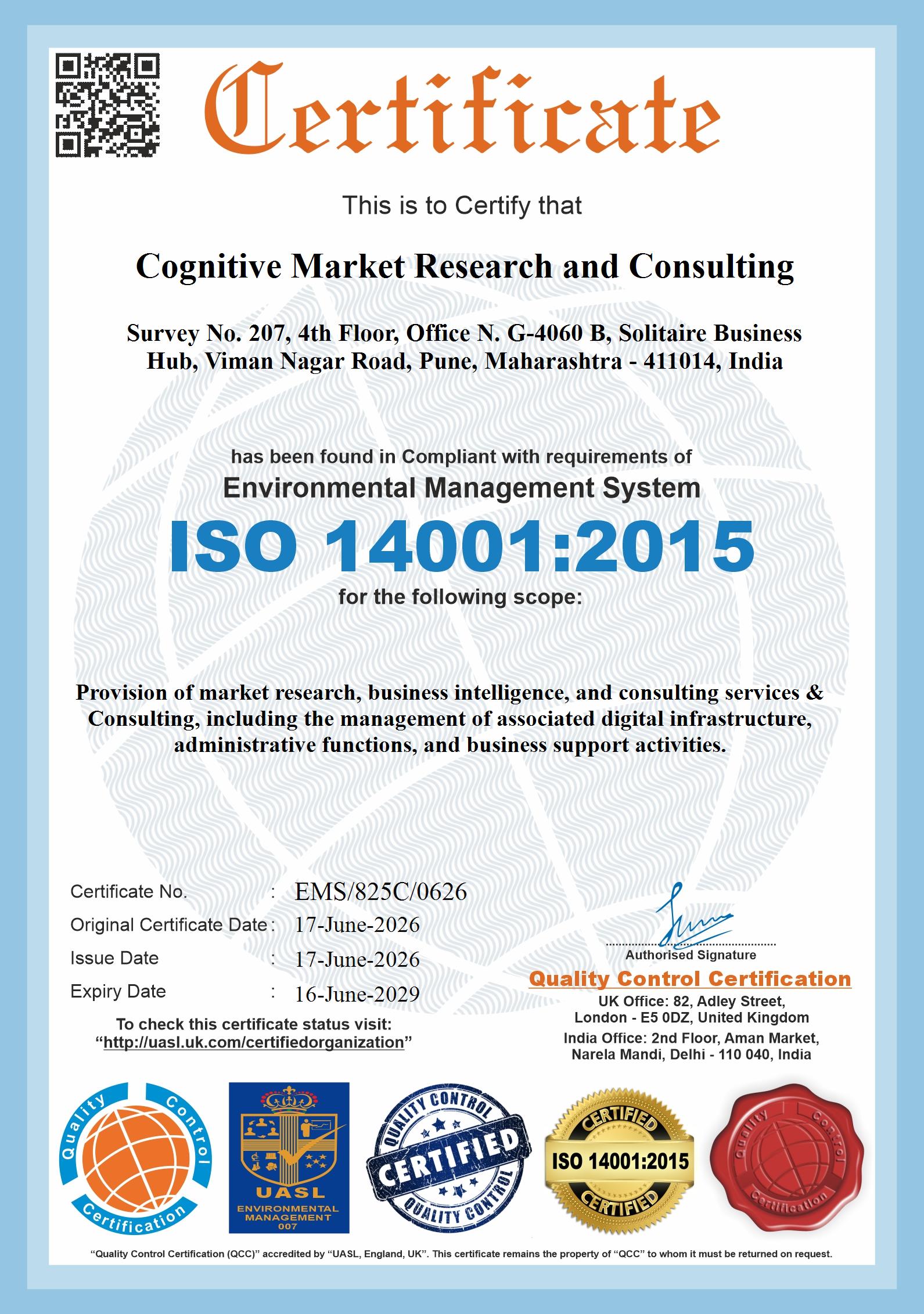
What these certifications mean to usA market figure is only as reliable as the system that produced it. That is why our accreditations cover the whole chain, not just the research step. ESOMAR and MRSI membership binds us to the professional codes that govern how respondents are recruited and how findings may be represented. ISO 20252 governs the research process itself; ISO 9001 and our quality control certification govern how consistently we repeat it. ISO 27001 and ISO 27701, alongside our GDPR, CCPA and DPDP compliance, govern what happens to your brief and your data once it reaches us; because a confidential scope is often more sensitive than the deliverable. ISO 14001, our D-U-N-S registration, Chamber of Commerce membership and DMCA protection speak to how the company itself is run and how its work is safeguarded.Our Clutch and Trustpilot profiles are deliberately listed next to them. They are the only signals on this page we do not issue ourselves, and they are the ones we would check first if we were you.
We worked on a project with Cognitive Market Research and the quality of the research met our expectations. We appreciate the help and prompt response from…
The global lithium-ion battery market for automotive is on a steep growth curve, with a projected CAGR of 16.39%, making it a cornerstone of the future automotive industry.
Asia Pacific, led by China, is the dominant force in manufacturing and supply, but North America and Europe are aggressively investing to build resilient, localized supply chains.
Government policies, including emission standards and financial incentives, are the most powerful drivers of market growth across all major regions.
Technological innovation in battery chemistry (like LFP and solid-state) and a focus on creating a circular economy through recycling will define the market leaders of the next decade.