Laboratory Proficiency Testing Market Analysis from 2022 to 2034 Containing Market Size, Share along with its CAGR, Forecast and Trends
Top Countries — Revenue
Market Dynamics of Laboratory Proficiency Testing Market Analysis
↑ Growth Drivers
- Government and private sector investments in healthcare and diagnostics
- Rising incidences of chronic diseases driving demand for diagnostic testing
- Expanding healthcare infrastructure and laboratory networks worldwide
↓ Restraints
- Shortage of skilled professionals to manage proficiency testing processes
- High costs associated with proficiency testing programs for small laboratories
~ Trends
- Expansion of online proficiency testing platforms for broader accessibility
- Rise in demand for proficiency testing in food and environmental testing sectors
Access the full forecast model.
Country-level data · Company profiles · Editable dataset · Analyst consultation included.
Laboratory Proficiency Testing Market Analysis — Presence
Geographical Analysis
Click countries to exploreRegional and Country Analysis
Global Laboratory Proficiency Testing Market Analysis 2026
| Region / Country | 2021 (A) | 2025 (A) | 2033 (P) | CAGR |
|---|---|---|---|---|
| Global | xxxx | xxxx | $ 2522.45 Million | 8% |
| North America | xxxx | $ 504.24 Million | $ 791.6 Million | 5.8% |
| United States | xxxx | $ 397.84 Million | xxxx | 5.6% |
| Canada | xxxx | $ 60.51 Million | xxxx | 6.6% |
| Mexico | xxxx | $ 45.89 Million | xxxx | 6.3% |
| Europe | xxxx | $ 395.21 Million | $ 644.3 Million | 6.3% |
| United Kingdom | xxxx | $ 66.4 Million | xxxx | 7.1% |
| France | xxxx | $ 36.36 Million | xxxx | 5.5% |
| Germany | xxxx | $ 78.25 Million | xxxx | 6.5% |
| Italy | xxxx | $ 33.99 Million | xxxx | 5.7% |
| Russia | xxxx | $ 61.26 Million | xxxx | 5.3% |
| Spain | xxxx | $ 32.41 Million | xxxx | 5.4% |
| Sweden | xxxx | $ 12.25 Million | xxxx | 6.4% |
| Denmark | xxxx | $ 8.3 Million | xxxx | 6.1% |
| Switzerland | xxxx | $ 5.93 Million | xxxx | 6% |
| Luxembourg | xxxx | $ 4.74 Million | xxxx | 6.6% |
| Rest of Europe | xxxx | $ 55.33 Million | xxxx | 5% |
| Asia Pacific | xxxx | $ 327.07 Million | $ 701.1 Million | 10% |
| China | xxxx | $ 137.37 Million | xxxx | 9.5% |
| Japan | xxxx | $ 45.14 Million | xxxx | 8.5% |
| South Korea | xxxx | $ 39.25 Million | xxxx | 9.1% |
| India | xxxx | $ 32.71 Million | xxxx | 11.9% |
| Australia | xxxx | $ 17.01 Million | xxxx | 9.3% |
| Singapore | xxxx | $ 6.54 Million | xxxx | 10.3% |
| Taiwan | xxxx | $ 12.76 Million | xxxx | 9.8% |
| South East Asia | xxxx | $ 21.59 Million | xxxx | 10.8% |
| Rest of APAC | xxxx | $ 14.72 Million | xxxx | 9.8% |
| South America | xxxx | $ 51.79 Million | $ 89 Million | 7% |
| Brazil | xxxx | $ 22.16 Million | xxxx | 7.6% |
| Argentina | xxxx | $ 8.7 Million | xxxx | 7.9% |
| Colombia | xxxx | $ 4.61 Million | xxxx | 6.8% |
| Peru | xxxx | $ 4.25 Million | xxxx | 7.2% |
| Chile | xxxx | $ 3.73 Million | xxxx | 7.3% |
| Rest of South America | xxxx | $ 8.34 Million | xxxx | 6.1% |
| Middle East | xxxx | $ 54.51 Million | $ 95.8 Million | 7.3% |
| Saudi Arabia | xxxx | $ 19.19 Million | xxxx | 7.6% |
| Turkey | xxxx | $ 4.36 Million | xxxx | 7.9% |
| UAE | xxxx | $ 11.23 Million | xxxx | 7.8% |
| Egypt | xxxx | $ 3.27 Million | xxxx | 7.1% |
| Qatar | xxxx | $ 4.36 Million | xxxx | 6.8% |
| Rest of Middle East | xxxx | $ 12.1 Million | xxxx | 6.5% |
| Africa | xxxx | $ 29.98 Million | $ 54.3 Million | 7.7% |
| East Africa | xxxx | xxxx | xxxx | xxxx |
| West Africa | xxxx | xxxx | xxxx | xxxx |
| North Africa | xxxx | xxxx | xxxx | xxxx |
| South Africa | xxxx | $ 10.55 Million | xxxx | 8.6% |
A = Actual · E = Estimated · P = Projected · 🔒 Locked values require full access. Click headers to sort.
Unlock full regional dataset →Segmentation Analysis
How are Segments Performing in the Global Laboratory Proficiency Testing Market? Laboratory Proficiency Testing Market Technology Segment Analysis According to Cognitive Market Research, cell culture holds a major share in the laboratory proficiency testing market due to its critical role in various applications such as drug development, vaccine production, and cancer research. Laboratories must ensure the accuracy and reliability of their cell culture techniques, making proficiency testing essential. The growing use of cell-based assays in clinical and research laboratories has increased the need for standardization and quality assurance. This demand drives the uptake of proficiency testing programs focused on cell culture processes and related analytical methods. Polymerase Chain Reaction (PCR) is the fastest-growing segment in the laboratory proficiency testing market due to its widespread use in molecular diagnostics and disease detection. The demand for PCR testing has surged, particularly in infectious disease screening, genetic analysis, and oncology diagnostics. Its high sensitivity, specificity, and rapid turnaround time make it a preferred method in clinical and research laboratories. Advancements in PCR technologies and increased global focus on accurate diagnostic testing further contribute to the segment's rapid growth within the market.
Charts are illustrative — exact values, country-level breakdowns, and full forecast in the paid report. Request a Free Sample PDF.
To learn more about market share and segmentation, request the free sample pages.
Competitor Analysis
Competitive Landscape of the Laboratory Proficiency Testing Market
The competitive landscape of the laboratory proficiency testing market is characterized by a mix of established players and emerging companies. Key market participants focus on expanding their service portfolios, adopting advanced technologies, and offering region-specific solutions to meet varying regulatory standards. Competitive strategies include partnerships, mergers, and acquisitions to strengthen market presence, alongside efforts to improve accuracy, efficiency, and customer engagement in proficiency testing services.
In April 2025, Beckman Coulter Life Sciences introduced its next-generation Basophil Activation Test (BAT) for research use aimed at characterizing food allergies more effectively. The test identified multiple allergens from a single blood draw, eliminating prolonged food testing and reducing the risk of harmful allergic reactions. https://clpmag.com/disease-states/allergy-autoimmune/next-generation-basophil-activation-test-launched/ In November 2024, The College of American Pathologists (CAP) introduced a new Proficiency Testing (PT) report for in vitro diagnostics companies to enhance understanding of customer needs. This tool supported CAP’s mission to advance laboratory medicine by providing manufacturers with aggregated insights to drive innovation and quality improvement. https://newsroom.cap.org/latest-news/cap-unveils-new-report-to-aid-ivd-companies-with-customer-insights/s/29b0fe1c-5cf6-4c18-9046-3361b6bc4496
| Top Companies (In no particular order) | 2022 (A) | 2023 (A) | 2024 (A) | 2025 (A) |
|---|---|---|---|---|
| LGC Limited (UK) | ••• | ••• | ••• | ••• |
| American Proficiency Institute (US) | ••• | ••• | ••• | ••• |
| College of American Pathologists (US) | ••• | ••• | ••• | ••• |
| Bio-Rad Laboratories (US) | ••• | ••• | ••• | ••• |
| Randox Laboratories (UK) | ••• | ••• | ••• | ••• |
| Merck (Germany) | ••• | ••• | ••• | ••• |
| Fapas (UK) | ••• | ••• | ••• | ••• |
| Waters Corporation (US) | ••• | ••• | ••• | ••• |
| Weqas (UK) | ••• | ••• | ••• | ••• |
| AOAC INTERNATIONAL (US) | ••• | ••• | ••• | ••• |
We Provide Regional Breakdown of this Companies and Company specific to any Country, Region, Product/ service as well. We cover market share analysis for publicly listed companies as well as privately held companies, subject to data availability.
Request company profile for validation →Report Scope & Analysis
According to Cognitive Market Research, the global laboratory proficiency testing market size will be USD 1362.8 million in 2025. It will expand at a compound annual growth rate (CAGR) of 8.00% from 2025 to 2033.
- North America held the major market share for more than 37% of the global revenue with a market size of USD 504.24 million in 2025 and will grow at a compound annual growth rate (CAGR) of 5.8% from 2025 to 2033.
- Europe accounted for a market share of over 29% of the global revenue with a market size of USD 395.21 million.
- APAC held a market share of around 24% of the global revenue with a market size of USD 327.07 million in 2025 and will grow at a compound annual growth rate (CAGR) of 10.0% from 2025 to 2033.
- South America has a market share of more than 3.8% of the global revenue with a market size of USD 51.79 million in 2025 and will grow at a compound annual growth rate (CAGR) of 7.0% from 2025 to 2033.
- The Middle East had a market share of around 4% of the global revenue and was estimated at a market size of USD 54.51 million in 2025 and will grow at a compound annual growth rate (CAGR) of 7.3% from 2025 to 2033.
- Africa had a market share of around 2.2% of the global revenue and was estimated at a market size of USD 29.98 million in 2025 and will grow at a compound annual growth rate (CAGR) of 7.7% from 2025 to 2033.
- Polymerase chain reaction (PCR) is the fastest growing segment of the laboratory proficiency testing industry
Introduction of the Laboratory Proficiency Testing Market
Laboratory proficiency testing (LPT) is a process where laboratories participate in external evaluations to assess their performance and accuracy in conducting specific tests. It involves comparing a laboratory's results with those of other laboratories or established reference standards to ensure reliability and consistency. The laboratory proficiency testing market has seen significant growth due to increasing regulatory requirements for quality control, a rise in healthcare standards, and the growing demand for accurate diagnostic results. As healthcare systems expand globally, particularly in emerging regions, laboratories are increasingly adopting proficiency testing programs to meet compliance standards and improve service quality. Additionally, advancements in testing technologies and the push for international accreditation have further fueled market demand. The continuous evolution of healthcare infrastructure and diagnostic practices is expected to drive further market growth.
In May 2025, Apollo Diagnostics launched its Digi-Smart Central Reference Laboratory (CRL) in Chennai, a fully automated facility designed to reduce sample turnaround time by 60 percent. It integrated five key disciplines using robotics, AI, and proprietary algorithms, processing over 100,000 samples daily across India and Southeast Asia. https://www.expresshealthcare.in/news/apollo-diagnostics-launches-fully-automated-digi-smart-central-reference-laboratory-in-chennai/448987/
Impact of Trump Tariffs on the Laboratory Proficiency Testing Market
Trump’s tariffs may raise costs for the Laboratory Proficiency Testing (LPT) market by increasing prices of imported testing materials like reagents and consumables. Labs rely on these for standardized testing to maintain accreditation. Higher costs could strain budgets, particularly for smaller labs, forcing some to limit testing or defer nonessential proficiency programs. Supply chain disruptions may also delay test kit availability, impacting compliance timelines.
Tariffs, including 10% on Chinese imports and up to 25% on Canadian and Mexican goods, could elevate expenses for LPT providers dependent on global supply chains. These increased costs may lead to higher service fees, potentially reducing demand from cost-sensitive clients. Additionally, new quality checks for imported materials could complicate regulatory compliance, requiring labs to invest in revalidation processes, further raising operational expenses.
The push for domestic sourcing to avoid tariffs may benefit the LPT market long-term but poses short-term challenges. Transitioning to U.S.-based suppliers requires costly validation and infrastructure investment, which could limit providers’ scalability. Economic pressures from tariffs, including reduced research funding, may constrain public health labs’ participation in proficiency testing, potentially impacting accreditation and outbreak response capabilities.?
Analyst Conclusion
Our study will explain complete manufacturing process along with major raw materials required to manufacture end-product. This report helps to make effective decisions determining product position and will assist you to understand opportunities and threats around the globe.
The Laboratory Proficiency Testing Market Analysis is witnessing significant growth in the near future.
In 2023, the Cell Culture segment accounted for a notable share of the Laboratory Proficiency Testing Market Analysis.

Supriya is a Team Lead at Cognitive Market Research & Consulting, leading research initiatives and strategic intelligence projects across the Healthcare, Pharmaceuticals, and Medical Devices & Consumables sectors. With more than two years of experience in market research and data analysis, she plays a key role in helping organizations navigate complex healthcare ecosystems, identify emerging opportunities, and make informed business decisions through data-driven insights and market intelligence.
Combining expertise in both primary and secondary research methodologies with a strong academic foundation in Marketing and Finance, Supriya oversees the execution of market assessments, competitive intelligence studies, forecasting models, stakeholder interviews, trend analysis, and custom consulting engagements. She collaborates with healthcare providers, pharmaceutical manufacturers, medical device companies, industry experts, and other key stakeholders to gather firsthand market perspectives while validating findings through extensive research. Her ability to interpret clinical, commercial, and market data enables clients to better understand industry developments, regulatory influences, innovation trends, and competitive dynamics.
In her leadership role, she manages end-to-end research projects and guides cross-functional teams in delivering high-quality market reports, consulting solutions, and strategic studies. Her expertise in market estimation, forecasting, and analytical modeling helps organizations evaluate market potential, assess growth opportunities, strengthen competitive positioning, and support strategic planning initiatives. By transforming complex healthcare and life sciences data into actionable business intelligence, she enables clients to make confident decisions in rapidly evolving market environments.
Driven by a passion for healthcare innovation and continuous professional development, Supriya remains committed to staying ahead of industry trends, technological advancements, and changing market conditions. Her leadership, analytical mindset, and dedication to research excellence help organizations mitigate risks, capitalize on emerging opportunities, and achieve sustainable growth across the global healthcare and life sciences landscape.
Frequently Asked Questions
★ Reviews
Rate this report
Laboratory Proficiency Testing Market Analysis — Table of Contents
- This is just a redacted sample pages of the actual deliverable report and only for representative purposes
- Charts/Graphs/Numbers/data are only for Representative purposes and do not depict actual statistics.
- The table of Contents differs according to the user License selection. Current Displayed TOC is for the Corporate User License Report Edition. TOC Customization options: Add or Remove section/s Or chapter/s from the report.
- Specific Tables, Graphs, Sections, and Chapters can be ordered at a discounted price.
- If applicable; On Request Volume Data will also be provided (at an Additional Cost).
Report Scope
| By Technology Outlook: | Cell Culture, Chromatography, Immunoassays, Polymerase Chain Reaction (PCR), Spectrophotometry |
|---|---|
| By Application Outlook: | Biologics, Cannabis/Opioids, Clinical Diagnostics, Commercial Beverages, Cosmetics, Dietary Supplements, Environmental, Food & Animal Feed, Microbiology, Neutraceuticals, Pharmaceuticals, Water |
| By End-Use Outlook: | Academic Research, Contract Research Organizations, Diagnostic Laboratories, Independent Laboratories, Specialty Laboratories, Pharmaceutical & Biotechnology Companies |
| List of Competitors | LGC Limited (UK), American Proficiency Institute (US), College of American Pathologists (US), Bio-Rad Laboratories (US), Randox Laboratories (UK), Merck (Germany), Fapas (UK), Waters Corporation (US), Weqas (UK), AOAC INTERNATIONAL (US) |
Chapter 1. Competitor Analysis (Subject to Data Availability (Private Players))
- 1.1 Top Competitors Analysis
- 1.1.1 Global Laboratory Proficiency Testing Market Analysis by Key Players
- 1.1.2 Segment Market Analysis by Key Players
- 1.1.3 Top Players Ranking 2024
- 1.1.4 New Product Launch Analysis
- 1.1.5 Industry Mergers and Acquisition Analysis
- 1.2 Company Profile (Data Subject to Availability) Sample Format
- 1.2.1 LGC Limited (UK)
- 1.2.1.1 Company Basic Information, Manufacturing Base, Sales Area, and Competitors
- 1.2.1.2 Business Overview
- 1.2.1.3 Financials (Subject to data availability)
- 1.2.1.4 R&D Investment (Subject to data availability)
- 1.2.1.5 Product Types Specification
- 1.2.1.6 Business Strategy
- 1.2.1.7 Recent Developments
- 1.2.1.8 Management Change
- 1.2.1.9 S.W.O.T Analysis
- 1.2.2 American Proficiency Institute (US)
- 1.2.2.1 Company Basic Information, Manufacturing Base, Sales Area, and Competitors
- 1.2.2.2 Business Overview
- 1.2.2.3 Financials (Subject to data availability)
- 1.2.2.4 R&D Investment (Subject to data availability)
- 1.2.2.5 Product Types Specification
- 1.2.2.6 Business Strategy
- 1.2.2.7 Recent Developments
- 1.2.2.8 Management Change
- 1.2.2.9 S.W.O.T Analysis
- 1.2.3 College of American Pathologists (US)
- 1.2.3.1 Company Basic Information, Manufacturing Base, Sales Area, and Competitors
- 1.2.3.2 Business Overview
- 1.2.3.3 Financials (Subject to data availability)
- 1.2.3.4 R&D Investment (Subject to data availability)
- 1.2.3.5 Product Types Specification
- 1.2.3.6 Business Strategy
- 1.2.3.7 Recent Developments
- 1.2.3.8 Management Change
- 1.2.3.9 S.W.O.T Analysis
- 1.2.4 Bio-Rad Laboratories (US)
- 1.2.4.1 Company Basic Information, Manufacturing Base, Sales Area, and Competitors
- 1.2.4.2 Business Overview
- 1.2.4.3 Financials (Subject to data availability)
- 1.2.4.4 R&D Investment (Subject to data availability)
- 1.2.4.5 Product Types Specification
- 1.2.4.6 Business Strategy
- 1.2.4.7 Recent Developments
- 1.2.4.8 Management Change
- 1.2.4.9 S.W.O.T Analysis
- 1.2.5 Randox Laboratories (UK)
- 1.2.5.1 Company Basic Information, Manufacturing Base, Sales Area, and Competitors
- 1.2.5.2 Business Overview
- 1.2.5.3 Financials (Subject to data availability)
- 1.2.5.4 R&D Investment (Subject to data availability)
- 1.2.5.5 Product Types Specification
- 1.2.5.6 Business Strategy
- 1.2.5.7 Recent Developments
- 1.2.5.8 Management Change
- 1.2.5.9 S.W.O.T Analysis
- 1.2.6 Merck (Germany)
- 1.2.6.1 Company Basic Information, Manufacturing Base, Sales Area, and Competitors
- 1.2.6.2 Business Overview
- 1.2.6.3 Financials (Subject to data availability)
- 1.2.6.4 R&D Investment (Subject to data availability)
- 1.2.6.5 Product Types Specification
- 1.2.6.6 Business Strategy
- 1.2.6.7 Recent Developments
- 1.2.6.8 Management Change
- 1.2.6.9 S.W.O.T Analysis
- 1.2.7 Fapas (UK)
- 1.2.7.1 Company Basic Information, Manufacturing Base, Sales Area, and Competitors
- 1.2.7.2 Business Overview
- 1.2.7.3 Financials (Subject to data availability)
- 1.2.7.4 R&D Investment (Subject to data availability)
- 1.2.7.5 Product Types Specification
- 1.2.7.6 Business Strategy
- 1.2.7.7 Recent Developments
- 1.2.7.8 Management Change
- 1.2.7.9 S.W.O.T Analysis
- 1.2.8 Waters Corporation (US)
- 1.2.8.1 Company Basic Information, Manufacturing Base, Sales Area, and Competitors
- 1.2.8.2 Business Overview
- 1.2.8.3 Financials (Subject to data availability)
- 1.2.8.4 R&D Investment (Subject to data availability)
- 1.2.8.5 Product Types Specification
- 1.2.8.6 Business Strategy
- 1.2.8.7 Recent Developments
- 1.2.8.8 Management Change
- 1.2.8.9 S.W.O.T Analysis
- 1.2.9 Weqas (UK)
- 1.2.9.1 Company Basic Information, Manufacturing Base, Sales Area, and Competitors
- 1.2.9.2 Business Overview
- 1.2.9.3 Financials (Subject to data availability)
- 1.2.9.4 R&D Investment (Subject to data availability)
- 1.2.9.5 Product Types Specification
- 1.2.9.6 Business Strategy
- 1.2.9.7 Recent Developments
- 1.2.9.8 Management Change
- 1.2.9.9 S.W.O.T Analysis
- 1.2.10 AOAC INTERNATIONAL (US)
- 1.2.10.1 Company Basic Information, Manufacturing Base, Sales Area, and Competitors
- 1.2.10.2 Business Overview
- 1.2.10.3 Financials (Subject to data availability)
- 1.2.10.4 R&D Investment (Subject to data availability)
- 1.2.10.5 Product Types Specification
- 1.2.10.6 Business Strategy
- 1.2.10.7 Recent Developments
- 1.2.10.8 Management Change
- 1.2.10.9 S.W.O.T Analysis
- 1.2.1 LGC Limited (UK)
- 1.1 Top Competitors Analysis
Chapter 2. Global Laboratory Proficiency Testing Market Analysis
- 2.1 Global Laboratory Proficiency Testing Market Analysis
- 2.2 Global Laboratory Proficiency Testing Market Analysis by Region
- 2.3 Global Laboratory Proficiency Testing Market Analysis by By Technology Outlook:
- 2.4 Global Laboratory Proficiency Testing Market Analysis by By Application Outlook:
- 2.5 Global Laboratory Proficiency Testing Market Analysis by By End-Use Outlook:
- 2.6 Global Laboratory Proficiency Testing Market Analysis by Key Players
Chapter 3. North America Laboratory Proficiency Testing Market Analysis
- 3.1 North America Laboratory Proficiency Testing Market Analysis
- 3.2 North America Laboratory Proficiency Testing Market Analysis by Country
- 3.3 North America Laboratory Proficiency Testing Market Analysis by By Technology Outlook:
- 3.4 North America Laboratory Proficiency Testing Market Analysis by By Application Outlook:
- 3.5 North America Laboratory Proficiency Testing Market Analysis by By End-Use Outlook:
- 3.6 North America Laboratory Proficiency Testing Market Analysis by Key Players
Chapter 4. Europe Laboratory Proficiency Testing Market Analysis
- 4.1 Europe Laboratory Proficiency Testing Market Analysis
- 4.2 Europe Laboratory Proficiency Testing Market Analysis by Country
- 4.3 Europe Laboratory Proficiency Testing Market Analysis by By Technology Outlook:
- 4.4 Europe Laboratory Proficiency Testing Market Analysis by By Application Outlook:
- 4.5 Europe Laboratory Proficiency Testing Market Analysis by By End-Use Outlook:
- 4.6 Europe Laboratory Proficiency Testing Market Analysis by Key Players
Chapter 5. Asia Pacific Laboratory Proficiency Testing Market Analysis
- 5.1 Asia Pacific Laboratory Proficiency Testing Market Analysis
- 5.2 Asia Pacific Laboratory Proficiency Testing Market Analysis by Country
- 5.3 Asia Pacific Laboratory Proficiency Testing Market Analysis by By Technology Outlook:
- 5.4 Asia Pacific Laboratory Proficiency Testing Market Analysis by By Application Outlook:
- 5.5 Asia Pacific Laboratory Proficiency Testing Market Analysis by By End-Use Outlook:
- 5.6 Asia Pacific Laboratory Proficiency Testing Market Analysis by Key Players
Chapter 6. South America Laboratory Proficiency Testing Market Analysis
- 6.1 South America Laboratory Proficiency Testing Market Analysis
- 6.2 South America Laboratory Proficiency Testing Market Analysis by Country
- 6.3 South America Laboratory Proficiency Testing Market Analysis by By Technology Outlook:
- 6.4 South America Laboratory Proficiency Testing Market Analysis by By Application Outlook:
- 6.5 South America Laboratory Proficiency Testing Market Analysis by By End-Use Outlook:
- 6.6 South America Laboratory Proficiency Testing Market Analysis by Key Players
Chapter 7. Middle East Laboratory Proficiency Testing Market Analysis
- 7.1 Middle East Laboratory Proficiency Testing Market Analysis
- 7.2 Middle East Laboratory Proficiency Testing Market Analysis by Country
- 7.3 Middle East Laboratory Proficiency Testing Market Analysis by By Technology Outlook:
- 7.4 Middle East Laboratory Proficiency Testing Market Analysis by By Application Outlook:
- 7.5 Middle East Laboratory Proficiency Testing Market Analysis by By End-Use Outlook:
- 7.6 Middle East Laboratory Proficiency Testing Market Analysis by Key Players
Chapter 8. Africa Laboratory Proficiency Testing Market Analysis
- 8.1 Africa Laboratory Proficiency Testing Market Analysis
- 8.2 Africa Laboratory Proficiency Testing Market Analysis by Country
- 8.3 Africa Laboratory Proficiency Testing Market Analysis by By Technology Outlook:
- 8.4 Africa Laboratory Proficiency Testing Market Analysis by By Application Outlook:
- 8.5 Africa Laboratory Proficiency Testing Market Analysis by By End-Use Outlook:
- 8.6 Africa Laboratory Proficiency Testing Market Analysis by Key Players
Chapter 9. By Technology Outlook: Analysis
- 9.1 Cell Culture
- 9.1.1 Global Cell Culture Market
- 9.1.2 Global Cell Culture Market by Region
- 9.2 Chromatography
- 9.2.1 Global Chromatography Market
- 9.2.2 Global Chromatography Market by Region
- 9.3 Immunoassays
- 9.3.1 Global Immunoassays Market
- 9.3.2 Global Immunoassays Market by Region
- 9.4 Polymerase Chain Reaction (PCR)
- 9.4.1 Global Polymerase Chain Reaction (PCR) Market
- 9.4.2 Global Polymerase Chain Reaction (PCR) Market by Region
- 9.5 Spectrophotometry
- 9.5.1 Global Spectrophotometry Market
- 9.5.2 Global Spectrophotometry Market by Region
- 9.1 Cell Culture
Chapter 10. By Application Outlook: Analysis
- 10.1 Biologics
- 10.1.1 Global Biologics Market
- 10.1.2 Global Biologics Market by Region
- 10.2 Cannabis/Opioids
- 10.2.1 Global Cannabis/Opioids Market
- 10.2.2 Global Cannabis/Opioids Market by Region
- 10.3 Clinical Diagnostics
- 10.3.1 Global Clinical Diagnostics Market
- 10.3.2 Global Clinical Diagnostics Market by Region
- 10.4 Commercial Beverages
- 10.4.1 Global Commercial Beverages Market
- 10.4.2 Global Commercial Beverages Market by Region
- 10.5 Cosmetics
- 10.5.1 Global Cosmetics Market
- 10.5.2 Global Cosmetics Market by Region
- 10.6 Dietary Supplements
- 10.6.1 Global Dietary Supplements Market
- 10.6.2 Global Dietary Supplements Market by Region
- 10.7 Environmental
- 10.7.1 Global Environmental Market
- 10.7.2 Global Environmental Market by Region
- 10.8 Food & Animal Feed
- 10.8.1 Global Food & Animal Feed Market
- 10.8.2 Global Food & Animal Feed Market by Region
- 10.9 Microbiology
- 10.9.1 Global Microbiology Market
- 10.9.2 Global Microbiology Market by Region
- 10.10 Neutraceuticals
- 10.10.1 Global Neutraceuticals Market
- 10.10.2 Global Neutraceuticals Market by Region
- 10.11 Pharmaceuticals
- 10.11.1 Global Pharmaceuticals Market
- 10.11.2 Global Pharmaceuticals Market by Region
- 10.12 Water
- 10.12.1 Global Water Market
- 10.12.2 Global Water Market by Region
- 10.1 Biologics
Chapter 11. By End-Use Outlook: Analysis
- 11.1 Academic Research
- 11.1.1 Global Academic Research Market
- 11.1.2 Global Academic Research Market by Region
- 11.2 Contract Research Organizations
- 11.2.1 Global Contract Research Organizations Market
- 11.2.2 Global Contract Research Organizations Market by Region
- 11.3 Diagnostic Laboratories
- 11.3.1 Global Diagnostic Laboratories Market
- 11.3.2 Global Diagnostic Laboratories Market by Region
- 11.4 Independent Laboratories
- 11.4.1 Global Independent Laboratories Market
- 11.4.2 Global Independent Laboratories Market by Region
- 11.5 Specialty Laboratories
- 11.5.1 Global Specialty Laboratories Market
- 11.5.2 Global Specialty Laboratories Market by Region
- 11.6 Pharmaceutical & Biotechnology Companies
- 11.6.1 Global Pharmaceutical & Biotechnology Companies Market
- 11.6.2 Global Pharmaceutical & Biotechnology Companies Market by Region
- 11.1 Academic Research
Chapter 12. Qualitative Analysis (Subject to Data Availability)
- 12.1 Market Drivers
- 12.2 Market Restraints
- 12.3 Market Trends
- 12.4 Market Opportunity
- 12.5 Technological Road Map (Subject to Data Availability)
- 12.6 Product Life Cycle (Subject to Data Availability)
- 12.7 Customer and Buyer Behavior Analysis
- 12.7.1 Digital Engagement, Customer Experience & Relationship Analysis
- 12.7.2 Customer Buying Behavior & Purchase Decision Analysis
- 12.7.3 Vendor Selection, Supplier Preferences & Future Demand Trends
- 12.7.4 Pricing, Affordability & Value Perception Analysis
- 12.7.5 Customer Segmentation & Demand Pattern Analysis
- 12.8 PESTEL Analysis
- 12.8.1 Political Factors
- 12.8.2 Economic Factors
- 12.8.3 Social Factors
- 12.8.4 Technological Factors
- 12.8.5 Legal Factors
- 12.8.6 Environmental Factors
- 12.9 Industrial Chain Analysis (Subject to Data Availability)
- 12.9.1 Industry Chain Analysis
- 12.9.2 Manufacturing Cost Analysis
- 12.9.3 Supply Side Analysis
- 12.9.3.1 Raw Material Analysis
- 12.9.3.2 Raw Material Procurement Analysis
- 12.9.3.3 Raw Material Price Trend Analysis
- 12.10 Porter’s Five Forces Analysis
- 12.10.1 Bargaining Power of Suppliers
- 12.10.2 Bargaining Power of Buyers
- 12.10.3 Threat of New Entrants
- 12.10.4 Threat of Substitutes
- 12.10.5 Degree of Competition
- 12.11 Patent Analysis (Subject to Data Availability)
- 12.12 ESG Analysis
- 12.13 Geopolitical Outlook
- 12.13.1 Global Power Realignment & Strategic Alliances
- 12.13.2 Geopolitical Risk Landscape & Conflict Hotspots
- 12.13.3 International Trade Relations & Market Access Environment
- 12.13.4 Regulatory & Policy Shifts Impacting Cross-Border Operations
- 12.13.5 Supply Chain Resilience, Localization & Resource Nationalism
- 12.13.6 Technology Sovereignty & Digital Geopolitics
- 12.13.7 Strategic Implications for Investment, Growth & Market Entry
- 12.14 AI & Market Transformation
- 12.14.1 Competitive Landscape Disruption & Strategic Shifts
- 12.14.2 AI-Driven Transformation of Industry Value Chain
- 12.14.3 Evolution of Business Models & Revenue Streams
- 12.14.4 AI-Driven Product, Service & Innovation Transformation
- 12.14.5 Customer Behavior, AI Adoption & Future Market Evolution
Chapter 13. TOP 10 Country Analysis
- 13.1 Country 1
- 13.2 Country 2
- 13.3 Country 3
- 13.4 Country 4
- 13.5 Country 5
- 13.6 Country 6
- 13.7 Country 7
- 13.8 Country 8
- 13.9 Country 9
- 13.10 Country 10
Chapter 14. Research Findings
- 14.1 Key Takeaways
- 14.2 Analyst Point of View
- 14.3 Assumptions and Acronyms
Chapter 15. Research Methodology and Sources
- 15.1 Primary Data Collection
- 15.1.1 Steps for Primary Data Collection
- 15.1.1.1 Identification of KOL
- 15.1.2 Backward Integration
- 15.1.3 Forward Integration
- 15.1.4 How Primary Research Help Us
- 15.1.5 Modes of Primary Research
- 15.1.1 Steps for Primary Data Collection
- 15.2 Secondary Research
- 15.2.1 How Secondary Research Help Us
- 15.2.2 Sources of Secondary Research
- 15.3 Data Validation
- 15.3.1 Data Triangulation
- 15.4 Data Representation
- 15.1 Primary Data Collection
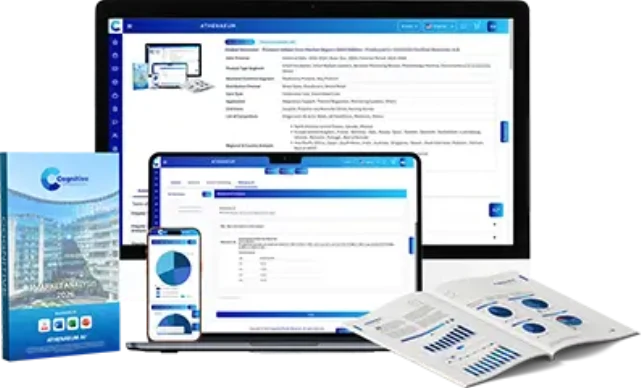
Athenaeum AI Dashboard
Our Proprietary Methodology
Cognitive Market Research and Consulting "The Full Truth" methodology — a rigorous triangulation process that combines primary research, secondary validation, and expert calibration. Implemented by Supriya Yadav and team for the Laboratory Proficiency Testing Market Analysis Market analysis.
Primary Intelligence Gathering
Direct interviews with 50+ industry stakeholders including manufacturers, distributors, end-users, and regulatory bodies across all six regions.
Secondary Data Triangulation
Cross-referencing against trade databases, customs records, financial filings, patent databases, and verified industry publications.
Expert Validation Protocol
Each data point undergoes validation by minimum two independent domain experts with 15+ years of industry experience.
Athenaeum AI Processing
Our proprietary AI platform aggregates, normalizes, and identifies patterns across 10,000+ data points to surface non-obvious insights.
Editorial & QA Review
Final review by senior analysts ensures accuracy, coherence, and actionability of all insights and recommendations.
Data Assurance Metrics
Analytical Coverage
To maintain the integrity of our proprietary methodology and protect our elite expert network, specific source disclosures are reserved for full-access partners. Our research framework is anchored by a 70:30 primary-to-secondary ratio, ensuring your strategy is driven by real-time market intelligence rather than recycled, publicly available, or AI-generated data. Every deliverable includes an exhaustive source directory and grants direct analyst access.
Sources from the Pharma & Healthcare Industry
The Three Pillars of End-to-End Market Research Services
We don't just hand over data. We partner with your team across three integrated service lines — each designed to give you decision-grade intelligence on the Laboratory Proficiency Testing Market Analysis market.
Market Survey
Structured primary research across both B2B and B2C channels. We design and execute custom surveys targeting manufacturers, distributors, procurement heads, and end-consumers in the laboratory proficiency testing market analysis ecosystem — validated by our global panel of 10,000+ industrial respondents.
- Buyer intent & sentiment analysis
- Purchase cycle mapping
- Price sensitivity research
- Channel preference profiling
- Competitive perception study
Customized Market Data & Reports
Choose from our ready-to-access 8th Edition report or commission a fully customized dataset tailored to your exact strategic questions. Cross-splits, custom geographies, proprietary segmentation — we build the intelligence asset your board actually needs.
- Ready syndicate report (250+ pages)
- Custom data scope & segmentation
- Excel quantitative models
- Board-ready PPT with key findings
- Secure cloud portal access
Strategic Consultation
Every survey and every report comes with dedicated analyst consultation. Our senior research team walks your leadership through findings, answers strategic questions in real-time, and helps translate data into your next board presentation or investment thesis.
- Dedicated analyst assigned to you
- Live walkthrough of findings
- Strategic Q&A sessions
- Go-to-market recommendations
- NDA-protected engagement
Customize This Report
Tell us the specific segments, regions, or companies you need — and we will tailor the deliverable to your requirements.