We value your privacy
We use cookies to improve your experience and analyze traffic. By continuing, you consent to our use of cookies under GDPR, CCPA and other applicable laws. Privacy Policy
Cookie preferences
Choose which categories of cookies you allow. Strictly necessary cookies are always on.
Strictly necessary
Required for core site functionality, security and your session. Always active.
Analytics
Help us understand how visitors use the site (e.g. Google Analytics) so we can improve it.
Marketing
Used to measure campaigns and show you relevant ads on other sites (e.g. LinkedIn, Google Ads).
Lab Grown Diamonds Market Analysis from 2022 to 2034 Containing Market Size, Share along with its CAGR, Forecast and Trends
Top Countries — Revenue
USD Million/Billion
Access the full forecast model.
Country-level data · Company profiles · Editable dataset · Analyst consultation included.
Lab Grown Diamonds Market Analysis — Presence
Geographical Analysis
Click countries to explore
Loading map…
Regional and Country Analysis
Global Lab Grown Diamonds Market Analysis 2026
Country-level values are locked in this preview.
Request a free sample
to unlock the full breakdown.
Region / Country
2021 (A)
2025 (A)
2033 (P)
CAGR
Global
xxxx
xxxx
xxxx
10.6%
North America
xxxx
xxxx
xxxx
8.8%
United States
xxxx
xxxx
xxxx
xxxx
Canada
xxxx
xxxx
xxxx
xxxx
Mexico
xxxx
xxxx
xxxx
xxxx
Europe
xxxx
xxxx
xxxx
9.1%
United Kingdom
xxxx
xxxx
xxxx
xxxx
France
xxxx
xxxx
xxxx
xxxx
Germany
xxxx
xxxx
xxxx
xxxx
Italy
xxxx
xxxx
xxxx
xxxx
Russia
xxxx
xxxx
xxxx
xxxx
Spain
xxxx
xxxx
xxxx
xxxx
Sweden
xxxx
xxxx
xxxx
xxxx
Denmark
xxxx
xxxx
xxxx
xxxx
Switzerland
xxxx
xxxx
xxxx
xxxx
Luxembourg
xxxx
xxxx
xxxx
xxxx
Rest of Europe
xxxx
xxxx
xxxx
xxxx
Asia Pacific
xxxx
xxxx
xxxx
12.6%
China
xxxx
xxxx
xxxx
xxxx
Japan
xxxx
xxxx
xxxx
xxxx
South Korea
xxxx
xxxx
xxxx
xxxx
India
xxxx
xxxx
xxxx
xxxx
Australia
xxxx
xxxx
xxxx
xxxx
Singapore
xxxx
xxxx
xxxx
xxxx
Taiwan
xxxx
xxxx
xxxx
xxxx
South East Asia
xxxx
xxxx
xxxx
xxxx
Rest of APAC
xxxx
xxxx
xxxx
xxxx
South America
xxxx
xxxx
xxxx
10%
Brazil
xxxx
xxxx
xxxx
xxxx
Argentina
xxxx
xxxx
xxxx
xxxx
Colombia
xxxx
xxxx
xxxx
xxxx
Peru
xxxx
xxxx
xxxx
xxxx
Chile
xxxx
xxxx
xxxx
xxxx
Rest of South America
xxxx
xxxx
xxxx
xxxx
Middle East
xxxx
xxxx
xxxx
10.3%
Saudi Arabia
xxxx
xxxx
xxxx
xxxx
Turkey
xxxx
xxxx
xxxx
xxxx
UAE
xxxx
xxxx
xxxx
xxxx
Egypt
xxxx
xxxx
xxxx
xxxx
Qatar
xxxx
xxxx
xxxx
xxxx
Rest of Middle East
xxxx
xxxx
xxxx
xxxx
Africa
xxxx
xxxx
xxxx
xxxx
East Africa
xxxx
xxxx
xxxx
xxxx
West Africa
xxxx
xxxx
xxxx
xxxx
North Africa
xxxx
xxxx
xxxx
xxxx
South Africa
xxxx
xxxx
xxxx
xxxx
The lab-grown diamonds market is a dynamic and rapidly evolving segment of the broader gemstone and jewelry industry. Characterized by technological innovation and shifting consumer values, it presents a compelling alternative to the traditional diamond market. These diamonds, created in controlled laboratory environments, possess the same physical, chemical, and optical properties as mined diamonds. The market's growth is underpinned by its ability to offer a product that is both cost-effective and ethically sourced, appealing to a modern consumer base that values sustainability and transparency.
Global Lab Grown Diamonds Market Drivers
Cost-Effectiveness and Affordability: Lab-grown diamonds offer a significant price advantage over natural diamonds, often costing 30-50% less for a comparable size and quality. This affordability allows consumers to purchase larger stones or higher-grade diamonds within their budget, which is a powerful incentive for market growth.
Ethical and Environmental Concerns: The demand for lab-grown diamonds is heavily driven by consumers' desire for conflict-free and environmentally friendly products. Unlike mined diamonds, which can be associated with human rights abuses ("blood diamonds") and significant ecological disruption, lab-grown diamonds offer a guaranteed origin and a much smaller environmental footprint.
Advancements in Production Technology: Continuous improvements in HPHT and CVD manufacturing techniques have led to the production of larger, higher-quality lab-grown diamonds with fewer imperfections. These technological strides have increased production efficiency, lowered costs, and enhanced the overall appeal and credibility of lab-grown diamonds in the eyes of consumers and jewelers.
Global Lab Grown Diamonds Market Trends
Mainstream Retail Acceptance: Major global jewelry brands and retailers are increasingly incorporating lab-grown diamonds into their collections. This mainstream acceptance lends credibility to the product and expands its reach, moving it from a niche offering to a standard choice for consumers.
Popularity of Colored Diamonds: The lab-growing process allows for the creation of a wide range of fancy colored diamonds (such as blue, pink, and yellow) in a consistent and affordable manner. This has led to a growing trend of using vibrant colored diamonds in fashion and custom jewelry designs.
Expansion into Industrial Applications: Beyond jewelry, the superior properties of lab-grown diamonds make them ideal for a variety of industrial uses. They are increasingly being utilized in electronics, semiconductors, optical equipment, and high-precision cutting tools, opening up new revenue streams for manufacturers.
Global Lab Grown Diamonds Market Restraints
Perception and Market Differentiation: Despite being physically identical to natural diamonds, lab-grown diamonds still face a perception challenge. The traditional diamond industry's marketing emphasizes rarity and eternal value, creating a hurdle for lab-grown diamonds to be perceived as equally luxurious or emotionally valuable.
Price Volatility and Erosion: As technology improves and more producers enter the market, the supply of lab-grown diamonds is increasing rapidly. This has led to downward pressure on prices, which, while beneficial for consumers, can erode profit margins for manufacturers and create market instability.
High Initial Capital Investment: Establishing a lab-grown diamond production facility requires significant upfront capital investment in specialized equipment and technology. This high barrier to entry can limit the number of new players and concentrate production among a few large-scale manufacturers.
Market Size: XX Million (2021) -> XX Million (2025) -> XX Million (2033)
CAGR (2021-2033): 8.8%
Country-Specific Insight: The United States dominates the region, accounting for approximately 28% of the global lab-grown diamond market in 2025, driven by high consumer spending and strong ethical purchasing trends. Canada follows, holding about 4% of the global market, with a growing base of environmentally conscious consumers.
Regional Dynamics:
Drivers:
High consumer awareness and preference for sustainable and conflict-free products.
Strong presence of major jewelry retailers who are actively promoting lab-grown diamond collections.
The ability to get a larger, better-quality diamond for the same price is a major purchasing factor.
Trends:
Increasing popularity for use in custom-designed engagement rings and bridal jewelry.
Growth of online direct-to-consumer (D2C) brands specializing in lab-grown diamonds.
Adoption by celebrity influencers, which is boosting mainstream appeal and acceptance.
Restraints:
Strong marketing campaigns from the natural diamond industry emphasizing rarity and resale value.
Consumer skepticism in some segments regarding the long-term value of lab-grown stones.
Competition from a large, established market for pre-owned natural diamonds.
Technology Focus:
The region is predominantly a consumer market, but it heavily favors diamonds produced via the CVD method, which is often marketed for its purity and clarity. U.S. based producers are focusing on improving the efficiency and quality of their CVD reactors.
Market Size: XX Million (2021) -> XX Million (2025) -> XX Million (2033)
CAGR (2021-2033): 9.1%
Country-Specific Insight: Europe presents a fragmented yet growing market. The UK holds an estimated 5% of the global market share in 2025, with Germany and France combined accounting for around 6%. Growth is driven by a strong regulatory push for sustainability and increasing acceptance in fashion-forward cities.
Regional Dynamics:
Drivers:
Strong EU regulations and consumer sentiment favoring sustainable and ethically sourced goods.
Increasing availability through both luxury and mid-tier European jewelry brands.
Growing tourism and a diverse, fashion-conscious population drive demand for innovative jewelry.
Trends:
Integration of lab-grown diamonds into high-fashion and designer jewelry collections.
Rising demand for bespoke jewelry featuring colored lab-grown diamonds.
A focus on certification and traceability to build consumer trust.
Restraints:
The deep-rooted cultural heritage and preference for traditional, natural gemstones in luxury markets.
A complex retail landscape with many independent jewelers who may be slow to adopt new products.
Varying VAT and import duties across countries can impact pricing and logistics.
Technology Focus:
While primarily a consumption market, some European countries are investing in boutique HPHT and CVD production facilities focused on high-quality, specialized industrial and jewelry-grade diamonds. The focus is on precision and quality over mass production.
Market Size: XX Million (2021) -> XX Million (2025) -> XX Million (2033)
CAGR (2021-2033): 12.6%
Country-Specific Insight: The APAC region is the epicenter of production and the fastest-growing consumer market. China is a leader, projected to hold around 18% of the global market in 2025, driven by its massive manufacturing capacity. India holds about 12% of the global share, leveraging its diamond cutting and polishing expertise.
Regional Dynamics:
Drivers:
The region is the world's largest production hub, ensuring a steady and cost-effective supply.
A rapidly growing middle class with increasing disposable income.
Government support for high-tech manufacturing industries in countries like China.
Trends:
A shift from being just a production hub to a major consumption market.
Use of lab-grown diamonds in affordable, everyday fashion jewelry.
Integration of advanced technologies like AI and automation in diamond cutting and grading.
Restraints:
Strong cultural preference for gold and natural diamonds for investment and traditional ceremonies in markets like India.
Intense price competition among a large number of producers can lead to margin squeeze.
Lack of consistent quality control and certification standards across all producers.
Technology Focus:
The APAC region is a global leader in both HPHT and CVD production technologies. China is particularly dominant in HPHT for both industrial and gem-quality diamonds, while India is rapidly scaling its CVD production capabilities.
Market Size: XX Million (2021) -> XX Million (2025) -> XX Million (2033)
CAGR (2021-2033): 10.0%
Country-Specific Insight: The South American market is nascent but shows strong potential. Brazil is the key market, expected to account for about 2% of the global share in 2025, with growth tied to its expanding middle class and influence from North American trends. Other countries like Argentina and Colombia represent smaller, emerging opportunities.
Regional Dynamics:
Drivers:
Increasing internet penetration and exposure to global fashion and jewelry trends.
The relative affordability of lab-grown diamonds makes them accessible to a wider segment of the population.
A young demographic that is more open to new technologies and sustainable products.
Trends:
Growth in e-commerce platforms offering international lab-grown diamond brands.
Adoption by local designers creating unique, culturally relevant jewelry pieces.
Initial focus on bridal jewelry, mirroring trends in more mature markets.
Restraints:
Economic instability and currency fluctuations in several countries can impact consumer purchasing power.
Limited local production and reliance on imports, leading to higher final prices.
Low consumer awareness and education compared to North America and Europe.
Technology Focus:
The region is almost entirely a consumer market with no significant local production technology. The focus is on importing finished diamonds and jewelry, primarily produced with CVD technology, which is popular in the key export market of the U.S.
Market Size: XX Million (2021) -> XX Million (2025) -> XX Million (2033)
CAGR (2021-2033): 10.3%
Country-Specific Insight: The Middle East is a high-potential luxury market. The UAE is the regional leader, holding an estimated 3% of the global market in 2025, driven by its status as a global hub for luxury and tourism. Saudi Arabia follows with significant growth potential due to its large, young population.
Regional Dynamics:
Drivers:
High disposable incomes and a strong appetite for luxury goods and jewelry.
A large, young, and tech-savvy population that is open to modern alternatives.
Government initiatives to diversify the economy away from oil, supporting new retail and tech sectors.
Trends:
Use of large, high-quality lab-grown diamonds in bold and opulent jewelry designs.
Adoption by well-established local jewelry houses looking to cater to a broader client base.
Marketing that emphasizes technological prowess and modernity rather than just affordability.
Restraints:
A very strong cultural preference for natural, high-value gemstones and gold as a store of wealth.
Perception of lab-grown diamonds as less prestigious or exclusive than their natural counterparts.
Competition from the world's most luxurious and established natural diamond and jewelry brands.
Technology Focus:
The region is a key consumer market with a burgeoning interest in becoming a trading and R&D hub. Investments are being made, particularly in the UAE, to establish grading laboratories and potentially small-scale, high-tech CVD production units focused on creating large, flawless diamonds.
Market Size: XX Million (2021) -> XX Million (2025) -> XX Million (2033)
CAGR (2021-2033): 9.5%
Country-Specific Insight: The African market for lab-grown diamonds is in its infancy. South Africa, with its established diamond history, leads the region, accounting for approximately 1% of the global market in 2025. Growth is slow but steady, driven by urban, affluent consumers in major hubs.
Regional Dynamics:
Drivers:
Growing urban middle-class population in countries like South Africa, Nigeria, and Kenya.
The appeal of a modern, technological product in a continent traditionally associated with diamond mining.
Potential for local entrepreneurs to enter the retail space with an innovative product.
Trends:
Initial adoption is concentrated in major metropolitan areas.
Interest from tourists and expatriates looking for jewelry.
Slow emergence of online retailers catering to the local market.
Restraints:
The irony of marketing a lab-grown product in a continent rich in natural diamonds creates a unique challenge.
Limited disposable income for luxury goods across large parts of the population.
Logistical challenges and lack of a well-developed retail infrastructure for luxury goods.
Technology Focus:
Africa is a consumption-focused region with no notable lab-grown diamond production technology. Any future development would likely focus on small-scale CVD facilities catering to niche local or industrial demand, but this remains a distant prospect.
A = Actual · E = Estimated · P = Projected · 🔒 Locked values require full access. Click headers to sort.
Lab Grown Diamonds Market Manufacturing Method Segment Analysis
HPHT diamonds are created by mimicking the high-pressure and high-temperature conditions present in the Earth's mantle, where natural diamonds form. This process involves subjecting a diamond seed to extreme pressure and temperature, allowing carbon atoms to crystallize and form a diamond. HPHT lab-grown diamonds are known for their exceptional hardness and are often used in industrial applications, including cutting tools and abrasives.
On the other hand, CVD diamonds are produced through a chemical vapor deposition process. In this method, a carbon-rich gas is ionized, and carbon atoms are deposited layer by layer on a substrate, forming a diamond. CVD diamonds are prized for purity and are commonly used in gemstone jewelry.
HPHT
CVD
HPHT Lab Grown Diamonds Market Analysis
XX
HPHT Market Size 2025
XX %
CAGR
Locked · Full data in paid report
CVD Lab Grown Diamonds Market Analysis
XX
CVD Market Size 2025
XX %
CAGR
Locked · Full data in paid report
Market size by (Illustrative, 2025)
Share distribution (2025)
Disclaimer: The charts and graphs are for illustrative purposes only and do not represent actual market values. To access accurate quantitative data, please request a paid report or request free sample.
To learn more about market share and segmentation, request the free sample pages.
Competitor Analysis
Competitive Landscape of the Lab-Grown Diamonds Market
The global Lab Grown Diamonds market features a competitive landscape. The companies focus on technological advancements, sustainable practices, and marketing strategies to maintain a strong market presence. The industry also sees the emergence of various start-ups and innovative players contributing to the competitive dynamics. As consumer awareness of ethical and sustainable alternatives grows, competition intensifies, with companies striving to position themselves as leaders in the lab-grown diamond market.
Lab-Grown Diamonds Industry News
In January 2021, A contract was struck by SP3 Diamond Technologies and MAPAL for the delivery of diamond coatings. The first coating that SP3 Diamond Technologies successfully supplied to the company was the OptiMill- Composite- Speed- Plus coating.
Click any bar or cell to request the full company profile
Top Companies (In no particular order)
2022 (A)
2023 (A)
2024 (A)
2025 (A)
Diamond Foundry Inc.
•••
•••
•••
•••
Henan Huanghe Whirlwind CO. Ltd.
•••
•••
•••
•••
New Diamond Technology LLC
•••
•••
•••
•••
ABD Diamonds Pvt. Ltd.
•••
•••
•••
•••
Mittal Diamonds
•••
•••
•••
•••
Diam Concept
•••
•••
•••
•••
De Beers Group
•••
•••
•••
•••
WD Lab Grown Diamonds
•••
•••
•••
•••
Swarovski AG
•••
•••
•••
•••
Clean Origin LLC.
•••
•••
•••
•••
We Provide Regional Breakdown of this Companies and Company specific to any Country, Region, Product/ service as well. We cover market share analysis for publicly listed companies as well as privately held companies, subject to data availability.
The global market for lab-grown diamonds is experiencing robust expansion, poised for significant growth in the coming years. This surge is primarily fueled by a paradigm shift in consumer preferences towards ethical, sustainable, and affordable alternatives to mined diamonds. Technologically advanced production methods, such as High Pressure/High Temperature (HPHT) and Chemical Vapor Deposition (CVD), have enhanced the quality and size of lab-grown stones, making them virtually indistinguishable from their natural counterparts. The market's appeal is particularly strong among millennial and Gen Z consumers, who prioritize transparency and environmental responsibility. As production scales up and costs decrease, lab-grown diamonds are not only disrupting the jewelry sector but are also finding increasing applications in various industrial fields, indicating a bright and diversified future for the industry.
Key strategic insights from our comprehensive analysis reveal:
The lower price point of lab-grown diamonds compared to natural diamonds is a primary adoption driver, making larger and higher-quality stones more accessible to a broader consumer base.
Growing consumer awareness regarding the environmental impact and ethical issues associated with traditional diamond mining is significantly boosting demand for lab-created alternatives.
Technological innovation in CVD and HPHT processes is critical, enabling producers to improve diamond quality, increase carat size, and reduce production costs, thereby intensifying market competition and expansion.
Strategic Recommendations for Manufacturers
Manufacturers should prioritize brand building and storytelling to create emotional value and differentiate their products from competitors. Investing in R&D to produce larger, higher-clarity diamonds and unique fancy colors will be crucial for maintaining a competitive edge. It is also recommended to pursue strategic partnerships with major jewelry retailers and expand into online direct-to-consumer channels to capture a wider audience. Educating consumers about the quality, value, and sustainable benefits of lab-grown diamonds through transparent marketing campaigns will help overcome perception barriers and solidify market trust.
Introduction of the Lab-Grown Diamonds Market
Laboratories and factories produce lab-grown diamonds. These diamonds are like real diamonds in terms of substance and look. Techniques like chemical vapor deposition (CVD) and high pressure and high temperature (HPHT) produce lab-grown diamonds. Lab-created diamonds are often of a higher grade than natural diamonds because they are created in controlled settings under continuous observation and quality control. High pressure, high temperature (HPHT), and chemical vapor deposition (CVD) are two methods to create lab-grown diamonds. Their look and composition are the same as those of genuine diamonds. These stones are also known as synthetic and cultivated stones. The market will rise, provided the fashion and jewelry industries widely accept lab-grown diamonds. The demand for jewelry made of lab-grown diamonds will rise as these diamonds are used more often in the industrial sector. Lab-grown diamonds can be adapted and customized to fulfill individual needs and be extremely economical, environmentally benign, and sustainable. Additionally, they are superior to traditional diamonds due to their exceptional purity.
In June 2021, Acquiring an 88% share in EcoFriendly Diamonds LLP (EDL) was disclosed by Goldiam. EDL was involved in the CVD method of lab-created diamond fabrication. Goldiam acquired it to gain a foothold in the Asia Pacific region's rapidly expanding lab-grown diamond sector.
As per Cognitive's Research Analyst, Lab Grown Diamonds are diamonds created in controlled laboratory environments that possess the same physical, chemical, and optical properties as mined diamonds. They play an essential role in offering a compelling, affordable alternative to traditional diamonds, appealing to modern consumers who value environmental responsibility and transparency.
Looking at the Historical Growth, the global market has been significantly driven by evolving consumer interest in conscious consumption and accessible luxury.
Currently in 2026, North America is a leading market, driven by the strong promotion from major jewelry retailers and the ability to acquire larger, quality diamonds for the same monetary outlay. The jewelry sector remains the primary consumer of Lab Grown Diamonds. Additionally Asia Pacific is set to be the fastest-growing region, exhibiting the highest CAGR of 12.6%, fueled by its substantial manufacturing capabilities and expanding middle-class demographic.
The market is witnessing a definitive shift towards broader retail acceptance, driven by the increasing integration of lab-grown diamonds into major global jewelry brands and collections. Ongoing innovation in advanced production technologies, specifically HPHT and CVD processes, is also leading, focusing on enhancing diamond quality, increasing carat size, and reducing operational costs.
In the future, the global Lab Grown Diamonds market will continue its expansion, driven by a compound annual growth rate of 10.6% from 2021, primarily fueled by their inherent economic advantages and verified origin. Ongoing innovation in diamond growth techniques and the strong trend towards expansion into industrial sectors will also contribute significantly.
Senior Research Associate at Cognitive Market Research
Anushka Gore is a Senior Research Associate at Cognitive Market Research & Consulting, specializing in the Consumer Goods sector. She is involved in delivering comprehensive market intelligence and business research solutions, utilizing both primary and secondary research methodologies to provide accurate, actionable, and data-driven insights for organizations operating across diverse consumer markets.
Her expertise includes market sizing and forecasting, competitive landscape assessment, consumer behavior analysis, brand positioning studies, customer and stakeholder surveys, expert interviews, and strategic market evaluations. Anushka works closely with manufacturers, retailers, distributors, industry experts, and consumers to gather firsthand market insights while leveraging extensive secondary research to validate market trends, demand patterns, and growth opportunities.
At Cognitive Market Research & Consulting, she contributes to market research reports, custom consulting engagements, and survey-based studies spanning various consumer goods categories, including packaged foods, beverages, personal care products, household products, consumer electronics, lifestyle products, and emerging consumer brands. Her research helps organizations understand changing consumer preferences, purchasing behaviors, distribution channel dynamics, competitive strategies, and innovation trends shaping the consumer goods industry.
Through her analytical approach and deep understanding of consumer markets, Anushka supports businesses in identifying growth opportunities, evaluating market potential, optimizing product strategies, and making informed strategic decisions. Her commitment to delivering high-quality research enables organizations to adapt to evolving consumer demands, strengthen market positioning, and achieve sustainable growth in an increasingly competitive marketplace.
The global market size for Lab Grown Diamonds in 2024 was 22514.2 USD million.
The global Lab Grown Diamonds market is expected to grow with a CAGR of 10.60% over the projected period.
North America held a significant global Lab Grown Diamonds market revenue share in 2024.
Europe will witness the fastest growth of the global Lab lab-grown diamonds market over the coming years.
The US had the most significant global Lab lab-grown diamonds market revenue share in 2024.
The main drivers of the Lab Grown Diamonds market growth are increasing consumer awareness of ethical and sustainable practices, environmental concerns related to traditional diamond mining, and the growing demand for affordable, high-quality diamonds.
The fashion segment had the largest share in the global Lab Grown Diamonds market by application.
★ Reviews
Rate this report
Lab Grown Diamonds Market Analysis — Table of Contents
Disclaimer:
This is just a redacted sample pages of the actual deliverable report and only for representative purposes
Charts/Graphs/Numbers/data are only for Representative purposes and do not depict actual statistics.
The table of Contents differs according to the user License selection. Current Displayed TOC is for the Corporate User License Report Edition. TOC Customization options: Add or Remove section/s Or chapter/s from the report.
Specific Tables, Graphs, Sections, and Chapters can be ordered at a discounted price.
If applicable; On Request Volume Data will also be provided (at an Additional Cost).
13.14.2 AI-Driven Transformation of Industry Value Chain
13.14.3 Evolution of Business Models & Revenue Streams
13.14.4 AI-Driven Product, Service & Innovation Transformation
13.14.5 Customer Behavior, AI Adoption & Future Market Evolution
Chapter 14. TOP 10 Country Analysis
14.1 Country 1
14.2 Country 2
14.3 Country 3
14.4 Country 4
14.5 Country 5
14.6 Country 6
14.7 Country 7
14.8 Country 8
14.9 Country 9
14.10 Country 10
Chapter 15. Research Findings
15.1 Key Takeaways
15.2 Analyst Point of View
15.3 Assumptions and Acronyms
Chapter 16. Research Methodology and Sources
16.1 Primary Data Collection
16.1.1 Steps for Primary Data Collection
16.1.1.1 Identification of KOL
16.1.2 Backward Integration
16.1.3 Forward Integration
16.1.4 How Primary Research Help Us
16.1.5 Modes of Primary Research
16.2 Secondary Research
16.2.1 How Secondary Research Help Us
16.2.2 Sources of Secondary Research
16.3 Data Validation
16.3.1 Data Triangulation
16.4 Data Representation
Athenaeum AI Dashboard
Research Framework · 70:30 Primary:Secondary
Our Proprietary Methodology
Cognitive Market Research and Consulting "The Full Truth" methodology — a rigorous triangulation process that combines primary research, secondary validation, and expert calibration. Implemented by Anushka Gore and team for the Lab Grown Diamonds Market Analysis Market analysis.
01
Primary Intelligence Gathering
Direct interviews with 50+ industry stakeholders including manufacturers, distributors, end-users, and regulatory bodies across all six regions.
02
Secondary Data Triangulation
Cross-referencing against trade databases, customs records, financial filings, patent databases, and verified industry publications.
03
Expert Validation Protocol
Each data point undergoes validation by minimum two independent domain experts with 15+ years of industry experience.
04
Athenaeum AI Processing
Our proprietary AI platform aggregates, normalizes, and identifies patterns across 10,000+ data points to surface non-obvious insights.
05
Editorial & QA Review
Final review by senior analysts ensures accuracy, coherence, and actionability of all insights and recommendations.
To maintain the integrity of our proprietary methodology and protect our elite expert network, specific source disclosures are reserved for full-access partners. Our research framework is anchored by a 70:30 primary-to-secondary ratio, ensuring your strategy is driven by real-time market intelligence rather than recycled, publicly available, or AI-generated data. Every deliverable includes an exhaustive source directory and grants direct analyst access.
April 2024: Limelight Lab Grown Diamonds has raised USD 1 million from industry players, raising its valuation to INR 340 crore. The investment will enable the company to open new stores and expand its brand presence in India. Limelight Lab Grown Diamonds previously received funding from the Emerald Group to create a unique vertically integrated brand for LGD-studded jewellery. This investment supports the company's strategic expansion and will lead to market expansion
The Three Pillars of End-to-End Market Research Services
We don't just hand over data. We partner with your team across three integrated service lines — each designed to give you decision-grade intelligence on the Lab Grown Diamonds Market Analysis market.
Service 01
Market Survey
B2BB2C
Structured primary research across both B2B and B2C channels. We design and execute custom surveys targeting manufacturers, distributors, procurement heads, and end-consumers in the lab grown diamonds market analysis ecosystem — validated by our global panel of 10,000+ industrial respondents.
What's Included
Buyer intent & sentiment analysis
Purchase cycle mapping
Price sensitivity research
Channel preference profiling
Competitive perception study
Most Requested
Service 02
Customized Market Data & Reports
CustomReady Report
Choose from our ready-to-access 8th Edition report or commission a fully customized dataset tailored to your exact strategic questions. Cross-splits, custom geographies, proprietary segmentation — we build the intelligence asset your board actually needs.
What's Included
Ready syndicate report
Custom data scope & segmentation
Excel quantitative models
Board-ready PPT with key findings
Secure cloud portal access
Service 03
Strategic Consultation
With SurveyWith Report
Every survey and every report comes with dedicated analyst consultation. Our senior research team walks your leadership through findings, answers strategic questions in real-time, and helps translate data into your next board presentation or investment thesis.
Tell us the specific segments, regions, or companies you need — and we will tailor the deliverable to your requirements.
Why Trust Us
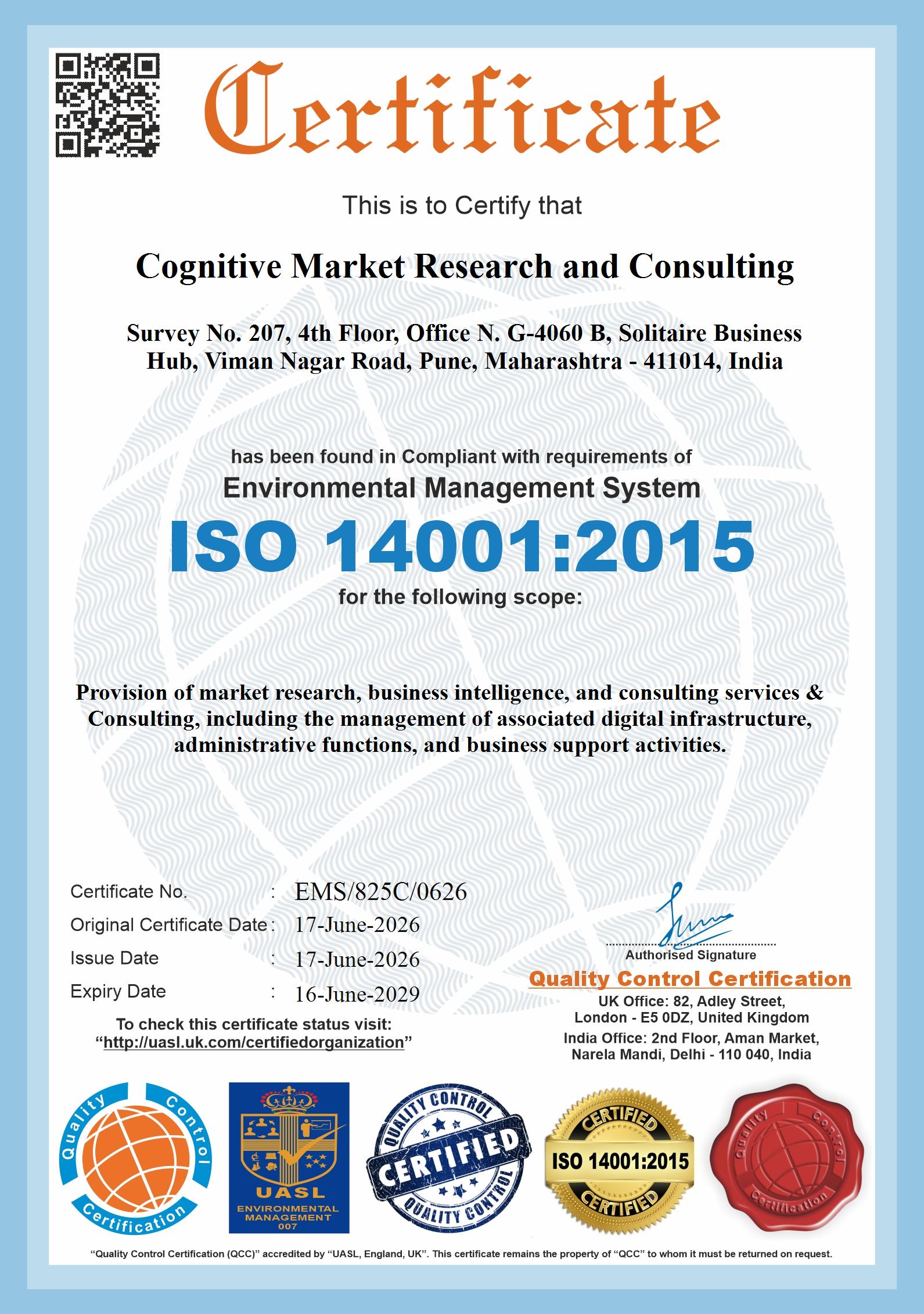
What these certifications mean to usA market figure is only as reliable as the system that produced it. That is why our accreditations cover the whole chain, not just the research step. ESOMAR and MRSI membership binds us to the professional codes that govern how respondents are recruited and how findings may be represented. ISO 20252 governs the research process itself; ISO 9001 and our quality control certification govern how consistently we repeat it. ISO 27001 and ISO 27701, alongside our GDPR, CCPA and DPDP compliance, govern what happens to your brief and your data once it reaches us; because a confidential scope is often more sensitive than the deliverable. ISO 14001, our D-U-N-S registration, Chamber of Commerce membership and DMCA protection speak to how the company itself is run and how its work is safeguarded.Our Clutch and Trustpilot profiles are deliberately listed next to them. They are the only signals on this page we do not issue ourselves, and they are the ones we would check first if we were you.
The global lab-grown diamond market is on a strong growth trajectory, driven by a global CAGR of 10.6%, with affordability and ethical sourcing as its core pillars of success.
The Asia-Pacific region, with a remarkable CAGR of 12.6%, is the engine of the market, serving as both the largest production center and the fastest-growing consumer base.
Mainstream acceptance by major retailers and expansion into industrial applications are key trends that are broadening the market's scope and ensuring its long-term viability beyond consumer jewelry.
Despite the positive outlook, manufacturers must navigate challenges related to brand perception and potential price erosion through strategic marketing, consumer education, and continuous technological innovation.