We value your privacy
We use cookies to improve your experience and analyze traffic. By continuing, you consent to our use of cookies under GDPR, CCPA and other applicable laws. Privacy Policy
Cookie preferences
Choose which categories of cookies you allow. Strictly necessary cookies are always on.
Strictly necessary
Required for core site functionality, security and your session. Always active.
Analytics
Help us understand how visitors use the site (e.g. Google Analytics) so we can improve it.
Marketing
Used to measure campaigns and show you relevant ads on other sites (e.g. LinkedIn, Google Ads).
Inhalation Drug Delivery Devices Market Analysis 2026
Inhalation Drug Delivery Devices Market Analysis size 2021 was recorded $20650 Million whereas by the end of 2026 it will reach $38120 Million. According to the author, by 2033 Inhalation Drug Delivery Devices market size will become $89910 Million. Inhalation Drug Delivery Devices market will be growing at a CAGR of 13.042% during 2026 to 2033. Download a free sample with data verified by Supriya Yadav
Inhalation Drug Delivery Devices Market Analysis from 2022 to 2034 Containing Market Size, Share along with its CAGR, Forecast and Trends
Top Countries — Revenue
Billion
Access the full forecast model.
Country-level data · Company profiles · Editable dataset · Analyst consultation included.
Inhalation Drug Delivery Devices Market Analysis — Presence
Geographical Analysis
Click countries to explore
Loading map…
Regional and Country Analysis
Global Inhalation Drug Delivery Devices Market Analysis 2026
Country-level values are locked in this preview.
Request a free sample
to unlock the full breakdown.
Region / Country
2021 (A)
2025 (A)
2033 (P)
CAGR
Global
$ 20.65 Billion
$ 33.72 Billion
$ 89.91 Billion
13.042%
North America
$ 8.24 Billion
$ 13.38 Billion
$ 34.63 Billion
12.62%
United States
$ 6.38 Billion
$ 10.32 Billion
$ 26.28 Billion
12.388%
Canada
$ 0.94 Billion
$ 1.56 Billion
$ 4.57 Billion
14.355%
Mexico
$ 0.92 Billion
$ 1.5 Billion
$ 3.79 Billion
12.29%
Europe
$ 5.97 Billion
$ 9.67 Billion
$ 25.01 Billion
12.608%
United Kingdom
$ 0.69 Billion
$ 1.09 Billion
$ 2.63 Billion
11.655%
France
$ 0.58 Billion
$ 0.95 Billion
$ 2.76 Billion
14.215%
Germany
$ 1.04 Billion
$ 1.68 Billion
$ 4.1 Billion
11.825%
Italy
$ 0.42 Billion
$ 0.69 Billion
$ 1.87 Billion
13.225%
Russia
$ 0.76 Billion
$ 1.22 Billion
$ 3.01 Billion
11.947%
Spain
$ 0.46 Billion
$ 0.73 Billion
$ 1.76 Billion
11.681%
Sweden
$ 0.17 Billion
$ 0.25 Billion
$ 0.53 Billion
9.536%
Denmark
$ 0.17 Billion
$ 0.26 Billion
$ 0.54 Billion
9.6%
Switzerland
$ 0.15 Billion
$ 0.23 Billion
$ 0.55 Billion
11.262%
Luxembourg
$ 0.09 Billion
$ 0.13 Billion
$ 0.31 Billion
11.22%
Rest of Europe
$ 1.47 Billion
$ 2.44 Billion
$ 6.97 Billion
14.01%
Asia Pacific
$ 3.86 Billion
$ 6.38 Billion
$ 18.58 Billion
14.307%
China
$ 1.17 Billion
$ 1.87 Billion
$ 5.3 Billion
13.883%
Japan
$ 0.78 Billion
$ 1.23 Billion
$ 3.46 Billion
13.81%
South Korea
$ 0.3 Billion
$ 0.47 Billion
$ 1.28 Billion
13.253%
India
$ 0.62 Billion
$ 1.06 Billion
$ 3.32 Billion
15.357%
Australia
$ 0.11 Billion
$ 0.18 Billion
$ 0.38 Billion
10%
Singapore
$ 0.13 Billion
$ 0.22 Billion
$ 0.71 Billion
16.021%
Taiwan
$ 0.08 Billion
$ 0.13 Billion
$ 0.31 Billion
11.646%
South East Asia
$ 0.38 Billion
$ 0.64 Billion
$ 2.03 Billion
15.6%
Rest of APAC
$ 0.3 Billion
$ 0.59 Billion
$ 1.81 Billion
15.049%
South America
$ 1.36 Billion
$ 2.3 Billion
$ 6.63 Billion
14.164%
Brazil
$ 0.48 Billion
$ 0.81 Billion
$ 2.26 Billion
13.761%
Argentina
$ 0.19 Billion
$ 0.32 Billion
$ 0.96 Billion
14.954%
Colombia
$ 0.12 Billion
$ 0.2 Billion
$ 0.6 Billion
14.943%
Peru
$ 0.06 Billion
$ 0.1 Billion
$ 0.24 Billion
11.764%
Chile
$ 0.03 Billion
$ 0.05 Billion
$ 0.12 Billion
11.012%
Rest of South America
$ 0.49 Billion
$ 0.83 Billion
$ 2.45 Billion
14.493%
Middle East
$ 0.79 Billion
$ 1.21 Billion
$ 2.9 Billion
11.559%
Saudi Arabia
$ 0.28 Billion
$ 0.42 Billion
$ 1 Billion
11.241%
Turkey
$ 0.1 Billion
$ 0.15 Billion
$ 0.34 Billion
10.986%
UAE
$ 0.08 Billion
$ 0.12 Billion
$ 0.31 Billion
12.775%
Egypt
$ 0.07 Billion
$ 0.11 Billion
$ 0.27 Billion
12.169%
Qatar
$ 0.06 Billion
$ 0.09 Billion
$ 0.21 Billion
10.998%
Rest of Middle East
$ 0.21 Billion
$ 0.32 Billion
$ 0.78 Billion
11.715%
Africa
$ 0.43 Billion
$ 0.78 Billion
$ 2.15 Billion
13.524%
East Africa
xxxx
xxxx
xxxx
xxxx
West Africa
xxxx
xxxx
xxxx
xxxx
North Africa
xxxx
xxxx
xxxx
xxxx
South Africa
$ 0.14 Billion
$ 0.25 Billion
$ 0.67 Billion
13.137%
The global inhalation drug delivery devices market is set for remarkable growth, driven by a confluence of factors including a rising global burden of respiratory ailments, an aging population more susceptible to such conditions, and significant strides in device technology. This market encompasses a range of products from metered-dose inhalers (MDIs) and dry powder inhalers (DPIs) to nebulizers, all designed for targeted drug delivery to the lungs. The growing preference for inhalation therapy over systemic drug delivery, due to its rapid onset of action and reduced side effects, is a key dynamic propelling market expansion.
Global Inhalation Drug Delivery Devices Market Drivers
Increasing Prevalence of Chronic Respiratory Diseases: The rising incidence of asthma and COPD globally is the primary driver. Factors like urbanization, air pollution, and lifestyle changes contribute to the growing patient population requiring long-term inhalation therapy.
Technological Advancements in Device Design: Innovations such as smart inhalers with Bluetooth connectivity, dose counters, and improved aerosolization performance are enhancing treatment efficacy and patient compliance, thereby driving market demand.
Growing Preference for Non-Invasive Delivery: Inhalation is a preferred route for its non-invasive nature, rapid drug action, and ability to deliver medication directly to the site of action in the lungs, leading to greater patient acceptance and adoption over parenteral routes.
Global Inhalation Drug Delivery Devices Market Trends
Emergence of Smart and Connected Inhalers: The integration of digital technology into inhalers to monitor usage patterns, improve adherence, and provide real-time feedback to patients and physicians is a major trend shaping the market's future.
Focus on Environmentally Friendly Solutions: There is a growing push to phase out chlorofluorocarbon (CFC) and even hydrofluoroalkane (HFA) propellants in MDIs in favor of more environmentally benign alternatives and a greater focus on recyclable materials.
Expansion into New Therapeutic Areas: While respiratory diseases are the mainstay, inhalation devices are increasingly being explored for systemic drug delivery, including vaccines, pain management, and diabetes treatment, opening up new avenues for market growth.
Global Inhalation Drug Delivery Devices Market Restraints
Stringent Regulatory Hurdles: Inhalation devices and their drug combinations are subject to complex and lengthy regulatory approval processes, which can delay product launches and increase development costs for manufacturers.
High Cost of Advanced Devices: The development and manufacturing of sophisticated devices, especially smart inhalers, result in higher costs, which can limit their accessibility and affordability, particularly in developing economies.
Technical and Formulation Challenges: Ensuring accurate dosing, consistent particle size, and stability of drug formulations for inhalation presents significant technical challenges that can hinder the development of new and effective therapies.
Country-Specific Insight: North America will command approximately 39.69% of the global market in 2025. The United States is the dominant force, accounting for 30.61% of the global market share in 2025, driven by high rates of respiratory diseases and advanced healthcare infrastructure. Canada and Mexico are projected to hold 4.64% and 4.44% of the global market, respectively, benefiting from growing healthcare investments.
Key Drivers
High prevalence of asthma and COPD combined with a strong presence of leading pharmaceutical and device manufacturers.
Favorable reimbursement policies and high healthcare expenditure supporting the adoption of advanced and premium-priced inhaler technologies.
Increased awareness among patients and healthcare providers regarding the benefits of advanced inhalation therapies.
Key Trends
Rapid adoption of smart inhalers integrated with digital health platforms for remote patient monitoring and adherence tracking.
A growing focus on developing biologic therapies delivered via inhalation devices for severe asthma.
Consolidation in the market through mergers and acquisitions aimed at strengthening product portfolios and technological capabilities.
Key Restraints
Stringent FDA regulatory requirements for new device and drug-device combination approvals.
Pricing pressure from payers and government bodies aimed at curbing healthcare costs.
Market saturation in conventional device segments, leading to intense competition among key players.
Technology Focus
The region is a hub for innovation, with a strong focus on developing next-generation smart inhalers featuring AI-driven analytics, breath-actuated mechanisms for improved drug delivery, and soft mist inhaler technology. There is also significant research into creating more portable and user-friendly nebulizer systems for home care.
Country-Specific Insight: Europe constitutes a significant portion of the market, representing about 28.69% of the global share in 2025. Germany leads the region, holding 4.97% of the global market, followed by the United Kingdom (3.23%) and France (2.83%). Countries like Russia (3.62% global share) and Italy (2.05% global share) also contribute substantially to the regional market size.
Key Drivers
An aging population with a higher susceptibility to respiratory conditions.
Robust government-funded healthcare systems in many countries facilitate patient access to necessary treatments.
Strong emphasis on reducing the environmental impact of inhalers, driving innovation in propellant technology.
Key Trends
Increasing demand for dry powder inhalers (DPIs) due to their breath-actuated mechanism and propellant-free nature.
Implementation of digital health initiatives by national health services to incorporate connected devices into standard care.
Growing development of generic and biosimilar inhalation products as key patents expire.
Key Restraints
Complex and fragmented reimbursement landscape across different European countries.
Strict environmental regulations (e.g., EU Green Deal) impacting the manufacturing and formulation of metered-dose inhalers.
Price negotiations and cost-containment measures by national health authorities limiting profitability.
Technology Focus
European technology development is heavily influenced by environmental regulations, leading to significant R&D in low Global Warming Potential (GWP) propellants and advanced DPI technologies. There is also a focus on patient-centric design to improve usability for elderly and pediatric populations.
Country-Specific Insight: As the fastest-growing region, APAC will account for 18.91% of the global market in 2025. China is the largest market in the region, holding a 5.55% share of the global market. Japan (3.64%) and India (3.14%) are also major contributors, with India exhibiting one of the highest growth rates globally due to its massive population and rising pollution levels.
Key Drivers
A large and growing patient base for respiratory diseases, driven by severe air pollution and high smoking rates in some countries.
Rapidly improving healthcare infrastructure and increasing disposable incomes.
Growing awareness and government initiatives to combat chronic respiratory diseases.
Key Trends
A significant increase in the adoption of branded generic inhalation products.
Expansion of local manufacturing capabilities to produce affordable inhalers.
A surge in medical tourism in countries like Singapore and South Korea for advanced respiratory treatments.
Key Restraints
Lack of reimbursement and high out-of-pocket expenses in many countries.
Limited patient awareness and diagnostic facilities, leading to under-diagnosis of respiratory conditions.
Prevalence of counterfeit medical devices in certain parts of the region.
Technology Focus
The technology focus in APAC is geared towards developing cost-effective and affordable devices for a mass market. There is a growing interest in portable nebulizers and simple-to-use DPIs. Local manufacturers are increasingly capable of producing high-quality generic versions of popular inhalers.
Country-Specific Insight: South America represents an emerging market, holding approximately 6.81% of the global share in 2025. Brazil is the key market, accounting for 2.39% of the global revenue. Argentina (0.94%) and Colombia (0.58%) are other notable markets with strong growth potential, driven by public health programs targeting respiratory illnesses.
Key Drivers
Government initiatives to improve access to essential medicines, including inhalers for asthma and COPD.
Increasing urbanization and associated pollution contributing to a rise in respiratory ailments.
Growing private healthcare sector and foreign investment.
Key Trends
Emphasis on public health education programs to improve disease awareness and treatment adherence.
Partnerships between local distributors and multinational corporations to introduce newer technologies.
Gradual adoption of more advanced devices beyond basic MDIs in urban centers.
Key Restraints
Economic instability and currency fluctuations impacting import costs and market affordability.
Uneven healthcare access between urban and rural populations.
Complex import regulations and bureaucratic hurdles for medical devices.
Technology Focus
The primary focus is on the accessibility and affordability of essential devices like MDIs and nebulizers. There is a gradual introduction of DPIs, but advanced smart technologies have yet to see wide adoption due to cost constraints. Local production and assembly are key strategies for market players.
Country-Specific Insight: The Middle East market is projected to hold 3.59% of the global market in 2025. Wealthy Gulf Cooperation Council (GCC) countries are the primary drivers, with Saudi Arabia (1.26% global share) and the UAE (0.35% global share) leading due to high healthcare spending. Environmental factors like sandstorms contribute to high rates of respiratory issues.
Key Drivers
High per-capita income and government investment in state-of-the-art healthcare facilities.
High prevalence of allergic rhinitis and asthma due to environmental factors.
A growing medical tourism industry, particularly in the UAE.
Key Trends
Rapid adoption of the latest technologies and premium products from Western manufacturers.
Increasing focus on home healthcare and the use of portable nebulizers.
Development of specialized respiratory care centers.
Key Restraints
Dependence on imported products makes the market susceptible to supply chain disruptions and price fluctuations.
Diverse regulatory requirements across different countries in the region.
Geopolitical instability can impact market stability and investment.
Technology Focus
The region, particularly the GCC countries, is an early adopter of advanced and premium technologies. There is strong demand for the latest smart inhalers, soft mist inhalers, and designer portable nebulizers. The focus is on acquiring the best-in-class technology to equip modern hospitals and cater to a discerning patient base.
Country-Specific Insight: Africa is a nascent market with significant long-term potential, accounting for 2.31% of the global market in 2025. South Africa is the most developed market in the region, holding 0.74% of the global share. Nigeria, with its large population, contributes 0.42% to the global market and is experiencing rapid growth in healthcare infrastructure.
Key Drivers
A high burden of both communicable (like tuberculosis) and non-communicable respiratory diseases.
International health aid and NGO programs improving access to basic medical supplies, including inhalers.
Slowly improving economic conditions and a growing middle class in key countries.
Key Trends
Focus on building primary healthcare capacity to diagnose and manage respiratory conditions.
Increased use of nebulizers in hospital settings.
Mobile health (mHealth) initiatives are being used for patient education and support.
Key Restraints
Severely limited healthcare infrastructure and a shortage of trained healthcare professionals.
Extreme price sensitivity and dependence on donor funding.
Logistical and supply chain challenges in distributing medical devices across the continent.
Technology Focus
The technological landscape is dominated by basic, low-cost MDIs and hospital-grade nebulizers. The primary objective is to ensure the availability of robust, easy-to-use, and affordable devices that can function reliably in resource-limited settings. There is virtually no market for advanced smart devices at present.
A = Actual · E = Estimated · P = Projected · 🔒 Locked values require full access. Click headers to sort.
Type breakdown · Illustrative 2025 shares shown free · Full-period forecast in paid report.
Nebulizers Inhalation Drug Delivery Devices Market Analysis
XX
Nebulizers Market Size 2025
XX %
CAGR
Locked · Full data in paid report
Dry Powder Inhaler (DPI) Inhalation Drug Delivery Devices Market Analysis
XX
Dry Powder Inhaler (DPI) Market Size 2025
XX %
CAGR
Locked · Full data in paid report
Metered Dose Inhaler (MDI) Inhalation Drug Delivery Devices Market Analysis
XX
Metered Dose Inhaler (MDI) Market Size 2025
XX %
CAGR
Locked · Full data in paid report
Market size by (Illustrative, 2025)
Share distribution (2025)
Disclaimer: The charts and graphs are for illustrative purposes only and do not represent actual market values. To access accurate quantitative data, please request a paid report or request free sample.
To learn more about market share and segmentation, request the free sample pages.
Competitor Analysis
The Inhalation Drug Delivery Devices Market Analysis market is highly competitive, with players expanding through new product launches, M&A, partnerships, and regulatory approvals for advanced technologies. The report covers financials (revenue, margin, market share 2021–2033) and SWOT analysis, while also highlighting company responses to tariff challenges via supply chain shifts, production changes, and digital healthcare investments.
Click any bar or cell to request the full company profile
Top Companies (In no particular order)
2022 (A)
2023 (A)
2024 (A)
2025 (A)
GSK
•••
•••
•••
•••
3M
•••
•••
•••
•••
AstraZeneca
•••
•••
•••
•••
Novartis
•••
•••
•••
•••
Aptar
•••
•••
•••
•••
Boehringer Ingelheim
•••
•••
•••
•••
Chiesi Farmaceutici
•••
•••
•••
•••
Omron Healthcare
•••
•••
•••
•••
Philips Respironics
•••
•••
•••
•••
PARI Respiratory
•••
•••
•••
•••
Skyepharma
•••
•••
•••
•••
CareFusion
•••
•••
•••
•••
Shanghai HuaRui
•••
•••
•••
•••
Taian Character
•••
•••
•••
•••
Aptar China
•••
•••
•••
•••
Chia Tai Tianqing
•••
•••
•••
•••
Allergan
•••
•••
•••
•••
DJO Global
•••
•••
•••
•••
CareFusion
•••
•••
•••
•••
DeVilbiss Healthcare
•••
•••
•••
•••
GlaxoSmithKline
•••
•••
•••
•••
Johnson & Johnson
•••
•••
•••
•••
Monaghan Medical
•••
•••
•••
•••
Mylan
•••
•••
•••
•••
Hisamitsu Pharmaceutical
•••
•••
•••
•••
Philips Healthcare
•••
•••
•••
•••
Salter Labs
•••
•••
•••
•••
Smiths Medical
•••
•••
•••
•••
Teikoku Pharma
•••
•••
•••
•••
Teleflex Medical
•••
•••
•••
•••
We Provide Regional Breakdown of this Companies and Company specific to any Country, Region, Product/ service as well. We cover market share analysis for publicly listed companies as well as privately held companies, subject to data availability.
Executive Summary of Inhalation Drug Delivery Devices Market
The global market for inhalation drug delivery devices is on a significant upward trajectory, projected to expand from $20.65 billion in 2021 to $89.91 billion by 2033, demonstrating a robust CAGR of 13.042%. This growth is primarily fueled by the escalating prevalence of chronic respiratory diseases such as asthma and Chronic Obstructive Pulmonary Disease (COPD), coupled with rising air pollution levels worldwide. Technological advancements leading to the development of more efficient and patient-friendly devices, including smart and connected inhalers, are revolutionizing treatment and adherence monitoring. North America currently dominates the market, but the Asia Pacific region is emerging as the fastest-growing area, driven by increasing healthcare awareness, rising incomes, and a large patient pool. The shift towards non-invasive drug delivery methods further solidifies the market's strong growth potential over the forecast period.
Key strategic insights from our comprehensive analysis reveal:
The market is experiencing a profound shift towards smart, connected devices that enhance patient adherence and provide valuable data for healthcare providers, representing a key area for investment and innovation.
While North America and Europe are the current revenue powerhouses, the Asia Pacific region, with a projected CAGR of 14.307%, offers the most significant growth opportunity for manufacturers due to its vast, underserved population and improving healthcare infrastructure.
Sustainability is becoming a critical trend, with increasing pressure to develop environmentally friendly propellants and recyclable or reusable device components, which will influence future product design and market acceptance.
Strategic Recommendations for Manufacturers
Manufacturers should prioritize investment in the research and development of smart, connected inhalation devices to capitalize on the digital health trend and improve patient outcomes. Expanding geographic footprint into high-growth emerging markets, particularly in the Asia Pacific region, is crucial for long-term growth. Furthermore, developing sustainable and eco-friendly inhalers will not only meet regulatory pressures but also appeal to environmentally conscious consumers and providers. Forming strategic alliances with pharmaceutical companies and tech firms can accelerate innovation and market access.
The medical devices and consumables industry is growing rapidly, driven by aging populations, rising healthcare spending, and supportive regulations, boosting demand for implants, assistive tech, and home monitoring. Challenges include strict regulations, high R&D costs, and supply chain risks, but opportunities lie in emerging markets, health-tech partnerships, and eco-friendly devices. Key trends such as AI, precision medicine, and sustainable innovations are transforming healthcare and accelerating market growth.
Analyst Conclusion
As per Cognitive's Research Analyst, Inhalation Drug Delivery Devices are devices designed for targeted drug delivery to the lungs. They play an essential role in effective management of chronic respiratory diseases like asthma and COPD, offering rapid onset of action and reduced systemic side effects.
Looking at the Historical Growth The global market expanded from $20650 million in 2021 to an estimated $38120 million in 2026 due to escalating prevalence of chronic respiratory diseases such as asthma and Chronic Obstructive Pulmonary Disease (COPD), coupled with rising air pollution levels worldwide. Regionally, North America grew from $8240 million in 2021 to $15070 million in 2026, while Europe progressed from $5968 million to $10890 million over the same period.
Currently in 2026, North America holds a commanding 39.53% of the global market, driven by a high incidence of pulmonary conditions, coupled with a robust presence of pharmaceutical manufacturers, and supported by advantageous reimbursement structures and substantial healthcare spending. Therapeutic interventions for respiratory ailments remains the primary consumer of Inhalation Drug Delivery Devices. Additionally Asia Pacific is set to be the fastest-growing region, exhibiting the highest CAGR of 14.307%, fueled by a vast and expanding population needing treatment for lung conditions, fueled by high levels of atmospheric contamination and significant smoking rates in several nations, complemented by improving medical infrastructure and increasing personal wealth.
The market is witnessing a definitive shift towards smart, connected devices, driven by their ability to enhance patient adherence and provide crucial data for healthcare providers. Ongoing innovation in digital health platforms is also leading, focusing on integrated usage monitoring and treatment efficacy.
In the future, The global Inhalation Drug Delivery Devices market will reach to $89910 million by 2033, expanding at a compound annual growth rate of 13.042% from 2021, primarily driven by the escalating global burden of respiratory ailments and continuous innovation in device technology. Ongoing advancements in advanced device design and the strong trend towards non-invasive drug delivery methods will also contribute significantly.
Supriya is a Team Lead at Cognitive Market Research & Consulting, leading research initiatives and strategic intelligence projects across the Healthcare, Pharmaceuticals, and Medical Devices & Consumables sectors. With more than two years of experience in market research and data analysis, she plays a key role in helping organizations navigate complex healthcare ecosystems, identify emerging opportunities, and make informed business decisions through data-driven insights and market intelligence.
Combining expertise in both primary and secondary research methodologies with a strong academic foundation in Marketing and Finance, Supriya oversees the execution of market assessments, competitive intelligence studies, forecasting models, stakeholder interviews, trend analysis, and custom consulting engagements. She collaborates with healthcare providers, pharmaceutical manufacturers, medical device companies, industry experts, and other key stakeholders to gather firsthand market perspectives while validating findings through extensive research. Her ability to interpret clinical, commercial, and market data enables clients to better understand industry developments, regulatory influences, innovation trends, and competitive dynamics.
In her leadership role, she manages end-to-end research projects and guides cross-functional teams in delivering high-quality market reports, consulting solutions, and strategic studies. Her expertise in market estimation, forecasting, and analytical modeling helps organizations evaluate market potential, assess growth opportunities, strengthen competitive positioning, and support strategic planning initiatives. By transforming complex healthcare and life sciences data into actionable business intelligence, she enables clients to make confident decisions in rapidly evolving market environments.
Driven by a passion for healthcare innovation and continuous professional development, Supriya remains committed to staying ahead of industry trends, technological advancements, and changing market conditions. Her leadership, analytical mindset, and dedication to research excellence help organizations mitigate risks, capitalize on emerging opportunities, and achieve sustainable growth across the global healthcare and life sciences landscape.
Inhalation Drug Delivery Devices Market Analysis market size and growth rate is provided in the report covering 2021-2025 historical and 2025-2033 forecast data.
Major factors including drivers, restraints, opportunities and challenges are analyzed with detailed insights.
Top manufacturers GSK, 3M, AstraZeneca, Novartis, Aptar, Boehringer Ingelheim, Chiesi Farmaceutici, Omron Healthcare, Philips Respironics, PARI Respiratory, Skyepharma, CareFusion, Shanghai HuaRui, Taian Character, Aptar China, Chia Tai Tianqing, Allergan, DJO Global, CareFusion, DeVilbiss Healthcare, GlaxoSmithKline, Johnson & Johnson, Monaghan Medical, Mylan, Hisamitsu Pharmaceutical, Philips Healthcare, Salter Labs, Smiths Medical, Teikoku Pharma, Teleflex Medical and others are profiled in the report.
Segments include Type, Application and additional sub-segments.
Regional analysis covers all major markets. The report identifies the dominant region and provides country-level data.
Sample pages can be obtained on demand from the website. 24/7 chat support and direct call services are available.
★ Reviews
Rate this report
Inhalation Drug Delivery Devices Market Analysis — Table of Contents
Disclaimer:
This is just a redacted sample pages of the actual deliverable report and only for representative purposes
Charts/Graphs/Numbers/data are only for Representative purposes and do not depict actual statistics.
The table of Contents differs according to the user License selection. Current Displayed TOC is for the Corporate User License Report Edition. TOC Customization options: Add or Remove section/s Or chapter/s from the report.
Specific Tables, Graphs, Sections, and Chapters can be ordered at a discounted price.
If applicable; On Request Volume Data will also be provided (at an Additional Cost).
11.14.2 AI-Driven Transformation of Industry Value Chain
11.14.3 Evolution of Business Models & Revenue Streams
11.14.4 AI-Driven Product, Service & Innovation Transformation
11.14.5 Customer Behavior, AI Adoption & Future Market Evolution
Chapter 12. TOP 10 Country Analysis
12.1 Country 1
12.2 Country 2
12.3 Country 3
12.4 Country 4
12.5 Country 5
12.6 Country 6
12.7 Country 7
12.8 Country 8
12.9 Country 9
12.10 Country 10
Chapter 13. Research Findings
13.1 Key Takeaways
13.2 Analyst Point of View
13.3 Assumptions and Acronyms
Chapter 14. Research Methodology and Sources
14.1 Primary Data Collection
14.1.1 Steps for Primary Data Collection
14.1.1.1 Identification of KOL
14.1.2 Backward Integration
14.1.3 Forward Integration
14.1.4 How Primary Research Help Us
14.1.5 Modes of Primary Research
14.2 Secondary Research
14.2.1 How Secondary Research Help Us
14.2.2 Sources of Secondary Research
14.3 Data Validation
14.3.1 Data Triangulation
14.4 Data Representation
Athenaeum AI Dashboard
Research Framework · 70:30 Primary:Secondary
Our Proprietary Methodology
Cognitive Market Research and Consulting "The Full Truth" methodology — a rigorous triangulation process that combines primary research, secondary validation, and expert calibration. Implemented by Supriya Yadav and team for the Inhalation Drug Delivery Devices Market Analysis Market analysis.
01
Primary Intelligence Gathering
Direct interviews with 50+ industry stakeholders including manufacturers, distributors, end-users, and regulatory bodies across all six regions.
02
Secondary Data Triangulation
Cross-referencing against trade databases, customs records, financial filings, patent databases, and verified industry publications.
03
Expert Validation Protocol
Each data point undergoes validation by minimum two independent domain experts with 15+ years of industry experience.
04
Athenaeum AI Processing
Our proprietary AI platform aggregates, normalizes, and identifies patterns across 10,000+ data points to surface non-obvious insights.
05
Editorial & QA Review
Final review by senior analysts ensures accuracy, coherence, and actionability of all insights and recommendations.
To maintain the integrity of our proprietary methodology and protect our elite expert network, specific source disclosures are reserved for full-access partners. Our research framework is anchored by a 70:30 primary-to-secondary ratio, ensuring your strategy is driven by real-time market intelligence rather than recycled, publicly available, or AI-generated data. Every deliverable includes an exhaustive source directory and grants direct analyst access.
Latest News about Inhalation Drug Delivery Devices Market
27 Jun 2024health.economictimes.indiatimes.com
US FDA approves Verona Pharma's inhaled COPD therapy
The company's US-listed shares increased 11% during extended trading. With approval from the US FDA, the therapy which will be marketed under the brand Ohtuvayre offers a novel inhalation non-steroidal treatment for chronic obstructive pulmonary disease and is the first of its kind for the firm. COPD, usually referred to as "smoker's lungs," is a chronic illness that mostly affects cigarette smokers and results in limited airflow and breathing difficulties. Numerous working settings' dust, chemicals, and fumes are additional elements that contribute to COPD.The effectiveness and safety results from two late-stage trials supporting Verona's application showed that Ohtuvayre improved lung functions and symptoms, significantly lowering the risk of exacerbation in individuals with mild-to-severe COPD. The treatment is a kind of single-drug therapeutic intended to lessen lung inflammation without the use of steroids by relaxing the muscles around the airways, thereby facilitating breathing.
The Three Pillars of End-to-End Market Research Services
We don't just hand over data. We partner with your team across three integrated service lines — each designed to give you decision-grade intelligence on the Inhalation Drug Delivery Devices Market Analysis market.
Service 01
Market Survey
B2BB2C
Structured primary research across both B2B and B2C channels. We design and execute custom surveys targeting manufacturers, distributors, procurement heads, and end-consumers in the inhalation drug delivery devices market analysis ecosystem — validated by our global panel of 10,000+ industrial respondents.
What's Included
Buyer intent & sentiment analysis
Purchase cycle mapping
Price sensitivity research
Channel preference profiling
Competitive perception study
Most Requested
Service 02
Customized Market Data & Reports
CustomReady Report
Choose from our ready-to-access 8th Edition report or commission a fully customized dataset tailored to your exact strategic questions. Cross-splits, custom geographies, proprietary segmentation — we build the intelligence asset your board actually needs.
What's Included
Ready syndicate report
Custom data scope & segmentation
Excel quantitative models
Board-ready PPT with key findings
Secure cloud portal access
Service 03
Strategic Consultation
With SurveyWith Report
Every survey and every report comes with dedicated analyst consultation. Our senior research team walks your leadership through findings, answers strategic questions in real-time, and helps translate data into your next board presentation or investment thesis.
What's Included
Dedicated analyst assigned to you
Live walkthrough of findings
Strategic Q&A sessions
Go-to-market recommendations
NDA-protected engagement
Inhalation Drug Delivery Devices Market Related Reports
Tell us the specific segments, regions, or companies you need — and we will tailor the deliverable to your requirements.
Why Trust Us
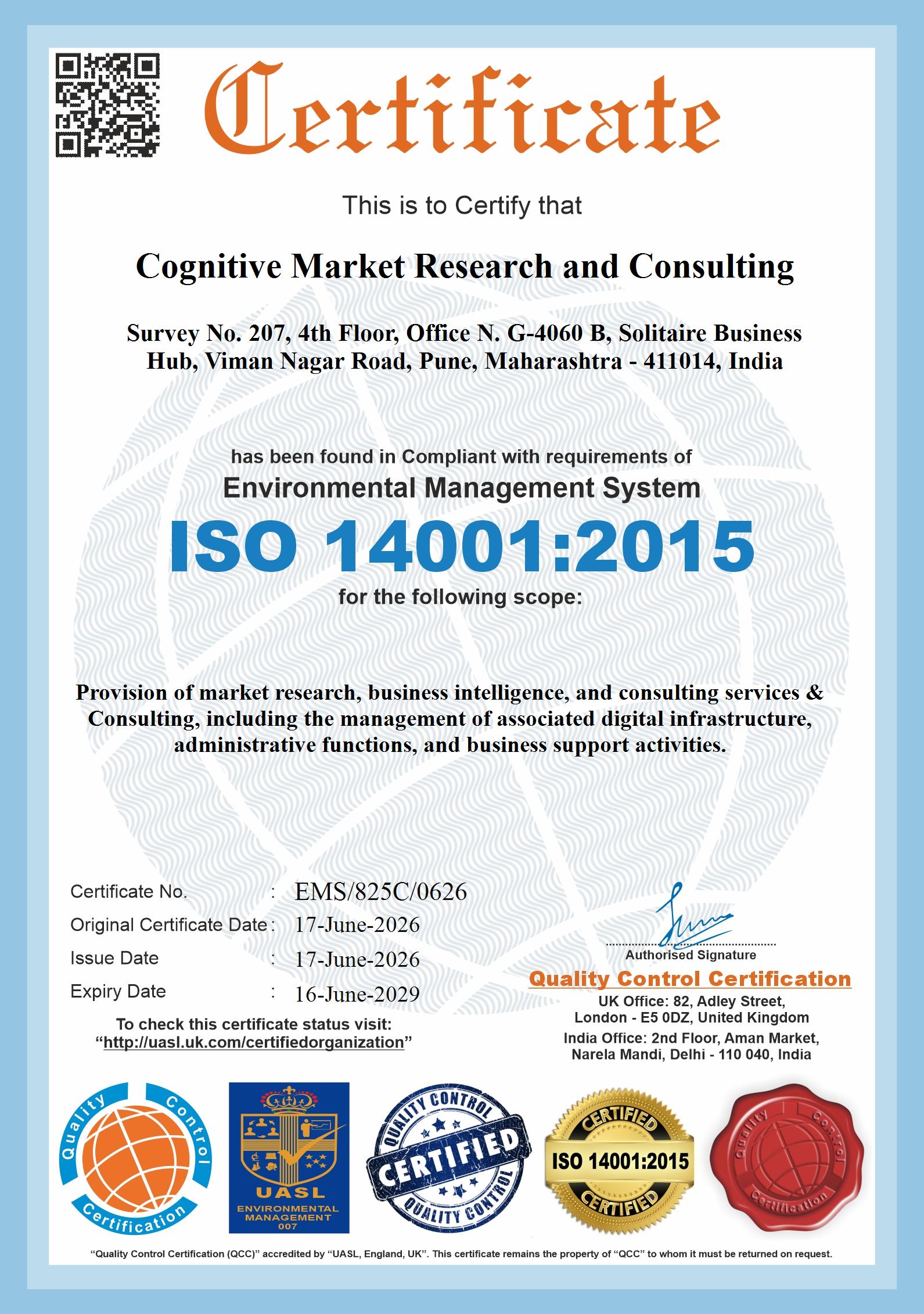
What these certifications mean to usA market figure is only as reliable as the system that produced it. That is why our accreditations cover the whole chain, not just the research step. ESOMAR and MRSI membership binds us to the professional codes that govern how respondents are recruited and how findings may be represented. ISO 20252 governs the research process itself; ISO 9001 and our quality control certification govern how consistently we repeat it. ISO 27001 and ISO 27701, alongside our GDPR, CCPA and DPDP compliance, govern what happens to your brief and your data once it reaches us; because a confidential scope is often more sensitive than the deliverable. ISO 14001, our D-U-N-S registration, Chamber of Commerce membership and DMCA protection speak to how the company itself is run and how its work is safeguarded.Our Clutch and Trustpilot profiles are deliberately listed next to them. They are the only signals on this page we do not issue ourselves, and they are the ones we would check first if we were you.
CMR has worked professionally at all times, enabling clear presentation of the results to identify key trends and areas for growth and improvement of the I…
The global inhalation drug delivery devices market is poised for exceptional growth, with a projected value of $89.91 billion by 2033, driven by the unrelenting rise in chronic respiratory diseases.
North America and Europe remain the cornerstones of the market in terms of revenue, but the Asia Pacific region is the engine of future growth, boasting the highest regional CAGR.
Innovation in smart, connected devices is the most significant trend, fundamentally changing disease management and creating new value propositions for both patients and providers.
Manufacturers must navigate a complex landscape of stringent regulations, pricing pressures, and environmental concerns to succeed, with a focus on cost-effective innovation and geographic expansion being paramount.