Gatifloxacin Market Analysis from 2022 to 2034 Containing Market Size, Share along with its CAGR, Forecast and Trends
Top Countries — Revenue
Access the full forecast model.
Country-level data · Company profiles · Editable dataset · Analyst consultation included.
Gatifloxacin Market Analysis — Presence
Interactive World Map
Click countries to exploreRegional and Country Analysis
- North America — United States, Canada, Mexico
- Europe — United Kingdom, France, Germany, Italy, Russia, Spain, Sweden, Denmark, Switzerland, Luxembourg, Rest of Europe
- Asia Pacific — China, Japan, South Korea, India, Australia, Singapore, Taiwan, South East Asia, Rest of APAC
- South America — Brazil, Argentina, Colombia, Peru, Chile, Rest of South America
- Middle East — Saudi Arabia, Turkey, UAE, Egypt, Qatar, Rest of Middle East
- Africa — East Africa, West Africa, North Africa, South Africa
| Region / Country | 2021 (A) | 2025 (A) | 2033 (P) | CAGR |
|---|
A = Actual · E = Estimated · P = Projected · 🔒 Locked values require full access. Click headers to sort.
Unlock full regional dataset →Segmentation Analysis
Charts are illustrative — exact values, country-level breakdowns, and full forecast in the paid report. Request a Free Sample PDF.
To learn more about market share and segmentation, request the free sample pages.
The pharmaceutical and healthcare industry is highly competitive, with players expanding through product launches, M&A, partnerships, and regulatory approvals. The Gatifloxacin Market Analysis market report covers financials, market share, SWOTs, and responses to Tariffs, while providing global, regional, and country-level forecasts supported by value chain, patent analysis, and a competitive matrix serving as a key resource for stakeholders and investors.
| Company | 2022 (A) | 2023 (A) | 2024 (A) | 2025 (A) |
|---|---|---|---|---|
| Pacific Pharma | ••• | ••• | ••• | ••• |
| Apotex | ••• | ••• | ••• | ••• |
| Sandoz | ••• | ••• | ••• | ••• |
| Allergan | ••• | ••• | ••• | ••• |
| Bristol Myers Squibb | ••• | ••• | ••• | ••• |
| Mylan | ••• | ••• | ••• | ••• |
| Hi Tech Pharmacal | ••• | ••• | ••• | ••• |
| Lupin Pharmaceuticals | ••• | ••• | ••• | ••• |
| Teva Pharmaceuticals | ••• | ••• | ••• | ••• |
Revenue data requires full access. *2nd & 3rd tier companies available on enquiry.
Request company profile for validation →Report Scope & Analysis
Executive Summary of Gatifloxacin Market
The global gatifloxacin market is poised for steady growth, projected to expand from $439.5 million in 2021 to $816.8 million by 2033, registering a CAGR of 5.3%. This growth is primarily fueled by the rising prevalence of bacterial infections, especially in ophthalmology for treating bacterial conjunctivitis. The market is also driven by its effectiveness as a broad-spectrum fluoroquinolone antibiotic. Asia Pacific currently dominates the market, driven by high population density and increasing healthcare expenditure. However, the market faces significant restraints, including concerns about side effects such as dysglycemia, the growing threat of antibiotic resistance, and the availability of newer, alternative antibiotics. Regulatory scrutiny in developed markets like North America and Europe also tempers growth, pushing manufacturers to focus on emerging economies and develop safer formulations. The development of generic versions is increasing market accessibility, while combination therapies are a key trend to enhance efficacy.
Key strategic insights from our comprehensive analysis reveal:
- The Asia Pacific region, particularly China and India, presents the most significant growth opportunity due to a large patient base for bacterial infections and improving healthcare infrastructure.
- Ophthalmic formulations of gatifloxacin are a major revenue driver, and an increasing focus on developing advanced drug delivery systems for eye infections will be crucial for market players.
- Navigating the complex regulatory landscape and addressing concerns about antibiotic resistance by promoting responsible use and developing combination therapies are critical for long-term sustainable growth.
Global Market Overview & Dynamics of Gatifloxacin Market Analysis
The Gatifloxacin market exhibits a dynamic landscape shaped by its utility as a potent fourth-generation fluoroquinolone antibiotic. Primarily used to treat respiratory and urinary tract infections, its most significant application today is in ophthalmology. The global market is driven by the high incidence of bacterial infections worldwide. The market's trajectory is influenced by a balance of drivers, such as its broad-spectrum efficacy, and restraints, including documented side effects and the pervasive issue of antibiotic resistance. The Asia Pacific region leads consumption, while North America and Europe maintain significant shares despite stricter regulations.
Global Gatifloxacin Market Drivers
-
Increasing Prevalence of Bacterial Infections: A primary driver for the market is the high and growing incidence of bacterial infections globally, particularly bacterial conjunctivitis and other ocular infections, where gatifloxacin is widely prescribed in topical formulations.
-
Effectiveness as a Broad-Spectrum Antibiotic: Gatifloxacin's efficacy against a wide range of gram-positive and gram-negative bacteria makes it a versatile treatment option for various infections, ensuring its continued relevance in clinical practice.
-
Growing Healthcare Expenditure in Emerging Economies: Rising disposable incomes and increased government spending on healthcare in developing nations are improving access to medications like gatifloxacin, thereby expanding the market.
Global Gatifloxacin Market Trends
-
Dominance of Ophthalmic Formulations: There is a clear trend towards the increased use of gatifloxacin in eye drops and ointments. This is due to its proven efficacy for ocular infections and the withdrawal of its systemic (oral) formulations in many countries due to side effects.
-
Rise of Generic Drug Manufacturing: As patents expire, the production of generic gatifloxacin has increased, particularly in regions like Asia Pacific. This has led to lower costs, increased market competition, and wider availability of the drug.
-
Development of Combination Therapies: To combat antibiotic resistance and enhance therapeutic outcomes, a growing trend involves combining gatifloxacin with other agents, such as corticosteroids (e.g., prednisolone, dexamethasone) in ophthalmic preparations.
Global Gatifloxacin Market Restraints
-
Concerns Over Side Effects and Regulatory Warnings: The history of systemic gatifloxacin causing serious side effects, such as dysglycemia (blood sugar fluctuations), has led to its withdrawal in many key markets and continues to create cautious prescribing patterns even for topical use.
-
Growing Antibiotic Resistance: Like all antibiotics, gatifloxacin faces the challenge of increasing bacterial resistance. The overuse and misuse of fluoroquinolones are reducing their long-term effectiveness and prompting a search for alternatives.
-
Availability of Alternative and Newer Antibiotics: The pharmaceutical market offers a range of alternative antibiotics, including other fluoroquinolones and drugs from different classes, which provide physicians with multiple choices and create a competitive environment that can limit gatifloxacin's market share.
Strategic Recommendations for Manufacturers
Manufacturers should strategically focus on the ophthalmic segment, investing in R&D to create advanced, sustained-release formulations that improve patient compliance and reduce dosage frequency. Geographic expansion into high-growth markets in Asia Pacific and the Middle East, where the burden of bacterial infections is high, is essential. Furthermore, forming strategic partnerships with local distributors can help navigate regional regulatory hurdles and improve market penetration. Emphasizing post-market surveillance and physician education on the appropriate use of gatifloxacin is crucial to mitigate risks associated with side effects and antibiotic resistance, thereby building long-term brand trust and market sustainability.
Detailed Regional Analysis: Data & Dynamics of Gatifloxacin Market Analysis
The global gatifloxacin market is geographically dominated by Asia Pacific, which holds the largest market share, followed by North America and Europe. The growth in Asia is propelled by large populations and rising healthcare needs. North America's market, while mature, is sustained by advanced healthcare systems, whereas Europe faces stringent regulations. Emerging markets in the Middle East, South America, and Africa are expected to witness steady growth.
North America Gatifloxacin Market Analysis
Market Size: $125.256 Million (2021) -> $152.376 Million (2025) -> $227.876 Million (2033)
CAGR (2021-2033): 5.159%
Country-Specific Insight: In 2025, North America is projected to hold approximately 28.2% of the global gatifloxacin market. The United States will account for the largest portion, with an estimated 23.15% of the global market. Canada and Mexico will contribute smaller shares, holding approximately 3.61% and 1.44% of the global market size, respectively.
Regional Dynamics:
Drivers
- High prevalence of eye disorders and a well-established healthcare system.
- Strong demand for effective treatments for bacterial conjunctivitis.
- Presence of key pharmaceutical players and robust R&D infrastructure.
Trends
- Increasing preference for fourth-generation fluoroquinolones in ophthalmology over older generations.
- Growing use of preservative-free ophthalmic formulations to reduce ocular surface toxicity.
- A shift towards combination drug products for treating complex eye infections.
Restraints
- Strict regulatory oversight by the FDA and Health Canada, leading to lengthy approval processes.
- High level of market competition from other established and new antibiotics.
- Concerns regarding antibiotic resistance leading to more conservative prescription practices.
Technology Focus
The technological focus in North America is on developing novel drug delivery systems for ophthalmic applications, such as mucoadhesive formulations and nanoparticle-based carriers. The goal is to enhance bioavailability, prolong drug retention on the ocular surface, and improve patient outcomes while minimizing systemic absorption and potential side effects.
Europe Gatifloxacin Market Analysis
Market Size: $111.632 Million (2021) -> $136.166 Million (2025) -> $205.007 Million (2033)
CAGR (2021-2033): 5.248%
Country-Specific Insight: Europe is set to represent about 25.2% of the global market in 2025. Germany will lead the region, holding 5.17% of the global market, followed by France (3.28%) and Russia (3.22%). Other key contributors include Spain (1.96%), Italy (1.89%), and the UK which is part of Rest of Europe holding 3.45% of global market share.
Regional Dynamics:
Drivers
- An aging population that is more susceptible to bacterial infections.
- High healthcare standards and reimbursement coverage in most Western European countries.
- Increasing incidence of post-operative eye infections requiring effective antibiotic prophylaxis.
Trends
- Adoption of European Committee on Antimicrobial Susceptibility Testing (EUCAST) guidelines influencing prescription patterns.
- Rising popularity of generic gatifloxacin, driving down costs and increasing accessibility.
- Growing awareness among ophthalmologists about the benefits of newer generation fluoroquinolones.
Restraints
- Stringent regulations under the European Medicines Agency (EMA) and national bodies.
- Pricing pressures and austerity measures in several European healthcare systems.
- Strong and unified European stance on combating antimicrobial resistance (AMR), which may limit broad-spectrum antibiotic use.
Technology Focus
In Europe, the technological emphasis is on manufacturing compliance with Good Manufacturing Practices (GMP) and developing eco-friendly production processes. There is also a focus on creating advanced formulations that meet the specific needs of diverse patient populations, including pediatric and geriatric patients, while adhering to strict safety and efficacy standards.
Asia Pacific (APAC) Gatifloxacin Market Analysis
Market Size: $151.626 Million (2021) -> $188.038 Million (2025) -> $290.766 Million (2033)
CAGR (2021-2033): 5.6%
Country-Specific Insight: The Asia Pacific region is the largest market, projected to account for approximately 34.8% of the global share in 2025. China is the dominant force, holding 13.95% of the global market. India is another major player with a 6.02% global share, followed by Japan (3.58%), South East Asia (2.85%), and South Korea (1.77%).
Regional Dynamics:
Drivers
- A large and densely populated region with a high burden of infectious diseases.
- Rapidly improving healthcare infrastructure and increasing access to medical treatments.
- A robust local manufacturing base for generic drugs, making gatifloxacin affordable and widely available.
Trends
- Increased government initiatives to improve public health and control infectious diseases.
- A growing medical tourism industry in countries like India and Singapore.
- Rising adoption of gatifloxacin in veterinary medicine to treat infections in livestock and companion animals.
Restraints
- Wide variability in regulatory standards and healthcare quality across the region.
- The high prevalence of counterfeit and substandard drugs in some markets.
- Widespread and often unregulated use of antibiotics, leading to a rapid increase in antibiotic resistance.
Technology Focus
The technology focus in APAC is centered on scaling up manufacturing capabilities to produce high-volume, low-cost generic gatifloxacin. Additionally, local companies are increasingly investing in R&D to develop differentiated products, such as novel combination therapies and improved ophthalmic formulations, to compete in both domestic and international markets.
South America Gatifloxacin Market Analysis
Market Size: $18.019 Million (2021) -> $21.073 Million (2025) -> $29.403 Million (2033)
CAGR (2021-2033): 4.252%
Country-Specific Insight: South America represents a smaller but growing segment, expected to hold about 3.9% of the global market in 2025. Brazil is the primary market in this region, accounting for 2.03% of the global share. Argentina (0.63%) and Colombia (0.23%) are other notable markets, with the rest of the region contributing collectively.
Regional Dynamics:
Drivers
- Improving economic conditions and expanding access to healthcare services.
- Increased awareness of bacterial infections and the importance of timely treatment.
- Government programs aimed at enhancing primary healthcare infrastructure.
Trends
- Growing local production of pharmaceuticals in countries like Brazil and Argentina.
- Increasing adoption of international treatment guidelines by healthcare professionals.
- A gradual shift from over-the-counter sales to prescription-based models for antibiotics.
Restraints
- Economic volatility and political instability in several countries affecting healthcare budgets.
- Challenges in supply chain and distribution networks, especially in remote areas.
- Significant disparities in healthcare access between urban and rural populations.
Technology Focus
The technology focus in South America is on strengthening local manufacturing infrastructure to reduce reliance on imports. Efforts are being made to adopt modern formulation technologies and quality control processes to meet international standards, which is crucial for building a sustainable domestic pharmaceutical industry.
Africa Gatifloxacin Market Analysis
Market Size: $13.185 Million (2021) -> $16.751 Million (2025) -> $23.278 Million (2033)
CAGR (2021-2033): 4.199%
Country-Specific Insight: Africa constitutes a nascent market, projected to hold around 3.1% of the global gatifloxacin market in 2025. South Africa is the most developed market in the region, with a 1.41% share of the global total. Nigeria follows with a projected share of approximately 0.55% of the global market.
Regional Dynamics:
Drivers
- A high burden of infectious diseases, including respiratory and ocular infections.
- Growing international aid and investment in the African healthcare sector.
- Efforts by national governments and NGOs to improve drug availability and accessibility.
Trends
- Expansion of mobile health (mHealth) solutions to improve diagnosis and treatment in remote areas.
- Increasing local production and packaging of essential medicines.
- Focus on community health programs to educate the public on hygiene and infection prevention.
Restraints
- Severely underdeveloped healthcare infrastructure in many parts of the continent.
- Widespread poverty and low healthcare spending per capita.
- Prevalence of counterfeit drugs and a lack of effective regulatory oversight.
Technology Focus
The technological focus in Africa is directed towards basic but essential needs: ensuring a stable supply chain through logistics technology and using mobile technology for health education and counterfeit drug detection. There is also a push for technology transfer to establish local manufacturing hubs for essential medicines like gatifloxacin.
Middle East Gatifloxacin Market Analysis
Market Size: $19.777 Million (2021) -> $25.936 Million (2025) -> $40.43 Million (2033)
CAGR (2021-2033): 5.706%
Country-Specific Insight: The Middle East is a rapidly growing market, expected to make up about 4.8% of the global market in 2025. Turkey leads the regional market with a 1.26% global share, closely followed by the UAE (0.94%), Saudi Arabia (0.84%), and Egypt (0.68%).
Regional Dynamics:
Drivers
- Rapid modernization of the healthcare sector, particularly in GCC countries.
- High government spending on health infrastructure and services.
- A growing population and an influx of expatriates increasing the patient pool.
Trends
- Strong preference for branded and high-quality pharmaceutical products.
- Increasing incidence of lifestyle-related diseases which can lead to secondary infections.
- Development of world-class hospitals and clinics, driving demand for advanced medical treatments.
Restraints
- Dependence on imports for the majority of pharmaceutical products.
- Complex and varied regulatory and import requirements across different countries.
- Political instability in certain parts of the region can disrupt market dynamics.
Technology Focus
In the Middle East, the technology focus is on building state-of-the-art healthcare facilities and adopting the latest medical technologies. For pharmaceuticals, this translates to a demand for advanced formulations and innovative drug delivery systems. There is also a growing interest in establishing local pharmaceutical manufacturing through joint ventures and technology transfer agreements.
Key Takeaways
- The global gatifloxacin market is projected to grow at a steady CAGR of 5.3%, driven predominantly by its use in ophthalmic applications to treat bacterial infections.
- Asia Pacific is the largest and fastest-growing regional market, with China and India being the key contributors, fueled by a large patient base and expanding generic manufacturing.
- Major restraints for the market include the global challenge of antibiotic resistance and lingering safety concerns from the historical withdrawal of systemic formulations, which necessitates cautious prescribing and use.
- Strategic focus on developing advanced ophthalmic formulations, expanding into emerging markets, and navigating stringent regulatory landscapes will be critical for manufacturers' success.
The pharmaceutical and healthcare industry is growing rapidly, driven by aging populations, chronic disease prevalence, and rising healthcare spending. Innovations in precision medicine, gene therapy, and digital health are improving outcomes, though challenges include high R&D costs, strict regulations, and pricing pressures. Growth opportunities lie in emerging markets with expanding healthcare infrastructure, while key trends such as AI-driven personalized medicine, telehealth, and sustainable pharma solutions are reshaping the industry.
Analyst Conclusion
Industry Categorization and Context
The Gatifloxacin market is a segment within the broader Pharmaceutical Industry, specifically positioned in the Antibiotics sector as a fourth-generation fluoroquinolone. It serves the clinical need for treating a wide range of bacterial infections, with its most significant current application being in the Ophthalmology field to manage conditions like bacterial conjunctivitis.
Historical Performance and Current Status
Historical Growth: The market has seen steady expansion, with the Asia Pacific region growing from a market size of $151.626 Million in 2021 and projected to reach $188.038 Million by 2025, while North America expanded from $125.256 Million in 2021 to a projected $152.376 Million in 2025.
Current Market Leader: Asia Pacific currently dominates the global market, projected to hold approximately 34.8% of the global share in 2025. This leadership is driven by a large patient base and a robust local manufacturing sector, with China alone accounting for 13.95% of the global market.
Leading Segment & Method: Ophthalmic formulations are the dominant product segment and a major revenue driver for the market. The rise of generic drug manufacturing, particularly in Asia Pacific, is the leading method, which has increased market competition and the drug's overall availability.
Market Projections and Future Outlook
Overall Projection: The global gatifloxacin market is projected to grow from $439.5 million in 2021 to $816.8 million by 2033, registering a global CAGR of 5.3%.
Fastest-Growing Region: The Middle East is projected to be the fastest-growing region with a CAGR of 5.706%, expected to expand from a market size of $19.777 Million in 2021 to $40.43 Million by 2033.
Primary Growth Driver: Future growth will be primarily driven by the increasing prevalence of bacterial infections, particularly ocular infections, and growing healthcare expenditure in emerging economies which improves access to medications like gatifloxacin.

Supriya is a Team Lead at Cognitive Market Research & Consulting, leading research initiatives and strategic intelligence projects across the Healthcare, Pharmaceuticals, and Medical Devices & Consumables sectors. With more than two years of experience in market research and data analysis, she plays a key role in helping organizations navigate complex healthcare ecosystems, identify emerging opportunities, and make informed business decisions through data-driven insights and market intelligence.
Combining expertise in both primary and secondary research methodologies with a strong academic foundation in Marketing and Finance, Supriya oversees the execution of market assessments, competitive intelligence studies, forecasting models, stakeholder interviews, trend analysis, and custom consulting engagements. She collaborates with healthcare providers, pharmaceutical manufacturers, medical device companies, industry experts, and other key stakeholders to gather firsthand market perspectives while validating findings through extensive research. Her ability to interpret clinical, commercial, and market data enables clients to better understand industry developments, regulatory influences, innovation trends, and competitive dynamics.
In her leadership role, she manages end-to-end research projects and guides cross-functional teams in delivering high-quality market reports, consulting solutions, and strategic studies. Her expertise in market estimation, forecasting, and analytical modeling helps organizations evaluate market potential, assess growth opportunities, strengthen competitive positioning, and support strategic planning initiatives. By transforming complex healthcare and life sciences data into actionable business intelligence, she enables clients to make confident decisions in rapidly evolving market environments.
Driven by a passion for healthcare innovation and continuous professional development, Supriya remains committed to staying ahead of industry trends, technological advancements, and changing market conditions. Her leadership, analytical mindset, and dedication to research excellence help organizations mitigate risks, capitalize on emerging opportunities, and achieve sustainable growth across the global healthcare and life sciences landscape.
Frequently Asked Questions
★ Reviews
Rate this report
Gatifloxacin Market Analysis — Table of Contents
| Type | Tablet, Aqueous Solution, Capsule, Others |
| Application | Synthetic Antibacterial, Ophthalmic Medicine, Other |
| List of Competitors | Pacific Pharma, Apotex, Sandoz, Allergan, Bristol Myers Squibb, Mylan, Hi Tech Pharmacal, Lupin Pharmaceuticals, Teva Pharmaceuticals |
- 1.1 Global Power Realignment & Strategic Alliances
- 1.2 Geopolitical Risk Landscape & Conflict Hotspots
- 1.3 International Trade Relations & Market Access Environment
- 1.4 Regulatory & Policy Shifts Impacting Cross-Border Operations
- 1.5 Supply Chain Resilience, Localization & Resource Nationalism
- 1.6 Technology Sovereignty & Digital Geopolitics
- 1.7 Strategic Implications for Investment, Growth & Market Entry
- 2.1 Competitive Landscape Disruption & Strategic Shifts
- 2.2 AI-Driven Transformation of Industry Value Chain
- 2.3 Evolution of Business Models & Revenue Streams
- 2.4 Operational Efficiency & Cost Structure Transformation
- 2.5 Product, Service & Innovation Acceleration
- 2.6 Customer Behavior & Demand Evolution
- 2.7 Future Outlook: AI-Led Market Evolution & Strategic Implications
- 3.1 Global Gatifloxacin Revenue Market Size, Trend Analysis 2022 - 2034
- 3.2 Global Gatifloxacin Volume Market Sales, Trend Analysis 2022 - 2034
-
3.3 Global Gatifloxacin Market Size By Regions 2022 - 2034
Global Market has been segmented on the basis 5 major regions such as North America, Europe, Asia-Pacific, Middle East & Africa, and Latin America.
- 3.3.1 Global Gatifloxacin Revenue Market Size By Region
- 3.3.2 Global Gatifloxacin Volume Market Sales By Region
-
3.4 Global Gatifloxacin Market Size By Type 2022 - 2034
- 3.4.1 Tablet Market Size
- 3.4.2 Aqueous Solution Market Size
- 3.4.3 Capsule Market Size
- 3.4.4 Others Market Size
-
3.5 Global Gatifloxacin Volume Market Sales By Type 2022 - 2034
- 3.5.1 Tablet Sales Volume
- 3.5.2 Aqueous Solution Sales Volume
- 3.5.3 Capsule Sales Volume
- 3.5.4 Others Sales Volume
-
3.6 Global Gatifloxacin Market Size By Application 2022 - 2034
- 3.6.1 Synthetic Antibacterial Market Size
- 3.6.2 Ophthalmic Medicine Market Size
- 3.6.3 Other Market Size
-
3.7 Global Gatifloxacin Volume Market Sales By Application 2022 - 2034
- 3.7.1 Synthetic Antibacterial Sales Volume
- 3.7.2 Ophthalmic Medicine Sales Volume
- 3.7.3 Other Sales Volume
- 3.8 Global Level Competitor Analysis (Subject to Data Availability (Private Players))
-
3.9 Executive Summary Global Market (2021 vs 2025 vs 2033)
You can purchase only the Executive Summary of Global Market (2019 vs 2024 vs 2031)
- 3.9.1 Regional Market Revenue Summary 2021 vs 2025 vs 2033
- 3.9.2 Regional Volume Market Summary 2021 vs 2025 vs 2033
- 3.9.3 Global Market Revenue Split By Type
- 3.9.4 Global Volume Market Split By Type
- 3.9.5 Global Market Revenue Split By Application
- 3.9.6 Global Volume Market Split By Application
-
3.9.7 Global Market Dynamics, Trends, Drivers, Restraints, Opportunities
Global Market Dynamics, Trends, Drivers, Restraints, Opportunities, Only Pointers will be deliverable
-
4.1 North America Gatifloxacin Market Outlook
- 4.1.1 North America Gatifloxacin Market Size 2022 - 2034
- 4.1.2 North America Gatifloxacin Volume Market Sales 2022 - 2034
- 4.1.3 North America Gatifloxacin Market Size By Country 2022 - 2034
- 4.1.4 North America Gatifloxacin Volume Market Sales By Country 2022 - 2034
-
4.1.5 North America Gatifloxacin Market Size by Type 2022 - 2034
- 4.1.5.1 North America Tablet Market Size
- 4.1.5.2 North America Aqueous Solution Market Size
- 4.1.5.3 North America Capsule Market Size
- 4.1.5.4 North America Others Market Size
-
4.1.6 North America Gatifloxacin Volume Market Sales by Type 2022 - 2034
- 4.1.6.1 North America Tablet Sales Volume
- 4.1.6.2 North America Aqueous Solution Sales Volume
- 4.1.6.3 North America Capsule Sales Volume
- 4.1.6.4 North America Others Sales Volume
-
4.1.7 North America Gatifloxacin Market Size by Application 2022 - 2034
- 4.1.7.1 North America Synthetic Antibacterial Market Size
- 4.1.7.2 North America Ophthalmic Medicine Market Size
- 4.1.7.3 North America Other Market Size
-
4.1.8 North America Gatifloxacin Volume Market Sales by Application 2022 - 2034
- 4.1.8.1 North America Synthetic Antibacterial Sales Volume
- 4.1.8.2 North America Ophthalmic Medicine Sales Volume
- 4.1.8.3 North America Other Sales Volume
-
5.1 Europe Gatifloxacin Market Outlook
- 5.1.1 Europe Gatifloxacin Market Size 2022 - 2034
- 5.1.2 Europe Gatifloxacin Volume Market Sales 2022 - 2034
- 5.1.3 Europe Gatifloxacin Market Size By Country 2022 - 2034
- 5.1.4 Europe Gatifloxacin Volume Market Sales By Country 2022 - 2034
-
5.1.5 Europe Gatifloxacin Market Size by Type 2022 - 2034
- 5.1.5.1 Europe Tablet Market Size
- 5.1.5.2 Europe Aqueous Solution Market Size
- 5.1.5.3 Europe Capsule Market Size
- 5.1.5.4 Europe Others Market Size
-
5.1.6 Europe Gatifloxacin Volume Market Sales by Type 2022 - 2034
- 5.1.6.1 Europe Tablet Sales Volume
- 5.1.6.2 Europe Aqueous Solution Sales Volume
- 5.1.6.3 Europe Capsule Sales Volume
- 5.1.6.4 Europe Others Sales Volume
-
5.1.7 Europe Gatifloxacin Market Size by Application 2022 - 2034
- 5.1.7.1 Europe Synthetic Antibacterial Market Size
- 5.1.7.2 Europe Ophthalmic Medicine Market Size
- 5.1.7.3 Europe Other Market Size
-
5.1.8 Europe Gatifloxacin Volume Market Sales by Application 2022 - 2034
- 5.1.8.1 Europe Synthetic Antibacterial Sales Volume
- 5.1.8.2 Europe Ophthalmic Medicine Sales Volume
- 5.1.8.3 Europe Other Sales Volume
-
6.1 Asia Pacific Gatifloxacin Market Outlook
- 6.1.1 Asia Pacific Gatifloxacin Market Size 2022 - 2034
- 6.1.2 Asia Pacific Gatifloxacin Volume Market Sales 2022 - 2034
- 6.1.3 Asia Pacific Gatifloxacin Market Size By Country 2022 - 2034
- 6.1.4 Asia Pacific Gatifloxacin Volume Market Sales By Country 2022 - 2034
-
6.1.5 Asia Pacific Gatifloxacin Market Size by Type 2022 - 2034
- 6.1.5.1 Asia Pacific Tablet Market Size
- 6.1.5.2 Asia Pacific Aqueous Solution Market Size
- 6.1.5.3 Asia Pacific Capsule Market Size
- 6.1.5.4 Asia Pacific Others Market Size
-
6.1.6 Asia Pacific Gatifloxacin Volume Market Sales by Type 2022 - 2034
- 6.1.6.1 Asia Pacific Tablet Sales Volume
- 6.1.6.2 Asia Pacific Aqueous Solution Sales Volume
- 6.1.6.3 Asia Pacific Capsule Sales Volume
- 6.1.6.4 Asia Pacific Others Sales Volume
-
6.1.7 Asia Pacific Gatifloxacin Market Size by Application 2022 - 2034
- 6.1.7.1 Asia Pacific Synthetic Antibacterial Market Size
- 6.1.7.2 Asia Pacific Ophthalmic Medicine Market Size
- 6.1.7.3 Asia Pacific Other Market Size
-
6.1.8 Asia Pacific Gatifloxacin Volume Market Sales by Application 2022 - 2034
- 6.1.8.1 Asia Pacific Synthetic Antibacterial Sales Volume
- 6.1.8.2 Asia Pacific Ophthalmic Medicine Sales Volume
- 6.1.8.3 Asia Pacific Other Sales Volume
-
7.1 South America Gatifloxacin Market Outlook
- 7.1.1 South America Gatifloxacin Market Size 2022 - 2034
- 7.1.2 South America Gatifloxacin Volume Market Sales 2022 - 2034
- 7.1.3 South America Gatifloxacin Market Size By Country 2022 - 2034
- 7.1.4 South America Gatifloxacin Volume Market Sales By Country 2022 - 2034
-
7.1.5 South America Gatifloxacin Market Size by Type 2022 - 2034
- 7.1.5.1 South America Tablet Market Size
- 7.1.5.2 South America Aqueous Solution Market Size
- 7.1.5.3 South America Capsule Market Size
- 7.1.5.4 South America Others Market Size
-
7.1.6 South America Gatifloxacin Volume Market Sales by Type 2022 - 2034
- 7.1.6.1 South America Tablet Sales Volume
- 7.1.6.2 South America Aqueous Solution Sales Volume
- 7.1.6.3 South America Capsule Sales Volume
- 7.1.6.4 South America Others Sales Volume
-
7.1.7 South America Gatifloxacin Market Size by Application 2022 - 2034
- 7.1.7.1 South America Synthetic Antibacterial Market Size
- 7.1.7.2 South America Ophthalmic Medicine Market Size
- 7.1.7.3 South America Other Market Size
-
7.1.8 South America Gatifloxacin Volume Market Sales by Application 2022 - 2034
- 7.1.8.1 South America Synthetic Antibacterial Sales Volume
- 7.1.8.2 South America Ophthalmic Medicine Sales Volume
- 7.1.8.3 South America Other Sales Volume
-
8.1 Middle East Gatifloxacin Market Outlook
- 8.1.1 Middle East Gatifloxacin Market Size 2022 - 2034
- 8.1.2 Middle East Gatifloxacin Volume Market Sales 2022 - 2034
- 8.1.3 Middle East Gatifloxacin Market Size By Country 2022 - 2034
- 8.1.4 Middle East Gatifloxacin Volume Market Sales By Country 2022 - 2034
-
8.1.5 Middle East Gatifloxacin Market Size by Type 2022 - 2034
- 8.1.5.1 Middle East Tablet Market Size
- 8.1.5.2 Middle East Aqueous Solution Market Size
- 8.1.5.3 Middle East Capsule Market Size
- 8.1.5.4 Middle East Others Market Size
-
8.1.6 Middle East Gatifloxacin Volume Market Sales by Type 2022 - 2034
- 8.1.6.1 Middle East Tablet Sales Volume
- 8.1.6.2 Middle East Aqueous Solution Sales Volume
- 8.1.6.3 Middle East Capsule Sales Volume
- 8.1.6.4 Middle East Others Sales Volume
-
8.1.7 Middle East Gatifloxacin Market Size by Application 2022 - 2034
- 8.1.7.1 Middle East Synthetic Antibacterial Market Size
- 8.1.7.2 Middle East Ophthalmic Medicine Market Size
- 8.1.7.3 Middle East Other Market Size
-
8.1.8 Middle East Gatifloxacin Volume Market Sales by Application 2022 - 2034
- 8.1.8.1 Middle East Synthetic Antibacterial Sales Volume
- 8.1.8.2 Middle East Ophthalmic Medicine Sales Volume
- 8.1.8.3 Middle East Other Sales Volume
-
9.1 Africa Gatifloxacin Market Outlook
- 9.1.1 Africa Gatifloxacin Market Size 2022 - 2034
- 9.1.2 Africa Gatifloxacin Volume Market Sales 2022 - 2034
- 9.1.3 Africa Gatifloxacin Market Size By Country 2022 - 2034
- 9.1.4 Africa Gatifloxacin Volume Market Sales By Country 2022 - 2034
-
9.1.5 Africa Gatifloxacin Market Size by Type 2022 - 2034
- 9.1.5.1 Africa Tablet Market Size
- 9.1.5.2 Africa Aqueous Solution Market Size
- 9.1.5.3 Africa Capsule Market Size
- 9.1.5.4 Africa Others Market Size
-
9.1.6 Africa Gatifloxacin Volume Market Sales by Type 2022 - 2034
- 9.1.6.1 Africa Tablet Sales Volume
- 9.1.6.2 Africa Aqueous Solution Sales Volume
- 9.1.6.3 Africa Capsule Sales Volume
- 9.1.6.4 Africa Others Sales Volume
-
9.1.7 Africa Gatifloxacin Market Size by Application 2022 - 2034
- 9.1.7.1 Africa Synthetic Antibacterial Market Size
- 9.1.7.2 Africa Ophthalmic Medicine Market Size
- 9.1.7.3 Africa Other Market Size
-
9.1.8 Africa Gatifloxacin Volume Market Sales by Application 2022 - 2034
- 9.1.8.1 Africa Synthetic Antibacterial Sales Volume
- 9.1.8.2 Africa Ophthalmic Medicine Sales Volume
- 9.1.8.3 Africa Other Sales Volume
-
10.1 Top Competitors Analysis
-
10.1.1 Global Gatifloxacin Market Revenue and Share by Key Players
(Subject to Data Availability (Private Players))
- 10.1.2 Global Gatifloxacin Market Volume and Share by Key Players
- 10.1.3 Top Players Ranking 2024
- 10.1.4 New Product Launch Analysis
- 10.1.5 Industry Mergers and Acquisition Analysis
-
-
10.2 Company Profile (Data Subject to Availability) Sample Format
-
10.2.1 Pacific Pharma
Data Subject to Availability as we consider Top competitors and their market share will be delivered.
- 10.2.1.1 Company Basic Information, Manufacturing Base, Sales Area, and Competitors
- 10.2.1.2 Business Overview
- 10.2.1.3 Financials (Subject to data availability)
- 10.2.1.4 R&D Investment (Subject to data availability)
- 10.2.1.5 Product Types Specification
- 10.2.1.6 Business Strategy
- 10.2.1.7 Recent Developments
- 10.2.1.8 Management Change
- 10.2.1.9 S.W.O.T Analysis
-
10.2.2 Apotex
Data Subject to Availability as we consider Top competitors and their market share will be delivered.
- 10.2.2.1 Company Basic Information, Manufacturing Base, Sales Area, and Competitors
- 10.2.2.2 Business Overview
- 10.2.2.3 Financials (Subject to data availability)
- 10.2.2.4 R&D Investment (Subject to data availability)
- 10.2.2.5 Product Types Specification
- 10.2.2.6 Business Strategy
- 10.2.2.7 Recent Developments
- 10.2.2.8 Management Change
- 10.2.2.9 S.W.O.T Analysis
-
10.2.3 Sandoz
Data Subject to Availability as we consider Top competitors and their market share will be delivered.
- 10.2.3.1 Company Basic Information, Manufacturing Base, Sales Area, and Competitors
- 10.2.3.2 Business Overview
- 10.2.3.3 Financials (Subject to data availability)
- 10.2.3.4 R&D Investment (Subject to data availability)
- 10.2.3.5 Product Types Specification
- 10.2.3.6 Business Strategy
- 10.2.3.7 Recent Developments
- 10.2.3.8 Management Change
- 10.2.3.9 S.W.O.T Analysis
-
10.2.4 Allergan
Data Subject to Availability as we consider Top competitors and their market share will be delivered.
- 10.2.4.1 Company Basic Information, Manufacturing Base, Sales Area, and Competitors
- 10.2.4.2 Business Overview
- 10.2.4.3 Financials (Subject to data availability)
- 10.2.4.4 R&D Investment (Subject to data availability)
- 10.2.4.5 Product Types Specification
- 10.2.4.6 Business Strategy
- 10.2.4.7 Recent Developments
- 10.2.4.8 Management Change
- 10.2.4.9 S.W.O.T Analysis
-
10.2.5 Bristol Myers Squibb
Data Subject to Availability as we consider Top competitors and their market share will be delivered.
- 10.2.5.1 Company Basic Information, Manufacturing Base, Sales Area, and Competitors
- 10.2.5.2 Business Overview
- 10.2.5.3 Financials (Subject to data availability)
- 10.2.5.4 R&D Investment (Subject to data availability)
- 10.2.5.5 Product Types Specification
- 10.2.5.6 Business Strategy
- 10.2.5.7 Recent Developments
- 10.2.5.8 Management Change
- 10.2.5.9 S.W.O.T Analysis
-
10.2.6 Mylan
Data Subject to Availability as we consider Top competitors and their market share will be delivered.
- 10.2.6.1 Company Basic Information, Manufacturing Base, Sales Area, and Competitors
- 10.2.6.2 Business Overview
- 10.2.6.3 Financials (Subject to data availability)
- 10.2.6.4 R&D Investment (Subject to data availability)
- 10.2.6.5 Product Types Specification
- 10.2.6.6 Business Strategy
- 10.2.6.7 Recent Developments
- 10.2.6.8 Management Change
- 10.2.6.9 S.W.O.T Analysis
-
10.2.7 Hi Tech Pharmacal
Data Subject to Availability as we consider Top competitors and their market share will be delivered.
- 10.2.7.1 Company Basic Information, Manufacturing Base, Sales Area, and Competitors
- 10.2.7.2 Business Overview
- 10.2.7.3 Financials (Subject to data availability)
- 10.2.7.4 R&D Investment (Subject to data availability)
- 10.2.7.5 Product Types Specification
- 10.2.7.6 Business Strategy
- 10.2.7.7 Recent Developments
- 10.2.7.8 Management Change
- 10.2.7.9 S.W.O.T Analysis
-
10.2.8 Lupin Pharmaceuticals
Data Subject to Availability as we consider Top competitors and their market share will be delivered.
- 10.2.8.1 Company Basic Information, Manufacturing Base, Sales Area, and Competitors
- 10.2.8.2 Business Overview
- 10.2.8.3 Financials (Subject to data availability)
- 10.2.8.4 R&D Investment (Subject to data availability)
- 10.2.8.5 Product Types Specification
- 10.2.8.6 Business Strategy
- 10.2.8.7 Recent Developments
- 10.2.8.8 Management Change
- 10.2.8.9 S.W.O.T Analysis
-
10.2.9 Teva Pharmaceuticals
Data Subject to Availability as we consider Top competitors and their market share will be delivered.
- 10.2.9.1 Company Basic Information, Manufacturing Base, Sales Area, and Competitors
- 10.2.9.2 Business Overview
- 10.2.9.3 Financials (Subject to data availability)
- 10.2.9.4 R&D Investment (Subject to data availability)
- 10.2.9.5 Product Types Specification
- 10.2.9.6 Business Strategy
- 10.2.9.7 Recent Developments
- 10.2.9.8 Management Change
- 10.2.9.9 S.W.O.T Analysis
-
- 11.1 Market Drivers
- 11.2 Market Restraints
- 11.3 Market Trends
- 11.4 Market Opportunity
- 11.5 Technological Road Map (Subject to Data Availability)
- 11.6 Product Life Cycle (Subject to Data Availability)
-
11.7 Customer and Buyer Behavior Analysis
- 11.7.1 Consumer Demographics and Target Audience Assessment
- 11.7.2 Consumer Purchase Behavior and Demand Assessment
- 11.7.3 Consumer Pricing Dynamics and Affordability Assessment
- 11.7.4 Digital Consumer Engagement and Online Adoption Analysis
- 11.7.5 Future Consumption Trends and Demand Evolution Analysis
- 11.7.6 Enterprise Procurement & Purchasing Behavior Analysis
- 11.7.7 Buyer Decision-Making & Purchase Influence Assessment
- 11.7.8 Customer Expectations & Service Experience Evaluation
- 11.7.9 Vendor Selection & Supplier Preference Analysis
- 11.7.10 Customer Retention & Loyalty Strategy Assessment
- 11.7.11 Pricing Sensitivity & Value Perception Analysis
- 11.7.12 Customer Segmentation & Demand Pattern Analysis
- 11.7.13 Relationship Management & Strategic Partnership Trends
- 11.8 Market Attractiveness Analysis
-
11.9 PESTEL Analysis
- 11.9.1 Political Factors
- 11.9.2 Economic Factors
- 11.9.3 Social Factors
- 11.9.4 Technological Factors
- 11.9.5 Legal Factors
- 11.9.6 Environmental Factors
-
11.10 Industrial Chain Analysis (Subject to Data Availability)
- 11.10.1 Industry Chain Analysis
- 11.10.2 Manufacturing Cost Analysis
-
11.10.3 Supply Side Analysis
- 11.10.3.1 Raw Material Analysis
- 11.10.3.2 Raw Material Procurement Analysis
- 11.10.3.3 Raw Material Price Trend Analysis
-
11.11 Porter’s Five Forces Analysis
- 11.11.1 Bargaining Power of Suppliers
- 11.11.2 Bargaining Power of Buyers
- 11.11.3 Threat of New Entrants
- 11.11.4 Threat of Substitutes
- 11.11.5 Degree of Competition
- 11.12 Patent Analysis (Subject to Data Availability)
- 11.13 ESG Analysis
-
12.1 Tablet
- 12.1.1 Global Gatifloxacin Revenue Market Size and Share by Tablet 2022 - 2034
- 12.1.2 Global Gatifloxacin Volume Market Sales by Tablet 2022 - 2034
-
12.2 Aqueous Solution
- 12.2.1 Global Gatifloxacin Revenue Market Size and Share by Aqueous Solution 2022 - 2034
- 12.2.2 Global Gatifloxacin Volume Market Sales by Aqueous Solution 2022 - 2034
-
12.3 Capsule
- 12.3.1 Global Gatifloxacin Revenue Market Size and Share by Capsule 2022 - 2034
- 12.3.2 Global Gatifloxacin Volume Market Sales by Capsule 2022 - 2034
-
12.4 Others
- 12.4.1 Global Gatifloxacin Revenue Market Size and Share by Others 2022 - 2034
- 12.4.2 Global Gatifloxacin Volume Market Sales by Others 2022 - 2034
-
13.1 Synthetic Antibacterial
- 13.1.1 Global Gatifloxacin Revenue Market Size and Share by Synthetic Antibacterial 2022 - 2034
- 13.1.2 Global Gatifloxacin Volume Market Sales by Synthetic Antibacterial 2022 - 2034
-
13.2 Ophthalmic Medicine
- 13.2.1 Global Gatifloxacin Revenue Market Size and Share by Ophthalmic Medicine 2022 - 2034
- 13.2.2 Global Gatifloxacin Volume Market Sales by Ophthalmic Medicine 2022 - 2034
-
13.3 Other
- 13.3.1 Global Gatifloxacin Revenue Market Size and Share by Other 2022 - 2034
- 13.3.2 Global Gatifloxacin Volume Market Sales by Other 2022 - 2034
- 14.1 Company Gap Assessment Analysis
- 14.2 Product & Service Portfolio Gap Analysis
- 14.3 Demand-Supply Imbalance Analysis
- 14.4 Market Opportunity & Unmet Needs Analysis
- 14.5 Technology Adoption & Digital Transformation Gap Analysis
- 14.6 Operational Efficiency & Process Gap Analysis
- 14.7 Infrastructure & Capacity Gap Analysis
- 14.8 Geographic Coverage & Distribution Gap Analysis
- 14.9 Investment Opportunity & Funding Gap Analysis
- 14.10 Pricing Structure & Margin Gap Analysis
- 14.11 Innovation & R&D Capability Gap Analysis
- 14.12 Policy, Compliance & Regulatory Gap Analysis
- 14.13 Customer Experience & Expectation Gap Analysis
- 14.14 Future Growth Opportunity Gap Analysis
- 14.15 Market Accessibility & Penetration Gap Analysis
- 15.1 Gross Margin Overview and Industry Profitability Trends
- 15.2 Regional Gross Margin Performance Analysis
- 15.3 Supply Chain and Distribution Impact on Gross Margins
- 15.4 Pricing Strategy and Value-Added Margin Assessment
- 15.5 Key Factors Influencing Gross Margin Variability
- 15.6 Future Gross Margin Outlook and Profitability Trends
- 16.1 Key Takeaways
-
16.2 Analyst Point of View
Here the analyst will summarize the content of entire report and will share his view point on the current industry scenario and how the market is expected to perform in the near future. The points shared by the analyst are based on his/her detailed in-depth understanding of the market during the course of this report study. You will be provided exclusive rights to interact with the concerned analyst for unlimited time pre purchase as well as post purchase of the report.
- 16.3 Assumptions and Acronyms
-
17.1 Primary Data Collection
-
17.1.1 Steps for Primary Data Collection
- 17.1.1.1 Identification of KOL
- 17.1.2 Backward Integration
- 17.1.3 Forward Integration
- 17.1.4 How Primary Research Help Us
- 17.1.5 Modes of Primary Research
-
17.1.1 Steps for Primary Data Collection
-
17.2 Secondary Research
- 17.2.1 How Secondary Research Help Us
- 17.2.2 Sources of Secondary Research
-
17.3 Data Validation
- 17.3.1 Data Triangulation
- 17.3.2 Top Down & Bottom Up Approach
- 17.3.3 Cross check KOL Responses with Secondary Data
- 17.4 Data Representation

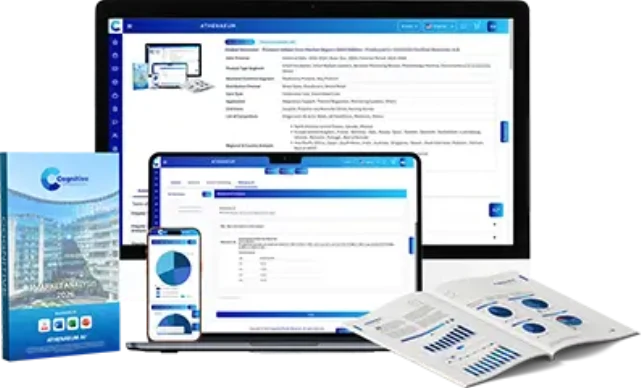
Athenaeum AI Dashboard
Our Proprietary Methodology
Cognitive Market Research employs "The Full Truth™" methodology — a rigorous triangulation process that combines primary research, secondary validation, and expert calibration. Implemented by Supriya Yadav and team for the Gatifloxacin Market Analysis Market analysis.
Primary Intelligence Gathering
Direct interviews with 50+ industry stakeholders including manufacturers, distributors, end-users, and regulatory bodies across all six regions.
Secondary Data Triangulation
Cross-referencing against trade databases, customs records, financial filings, patent databases, and verified industry publications.
Expert Validation Protocol
Each data point undergoes validation by minimum two independent domain experts with 15+ years of industry experience.
Athenaeum AI Processing
Our proprietary AI platform aggregates, normalizes, and identifies patterns across 10,000+ data points to surface non-obvious insights.
Editorial & QA Review
Final review by senior analysts ensures accuracy, coherence, and actionability of all insights and recommendations.
Data Assurance Metrics
Analytical Coverage
To maintain the integrity of our proprietary methodology and protect our elite expert network, specific source disclosures are reserved for full-access partners. Our research framework is anchored by a 70:30 primary-to-secondary ratio, ensuring your strategy is driven by real-time market intelligence rather than recycled, publicly available, or AI-generated data. Every deliverable includes an exhaustive source directory and grants direct analyst access.
Latest News about Gatifloxacin Market
Sources from Pharma & Healthcare Industry
- https://en.wikipedia.org/wiki/American_Society_for_Pharmacy_Law
- https://en.wikipedia.org/wiki/American_Society_of_Consultant_Pharmacists
- https://en.wikipedia.org/wiki/American_Society_of_Health-System_Pharmacists
- https://www.apsm-uk.com/
- https://en.wikipedia.org/wiki/Australasian_College_of_Pharmacy
- https://en.wikipedia.org/wiki/American_Association_of_Colleges_of_Pharmacy
- https://en.wikipedia.org/wiki/American_College_of_Clinical_Pharmacy
- https://en.wikipedia.org/wiki/American_Pharmacists_Association
- https://www.bio.org/
- https://en.wikipedia.org/wiki/Canadian_Pharmacists_Association
- https://en.wikipedia.org/wiki/Canadian_Society_of_Hospital_Pharmacists
- https://en.wikipedia.org/wiki/Chinese_Pharmaceutical_Association
- https://en.wikipedia.org/wiki/American_Association_of_Psychiatric_Pharmacists
- https://en.wikipedia.org/wiki/Danish_Association_of_Pharmaconomists
- https://en.wikipedia.org/wiki/EPhEU
- https://www.fda.gov/
- https://www.gmc-uk.org/
- https://www.ifpma.org/
- https://www.fip.org/
- https://en.wikipedia.org/wiki/International_Pharmaceutical_Students%27_Federation
- https://www.gov.uk/government/organisations/medicines-and-healthcare-products-regulatory-agency
- https://en.wikipedia.org/wiki/National_Pharmacy_Association
- https://en.wikipedia.org/wiki/Norwegian_Pharmacy_Association
- https://en.wikipedia.org/wiki/Canadian_Pharmacists_Journal#History
- https://en.wikipedia.org/wiki/Pakistan_Pharmacists_Association
- https://en.wikipedia.org/wiki/Pharmaceutical_Association_of_Mauritius
- https://en.wikipedia.org/wiki/Pharmaceutical_Group_of_the_European_Union
- https://en.wikipedia.org/wiki/Pharmaceutical_Society_of_Australia
- https://en.wikipedia.org/wiki/Pharmaceutical_Society_of_New_Zealand
- https://en.wikipedia.org/wiki/Pharmaceutical_Society_of_Northern_Ireland
- https://en.wikipedia.org/wiki/Professional_Compounding_Centers_of_America
- https://en.wikipedia.org/wiki/Royal_Pharmaceutical_Society
- https://www.aaps.org/home
- https://www.bioindustry.org/
- https://www.controlledreleasesociety.org/
- https://www.efpia.eu/
- https://www.epemed.org/online/www/content/ENG/index.html
- https://icr-global.org/
- https://ispe.org/
- https://en.wikipedia.org/wiki/Pharmaceutical_Association_of_Israel
- https://www.phrma.org/
- https://en.wikipedia.org/wiki/The_Pharmacy_Guild_of_Australia
- https://en.wikipedia.org/wiki/The_Society_of_Hospital_Pharmacists_of_Australia
- https://www.pharma-iq.com/business-development/articles/top-50-pharmaceutical-blogs-and-publications
- https://www.pharmatimes.com/news
- https://www.ncbi.nlm.nih.gov/pmc/articles/PMC7967517/
- https://www.cbo.gov/publication/57126
- https://www.oecd.org/els/health-systems/health-data.htm
- https://www.bls.gov/ooh/healthcare/home.htm
- https://data.worldbank.org/topic/8
- https://www.statnews.com/about/
- https://www.health.pa.gov/topics/HealthStatistics/Pages/health-statistics.aspx
- https://www.cdc.gov/nchs/index.htm
- https://www.aha.org/statistics/fast-facts-us-hospitals
- https://www.census.gov/library/publications/2021/demo/p60-274.html
- https://www.adb.org/what-we-do/sectors/health/main
Three Pillars of Market Intelligence
We don't just hand over data. We partner with your team across three integrated service lines — each designed to give you decision-grade intelligence on the Gatifloxacin Market Analysis market.
Market Survey
Structured primary research across both B2B and B2C channels. We design and execute custom surveys targeting manufacturers, distributors, procurement heads, and end-consumers in the gatifloxacin market analysis ecosystem — validated by our global panel of 10,000+ industrial respondents.
- Buyer intent & sentiment analysis
- Purchase cycle mapping
- Price sensitivity research
- Channel preference profiling
- Competitive perception study
Customized Market Data & Reports
Choose from our ready-to-access 8th Edition report or commission a fully customized dataset tailored to your exact strategic questions. Cross-splits, custom geographies, proprietary segmentation — we build the intelligence asset your board actually needs.
- Ready syndicate report (250+ pages)
- Custom data scope & segmentation
- Excel quantitative models
- Board-ready PPT with key findings
- Secure cloud portal access
Strategic Consultation
Every survey and every report comes with dedicated analyst consultation. Our senior research team walks your leadership through findings, answers strategic questions in real-time, and helps translate data into your next board presentation or investment thesis.
- Dedicated analyst assigned to you
- Live walkthrough of findings
- Strategic Q&A sessions
- Go-to-market recommendations
- NDA-protected engagement
Customize This Report
Tell us the specific segments, regions, or companies you need — and we will tailor the deliverable to your requirements.