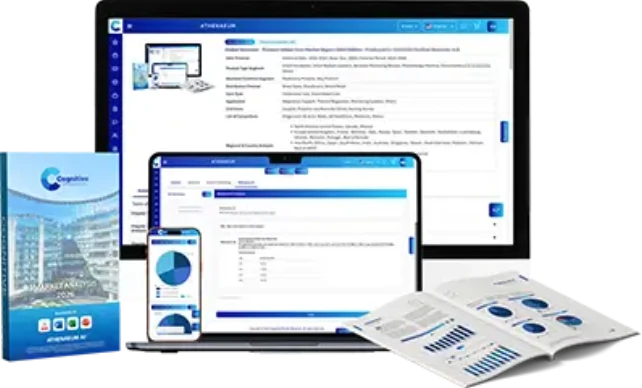
Enterprise Software Services Market Analysis from 2022 to 2034 Containing Market Size, Share along with its CAGR, Forecast and Trends
Top Countries — Revenue
Market Dynamics of Enterprise Software Services Market Analysis
Growth Drivers
- Accelerated need for digital transformation
- Increasing integration of AI
Access the full forecast model.
Country-level data · Company profiles · Editable dataset · Analyst consultation included.
Enterprise Software Services Market Analysis — Presence
Geographical Analysis
Click countries to exploreRegional and Country Analysis
Global Enterprise Software Services Market Analysis 2026
| Region / Country | 2021 (A) | 2025 (A) | 2033 (P) | CAGR |
|---|---|---|---|---|
| Global | xxxx | xxxx | xxxx | xxxx |
| North America | xxxx | xxxx | xxxx | xxxx |
| United States | xxxx | xxxx | xxxx | xxxx |
| Canada | xxxx | xxxx | xxxx | xxxx |
| Mexico | xxxx | xxxx | xxxx | xxxx |
| Europe | xxxx | xxxx | xxxx | xxxx |
| United Kingdom | xxxx | xxxx | xxxx | xxxx |
| France | xxxx | xxxx | xxxx | xxxx |
| Germany | xxxx | xxxx | xxxx | xxxx |
| Italy | xxxx | xxxx | xxxx | xxxx |
| Russia | xxxx | xxxx | xxxx | xxxx |
| Spain | xxxx | xxxx | xxxx | xxxx |
| Sweden | xxxx | xxxx | xxxx | xxxx |
| Denmark | xxxx | xxxx | xxxx | xxxx |
| Switzerland | xxxx | xxxx | xxxx | xxxx |
| Luxembourg | xxxx | xxxx | xxxx | xxxx |
| Rest of Europe | xxxx | xxxx | xxxx | xxxx |
| Asia Pacific | xxxx | xxxx | xxxx | xxxx |
| China | xxxx | xxxx | xxxx | xxxx |
| Japan | xxxx | xxxx | xxxx | xxxx |
| South Korea | xxxx | xxxx | xxxx | xxxx |
| India | xxxx | xxxx | xxxx | xxxx |
| Australia | xxxx | xxxx | xxxx | xxxx |
| Singapore | xxxx | xxxx | xxxx | xxxx |
| Taiwan | xxxx | xxxx | xxxx | xxxx |
| South East Asia | xxxx | xxxx | xxxx | xxxx |
| Rest of APAC | xxxx | xxxx | xxxx | xxxx |
| South America | xxxx | xxxx | xxxx | xxxx |
| Brazil | xxxx | xxxx | xxxx | xxxx |
| Argentina | xxxx | xxxx | xxxx | xxxx |
| Colombia | xxxx | xxxx | xxxx | xxxx |
| Peru | xxxx | xxxx | xxxx | xxxx |
| Chile | xxxx | xxxx | xxxx | xxxx |
| Rest of South America | xxxx | xxxx | xxxx | xxxx |
| Middle East | xxxx | xxxx | xxxx | xxxx |
| Saudi Arabia | xxxx | xxxx | xxxx | xxxx |
| Turkey | xxxx | xxxx | xxxx | xxxx |
| UAE | xxxx | xxxx | xxxx | xxxx |
| Egypt | xxxx | xxxx | xxxx | xxxx |
| Qatar | xxxx | xxxx | xxxx | xxxx |
| Rest of Middle East | xxxx | xxxx | xxxx | xxxx |
| Africa | xxxx | xxxx | xxxx | xxxx |
| East Africa | xxxx | xxxx | xxxx | xxxx |
| West Africa | xxxx | xxxx | xxxx | xxxx |
| North Africa | xxxx | xxxx | xxxx | xxxx |
| South Africa | xxxx | xxxx | xxxx | xxxx |
A = Actual · E = Estimated · P = Projected · 🔒 Locked values require full access. Click headers to sort.
Unlock full regional dataset →Segmentation Analysis
Additional Insights of Enterprise Software Services Market
Technology Analysis of Enterprise Software Services Market
Artificial Intelligence (AI/ML)
Artificial Intelligence (AI/ML) leverages algorithms and data to mimic human intelligence, enabling systems to learn, adapt, and make decisions. In enterprise software, AI powers predictive analytics, intelligent automation, natural language processing, and customer personalization streamlining operations, enhancing user experience, and uncovering deep business insights across departments such as HR, finance, and sales.
Business Impact: Enables predictive insights, automated support, and personalization.
For instance, in June 2025 EXL implemented AI-driven workflows for insurance and retail: clients saw 35% higher fan engagement, 60% better marketing ROI, and a 20% cost reduction
Enterprise Resource Planning (ERP)
Centralized system integrating finance, supply chain, HR, and operations. Enterprise Resource Planning (ERP) is a unified software platform that integrates core business functions such as finance, supply chain, human resources, procurement, and manufacturing. It enables seamless data flow across departments, enhances process automation, improves reporting accuracy, and supports compliance allowing organizations to operate more efficiently with real-time visibility and control over operations.
Business Impact: Offers a single source of truth and real-time decision capability.
In November 2021, Western Digital merged with SanDisk and HGST via Oracle ERP Cloud; they unified global operations financial operations, HR, supply chain under one system
(Source:https://www.oracle.com/in/customers/western-digital-erp/ )
Cybersecurity Software
Protects systems through threat detection, compliance, and secure design. Cybersecurity Software encompasses tools and frameworks designed to protect enterprise systems, networks, and data from unauthorized access, cyber threats, and breaches. It includes firewalls, endpoint protection, identity and access management, encryption, and threat intelligence. These solutions help organizations safeguard sensitive information, ensure business continuity, and maintain trust with customers and regulators.
Business Impact: Ensures regulatory compliance and risk mitigation.
For instance, in July 2025 UK’s PAC urged secure-by-design approach across legacy systems to address evolving cyber threats signaling industry shift.
Ai in enterprise software services market
For many early adopters of enterprise AI, the results have shown that it creates a tangible competitive advantage. These businesses have seen significant improvements and efficiency gains across a spectrum of AI use cases, from data analysis, forecasting, and decision-making, to process automation, workplace productivity, and product development.
Types of enterprise AI
One of the most interesting aspects of enterprise AI is that it can be used to perform both routine and transformational tasks. Examples:
Routine: An employee saves a few minutes (and some frustration) by using an AI copilot to find a document that’s been stored in the wrong place. Routine use cases may sound small, but they can really boost productivity at scale. In April 2025, the British Heart Foundation piloted Microsoft?365 Copilot to assist staff with everyday tasks. During initial testing, users reported saving up to 30 minutes per day by quickly locating documents through Copilot whether by content, context, or file storage without manual searching.
(Source:https://www.microsoft.com/en/customers/story/18915-british-heart-foundation-microsoft-copilot)
Transformational: A manufacturer saves millions of dollars by using deep learning to predict when its machines will need to have parts replaced before they break.
This extreme diversity in AI use cases is impressive but can also make it hard to decide where to begin with AI adoption. A good place to start is by becoming familiar with the main types of business AI and their common applications.
Benefits of enterprise AI
As business AI tools like chatbots, generative AI, and copilots become more advanced and popular, companies utilizing these technologies are always coming up with new and creative ways to employ them. Let's examine some of the broad advantages of business AI before delving into more particular use cases.
Experience at work
AI is essential for enhancing the working environment because it supports and enhances employees' abilities:
Tools for employee productivity: By assisting with email management, meeting scheduling, and task prioritization, AI copilots free up staff members to concentrate on higher-value work.
Adaptive learning systems: AI-powered learning platforms offer individualized instruction and training that adjusts to each worker's preferred learning style and pace, enhancing the effectiveness and engagement of professional development.
Workplace analytics: By examining work habits and offering recommendations for streamlining processes, AI systems enable teams to improve employee performance and happiness.
(Source:https://www.sap.com/resources/what-is-enterprise-ai#enterprise-ai-examples-across-industries)
Making strategic decisions
Businesses can improve timeliness and accuracy in their decision-making processes by incorporating AI:
Data-driven insights: By evaluating large datasets and offering strategic recommendations, AI copilots and other enterprise machine learning tools assist teams in making well-informed decisions quickly.
Improved forecasting: By leveraging historical data to predict future trends, enterprise generative AI solutions enable companies to more accurately predict customer behavior and market demands.
Scenario analysis: Businesses can investigate a range of strategic possibilities with the aid of sophisticated simulation models, which facilitate efficient risk management and planning.
(Source:https://www.sap.com/resources/what-is-enterprise-ai#enterprise-ai-examples-across-industries)
Experience of the customer
AI provides individualized and responsive services that revolutionize how companies engage with their clientele:
Scalable personalization: AI uses consumer data to customize advertising and product suggestions.
24/7 customer service: Chatbots instantly respond to consumer questions at any time, increasing customer happiness and service availability.
Customer insights: AI assists companies in comprehending and anticipating customer needs through the collection and analysis of consumer input and behavior, which results in improved service and product offers.
(Source:https://www.sap.com/resources/what-is-enterprise-ai#enterprise-ai-examples-across-industries)
Enterprise AI examples across industries
Automotive
companies are using AI to enhance quality control and develop technologies for safe autonomous driving.
Energy
By forecasting demand precisely and adjusting supply, AI helps amplify the integration and value of renewable energy sources.
Entertainment
Streaming services are using AI to personalize viewer recommendations, and game developers and platforms are creating more responsive, realistic environments.
Finance
Advanced fraud detection systems and robo-advisors, powered by AI,significantly improve efficiency and security in the financial sector.
Healthcare
AI has had a dramatic impact in healthcare, improving the accuracy of diagnostics, allowing care providers to personalize medicine, and enhancing treatment outcomes through cognitive analysis of clinical data.
Life sciences
Companies in drug discovery and genomic research have seen reduced costs and time to market thanks to AI, and clinicians are now able to tailor medical treatments to individual genetic profiles.
Manufacturing
Many manufacturers are using enterprise AI to boost production efficiency, minimize downtime with predictive maintenance, and improve sustainability.
Public sector
AI is allowing organizations to automate administrative processes, optimize urban management systems for traffic and emergency services, and increase civic engagement.
Software development
Enterprise generative AI tools streamline coding and testing processes to accelerate development cycles, identify security vulnerabilities, and help developers learn new languages and frameworks faster.
Telecom
In the telecom industry, AI-powered predictive analytics enhance service delivery and network management, helping prevent outages and offering personalized customer experiences.
(Source:https://www.sap.com/resources/what-is-enterprise-ai#enterprise-ai-examples-across-industries )
Key Conferences and Events (2025)
|
Date |
Key Conferences and Events |
|
April?9–11,?2025 |
Google Cloud Next ’25 AI in enterprise cloud infra, Vertex AI, TPU |
|
March?18–20,?2025 |
Adobe Summit 2025 Customer experience, generative AI marketing tools |
|
February?27,?2025 |
Enterprise Software Solutions Summit (ES Summit) Innovations & challenges in enterprise software |
|
May?5–8,?2025 |
IBM Think 2025 AI productivity, hybrid cloud, scalable architectures |
|
April?2025 |
Atlassian Team ’25 AI-powered collaboration, enterprise knowledge tools |
|
April?23–25,?2025 |
GITEX Asia x AI Everything Cloud, AI, enterprise tech in Asia |
|
February?2–5,?2025 |
Pink25 (ITSM) IT service management with AI integration |
|
March?2–4,?2025 |
XChange 2025 (IT Channel) XaaS, channel strategies for solution providers |
|
February?11–14,?2025 |
IT Expo 2025 Cybersecurity, AI ops, MSPs |
|
April?28–May?1,?2025 |
Kaseya Connect 2025 IT management, Kaseya 365, AI in services |
(Source:https://www.designrush.com/agency/software-development/trends/saas-conferences)
Recent Developments
April?2025 – Oracle Launches OCI Generative AI Guardrails & ML Quick Action Oracle added AI guardrails to its OCI Generative AI model endpoints and introduced AI Quick Actions within its Data Science service, enabling multi-model deployment and enhanced safety controls for enterprise AI workflows.
(Source:https://docs.oracle.com/en-us/iaas/releasenotes/generative-ai/ai-guardrails.htm)
April?2025 – SAP Rolls Out Business AI in S/4HANA Cloud SAP introduced advanced AI-assisted features in S/4HANA Cloud Public Edition, including smart summarization, automatic error explanations, and AI-driven financial insight cards within Fiori. The enhancements are designed to reduce report generation time by up to 88% and accelerate transactional workflows across finance, procurement, and operations.
(Source:https://news.sap.com/2025/04/sap-business-ai-release-highlights-q1-2025)
End-to-End View of the Market
The enterprise software ecosystem encompasses a wide array of mission-critical functions, including ERP, CRM, supply chain management, finance, human resources, and increasingly, low-code/no-code development platforms. These systems are rapidly evolving through the infusion of embedded AI, real-time analytics, and multi-cloud deployment models, enabling faster, data-driven decision-making. Modern platforms are built for composability, allowing businesses to integrate and scale capabilities on demand. This shift mirrors the trajectory of AIaaS, with a move toward modular, plug-and-play architectures that reduce integration complexity, shorten time to value, and empower developers and business users to co-create adaptive digital solutions at scale.
Unmet Needs
- Better enterprise AI governance & explainability
- Seamless legacy-to-cloud migration tools
- Lower complexity for SMEs in adopting AI modules
- Unified observability across multi-cloud AI services
Type breakdown · Illustrative 2025 shares shown free · Full-period forecast in paid report.
Disclaimer: The charts and graphs are for illustrative purposes only and do not represent actual market values. To access accurate quantitative data, please request a paid report or request free sample.
To learn more about market share and segmentation, request the free sample pages.
Competitor Analysis
Competitive Landscape of Enterprise Software Services Market
Leading Players of Enterprise Software Services Market
Market leaders such as Microsoft, Oracle, SAP, Salesforce, and IBM dominate the Enterprise Software Services landscape with comprehensive cloud-based ERP, CRM, and AI-powered platforms. For instance, Microsoft offers Dynamics 365 integrated with Copilot and the Power Platform for intelligent automation and low-code app development, transforming business workflows through natural language interaction. Oracle’s Fusion Cloud ERP and HCM embed AI capabilities powered by Oracle Cloud Infrastructure to enhance enterprise operations. SAP’s S/4HANA Cloud integrates AI copilot features like Joule for autonomous business process automation. Salesforce’s Einstein AI platform delivers predictive insights and service automation within its CRM suite, while IBM’s Watsonx focuses on explainability and governance in AI applications.
Premier League – Microsoft AI Deal: In July 2025, The Premier League signed a five-year partnership with Microsoft to migrate operations to Azure and integrate AI tools like Copilot for enhanced fan engagement and real-time analytics.
Oracle & Cohere Partnership: In March 2024 Oracle partnered with Cohere to embed generative AI capabilities in Oracle Cloud applications, improving customer experience and enterprise automation.
(Source:https://www.oracle.com/in/customers/cohere/)
The Enterprise Software Services market is moderately consolidated, with these major players controlling a significant share due to their robust, integrated platforms and global enterprise reach. However, emerging niche providers and specialized startups offering vertical-specific or modular AI solutions indicate growing fragmentation at the market edges.
Emerging Players of Enterprise Software Services Market
Emerging players such as Ascendion, Qubika, Glean, and Unqork are gaining traction due to their focus on AI-driven automation, nearshore development, enterprise knowledge management, and no-code application platforms. These companies emphasize ease of deployment, customization, and integration with existing enterprise systems.
Ascendion has positioned itself as a leader in AI-first software engineering, supporting over 400 enterprise clients globally.
The Enterprise Software Services market’s evolving landscape is marked by these emerging players’ focus on AI augmentation, modular platforms, and ease of adoption, complementing established giants and enabling specialized, flexible enterprise solutions.
| Top Companies (In no particular order) | 2022 (A) | 2023 (A) | 2024 (A) | 2025 (A) |
|---|---|---|---|---|
| Company 1 | ••• | ••• | ••• | ••• |
| Company 2 | ••• | ••• | ••• | ••• |
We Provide Regional Breakdown of this Companies and Company specific to any Country, Region, Product/ service as well. We cover market share analysis for publicly listed companies as well as privately held companies, subject to data availability.
Request company profile for validation →Report Scope & Analysis
According to Cognitive Market Research, the global Enterprise Software Services Market is driven by accelerated need for digital transformation and increasing integration of AI into enterprise applications
Introduction of Enterprise Software Services Market
The global Enterprise Software Services market continues to expand rapidly as businesses seek intelligent, integrated platforms that enhance operational efficiency and digital transformation. For example, in January 2025, Microsoft announced the integration of Copilot capabilities across Microsoft Dynamics 365 and Power Platform, offering AI-powered enterprise services such as automated customer insights, predictive sales analytics, and natural language-based workflow creation. These services demonstrate the shift toward AI-native enterprise software platforms that deliver context-aware automation and business intelligence.
Driven by AI integration, multi-cloud deployment, and vertical-specific customizations, the market is evolving from traditional software licensing to outcome-based services that are embedded within business workflows. Enterprises are now prioritizing platforms that offer modular services, data interoperability, and embedded analytics as core differentiators.
Analyst Conclusion
Enterprise software is no longer defined by legacy systems it has evolved into a foundation of AI-first, cloud-native, and composable platforms that drive intelligent decision-making across all business functions. The next generation of market leaders will be those who master a balance between open innovation, strong partner ecosystems, and seamless, low-friction deployment across hybrid and multi-cloud environments. As businesses prioritize flexibility, speed, and personalization, vendors that deliver modular, interoperable, and vertically adaptive solutions will be best positioned to lead the future of enterprise software.

Driven by a passion for transforming complex digital and business data into actionable market intelligence, Aarti Bagekari focuses her research expertise on the Services & Software and Internet & Communication sectors. Her professional interests lie in analyzing evolving technology ecosystems, digital business models, software innovation, communication infrastructure, and emerging trends that are reshaping the global digital economy.
By leveraging a combination of primary and secondary research methodologies, Aarti develops comprehensive market perspectives that enable organizations to make informed strategic decisions in highly dynamic and competitive environments. Her work involves engaging with industry experts, technology providers, service operators, and key stakeholders while conducting extensive analysis of market data, industry developments, regulatory landscapes, and competitive dynamics. This balanced research approach allows her to uncover meaningful market patterns and identify opportunities that support long-term business growth.
Aarti possesses strong capabilities in market sizing and forecasting, competitive benchmarking, customer and stakeholder research, technology trend analysis, and strategic market assessment. She regularly evaluates developments across software solutions, cloud computing, digital services, telecommunications, internet platforms, enterprise technologies, and next-generation communication networks. Her ability to synthesize large volumes of information into clear and actionable insights helps organizations better understand market shifts, customer expectations, and emerging business opportunities.
At Cognitive Market Research & Consulting, Aarti contributes to market research reports, custom consulting engagements, and survey-based studies that support technology vendors, service providers, investors, and enterprise decision-makers. Her analytical mindset, attention to detail, and commitment to research excellence enable clients to navigate rapidly evolving digital markets, strengthen competitive positioning, and develop sustainable growth strategies in an increasingly connected world.
Frequently Asked Questions
★ Reviews
Rate this report
Enterprise Software Services Market Analysis — Table of Contents
- This is just a redacted sample pages of the actual deliverable report and only for representative purposes
- Charts/Graphs/Numbers/data are only for Representative purposes and do not depict actual statistics.
- The table of Contents differs according to the user License selection. Current Displayed TOC is for the Corporate User License Report Edition. TOC Customization options: Add or Remove section/s Or chapter/s from the report.
- Specific Tables, Graphs, Sections, and Chapters can be ordered at a discounted price.
- If applicable; On Request Volume Data will also be provided (at an Additional Cost).
Report Scope
| Type | Type1, Type2, Type3 |
|---|---|
| Application | Application 1, Application 2, Application 3 |
| List of Competitors | Company 1, Company 2 |
Chapter 1. Competitor Analysis (Subject to Data Availability (Private Players))
- 1.1 Top Competitors Analysis
- 1.1.1 Global Enterprise Software Services Market Analysis by Key Players
- 1.1.2 Segment Market Analysis by Key Players
- 1.1.3 Top Players Ranking 2024
- 1.1.4 New Product Launch Analysis
- 1.1.5 Industry Mergers and Acquisition Analysis
- 1.2 Company Profile (Data Subject to Availability) Sample Format
- 1.2.1 Company 1
- 1.2.1.1 Company Basic Information, Manufacturing Base, Sales Area, and Competitors
- 1.2.1.2 Business Overview
- 1.2.1.3 Financials (Subject to data availability)
- 1.2.1.4 R&D Investment (Subject to data availability)
- 1.2.1.5 Product Types Specification
- 1.2.1.6 Business Strategy
- 1.2.1.7 Recent Developments
- 1.2.1.8 Management Change
- 1.2.1.9 S.W.O.T Analysis
- 1.2.2 Company 2
- 1.2.2.1 Company Basic Information, Manufacturing Base, Sales Area, and Competitors
- 1.2.2.2 Business Overview
- 1.2.2.3 Financials (Subject to data availability)
- 1.2.2.4 R&D Investment (Subject to data availability)
- 1.2.2.5 Product Types Specification
- 1.2.2.6 Business Strategy
- 1.2.2.7 Recent Developments
- 1.2.2.8 Management Change
- 1.2.2.9 S.W.O.T Analysis
- 1.2.1 Company 1
- 1.1 Top Competitors Analysis
Chapter 2. Global Enterprise Software Services Market Analysis
- 2.1 Global Enterprise Software Services Market Analysis
- 2.2 Global Enterprise Software Services Market Analysis by Region
- 2.3 Global Enterprise Software Services Market Analysis by Type
- 2.4 Global Enterprise Software Services Market Analysis by Application
- 2.5 Global Enterprise Software Services Market Analysis by Key Players
Chapter 3. North America Enterprise Software Services Market Analysis
- 3.1 North America Enterprise Software Services Market Analysis
- 3.2 North America Enterprise Software Services Market Analysis by Country
- 3.3 North America Enterprise Software Services Market Analysis by Type
- 3.4 North America Enterprise Software Services Market Analysis by Application
- 3.5 North America Enterprise Software Services Market Analysis by Key Players
Chapter 4. Europe Enterprise Software Services Market Analysis
- 4.1 Europe Enterprise Software Services Market Analysis
- 4.2 Europe Enterprise Software Services Market Analysis by Country
- 4.3 Europe Enterprise Software Services Market Analysis by Type
- 4.4 Europe Enterprise Software Services Market Analysis by Application
- 4.5 Europe Enterprise Software Services Market Analysis by Key Players
Chapter 5. Asia Pacific Enterprise Software Services Market Analysis
- 5.1 Asia Pacific Enterprise Software Services Market Analysis
- 5.2 Asia Pacific Enterprise Software Services Market Analysis by Country
- 5.3 Asia Pacific Enterprise Software Services Market Analysis by Type
- 5.4 Asia Pacific Enterprise Software Services Market Analysis by Application
- 5.5 Asia Pacific Enterprise Software Services Market Analysis by Key Players
Chapter 6. South America Enterprise Software Services Market Analysis
- 6.1 South America Enterprise Software Services Market Analysis
- 6.2 South America Enterprise Software Services Market Analysis by Country
- 6.3 South America Enterprise Software Services Market Analysis by Type
- 6.4 South America Enterprise Software Services Market Analysis by Application
- 6.5 South America Enterprise Software Services Market Analysis by Key Players
Chapter 7. Middle East Enterprise Software Services Market Analysis
- 7.1 Middle East Enterprise Software Services Market Analysis
- 7.2 Middle East Enterprise Software Services Market Analysis by Country
- 7.3 Middle East Enterprise Software Services Market Analysis by Type
- 7.4 Middle East Enterprise Software Services Market Analysis by Application
- 7.5 Middle East Enterprise Software Services Market Analysis by Key Players
Chapter 8. Africa Enterprise Software Services Market Analysis
- 8.1 Africa Enterprise Software Services Market Analysis
- 8.2 Africa Enterprise Software Services Market Analysis by Country
- 8.3 Africa Enterprise Software Services Market Analysis by Type
- 8.4 Africa Enterprise Software Services Market Analysis by Application
- 8.5 Africa Enterprise Software Services Market Analysis by Key Players
Chapter 9. Type Analysis
- 9.1 Type1
- 9.1.1 Global Type1 Market
- 9.1.2 Global Type1 Market by Region
- 9.2 Type2
- 9.2.1 Global Type2 Market
- 9.2.2 Global Type2 Market by Region
- 9.3 Type3
- 9.3.1 Global Type3 Market
- 9.3.2 Global Type3 Market by Region
- 9.1 Type1
Chapter 10. Application Analysis
- 10.1 Application 1
- 10.1.1 Global Application 1 Market
- 10.1.2 Global Application 1 Market by Region
- 10.2 Application 2
- 10.2.1 Global Application 2 Market
- 10.2.2 Global Application 2 Market by Region
- 10.3 Application 3
- 10.3.1 Global Application 3 Market
- 10.3.2 Global Application 3 Market by Region
- 10.1 Application 1
Chapter 11. Qualitative Analysis (Subject to Data Availability)
- 11.1 Market Drivers
- 11.2 Market Restraints
- 11.3 Market Trends
- 11.4 Market Opportunity
- 11.5 Technological Road Map (Subject to Data Availability)
- 11.6 Product Life Cycle (Subject to Data Availability)
- 11.7 Customer and Buyer Behavior Analysis
- 11.7.1 Digital Engagement, Customer Experience & Relationship Analysis
- 11.7.2 Customer Buying Behavior & Purchase Decision Analysis
- 11.7.3 Vendor Selection, Supplier Preferences & Future Demand Trends
- 11.7.4 Pricing, Affordability & Value Perception Analysis
- 11.7.5 Customer Segmentation & Demand Pattern Analysis
- 11.8 PESTEL Analysis
- 11.8.1 Political Factors
- 11.8.2 Economic Factors
- 11.8.3 Social Factors
- 11.8.4 Technological Factors
- 11.8.5 Legal Factors
- 11.8.6 Environmental Factors
- 11.9 Industrial Chain Analysis (Subject to Data Availability)
- 11.9.1 Industry Chain Analysis
- 11.9.2 Manufacturing Cost Analysis
- 11.9.3 Supply Side Analysis
- 11.9.3.1 Raw Material Analysis
- 11.9.3.2 Raw Material Procurement Analysis
- 11.9.3.3 Raw Material Price Trend Analysis
- 11.10 Porter’s Five Forces Analysis
- 11.10.1 Bargaining Power of Suppliers
- 11.10.2 Bargaining Power of Buyers
- 11.10.3 Threat of New Entrants
- 11.10.4 Threat of Substitutes
- 11.10.5 Degree of Competition
- 11.11 Patent Analysis (Subject to Data Availability)
- 11.12 ESG Analysis
- 11.13 Geopolitical Outlook
- 11.13.1 Global Power Realignment & Strategic Alliances
- 11.13.2 Geopolitical Risk Landscape & Conflict Hotspots
- 11.13.3 International Trade Relations & Market Access Environment
- 11.13.4 Regulatory & Policy Shifts Impacting Cross-Border Operations
- 11.13.5 Supply Chain Resilience, Localization & Resource Nationalism
- 11.13.6 Technology Sovereignty & Digital Geopolitics
- 11.13.7 Strategic Implications for Investment, Growth & Market Entry
- 11.14 AI & Market Transformation
- 11.14.1 Competitive Landscape Disruption & Strategic Shifts
- 11.14.2 AI-Driven Transformation of Industry Value Chain
- 11.14.3 Evolution of Business Models & Revenue Streams
- 11.14.4 AI-Driven Product, Service & Innovation Transformation
- 11.14.5 Customer Behavior, AI Adoption & Future Market Evolution
Chapter 12. TOP 10 Country Analysis
- 12.1 Country 1
- 12.2 Country 2
- 12.3 Country 3
- 12.4 Country 4
- 12.5 Country 5
- 12.6 Country 6
- 12.7 Country 7
- 12.8 Country 8
- 12.9 Country 9
- 12.10 Country 10
Chapter 13. Research Findings
- 13.1 Key Takeaways
- 13.2 Analyst Point of View
- 13.3 Assumptions and Acronyms
Chapter 14. Research Methodology and Sources
- 14.1 Primary Data Collection
- 14.1.1 Steps for Primary Data Collection
- 14.1.1.1 Identification of KOL
- 14.1.2 Backward Integration
- 14.1.3 Forward Integration
- 14.1.4 How Primary Research Help Us
- 14.1.5 Modes of Primary Research
- 14.1.1 Steps for Primary Data Collection
- 14.2 Secondary Research
- 14.2.1 How Secondary Research Help Us
- 14.2.2 Sources of Secondary Research
- 14.3 Data Validation
- 14.3.1 Data Triangulation
- 14.4 Data Representation
- 14.1 Primary Data Collection
Athenaeum AI Dashboard
Our Proprietary Methodology
Cognitive Market Research and Consulting "The Full Truth" methodology — a rigorous triangulation process that combines primary research, secondary validation, and expert calibration. Implemented by Aarti Bagekari and team for the Enterprise Software Services Market Analysis Market analysis.
Primary Intelligence Gathering
Direct interviews with 50+ industry stakeholders including manufacturers, distributors, end-users, and regulatory bodies across all six regions.
Secondary Data Triangulation
Cross-referencing against trade databases, customs records, financial filings, patent databases, and verified industry publications.
Expert Validation Protocol
Each data point undergoes validation by minimum two independent domain experts with 15+ years of industry experience.
Athenaeum AI Processing
Our proprietary AI platform aggregates, normalizes, and identifies patterns across 10,000+ data points to surface non-obvious insights.
Editorial & QA Review
Final review by senior analysts ensures accuracy, coherence, and actionability of all insights and recommendations.
Data Assurance Metrics
Analytical Coverage
To maintain the integrity of our proprietary methodology and protect our elite expert network, specific source disclosures are reserved for full-access partners. Our research framework is anchored by a 70:30 primary-to-secondary ratio, ensuring your strategy is driven by real-time market intelligence rather than recycled, publicly available, or AI-generated data. Every deliverable includes an exhaustive source directory and grants direct analyst access.
Sources from the Service and Software Industry
The Three Pillars of End-to-End Market Research Services
We don't just hand over data. We partner with your team across three integrated service lines — each designed to give you decision-grade intelligence on the Enterprise Software Services Market Analysis market.
Market Survey
Structured primary research across both B2B and B2C channels. We design and execute custom surveys targeting manufacturers, distributors, procurement heads, and end-consumers in the enterprise software services market analysis ecosystem — validated by our global panel of 10,000+ industrial respondents.
- Buyer intent & sentiment analysis
- Purchase cycle mapping
- Price sensitivity research
- Channel preference profiling
- Competitive perception study
Customized Market Data & Reports
Choose from our ready-to-access 8th Edition report or commission a fully customized dataset tailored to your exact strategic questions. Cross-splits, custom geographies, proprietary segmentation — we build the intelligence asset your board actually needs.
- Ready syndicate report
- Custom data scope & segmentation
- Excel quantitative models
- Board-ready PPT with key findings
- Secure cloud portal access
Strategic Consultation
Every survey and every report comes with dedicated analyst consultation. Our senior research team walks your leadership through findings, answers strategic questions in real-time, and helps translate data into your next board presentation or investment thesis.
- Dedicated analyst assigned to you
- Live walkthrough of findings
- Strategic Q&A sessions
- Go-to-market recommendations
- NDA-protected engagement
Customize This Report
Tell us the specific segments, regions, or companies you need — and we will tailor the deliverable to your requirements.