Global Breast Cancer Drugs
At cognitive, a dedicated team has worked on this report, we have disclosed one of the team member involved in the publication and client consultation process for your reference. You can initiate the discussion her via Book an appointment
At cognitive, our research analyst works closely with Breast Cancer Drugs market experts to validate the gathered data and have the expert's opinion available for our clients. You can book a consultation call with our research analyst and industry experts on board (Subject to time availability and paid consultation services)
The base year for the analysis is 2025. Historical data has been considered for the period from 2022 to 2025. The year 2026 is considered as the estimated base for forecasting, with projections covering the period from 2026 to 2034. When we deliver the report that time we updated report data till the purchase date.
From the database of Cognitive, this is an unique identification number of reports and it will also have different reports associated with it.
Report edition's total number of pages for pdf format (Approximate)
Rating and review received by the reader or subscriber of the said report.
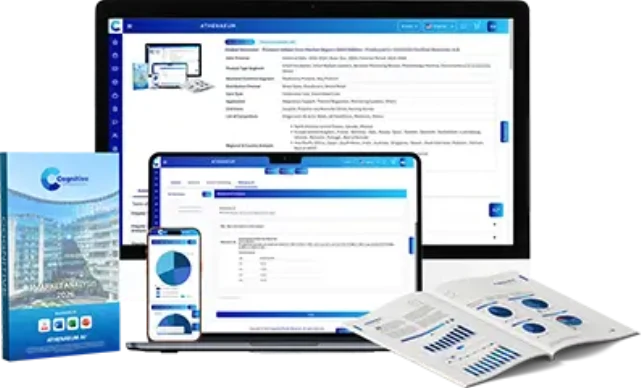
Athenaeum Visualization Dashboard: Access your purchased data/Report/Service through a sophisticated, interactive interface. The Athenaeum Dashboard allows you to preview data/reports and store them in a customizable dashboard, enabling you to filter metrics and uncover deeper trends specific to your enterprise needs.
PDF Access: To ensure the highest level of data integrity and confidentiality, your premium report editions are delivered as password-protected PDF files. These are securely shared via email and remain accessible within your dedicated Athenaeum account for future reference.
Versatile Multi-Format Export (Excel & MS Word): We provide the flexibility to integrate our research directly into your internal workflows. Upon request, relevant quantitative data and qualitative insights from your purchased reports can be provided in fully editable Microsoft Excel and Word formats.
Multiple Cloud Accounts: Benefit from a dedicated, encrypted cloud account that ensures your market intelligence is available on-demand. Access your research from any device, at any time, and from any location. Multiple Accounts facilitating seamless collaboration across your collegue or whole organization.
Athenaeum AI Assistant(Value-Added Service): Elevate your research capabilities with Athenaeum AI Assistant, our proprietary 24/7 research assistant. Equivalent in depth to a dedicated research analyst, this AI-driven tool provides round-the-clock data support and instant insights to help you navigate complex market landscapes in real-time.
As Cognitive a market research and consulting firm, we can provide Breast Cancer Drugs market Analysis and consultation services with the help of our data collection processes and Proprietary research methodology called Full Truth. We have in-house team of research analysts and network of industry experts on board. In fact, we provided high-impact consualtion services to the listed client in competitior analysis. As an extension of our bespoke consulting engagements, we also provide access to Proprietary datasets of market analysis publish, making authoritative industry intelligence accessible to the public domain.
Proprietary Database, Market Surveys, Strategic Consultation & Advisory Services, Industry & Competitive Intelligence. along with Report Access and Athenaeum Dashboard Subscription — Revenue, Volume, Production, Trade Analysis, value chain and supply chain analysis, Market Size, Share, Forecast, Drivers, Trends, Growth Opportunities, ESG and more.
| Data Timeline | Historical Data: 2022-2025 | Base Year: 2025 | Forecast Period: 2026-2034 |
|---|---|
| Type Segment Analysis | HER2 Inhibitors, Mitotic Inhibitors, Anti Metabolites, Aromatase Inhibitors |
| Application Segment Analysis | Hospitals, Clinics, Others |
| Regions & Countries Analysis |
|
|---|
Share your contact details to receive free updated sample copy/pages of the recently published edition of Breast Cancer Drugs Market Report 2025.
The global Breast Cancer Drugs Market is on a robust growth trajectory, with projections indicating an expansion from $9,583.2 million in 2025 to $16,260 million by 2033, advancing at a strong CAGR of 6.83%. This significant growth is fueled by a rising global incidence of breast cancer, coupled with major advancements in oncological research and drug development. The market is witnessing a paradigm shift from traditional chemotherapies towards more effective and personalized treatments, such as targeted therapies and immunotherapies. While North America currently commands the largest market share due to high healthcare spending and early adoption of novel drugs, the Asia-Pacific region is emerging as the fastest-growing market. The industry's future will be shaped by ongoing R&D, patent expirations leading to the entry of biosimilars, and evolving regulatory and reimbursement landscapes across the globe.
Shift to Targeted Therapies: The market is increasingly dominated by targeted drugs (like HER2 inhibitors and CDK4/6 inhibitors) that offer higher efficacy and fewer side effects compared to conventional chemotherapy, representing the primary driver of value growth.
Asia-Pacific as the Growth Epicenter: The Asia-Pacific region is the fastest-growing market, with a formidable CAGR of 7.84%. This is spearheaded by countries like India, which exhibits the highest country-level CAGR (8.88%), driven by improving healthcare infrastructure, rising patient awareness, and increasing access to advanced treatments.
Pipeline and Combination Therapies are Key: Future market dynamics will be heavily influenced by the success of drugs currently in the clinical pipeline and the increasing use of combination therapies. The strategy of combining different drug classes to improve patient outcomes is becoming a standard of care, driving market complexity and value.
The Breast Cancer Drugs Market encompasses a wide range of pharmaceutical products used for the treatment of breast cancer, including chemotherapy, hormone therapy, targeted therapy, and immunotherapy. The market's dynamics are driven by the complex interplay of rising disease prevalence, significant unmet medical needs in advanced and metastatic breast cancer, and the high-stakes environment of oncological drug development. As our understanding of the molecular subtypes of breast cancer deepens, the market is moving towards a more personalized medicine approach, where treatments are tailored to the specific genetic makeup of a patient's tumor.
Increasing Incidence of Breast Cancer: A rising global incidence of breast cancer, linked to factors such as aging populations, lifestyle changes, and improved detection rates, is the fundamental driver expanding the patient pool and the demand for effective treatments.
Advancements in Drug Development and Biotechnology: Continuous innovation in biotechnology and a deeper understanding of cancer biology are leading to the development of novel, more effective drug classes like antibody-drug conjugates (ADCs) and PARP inhibitors, which are transforming patient outcomes.
Growing Healthcare Expenditure and Awareness: Increased government and private spending on healthcare, coupled with rising patient awareness and advocacy, is improving access to diagnosis and advanced cancer therapies, particularly in emerging economies.
Rise of Personalized Medicine: A dominant trend is the use of companion diagnostics and genetic testing to identify specific biomarkers (like HER2, HR, BRCA mutations), allowing for the selection of the most effective targeted therapy for individual patients.
Focus on Immunotherapy: While still emerging in breast cancer compared to other oncology fields, there is a strong research focus on developing and expanding the use of immunotherapies (checkpoint inhibitors) to harness the patient's own immune system to fight cancer.
Emergence of Biosimilars: As patents for major blockbuster biologic drugs expire, the market is seeing the entry of biosimilars, which can increase competition, lower treatment costs, and improve patient access.
High Cost of Novel Cancer Drugs: The extremely high price of new targeted therapies and immunotherapies places a significant financial burden on patients and healthcare systems, often limiting access, especially in regions without robust reimbursement policies.
Stringent Regulatory Approval Processes: The drug development and approval process is long, complex, and expensive, with a high rate of failure in clinical trials. Stringent requirements from regulatory bodies like the FDA and EMA can delay the entry of new drugs to the market.
Development of Drug Resistance: A significant clinical challenge is the development of resistance to existing therapies, particularly in metastatic breast cancer, which creates a continuous need for new drugs and treatment strategies.
Pharmaceutical companies should prioritize investment in their R&D pipelines, focusing on novel mechanisms of action, particularly in immunotherapy and targeted therapies for difficult-to-treat subtypes like triple-negative breast cancer (TNBC). Pursuing a strategy of developing combination therapies can enhance efficacy and extend the lifecycle of existing drugs. Expanding market access programs and developing tiered pricing strategies for emerging economies, especially in the high-growth Asia-Pacific region, will be crucial for capturing future growth. Finally, investing in the development of companion diagnostics alongside new targeted drugs is essential for enabling the personalized medicine approach that is defining modern oncology.
The global Breast Cancer Drugs Market exhibits significant regional disparities in market size, growth, and technological adoption. These differences are shaped by varying healthcare infrastructures, economic conditions, regulatory environments, and the prevalence of the disease. North America currently leads the market in revenue, while the Asia-Pacific region is poised for the most rapid expansion.
North America is the largest and most advanced market for breast cancer drugs, characterized by high healthcare spending, extensive research and development activities, and rapid adoption of newly approved, innovative therapies.
Market Size: $2847.19 Million (2021) -> $3646.41 Million (2025) -> $5983.69 Million (2033)
CAGR (2021-2033): 6.387%
Country-Specific Insight: The United States is the single most dominant country market in the world, projected to account for a massive 30.23% of the total global market in 2025. Canada holds a significant 5.02% of the global share, while Mexico's growing market represents 2.80%.
Regional Dynamics:
Drivers: Favorable reimbursement policies, high patient awareness, and the presence of major pharmaceutical and biotech companies.
Trends: Rapid uptake of newly approved drugs, particularly in the metastatic setting; strong emphasis on clinical trials for novel agents.
Restraints: Intense pricing pressure from payers and government bodies; high cost of drug development and clinical trials.
Technology Focus: Cutting-edge research in genomics, proteomics, and the development of next-generation therapies like antibody-drug conjugates (ADCs) and cell therapies.
Europe is the second-largest market, featuring advanced healthcare systems and a strong focus on evidence-based medicine. Access and pricing are often determined by national health authorities, leading to a varied landscape across the continent.
Market Size: $2030.55 Million (2021) -> $2597.05 Million (2025) -> $4292.65 Million (2033)
CAGR (2021-2033): 6.483%
Country-Specific Insight: Germany is the largest European market, holding a 5.64% share of the 2025 global market. The United Kingdom follows with a 4.61% global share, and Spain and France account for 2.06% and 3.37% respectively.
Regional Dynamics:
Drivers: Universal healthcare coverage in many countries, strong academic research institutions, and a high standard of clinical practice.
Trends: Growing adoption of biosimilars for older biologics; increasing use of health technology assessments (HTAs) to determine the value and reimbursement of new drugs.
Restraints: Complex and often lengthy pricing and reimbursement negotiations on a country-by-country basis; budget constraints within national health systems.
Technology Focus: Emphasis on clinical effectiveness and cost-effectiveness analysis; strong pipeline of drugs from European pharmaceutical companies.
The Asia-Pacific region is the fastest-growing market, driven by improving economic conditions, expanding healthcare access, and a large, increasingly aware patient population.
Market Size: $1684.77 Million (2021) -> $2276.01 Million (2025) -> $4162.57 Million (2033)
CAGR (2021-2033): 7.838%
Country-Specific Insight: Based here in India, I can see the rapid changes firsthand. China is the dominant regional player, commanding a 7.27% share of the 2025 global market. Japan is a key mature market with a 3.10% global share, while India is the global growth leader, holding a 2.81% share with the highest CAGR.
Regional Dynamics:
Drivers: Rising disposable incomes and healthcare spending; government initiatives to improve cancer care; increasing prevalence of Western lifestyles linked to higher cancer risk.
Trends: Rapid expansion of both public and private healthcare infrastructure; increasing patient access to targeted therapies and participation in global clinical trials.
Restraints: Significant out-of-pocket expenses for patients in many countries; disparities in access to care between urban and rural areas; challenges with cold-chain logistics for biologic drugs.
Technology Focus: Increasing local manufacturing capabilities; adoption of digital health platforms for patient management and education.
The South American market is experiencing strong growth, fueled by economic development and efforts to improve public health systems and access to essential medicines.
Market Size: $323.711 Million (2021) -> $429.327 Million (2025) -> $751.539 Million (2033)
CAGR (2021-2033): 7.25%
Country-Specific Insight: Brazil is the largest market in the region, accounting for 1.73% of the 2025 global market. Argentina and Colombia follow with 0.71% and 0.79% global shares respectively, both showing strong growth potential.
Regional Dynamics:
Drivers: Expanding public healthcare coverage for cancer treatment; growing middle class demanding better quality of care.
Trends: Increasing adoption of generic and biosimilar drugs to manage costs; partnerships between public and private sectors to improve cancer care.
Restraints: Economic and political instability can impact healthcare budgets; significant inequalities in access to advanced treatments.
Technology Focus: Focus on improving diagnostic infrastructure and access to standard-of-care therapies.
The African market is in an early stage of development but holds significant long-term potential as healthcare infrastructure and economies grow.
Market Size: $205.998 Million (2021) -> $285.1 Million (2025) -> $465.2 Million (2033)
CAGR (2021-2033): 6.311%
Country-Specific Insight: South Africa is the most developed market on the continent, representing 1.29% of the 2025 global market. Nigeria, with its large population, is a key emerging market, holding a 0.50% global share.
Regional Dynamics:
Drivers: Growing awareness campaigns and international aid programs focused on cancer control.
Trends: Focus on improving access to essential chemotherapy and hormone therapy drugs.
Restraints: Limited healthcare infrastructure and funding; challenges with diagnosis at early stages; high cost of imported drugs.
Technology Focus: Building foundational cancer care infrastructure, including diagnostic labs and treatment centers.
The Middle East market is growing rapidly, driven by high-income economies investing heavily in their healthcare sectors and a high prevalence of breast cancer, often in younger populations.
Market Size: $264.855 Million (2021) -> $349.308 Million (2025) -> $604.385 Million (2033)
CAGR (2021-2033): 7.094%
Country-Specific Insight: Key markets include Saudi Arabia (0.94% global share in 2025), Turkey (0.71% global share), and the UAE (0.64% global share), all of which are rapidly modernizing their cancer treatment capabilities.
Regional Dynamics:
Drivers: High government investment in state-of-the-art hospitals and cancer centers; high disposable incomes and good insurance coverage in GCC countries.
Trends: Rapid adoption of the latest targeted and immunotherapies; increasing number of clinical trials being conducted in the region.
Restraints: A younger average age at diagnosis presents unique clinical challenges.
Technology Focus: Investment in advanced diagnostics, genomic sequencing, and the latest generation of therapeutic agents.
The market is a dynamic battleground between three primary categories of vendors:
Big Pharma / Multinational Corporations: This group includes giants like Roche, Novartis, Pfizer, AstraZeneca, and Eli Lilly. They have extensive R&D capabilities, massive global sales and marketing infrastructure, and a portfolio of blockbuster drugs that form the backbone of breast cancer treatment.
Specialized Biotechnology Companies: These are often more focused firms, such as Seagen or Gilead Sciences (through its acquisition of Immunomedics). They are highly innovative, often pioneering new technologies like antibody-drug conjugates (ADCs), and are frequently acquisition targets for larger players.
Generic and Biosimilar Manufacturers: This category includes companies like Teva Pharmaceuticals and various manufacturers in India and China. They play a crucial role in the market by producing lower-cost versions of drugs once patents expire, which increases patient access and puts pricing pressure on originator brands.
Strong, Science-Driven Growth: The Breast Cancer Drugs Market is set for robust and sustained growth, projected to reach over $16 billion by 2033. This expansion is fundamentally powered by scientific advancements that are delivering more effective and personalized treatments.
The Future is Targeted and Personalized: The one-size-fits-all approach of traditional chemotherapy is being replaced. The future of breast cancer treatment—and the primary driver of market value—lies in targeted therapies and immunotherapies guided by specific genetic biomarkers.
Geographic Shift in Growth: While North America remains the largest market by revenue, the center of gravity for growth is shifting decisively to the Asia-Pacific region. Improving economies and healthcare access in countries like China and India are creating the largest new patient access opportunities.
Access and Cost Remain Critical Challenges: Despite the incredible scientific progress, the high cost of new drugs poses a significant global challenge. The interplay between innovation, pricing, reimbursement policies, and the entry of lower-cost biosimilars will be a defining feature of the market for the foreseeable future.
Market Drivers:
|
Market Restrains:
|
Market Trends:
|
| Market Size | 2021 (A) | 2025 (A) | 2033 (P) | CAGR |
|---|---|---|---|---|
| Global Breast Cancer Drugs Market Sales Revenue | $ 7357.07 Million | $ 9583.2 Million | $ 16260 Million | 6.832% |
| North America Breast Cancer Drugs Market Sales Revenue | $ 2847.19 Million | $ 3646.41 Million | $ 5983.69 Million | 6.387% |
| United States Breast Cancer Drugs Market Sales Revenue | $ 2272.06 Million | $ 2897.44 Million | $ 4710.96 Million | 6.264% |
| Canada Breast Cancer Drugs Market Sales Revenue | $ 367.287 Million | $ 480.961 Million | $ 826.348 Million | 6.999% |
| Mexico Breast Cancer Drugs Market Sales Revenue | $ 207.845 Million | $ 268.011 Million | $ 446.383 Million | 6.585% |
| Europe Breast Cancer Drugs Market Sales Revenue | $ 2030.55 Million | $ 2597.05 Million | $ 4292.65 Million | 6.483% |
| United Kingdom Breast Cancer Drugs Market Sales Revenue | $ 341.133 Million | $ 441.498 Million | $ 745.633 Million | 6.77% |
| Germany Breast Cancer Drugs Market Sales Revenue | $ 414.233 Million | $ 540.186 Million | $ 940.09 Million | 7.171% |
| France Breast Cancer Drugs Market Sales Revenue | $ 258.083 Million | $ 323.332 Million | $ 510.825 Million | 5.883% |
| Italy Breast Cancer Drugs Market Sales Revenue | $ 201.025 Million | $ 253.991 Million | $ 408.66 Million | 6.125% |
| Russia Breast Cancer Drugs Market Sales Revenue | $ 115.741 Million | $ 140.241 Million | $ 208.193 Million | 5.063% |
| Spain Breast Cancer Drugs Market Sales Revenue | $ 152.291 Million | $ 197.116 Million | $ 333.968 Million | 6.813% |
| Sweden Breast Cancer Drugs Market Sales Revenue | $ 107.619 Million | $ 138.942 Million | $ 233.305 Million | 6.693% |
| Denmark Breast Cancer Drugs Market Sales Revenue | $ 71.069 Million | $ 89.598 Million | $ 144.233 Million | 6.132% |
| Switzerland Breast Cancer Drugs Market Sales Revenue | $ 97.467 Million | $ 121.802 Million | $ 191.452 Million | 5.816% |
| Luxembourg Breast Cancer Drugs Market Sales Revenue | $ 14.214 Million | $ 17.011 Million | $ 24.211 Million | 4.511% |
| Rest of Europe Breast Cancer Drugs Market Sales Revenue | $ 257.677 Million | $ 333.331 Million | $ 552.078 Million | 6.51% |
| Asia Pacific Breast Cancer Drugs Market Sales Revenue | $ 1684.77 Million | $ 2276.01 Million | $ 4162.57 Million | 7.838% |
| China Breast Cancer Drugs Market Sales Revenue | $ 512.17 Million | $ 696.459 Million | $ 1292.48 Million | 8.035% |
| Japan Breast Cancer Drugs Market Sales Revenue | $ 225.759 Million | $ 297.019 Million | $ 510.331 Million | 7% |
| India Breast Cancer Drugs Market Sales Revenue | $ 192.064 Million | $ 269.707 Million | $ 532.809 Million | 8.883% |
| South Korea Breast Cancer Drugs Market Sales Revenue | $ 161.738 Million | $ 213.717 Million | $ 374.215 Million | 7.253% |
| Australia Breast Cancer Drugs Market Sales Revenue | $ 106.141 Million | $ 137.471 Million | $ 232.688 Million | 6.8% |
| Singapore Breast Cancer Drugs Market Sales Revenue | $ 75.815 Million | $ 103.786 Million | $ 193.559 Million | 8.102% |
| South East Asia Breast Cancer Drugs Market Sales Revenue | $ 170.162 Million | $ 234.201 Million | $ 442.481 Million | 8.277% |
| Taiwan Breast Cancer Drugs Market Sales Revenue | $ 84.351 Million | $ 111.904 Million | $ 199.082 Million | 7.467% |
| South America Breast Cancer Drugs Market Sales Revenue | $ 323.711 Million | $ 429.327 Million | $ 751.539 Million | 7.25% |
| Brazil Breast Cancer Drugs Market Sales Revenue | $ 125.6 Million | $ 165.72 Million | $ 287.238 Million | 7.117% |
| Argentina Breast Cancer Drugs Market Sales Revenue | $ 50.175 Million | $ 67.963 Million | $ 124.53 Million | 7.864% |
| Colombia Breast Cancer Drugs Market Sales Revenue | $ 57.297 Million | $ 75.879 Million | $ 128.543 Million | 6.811% |
| Peru Breast Cancer Drugs Market Sales Revenue | $ 26.221 Million | $ 34.552 Million | $ 59.582 Million | 7.048% |
| Chile Breast Cancer Drugs Market Sales Revenue | $ 30.105 Million | $ 40.228 Million | $ 71.622 Million | 7.477% |
| Rest of South America Breast Cancer Drugs Market Sales Revenue | $ 34.313 Million | $ 44.985 Million | $ 80.024 Million | 7.465% |
| Middle East Breast Cancer Drugs Market Sales Revenue | $ 264.855 Million | $ 349.308 Million | $ 604.385 Million | 7.094% |
| Saudi Arabia Breast Cancer Drugs Market Sales Revenue | $ 68.068 Million | $ 90.086 Million | $ 156.898 Million | 7.182% |
| Turkey Breast Cancer Drugs Market Sales Revenue | $ 51.117 Million | $ 68.08 Million | $ 120.696 Million | 7.42% |
| UAE Breast Cancer Drugs Market Sales Revenue | $ 45.555 Million | $ 61.443 Million | $ 111.449 Million | 7.727% |
| Egypt Breast Cancer Drugs Market Sales Revenue | $ 35.755 Million | $ 46.493 Million | $ 77.482 Million | 6.593% |
| Qatar Breast Cancer Drugs Market Sales Revenue | $ 30.193 Million | $ 39.44 Million | $ 67.153 Million | 6.879% |
| Rest of Middle East Breast Cancer Drugs Market Sales Revenue | $ 34.166 Million | $ 43.765 Million | $ 70.707 Million | 6.18% |
| Africa Breast Cancer Drugs Market Sales Revenue | $ 205.998 Million | $ 285.1 Million | $ 465.2 Million | 6.311% |
| Nigeria Breast Cancer Drugs Market Sales Revenue | $ 33.99 Million | $ 47.555 Million | $ 78.944 Million | 6.541% |
| South Africa Breast Cancer Drugs Market Sales Revenue | $ 87.961 Million | $ 123.905 Million | $ 210.828 Million | 6.87% |
Breast Cancer Drugs Market is Segmented as below. Particular segment of your interest can be provided without any additional cost. Download the Sample Pages!
Market Dynamics such as Drivers, Restraints, Opportunities, Trends data
The pharmaceutical and healthcare industry is growing rapidly, driven by aging populations, chronic disease prevalence, and rising healthcare spending. Innovations in precision medicine, gene therapy, and digital health are improving outcomes, though challenges include high R&D costs, strict regulations, and pricing pressures. Growth opportunities lie in emerging markets with expanding healthcare infrastructure, while key trends such as AI-driven personalized medicine, telehealth, and sustainable pharma solutions are reshaping the industry.
We have various report editions of Breast Cancer Drugs Market, hence please contact our sales team and author directly to obtain/purchase a desired Edition eg, Global Edition, Regional Edition, Country Specific Report Edition, Company Profiles, Forecast Edition, etc. Request for your Free Sample PDF/Online Access.
The April 2025 “Liberation Day Tariffs” (10–46%) have disrupted global pharmaceutical trade, raising costs for APIs, packaging, and machinery from China and India. Generic drug makers, biopharma, vaccines, and CMOs face higher expenses, supply chain delays, and regulatory hurdles, while EU retaliation has further strained U.S. exports. Clinical trials are also delayed due to tariffs on drugs and kits. In this landscape, market research is vital, providing real-time data on pricing, suppliers, and tariff impacts to help companies optimize supply chains, find alternative hubs, and maintain competitiveness.
The pharmaceutical and healthcare industry is highly competitive, with players expanding through product launches, M&A, partnerships, and regulatory approvals. The Breast Cancer Drugs market report covers financials, market share, SWOTs, and responses to Tariffs, while providing global, regional, and country-level forecasts supported by value chain, patent analysis, and a competitive matrix serving as a key resource for stakeholders and investors.
Top Companies Market Share in Breast Cancer Drugs Industry: (In no particular order of Rank)
| Companies | 2022 (A) | 2023 (A) | 2024 (A) | 2025 (A) |
|---|---|---|---|---|
| Roche Group | xxxx | xxxx | xxxx | xxxx |
| Novartis | xxxx | xxxx | xxxx | xxxx |
| Pfizer | xxxx | xxxx | xxxx | xxxx |
| Bristol Myers Squibb | xxxx | xxxx | xxxx | xxxx |
| Puma Biotech | xxxx | xxxx | xxxx | xxxx |
| Verzenio (Eli Lilly) | xxxx | xxxx | xxxx | xxxx |
| HALAVEN (Eisai Inc) | xxxx | xxxx | xxxx | xxxx |
| AstraZeneca | xxxx | xxxx | xxxx | xxxx |
| GlaxoSmithKline | xxxx | xxxx | xxxx | xxxx |
| Merck Sharp & Dohme Corp. | xxxx | xxxx | xxxx | xxxx |
| Dr Reddy's Laboratories | xxxx | xxxx | xxxx | xxxx |
| Celltrion Inc | xxxx | xxxx | xxxx | xxxx |
| Biocon | xxxx | xxxx | xxxx | xxxx |
| Mylan | xxxx | xxxx | xxxx | xxxx |
*List of Second Tier Companies, List of Third Tier/ Start-up Companies (Inquire with sales executive)
Request Any Company Profile for Preview Purpose OR Data Validation!
If any Company(ies) of your interest has/have not been disclosed in the above list then please let us know the same so that we will check the data availability in our database and provide you the confirmation or include it in the final deliverables.
The Region and Country Analysis of the Breast Cancer Drugs market covers six regions North America, Europe, Asia-Pacific, South America, and Middle East & Africa along with key countries. It highlights revenue share, trends, growth rates, and market dynamics, supported by charts and data. The study also evaluates profitability, pricing, capacity, production, and supply-demand balance to provide a clear outlook on future market prospects.
The current report Scope analyzes Breast Cancer Drugs Market on 6 major region Split (In case you wish to acquire a specific region edition (more granular data) or any country Edition data then please write us on info@cognitivemarketresearch.com
The above graph is for illustrative purposes only.
To learn more about geographical trends request the free sample pages.
Get Free Sample
Our study will explain complete manufacturing process along with major raw materials required to manufacture end-product. This report helps to make effective decisions determining product position and will assist you to understand opportunities and threats around the globe.
The Global Breast Cancer Drugs Market is witnessing significant growth in the near future.
In 2023, the HER2 Inhibitors segment accounted for noticeable share of global Breast Cancer Drugs Market and is projected to experience significant growth in the near future.
The Hospitals segment is expected to expand at the significant CAGR retaining position throughout the forecast period.
Some of the key companies Roche Group, Pfizer and others are focusing on its strategy building model to strengthen its product portfolio and expand its business in the global market.
Research Analyst
LinkedIn | Profile | Book Appointment
Supriya Yadav is a dedicated market research professional with expertise in the aerospace and defence industry. At Cognitive Market Research, she focuses on delivering strategic insights into aviation advancements, defence technologies, and global security trends shaping the future of the sector.
Her research covers areas such as military modernization, commercial aviation growth, space exploration, and defence procurement strategies. With a strong analytical mindset and attention to technological evolution, Supriya provides data-driven intelligence that supports innovation, strategic planning, and informed decision-making within the aerospace and defence domain.
As a Research Analyst, I bring over two years of experience in market research, data analysis, and market estimation. I specialize in turning complex datasets into meaningful insights that help businesses identify opportunities, understand market dynamics, and make confident, growth-focused decisions.
My expertise spans across analyzing industry trends, forecasting market potential, mapping competitive landscapes, and studying consumer behavior to deliver actionable recommendations. With an MBA in Marketing and Finance, I combine strong analytical skills with strategic thinking, ensuring that every project I work on contributes real value to clients.
I am passionate about using research to uncover patterns, anticipate shifts, and deliver insights that drive measurable business impact. My goal is to continuously learn, innovate, and provide data-driven solutions that empower clients to succeed in a competitive environment.
Global Breast Cancer Drugs Market Report 2025 Edition talks about crucial market insights with the help of segments and sub-segments analysis. In this section, we reveal an in-depth analysis of the key factors influencing Breast Cancer Drugs Industry growth. Breast Cancer Drugs market has been segmented with the help of its Type, Application , and others. Breast Cancer Drugs market analysis helps to understand key industry segments, and their global, regional, and country-level insights. Furthermore, this analysis also provides information pertaining to segments that are going to be most lucrative in the near future and their expected growth rate and future market opportunities. The report also provides detailed insights into factors responsible for the positive or negative growth of each industry segment.
This report classifies pharmaceutical and healthcare competitors by product portfolios and business models, covering small molecule drugs, biologics, and biosimilars. It includes definitions, applications, technological advances, and regional advantages, along with market share, revenue, and CAGR trends (2021–2033) to highlight opportunities and competitive dynamics.
Type of Breast Cancer Drugs analyzed in this report are as follows:
The above Chart is for representative purposes and does not depict actual sale statistics. Access/Request the quantitative data to understand the trends and dominating segment of Breast Cancer Drugs Industry. Request a Free Sample PDF!
This report analyzes pharmaceutical and healthcare revenue growth at global, regional, and country levels, highlighting trends and opportunities across applications like pharmaceuticals, therapy, and monitoring. It covers market size, revenue share, AI-driven innovations, regulations, and value chain insights, profiling key players and processes driving industry growth.
Some of the key Application of Breast Cancer Drugs are:
The above Graph is for representation purposes only. This chart does not depict actual Market share.
To learn more about market share request the free sample pages.
Get Free Sample
Disclaimer:
| Type | HER2 Inhibitors, Mitotic Inhibitors, Anti Metabolites, Aromatase Inhibitors |
| Application | Hospitals, Clinics, Others |
| List of Competitors | Roche Group, Novartis, Pfizer, Bristol Myers Squibb, Puma Biotech, Verzenio (Eli Lilly), HALAVEN (Eisai Inc), AstraZeneca, GlaxoSmithKline, Merck Sharp & Dohme Corp., Dr Reddy's Laboratories, Celltrion Inc, Biocon, Mylan |
Chapter 1 2026 Geopolitical Outlook - Breast Cancer Drugs Market Detailed Analysis
This chapter isn't just about technology; it’s about certainty. We show you how AI is being used in leading industries so you can apply those same 'High-Speed' and 'High-Accuracy' principles to your own market strategy
Chapter 2 AI's Impact on Market - Detailed Qualitative Analysis
This chapter will help you gain GLOBAL Market Analysis of Breast Cancer Drugs. Further deep in this chapter, you will be able to review Global Breast Cancer Drugs Market Split by various segments and Geographical Split.
Chapter 3 Global Market Analysis
Global Market has been segmented on the basis 5 major regions such as North America, Europe, Asia-Pacific, Middle East & Africa, and Latin America.
You can purchase only the Executive Summary of Global Market (2019 vs 2024 vs 2031)
Global Market Dynamics, Trends, Drivers, Restraints, Opportunities, Only Pointers will be deliverable
This chapter will help you gain North America Market Analysis of Breast Cancer Drugs. Further deep in this chapter, you will be able to review North America Breast Cancer Drugs Market Split by various segments and Country Split.
Chapter 4 North America Market Analysis
This chapter will help you gain Europe Market Analysis of Breast Cancer Drugs. Further deep in this chapter, you will be able to review Europe Breast Cancer Drugs Market Split by various segments and Country Split.
Chapter 5 Europe Market Analysis
This chapter will help you gain Asia Pacific Market Analysis of Breast Cancer Drugs. Further deep in this chapter, you will be able to review Asia Pacific Breast Cancer Drugs Market Split by various segments and Country Split.
Chapter 6 Asia Pacific Market Analysis
This chapter will help you gain South America Market Analysis of Breast Cancer Drugs. Further deep in this chapter, you will be able to review South America Breast Cancer Drugs Market Split by various segments and Country Split.
Chapter 7 South America Market Analysis
This chapter will help you gain Middle East Market Analysis of Breast Cancer Drugs. Further deep in this chapter, you will be able to review Middle East Breast Cancer Drugs Market Split by various segments and Country Split.
Chapter 8 Middle East Market Analysis
This chapter will help you gain Middle East Market Analysis of Breast Cancer Drugs. Further deep in this chapter, you will be able to review Middle East Breast Cancer Drugs Market Split by various segments and Country Split.
Chapter 9 Africa Market Analysis
This chapter provides an in-depth analysis of the market share among key competitors of Breast Cancer Drugs. The analysis highlights each competitor's position in the market, growth trends, and financial performance, offering insights into competitive dynamics, and emerging players.
Chapter 10 Competitor Analysis (Subject to Data Availability (Private Players))
(Subject to Data Availability (Private Players))
Data Subject to Availability as we consider Top competitors and their market share will be delivered.
This chapter would comprehensively cover market drivers, trends, restraints, opportunities, and various in-depth analyses like industrial chain, PESTEL, Porter’s Five Forces, and ESG, among others. It would also include product life cycle, technological advancements, and patent insights.
Chapter 11 Qualitative Analysis (Subject to Data Availability)
Segmentation Type Analysis 2019 -2031, will provide market size split by Type. This Information is provided at Global Level, Regional Level and Top Countries Level The report with the segmentation perspective mentioned under this chapters will be delivered to you On Demand. So please let us know if you would like to receive this additional data as well. No additional cost will be applicable for the same.
Chapter 12 Market Split by Type Analysis 2022 - 2034
The report with the segmentation perspective mentioned under this chapters will be delivered to you On Demand. So please let us know if you would like to receive this additional data as well. No additional cost will be applicable for the same.
Chapter 13 Market Split by Application Analysis 2022 - 2034
Chapter 14 Breast Cancer Drugs Price Trend Analysis
Chapter 15 Breast Cancer Drugs Import/Export Analysis
Chapter 16 Breast Cancer Drugs Production Analysis
Chapter 17 Gap Analysis
Chapter 18 Strategy Analysis
Chapter 19 Profitability and Gross Margin Analysis
Chapter 20 TAM Analysis
This chapter helps you understand the Key Takeaways and Analyst Point of View of the global Breast Cancer Drugs market
Chapter 21 Research Findings
Here the analyst will summarize the content of entire report and will share his view point on the current industry scenario and how the market is expected to perform in the near future. The points shared by the analyst are based on his/her detailed in-depth understanding of the market during the course of this report study. You will be provided exclusive rights to interact with the concerned analyst for unlimited time pre purchase as well as post purchase of the report.
Chapter 22 Research Methodology and Sources
1 Data Gathering
2 Data Validation
3 Data Presentation
To maintain the integrity of our proprietary methodology and protect our elite expert network, specific source disclosures are reserved for our full-access partners. Our research framework is anchored by a 70:30 primary-to-secondary ratio, ensuring your strategy is driven by real-time market intelligence rather than recycled, publicly available, or AI-generated data. Every deliverable includes an exhaustive source directory and grants your team direct access to our lead analysts for bespoke strategic consultation.
The US Food and Drug Administration (FDA) has granted fast-track designation to biopharmaceutical company Mabwell’s antibody-drug conjugate (ADC) 9MW2821 for the treatment of triple-negative breast cancer (TNBC). Mabwell’s 9MW2821 is intended for treating patients with locally advanced or metastatic Nectin-4 positive TNBC.
With several FDA regulatory designations granted in less than six months, 9MW2821's development and assessment might proceed more quickly thanks to the regulatory milestone. Before receiving platinum-based treatment, 9MW2821 was granted orphan drug status for oesophageal cancer and fast-track designation for advanced, recurring, or metastatic oesophageal squamous cell carcinoma (ESCC) and recurrent or metastatic cervical cancer (CC). 9MW2821 is the first site-specific conjugated Nectin-4-targeting ADC, developed with the aid of Mabwell's ADC platform and automated hybridoma antibody molecular discovery technology.