Blog Content
What is Military Vetronics?
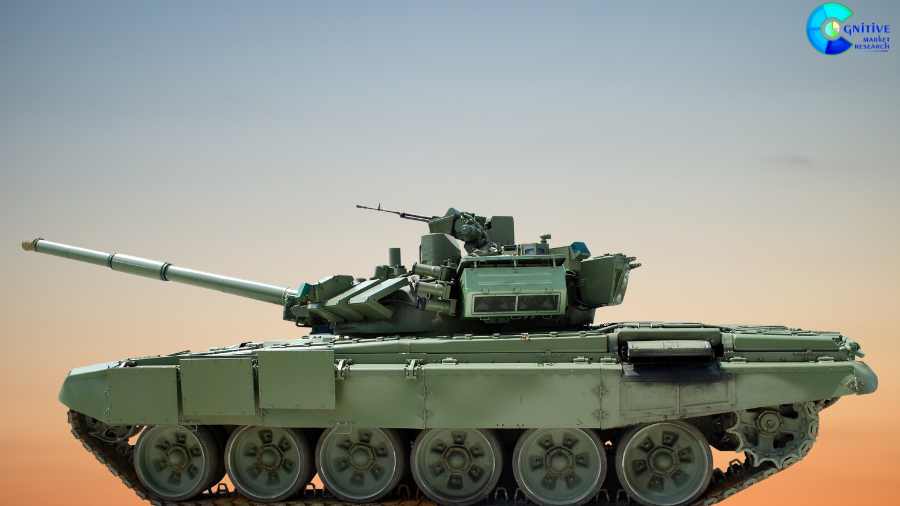
Military vetronics is a term derived from vehicle electronics and refers to the integrated electronic systems used in military vehicles such as tanks, armored personnel carriers, and unmanned ground vehicles.
Increasing adaption of technological advancement in defense sector
The defense industry relied on commercial technology innovation to adopt new advancements. Many developed and developing countries are ready to adapt the technology innovations for military purposes. In the defense industry, big data and Internet of Things (IoT) plays the important role in technology innovations.
Along with that, many countries are investing huge amount in smart systems and artificial intelligence (AI). In 2018, the U.S. Defense Advanced Research Projects Agency (DARPA) announced a $2 billion campaign to develop the AI technologies and create more trusting, collaborative partnerships between human and machines. In the defense industry, artificial intelligence helps to use data effectively. It is also the gateway towards autonomous systems like amphibious vehicles, unmanned ground vehicles, infantry fighting vehicles, and mine-resistant ambush protection vehicles.
Military vetronics market include involvement of several electronic systems that is installed on a vehicle in order to control various functions, such as communication, navigation, and weapons. It consists of components from boards and chips to displays and power electronics. Real time data helps soldiers with situational awareness during battle. This advanced system strengthens the defense system.
Almost all countries are focusing and investing to make their defense sector strong enough. Following picturized statistic shows the list of 15 countries with the highest military spending in 2019. The United States ranked first, with defense spending total of approx. 732 billion U.S. dollars. Increasing adaption of technological advancement in defense sector is one of the major driving factors for the growth of military vetronics market.
What are the trends in Military Vetronics Market?
Adoption of Artificial Intelligence and Automation- Modern vetronics systems are increasingly integrating AI and autonomous technologies to enhance real-time decision-making, surveillance, navigation, and threat detection in combat environments.
Focus on Cybersecurity in Military Vehicles- As battlefield platforms become more digitally interconnected, there is a rising emphasis on cyber protection to safeguard critical communications and data systems from electronic warfare and hacking attempts.
Advancements in Electronic Warfare Capabilities- Vetronics systems are evolving to support sophisticated electronic warfare features, including signal interception, jamming, and spoofing, to gain an edge in electromagnetic operations.
Integration of Next-Gen Communication Systems- Seamless communication between manned and unmanned systems, as well as command and control centers, is driving the development of secure, high-speed vetronic communication modules.
Miniaturization and Modular Design- The trend toward smaller, modular vetronics components enables easier integration, flexibility in upgrades, and weight reduction in military vehicles, which is vital for mobility and operational efficiency.
Growth in Unmanned Ground Vehicles (UGVs)- The expansion of unmanned vehicle fleets for reconnaissance, logistics, and combat is propelling demand for advanced onboard electronics, including autonomous control units and sensor fusion systems.
Conclusion
The military vetronics market is rapidly evolving, driven by the increasing adoption of advanced technologies such as AI, IoT, and autonomous systems in the defense sector. As nations invest heavily in strengthening their military capabilities, the integration of smart, modular, and secure electronic systems in combat vehicles is becoming essential. Key trends such as enhanced cybersecurity, miniaturization, next-gen communication systems, and the rise of unmanned ground vehicles highlight the growing importance of vetronics in modern warfare, making it a critical component of future defense strategies.