Blog Content
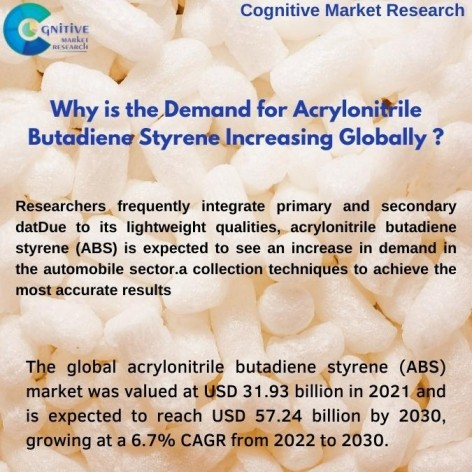
The acrylonitrile butadiene styrene (ABS) market is driven by the sole use of ABS material in high-end 3-D printers. Because acrylonitrile butadiene styrene plastic is environmentally benign, easy to paint and glue, and comes in large quantities, its use is predicted to increase in the near future. The global market for acrylonitrile butadiene styrene (ABS) is driven by the growing demand for lightweight automobiles and the growth of the automotive sector, particularly in developed nations like the United States and those in Europe.
Why acrylonitrile butadiene styrene market is in demand?
The drivers of the acrylonitrile butadiene styrene (ABS) market are factors that fuel the demand for this versatile thermoplastic polymer, which is widely used in industries such as automotive, electronics, consumer goods, and construction. One of the key drivers is the growing demand in the automotive industry, where ABS is extensively used for manufacturing lightweight parts such as bumpers, dashboards, and interior trims. As the automotive sector continues to focus on reducing vehicle weight for better fuel efficiency and lower emissions, the demand for ABS increases. Additionally, ABS's ability to withstand impact, its superior surface finish, and ease of molding make it a popular choice for automotive applications, particularly as manufacturers seek high-quality materials for improved aesthetics and performance.
Another driver is the expanding electronics and electrical industry. ABS is well-regarded for its excellent electrical insulation properties, making it ideal for electrical and electronic components like housings for appliances, televisions, and computers. The increasing demand for consumer electronics such as smartphones, computers, and home appliances has further boosted the market for ABS, as it is commonly used to produce durable, lightweight casings and components.
In the construction industry, ABS's versatility makes it a sought-after material for pipes, fittings, and various building applications. The growing global construction industry, especially in developing regions, fuels the demand for ABS in plumbing systems and other construction materials. Additionally, ABS's resistance to corrosion is a significant advantage in plumbing systems, making it a preferred choice for both residential and commercial applications. These factors contribute significantly to the growth of the ABS market.
What are the trends in acrylonitrile butadiene styrene market?
The acrylonitrile butadiene styrene (ABS) market has been evolving in response to technological advancements, shifting consumer preferences, and sustainability concerns. A significant trend driving the market is the growing focus on sustainability and recycling. As sustainability becomes increasingly important, there is an emphasis on recycling ABS, with many companies investing in technologies to efficiently recycle the material and reintroduce it into the production cycle. This trend is driven by consumer demand for eco-friendly products and stricter environmental regulations. Manufacturers are also exploring more sustainable production methods for ABS, such as utilizing renewable energy in production processes and developing bio-based ABS from renewable feedstocks, aiming to reduce the carbon footprint associated with its production.
Another key trend is the advancement in ABS blends and alloys. To cater to a wide range of applications, there is a growing trend of developing ABS blends with other polymers or additives to enhance properties such as heat resistance, flame retardancy, and impact strength. This customization allows ABS to be used in specialized applications across industries like automotive, aerospace, and electronics. Additionally, blends of ABS with polycarbonate (PC) are gaining popularity for their improved toughness and heat resistance, making them essential for high-performance industries.
The rise of 3D printing applications is also significantly shaping the ABS market. ABS is one of the most commonly used materials in additive manufacturing, particularly for prototyping and producing complex parts due to its excellent moldability, strength, and durability. The ability to quickly customize and prototype with ABS is attracting various industries, particularly in product development and rapid manufacturing, further driving the demand for ABS in the 3D printing sector.
Which are the major players in acrylonitrile butadiene styrene market?
LG Chem, a leading global producer of ABS, has a strong presence in the ABS market, known for its innovative solutions and large-scale production capabilities. The company produces a range of ABS grades for various applications, including automotive, electronics, and consumer goods. INEOS Styrolution, a global leader in styrenics, is one of the largest producers of ABS, specializing in high-performance ABS and offering a broad portfolio of ABS products tailored for industries such as automotive, appliances, electronics, and healthcare. SABIC (Saudi Basic Industries Corporation), one of the world’s largest petrochemical companies, plays a significant role in the ABS market by producing high-quality ABS resins for a wide range of applications. The company offers various ABS grades, including those used in automotive, electrical, and consumer goods industries. Covestro AG is another key player, known for its high-tech polymer materials, including ABS, offering innovative and sustainable solutions for industries like automotive, electronics, and healthcare. Their ABS products are highly regarded for their performance, strength, and ease of processing. Trinseo, a global materials company, is also a significant player in the ABS market, offering a wide range of styrenic block copolymers, including ABS. Trinseo’s ABS solutions are widely used across industries such as automotive, appliances, and packaging.
Conclusion
The acrylonitrile butadiene styrene (ABS) market is growing rapidly due to its versatility across industries like automotive, electronics, consumer goods, and construction. Key drivers include the increasing demand for lightweight automotive components, as ABS helps improve fuel efficiency and reduce emissions. The expanding electronics sector also boosts demand for ABS, particularly for electronic housings and consumer goods. In construction, ABS is favored for plumbing systems due to its resistance to corrosion.
Sustainability is a major trend, with companies focusing on recycling ABS and developing bio-based versions to reduce environmental impact. Additionally, the rise of 3D printing is driving demand for ABS, as its durability and ease of molding are ideal for rapid prototyping and manufacturing. Advancements in ABS blends and alloys are also enhancing properties like heat resistance, broadening its applications in high-performance sectors like aerospace.
Key players like LG Chem, INEOS Styrolution, and SABIC are leading innovation in the market.