Blog Content
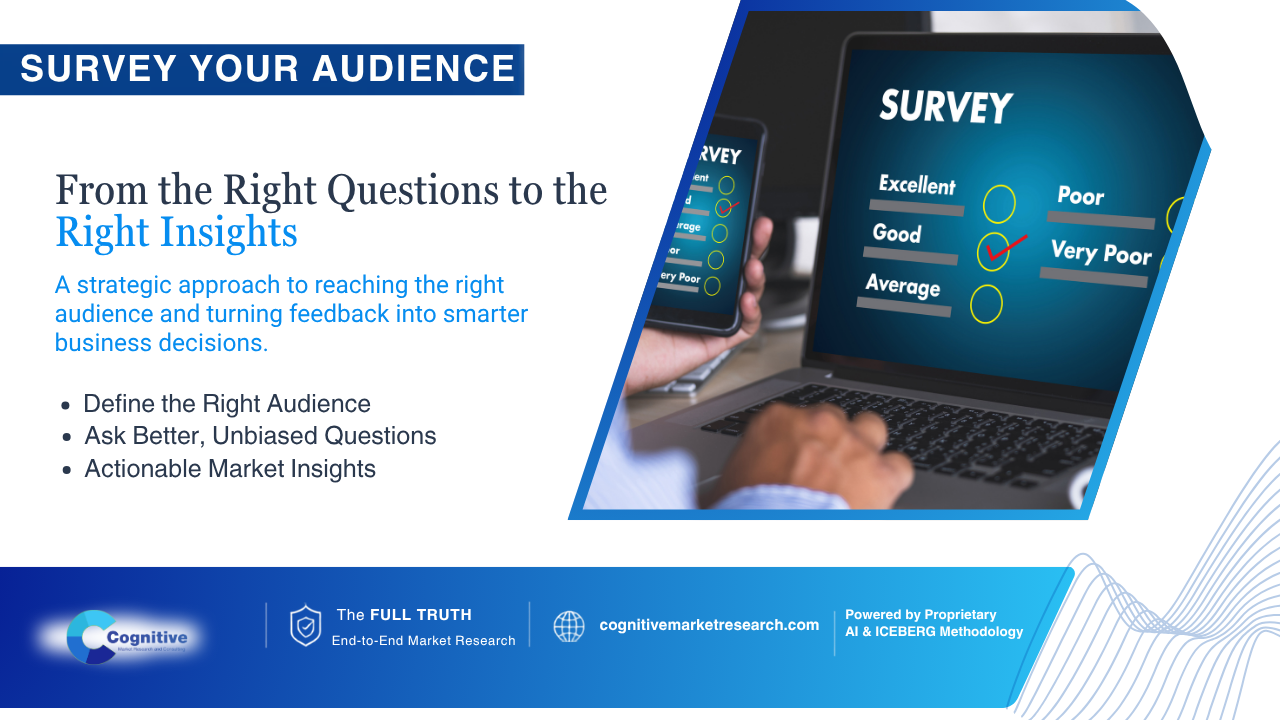
Mastering the Art of the Survey Target Audience: A Strategic Blueprint for Brands and Consumers
In today’s hyper-competitive global marketplace, guesswork is the fastest route to obsolescence. Whether you are a multinational manufacturing enterprise preparing to scale a revolutionary product line or an everyday consumer trying to understand why certain brands dominate your daily habits, one foundational truth remains, success begins with knowing who you are talking to.
At the heart of every great market breakthrough lies a meticulously planned initiative to survey target audience segments. By capturing real-time feedback, behavioral patterns, and unexpressed needs, organizations can align their production lines and marketing narratives with absolute precision.
In this comprehensive guide designed for business leaders, enterprise manufacturers, and curious consumers alike, we explore how to effectively survey target audience groups, eliminate data bias, and leverage professional intelligence frameworks to achieve long-term market dominance.
Understanding the Core Purpose: Why Every Brand Must Survey Target Audience Segments
Why do some product launches capture immediate consumer adoption while others stall on store shelves? The answer almost always traces back to how effectively the organization chose to survey target audience segments before committing capital.
In manufacturing and consumer goods alike, relying on historical intuition or generalized industry trends is no longer viable. Modern markets move too fast. When companies take the time to survey target audience participants, they unlock a direct line to real-time consumer sentiment. This process bridges the gap between factory floor engineering and living room realities.
The Shift from Assumptions to Empirical Data
For decades, corporate decision-making was dominated by boardroom assumptions. Leaders built what they thought the market wanted. Today, empowered by advanced digital tools and structured methodologies, brands can systematically survey target audience members to test hypotheses long before mass production begins. This mitigates financial risk and ensures that every product iteration meets genuine market demand.
How Manufacturers and Everyday Consumers Both Benefit from Insights
While enterprise manufacturers use a survey target audience initiative to optimize supply chains, reduce defect rates, and fine-tune pricing tiers, everyday consumers experience the downstream benefits directly. Better research leads to safer products, intuitive user interfaces, sustainable packaging, and personalized services that genuinely address daily pain points.
The 4-Step Framework to Design and Execute a High-Conversion Survey Target Audience Strategy
Executing a successful research campaign requires more than simply publishing a questionnaire online. To yield statistically significant results when you survey target audience pools, you must follow a disciplined, multi-phase workflow.
Step 1: Defining Demographic and Psychographic Parameters
Before writing a single question, you must define who belongs in your respondent pool. Effective segmentation goes beyond basic age, gender, and geographic location. It delves into psychographics lifestyle choices, purchasing behaviors, core values, and digital media habits. When you precisely define your parameters, every attempt to survey target audience groups yields cleaner, more actionable data.
Step 2: Crafting Questions That Eliminate Cognitive Bias
The quality of your data depends entirely on the structure of your questions. Leading market analysts emphasize avoiding leading or double-barreled questions that push respondents toward a predetermined answer. Whether utilizing multiple-choice matrices, rating scales, or open-ended text fields, your questions must remain neutral, clear, and easy to interpret across diverse educational and cultural backgrounds.
Step 3: Selecting the Right Digital Distribution Channels
Reaching your respondents requires meeting them where they are. B2B manufacturers might distribute surveys via professional networks, industry portals, and direct email sequences. Consumer brands, on the other hand, can leverage social media advertising, in-app prompts, and dedicated customer panels. Diversifying your channels ensures your survey target audience sample remains representative rather than skewed.
Step 4: Analyzing Quantitative Metrics and Qualitative Sentiment
Once responses roll in, raw data must be transformed into strategic foresight. Quantitative metrics (such as Net Promoter Scores, frequency rates, and pricing thresholds) provide the statistical backbone. Meanwhile, qualitative feedback uncovers the emotional why behind consumer choices. Combining both dimensions is essential when you survey target audience participants for major product overhauls.
Common Pitfalls When You Survey Target Audience Groups and How to Avoid Them
Even seasoned marketers occasionally stumble when gathering primary data. Recognizing these common traps ensures your research remains robust.
Avoiding Sampling Bias and Echo Chambers
One of the most dangerous errors is surveying an existing customer base exclusively when testing acquisition strategies. While loyal customers provide valuable retention insights, they do not represent the broader market. To capture true market expansion opportunities, your survey target audience framework must include non-users, churned customers, and emerging demographic cohorts.
Combating Survey Fatigue with Value-Driven Incentives
Consumers and business executives alike are bombarded with daily requests for feedback. Long, poorly structured questionnaires lead to high drop-off rates and incomplete data sets. To maintain high completion rates, keep questionnaires concise, mobile-friendly, and anchored by meaningful value exchanges such as exclusive research reports, educational whitepapers, or direct financial incentives.
Conclusion
In an era defined by rapid technological disruption and evolving consumer expectations, operating on generalized assumptions is a risk no enterprise can afford. Whether you are scaling a manufacturing infrastructure, refining a digital service, or launching your next category-defining product, data-backed clarity is your greatest asset.
Are you ready to elevate your market research capabilities and unlock actionable consumer insights? Schedule a Strategic Consultation with Cognitive Market Research and Consulting today to align your enterprise with the data-driven future.