Blog Content
Gamification in Market Research: How to Supercharge Data Quality and Consumer Engagement
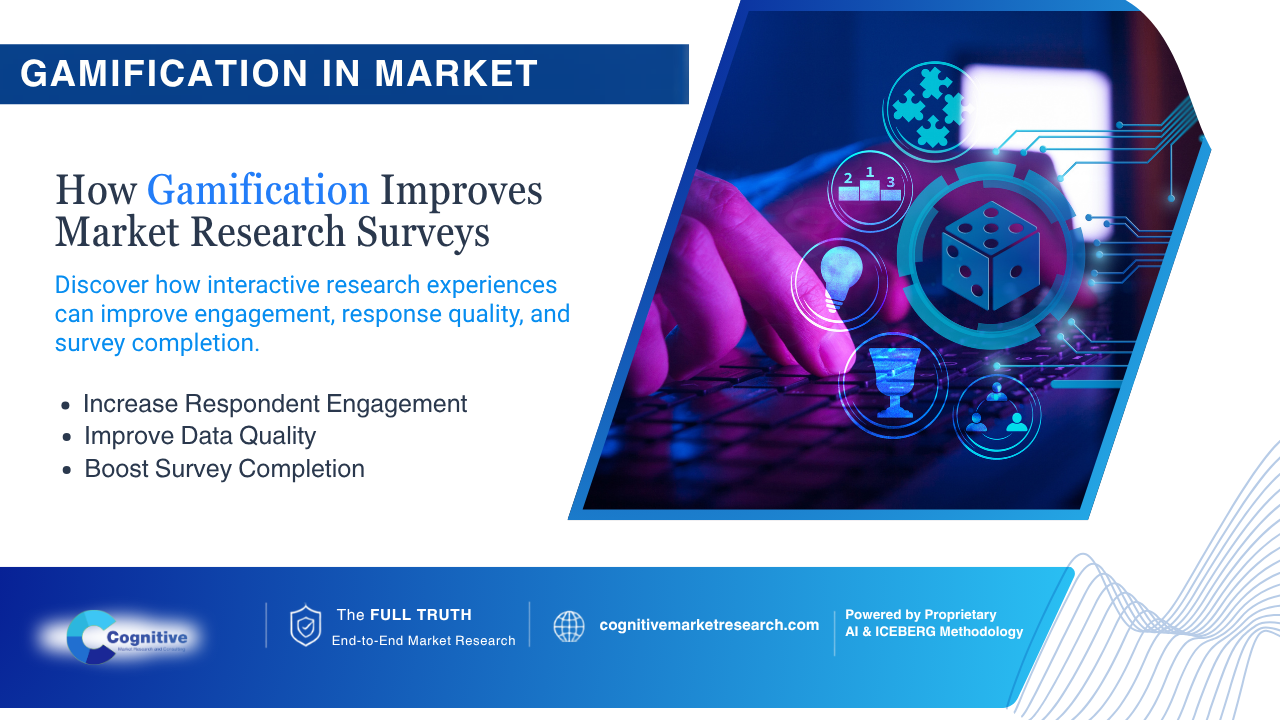
Traditional surveys are broken. With response rates plummeting and survey fatigue at an all-time high, brands and manufacturers are finding it increasingly difficult to extract honest, high-value consumer insights. Enter gamification in market research—a transformative approach that injects game mechanics like points, badges, progress bars, and leaderboards into research frameworks.
By turning passive respondents into active players, gamification in market research solves the core crisis of modern data collection, boredom. Whether you are a product manufacturer tracking consumer trends or a market analyst compiling a robust industry study, understanding gamification in market research is the key to unlocking deeper psychological insights and authentic behavioral data.
The Modern Crisis: Why Traditional Research Fails
Look at any recent consumer data report, and you will notice a glaring pattern, completion rates are dropping, and straight-lining (randomly clicking through answers just to finish) is rampant. Consumers and B2B buyers alike suffer from severe survey fatigue. Lengthy, text-heavy questionnaires feel like digital chores rather than meaningful touchpoints.
For manufacturers launching new product lines or brands trying to decode shifting demographics, getting superficial data is worse than getting no data at all. It leads to misallocated R&D budgets, flawed marketing strategies, and missed market windows. To combat this, the industry is shifting toward gamification in market research, replacing monotony with motivation.
What is Gamification in Market Research?
At its core, gamification in market research involves integrating game design elements, mechanics, and psychological triggers into non-game contexts, such as online surveys, consumer panels, and diary studies. Rather than forcing users to trudge through 50 static rating scales, gamification in market research transforms the experience. Panelists become players. They earn rewards, visualize their progress, solve simulated challenges, and engage with interactive storytelling. This shift taps into intrinsic human motivators curiosity, achievement, and competition yielding vastly superior qualitative and quantitative outcomes.
Core Mechanics Driving Gamification in Market Research
Successful gamification in market research does not mean turning a survey into an arcade game. It relies on strategic psychological levers:
Progress Bars and Milestone Trackers: Showing a dynamic visual indicator of how close a user is to finishing drastically lowers bounce rates.
Points and Scoring Systems: Rewarding thoughtful, elaborated answers on open-ended questions with dynamic points encourages respondents to write more and think deeper.
Scenario-Based Storytelling: Framing a product feedback session as a rescue mission or a brand design challenge contextualizes questions naturally.
Instant Feedback and Micro-Badges: Giving users mini-achievements as they complete distinct sections keeps dopamine levels stable throughout the session.
Expert Note: Research indicates that integrating achievement-oriented mechanics into quantitative instruments significantly increases response length and data consistency compared to standard questionnaires.
Key Benefits for Manufacturers and Enterprise Brands
Why should product manufacturers and industry strategists prioritize gamification in market research? The advantages directly impact the bottom line:
- Elimination of Survey Fatigue: By making the process genuinely fun, drop-off rates plummet, ensuring larger sample sizes and more representative demographic capture.
- Richer, Higher-Quality Text Responses: Traditional text boxes often yield one-word answers. Utilizing competitive or achievement-based gamification in market research drives longer, more descriptive qualitative feedback.
- Uncovering Subconscious Preferences: Interactive drag-and-drop exercises or visual preference mapping bypass rational overthinking, exposing true consumer instincts.
- Enhanced Brand Perception: When respondents enjoy a survey, their overall sentiment toward the sponsoring brand improves, fostering stronger long-term brand loyalty.
Best Practices for Implementing Gamification in Market Research
Deploying interactive elements requires careful balance. To maximize the return on your research investment, follow these golden rules:
- Keep Mobile Optimization First: Most respondents will access your study via smartphones. Touch-friendly mechanics like swiping, dragging, and tapping are essential.
- Align Mechanics with Objectives: Do not add a game feature just for fun. If you need deep analytical data, use point systems that reward detail. If you are tracking visual appeal, use gamified image sorting.
- Avoid Cognitive Overload: Keep instructions clear. If the rules of the game are harder to understand than the survey questions, respondents will quit.
- Partner with Professionals: Designing statistically sound, unbiased gamified frameworks requires specialized expertise. This is where professional market research consulting shines.
The Future Outlook with Cognitive Market Research
As digital ecosystems evolve, the integration of artificial intelligence and immersive design is pushing gamification in market research into hyper-personalized territories. Predictive analytics can now adapt game difficulty and question paths dynamically based on real-time user engagement levels.
Navigating these advanced methodologies requires a trusted partner who understands both data integrity and cutting-edge engagement strategies. Cognitive Market Research delivers comprehensive consulting, advanced analytics, and custom research frameworks designed to help manufacturers and enterprise leaders turn raw consumer data into decisive competitive advantages.
Conclusion
Stop letting low response rates and flat data compromise your strategic decisions. Embracing gamification in market research is no longer just a creative experiment, it is a modern imperative for accurate consumer intelligence.
Ready to transform your consumer insights? Contact Cognitive Market Research today to design custom, gamified research studies that captivate your audience, maximize data quality, and accelerate your business growth.