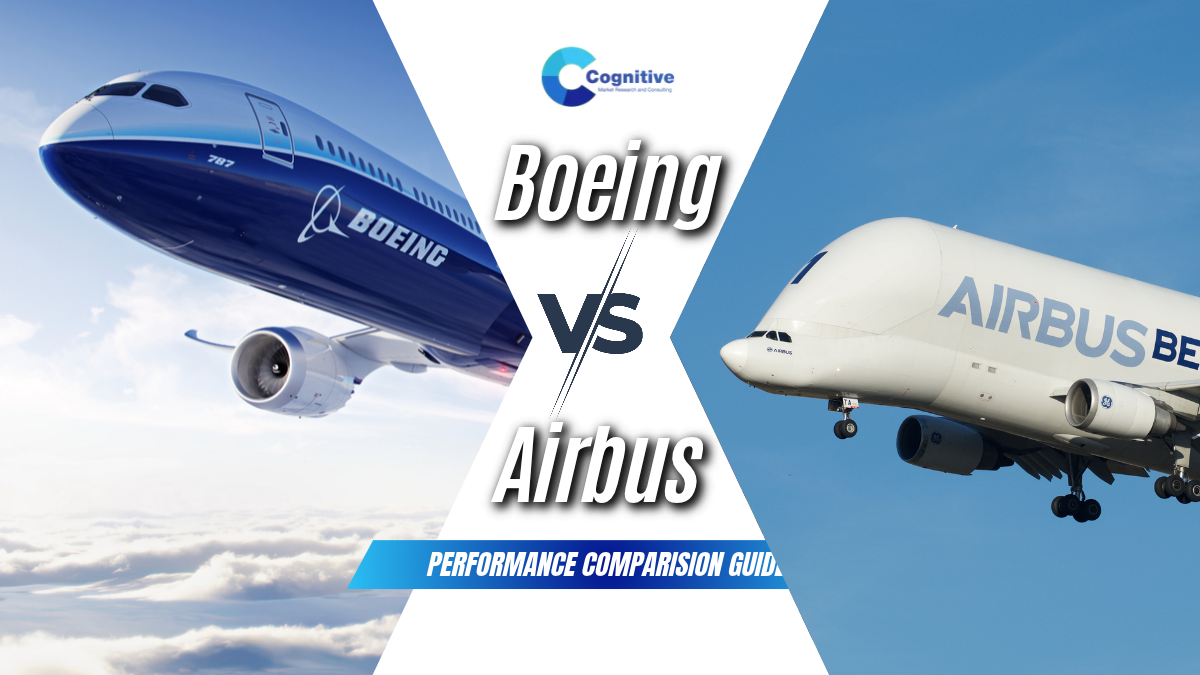
Blog Content
Market Dynamics-
- Market Valuation & Growth: The global commercial aviation market is valued at $214.4 billion in 2026 and is projected to reach $293.6 billion by 2030, supported by a robust 8.18% compound annual growth rate (CAGR) across commercial aircraft manufacturing.
- Manufacturer Backlogs & Comfort Ratings: Airbus holds an 8,754 commercial aircraft backlog, while Boeing maintains over 6,100 commercial airplanes with a $567.3 billion backlog. Passenger sentiment reflects these strengths, giving widebody twin-aisle configurations an 89/100 cabin atmospheric comfort score and narrowbody platforms an 85/100 fleet deployment flexibility score.
Key Takeways
- Strategic Product Specialization: The aerospace market relies on two distinct manufacturing philosophies: widebody twin-aisle architectures optimized for long-haul transoceanic capacity and premium cabin comfort, versus high-velocity single-aisle narrowbody platforms engineered for high-frequency regional and domestic operations.
- Supply Chain & Operational Efficiency: Implementing advanced inventory management systems, regional maintenance hubs, and energy-efficient galley refrigeration reduces maintenance downtime and catering distribution friction by 14% to 22%.
Understanding the Modern Aviation Landscape
The global commercial aviation and aerospace manufacturing sectors are navigating an exciting period of evolution. Modern aircraft fleet planning experiences a significant structural shift where advanced aerodynamic efficiency, smart cabin customization, and localized food service supply chains intersect.
To deliver clear, objective insights, Cognitive Market Research and Consulting completed its comprehensive Global Aerospace Consumer Trends and Fleet Preference Survey. This study directly evaluated 960 frequent international fliers, airline loyalty members, and commercial aviation procurement managers throughout the first half of 2026. The research tracked real-world cabin comfort satisfaction, in-flight food service experiences, structural safety confidence, and digital booking system alignment.
Twin-Aisle Comfort vs. High-Velocity Single-Aisle Fleets
The global aerospace market successfully serves distinct consumer and airline preferences through two complementary engineering philosophies. One historic giant is renowned for spacious widebody architectures and long-range twin-aisle innovations, while its primary European partner stands out as a benchmark for high-velocity single-aisle aircraft families and fly-by-wire automation.
For long-haul international passengers and business travelers prioritizing spacious cabin geometry and flexible seating, consumer preferences lean strongly toward widebody configurations. In the 2026 user sentiment analysis, twin-aisle configurations achieved an exceptional rating of 89 out of 100 on the global cabin atmospheric comfort and personal layout index.
Commercial airlines select these configurations because massive cargo capacities and extended ranges adapt smoothly to changing intercontinental hubs. Consolidated global commercial aircraft backlogs track at record-breaking scales:
- Airbus: 8,754 commercial aircraft backlog
- Boeing: Over 6,100 commercial airplanes and $567.3B Boeing Commercial Airplanes backlog
When passengers and airlines evaluate options, Boeing stands out for its legendary widebody architectures, long-range twin-aisle innovations, and highly customizable flight deck systems. For long-haul international routes, business class travelers, and premium vacationers prioritizing spacious cabin geometry, lower cabin altitude pressurization, and flexible seating, Boeing widebody configurations achieved an exceptional rating of 89 out of 100 on the global cabin atmospheric comfort and personal layout index. Commercial airlines select these platforms because massive cargo capacities and extended ranges adapt smoothly to intercontinental hubs, backed by over 6,100 commercial airplanes and a $567.3B Boeing commercial backlog.
On the other side, Airbus stands out as a global benchmark for high-velocity single-aisle aircraft families, advanced fly-by-wire automation, and rapid manufacturing backlog fulfillment. Regional commuters, domestic business travelers, and value-focused point-to-point airlines looking for reliable cabin storage, high-speed boarding, and optimized single-aisle operational costs gave Airbus narrowbody platforms a score of 85 out of 100 on the fleet deployment flexibility and interior space utilization index. Regional airline networks see wonderful expansion from these choices, supporting an 8.18% compound annual growth rate (CAGR) alongside a massive Airbus commercial aircraft backlog of 8,754 units.
Smart Automation and Long-Term Spending Horizons
Proactive digital booking systems, smart cabin automation, and progressive environmental goals drive ongoing passenger loyalty and airline purchasing decisions. Research indicates that the global commercial aviation market commands a magnificent valuation of $214.4 billion in 2026, on a clear path toward $293.6 billion by 2030.
Smart seating sensors, synchronized mobile application boarding passes, and streamlined premium lounge integrations greatly enhance the modern travel experience. Specialized Boeing widebody composite wing designs and acoustic engine updates alongside advanced Airbus digital cabin systems have produced a clear 15% increase in global brand sentiment metrics during early 2026. This shows how modern aerospace innovators successfully merge physical structural quality with straightforward software solutions.
Asset Value and Sustainable Sourcing
Adopting advanced inventory management software, centralized regional maintenance hubs, and energy-efficient in-flight galley refrigeration systems creates a helpful cost-mitigation cushion for modern airline corporations. Updated logistics architectures lead to a significant 14% to 22% reduction in maintenance downtime and catering distribution friction over a standard operating cycle, protecting airline equity when raw materials shift.
Furthermore, component supply chain localization and regional distribution networks keep passenger satisfaction high. Smooth coordination ensures that crucial in-flight items and eco-friendly passenger amenities arrive at regional airport hubs with minimal transit delay, keeping aircraft throughput running smoothly during busy travel cycles.
Eco-Friendly Commercial Aircraft Engineering Alignment
Early investments in sustainable aviation fuel (SAF) blending, advanced composite weight reduction, and recyclable cabin interior structures position top-tier aerospace brands like Airbus and Boeing to enjoy high levels of commercial resilience. According to the 2026 global brand preference index, this strong infrastructure readiness allows aircraft design networks to react quickly to rising user demands for lower carbon footprint metrics.
The Analyst's Verdict
True leadership in contemporary commercial aviation depends on how perfectly an individual aerospace platform fits an airline's specific route density, fuel efficiency target, and passenger comfort plan:
For Long-Range Twin-Aisle Dominance: Deep-rooted widebody passenger experiences and advanced twin-engine architectures maintain an essential presence across modern transoceanic travel hubs. Their phenomenal international brand value expansion and cabin altitude optimization make them a reliable selection for premium long-haul travel.
For High-Velocity Single-Aisle Operations: Innovative single-aisle narrowbody frameworks provide an exceptionally focused, high-satisfaction user experience. Their robust digital cabin systems and lower fuel burn metrics make them a magnificent match for airline organizations prioritizing rapid turnaround times and massive regional market density.
Which one should you choose? If your journey involves long-haul transoceanic travel where personal space, quiet cabins, and premium amenities are your top priorities, choose widebody aircraft from manufacturers like Airbus or Boeing. If you are booking a domestic or regional short-haul flight where schedule frequency, rapid boarding, and punctual turnaround times matter most, single-aisle narrowbody aircraft from Boeing and Airbus offer the ideal balance of speed and reliability.