We value your privacy
We use cookies to improve your experience and analyze traffic. By continuing, you consent to our use of cookies under GDPR, CCPA and other applicable laws. Privacy Policy
Cookie preferences
Choose which categories of cookies you allow. Strictly necessary cookies are always on.
Strictly necessary
Required for core site functionality, security and your session. Always active.
Analytics
Help us understand how visitors use the site (e.g. Google Analytics) so we can improve it.
Marketing
Used to measure campaigns and show you relevant ads on other sites (e.g. LinkedIn, Google Ads).
Biofuels and Biodiesel Market Analysis size 2021 was recorded $202.926 Billion whereas by the end of 2025 it will reach $233.763 Billion. According to the author, by 2033 Biofuels and Biodiesel market size will become $310.209. Biofuels and Biodiesel market will be growing at a CAGR of 3.6% during 2025 to 2033. Download a free sample with market size, key players, and regional forecast data verified by Chidanand Bilagi.
Biofuels and Biodiesel Market Analysis from 2022 to 2034 Containing Market Size, Share along with its CAGR, Forecast and Trends
Top Countries — Revenue
Billion
Market Dynamics of Biofuels and Biodiesel Market Analysis
Growth Drivers
Rising Environmental Concerns and Emission Regulations
Supportive Government Policies and Subsidies
Volatile Crude Oil Prices and Energy Security
Restraints
Competition with Food Supply Chains
High Production and Processing Costs
Feedstock Availability and Seasonality
Trends
Adoption of Second and Third-Generation Biofuels
Expansion of Sustainable Aviation Fuel (SAF)
Integration of Circular Economy in Biofuel Production
Access the full forecast model.
Country-level data · Company profiles · Editable dataset · Analyst consultation included.
Biofuels and Biodiesel Market Analysis — Presence
Geographical Analysis
Click countries to explore
Loading map…
Regional and Country Analysis
Global Biofuels and Biodiesel Market Analysis 2026
Country-level values are locked in this preview.
Request a free sample
to unlock the full breakdown.
Region / Country
2021 (A)
2025 (A)
2033 (P)
CAGR
Global
$ 202.93 Billion
$ 233.76 Billion
$ 310.21 Billion
3.6%
North America
$ 56.41 Billion
$ 63.72 Billion
$ 81.28 Billion
3.09%
United States
$ 45.58 Billion
$ 50.97 Billion
$ 63.72 Billion
2.831%
Canada
$ 8.58 Billion
$ 10.27 Billion
$ 14.71 Billion
4.601%
Mexico
$ 2.26 Billion
$ 2.48 Billion
$ 2.85 Billion
1.714%
Europe
$ 69.4 Billion
$ 78.76 Billion
$ 101.44 Billion
3.214%
United Kingdom
$ 10.48 Billion
$ 11.6 Billion
$ 14.2 Billion
2.565%
France
$ 10.13 Billion
$ 11.58 Billion
$ 15.11 Billion
3.389%
Germany
$ 13.05 Billion
$ 14.7 Billion
$ 18.67 Billion
3.029%
Italy
$ 7.15 Billion
$ 8.29 Billion
$ 11.16 Billion
3.781%
Russia
$ 6.25 Billion
$ 7.39 Billion
$ 10.35 Billion
4.296%
Spain
$ 5.48 Billion
$ 6.43 Billion
$ 8.83 Billion
4.047%
Sweden
$ 4.1 Billion
$ 4.54 Billion
$ 5.59 Billion
2.635%
Denmark
$ 2.71 Billion
$ 2.99 Billion
$ 3.65 Billion
2.527%
Switzerland
$ 3.68 Billion
$ 4.23 Billion
$ 5.58 Billion
3.533%
Luxembourg
$ 2.92 Billion
$ 3.24 Billion
$ 4.01 Billion
2.687%
Rest of Europe
$ 3.47 Billion
$ 3.78 Billion
$ 4.3 Billion
1.627%
Asia Pacific
$ 51.34 Billion
$ 60.85 Billion
$ 85.46 Billion
4.338%
China
$ 18.12 Billion
$ 21.25 Billion
$ 29.23 Billion
4.063%
Japan
$ 8.99 Billion
$ 10.36 Billion
$ 13.76 Billion
3.616%
South Korea
$ 4.88 Billion
$ 5.68 Billion
$ 7.69 Billion
3.869%
India
$ 8.01 Billion
$ 10.15 Billion
$ 16.32 Billion
6.113%
Australia
$ 3.7 Billion
$ 4.46 Billion
$ 6.5 Billion
4.809%
Singapore
$ 2.01 Billion
$ 2.45 Billion
$ 3.64 Billion
5.086%
Taiwan
$ 1.54 Billion
$ 1.77 Billion
$ 2.35 Billion
3.584%
South East Asia
$ 3.03 Billion
$ 3.52 Billion
$ 4.74 Billion
3.808%
Rest of APAC
$ 1.07 Billion
$ 1.21 Billion
$ 1.23 Billion
0.257%
South America
$ 11.77 Billion
$ 13.83 Billion
$ 19.08 Billion
4.107%
Brazil
$ 5.05 Billion
$ 5.91 Billion
$ 8.09 Billion
4.005%
Argentina
$ 2.33 Billion
$ 2.8 Billion
$ 4.03 Billion
4.66%
Colombia
$ 1.62 Billion
$ 1.95 Billion
$ 2.8 Billion
4.657%
Peru
$ 1.11 Billion
$ 1.28 Billion
$ 1.71 Billion
3.682%
Chile
$ 0.86 Billion
$ 1 Billion
$ 1.34 Billion
3.744%
Rest of South America
$ 0.8 Billion
$ 0.9 Billion
$ 1.12 Billion
2.738%
Middle East
$ 6.29 Billion
$ 7.56 Billion
$ 10.86 Billion
4.631%
Saudi Arabia
$ 1.92 Billion
$ 2.29 Billion
$ 3.26 Billion
4.487%
Turkey
$ 1.21 Billion
$ 1.45 Billion
$ 2.07 Billion
4.513%
UAE
$ 0.99 Billion
$ 1.25 Billion
$ 1.94 Billion
5.702%
Egypt
$ 0.81 Billion
$ 0.98 Billion
$ 1.42 Billion
4.732%
Qatar
$ 0.57 Billion
$ 0.68 Billion
$ 0.96 Billion
4.338%
Rest of Middle East
$ 0.78 Billion
$ 0.91 Billion
$ 1.22 Billion
3.741%
Africa
$ 7.71 Billion
$ 9.06 Billion
$ 12.1 Billion
3.684%
East Africa
xxxx
xxxx
xxxx
xxxx
West Africa
xxxx
xxxx
xxxx
xxxx
North Africa
xxxx
xxxx
xxxx
xxxx
South Africa
$ 3.02 Billion
$ 3.6 Billion
$ 4.99 Billion
4.139%
The global biofuels and biodiesel market is experiencing robust growth, driven by a worldwide push towards decarbonization and sustainable energy alternatives. With a projected CAGR of 3.6%, the market is expanding as nations strive to meet climate goals and reduce dependence on volatile fossil fuel markets. The dynamics are heavily influenced by regulatory frameworks, technological advancements in production, and fluctuating feedstock prices. While the transportation sector is the main end-user, applications in power generation and industrial heating are also gaining traction, diversifying the market's scope.
Global Biofuels and Biodiesel Market Drivers
Supportive Government Policies and Mandates: Governments globally are implementing blending mandates (e.g., E10, B20), offering subsidies, and providing tax incentives to promote the production and consumption of biofuels, creating a favorable regulatory environment.
Growing Environmental Concerns and Climate Change Mitigation: The urgent need to reduce greenhouse gas emissions and combat climate change is a primary driver, positioning biofuels as a key lower-carbon alternative to traditional petroleum-based fuels.
Energy Security and Reduced Dependence on Fossil Fuels: Volatility in crude oil prices and geopolitical tensions have prompted nations to seek greater energy independence by developing domestic, renewable energy sources like biofuels.
Global Biofuels and Biodiesel Market Trends
Advancement in Second and Third-Generation Biofuels: There is a significant R&D push towards commercializing advanced biofuels made from non-food sources such as cellulosic biomass, waste oils, and algae, which addresses sustainability and food competition concerns.
Rising Demand for Sustainable Aviation Fuel (SAF): The aviation industry is increasingly adopting biofuels to reduce its carbon footprint, with airlines and governments setting ambitious targets for SAF usage, creating a high-value growth segment.
Focus on Circular Economy and Waste-to-Energy: The utilization of municipal solid waste, used cooking oil (UCO), and agricultural residues as feedstock is a growing trend, aligning with circular economy principles and providing a sustainable raw material stream.
Global Biofuels and Biodiesel Market Restraints
Food vs. Fuel Debate: The use of food crops like corn, sugarcane, and palm oil for first-generation biofuel production raises concerns about food price inflation, land use change, and competition for agricultural resources.
High Production Costs and Feedstock Price Volatility: The cost of producing biofuels is often higher than that of conventional fuels, and the market is susceptible to fluctuations in the price and availability of agricultural feedstock.
Technological and Infrastructural Challenges: The commercial-scale production of advanced biofuels remains technologically challenging and capital-intensive. Additionally, distribution and storage infrastructure often requires modification to handle biofuels.
Country-Specific Insight: North America accounts for 27.3% of the global market. The United States is the dominant player, holding approximately 21.8% of the global market share in 2025, driven by its Renewable Fuel Standard (RFS). Canada contributes a significant 4.4% to the global market, with Mexico making up about 1.1%.
Regional Dynamics:
Drivers: Strong regulatory support through the U.S. Renewable Fuel Standard (RFS) and Canada's Clean Fuel Regulations are primary drivers. The pursuit of energy independence further bolsters regional production.
Trends: A growing focus on advanced biofuels like cellulosic ethanol and the development of Sustainable Aviation Fuel (SAF) are key trends. There is also increasing consolidation among producers to achieve economies of scale.
Restraints: The ongoing "food vs. fuel" debate surrounding corn-based ethanol and policy uncertainty related to mandate revisions pose significant challenges.
Technology Focus: The region is a leader in corn-based ethanol and soy-based biodiesel production technology, with increasing investment in cellulosic ethanol and renewable diesel (HVO) facilities.
Country-Specific Insight: Europe holds the largest share of the global market at 33.7%. Germany is the regional leader, accounting for 6.3% of the global market share in 2025. Other major contributors include the United Kingdom (5.0%), France (4.9%), Italy (3.5%), and Russia (3.2%).
Regional Dynamics:
Drivers: The market is driven by the EU's Renewable Energy Directive (RED II), which sets ambitious targets for renewable energy in transport and promotes advanced biofuels.
Trends: There is a strong shift towards waste-based biofuels, particularly from used cooking oil (UCO) and animal fats, to meet sustainability criteria. Phasing out of palm oil as a feedstock is also a prominent trend.
Restraints: Strict sustainability and certification requirements can be a barrier for producers. The region's high reliance on imported feedstock also creates supply chain vulnerabilities.
Technology Focus: Europe has a strong focus on advanced technologies like Hydrotreated Vegetable Oil (HVO), also known as renewable diesel, and is a hub for research in waste-to-liquid and other advanced biofuel pathways.
Country-Specific Insight: The Asia Pacific region represents 26.0% of the global market and is the fastest-growing. China is the largest market, holding 9.1% of the global share in 2025, followed by Japan (4.4%) and India (4.3%). India's market is expected to grow rapidly due to new blending mandates.
Regional Dynamics:
Drivers: Rapidly growing energy demand, government initiatives to reduce air pollution, and policies aimed at enhancing energy security (e.g., India's E20 blending target) are key drivers.
Trends: Increasing production of ethanol from sugarcane and biodiesel from palm oil (particularly in Southeast Asia). There is also growing interest in non-edible feedstocks like jatropha.
Restraints: Competition for land and water resources between food and fuel crops is a major concern. Inconsistent feedstock supply and logistical challenges also hinder market growth.
Technology Focus: The region primarily relies on first-generation technologies for producing ethanol from sugarcane and corn, and biodiesel from palm oil and jatropha.
Country-Specific Insight: South America constitutes 5.9% of the global market. Brazil is the undisputed leader, accounting for 2.5% of the global share in 2025, with its well-established sugarcane ethanol industry. Argentina follows, holding 1.2% of the global market, primarily through soy-based biodiesel.
Regional Dynamics:
Drivers: Abundant availability of agricultural feedstock, particularly sugarcane in Brazil and soybeans in Argentina. Long-standing government programs promoting biofuel use, like Brazil's RenovaBio, support the market.
Trends: The development of second-generation ethanol from sugarcane bagasse is a key trend. Brazil continues to be a global benchmark for a successful and integrated bioethanol economy.
Restraints: Economic instability and currency fluctuations in key countries like Argentina can impact investment. Environmental concerns related to deforestation for crop cultivation also pose a restraint.
Technology Focus: The region has highly efficient first-generation ethanol production from sugarcane. R&D is increasingly focused on cellulosic ethanol (2G) technology to leverage sugarcane waste.
Country-Specific Insight: The Middle East accounts for 3.2% of the global market. Key countries include Saudi Arabia (1.0% of the global market share in 2025), Turkey (0.6%), and the UAE (0.5%), with the latter showing strong interest in sustainable aviation fuels.
Regional Dynamics:
Drivers: Economic diversification efforts to reduce dependence on crude oil exports and a strategic focus on sustainable aviation are driving interest in biofuels.
Trends: A strong focus on waste-to-energy projects and research into algae-based biofuels, given the region's abundant sunlight and scarcity of arable land and fresh water.
Restraints: The abundance of low-cost fossil fuels creates a highly competitive environment for biofuels. A lack of agricultural feedstock and fresh water limits the potential for conventional biofuel production.
Technology Focus: The region is investing heavily in cutting-edge research on third-generation biofuels from algae and developing production facilities for Sustainable Aviation Fuel (SAF).
Country-Specific Insight: Africa holds a smaller but growing share of the global market at 3.9%. The market is led by Nigeria and South Africa, which in 2025 are projected to hold 1.7% and 1.5% of the global market share, respectively, driven by domestic energy needs and agricultural potential.
Regional Dynamics:
Drivers: The need to create rural employment, improve energy access, and leverage vast agricultural land are major drivers. Potential for non-food feedstocks like jatropha and cassava is significant.
Trends: The market is characterized by small-scale, localized production projects. There is growing international interest in investing in Africa's biofuel potential as a future supply source.
Restraints: A lack of investment, inadequate infrastructure, and political instability are major barriers. The absence of strong, consistent government policies also hinders large-scale development.
Technology Focus: Focus is on developing cultivation of drought-resistant, non-food energy crops. Technology adoption is mainly centered on small-scale, modular biodiesel processing units.
A = Actual · E = Estimated · P = Projected · 🔒 Locked values require full access. Click headers to sort.
Form breakdown · Illustrative 2025 shares shown free · Full-period forecast in paid report.
Solid Biofuel Biofuels and Biodiesel Market Analysis
XX
Solid Biofuel Market Size 2025
XX %
CAGR
Locked · Full data in paid report
Liquid Biofuel Biofuels and Biodiesel Market Analysis
XX
Liquid Biofuel Market Size 2025
XX %
CAGR
Locked · Full data in paid report
Gaseous Biofuel Biofuels and Biodiesel Market Analysis
XX
Gaseous Biofuel Market Size 2025
XX %
CAGR
Locked · Full data in paid report
Market size by (Illustrative, 2025)
Share distribution (2025)
Disclaimer: The charts and graphs are for illustrative purposes only and do not represent actual market values. To access accurate quantitative data, please request a paid report or request free sample.
To learn more about market share and segmentation, request the free sample pages.
Competitor Analysis
Gain a decisive edge in the challenging chemical and materials market. As companies navigate strict regulations and volatile supply chains, they are turning to technology to innovate and improve efficiency. Our competitive analysis provides the intelligence you need to understand this dynamic environment. This study reveals your competitor's revenue models, core strategies, and recent developments all framed within a comprehensive S.W.O.T. analysis so you can make informed decisions and capitalize on market opportunities.
Click any bar or cell to request the full company profile
Top Companies (In no particular order)
2022 (A)
2023 (A)
2024 (A)
2025 (A)
Diester Industries
•••
•••
•••
•••
Neste Oil Rotterdam
•••
•••
•••
•••
ADM
•••
•••
•••
•••
Infinita Renovables
•••
•••
•••
•••
Biopetrol
•••
•••
•••
•••
Cargill
•••
•••
•••
•••
Ital Green Oil
•••
•••
•••
•••
Glencore
•••
•••
•••
•••
Louis Dreyfus
•••
•••
•••
•••
Renewable Energy Group
•••
•••
•••
•••
RBF Port Neches
•••
•••
•••
•••
Ag Processing
•••
•••
•••
•••
Elevance
•••
•••
•••
•••
Marathon Petroleum Corporation
•••
•••
•••
•••
Evergreen Bio Fuels
•••
•••
•••
•••
Minnesota Soybean Processors
•••
•••
•••
•••
Caramuru
•••
•••
•••
•••
Poet
•••
•••
•••
•••
Valero
•••
•••
•••
•••
Green Plains
•••
•••
•••
•••
Flint Hills Resources
•••
•••
•••
•••
Abengoa Bioenergy
•••
•••
•••
•••
Pacific Ethanol
•••
•••
•••
•••
CropEnergies
•••
•••
•••
•••
Raizen
•••
•••
•••
•••
The Andersons
•••
•••
•••
•••
We Provide Regional Breakdown of this Companies and Company specific to any Country, Region, Product/ service as well. We cover market share analysis for publicly listed companies as well as privately held companies, subject to data availability.
The global biofuels and biodiesel market is on a steady growth trajectory, projected to expand from $202.926 billion in 2021 to $310.209 billion by 2033. This growth is primarily fueled by increasing global concerns over greenhouse gas emissions and the urgent need for energy security. Governments worldwide are implementing supportive policies, such as blending mandates and subsidies, to encourage the shift from conventional fossil fuels to renewable energy sources. The transportation sector remains the largest consumer, with a rising demand for sustainable aviation fuel (SAF) creating new opportunities. While first-generation biofuels from food crops still dominate, the market is gradually shifting towards advanced biofuels derived from non-food feedstocks like waste oils, agricultural residues, and algae. This transition aims to address the "food versus fuel" debate and enhance sustainability. Key regions like North America and Europe lead the market, but the Asia Pacific region is emerging as the fastest-growing market due to rapid industrialization and supportive government initiatives.
Key strategic insights from our comprehensive analysis reveal:
Government mandates and targets for greenhouse gas reduction are the primary catalysts for market growth, creating a regulated and stable demand for biofuels and biodiesel across key regions.
The Asia Pacific region, led by countries like China and India, is poised for the most significant growth, driven by policies promoting energy self-sufficiency and burgeoning transportation needs.
A critical industry trend is the technological shift towards advanced and third-generation biofuels, which utilize non-food feedstocks, thereby mitigating concerns about food security and land use.
Strategic Recommendations for Manufacturers
Manufacturers should prioritize investment in research and development for second and third-generation biofuel technologies to diversify feedstock options and reduce reliance on food crops. Building a resilient supply chain through strategic partnerships with agricultural producers, waste management companies, and technology providers is crucial. Companies should actively engage with policymakers to advocate for long-term, stable regulatory frameworks that support market growth. Furthermore, focusing on high-growth application areas like Sustainable Aviation Fuel (SAF) and expanding into emerging markets, particularly in the Asia-Pacific region, will be key to capturing future growth opportunities and achieving a competitive edge.
This section explores the key market dynamics for Biofuels and Biodiesel Market Analysis within the chemical industry. Our analysis details the primary drivers, restraints, opportunities, and the technological roadmap shaping the sector. We examine how factors like raw material availability, economic conditions, and stringent environmental and safety regulations impact the production, pricing, and distribution of chemicals. This intelligence helps businesses understand current market conditions and technological advancements, enabling informed strategic planning in a complex regulatory environment.
Analyst Conclusion
Our study will explain complete manufacturing process along with major raw materials required to manufacture end-product. This report helps to make effective decisions determining product position and will assist you to understand opportunities and threats around the globe.
The Biofuels and Biodiesel Market Analysis is witnessing significant growth in the near future.
In 2023, the Solid Biofuel
segment accounted for a notable share of the Biofuels and Biodiesel Market Analysis.
Senior Research Associate at Cognitive Market Research
Chidanand Bilagi is a Senior Research Associate at Cognitive Market Research and Consulting, specializing in the chemical and materials industry. With a strong focus on global chemical markets, advanced materials, specialty chemicals, sustainable materials, and emerging industrial innovations, he delivers in-depth market intelligence and strategic insights to support informed decision-making.
His expertise includes analyzing industry trends, competitive landscapes, supply chain dynamics, regulatory developments, raw material pricing patterns, and technological advancements shaping the future of the chemical and materials sector. Through rigorous research and data-driven analysis, Chidanand contributes to the development of comprehensive market reports, helping businesses, investors, and industry stakeholders identify opportunities and address challenges in an evolving global market landscape.
Biofuels and Biodiesel Market Analysis market size and growth rate is provided in the report covering 2021-2025 historical and 2025-2033 forecast data.
Major factors including drivers, restraints, opportunities and challenges are analyzed with detailed insights.
Top manufacturers Diester Industries, Neste Oil Rotterdam, ADM, Infinita Renovables, Biopetrol, Cargill, Ital Green Oil, Glencore, Louis Dreyfus, Renewable Energy Group, RBF Port Neches, Ag Processing, Elevance, Marathon Petroleum Corporation, Evergreen Bio Fuels, Minnesota Soybean Processors, Caramuru, Poet, Valero, Green Plains, Flint Hills Resources, Abengoa Bioenergy, Pacific Ethanol, CropEnergies, Raizen, The Andersons and others are profiled in the report.
Segments include Form, Application and additional sub-segments.
Regional analysis covers all major markets. The report identifies the dominant region and provides country-level data.
Sample pages can be obtained on demand from the website. 24/7 chat support and direct call services are available.
★ Reviews
Rate this report
Biofuels and Biodiesel Market Analysis — Table of Contents
Disclaimer:
This is just a redacted sample pages of the actual deliverable report and only for representative purposes
Charts/Graphs/Numbers/data are only for Representative purposes and do not depict actual statistics.
The table of Contents differs according to the user License selection. Current Displayed TOC is for the Corporate User License Report Edition. TOC Customization options: Add or Remove section/s Or chapter/s from the report.
Specific Tables, Graphs, Sections, and Chapters can be ordered at a discounted price.
If applicable; On Request Volume Data will also be provided (at an Additional Cost).
Report Scope
Form
Solid Biofuel, Liquid Biofuel, Gaseous Biofuel
Application
Transportation, Aviation, Energy Generation, Heating, Others
Types
Biodiesel, Ethanol, Biobutanol, Others
Feedstock
Corn, Sugarcane, Vegetables Oils, Others
Blending Level
Pure, Blends
List of Competitors
Diester Industries, Neste Oil Rotterdam, ADM, Infinita Renovables, Biopetrol, Cargill, Ital Green Oil, Glencore, Louis Dreyfus, Renewable Energy Group, RBF Port Neches, Ag Processing, Elevance, Marathon Petroleum Corporation, Evergreen Bio Fuels, Minnesota Soybean Processors, Caramuru, Poet, Valero, Green Plains, Flint Hills Resources, Abengoa Bioenergy, Pacific Ethanol, CropEnergies, Raizen, The Andersons
Chapter 1. Competitor Analysis (Subject to Data Availability (Private Players))
1.1 Top Competitors Analysis
1.1.1 Global Biofuels and Biodiesel Market Analysis by Key Players
1.1.2 Segment Market Analysis by Key Players
1.1.3 Top Players Ranking 2024
1.1.4 New Product Launch Analysis
1.1.5 Industry Mergers and Acquisition Analysis
1.2 Company Profile (Data Subject to Availability) Sample Format
1.2.1 Diester Industries
1.2.1.1 Company Basic Information, Manufacturing Base, Sales Area, and Competitors
1.2.1.2 Business Overview
1.2.1.3 Financials (Subject to data availability)
1.2.1.4 R&D Investment (Subject to data availability)
1.2.1.5 Product Types Specification
1.2.1.6 Business Strategy
1.2.1.7 Recent Developments
1.2.1.8 Management Change
1.2.1.9 S.W.O.T Analysis
1.2.2 Neste Oil Rotterdam
1.2.2.1 Company Basic Information, Manufacturing Base, Sales Area, and Competitors
1.2.2.2 Business Overview
1.2.2.3 Financials (Subject to data availability)
1.2.2.4 R&D Investment (Subject to data availability)
1.2.2.5 Product Types Specification
1.2.2.6 Business Strategy
1.2.2.7 Recent Developments
1.2.2.8 Management Change
1.2.2.9 S.W.O.T Analysis
1.2.3 ADM
1.2.3.1 Company Basic Information, Manufacturing Base, Sales Area, and Competitors
1.2.3.2 Business Overview
1.2.3.3 Financials (Subject to data availability)
1.2.3.4 R&D Investment (Subject to data availability)
1.2.3.5 Product Types Specification
1.2.3.6 Business Strategy
1.2.3.7 Recent Developments
1.2.3.8 Management Change
1.2.3.9 S.W.O.T Analysis
1.2.4 Infinita Renovables
1.2.4.1 Company Basic Information, Manufacturing Base, Sales Area, and Competitors
1.2.4.2 Business Overview
1.2.4.3 Financials (Subject to data availability)
1.2.4.4 R&D Investment (Subject to data availability)
1.2.4.5 Product Types Specification
1.2.4.6 Business Strategy
1.2.4.7 Recent Developments
1.2.4.8 Management Change
1.2.4.9 S.W.O.T Analysis
1.2.5 Biopetrol
1.2.5.1 Company Basic Information, Manufacturing Base, Sales Area, and Competitors
1.2.5.2 Business Overview
1.2.5.3 Financials (Subject to data availability)
1.2.5.4 R&D Investment (Subject to data availability)
1.2.5.5 Product Types Specification
1.2.5.6 Business Strategy
1.2.5.7 Recent Developments
1.2.5.8 Management Change
1.2.5.9 S.W.O.T Analysis
1.2.6 Cargill
1.2.6.1 Company Basic Information, Manufacturing Base, Sales Area, and Competitors
1.2.6.2 Business Overview
1.2.6.3 Financials (Subject to data availability)
1.2.6.4 R&D Investment (Subject to data availability)
1.2.6.5 Product Types Specification
1.2.6.6 Business Strategy
1.2.6.7 Recent Developments
1.2.6.8 Management Change
1.2.6.9 S.W.O.T Analysis
1.2.7 Ital Green Oil
1.2.7.1 Company Basic Information, Manufacturing Base, Sales Area, and Competitors
1.2.7.2 Business Overview
1.2.7.3 Financials (Subject to data availability)
1.2.7.4 R&D Investment (Subject to data availability)
1.2.7.5 Product Types Specification
1.2.7.6 Business Strategy
1.2.7.7 Recent Developments
1.2.7.8 Management Change
1.2.7.9 S.W.O.T Analysis
1.2.8 Glencore
1.2.8.1 Company Basic Information, Manufacturing Base, Sales Area, and Competitors
1.2.8.2 Business Overview
1.2.8.3 Financials (Subject to data availability)
1.2.8.4 R&D Investment (Subject to data availability)
1.2.8.5 Product Types Specification
1.2.8.6 Business Strategy
1.2.8.7 Recent Developments
1.2.8.8 Management Change
1.2.8.9 S.W.O.T Analysis
1.2.9 Louis Dreyfus
1.2.9.1 Company Basic Information, Manufacturing Base, Sales Area, and Competitors
1.2.9.2 Business Overview
1.2.9.3 Financials (Subject to data availability)
1.2.9.4 R&D Investment (Subject to data availability)
1.2.9.5 Product Types Specification
1.2.9.6 Business Strategy
1.2.9.7 Recent Developments
1.2.9.8 Management Change
1.2.9.9 S.W.O.T Analysis
1.2.10 Renewable Energy Group
1.2.10.1 Company Basic Information, Manufacturing Base, Sales Area, and Competitors
1.2.10.2 Business Overview
1.2.10.3 Financials (Subject to data availability)
1.2.10.4 R&D Investment (Subject to data availability)
1.2.10.5 Product Types Specification
1.2.10.6 Business Strategy
1.2.10.7 Recent Developments
1.2.10.8 Management Change
1.2.10.9 S.W.O.T Analysis
1.2.11 RBF Port Neches
1.2.11.1 Company Basic Information, Manufacturing Base, Sales Area, and Competitors
1.2.11.2 Business Overview
1.2.11.3 Financials (Subject to data availability)
1.2.11.4 R&D Investment (Subject to data availability)
1.2.11.5 Product Types Specification
1.2.11.6 Business Strategy
1.2.11.7 Recent Developments
1.2.11.8 Management Change
1.2.11.9 S.W.O.T Analysis
1.2.12 Ag Processing
1.2.12.1 Company Basic Information, Manufacturing Base, Sales Area, and Competitors
1.2.12.2 Business Overview
1.2.12.3 Financials (Subject to data availability)
1.2.12.4 R&D Investment (Subject to data availability)
1.2.12.5 Product Types Specification
1.2.12.6 Business Strategy
1.2.12.7 Recent Developments
1.2.12.8 Management Change
1.2.12.9 S.W.O.T Analysis
1.2.13 Elevance
1.2.13.1 Company Basic Information, Manufacturing Base, Sales Area, and Competitors
1.2.13.2 Business Overview
1.2.13.3 Financials (Subject to data availability)
1.2.13.4 R&D Investment (Subject to data availability)
1.2.13.5 Product Types Specification
1.2.13.6 Business Strategy
1.2.13.7 Recent Developments
1.2.13.8 Management Change
1.2.13.9 S.W.O.T Analysis
1.2.14 Marathon Petroleum Corporation
1.2.14.1 Company Basic Information, Manufacturing Base, Sales Area, and Competitors
1.2.14.2 Business Overview
1.2.14.3 Financials (Subject to data availability)
1.2.14.4 R&D Investment (Subject to data availability)
1.2.14.5 Product Types Specification
1.2.14.6 Business Strategy
1.2.14.7 Recent Developments
1.2.14.8 Management Change
1.2.14.9 S.W.O.T Analysis
1.2.15 Evergreen Bio Fuels
1.2.15.1 Company Basic Information, Manufacturing Base, Sales Area, and Competitors
1.2.15.2 Business Overview
1.2.15.3 Financials (Subject to data availability)
1.2.15.4 R&D Investment (Subject to data availability)
1.2.15.5 Product Types Specification
1.2.15.6 Business Strategy
1.2.15.7 Recent Developments
1.2.15.8 Management Change
1.2.15.9 S.W.O.T Analysis
1.2.16 Minnesota Soybean Processors
1.2.16.1 Company Basic Information, Manufacturing Base, Sales Area, and Competitors
1.2.16.2 Business Overview
1.2.16.3 Financials (Subject to data availability)
1.2.16.4 R&D Investment (Subject to data availability)
1.2.16.5 Product Types Specification
1.2.16.6 Business Strategy
1.2.16.7 Recent Developments
1.2.16.8 Management Change
1.2.16.9 S.W.O.T Analysis
1.2.17 Caramuru
1.2.17.1 Company Basic Information, Manufacturing Base, Sales Area, and Competitors
1.2.17.2 Business Overview
1.2.17.3 Financials (Subject to data availability)
1.2.17.4 R&D Investment (Subject to data availability)
1.2.17.5 Product Types Specification
1.2.17.6 Business Strategy
1.2.17.7 Recent Developments
1.2.17.8 Management Change
1.2.17.9 S.W.O.T Analysis
1.2.18 Poet
1.2.18.1 Company Basic Information, Manufacturing Base, Sales Area, and Competitors
1.2.18.2 Business Overview
1.2.18.3 Financials (Subject to data availability)
1.2.18.4 R&D Investment (Subject to data availability)
1.2.18.5 Product Types Specification
1.2.18.6 Business Strategy
1.2.18.7 Recent Developments
1.2.18.8 Management Change
1.2.18.9 S.W.O.T Analysis
1.2.19 Valero
1.2.19.1 Company Basic Information, Manufacturing Base, Sales Area, and Competitors
1.2.19.2 Business Overview
1.2.19.3 Financials (Subject to data availability)
1.2.19.4 R&D Investment (Subject to data availability)
1.2.19.5 Product Types Specification
1.2.19.6 Business Strategy
1.2.19.7 Recent Developments
1.2.19.8 Management Change
1.2.19.9 S.W.O.T Analysis
1.2.20 Green Plains
1.2.20.1 Company Basic Information, Manufacturing Base, Sales Area, and Competitors
1.2.20.2 Business Overview
1.2.20.3 Financials (Subject to data availability)
1.2.20.4 R&D Investment (Subject to data availability)
1.2.20.5 Product Types Specification
1.2.20.6 Business Strategy
1.2.20.7 Recent Developments
1.2.20.8 Management Change
1.2.20.9 S.W.O.T Analysis
1.2.21 Flint Hills Resources
1.2.21.1 Company Basic Information, Manufacturing Base, Sales Area, and Competitors
1.2.21.2 Business Overview
1.2.21.3 Financials (Subject to data availability)
1.2.21.4 R&D Investment (Subject to data availability)
1.2.21.5 Product Types Specification
1.2.21.6 Business Strategy
1.2.21.7 Recent Developments
1.2.21.8 Management Change
1.2.21.9 S.W.O.T Analysis
1.2.22 Abengoa Bioenergy
1.2.22.1 Company Basic Information, Manufacturing Base, Sales Area, and Competitors
1.2.22.2 Business Overview
1.2.22.3 Financials (Subject to data availability)
1.2.22.4 R&D Investment (Subject to data availability)
1.2.22.5 Product Types Specification
1.2.22.6 Business Strategy
1.2.22.7 Recent Developments
1.2.22.8 Management Change
1.2.22.9 S.W.O.T Analysis
1.2.23 Pacific Ethanol
1.2.23.1 Company Basic Information, Manufacturing Base, Sales Area, and Competitors
1.2.23.2 Business Overview
1.2.23.3 Financials (Subject to data availability)
1.2.23.4 R&D Investment (Subject to data availability)
1.2.23.5 Product Types Specification
1.2.23.6 Business Strategy
1.2.23.7 Recent Developments
1.2.23.8 Management Change
1.2.23.9 S.W.O.T Analysis
1.2.24 CropEnergies
1.2.24.1 Company Basic Information, Manufacturing Base, Sales Area, and Competitors
1.2.24.2 Business Overview
1.2.24.3 Financials (Subject to data availability)
1.2.24.4 R&D Investment (Subject to data availability)
1.2.24.5 Product Types Specification
1.2.24.6 Business Strategy
1.2.24.7 Recent Developments
1.2.24.8 Management Change
1.2.24.9 S.W.O.T Analysis
1.2.25 Raizen
1.2.25.1 Company Basic Information, Manufacturing Base, Sales Area, and Competitors
1.2.25.2 Business Overview
1.2.25.3 Financials (Subject to data availability)
1.2.25.4 R&D Investment (Subject to data availability)
1.2.25.5 Product Types Specification
1.2.25.6 Business Strategy
1.2.25.7 Recent Developments
1.2.25.8 Management Change
1.2.25.9 S.W.O.T Analysis
1.2.26 The Andersons
1.2.26.1 Company Basic Information, Manufacturing Base, Sales Area, and Competitors
1.2.26.2 Business Overview
1.2.26.3 Financials (Subject to data availability)
1.2.26.4 R&D Investment (Subject to data availability)
1.2.26.5 Product Types Specification
1.2.26.6 Business Strategy
1.2.26.7 Recent Developments
1.2.26.8 Management Change
1.2.26.9 S.W.O.T Analysis
Chapter 2. Global Biofuels and Biodiesel Market Analysis
2.1 Global Biofuels and Biodiesel Market Analysis
2.2 Global Biofuels and Biodiesel Market Analysis by Region
2.3 Global Biofuels and Biodiesel Market Analysis by Form
2.4 Global Biofuels and Biodiesel Market Analysis by Application
2.5 Global Biofuels and Biodiesel Market Analysis by Types
2.6 Global Biofuels and Biodiesel Market Analysis by Feedstock
2.7 Global Biofuels and Biodiesel Market Analysis by Blending Level
2.8 Global Biofuels and Biodiesel Market Analysis by Key Players
Chapter 3. North America Biofuels and Biodiesel Market Analysis
3.1 North America Biofuels and Biodiesel Market Analysis
3.2 North America Biofuels and Biodiesel Market Analysis by Country
3.3 North America Biofuels and Biodiesel Market Analysis by Form
3.4 North America Biofuels and Biodiesel Market Analysis by Application
3.5 North America Biofuels and Biodiesel Market Analysis by Types
3.6 North America Biofuels and Biodiesel Market Analysis by Feedstock
3.7 North America Biofuels and Biodiesel Market Analysis by Blending Level
3.8 North America Biofuels and Biodiesel Market Analysis by Key Players
Chapter 4. Europe Biofuels and Biodiesel Market Analysis
4.1 Europe Biofuels and Biodiesel Market Analysis
4.2 Europe Biofuels and Biodiesel Market Analysis by Country
4.3 Europe Biofuels and Biodiesel Market Analysis by Form
4.4 Europe Biofuels and Biodiesel Market Analysis by Application
4.5 Europe Biofuels and Biodiesel Market Analysis by Types
4.6 Europe Biofuels and Biodiesel Market Analysis by Feedstock
4.7 Europe Biofuels and Biodiesel Market Analysis by Blending Level
4.8 Europe Biofuels and Biodiesel Market Analysis by Key Players
Chapter 5. Asia Pacific Biofuels and Biodiesel Market Analysis
5.1 Asia Pacific Biofuels and Biodiesel Market Analysis
5.2 Asia Pacific Biofuels and Biodiesel Market Analysis by Country
5.3 Asia Pacific Biofuels and Biodiesel Market Analysis by Form
5.4 Asia Pacific Biofuels and Biodiesel Market Analysis by Application
5.5 Asia Pacific Biofuels and Biodiesel Market Analysis by Types
5.6 Asia Pacific Biofuels and Biodiesel Market Analysis by Feedstock
5.7 Asia Pacific Biofuels and Biodiesel Market Analysis by Blending Level
5.8 Asia Pacific Biofuels and Biodiesel Market Analysis by Key Players
Chapter 6. South America Biofuels and Biodiesel Market Analysis
6.1 South America Biofuels and Biodiesel Market Analysis
6.2 South America Biofuels and Biodiesel Market Analysis by Country
6.3 South America Biofuels and Biodiesel Market Analysis by Form
6.4 South America Biofuels and Biodiesel Market Analysis by Application
6.5 South America Biofuels and Biodiesel Market Analysis by Types
6.6 South America Biofuels and Biodiesel Market Analysis by Feedstock
6.7 South America Biofuels and Biodiesel Market Analysis by Blending Level
6.8 South America Biofuels and Biodiesel Market Analysis by Key Players
Chapter 7. Middle East Biofuels and Biodiesel Market Analysis
7.1 Middle East Biofuels and Biodiesel Market Analysis
7.2 Middle East Biofuels and Biodiesel Market Analysis by Country
7.3 Middle East Biofuels and Biodiesel Market Analysis by Form
7.4 Middle East Biofuels and Biodiesel Market Analysis by Application
7.5 Middle East Biofuels and Biodiesel Market Analysis by Types
7.6 Middle East Biofuels and Biodiesel Market Analysis by Feedstock
7.7 Middle East Biofuels and Biodiesel Market Analysis by Blending Level
7.8 Middle East Biofuels and Biodiesel Market Analysis by Key Players
Chapter 8. Africa Biofuels and Biodiesel Market Analysis
8.1 Africa Biofuels and Biodiesel Market Analysis
8.2 Africa Biofuels and Biodiesel Market Analysis by Country
8.3 Africa Biofuels and Biodiesel Market Analysis by Form
8.4 Africa Biofuels and Biodiesel Market Analysis by Application
8.5 Africa Biofuels and Biodiesel Market Analysis by Types
8.6 Africa Biofuels and Biodiesel Market Analysis by Feedstock
8.7 Africa Biofuels and Biodiesel Market Analysis by Blending Level
8.8 Africa Biofuels and Biodiesel Market Analysis by Key Players
Chapter 9. Form Analysis
9.1 Solid Biofuel
9.1.1 Global Solid Biofuel Market
9.1.2 Global Solid Biofuel Market by Region
9.2 Liquid Biofuel
9.2.1 Global Liquid Biofuel Market
9.2.2 Global Liquid Biofuel Market by Region
9.3 Gaseous Biofuel
9.3.1 Global Gaseous Biofuel Market
9.3.2 Global Gaseous Biofuel Market by Region
Chapter 10. Application Analysis
10.1 Transportation
10.1.1 Global Transportation Market
10.1.2 Global Transportation Market by Region
10.2 Aviation
10.2.1 Global Aviation Market
10.2.2 Global Aviation Market by Region
10.3 Energy Generation
10.3.1 Global Energy Generation Market
10.3.2 Global Energy Generation Market by Region
10.4 Heating
10.4.1 Global Heating Market
10.4.2 Global Heating Market by Region
10.5 Others
10.5.1 Global Others Market
10.5.2 Global Others Market by Region
Chapter 11. Types Analysis
11.1 Biodiesel
11.1.1 Global Biodiesel Market
11.1.2 Global Biodiesel Market by Region
11.2 Ethanol
11.2.1 Global Ethanol Market
11.2.2 Global Ethanol Market by Region
11.3 Biobutanol
11.3.1 Global Biobutanol Market
11.3.2 Global Biobutanol Market by Region
11.4 Others
11.4.1 Global Others Market
11.4.2 Global Others Market by Region
Chapter 12. Feedstock Analysis
12.1 Corn
12.1.1 Global Corn Market
12.1.2 Global Corn Market by Region
12.2 Sugarcane
12.2.1 Global Sugarcane Market
12.2.2 Global Sugarcane Market by Region
12.3 Vegetables Oils
12.3.1 Global Vegetables Oils Market
12.3.2 Global Vegetables Oils Market by Region
12.4 Others
12.4.1 Global Others Market
12.4.2 Global Others Market by Region
Chapter 13. Blending Level Analysis
13.1 Pure
13.1.1 Global Pure Market
13.1.2 Global Pure Market by Region
13.2 Blends
13.2.1 Global Blends Market
13.2.2 Global Blends Market by Region
Chapter 14. Qualitative Analysis (Subject to Data Availability)
14.1 Market Drivers
14.2 Market Restraints
14.3 Market Trends
14.4 Market Opportunity
14.5 Technological Road Map (Subject to Data Availability)
14.6 Product Life Cycle (Subject to Data Availability)
14.7 Customer and Buyer Behavior Analysis
14.7.1 Digital Engagement, Customer Experience & Relationship Analysis
14.14.2 AI-Driven Transformation of Industry Value Chain
14.14.3 Evolution of Business Models & Revenue Streams
14.14.4 AI-Driven Product, Service & Innovation Transformation
14.14.5 Customer Behavior, AI Adoption & Future Market Evolution
Chapter 15. TOP 10 Country Analysis
15.1 Country 1
15.2 Country 2
15.3 Country 3
15.4 Country 4
15.5 Country 5
15.6 Country 6
15.7 Country 7
15.8 Country 8
15.9 Country 9
15.10 Country 10
Chapter 16. Research Findings
16.1 Key Takeaways
16.2 Analyst Point of View
16.3 Assumptions and Acronyms
Chapter 17. Research Methodology and Sources
17.1 Primary Data Collection
17.1.1 Steps for Primary Data Collection
17.1.1.1 Identification of KOL
17.1.2 Backward Integration
17.1.3 Forward Integration
17.1.4 How Primary Research Help Us
17.1.5 Modes of Primary Research
17.2 Secondary Research
17.2.1 How Secondary Research Help Us
17.2.2 Sources of Secondary Research
17.3 Data Validation
17.3.1 Data Triangulation
17.4 Data Representation
Athenaeum AI Dashboard
Research Framework · 70:30 Primary:Secondary
Our Proprietary Methodology
Cognitive Market Research and Consulting "The Full Truth" methodology — a rigorous triangulation process that combines primary research, secondary validation, and expert calibration. Implemented by Chidanand Bilagi and team for the Biofuels and Biodiesel Market Analysis Market analysis.
01
Primary Intelligence Gathering
Direct interviews with 50+ industry stakeholders including manufacturers, distributors, end-users, and regulatory bodies across all six regions.
02
Secondary Data Triangulation
Cross-referencing against trade databases, customs records, financial filings, patent databases, and verified industry publications.
03
Expert Validation Protocol
Each data point undergoes validation by minimum two independent domain experts with 15+ years of industry experience.
04
Athenaeum AI Processing
Our proprietary AI platform aggregates, normalizes, and identifies patterns across 10,000+ data points to surface non-obvious insights.
05
Editorial & QA Review
Final review by senior analysts ensures accuracy, coherence, and actionability of all insights and recommendations.
To maintain the integrity of our proprietary methodology and protect our elite expert network, specific source disclosures are reserved for full-access partners. Our research framework is anchored by a 70:30 primary-to-secondary ratio, ensuring your strategy is driven by real-time market intelligence rather than recycled, publicly available, or AI-generated data. Every deliverable includes an exhaustive source directory and grants direct analyst access.
Latest News about Biofuels and Biodiesel Market
19 Apr 2024biofuels-news.com
Repsol begins large-scale biofuel production at Cartegena plant
Repsol has begun large-scale manufacturing of renewable fuels at its Cartagena industrial complex in Spain, marking a key step towards decarbonising transport on the Iberian Peninsula. The plant, which will be the Peninsula's first dedicated entirely to 100% renewable fuels, would generate renewable diesel and sustainable aviation fuel (SAF) from organic waste, such as leftover cooking oil or agri-food waste. The generation of 100% renewable fuels will cut net emissions by 90% compared to mineral fuels, saving 900,000 tonnes of CO2 each year.
The Three Pillars of End-to-End Market Research Services
We don't just hand over data. We partner with your team across three integrated service lines — each designed to give you decision-grade intelligence on the Biofuels and Biodiesel Market Analysis market.
Service 01
Market Survey
B2BB2C
Structured primary research across both B2B and B2C channels. We design and execute custom surveys targeting manufacturers, distributors, procurement heads, and end-consumers in the biofuels and biodiesel market analysis ecosystem — validated by our global panel of 10,000+ industrial respondents.
What's Included
Buyer intent & sentiment analysis
Purchase cycle mapping
Price sensitivity research
Channel preference profiling
Competitive perception study
Most Requested
Service 02
Customized Market Data & Reports
CustomReady Report
Choose from our ready-to-access 8th Edition report or commission a fully customized dataset tailored to your exact strategic questions. Cross-splits, custom geographies, proprietary segmentation — we build the intelligence asset your board actually needs.
What's Included
Ready syndicate report
Custom data scope & segmentation
Excel quantitative models
Board-ready PPT with key findings
Secure cloud portal access
Service 03
Strategic Consultation
With SurveyWith Report
Every survey and every report comes with dedicated analyst consultation. Our senior research team walks your leadership through findings, answers strategic questions in real-time, and helps translate data into your next board presentation or investment thesis.
Tell us the specific segments, regions, or companies you need — and we will tailor the deliverable to your requirements.
Why Trust Us
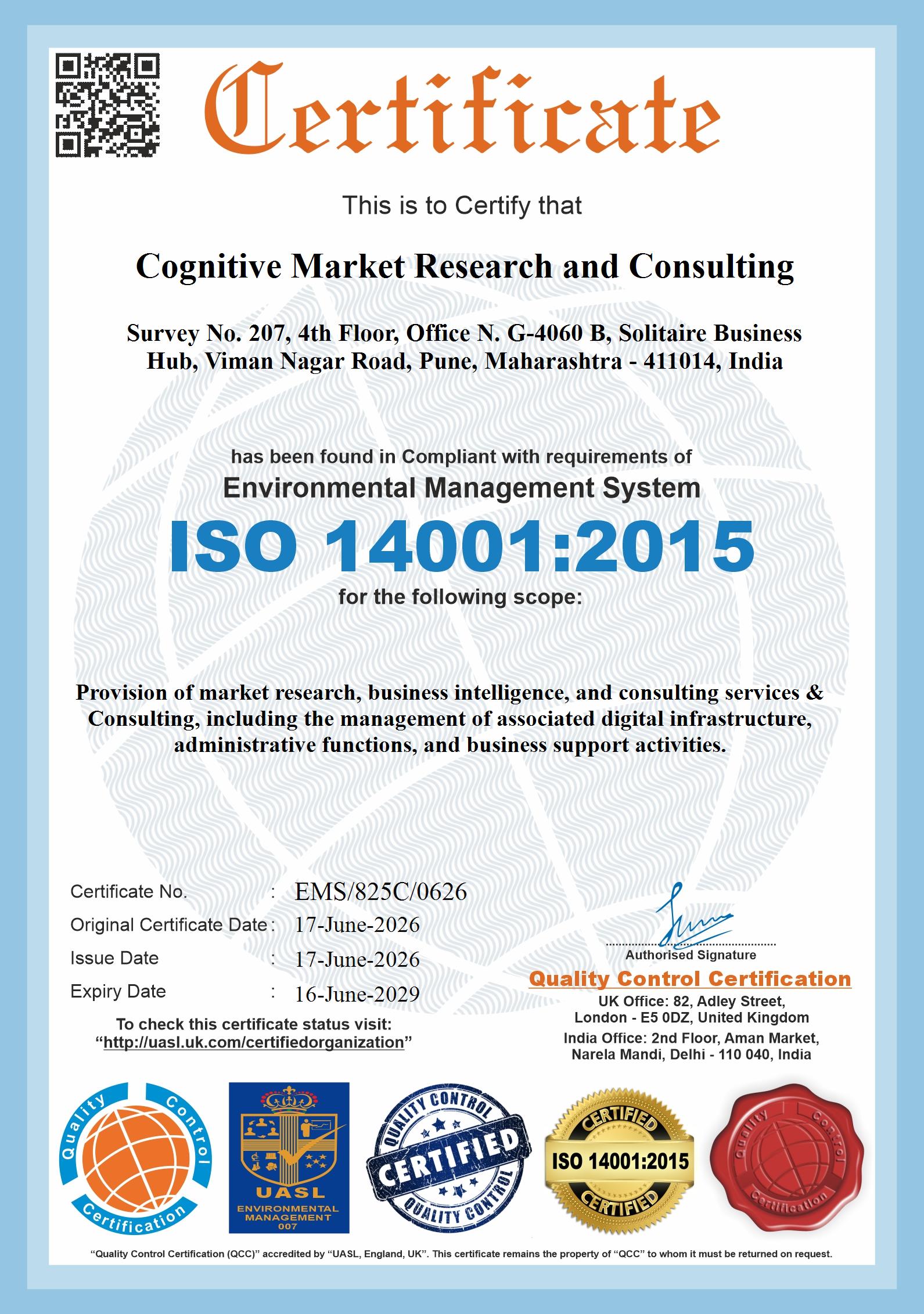
What these certifications mean to usA market figure is only as reliable as the system that produced it. That is why our accreditations cover the whole chain, not just the research step. ESOMAR and MRSI membership binds us to the professional codes that govern how respondents are recruited and how findings may be represented. ISO 20252 governs the research process itself; ISO 9001 and our quality control certification govern how consistently we repeat it. ISO 27001 and ISO 27701, alongside our GDPR, CCPA and DPDP compliance, govern what happens to your brief and your data once it reaches us; because a confidential scope is often more sensitive than the deliverable. ISO 14001, our D-U-N-S registration, Chamber of Commerce membership and DMCA protection speak to how the company itself is run and how its work is safeguarded.Our Clutch and Trustpilot profiles are deliberately listed next to them. They are the only signals on this page we do not issue ourselves, and they are the ones we would check first if we were you.
The global biofuels and biodiesel market is set for consistent growth at a 3.6% CAGR, primarily driven by international commitments to reduce carbon emissions and enhance energy security.
Europe and North America are the largest markets, but the Asia Pacific region is the growth engine, exhibiting the highest CAGR of 4.34% due to strong government support and rising energy consumption.
A fundamental shift is underway from first-generation (crop-based) to advanced (waste-based) biofuels to address sustainability concerns, with Sustainable Aviation Fuel (SAF) emerging as a critical high-growth segment.
Government policy, in the form of blending mandates, subsidies, and carbon pricing, remains the most influential factor shaping the profitability and expansion of the biofuels market in every region.