Article
Introduction to the Gaming Market
The Gaming market continues to expand rapidly, driven by evolving technology, increasing digital penetration, and growing consumer demand for interactive entertainment experiences. What was once a niche segment has now become a global industry encompassing mobile, PC, and console gaming, along with rapidly growing segments like cloud gaming, eSports, and virtual reality (VR). From casual mobile players to competitive gamers and streamers, the global gaming audience is more diverse and engaged than ever before. According to Cognitive Market Research, the Gaming market is expected to grow from USD 281,452.9 million in 2024 to USD 560,812.5 million by 2032, registering a compound annual growth rate (CAGR) of 9.00%. This steady growth highlights the sector’s strong resilience, sustained innovation, and expanding monetization avenues from in-game purchases to subscription-based models and cross-platform ecosystems. Multiple drivers are contributing to this upward trajectory. The rapid improvement in graphics, immersive storytelling, and advanced game physics have elevated user expectations and prompted developers to deliver increasingly sophisticated content. The widespread adoption of smartphones and high-speed internet, particularly in emerging economies, has further democratized access to gaming platforms. Additionally, advancements in augmented and virtual reality technologies are enhancing the gaming experience by offering players immersive environments that blur the line between the digital and physical worlds. The rise of social gaming and eSports has also turned gaming into a shared, community-driven activity, fueling increased user engagement and brand loyalty. Meanwhile, game developers and publishers are capitalizing on data analytics, cloud infrastructure, and AI to personalize experiences, optimize gameplay, and extend product lifecycles, all of which are boosting profitability and player retention.
Top Companies Operating in the Gaming Industry Worldwide
- Tencent Holdings Limited
- Sony Group Corporation
- Apple Inc.
- Microsoft Corporation
- NetEase, Inc.
- Google LLC
- Activision Blizzard, Inc.
- Electronic Arts Inc.
- Nintendo Co., Ltd.
- Take-Two Interactive Software, Inc.
Criteria for Comparing Companies in the Gaming Market
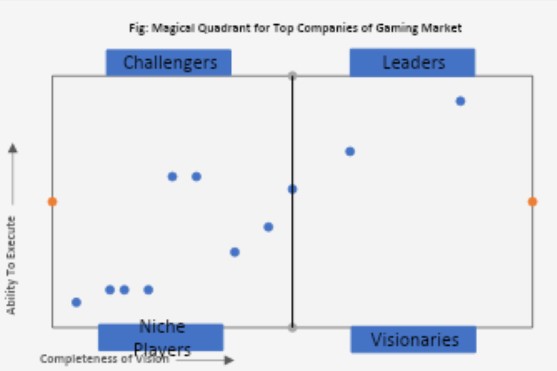
Cognitive Market Research evaluates companies in the gaming market based on several key factors that highlight their competitive positioning and performance in the industry. In the Gaming market, companies are typically evaluated based on their platform reach, portfolio diversity, user engagement levels, and ability to innovate across content and technology. Leading gaming firms often offer a mix of blockbuster titles and live-service games, appealing to different demographics and regions. Their ability to deliver consistent updates, downloadable content (DLC), and multiplayer experiences contributes significantly to user retention and monetization. Moreover, companies that create or support robust gaming ecosystems where hardware, software, and online services are seamlessly integrated are positioned to maximize lifetime customer value. Another critical factor is scalability and cross-platform compatibility. As gamers increasingly demand seamless transitions between consoles, PCs, and mobile devices, firms that can deliver synchronized gaming experiences and cloud-based saves enjoy a competitive advantage. Monetization strategy is another differentiator: successful players in the market balance in-game advertising, subscription models (e.g., Game Pass), and microtransactions without compromising the player experience. Security, community moderation, and customer support are also key, especially in multiplayer and competitive environments where user trust and safety are paramount. Brand strength, global reach, and development agility round out the key comparison points. Firms with a loyal fan base, compelling intellectual properties (IPs), and a strong development pipeline tend to lead in both revenue generation and cultural impact. Strategic partnerships with console manufacturers, streaming platforms, and influencers can further amplify brand visibility and user acquisition. Ultimately, as the gaming market matures, companies that combine technological innovation with compelling content and inclusive gaming experiences will remain at the forefront of this dynamic and high-growth industry
Top Manufacturing Companies of Gaming:
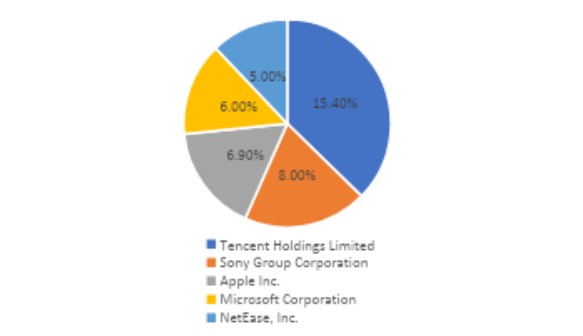
Tencent Holdings Limited, Sony Group Corporation, Apple Inc., Microsoft Corporation, and NetEase, Inc. are the key players in the Gaming Market
Tencent Holdings Limited
Tencent Holdings Limited leads the global gaming market with an impressive 15.40% share, solidifying its position as the dominant force in the industry. As the largest video game company by revenue worldwide, Tencent has built an expansive and diverse portfolio across the gaming spectrum, which includes game development, publishing, and strategic investments in international gaming studios.
Sony Group Corporation
Sony Group Corporation holds a significant 8.00% share of the global gaming market, a testament to its robust and enduring presence in the industry, mainly through its PlayStation ecosystem. The company’s position is largely driven by its PlayStation consoles, with the PlayStation 5 (PS5) being a major driver of the current generation of gaming hardware.
Apple Inc.
Apple Inc. holds a notable 6.90% share of the global gaming market, a position that underscores the company’s influential role in the mobile gaming sector. While Apple is not traditionally viewed as a gaming-focused company, it has established itself as a dominant player in mobile gaming thanks to its App Store, where millions of mobile gamers around the world purchase and download games.
Microsoft Corporation
Microsoft Corporation commands a solid 6.00% share of the global gaming market, primarily driven by its Xbox console ecosystem, subscription services, and increasing focus on cloud gaming. The company has cultivated a strong following with the Xbox series of consoles, complemented by its highly successful gaming service, Xbox Game Pass. Game Pass, which offers a subscription model that allows gamers access to a vast library of games, has significantly disrupted the traditional gaming industry by offering more flexibility and value for money.
NetEase, Inc.
NetEase, Inc. holds a 5.00% share of the global gaming market, and it continues to expand its footprint both within China and internationally. The company has gained significant traction in the online and mobile gaming sectors, with popular titles such as Identity V, Knives Out, and Fantasy Westward Journey. NetEase has demonstrated a unique ability to blend traditional MMORPGs with innovative mobile games, appealing to a broad demographic of gamers.
Conclusion
Focus Towards Real-Time Experiences and Cross-Platform Accessibility to Accelerate Growth in the Gaming Market
The gaming market is on a strong growth trajectory, projected to rise from USD 281,452.9 million in 2024 to USD 560,812.5 million by 2032, driven by increasing demand for immersive experiences, technological innovations, and wider demographic engagement. Industry giants like Sony Corporation, Microsoft Corporation, Tencent Holdings Ltd., Apple Inc., and NetEase Inc. continue to lead through advanced console ecosystems, mobile-first innovations, and global distribution capabilities. These companies are setting the pace with investments in cloud gaming, artificial intelligence, and user-driven game development platforms. However, the entrance of players such as Google LLC, Activision Blizzard, Nintendo Co., Ltd., and Take-Two Interactive is reshaping industry dynamics by introducing unique content models, pioneering live service ecosystems, and embracing alternative gaming formats such as hybrid consoles and mobile-first RPGs. These challengers are targeting niche markets and leveraging brand equity, global infrastructure, and agile development models to compete with legacy systems. For new entrants and mid-tier players, success will rest on their ability to innovate quickly, localize content effectively, and adopt sustainable business models. As consumer expectations shift toward real-time interaction, personalized gameplay, and content diversity, companies that can deliver on these fronts will secure long-term growth. Strategic partnerships, AI-powered personalization, and a strong presence in emerging markets will also be instrumental in gaining market share. The future of the gaming market lies in integrating technological excellence with creative storytelling, regional relevance, and inclusive community-building. As competition intensifies, the synergy between established giants, disruptive innovators, and agile newcomers will define the next era of global gaming.

 X
X
Article Details
-
Author Kalyani Raje
-
Published 09 Jun 2025
-
Last Updated 26 Jun 2025
-
Reading Time~3 minutes
Related Reports
Get a Custom Report
Interested in a similar analysis for your market? Our experts can deliver a customized report.
Contact Our ExpertsMore Articles
Explore all published articles across 30+ industry verticals.
View All Articles