Article
Emerging Semiconductor Players Reshaping Manufacturing
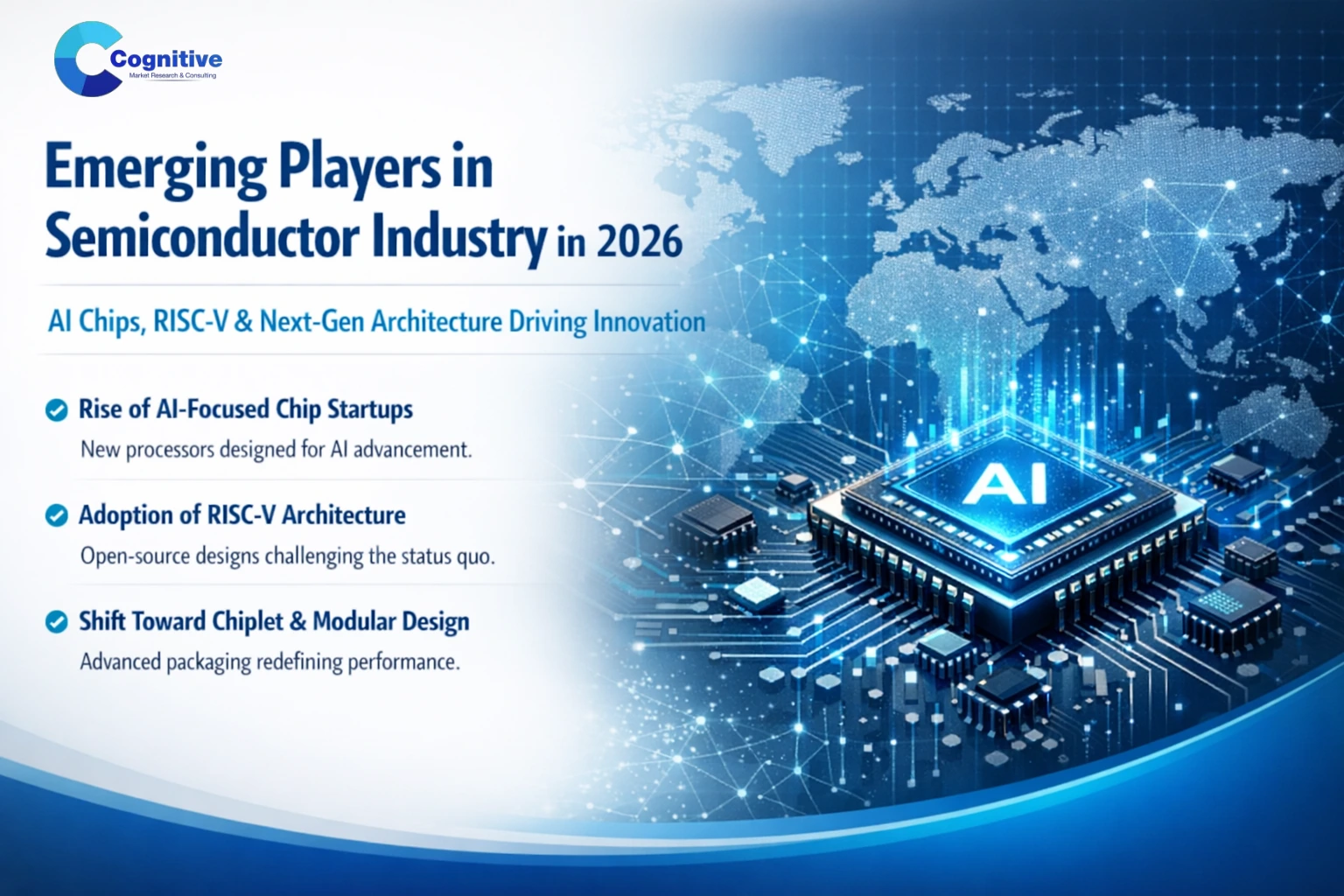
As we move through 2026, the semiconductor world has shifted from the chip famine of the early 20s to what I’d call specialized abundance. While the household names still dominate the headlines, a fresh crop of emerging players is completely rewriting the rulebook for manufacturers in the automotive, industrial IoT, and data center sectors. We’re seeing a move away from one-size-fits-all silicon toward highly specific, application-driven solutions that are much more efficient for the next generation of industrial tech.
1. The AI at the Edge Revolution
In 2026, relying on the cloud for every AI calculation is becoming a thing of the past. For manufacturers, the real value is now in Edge AI processing data right where it’s collected to save time and energy.
Cerebras & SambaNova:
These names started in the massive data centers, but by 2026, their tech is being used for high-end industrial simulations. If you're a manufacturer trying to run a digital twin of your entire factory in real-time, these are the players providing the necessary horsepower.
Hailo & Syntiant:
These are the ones to watch for smaller, low-power applications. Their chips are increasingly showing up in smart industrial sensors and cameras, allowing for predictive maintenance that doesn't need a constant, high-speed connection to a central server.
2. The Power Players: Silicon Carbide (SiC) and Gallium Nitride (GaN)
Traditional silicon is finally hitting its physical limits as we push for more power. Manufacturers in the EV and green energy space are quickly pivoting to Wide Bandgap materials that can handle the heat.
Navitas Semiconductor & GaN Systems:
These companies have graduated from being niche startups to essential partners for anyone making power supplies or EV chargers. In 2026, their ability to shrink power converters while boosting efficiency by 30% has made them a must-have in the supply chain.
Wolfspeed:
They’ve really hit their stride in 2026 with SiC wafer production. For automotive manufacturers, Wolfspeed is becoming the go-to to stabilize their supply chains as they move away from older silicon-based power systems.
3. RISC-V: The Open Source Disruptors
Between global politics and the rising cost of licensing, manufacturers are looking for more control. RISC-V isn't an experiment anymore it’s a strategic necessity in 2026.
SiFive:
They’ve emerged as the lead alternative to the standard ARM architectures. For B2B manufacturers, SiFive offers the chance to build custom chip designs without the massive licensing fees, allowing for bespoke silicon that’s perfectly tuned for specific factory automation tasks.
Ventana Micro Systems:
These guys specialize in high-performance RISC-V chiplets. It’s basically a LEGO-style approach to semiconductors, allowing manufacturers to mix and match different components to get exactly what they need, which drastically cuts down on R&D time.
4. Silicon Photonics: Moving at the Speed of Light
We’re reaching the point where copper wiring just can't keep up with our data demands. Emerging photonics players are now using light to move data, which is a massive leap forward.
Ayar Labs:
Their optical I/O technology is being baked into the 2026-era high-performance computing clusters. For manufacturers of high-end server gear and telecommunications, Ayar Labs is the key to breaking through the bandwidth wall that’s been slowing things down.
Lightmatter:
They are using light not just to move data, but to perform the actual AI calculations. While they are still scaling up, their 2026 deployments in green data centers are a huge draw for manufacturers under pressure to cut their carbon footprint.
5. Strategic Takeaways for Manufacturers
Look Beyond the Big Three: In 2026, sticking only with the legacy providers is a risky move. These emerging players are often more agile and more willing to co-develop products tailored to your specific industrial needs.
Material Science is Key: If your business involves power electronics, the shift to GaN and SiC is non-negotiable. Locking in partnerships with these material specialists now is what will define your product’s performance for the rest of the decade.
Customization is the Standard: With the rise of RISC-V and chiplet tech, it’s time to move away from off-the-shelf parts. Building purpose-built silicon is the best way to protect your intellectual property and get a leg up on efficiency.
Conclusion
The 2026 semiconductor market is no longer a monolith it’s a vibrant, fragmented ecosystem. The emerging players are the ones actually solving the most difficult industrial problems right now. For manufacturers, the goal isn't just to find chips anymore; it’s to find the right partners who can deliver the specialized intelligence and power efficiency needed for the next ten years of production. At Cognitive Market Research, we suggest that procurement and R&D teams shift their focus toward these innovators to ensure their supply chains stay resilient and their technology stays ahead of the curve.
 X
X
Article Details
-
Author Sneha Mali
-
Published 01 Apr 2026
-
Last Updated 02 Apr 2026
-
Reading Time~3 minutes
Get a Custom Report
Interested in a similar analysis for your market? Our experts can deliver a customized report.
Contact Our ExpertsMore Articles
Explore all published articles across 30+ industry verticals.
View All Articles