Article
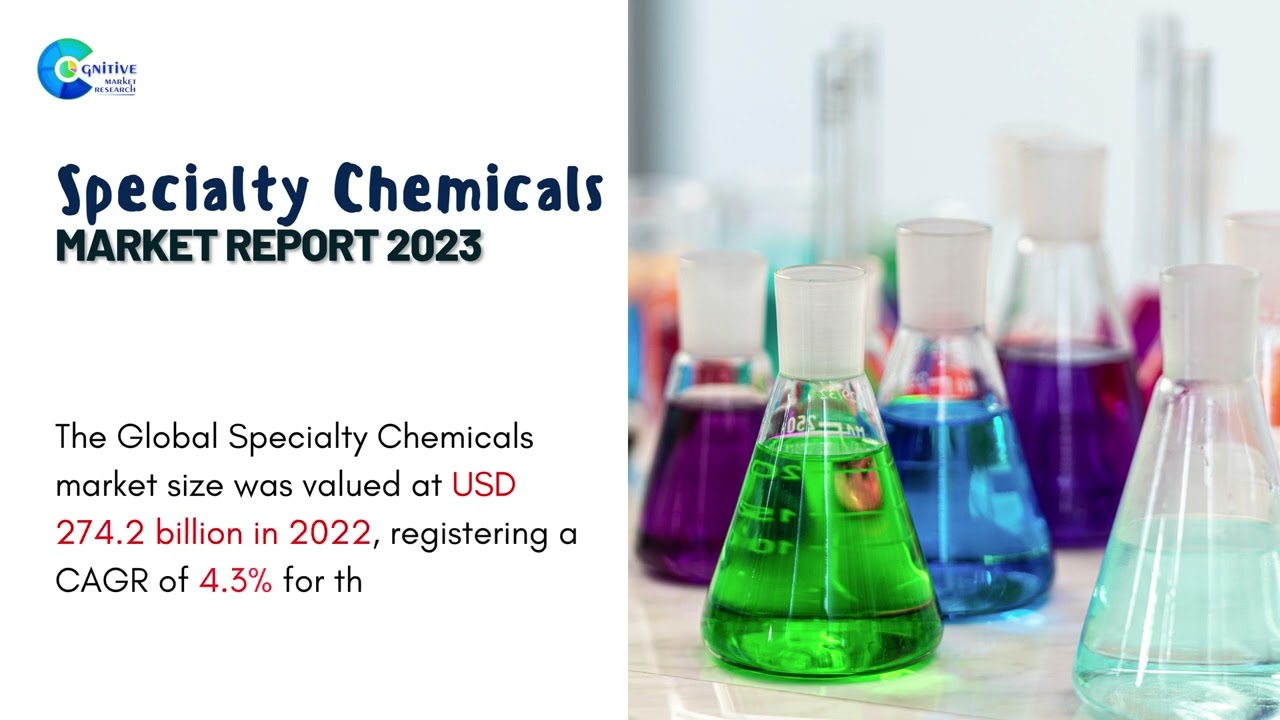
Introduction of the Specialty Chemicals Industry
The global specialty chemicals industry in 2026 is undergoing accelerated transformation, driven by sustainability mandates, advanced material innovation, green chemistry adoption, bio-based formulations, digital manufacturing, and high-performance application demand across end-use industries. According to Cognitive Market Research, traditional bulk chemical production models are increasingly shifting toward value-added, application-specific, and performance-driven solutions that prioritize customization, regulatory compliance, and environmental responsibility.
The rapid expansion of electric vehicles (EVs), renewable energy infrastructure, semiconductor manufacturing, advanced electronics, pharmaceutical production, agrochemical optimization, and high-performance coatings is significantly increasing demand for specialty additives, functional polymers, electronic chemicals, construction chemicals, and performance materials. Innovations in nano-materials, high-purity solvents, specialty catalysts, battery-grade chemicals, and water treatment solutions are becoming critical competitive differentiators.
At the same time, the specialty chemicals industry faces challenges including volatile raw material prices, geopolitical supply chain disruptions, regulatory tightening on hazardous substances, carbon emission reduction targets, and pressure for circular economy integration. These factors are accelerating investments in bio-based feedstocks, carbon capture technologies, process automation, AI-enabled formulation, and sustainable product portfolios.
As global industries transition toward decarbonization, electrification, and high-performance manufacturing, emerging specialty chemical companies are combining advanced R&D capabilities with niche application expertise. Firms focusing on battery materials, semiconductor chemicals, green solvents, advanced coatings, water treatment technologies, and sustainable additives are defining the next wave of transformation in the specialty chemicals ecosystem.
Emerging Companies of the Specialty Chemicals Industry
Sila Nanotechnologies (Advanced Battery Materials & Energy Storage Innovation)
Sila Nanotechnologies is emerging as a transformative player in next-generation lithium-ion battery chemistry by developing silicon-dominant anode materials that significantly enhance energy density and charging speed. As EV manufacturers seek longer range and faster charging cycles, silicon-based anodes offer a critical upgrade over traditional graphite materials. The company is actively scaling manufacturing capacity to meet growing EV demand and is partnering with automotive OEMs and battery producers to commercialize its technology at scale.
Its material innovation addresses key industry challenges such as range anxiety, battery degradation, and performance efficiency. With electrification accelerating globally, Sila’s advanced anode chemistry positions it at the center of battery material transformation.
- Key Innovation: Silicon-dominant battery anode technology improving energy density and fast charging performance
- Focus Areas: EV batteries, energy storage systems, advanced lithium-ion materials
Origin Materials (Bio-Based Platform Chemicals & Carbon-Negative Solutions)
Origin Materials is redefining sustainable specialty chemicals by converting non-food biomass into carbon-negative platform chemicals. Its proprietary technology transforms lignocellulosic feedstocks into versatile intermediates that can replace fossil-based inputs in packaging, textiles, automotive components, and specialty polymers.
The company’s strategy aligns with circular economy principles and global carbon reduction targets. By offering drop-in chemical alternatives compatible with existing manufacturing infrastructure, Origin Materials reduces transition barriers for industrial customers seeking decarbonized supply chains.
- Key Innovation: Carbon-negative chemical intermediates derived from biomass
- Focus Areas: Sustainable polymers, packaging materials, specialty chemical feedstocks
Entegris (High-Purity Semiconductor Specialty Chemicals)
Entegris plays a strategic role in the semiconductor value chain by supplying ultra-high purity chemicals, filtration systems, and advanced material handling solutions required for chip fabrication. As semiconductor nodes become increasingly advanced, contamination control and material precision are critical to yield optimization.
The rise of AI processors, high-performance computing, electric vehicles, and 5G infrastructure is driving robust demand for semiconductor-grade specialty chemicals. Entegris continues investing in process control solutions and advanced materials to support next-generation chip manufacturing ecosystems.
- Key Innovation: Ultra-high purity process chemicals for advanced semiconductor nodes
- Focus Areas: Electronic specialty chemicals, contamination control, chip fabrication materials
Ecovyst (Advanced Catalysts & Environmental Solutions)
Ecovyst is strengthening its portfolio of specialty catalysts and silica-based materials used in refining, petrochemical processing, and emission reduction applications. Its catalysts improve process efficiency, optimize chemical conversion rates, and support cleaner fuel production standards.
As regulatory pressure intensifies globally to reduce sulfur emissions and industrial pollutants, advanced catalyst technologies are gaining importance. Ecovyst’s innovation roadmap includes sustainability-aligned catalysts that support renewable fuels and lower-carbon refining processes.
- Key Innovation: High-performance catalyst formulations enhancing refining efficiency
- Focus Areas: Catalysts, silica materials, cleaner fuel production, environmental applications
Carbon Clean (Carbon Capture & Industrial Decarbonization Chemicals)
Carbon Clean is emerging as a leader in carbon capture chemistry by developing advanced solvent systems that significantly reduce the energy intensity of CO? capture. Its modular carbon capture units are designed for hard-to-abate sectors such as cement, steel, refining, and chemical manufacturing.
With governments implementing carbon pricing mechanisms and stricter emission standards, cost-effective carbon capture solutions are becoming commercially essential. Carbon Clean’s scalable technology provides industrial operators with a practical pathway to decarbonization without major infrastructure overhauls.
- Key Innovation: Energy-efficient solvent-based carbon capture technology
- Focus Areas: Industrial decarbonization, emission reduction systems, specialty solvent chemistry
Nouryon (Green Additives & Performance Chemicals)
Nouryon is expanding its specialty additives, surfactants, and performance chemicals portfolio across agriculture, coatings, mining, and personal care sectors. The company emphasizes bio-based raw materials and environmentally compliant formulations to meet evolving regulatory frameworks.
Its innovation strategy focuses on improving functional performance while reducing environmental impact. From crop protection additives to industrial surfactants and polymer modifiers, Nouryon supports efficiency improvements across diverse industrial ecosystems.
- Key Innovation: Bio-based surfactants and environmentally compliant specialty additives
- Focus Areas: Agrochemicals, coatings, mining chemicals, personal care ingredients
Arkema (Advanced Performance Materials & Sustainable Solutions)
Arkema continues to strengthen its presence in high-performance polymers, battery binders, advanced adhesives, and lightweight composite materials. The company plays a vital role in supporting electric mobility, renewable energy infrastructure, and aerospace innovation.
Its specialty materials improve thermal resistance, durability, and lightweight efficiency. Arkema’s battery binder technologies and bio-based polymer lines align with global electrification and sustainability goals, reinforcing its strategic positioning in value-added chemical segments.
- Key Innovation: High-performance polymers and battery binder technologies
- Focus Areas: EV materials, advanced coatings, specialty adhesives, lightweight composites
Ascend Performance Materials (Engineered Polymers & High-Performance Resins)
Ascend Performance Materials specializes in engineered nylon resins and high-performance polymers used in automotive, electronics, and industrial manufacturing applications. As vehicle electrification and lightweighting trends accelerate, demand for durable, heat-resistant, and lightweight polymer materials continues to rise.
The company’s material innovations enhance mechanical strength, chemical resistance, and long-term durability, making them suitable for high-stress environments. Ascend’s portfolio supports sustainable product development and improved energy efficiency in industrial applications.
- Key Innovation: Advanced nylon and engineered polymer solutions
- Focus Areas: Automotive lightweighting, electrical components, industrial plastics
Solid Power (Solid-State Electrolyte Materials & Advanced Battery Chemistry)
Solid Power is advancing sulfide-based solid-state electrolyte materials that aim to improve safety, energy density, and lifecycle performance compared to traditional liquid electrolyte systems. Solid-state chemistry is widely considered the next major evolution in battery technology.
The company collaborates with automotive manufacturers to scale production and integrate solid-state battery materials into next-generation EV platforms. As safety and performance become critical differentiators in battery design, Solid Power’s electrolyte innovation offers long-term strategic value.
- Key Innovation: Sulfide-based solid-state electrolyte chemistry
- Focus Areas: Solid-state batteries, EV energy storage, advanced battery materials
Conclusion
The specialty chemicals industry in 2026 is defined by sustainability-driven material science, advanced battery chemistry innovation, semiconductor-grade chemical precision, catalyst optimization, and bio-based feedstock expansion. Emerging companies such as Sila Nanotechnologies, Origin Materials, Entegris, Ecovyst, Carbon Clean, Nouryon, Arkema, Ascend Performance Materials, and Solid Power are reshaping high-value specialty chemical applications across electrification, digitalization, and industrial decarbonization ecosystems.
As per our research analyst, manufacturers, EV producers, semiconductor fabs, renewable energy developers, and industrial operators collaborating with these emerging innovators can gain strategic advantages through performance differentiation, regulatory compliance readiness, carbon reduction alignment, and high-margin application-specific chemical solutions. As global sustainability mandates intensify and advanced manufacturing expands, these emerging specialty chemical companies are positioned to lead the next phase of innovation-driven industry growth.

 X
X
Article Details
-
Author Akash Das
-
Published 17 Feb 2026
-
Last Updated 17 Feb 2026
-
Reading Time~3 minutes
Related Reports
Get a Custom Report
Interested in a similar analysis for your market? Our experts can deliver a customized report.
Contact Our ExpertsMore Articles
Explore all published articles across 30+ industry verticals.
View All Articles