Article
Feds Probe Tesla Cybercab: Autonomous Vehicle Market Test
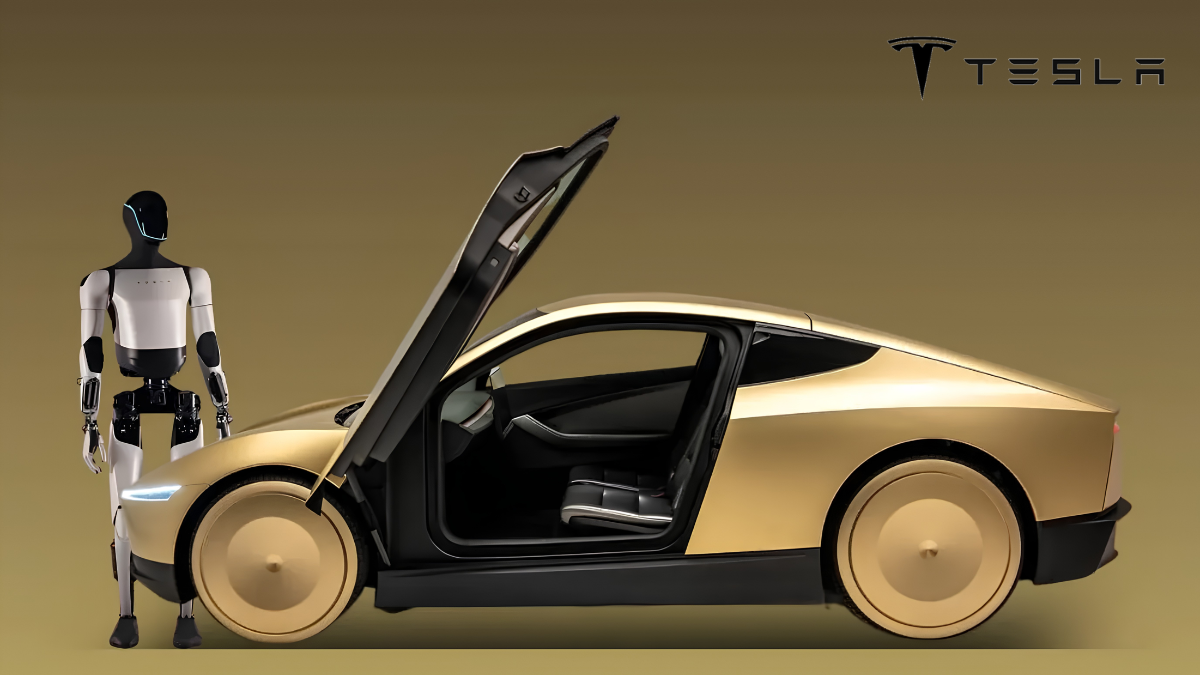
Tesla waited years to put a car with no steering wheel on a public road. It lasted about a day before the federal government knocked. On September 3, 2026, Tesla began charging fares for its Cybercab in Austin and within hours, NHTSA opened an audit into whether the vehicle was ever legal to sell. No recall. No crash. Just a quiet, technical query that could decide how fast the entire autonomous vehicle market, a sector racing toward $344 billion by 2033 is allowed to grow. Here's why one piece of paperwork suddenly matters more than any robotaxi ride.
Wait, what did Tesla actually do wrong?
Maybe nothing. That's the twist. NHTSA opened Audit Query AQ26002, covering roughly 1,000 Cybercabs, to examine how Tesla self-certified that the car meets Federal Motor Vehicle Safety Standards, rules written for vehicles with human drivers.
The Cybercab has no steering wheel, no pedals, and no mirrors. So the real question isn't whether it drives well; the audit doesn't test that at all. It's whether Tesla was allowed to decide, on its own, that a stack of human-driver safety rules simply don't apply to a car built without those parts.
Under U.S. law, automakers certify their own compliance. Tesla did exactly that and then dared the regulator to disagree.
The catch: Regulatory uncertainty is one of the three biggest restraints on this market in our 8th Edition 2026 analysis. The Cybercab audit is that abstract risk turning into a dated, named enforcement action.
Why should the market care about a paperwork probe?
Because it quietly sets the rules of entry for every driverless car that comes next. And right now, two very different routes onto American roads are being tested side by side.

Tesla's route — self-certification. Fast, uncapped, and risky: declare compliance, deploy at scale, and absorb open-ended legal exposure if the certification is later rejected. Every car added multiplies the risk.
Zoox's route — a Part 555 exemption. Slower and capped at 2,500 vehicles a year, but it buys certainty. Amazon's Zoox took this path and won final approval in July 2026, clearing its way to charge for rides.
One company bet on speed. The other bet on permission. The audit's outcome effectively prices that bet for the whole industry and tells the next entrant which gamble the market rewards.
How did we get here so fast?
This didn't come out of nowhere. The timeline is almost comic in its whiplash: the same regulator that's now auditing Tesla spent the summer trying to make driverless deployment easier.
 In June 2026, NHTSA proposed scrapping the manual-brake-pedal requirement for self-driving cars. In July, Zoox got its exemption. Then in September, Tesla launched and got audited on the same day. Deregulation and enforcement, running in parallel — that contradiction is the 2026 autonomous vehicle market.
So how much money is actually on the line?
Enough to make a certification footnote a market event. Our analysis values the autonomous vehicle market at $86.8 billion in 2025, climbing to $344.25 billion by 2033, an 18.794% CAGR, nearly an eightfold rise from 2021.
 North America holds about 36% of that market, which is exactly why a U.S. precedent echoes globally, the rules written here govern the sector's single largest revenue pool. And if U.S. friction slows things down, momentum tilts toward Asia Pacific, already the fastest-growing region at 19.8%, with India accelerating at 21.09% and China targeting mass self-driving by 2030. The audit isn't just a Tesla problem; it's a question of where autonomy scales first.
What happens next and what to watch
The next real signal has a date: September 30, 2026, when Tesla must answer NHTSA's Special Order. If the agency buys Tesla's reasoning, the query closes and self-certification stands validated as a scalable model. If it doesn't, this can escalate to a formal investigation, a recall demand, or civil penalties and every AV maker recalculates.
For manufacturers, investors and buyers, three things are worth tracking:
The Sept 30 response - the tell on whether speed or certainty wins.
The FMVSS-applicability - precedent whatever NHTSA accepts becomes the template for every steering-wheel-free vehicle.
Regional rebalancing - U.S. delay is an APAC tailwind; watch where the next paid, permitted services launch.
The bottom line
The $344 billion trajectory of the autonomous vehicle market is bigger than any single audit safety, efficiency and AI economics will carry it regardless. But how fast, at what compliance cost, and led by which region may well hinge on one query, one deadline, and one question no one has cleanly answered yet: who gets to decide a driverless car is safe? We'll be reading the September 30 filing closely.
Want the full picture? Request a free sample of our Autonomous Vehicle Market report for country-level data, regulatory analysis and company profiles or book a custom consultation to pressure-test your deployment plan.

 X
X
Article Details
-
Author Sneha Singh
-
Published 22 Sep 2026
-
Last Updated 22 Sep 2026
-
Reading Time~3 minutes
Related Reports
Get a Custom Report
Interested in a similar analysis for your market? Our experts can deliver a customized report.
Contact Our ExpertsMore Articles
Explore all published articles across 30+ industry verticals.
View All Articles