Article
Navigating the Future: Key Marine Industry Trends Transforming Global Commerce
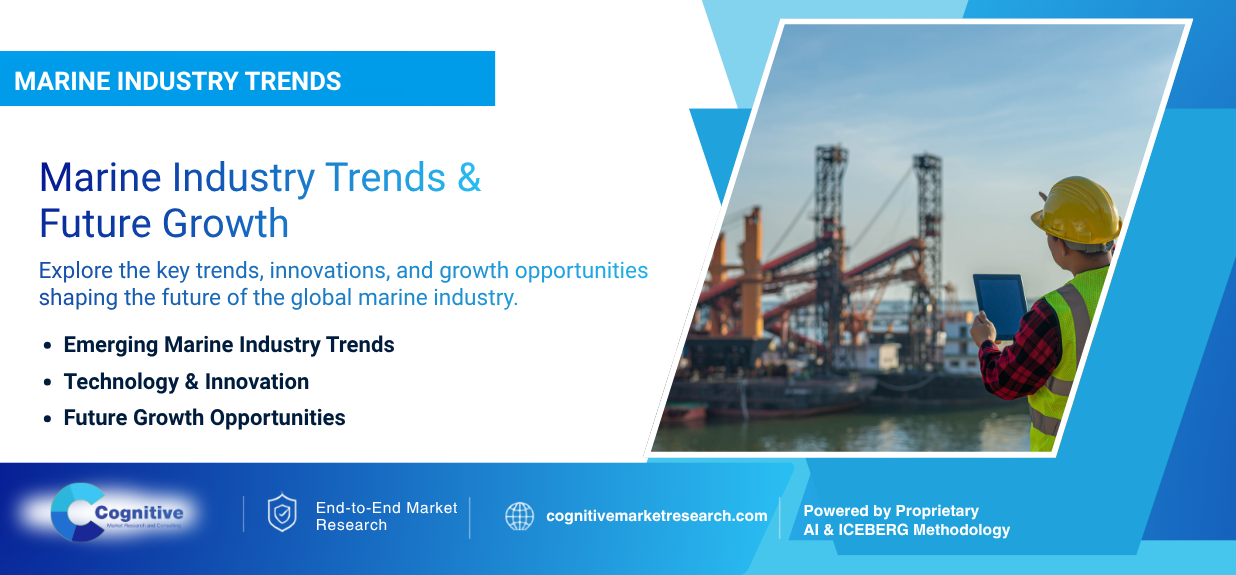
The global marine industry, serving as the primary physical logistics infrastructure for over 80% of global commerce by volume has entered a phase of intensive technology-driven transition. Long viewed as a traditional, asset-heavy sector, the maritime ecosystem is undergoing a massive structural reorientation. Driven by strict environmental regulations, escalating operational costs, and digital modernization, market stakeholders are rapidly rethinking how fleets operate, how ports function, and how supply chains deliver value.
Comprehensive market tracking highlights that the total global marine market has reached USD 180.50 billion, projected to expand toward a structural valuation of USD 238.40 billion. Propelled by non-discretionary corporate investments in green shipping compliance and global fleet modernizations, industry leaders must adapt to stay competitive.
Key Takeaways
-
Fleet Modernization and Efficiency: Shipowners are aggressively updating aging fleets with optimized hull designs, alternative propulsion systems, and digital management tools to boost efficiency.
-
The Decarbonization Imperative: The adoption of low-emission fuels including LNG, methanol, ammonia, and hybrid-electric configurations is altering traditional shipbuilding engineering.
-
Data-Driven Intelligence: Enterprise decision-makers leverage rigorous market frameworks provided by Cognitive Market Research and Consulting to navigate compliance hurdles and optimize investments.
Decoding Core Marine Industry Trends in Modern Operations
Why Marine Decarbonization Drives Industrial Innovation
Environmental sustainability has transitioned from a compliance afterthought into a foundational operational pillar. With stricter emission standards enforced globally, marine industry trends highlight an accelerated shift toward alternative propulsion technologies. Shipbuilders and equipment manufacturers are investing heavily in engines capable of running on green methanol, liquefied natural gas (LNG), and hydrogen hybrids, aiming to slash greenhouse gas footprints without sacrificing long-haul payload capacities.
The Rise of Smart Shipping and Digitalization
The convergence of the Internet of Things (IoT), artificial intelligence (AI), and cloud-based software is fundamentally rewriting maritime operations. Modern commercial vessels and smart ports are deploying IoT-enabled sensors, digital twins, and predictive maintenance algorithms to monitor real-time performance. These smart shipping technologies drastically minimize unexpected downtime, optimize route planning, and reduce overall fuel consumption across complex supply chains.
Essential Pillars Transforming the Maritime Landscape
1. Smart Port Modernization and Automation
Global supply chains demand faster container handling and reduced vessel turnaround times. Consequently, smart ports are installing automated cranes, autonomous terminal vehicles, and AI-driven scheduling platforms. These automated systems optimize yard operations and boost cargo visibility, making digital infrastructure investment a top priority for terminal operators.
2. Advanced Marine Equipment and Lifecycle Cybersecurity
As vessels integrate more advanced tracking and communications equipment, digital security has become paramount. Leading organizations are implementing lifecycle-based cybersecurity frameworks incorporating threat modeling, threat intelligence, and real-time risk managers to protect digital systems from development through operation.
Leveraging Market Intelligence for Marine Investments
Navigating Regulatory Shifts and Capital Constraints
While technological advancements offer immense performance upsides, marine manufacturers frequently encounter hurdles such as rising component costs, shifting trade tariffs, and complex regional compliance standards. Relying on generalized public insights is insufficient for executives navigating high-stakes infrastructure commitments.
How Cognitive Market Research and Consulting Reinforces Strategy
Partnering with established market authorities gives enterprises the analytical clarity required to de-risk capital deployment. Cognitive Market Research and Consulting provides deep-dive market sizing, competitive benchmarking, and forward-looking growth forecasts tailored specifically to the marine and shipping sector. By deploying data-backed intelligence, Cognitive Market Research and Consulting helps organizations align their R&D roadmaps with long-term commercial profitability.
Conclusion
The modern maritime sector represents a high-stakes frontier of industrial capability. Successfully navigating supply chain friction, digital adoption, and alternative energy transitions requires precision intelligence alongside technical engineering expertise.
Are you ready to de-risk your next capital allocation and capitalize on the future of marine industry trends? Contact Cognitive Market Research and Consulting today to access custom industry reports, predictive insights, and expert advisory services designed to secure your competitive advantage.

 X
X
Article Details
-
Author Anuja Bawaskar
-
Published 24 Aug 2026
-
Last Updated 24 Aug 2026
-
Reading Time~3 minutes
Related Reports
Get a Custom Report
Interested in a similar analysis for your market? Our experts can deliver a customized report.
Contact Our ExpertsMore Articles
Explore all published articles across 30+ industry verticals.
View All Articles