Article
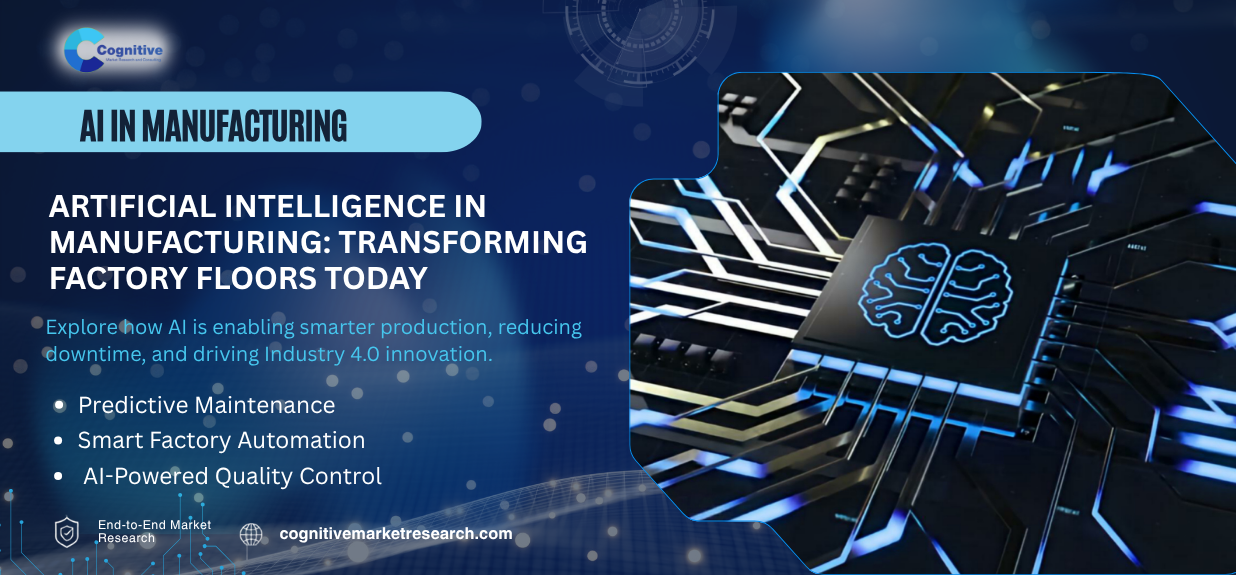
How Is Artificial Intelligence in Manufacturing Transforming Factory Floors Today?
Introduction: The New Era of Smart Industrial Operations
Let’s face it: running an industrial facility or steering a manufacturing enterprise today feels like walking a tightrope during a high-stakes gale. Plant managers, operations directors, and corporate decision-makers are constantly juggling volatile raw material costs, tightening supply chain margins, unexpected equipment breakdowns, and fierce global competition. In this environment, relying on rigid, outdated spreadsheets and manual oversight introduces a massive operational hazard.
To stay competitive, industrial leaders are rapidly modernizing their operations. At the heart of this industrial revolution is artificial intelligence in manufacturing, a powerful technological catalyst that converts raw machine telemetry into autonomous decision-making power. Whether you are trying to protect profit margins or eliminate assembly line delays, deploying artificial intelligence in manufacturing has become the ultimate differentiator between market leaders and lagging competitors.
1. Why Artificial Intelligence in Manufacturing is No Longer Optional
For decades, industrial plants relied heavily on reactive maintenance, calendar-based equipment overhauls, and manual quality checks. Today, these legacy practices are too slow and expensive to handle modern economic pressures.
Shifting from Reactive Firefighting to Proactive Control
When a critical assembly line halts unexpectedly, the financial damage cascades instantly across the entire enterprise. Implementing artificial intelligence in manufacturing allows organizations to transition from firefighting sudden crises to predicting and neutralizing them before they happen.
The Growing Demand for Operational Resiliency
Global supply chain volatility and rising labor constraints mean that plants must operate with absolute precision. Leading enterprises harness artificial intelligence in manufacturing to continuously optimize machine utilization, minimize waste, and maintain seamless throughput regardless of external market shocks.
2. Top Ways Artificial Intelligence in Manufacturing Resolves Factory Bottlenecks
Real-world applications of artificial intelligence in manufacturing span across multiple functional areas, delivering immediate, measurable return on investment.
Predictive Maintenance and Maximizing Asset Uptime
Unplanned machinery failure is one of the costliest disruptions on any factory floor. Traditional maintenance either replaces parts too early or waits until a catastrophic breakdown occurs.
How It Works: Internet of Things (IoT) sensors track equipment vibration, temperature, and power consumption continuously. Machine learning models analyze these data streams to detect subtle anomalies weeks before a component fails.
Example: A heavy automotive press plant uses artificial intelligence in manufacturing to spot bearing wear early, scheduling repairs during planned off-hours and slashing emergency downtime by up to 40%.
Computer Vision and Zero-Defect Quality Assurance
Human inspectors are susceptible to fatigue and oversight during high-speed production runs, risking the shipment of flawed goods to enterprise clients.
How It Works: Deep-learning computer vision systems scan thousands of parts per minute, spotting micro-fractures, surface blemishes, and dimensional inaccuracies with absolute sub-millimeter precision.
Intelligent Supply Chain Forecasting and Autonomous Scheduling
Balancing fluctuating consumer demand with rigid inventory levels is a perennial challenge for executive decision-makers.
How It Works: Advanced algorithms ingest live market data, weather patterns, and shipping logistics to dynamically update production calendars and resource allocations.
3. How Cognitive Market Research and Consulting Delivers Solutions
Deploying smart factory architectures requires more than just installing hardware; it demands precise data validation and strategic market intelligence. This is where expert guidance becomes vital.
Translating Complex Plant Data into Executable ROI
Many manufacturers sit on vast oceans of underutilized operational data. Cognitive Market Research and Consulting assists enterprise decision-makers by filtering out noise, structuring raw telemetry, and providing rigorous market analytics. By bridging the gap between raw data and executive strategy, Cognitive Market Research and Consulting ensures that every capital investment in artificial intelligence in manufacturing yields predictable, high-yield commercial outcomes.
Mitigating Capital Risk During Digital Transformations
Investing in advanced machine learning platforms and automation infrastructure carries upfront exposure. Strategic analytical partners like Cognitive Market Research and Consulting help leadership teams evaluate vendor options, stress-test project scopes, and map out clear financial payback periods, successfully reducing deployment friction.
4. Overcoming Core Adoption Challenges on the Factory Floor
Despite clear long-term advantages, industrial leaders must navigate specific hurdles when scaling digital initiatives.
Managing System Integration and Legacy Infrastructure
A primary bottleneck for industrial firms is integrating modern AI tools with older legacy machinery and disconnected enterprise software. Overcoming this requires modular, phased implementations proving value on a single assembly line before scaling across multi-site operations.
Bridging the Industrial Workforce Skill Gap
As veteran technicians retire, plants face a growing talent shortage. Forward-thinking manufacturers combine artificial intelligence in manufacturing with user-friendly natural language processing dashboards and collaborative robots (cobots), enabling floor supervisors to interact with data seamlessly without needing advanced data science degrees.
Conclusion & Strategic Takeaways
Adopting artificial intelligence in manufacturing is no longer an experimental luxury, it is the baseline requirement for maintaining a competitive edge in global markets. By automating quality control, mastering predictive maintenance, and leveraging real-time data intelligence, manufacturers can turn daily operational volatility into long-term enterprise growth.
Ready to unlock the full potential of artificial intelligence in manufacturing and secure your factory's future? Connect with the industry experts at Cognitive Market Research and Consulting today to turn your operational data into a powerful roadmap for market leadership.

 X
X
Article Details
-
Author Aarti Bagekari
-
Published 24 Jul 2026
-
Last Updated 27 Jul 2026
-
Reading Time~3 minutes
Related Reports
Get a Custom Report
Interested in a similar analysis for your market? Our experts can deliver a customized report.
Contact Our ExpertsMore Articles
Explore all published articles across 30+ industry verticals.
View All Articles