Article
Strategic Analysis: Coffee Pods Market Trends & Future Opportunities.
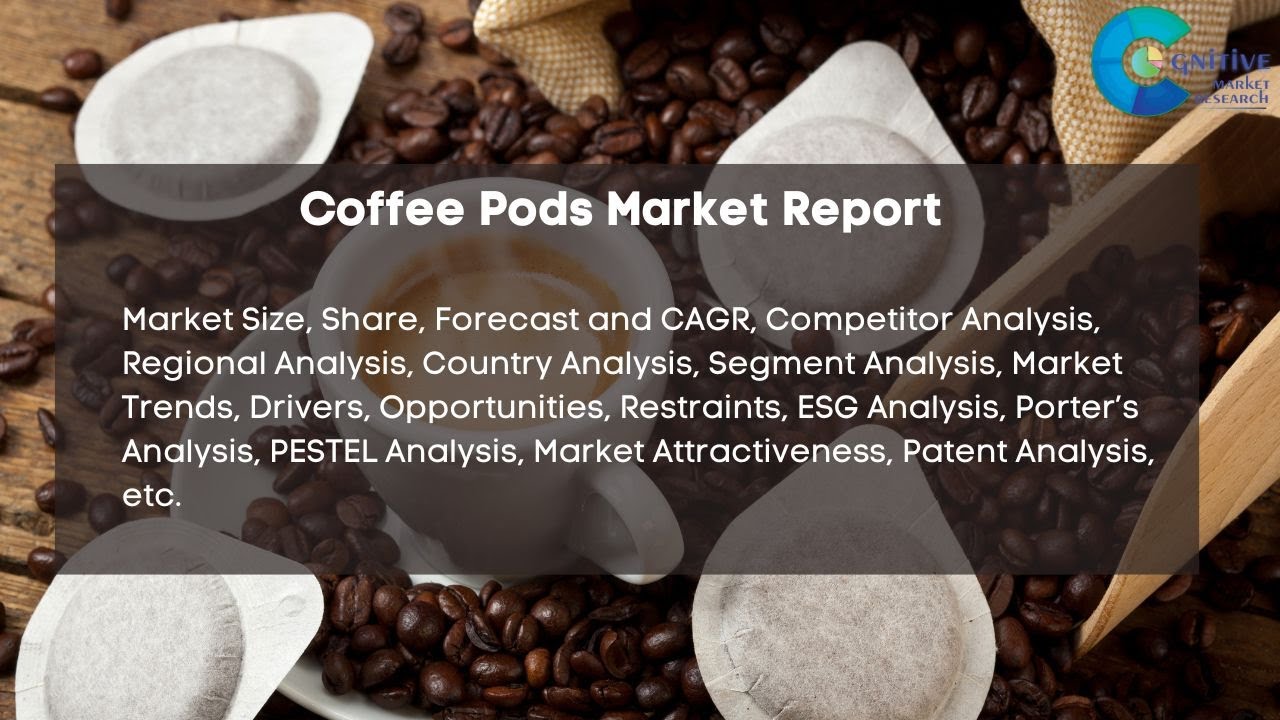
The landscape for coffee pods in 2026 is defined by a fundamental shift in consumer values. According to our internal data at Cognitive Market Research, the market is no longer just about compatibility; it is about material science. Success now rests on your ability to deliver a guilt-free premium experience that matches the performance of traditional materials without their environmental footprint.
I. The 2026 Market Reality: Size and Growth
The global coffee pods and capsules market has reached a valuation of approximately USD 46.4 billion in 2026. While the rapid growth of the pandemic years has leveled off, hybrid work remains a permanent fixture of life, anchoring high consumption volumes in the home kitchen.
Specialty Segment Boom:
We are seeing an explosion in the Specialty Coffee pod segment. Consumers are demanding SCA-graded beans in capsule formats, moving beyond generic blends toward specific terroirs and light-roast profiles.
The APAC Engine:
Asia-Pacific specifically urban China, India, and South Korea is currently the industry's powerhouse. In these regions, pods are rapidly replacing instant coffee as the default for young professionals who want quality without the time investment of a traditional pour-over.
II. Core Market Drivers for Manufacturers
The Third Wave Pod Revolution:
People want a story in their cup. In 2026, the demand is for light-roasts and micro-batch capsules. This is a massive win for manufacturers who have mastered oxygen-barrier tech that can protect those bright, citrusy notes that used to be lost in traditional pod packaging.
Sustainability as the License to Operate:
This isn't just marketing anymore; it is a regulatory requirement. With the EU’s Packaging and Packaging Waste Regulation (PPWR) taking full effect late this year, home-compostable is the new industry baseline. If your capsule isn't made from cellulose or high-performance bio-polymers, you risk losing major retail contracts.
Wellness in a Cup:
We are tracking a significant surge in functional pods. Consumers are looking for coffee fortified with vitamins, collagen, or adaptogens like Lion’s Mane. This offers a high-margin opportunity to move away from the race-to-the-bottom on commodity coffee pricing.
III. Innovation Changing the Factory Floor
High-Pressure Bio-Barriers:
The big breakthrough of 2026 has been the mainstreaming of plant-based barriers like OxBarrier. We have finally reached the point where a compostable pod can handle the 19 bars of pressure needed for a real espresso without letting the coffee go stale in three months.
Smart Brewing and the IoT:
The newest generation of machines uses optical sensors to read a pod's specific recipe. The capsule effectively tells the machine exactly what temperature and pressure it needs. For you as a manufacturer, this means you can finally guarantee your roast won't be ruined by a machine that's too hot.
Recycled Aluminum Standards:
For segments where aluminum is still preferred for its seal, the focus has shifted entirely to 100% Post-Consumer Recycled (PCR) content. B2B clients are now demanding Full Circle logistics where the manufacturer takes the lead on reclaiming and recycling spent pods.
IV. Strategic Opportunities for B2B Growth
Premium Private Label:
Supermarkets are no longer looking for the cheapest option; they want a premium house brand that competes with Nespresso. Manufacturers who can deliver high-quality, nitrogen-flushed, compostable pods for retailers are winning the biggest volume contracts this year.
The Office Coffee Service (OCS) Pivot:
As offices get smaller and more high-end, companies are ditching massive, messy bean-to-cup machines for high-performance pod systems. This is a massive, underserved B2B market in 2026 for providers who can offer low-maintenance variety.
Regional Localization:
With the middle class growing in India and SE Asia, the winning manufacturers are those localizing production to avoid import duties and lower their carbon footprints, catering to local flavor preferences (like ube or pandan-infused lattes) which are trending on social media.
V. Conclusion
The coffee pod industry has survived its sustainability crisis by leaning hard into material science. The pod is no longer just a delivery system; it’s a piece of bio-engineering. Success in 2026 comes down to proving to the consumer that their 30-second cup doesn't cost the environment or the quality of the bean anything at all.
 X
X
Article Details
-
Author Sneha Mali
-
Published 28 Jan 2025
-
Last Updated 06 Mar 2026
-
Reading Time~3 minutes
Related Reports
Get a Custom Report
Interested in a similar analysis for your market? Our experts can deliver a customized report.
Contact Our ExpertsMore Articles
Explore all published articles across 30+ industry verticals.
View All Articles