
Article
Introduction and Current Market Scenario of the Boiler Water Treatment Chemicals Industry
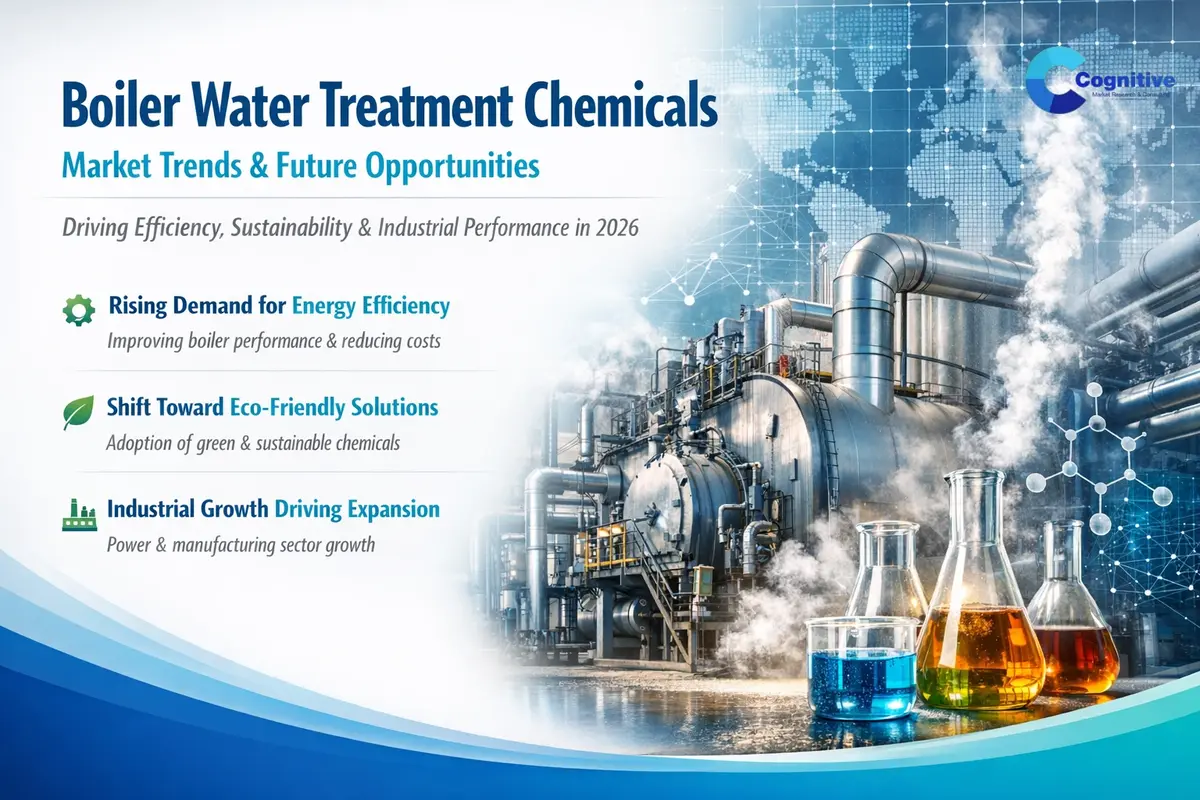
Boiler water treatment chemicals play a critical role in maintaining the efficiency and longevity of industrial boilers by mitigating the adverse effects of impurities and scale formation. Boilers are integral to industries like power generation, chemical processing, food and beverage, and others where steam or heated water is required for various processes. However, the operational efficiency of these systems is often compromised by issues such as corrosion, scaling, and the accumulation of deposits. This is where boiler water treatment chemicals come into play, addressing these challenges and ensuring the optimal performance of boiler systems.
According to Cognitive Market Research the global market for boiler water treatment chemicals has been experiencing consistent growth due to the increasing demand for energy and the expansion of industries relying on steam generation. The rise of urbanization and industrialization, especially in developing economies, is further propelling the demand for efficient boiler systems and, consequently, the chemicals required for their maintenance. Additionally, stringent regulations surrounding industrial emissions and water quality management are driving the adoption of advanced treatment solutions, fostering innovation and development in the industry. The boiler water treatment chemicals market was estimated to be worth approximately USD 4526.5 million in 2024 and is projected to increase to USD 10134.5 million by 2032, with a compound annual growth rate (CAGR) of 10.60% during the forecast period, according to a recent market analysis Factors such as the growing emphasis on energy efficiency, cost reduction in industrial processes, and the increasing prevalence of environmental sustainability are contributing to this upward trajectory. The market is characterized by a mix of established players and emerging innovators, each striving to enhance the effectiveness, sustainability, and cost-efficiency of their chemical solutions.
1. What’s Actually Driving the Market in 2026?
The Energy Crunch is Real:
Let's be honest energy prices are still a massive headache. Scale is no longer just gunk in the pipes; it’s a financial leak. When 1mm of scale can drive up your fuel bill by over 10%, a solid water treatment program is basically an insurance policy for your bottom line.
Keeping the Old Guard Running:
Not everyone is building brand-new facilities. Most of us are working with boilers that have seen a few decades of service. In 2026, we’re seeing a huge focus on chemicals that can baby older metal, preventing corrosion and extending the life of assets that are simply too expensive to replace right now.
Recycled Water Challenges:
Everyone wants to be water-neutral, which is great, but recycling water means dealing with much higher mineral concentrations. We’re seeing a massive demand for chemistries that can handle tough water like high-silica or high-magnesium sources without clogging up the system.
2. Trends We’re Actually Seeing on the Floor
The Move to Green is No Longer Optional:
We’ve finally hit the point where organic acids (citric, lactic, etc.) are performing just as well as the old-school harsh stuff. Manufacturers are switching because these are safer for the crew to handle and a lot easier to neutralize before they hit the drain.
The Death of Guesswork Dosing:
Most top-tier plants have ditched manual testing. With IoT sensors now standard, systems are dosing themselves based on real-time data. It’s just-in-time chemistry preventing the waste of expensive chemicals while ensuring the boiler is always protected.
Film-Forming Tech:
This has been a game-changer. Instead of just treating the water, we’re seeing more film-forming amines that create a microscopic shield on the metal itself. It’s a set it and forget it layer of protection that works even during those dreaded seasonal shutdowns.
3. A Quick Look Around the World
Asia-Pacific:
Still the powerhouse. With all the new manufacturing popping up in India and Vietnam, the volume demand is huge. The trend here is toward super-concentrated products to keep those shipping costs down and minimize the carbon footprint of the chemicals themselves.
North America & Europe:
It’s all about the paperwork and the planet. With stricter EPA and EU rules, if your chemicals aren't eco-certified, you're going to have a hard time with audits. Compliance is the name of the game here.
4. Smart Moves for Manufacturers
Stop Buying Gallons, Start Buying Results:
We’re seeing more companies move to Performance Contracts. You’re not just buying a drum of chemicals; you’re paying for a guarantee that your boiler will stay at peak efficiency. It shifts the risk back to the supplier.
Focus on the Clean and Protect Combo:
Maintenance teams are stretched thin. Any product that can descale and add a corrosion inhibitor in one go is winning. It saves a step, saves labor, and gets the system back online faster.
Specializing in the Hard Stuff:
If you’re in a high-stakes industry like food processing or pharma, you can’t use just any industrial cleaner. There's a massive push for food-grade, high-purity chemicals that meet the strictest safety specs.
5. Conclusion
As we look at the rest of 2026, the vibe is Practical Sustainability. We’ve stopped talking about going green as a PR stunt and started doing it because it’s more efficient. The winners in this market are the ones who can prove their chemicals actually save energy and don't hurt the environment. In 2026, efficiency isn't just a goal it’s how you stay in business.
 X
X
Article Details
-
Published 02 Dec 2024
-
Last Updated 02 Apr 2026
-
Reading Time~3 minutes
Related Reports
Get a Custom Report
Interested in a similar analysis for your market? Our experts can deliver a customized report.
Contact Our ExpertsMore Articles
Explore all published articles across 30+ industry verticals.
View All Articles