We value your privacy
We use cookies to improve your experience and analyze traffic. By continuing, you consent to our use of cookies under GDPR, CCPA and other applicable laws. Privacy Policy
Cookie preferences
Choose which categories of cookies you allow. Strictly necessary cookies are always on.
Strictly necessary
Required for core site functionality, security and your session. Always active.
Analytics
Help us understand how visitors use the site (e.g. Google Analytics) so we can improve it.
Marketing
Used to measure campaigns and show you relevant ads on other sites (e.g. LinkedIn, Google Ads).
Antimicrobial Agents Market Analysis size 2021 was recorded $2844.92 Million whereas by the end of 2026 it will reach $4459.79 Million. According to the author, by 2033 Antimicrobial Agents market size will become $7883.69 Million. Antimicrobial Agents market will be growing at a CAGR of 8.865% during 2026 to 2033. Download a free sample with data verified by Supriya Yadav
Antimicrobial Agents Market Analysis from 2022 to 2034 Containing Market Size, Share along with its CAGR, Forecast and Trends
Top Countries — Revenue
Million
Market Dynamics of Antimicrobial Agents Market Analysis
Growth Drivers
Rising Infection Rates
Hospital-Acquired Infections (HAIs)
Demand in Food and Agriculture
Restraints
Antimicrobial Resistance (AMR)
Regulatory Challenges
Limited Innovation Pipeline
Trends
Increasing Infection Rates
Hospital-Acquired Infections (HAIs)
Demand in Food and Agriculture
Access the full forecast model.
Country-level data · Company profiles · Editable dataset · Analyst consultation included.
Antimicrobial Agents Market Analysis — Presence
Geographical Analysis
Click countries to explore
Loading map…
Regional and Country Analysis
Global Antimicrobial Agents Market Analysis 2026
Country-level values are locked in this preview.
Request a free sample
to unlock the full breakdown.
Region / Country
2021 (A)
2025 (A)
2033 (P)
CAGR
Global
$ 2844.92 Million
$ 3995.98 Million
$ 7883.69 Million
8.865%
North America
$ 1132.28 Million
$ 1581.61 Million
$ 3027.34 Million
8.454%
United States
$ 909.45 Million
$ 1265.29 Million
$ 2383.73 Million
8.239%
Canada
$ 138.36 Million
$ 197.07 Million
$ 403.24 Million
9.363%
Mexico
$ 84.47 Million
$ 119.25 Million
$ 240.37 Million
9.157%
Europe
$ 825.03 Million
$ 1150.04 Million
$ 2199.55 Million
8.443%
United Kingdom
$ 108.41 Million
$ 148.7 Million
$ 268.13 Million
7.647%
France
$ 114.1 Million
$ 160.66 Million
$ 333.32 Million
9.552%
Germany
$ 141.82 Million
$ 196.43 Million
$ 355.01 Million
7.679%
Italy
$ 68.23 Million
$ 96.6 Million
$ 191.8 Million
8.951%
Russia
$ 110.8 Million
$ 152.84 Million
$ 279.56 Million
7.84%
Spain
$ 59.81 Million
$ 82 Million
$ 146.27 Million
7.503%
Sweden
$ 24.34 Million
$ 31.97 Million
$ 49.71 Million
5.672%
Denmark
$ 23.18 Million
$ 31.28 Million
$ 48.39 Million
5.605%
Switzerland
$ 20.3 Million
$ 27.49 Million
$ 47.73 Million
7.142%
Luxembourg
$ 14.03 Million
$ 18.47 Million
$ 32.47 Million
7.305%
Rest of Europe
$ 140.01 Million
$ 203.6 Million
$ 447.17 Million
10.334%
Asia Pacific
$ 534.85 Million
$ 764.03 Million
$ 1654 Million
10.136%
China
$ 162.81 Million
$ 225.24 Million
$ 473.37 Million
9.729%
Japan
$ 120.02 Million
$ 164.88 Million
$ 346.02 Million
9.709%
South Korea
$ 40.49 Million
$ 56.08 Million
$ 112.64 Million
9.109%
India
$ 76.96 Million
$ 114.22 Million
$ 268.11 Million
11.255%
Australia
$ 16.05 Million
$ 21.78 Million
$ 35.07 Million
6.136%
Singapore
$ 19.58 Million
$ 28.65 Million
$ 69.14 Million
11.64%
Taiwan
$ 11.77 Million
$ 16.2 Million
$ 29.44 Million
7.755%
South East Asia
$ 51.19 Million
$ 73.81 Million
$ 175.32 Million
11.422%
Rest of APAC
$ 36 Million
$ 63.19 Million
$ 144.89 Million
10.931%
South America
$ 187.77 Million
$ 268.53 Million
$ 575.51 Million
9.997%
Brazil
$ 68.85 Million
$ 98.21 Million
$ 204.84 Million
9.625%
Argentina
$ 25.29 Million
$ 36.41 Million
$ 82.52 Million
10.769%
Colombia
$ 16.26 Million
$ 23.36 Million
$ 52.82 Million
10.738%
Peru
$ 7.4 Million
$ 10.51 Million
$ 18.72 Million
7.486%
Chile
$ 4 Million
$ 5.67 Million
$ 9.51 Million
6.671%
Rest of South America
$ 65.96 Million
$ 94.38 Million
$ 207.11 Million
10.323%
Middle East
$ 105.26 Million
$ 143.06 Million
$ 252.28 Million
7.349%
Saudi Arabia
$ 39.65 Million
$ 53.65 Million
$ 92.61 Million
7.063%
Turkey
$ 13.22 Million
$ 17.81 Million
$ 30.17 Million
6.811%
UAE
$ 10.39 Million
$ 14.29 Million
$ 27.45 Million
8.5%
Egypt
$ 9.28 Million
$ 12.75 Million
$ 23.46 Million
7.925%
Qatar
$ 8.21 Million
$ 10.97 Million
$ 18.62 Million
6.833%
Rest of Middle East
$ 24.51 Million
$ 33.59 Million
$ 59.97 Million
7.514%
Africa
$ 59.74 Million
$ 88.71 Million
$ 175.02 Million
8.865%
East Africa
xxxx
xxxx
xxxx
xxxx
West Africa
xxxx
xxxx
xxxx
xxxx
North Africa
xxxx
xxxx
xxxx
xxxx
South Africa
$ 20.95 Million
$ 31.03 Million
$ 59.66 Million
8.515%
The global antimicrobial agents market is on a robust growth trajectory, driven by the critical need to control and eliminate microbial growth in a wide range of applications. Valued at $2,844.92 million in 2021, the market is expected to reach $7,883.69 million by 2033, expanding at a CAGR of 8.865%. This dynamic growth is underpinned by an increasing incidence of hospital-acquired infections (HAIs), stringent food safety regulations, and heightened consumer awareness of hygiene, particularly in the wake of global health crises. The interplay between drivers, such as innovation in healthcare, and restraints, like the development of microbial resistance, defines the evolving landscape of this essential market.
Global Antimicrobial Agents Market Drivers
Rising Prevalence of Infectious Diseases and HAIs: The increasing incidence of infectious diseases and hospital-acquired infections (HAIs) worldwide is a primary driver. This necessitates the extensive use of antimicrobial agents in healthcare settings for sterilization, disinfection, and in medical devices to ensure patient safety and prevent cross-contamination.
Stringent Regulations and Heightened Hygiene Awareness: Governments and international bodies are implementing stricter regulations regarding sanitation and food safety. Concurrently, consumer awareness of hygiene has surged, boosting demand for antimicrobial products in personal care, food packaging, textiles, and consumer goods to ensure safety and extend product longevity.
Growth in End-Use Industries: Rapid growth and innovation in end-use industries such as healthcare, food & beverage, construction, and textiles create sustained demand. The incorporation of antimicrobial additives into paints, coatings, plastics, and fabrics to impart hygiene properties is becoming a standard practice, further propelling market growth.
Global Antimicrobial Agents Market Trends
Shift Towards Natural and Bio-Based Agents: A significant trend is the growing demand for natural and eco-friendly antimicrobial agents derived from plant extracts, essential oils, and other biological sources. This is driven by consumer preference for "green" products and regulatory scrutiny over the environmental impact of synthetic chemicals.
Development of Antimicrobial Coatings and Polymers: There is increasing R&D focus on developing advanced materials with inherent antimicrobial properties, such as antimicrobial coatings for high-touch surfaces and polymers for medical devices and food packaging. These innovations offer long-lasting, built-in protection against microbial contamination.
Focus on Combating Antimicrobial Resistance (AMR): The global threat of AMR is pushing the industry to innovate and develop novel antimicrobial agents with new mechanisms of action. Research into bacteriophage therapy, antimicrobial peptides, and nanotechnology-based solutions is gaining momentum to overcome resistance in pathogenic microbes.
Global Antimicrobial Agents Market Restraints
Development of Antimicrobial Resistance (AMR): The ability of microorganisms to develop resistance to antimicrobial agents is a major challenge. It reduces the efficacy of existing products, necessitates continuous and costly R&D for new solutions, and poses a significant threat to public health.
Strict and Lengthy Regulatory Approval Processes: Antimicrobial agents are subject to rigorous and complex regulatory frameworks (e.g., EPA in the U.S., BPR in Europe). The high cost and long timelines associated with obtaining approvals for new products can act as a significant barrier to entry and slow down innovation.
Environmental and Health Concerns: Certain chemical-based antimicrobial agents have faced scrutiny and restrictions due to their potential adverse effects on the environment and human health. This has led to bans on substances like triclosan in some applications, forcing manufacturers to find safer, often more expensive, alternatives.
Market Size: $1132.28 Million (2021) -> $1581.61 Million (2025) -> $3027.34 Million (2033) CAGR (2021-2033): 8.454%
Market Characteristics
Country-Specific Insight: North America is the leading region, holding 39.58% of the global market in 2025. The United States is the dominant force, accounting for a substantial 31.66% of the global market. Canada and Mexico contribute significantly, holding 4.93% and 2.98% of the global market share, respectively, driven by integrated healthcare supply chains and regulatory alignment.
Key Drivers
A highly advanced healthcare sector with substantial spending on infection control measures.
Stringent regulations from bodies like the EPA and FDA, mandating the use of effective antimicrobial agents in various products.
High consumer awareness and demand for hygienic products, including sanitizers, antimicrobial soaps, and treated textiles.
Key Trends
Rapid adoption of antimicrobial coatings for medical devices and high-touch surfaces in public and commercial spaces.
Growing investment in R&D for novel biotechnological and nanotechnology-based antimicrobial solutions.
A strong shift towards sustainable and "green" antimicrobial agents in response to consumer and regulatory pressure.
Key Restraints
Extremely rigorous and expensive regulatory approval processes, which can stifle innovation and delay market entry.
The well-established issue of antimicrobial resistance, particularly in clinical settings, requiring constant development of new formulas.
Public and environmental group scrutiny over the use of certain chemical agents, leading to litigation and product reformulations.
Technology Focus
The region focuses heavily on advanced technologies, including silver ion technology, quaternary ammonium compounds, and the development of antimicrobial polymers and nanomaterials. There is a significant push towards creating "smart surfaces" that offer long-term, self-disinfecting properties for applications in healthcare and public transportation.
Market Size: $825.027 Million (2021) -> $1150.04 Million (2025) -> $2199.55 Million (2033) CAGR (2021-2033): 8.443%
Market Characteristics
Country-Specific Insight: Europe represents a mature and significant market, holding 28.78% of the global share in 2025. Germany leads the region, accounting for 4.92% of the global market, closely followed by France (4.02%), Russia (3.82%), and the United Kingdom (3.72%). Other key contributors include Italy (2.42%) and Spain (2.05%), reflecting the region's strong industrial and healthcare base.
Key Drivers
A robust regulatory framework (e.g., Biocidal Products Regulation - BPR) that ensures high standards for product safety and efficacy.
Strong government support for healthcare and a high prevalence of public health initiatives aimed at reducing infections.
A large and sophisticated food and beverage industry that extensively uses antimicrobial agents for preservation and safety.
Key Trends
An exceptional focus on sustainability, driving the market for natural and biodegradable antimicrobial agents.
Increasing use of antimicrobial additives in construction materials, paints, and coatings for creating healthier living and working environments.
Collaborative research projects funded by the EU to combat antimicrobial resistance (AMR) and develop innovative solutions.
Key Restraints
The complex and stringent BPR regulation, which creates high compliance costs and barriers for non-EU manufacturers.
Economic pressures and varied healthcare reimbursement policies across different countries can impact market growth.
Growing consumer skepticism and demand for "preservative-free" products in the food and cosmetic sectors.
Technology Focus
Europe's technology focus is on green chemistry and sustainable solutions. This includes the development of antimicrobial agents from plant extracts, essential oils, and fermentation products. There is also strong research into surface modification technologies and photocatalytic antimicrobial agents that are activated by light.
Market Size: $534.845 Million (2021) -> $764.031 Million (2025) -> $1654 Million (2033) CAGR (2021-2033): 10.136%
Market Characteristics
Country-Specific Insight: Exhibiting the highest growth rate, the APAC region will account for 19.12% of the global market by 2025. China is the regional leader, holding 5.64% of the global market share, with Japan following at 4.13%. India is a rapidly emerging market, representing 2.86% of the global share, while the collective South East Asian nations contribute 1.85% and South Korea 1.40%.
Key Drivers
Rapid urbanization, industrialization, and a growing middle class with increasing disposable income and health consciousness.
Improving healthcare infrastructure and rising government expenditure on public health and sanitation.
A booming food and beverage processing industry, coupled with growing exports that must meet international hygiene standards.
Key Trends
Fast adoption of antimicrobial agents in textiles, particularly for sportswear and medical apparel.
Government initiatives to promote domestic manufacturing and R&D in countries like China and India.
A growing market for water treatment chemicals, including antimicrobial agents, to address water scarcity and pollution issues.
Key Restraints
A fragmented market with a wide variation in regulatory standards and enforcement across different countries.
Price sensitivity among consumers and industries, leading to a preference for lower-cost, sometimes less effective, agents.
Lack of awareness and infrastructure for proper waste management of products containing chemical agents in some rural areas.
Technology Focus
The technology focus in APAC is geared towards cost-effective manufacturing and scalability. There is significant interest in phenolic compounds, halogens, and metallic compounds. Additionally, local research is growing in the area of herbal and traditional medicine-derived antimicrobial agents, aiming to combine traditional knowledge with modern science.
Market Size: $187.765 Million (2021) -> $268.53 Million (2025) -> $575.509 Million (2033) CAGR (2021-2033): 9.997%
Market Characteristics
Country-Specific Insight: South America is a high-growth market, projected to hold 6.72% of the global share in 2025. Brazil is the largest market in the region, accounting for 2.46% of the global total. Other notable markets include Argentina (0.91%) and Colombia (0.58%), which are witnessing steady growth driven by expanding healthcare and agricultural sectors.
Key Drivers
Expansion of the healthcare and pharmaceutical industries, with increased investments in hospitals and clinics.
A large agriculture and food export sector that requires antimicrobial agents for crop protection and food preservation.
Growing awareness of hygiene and sanitation, particularly in urban centers, driving demand in consumer products.
Key Trends
Increased use of antimicrobial agents in animal feed to prevent diseases and promote growth in the region's massive livestock industry.
A rising trend of using antimicrobial packaging to reduce food waste and extend the shelf life of perishable goods.
Gradual adoption of more advanced antimicrobial technologies as foreign investment and knowledge transfer increase.
Key Restraints
Economic volatility and political instability in some countries can impact industrial investment and consumer spending.
Logistical and infrastructural challenges can hinder the distribution and availability of products in remote areas.
Less stringent regulatory enforcement compared to North America and Europe can lead to the prevalence of low-quality products.
Technology Focus
The technology focus in South America is often on practical and cost-effective solutions like quaternary ammonium compounds and alcohol-based disinfectants. There is also a growing interest in natural agents, particularly those derived from the region's rich biodiversity, for use in cosmetics and food preservation.
Market Size: $105.262 Million (2021) -> $143.056 Million (2025) -> $252.278 Million (2033) CAGR (2021-2033): 7.349%
Market Characteristics
Country-Specific Insight: The Middle East market is projected to constitute 3.58% of the global share in 2025. Saudi Arabia leads the region, holding 1.34% of the global market, driven by its large-scale healthcare projects. Other key markets include Turkey (0.45%), the UAE (0.36%), and Egypt (0.32%), each benefiting from tourism and infrastructure development.
Key Drivers
Significant government investment in building world-class healthcare infrastructure and smart cities.
A booming tourism and hospitality sector that demands high standards of cleanliness and hygiene.
Growth in the construction industry, with increasing use of antimicrobial paints, coatings, and HVAC systems.
Key Trends
High demand for advanced water treatment and desalination technologies, which require antimicrobial agents to prevent biofouling.
Adoption of international hygiene standards in food processing and hospitality to cater to a global audience.
A growing market for high-end personal care and cosmetic products containing specialized antimicrobial ingredients.
Key Restraints
Geopolitical instability and regional conflicts can disrupt supply chains and investment.
Extreme climatic conditions necessitate specialized, durable antimicrobial formulations, which can be more expensive.
Heavy reliance on imports for specialized chemicals and advanced antimicrobial technologies.
Technology Focus
The region's technology focus is on high-performance and durable solutions suitable for harsh environments. This includes advanced polymer additives for plastics and coatings, UV-resistant antimicrobial agents, and sophisticated biocides for industrial water systems and oil and gas applications.
Market Size: $59.743 Million (2021) -> $88.711 Million (2025) -> $175.018 Million (2033) CAGR (2021-2033): 8.865%
Market Characteristics
Country-Specific Insight: Africa represents a nascent but growing market, holding 2.22% of the global share in 2025. South Africa is the most developed market on the continent, accounting for 0.78% of the global total, followed by Nigeria, a key West African hub, with a 0.44% global share. Growth is driven by foundational needs in public health and sanitation.
Key Drivers
Urgent need to combat a high burden of infectious diseases, including malaria, tuberculosis, and HIV/AIDS, driving demand in healthcare.
International health aid and government initiatives focused on improving water sanitation and hygiene (WASH) infrastructure.
A growing population and urbanization are creating a greater need for food preservation and basic hygiene products.
Key Trends
Increasing local production of basic disinfectants and sanitizers to meet immediate public health needs.
Adoption of antimicrobial agents in the agricultural sector to protect crops and livestock.
Mobile health (mHealth) initiatives are helping to spread awareness about hygiene and disease prevention.
Key Restraints
Significant infrastructural deficits, including limited access to clean water and healthcare facilities.
High price sensitivity and low disposable incomes limit the market for higher-value antimicrobial products.
A challenging regulatory and distribution environment, coupled with political instability in some areas.
Technology Focus
The technology focus is primarily on affordable and easy-to-implement solutions. Chlorine-based compounds for water purification and alcohol-based hand sanitizers are dominant. There is little focus on advanced or novel technologies; the priority remains on the wide-scale availability of basic, effective antimicrobial agents.
A = Actual · E = Estimated · P = Projected · 🔒 Locked values require full access. Click headers to sort.
Type breakdown · Illustrative 2025 shares shown free · Full-period forecast in paid report.
Organic Antimicrobial Agents Market Analysis
XX
Organic Market Size 2025
XX %
CAGR
Locked · Full data in paid report
Inorganic Antimicrobial Agents Market Analysis
XX
Inorganic Market Size 2025
XX %
CAGR
Locked · Full data in paid report
Market size by (Illustrative, 2025)
Share distribution (2025)
Disclaimer: The charts and graphs are for illustrative purposes only and do not represent actual market values. To access accurate quantitative data, please request a paid report or request free sample.
To learn more about market share and segmentation, request the free sample pages.
Competitor Analysis
The pharmaceutical and healthcare industry is highly competitive, with players expanding through product launches, M&A, partnerships, and regulatory approvals. The Antimicrobial Agents Market Analysis market report covers financials, market share, SWOTs, and responses to Tariffs, while providing global, regional, and country-level forecasts supported by value chain, patent analysis, and a competitive matrix serving as a key resource for stakeholders and investors.
Click any bar or cell to request the full company profile
Top Companies (In no particular order)
2022 (A)
2023 (A)
2024 (A)
2025 (A)
BASF SE
•••
•••
•••
•••
Clariant
•••
•••
•••
•••
Akzo Nobel N.V.
•••
•••
•••
•••
DuPont
•••
•••
•••
•••
Radical Materials Ltd.
•••
•••
•••
•••
RTP Company
•••
•••
•••
•••
Microban International
•••
•••
•••
•••
Ltd.
•••
•••
•••
•••
Life Material Technologies Limited
•••
•••
•••
•••
SANITIZED AG
•••
•••
•••
•••
BioCote Limited
•••
•••
•••
•••
We Provide Regional Breakdown of this Companies and Company specific to any Country, Region, Product/ service as well. We cover market share analysis for publicly listed companies as well as privately held companies, subject to data availability.
The global antimicrobial agents market is poised for significant expansion, projected to grow from $2,844.92 million in 2021 to $7,883.69 million by 2033, demonstrating a strong compound annual growth rate (CAGR) of 8.865%. This growth is primarily fueled by the increasing prevalence of infectious diseases, a heightened global focus on hygiene and sanitation, and rising demand from key end-use industries such as healthcare, food and beverage, and personal care. The market is also heavily influenced by the growing challenge of antimicrobial resistance (AMR), which paradoxically drives both innovation in novel agents and restraint on existing ones. North America currently holds the largest market share, but the Asia Pacific region is emerging as the fastest-growing market, driven by rapid industrialization, improving healthcare infrastructure, and rising consumer awareness. The industry is trending towards sustainable and natural antimicrobial solutions to meet regulatory pressures and consumer demand for eco-friendly products.
Key strategic insights from our comprehensive analysis reveal:
The market is experiencing a geographical shift, with the Asia-Pacific region demonstrating the highest growth potential (10.136% CAGR), challenging the long-standing dominance of North America and Europe.
Antimicrobial resistance (AMR) acts as a dual-edged sword; while it renders some existing agents less effective, it simultaneously fuels significant research and development investments into next-generation, more potent antimicrobial solutions.
There is a pronounced industry trend towards natural and bio-based antimicrobial agents, driven by stringent environmental regulations and growing consumer preference for sustainable and "clean-label" products across various applications.
Strategic Recommendations for Manufacturers
To thrive in the evolving antimicrobial agents market, manufacturers should prioritize a multi-faceted strategy. Firstly, investment in R&D is paramount, with a specific focus on developing novel, bio-based, and eco-friendly antimicrobial agents to address the dual challenges of antimicrobial resistance (AMR) and stringent environmental regulations. Secondly, strategic market expansion into high-growth regions, particularly Asia-Pacific and South America, is crucial; this requires tailoring product portfolios and pricing strategies to meet local demands and regulatory nuances. Thirdly, forming collaborations with academic institutions, research labs, and technology start-ups can accelerate the innovation pipeline, especially in high-potential areas like antimicrobial coatings, nanotechnology, and smart materials. Finally, diversifying applications beyond traditional healthcare, such as into advanced textiles, water treatment, and active food packaging, will open new revenue streams and mitigate risks associated with reliance on a single sector.
The pharmaceutical and healthcare industry is growing rapidly, driven by aging populations, chronic disease prevalence, and rising healthcare spending. Innovations in precision medicine, gene therapy, and digital health are improving outcomes, though challenges include high R&D costs, strict regulations, and pricing pressures. Growth opportunities lie in emerging markets with expanding healthcare infrastructure, while key trends such as AI-driven personalized medicine, telehealth, and sustainable pharma solutions are reshaping the industry.
Analyst Conclusion
As per Cognitive's Research Analyst, Antimicrobial Agents are integral substances for controlling microbial growth in a wide range of applications. They play an essential role in ensuring safety, extending product longevity, and preventing cross-contamination in critical sectors like healthcare, food processing, and personal care.
Looking at the Historical Growth The global market expanded from $2,844.92 million in 2021 to an estimated $4459.79 million in 2026 due to increasing incidence of hospital-acquired infections (HAIs) and heightened sanitation consciousness. Regionally, North America grew from $1132.28 Million in 2021 to $1715.34 million in 2026, while Europe progressed from $825.027 Million to $1247.17 million over the same period.
Currently in 2026, North America holds a commanding 38.47% of the global market, driven by its highly advanced healthcare infrastructure and robust regulatory framework. The healthcare and medical device applications segment remains the primary consumer of Antimicrobial Agents. Additionally Asia Pacific is set to be the fastest-growing region, exhibiting the highest CAGR of 10.136%, fueled by rapid urbanization, industrialization, and improving healthcare infrastructure.
The market is witnessing a definitive shift towards natural and bio-based agents, driven by consumer preference for eco-friendly products and increasing regulatory scrutiny on synthetic chemicals. Ongoing innovation in advanced materials is also leading, focusing on long-term, self-disinfecting capabilities.
In the future, The global Antimicrobial Agents market will reach to $7,883.69 million by 2033, expanding at a compound annual growth rate of 8.865% from 2021, primarily driven by escalating demand from medical and industrial sectors, alongside a persistent global emphasis on public health and cleanliness. Ongoing innovation in biotechnological and nanotechnology-based solutions and the strong trend towards environmentally sustainable antimicrobial formulations will also contribute significantly.
Supriya is a Team Lead at Cognitive Market Research & Consulting, leading research initiatives and strategic intelligence projects across the Healthcare, Pharmaceuticals, and Medical Devices & Consumables sectors. With more than two years of experience in market research and data analysis, she plays a key role in helping organizations navigate complex healthcare ecosystems, identify emerging opportunities, and make informed business decisions through data-driven insights and market intelligence.
Combining expertise in both primary and secondary research methodologies with a strong academic foundation in Marketing and Finance, Supriya oversees the execution of market assessments, competitive intelligence studies, forecasting models, stakeholder interviews, trend analysis, and custom consulting engagements. She collaborates with healthcare providers, pharmaceutical manufacturers, medical device companies, industry experts, and other key stakeholders to gather firsthand market perspectives while validating findings through extensive research. Her ability to interpret clinical, commercial, and market data enables clients to better understand industry developments, regulatory influences, innovation trends, and competitive dynamics.
In her leadership role, she manages end-to-end research projects and guides cross-functional teams in delivering high-quality market reports, consulting solutions, and strategic studies. Her expertise in market estimation, forecasting, and analytical modeling helps organizations evaluate market potential, assess growth opportunities, strengthen competitive positioning, and support strategic planning initiatives. By transforming complex healthcare and life sciences data into actionable business intelligence, she enables clients to make confident decisions in rapidly evolving market environments.
Driven by a passion for healthcare innovation and continuous professional development, Supriya remains committed to staying ahead of industry trends, technological advancements, and changing market conditions. Her leadership, analytical mindset, and dedication to research excellence help organizations mitigate risks, capitalize on emerging opportunities, and achieve sustainable growth across the global healthcare and life sciences landscape.
Antimicrobial Agents Market Analysis market size and growth rate is provided in the report covering 2021-2025 historical and 2025-2033 forecast data.
Major factors including drivers, restraints, opportunities and challenges are analyzed with detailed insights.
Top manufacturers BASF SE, Clariant, Akzo Nobel N.V., DuPont, Radical Materials Ltd., RTP Company, Microban International, Ltd., Life Material Technologies Limited, SANITIZED AG, BioCote Limited and others are profiled in the report.
Segments include Type, Application and additional sub-segments.
Regional analysis covers all major markets. The report identifies the dominant region and provides country-level data.
Sample pages can be obtained on demand from the website. 24/7 chat support and direct call services are available.
★ Reviews
Rate this report
Antimicrobial Agents Market Analysis — Table of Contents
Disclaimer:
This is just a redacted sample pages of the actual deliverable report and only for representative purposes
Charts/Graphs/Numbers/data are only for Representative purposes and do not depict actual statistics.
The table of Contents differs according to the user License selection. Current Displayed TOC is for the Corporate User License Report Edition. TOC Customization options: Add or Remove section/s Or chapter/s from the report.
Specific Tables, Graphs, Sections, and Chapters can be ordered at a discounted price.
If applicable; On Request Volume Data will also be provided (at an Additional Cost).
Report Scope
Type
Organic, Inorganic
Application
Plastics, Paint and Coatings, Pulp and Paper, Personal Care and Cosmetics, Others
14.14.2 AI-Driven Transformation of Industry Value Chain
14.14.3 Evolution of Business Models & Revenue Streams
14.14.4 AI-Driven Product, Service & Innovation Transformation
14.14.5 Customer Behavior, AI Adoption & Future Market Evolution
Chapter 15. TOP 10 Country Analysis
15.1 Country 1
15.2 Country 2
15.3 Country 3
15.4 Country 4
15.5 Country 5
15.6 Country 6
15.7 Country 7
15.8 Country 8
15.9 Country 9
15.10 Country 10
Chapter 16. Research Findings
16.1 Key Takeaways
16.2 Analyst Point of View
16.3 Assumptions and Acronyms
Chapter 17. Research Methodology and Sources
17.1 Primary Data Collection
17.1.1 Steps for Primary Data Collection
17.1.1.1 Identification of KOL
17.1.2 Backward Integration
17.1.3 Forward Integration
17.1.4 How Primary Research Help Us
17.1.5 Modes of Primary Research
17.2 Secondary Research
17.2.1 How Secondary Research Help Us
17.2.2 Sources of Secondary Research
17.3 Data Validation
17.3.1 Data Triangulation
17.4 Data Representation
Athenaeum AI Dashboard
Research Framework · 70:30 Primary:Secondary
Our Proprietary Methodology
Cognitive Market Research and Consulting "The Full Truth" methodology — a rigorous triangulation process that combines primary research, secondary validation, and expert calibration. Implemented by Supriya Yadav and team for the Antimicrobial Agents Market Analysis Market analysis.
01
Primary Intelligence Gathering
Direct interviews with 50+ industry stakeholders including manufacturers, distributors, end-users, and regulatory bodies across all six regions.
02
Secondary Data Triangulation
Cross-referencing against trade databases, customs records, financial filings, patent databases, and verified industry publications.
03
Expert Validation Protocol
Each data point undergoes validation by minimum two independent domain experts with 15+ years of industry experience.
04
Athenaeum AI Processing
Our proprietary AI platform aggregates, normalizes, and identifies patterns across 10,000+ data points to surface non-obvious insights.
05
Editorial & QA Review
Final review by senior analysts ensures accuracy, coherence, and actionability of all insights and recommendations.
To maintain the integrity of our proprietary methodology and protect our elite expert network, specific source disclosures are reserved for full-access partners. Our research framework is anchored by a 70:30 primary-to-secondary ratio, ensuring your strategy is driven by real-time market intelligence rather than recycled, publicly available, or AI-generated data. Every deliverable includes an exhaustive source directory and grants direct analyst access.
Latest News about Antimicrobial Agents Market
30 Aug 2024nhsconfed.org
NHS launches
The NHS in the UK plans to implement subscription-style deals with pharmaceutical companies to encourage the development of new antibiotics and combat antimicrobial resistance (AMR). To eliminate incentives for overprescribing, the NHS will implement a plan that pays set fees of up to £20 million per year per medicine, regardless of the prescription quantity. This program is a component of a larger attempt to combat the threat that drug-resistant diseases represent to the world.
The program's goal is to make it financially feasible for businesses to research new antimicrobial medications. It has a maximum value of £1.9 billion over 16 years. The World Health Organisation has designated some diseases as being caused by "critical" pathogens, for which the NHS will give priority treatment. Although this program is a start in the right direction, there are worries that the financial rewards might not be enough in light of the prospective profits from other very profitable medications.
The Three Pillars of End-to-End Market Research Services
We don't just hand over data. We partner with your team across three integrated service lines — each designed to give you decision-grade intelligence on the Antimicrobial Agents Market Analysis market.
Service 01
Market Survey
B2BB2C
Structured primary research across both B2B and B2C channels. We design and execute custom surveys targeting manufacturers, distributors, procurement heads, and end-consumers in the antimicrobial agents market analysis ecosystem — validated by our global panel of 10,000+ industrial respondents.
What's Included
Buyer intent & sentiment analysis
Purchase cycle mapping
Price sensitivity research
Channel preference profiling
Competitive perception study
Most Requested
Service 02
Customized Market Data & Reports
CustomReady Report
Choose from our ready-to-access 8th Edition report or commission a fully customized dataset tailored to your exact strategic questions. Cross-splits, custom geographies, proprietary segmentation — we build the intelligence asset your board actually needs.
What's Included
Ready syndicate report
Custom data scope & segmentation
Excel quantitative models
Board-ready PPT with key findings
Secure cloud portal access
Service 03
Strategic Consultation
With SurveyWith Report
Every survey and every report comes with dedicated analyst consultation. Our senior research team walks your leadership through findings, answers strategic questions in real-time, and helps translate data into your next board presentation or investment thesis.
Tell us the specific segments, regions, or companies you need — and we will tailor the deliverable to your requirements.
Why Trust Us
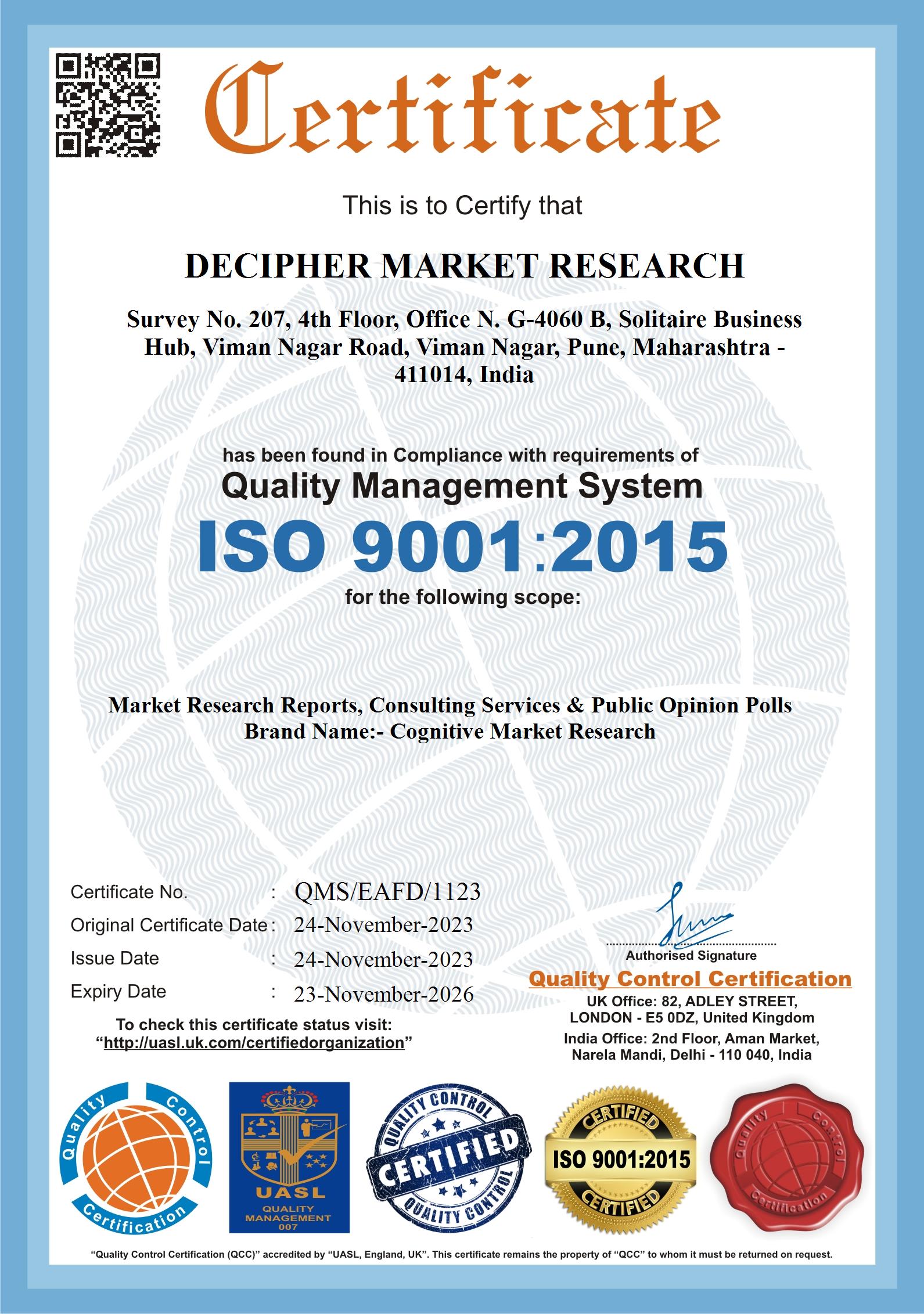
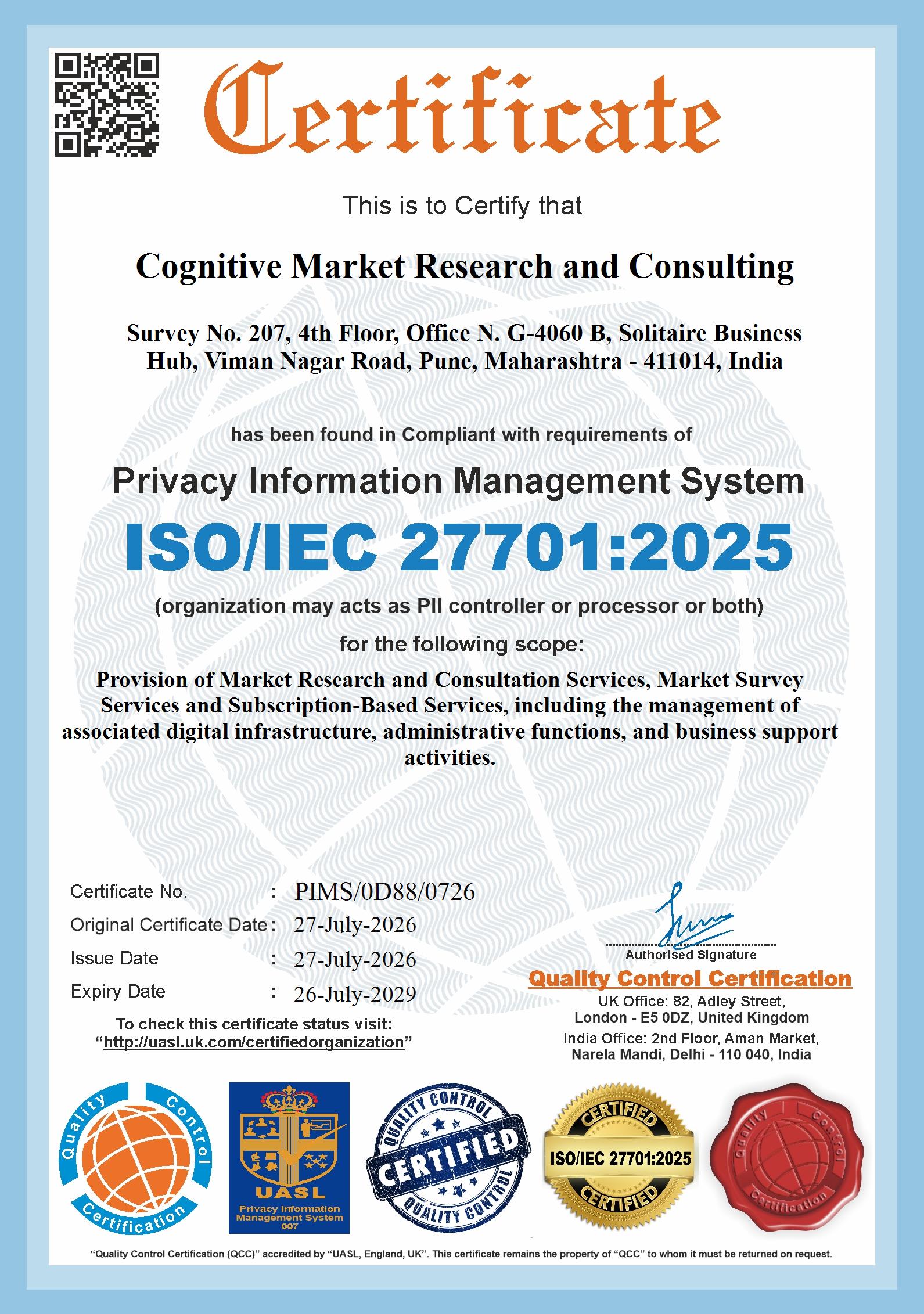
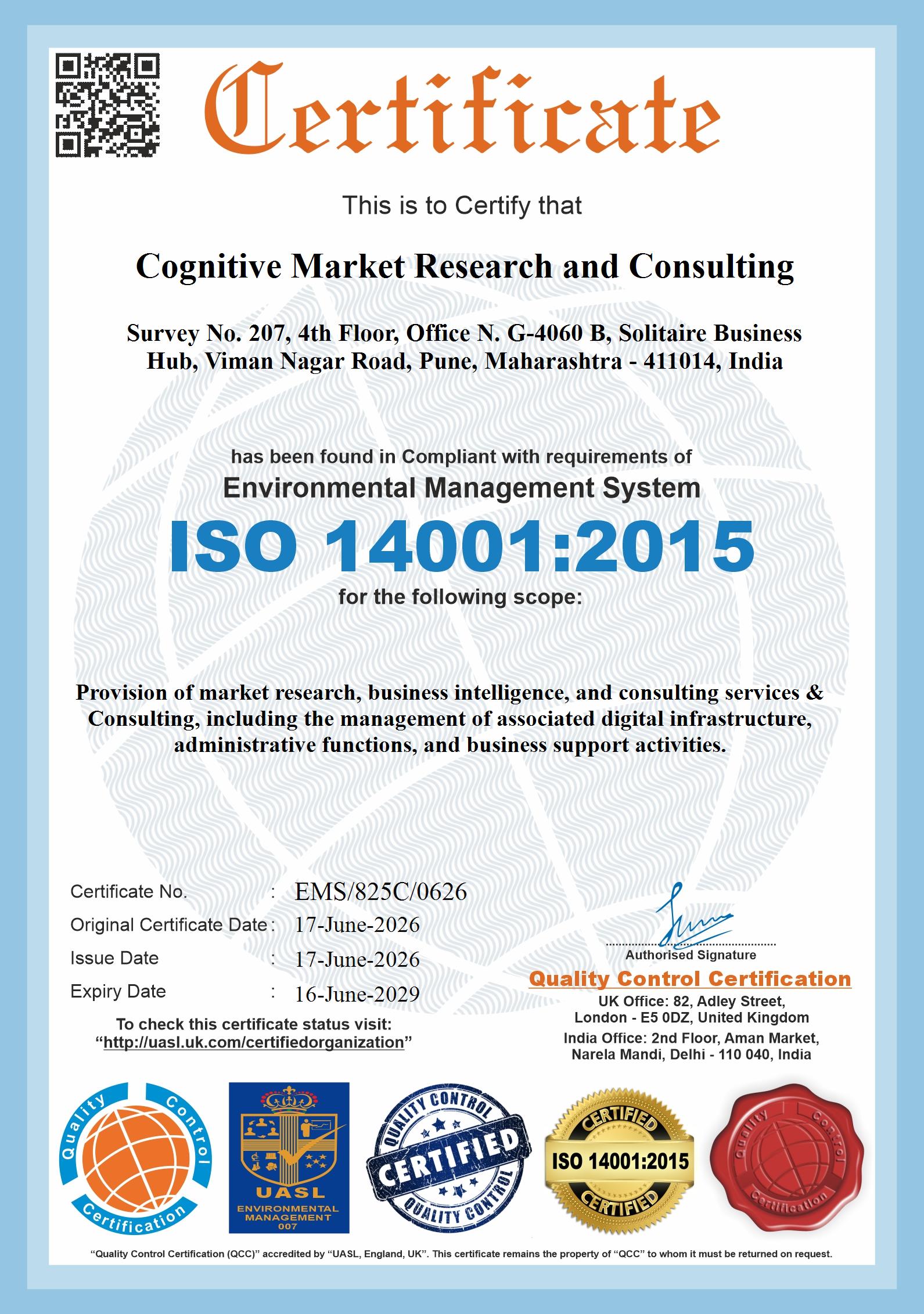
What these certifications mean to usA market figure is only as reliable as the system that produced it. That is why our accreditations cover the whole chain, not just the research step. ESOMAR and MRSI membership binds us to the professional codes that govern how respondents are recruited and how findings may be represented. ISO 20252 governs the research process itself; ISO 9001 and our quality control certification govern how consistently we repeat it. ISO 27001 and ISO 27701, alongside our GDPR, CCPA and DPDP compliance, govern what happens to your brief and your data once it reaches us; because a confidential scope is often more sensitive than the deliverable. ISO 14001, our D-U-N-S registration, Chamber of Commerce membership and DMCA protection speak to how the company itself is run and how its work is safeguarded.Our Clutch and Trustpilot profiles are deliberately listed next to them. They are the only signals on this page we do not issue ourselves, and they are the ones we would check first if we were you.
I enjoyed reviewing all the contents of the report. I am wondering if you can generate similar reports for Orlistat and Mounjaro as you have provided for o…
The global antimicrobial agents market is set for strong and consistent growth, with its value projected to nearly triple from $2,844.92 million in 2021 to $7,883.69 million by 2033, driven by escalating hygiene demands in healthcare and other industries.
While North America currently holds the largest market share, the Asia-Pacific region is the undisputed growth leader, boasting the highest CAGR of 10.136% and signaling a major shift in the market's geographic focus.
The persistent threat of antimicrobial resistance (AMR) serves as a critical market driver, compelling continuous innovation and R&D investment into novel agents to overcome microbial evolution.
A definitive trend towards sustainability is reshaping the market, with increasing regulatory pressure and consumer demand pushing manufacturers, especially in Europe and North America, to develop and adopt natural and eco-friendly antimicrobial solutions.