We value your privacy
We use cookies to improve your experience and analyze traffic. By continuing, you consent to our use of cookies under GDPR, CCPA and other applicable laws. Privacy Policy
Cookie preferences
Choose which categories of cookies you allow. Strictly necessary cookies are always on.
Strictly necessary
Required for core site functionality, security and your session. Always active.
Analytics
Help us understand how visitors use the site (e.g. Google Analytics) so we can improve it.
Marketing
Used to measure campaigns and show you relevant ads on other sites (e.g. LinkedIn, Google Ads).
The global LED Stadium Light market size was USD XX million in 2024.
Rising energy efficiency is expected to boost sales to USD XX million by 2031, with a Compound Annual Growth Rate (CAGR) of 8.60% from 2024 to 2031. Download a free sample with data verified by Kalyani Raje
Type breakdown · Illustrative 2025 shares shown free · Full-period forecast in paid report.
High-Power LED Flood Lights LED Stadium Lights Market Analysis
XX
High-Power LED Flood Lights Market Size 2025
XX %
CAGR
Locked · Full data in paid report
High Mast LED Stadium Lights Market Analysis
XX
High Mast Market Size 2025
XX %
CAGR
Locked · Full data in paid report
Linear LED Sports Lights LED Stadium Lights Market Analysis
XX
Linear LED Sports Lights Market Size 2025
XX %
CAGR
Locked · Full data in paid report
Market size by (Illustrative, 2025)
Share distribution (2025)
Disclaimer: The charts and graphs are for illustrative purposes only and do not represent actual market values. To access accurate quantitative data, please request a paid report or request free sample.
To learn more about market share and segmentation, request the free sample pages.
Competitor Analysis
Top Manufacturing Companies of LED Stadium Lights:
Signify Holding, Eaton (Ephesus Lighting), Acuity Brands Lighting Inc., Musco Sports Lighting LLC., and Hubbell Incorporated are the key players in the LED Stadium Lights Market
Signify Holding
Signify Holding, headquartered in Eindhoven, Netherlands, is a global leader in lighting solutions and a prominent player in the LED stadium lights market. In 2023, the company reported total sales of USD 8.1 billion, with USD 1.3 billion attributed specifically to its stadium lighting solutions, capturing a significant 15% market share. Signify’s innovations in LED lighting technology emphasize energy efficiency, superior illumination, and sustainability. The company’s Philips ArenaVision LED lighting systems are widely adopted in stadiums worldwide, offering uniform light distribution, instant on/off capabilities, and enhanced broadcast quality for sports events. Signify's products are designed to reduce energy consumption by up to 40% compared to traditional lighting systems, aligning with global energy-saving initiatives. Recent developments include a partnership with FIFA to provide lighting solutions for the 2023 FIFA Women's World Cup, underscoring the company’s leadership in the sports lighting segment. Additionally, Signify launched a new generation of connected LED lighting systems in 2023, integrating IoT for advanced control and monitoring capabilities. Its commitment to innovation, coupled with strong collaborations and a global presence, solidifies Signify's position as a top competitor in the LED stadium lights market.
Eaton (Ephesus Lighting)
Eaton’s Ephesus Lighting division is a well-recognized name in the LED stadium lights market, renowned for its cutting-edge solutions designed for professional and collegiate sports facilities. Headquartered in Dublin, Ireland, Eaton leverages its expertise in power management and lighting technologies to deliver high-performance stadium lighting systems. In 2023, the company reported total sales of USD 4.9 billion, with USD 820 million coming from its stadium lighting segment, representing a robust 12% market share. Eaton's Ephesus sports lighting systems are celebrated for their superior energy efficiency, glare reduction, and color rendering capabilities, providing an enhanced viewing experience for spectators and broadcasters alike. In recent years, Eaton introduced the Ephesus All Field series, which delivers customizable lighting levels and dynamic scenes for different events. The company also partnered with major sports leagues in 2023 to retrofit stadiums with energy-efficient lighting solutions, reducing operational costs and carbon footprints. Eaton's strong focus on innovation, sustainability, and customer-centric solutions ensures its continued prominence in the LED stadium lights market.
Acuity Brands Lighting Inc.
Acuity Brands Lighting Inc., headquartered in Atlanta, USA, is a leading provider of innovative lighting and building management solutions, with a significant presence in the LED stadium lights market. The company reported total revenue of USD 4.1 billion in 2023, with USD 620 million derived from stadium lighting solutions, accounting for a 10% market share. Acuity Brands’ portfolio includes the Holophane brand, known for high-performance and durable LED lighting systems tailored for large venues and sports facilities. The company's solutions are characterized by exceptional energy efficiency, long lifespans, and advanced control options, such as its nLight lighting control system. Recent advancements include the launch of Holophane's Endura series in 2023, featuring modular designs and enhanced thermal management for greater performance and reliability. Acuity Brands has also undertaken multiple projects to upgrade sports venues across North America with state-of-the-art LED systems. Its focus on technological innovation, sustainability, and customer satisfaction cements its status as a key player in the LED stadium lights market.
Musco Sports Lighting LLC
Musco Sports Lighting LLC, based in Iowa, USA, is a globally recognized name in sports and large-area lighting solutions, including LED stadium lights. The privately-held company specializes in tailored lighting systems for sports facilities, ensuring optimal visibility and energy efficiency. In 2023, Musco reported an estimated revenue of USD 900 million, with USD 580 million attributed to its stadium lighting segment, commanding a 11% market share. The company’s hallmark innovation, Total Light Control–TLC for LED™, minimizes glare and spill light while maximizing efficiency and performance. Recent accomplishments include providing lighting solutions for high-profile venues like the Super Bowl and the 2023 U.S. Open Tennis Championship. Musco also introduced a groundbreaking wireless control system in 2023, enabling real-time adjustments and diagnostics to optimize lighting performance. The company’s reputation for precision, quality, and sustainability, combined with its strong industry partnerships, secures its leadership in the LED stadium lights market.
Hubbell Incorporated
Hubbell Incorporated, headquartered in Shelton, USA, is a key player in the lighting and electrical products industry, with a robust presence in the LED stadium lights market. In 2023, Hubbell achieved total revenue of USD 5.2 billion, with USD 540 million derived from its stadium lighting solutions, representing an 8% market share. The company’s solutions under its Hubbell Lighting brand include advanced LED systems designed for sports facilities, delivering exceptional illumination, energy efficiency, and durability. Hubbell’s innovative SportScape™ LED lighting range provides superior uniformity, reduced glare, and dynamic control options to enhance the spectator and player experience. In 2023, Hubbell collaborated with leading sports organizations to retrofit stadiums with eco-friendly LED systems, achieving significant energy savings and compliance with stringent environmental standards. Its continuous investment in R&D, strategic collaborations, and a strong commitment to sustainability position Hubbell as a top contender in the LED stadium lights market.
What Growth Strategies Can Help New Entrants Succeed in the LED Stadium Lights Market?
Development of energy-efficient, high-lumen, and long-lasting LED solutions are the key factors where new entrants should focus in the LED Stadium Lights Market
Entering the LED stadium lights market demands a well-rounded strategy that prioritizes innovation, affordability, and targeted regional expansion. New entrants should focus on developing energy-efficient, high-lumen, and long-lasting LED solutions that meet the specific needs of stadiums and large venues. Advanced features such as dynamic lighting control, smart integration with IoT systems, and customization options for different event types can provide a competitive edge. Strategic sourcing of raw materials and efficient manufacturing processes are essential to maintain cost-competitiveness while ensuring product quality. Targeting high-growth regions like Asia-Pacific and Latin America can yield significant market penetration opportunities, as these areas are experiencing rapid development in sports and event infrastructure. Establishing a local presence or collaborating with regional distributors and contractors can facilitate market entry and enhance brand visibility. Focusing on sustainability is another critical factor. Developing eco-friendly lighting solutions and offering services such as retrofitting traditional systems with LEDs can attract environmentally conscious customers and align with global trends. Forming strategic partnerships with sports organizations, event managers, and stadium operators can further bolster market reach and credibility. By emphasizing these strategies, new entrants can effectively compete in the LED stadium lights market, leveraging innovation, cost-efficiency, and regional focus to gain a foothold and expand their presence.
Click any bar or cell to request the full company profile
Top Companies (In no particular order)
2022 (A)
2023 (A)
2024 (A)
2025 (A)
Signify
•••
•••
•••
•••
Musco Sports Lighting
•••
•••
•••
•••
Acuity Brands
•••
•••
•••
•••
Zumtobel Group
•••
•••
•••
•••
Current Lighting
•••
•••
•••
•••
LEDVANCE
•••
•••
•••
•••
Cree Lighting
•••
•••
•••
•••
Eaton
•••
•••
•••
•••
Havells
•••
•••
•••
•••
NVC Lighting
•••
•••
•••
•••
Others
•••
•••
•••
•••
We Provide Regional Breakdown of this Companies and Company specific to any Country, Region, Product/ service as well. We cover market share analysis for publicly listed companies as well as privately held companies, subject to data availability.
According to Cognitive Market Research, the global LED Stadium Light market size was USD XX million in 2024. It will expand at a compound annual growth rate (CAGR) of 8.60% from 2024 to 2031.
North America held the major market share for more than 40% of the global revenue with a market size of USD XX million in 2024 and will grow at a compound annual growth rate (CAGR) of 6.8% from 2024 to 2031.
Europe accounted for a market share of over 30% of the global revenue with a market size of USD XX million.
Asia Pacific held a market share of around 23% of the global revenue with a market size of USD XX million in 2024 and will grow at a compound annual growth rate (CAGR) of 10.6% from 2024 to 2031.
Latin America had a market share of more than 5% of the global revenue with a market size of USD XX million in 2024 and will grow at a compound annual growth rate (CAGR) of 8.0% from 2024 to 2031.
Middle East and Africa had a market share of around 2% of the global revenue and was estimated at a market size of USD XX million in 2024 and will grow at a compound annual growth rate (CAGR) of 8.3% from 2024 to 2031.
The <150W is the fastest growing segment of the LED Stadium Light industry
Introduction of the LED Stadium Light Market
The LED Stadium Light market encompasses the production and sale of energy-green LED lighting fixtures solutions mainly designed for sports activities, venues, and outdoor arenas. These lighting fixtures offer better illumination, improved visibility, and longer lifespans compared to conventional lighting alternatives, making them best for stadium environments. The market includes numerous varieties of LED furniture, along with floodlights and modular systems, which can be customized to meet the unique necessities of each venue. With a developing emphasis on electricity performance, sustainability, and decreased operational costs, the LED Stadium Light market is experiencing a sturdy boom as more stadiums undertake current light technologies for progressed performance.
In November 2023: Modern LED stadium lighting fixtures were introduced by Olympia Lighting. Olympia's LED stadium light fixtures have a 300W to 800W range with color-correlated temperatures (CCT) between 2,200K and 5,500K. They have a high efficacy of up to 167 lm/W. Additionally, they have integrated 20KV/10KA surge protection, which offers unmatched longevity and safety. Source: https://www.sportsvenue-technology.com/news/olympia-lighting-introduces-state-of-the-art-led-stadium-light-fixtures.
Analyst Conclusion
Our study will explain complete manufacturing process along with major raw materials required to manufacture end-product. This report helps to make effective decisions determining product position and will assist you to understand opportunities and threats around the globe.
The LED Stadium Lights Market Analysis is witnessing significant growth in the near future.
In 2023, the High-Power LED Flood Lights segment accounted for a notable share of the LED Stadium Lights Market Analysis.
Senior Research Analyst at Cognitive Market Research
Kalyani Raje is a distinguished research leader and the Co-Founder & Chief Research Officer at Cognitive Market Research and Consulting, a global market research and consulting firm specializing in data-driven intelligence and strategic business insights. With over a decade of experience in market research, competitive intelligence, and analytical consulting, she has played a pivotal role in helping organizations understand evolving market landscapes and make informed strategic decisions across industries including FMCG, IT, Telecom, Automotive, Electronics, Healthcare, and Consumer Goods.
As a research professional, Kalyani is recognized for her expertise in developing rigorous research methodologies, interpreting complex market data, and transforming insights into actionable business strategies. Her analytical approach, combined with a strong understanding of global industry trends and consumer behavior, has enabled enterprises, manufacturers, investors, and business leaders to navigate competitive environments with greater confidence and clarity.
Kalyani is an active member of ESOMAR and the Market Research Society of India (MRSI), reflecting her commitment to maintaining ethical, transparent, and internationally recognized research standards. She strongly advocates adherence to the ICC/ESOMAR International Code on Market and Social Research, reinforcing her dedication to research integrity, data quality, and responsible business practices within the global insights industry.
In 2026, Kalyani was invited as a Speaker at ESOMAR Africa 2026, where she shared her expertise on Africa’s Youthquake: Decoding the Continent’s Largest Generation and Its Transformative Impact. Her participation highlighted her thought leadership in understanding demographic shifts, emerging markets, and the evolving role of data and analytics in shaping future business opportunities.
Throughout her professional journey, Kalyani has been instrumental in driving research excellence, mentoring analytical teams, and building scalable research frameworks that deliver high-value intelligence to global clients. Her passion for innovation, strategic thinking, and evidence-based decision-making continues to strengthen Cognitive Market Research’s position as a trusted global insights partner for businesses worldwide.
The global market size for LED Stadium Light in 2024 is USD XX million.
The global LED Stadium Light market is expected to grow with a CAGR of 8.60% over the projected period.
North America held a significant global LED Stadium Light market revenue share in 2024.
Asia-Pacific will witness the fastest growth of the global LED Stadium Light market over the coming years.
The US had the most significant global LED Stadium Light market revenue share in 2024.
The main driver of the growth of the LED Stadium Light market is Energy Efficiency, Longer Lifespan and Improved Lighting Quality.
The
★ Reviews
Rate this report
LED Stadium Lights Market Analysis — Table of Contents
Disclaimer:
This is just a redacted sample pages of the actual deliverable report and only for representative purposes
Charts/Graphs/Numbers/data are only for Representative purposes and do not depict actual statistics.
The table of Contents differs according to the user License selection. Current Displayed TOC is for the Corporate User License Report Edition. TOC Customization options: Add or Remove section/s Or chapter/s from the report.
Specific Tables, Graphs, Sections, and Chapters can be ordered at a discounted price.
If applicable; On Request Volume Data will also be provided (at an Additional Cost).
Report Scope
Type
High-Power LED Flood Lights, High Mast LED Stadium Lights, Linear LED Sports Lights
14.14.2 AI-Driven Transformation of Industry Value Chain
14.14.3 Evolution of Business Models & Revenue Streams
14.14.4 AI-Driven Product, Service & Innovation Transformation
14.14.5 Customer Behavior, AI Adoption & Future Market Evolution
Chapter 15. TOP 10 Country Analysis
15.1 Country 1
15.2 Country 2
15.3 Country 3
15.4 Country 4
15.5 Country 5
15.6 Country 6
15.7 Country 7
15.8 Country 8
15.9 Country 9
15.10 Country 10
Chapter 16. Research Findings
16.1 Key Takeaways
16.2 Analyst Point of View
16.3 Assumptions and Acronyms
Chapter 17. Research Methodology and Sources
17.1 Primary Data Collection
17.1.1 Steps for Primary Data Collection
17.1.1.1 Identification of KOL
17.1.2 Backward Integration
17.1.3 Forward Integration
17.1.4 How Primary Research Help Us
17.1.5 Modes of Primary Research
17.2 Secondary Research
17.2.1 How Secondary Research Help Us
17.2.2 Sources of Secondary Research
17.3 Data Validation
17.3.1 Data Triangulation
17.4 Data Representation
Athenaeum AI Dashboard
Research Framework · 70:30 Primary:Secondary
Our Proprietary Methodology
Cognitive Market Research and Consulting "The Full Truth" methodology — a rigorous triangulation process that combines primary research, secondary validation, and expert calibration. Implemented by Kalyani Raje and team for the LED Stadium Lights Market Analysis Market analysis.
01
Primary Intelligence Gathering
Direct interviews with 50+ industry stakeholders including manufacturers, distributors, end-users, and regulatory bodies across all six regions.
02
Secondary Data Triangulation
Cross-referencing against trade databases, customs records, financial filings, patent databases, and verified industry publications.
03
Expert Validation Protocol
Each data point undergoes validation by minimum two independent domain experts with 15+ years of industry experience.
04
Athenaeum AI Processing
Our proprietary AI platform aggregates, normalizes, and identifies patterns across 10,000+ data points to surface non-obvious insights.
05
Editorial & QA Review
Final review by senior analysts ensures accuracy, coherence, and actionability of all insights and recommendations.
To maintain the integrity of our proprietary methodology and protect our elite expert network, specific source disclosures are reserved for full-access partners. Our research framework is anchored by a 70:30 primary-to-secondary ratio, ensuring your strategy is driven by real-time market intelligence rather than recycled, publicly available, or AI-generated data. Every deliverable includes an exhaustive source directory and grants direct analyst access.
Analyze key trends and future growth opportunities in the LED Stadium Lights Market, focusing on intelligent lighting systems, IoT integration, sustainable energy solutions, and innovations transforming modern sports and entertainment venues.
The Three Pillars of End-to-End Market Research Services
We don't just hand over data. We partner with your team across three integrated service lines — each designed to give you decision-grade intelligence on the LED Stadium Lights Market Analysis market.
Service 01
Market Survey
B2BB2C
Structured primary research across both B2B and B2C channels. We design and execute custom surveys targeting manufacturers, distributors, procurement heads, and end-consumers in the led stadium lights market analysis ecosystem — validated by our global panel of 10,000+ industrial respondents.
What's Included
Buyer intent & sentiment analysis
Purchase cycle mapping
Price sensitivity research
Channel preference profiling
Competitive perception study
Most Requested
Service 02
Customized Market Data & Reports
CustomReady Report
Choose from our ready-to-access 8th Edition report or commission a fully customized dataset tailored to your exact strategic questions. Cross-splits, custom geographies, proprietary segmentation — we build the intelligence asset your board actually needs.
What's Included
Ready syndicate report
Custom data scope & segmentation
Excel quantitative models
Board-ready PPT with key findings
Secure cloud portal access
Service 03
Strategic Consultation
With SurveyWith Report
Every survey and every report comes with dedicated analyst consultation. Our senior research team walks your leadership through findings, answers strategic questions in real-time, and helps translate data into your next board presentation or investment thesis.
Tell us the specific segments, regions, or companies you need — and we will tailor the deliverable to your requirements.
Why Trust Us
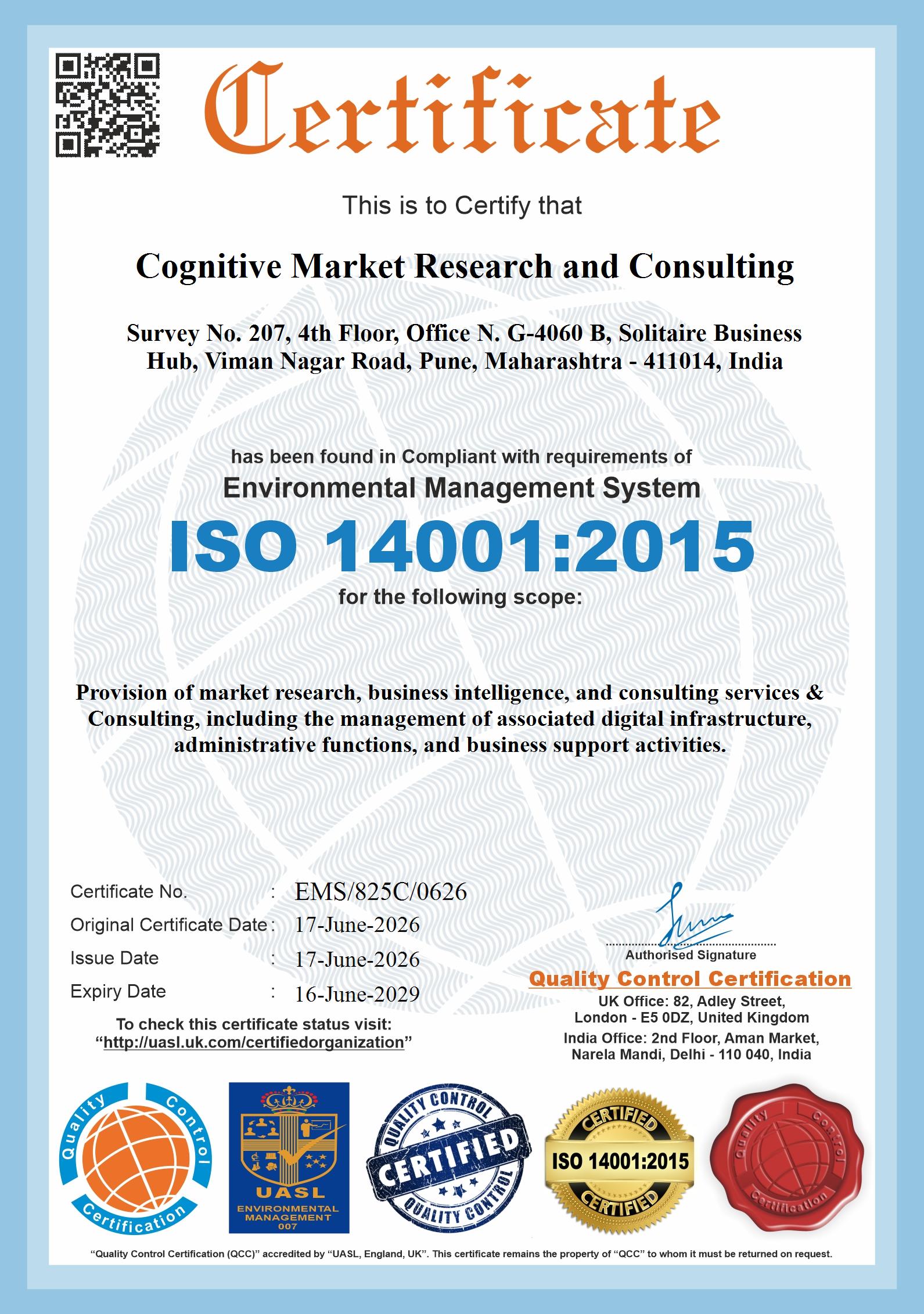
What these certifications mean to usA market figure is only as reliable as the system that produced it. That is why our accreditations cover the whole chain, not just the research step. ESOMAR and MRSI membership binds us to the professional codes that govern how respondents are recruited and how findings may be represented. ISO 20252 governs the research process itself; ISO 9001 and our quality control certification govern how consistently we repeat it. ISO 27001 and ISO 27701, alongside our GDPR, CCPA and DPDP compliance, govern what happens to your brief and your data once it reaches us; because a confidential scope is often more sensitive than the deliverable. ISO 14001, our D-U-N-S registration, Chamber of Commerce membership and DMCA protection speak to how the company itself is run and how its work is safeguarded.Our Clutch and Trustpilot profiles are deliberately listed next to them. They are the only signals on this page we do not issue ourselves, and they are the ones we would check first if we were you.
I would like to appreciate your efforts ni this complete sales cycle. You have been very helpful in giving al the possible details, transparent, getting yo…