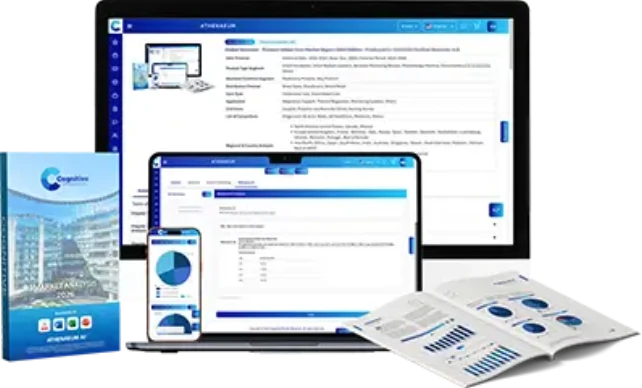
Electric Rice Cooker Market Analysis from 2022 to 2034 Containing Market Size, Share along with its CAGR, Forecast and Trends
Top Countries — Revenue
Market Dynamics of Electric Rice Cooker Market Analysis
Growth Drivers
- Increasing disposable income and rapid urbanization help to boost the market for electric cookers.
- Increasing the affordability of household applications and reducing time for household activities can help the market grow.
Restraints
- The high price of the product can hamper the market of electric rice cookers.
Trends
- Advancements in technology will create new opportunities for the market to grow
Access the full forecast model.
Country-level data · Company profiles · Editable dataset · Analyst consultation included.
Electric Rice Cooker Market Analysis — Presence
Geographical Analysis
Click countries to exploreRegional and Country Analysis
Global Electric Rice Cooker Market Analysis 2026
| Region / Country | 2021 (A) | 2025 (A) | 2033 (P) | CAGR |
|---|---|---|---|---|
| Global | xxxx | xxxx | xxxx | xxxx |
| North America | xxxx | xxxx | xxxx | xxxx |
| United States | xxxx | xxxx | xxxx | xxxx |
| Canada | xxxx | xxxx | xxxx | xxxx |
| Mexico | xxxx | xxxx | xxxx | xxxx |
| Europe | xxxx | xxxx | xxxx | xxxx |
| United Kingdom | xxxx | xxxx | xxxx | xxxx |
| France | xxxx | xxxx | xxxx | xxxx |
| Germany | xxxx | xxxx | xxxx | xxxx |
| Italy | xxxx | xxxx | xxxx | xxxx |
| Russia | xxxx | xxxx | xxxx | xxxx |
| Spain | xxxx | xxxx | xxxx | xxxx |
| Sweden | xxxx | xxxx | xxxx | xxxx |
| Denmark | xxxx | xxxx | xxxx | xxxx |
| Switzerland | xxxx | xxxx | xxxx | xxxx |
| Luxembourg | xxxx | xxxx | xxxx | xxxx |
| Rest of Europe | xxxx | xxxx | xxxx | xxxx |
| Asia-Pacific | xxxx | xxxx | xxxx | xxxx |
| China | xxxx | xxxx | xxxx | xxxx |
| Japan | xxxx | xxxx | xxxx | xxxx |
| South Korea | xxxx | xxxx | xxxx | xxxx |
| India | xxxx | xxxx | xxxx | xxxx |
| Australia | xxxx | xxxx | xxxx | xxxx |
| Singapore | xxxx | xxxx | xxxx | xxxx |
| Taiwan | xxxx | xxxx | xxxx | xxxx |
| South East Asia | xxxx | xxxx | xxxx | xxxx |
| Rest of APAC | xxxx | xxxx | xxxx | xxxx |
| South America | xxxx | xxxx | xxxx | xxxx |
| Brazil | xxxx | xxxx | xxxx | xxxx |
| Argentina | xxxx | xxxx | xxxx | xxxx |
| Colombia | xxxx | xxxx | xxxx | xxxx |
| Peru | xxxx | xxxx | xxxx | xxxx |
| Chile | xxxx | xxxx | xxxx | xxxx |
| Rest of South America | xxxx | xxxx | xxxx | xxxx |
| Middle East | xxxx | xxxx | xxxx | xxxx |
| Saudi Arabia | xxxx | xxxx | xxxx | xxxx |
| Turkey | xxxx | xxxx | xxxx | xxxx |
| UAE | xxxx | xxxx | xxxx | xxxx |
| Egypt | xxxx | xxxx | xxxx | xxxx |
| Qatar | xxxx | xxxx | xxxx | xxxx |
| Rest of Middle East | xxxx | xxxx | xxxx | xxxx |
| Africa | xxxx | xxxx | xxxx | xxxx |
| East Africa | xxxx | xxxx | xxxx | xxxx |
| West Africa | xxxx | xxxx | xxxx | xxxx |
| North Africa | xxxx | xxxx | xxxx | xxxx |
| South Africa | xxxx | xxxx | xxxx | xxxx |
A = Actual · E = Estimated · P = Projected · 🔒 Locked values require full access. Click headers to sort.
Unlock full regional dataset →Segmentation Analysis
Standard cooker dominates the market in product type. Rice may be cooked easily and affordably using standard electric rice cookers. These entry-level models cater to a broad spectrum of customers by offering basic features like keep-warm and automated cooking. They are appealing to people who want a simple rice-cooking solution without any further hassles. Standard electric rice cookers are a popular option for anyone searching for a simple and dependable cooking device because of their cost and convenience of use. This was about the segmentation on the basis of product type where standard cooker dominates the market.
Disclaimer: The charts and graphs are for illustrative purposes only and do not represent actual market values. To access accurate quantitative data, please request a paid report or request free sample.
To learn more about market share and segmentation, request the free sample pages.
Competitor Analysis
Competitive Landscape of the Electric Rice Cooker Market
The rice cookers that include easy-to-clean and maintain anti-rust, anti-fingerprint, and anti-scratch coatings, manufacturers are stepping up their game. Additionally, they are concentrating on the launch of cutting-edge goods such as small electric rice cookers that accommodate kitchens with limited space and enhance the appearance of any countertop. Voice activation, customizable settings, and smartphone management are becoming more popular features for smart rice cookers. Multi-functionality increases adaptability by enabling users to prepare more than simply rice and satisfy a range of nutritional requirements.
It is anticipated that major players in the electric rice market will concentrate on advancing technological advancement to increase the energy efficiency of electric rice cookers and work to manufacture goods with greater energy efficiency. To encourage consumers to buy energy-efficient electric rice cookers, manufacturers want to quickly introduce energy efficiency labeling and will make every effort to supply relevant information.
| Top Companies (In no particular order) | 2022 (A) | 2023 (A) | 2024 (A) | 2025 (A) |
|---|---|---|---|---|
| Panasonic Corporation | ••• | ••• | ••• | ••• |
| Tiger Corporation | ••• | ••• | ••• | ••• |
| Zojirushi American Corporation | ••• | ••• | ••• | ••• |
| Bajaj Electricals | ••• | ••• | ••• | ••• |
| Breville Group Limited | ••• | ••• | ••• | ••• |
| Hitachi Appliances | ••• | ••• | ••• | ••• |
| Toshiba Corporation | ••• | ••• | ••• | ••• |
We Provide Regional Breakdown of this Companies and Company specific to any Country, Region, Product/ service as well. We cover market share analysis for publicly listed companies as well as privately held companies, subject to data availability.
Request company profile for validation →Report Scope & Analysis
According to Cognitive Market Research, the global Electric Rice Cooker market size was valued at USD xx billion in 2024 and is expected to reach USD xx billion at a CAGR of xx% during the forecast period.
- Asia-Pacific accounted for a share of over XX% of the global market size of USD XX million.
- North America held the largest share of the global Turbo Generator market around XX% of the global revenue with a market size of USD XX million in 2024 and will grow at a compound annual growth rate (CAGR) of XX% from 2024 to 2031.
- Europe held a market share of around XX% of the global revenue with a market size of USD XX million in 2024 and will grow at a compound annual growth rate (CAGR) of XX% from 2024 to 2031.
- The Latin American market is around XX% of the global revenue with a market size of USD XX million in 2024 and will grow at a compound annual growth rate (CAGR) of XX% from 2024 to 2031.
- Middle East and Africa held the major market of around XX% of the global revenue with a market size of USD XX million in 2024 and will grow at a compound annual growth rate (CAGR) of XX% from 2024 to 2031.
Introduction of the Electric Rice Cooker Market
A rice cooker or rice steamer is an automated kitchen appliance designed to boil or steam rice. It consists of a heat source, a cooking bowl, and a thermostat. The thermostat measures the temperature of the cooking bowl and controls the heat.
The market for electric rice cookers market is growing due to increased consumer awareness about the use of energy-efficiency cooking applications. This can be an appealing factor for the regions where energy conservation is the major factor. Cooking with electricity offers several benefits efficiency in cooking, cost savings, and reduction in energy consumption. According to the report by MECS, around 40% of households are connected to the grid or off-grid electricity to be used for cooking, and 60% of households will use modern energy for cooking which generates less carbon sources by 2030.
Additionally, electric rice cooker manufacturers are focusing more on research and development activities for product designs, to bolster product portfolios and meet the diverse needs of the public. The new launches of innovative products lead to an increase in product visibility among customers.
Consumers have become health-conscious and are looking for appliances that help them to maintain their nutritious diet. An electric cooker helps maintain the nutrition. According to the report by DSM, 60% of the worldwide population said that they have started consuming a healthy diet after the pandemic. (Source:https://www.dsm.com/food-beverage/en_US/insights/insights/consumer-insights/health-conscious-consumers-are-looking-to-enjoy-it-all.html). This was about the overview of the electric rice cooker market.
Analyst Conclusion
Based on the Electric Rice Cooker Market study mentioned above, it can be inferred that the global market for embedded hypervisors is anticipated to grow rapidly shortly. The market dynamics, segmentations, status and trends, and major players can all be understood and inferred from the research. It offers information on a range of subjects, including market size, current trends, the competitive environment, and the likelihood of future growth. This makes it possible for the reader to comprehend and obtain trustworthy market and industry data.

Anushka Gore is a Senior Research Associate at Cognitive Market Research & Consulting, specializing in the Consumer Goods sector. She is involved in delivering comprehensive market intelligence and business research solutions, utilizing both primary and secondary research methodologies to provide accurate, actionable, and data-driven insights for organizations operating across diverse consumer markets.
Her expertise includes market sizing and forecasting, competitive landscape assessment, consumer behavior analysis, brand positioning studies, customer and stakeholder surveys, expert interviews, and strategic market evaluations. Anushka works closely with manufacturers, retailers, distributors, industry experts, and consumers to gather firsthand market insights while leveraging extensive secondary research to validate market trends, demand patterns, and growth opportunities.
At Cognitive Market Research & Consulting, she contributes to market research reports, custom consulting engagements, and survey-based studies spanning various consumer goods categories, including packaged foods, beverages, personal care products, household products, consumer electronics, lifestyle products, and emerging consumer brands. Her research helps organizations understand changing consumer preferences, purchasing behaviors, distribution channel dynamics, competitive strategies, and innovation trends shaping the consumer goods industry.
Through her analytical approach and deep understanding of consumer markets, Anushka supports businesses in identifying growth opportunities, evaluating market potential, optimizing product strategies, and making informed strategic decisions. Her commitment to delivering high-quality research enables organizations to adapt to evolving consumer demands, strengthen market positioning, and achieve sustainable growth in an increasingly competitive marketplace.
Purchase & Support
What you get, what it costs, and how we stand behind it
Every licence includes two years of analyst access, not just a document. Below: the decisions this research supports, what is included, what is charged separately, and the checks every figure passes before release.
What our consultation helps you decide
If you are deciding…
- Whether to enter or expand in a market
- Where to invest across the portfolio
- Which customer groups to target
- Where to direct product development
- How to position against competitors
- How your performance compares to the market
- Whether to acquire, partner or divest
- Whether to invest or fund
- How to plan budgets and targets
- Which route to market to build
- How to assess supply and sourcing risk
These are the decisions clients bring us most often — but they are not the limit. Most engagements surface questions the data alone does not answer, and that is where the consultation does the work. Tell us what you are deciding, and our analyst will tell you what the research can support.
Included in your purchase
A licence is a two-year relationship, not a one-time download. Everything below is included at no additional cost.
Access & formats
- Multi-format delivery
- Cloud/HTML with master and team access, PDF, Excel data models, board-ready PPT, and the Athenaeum AI consultant.
- Interactive dashboard
- Toggle the dataset across global currencies and languages in real time.
- Portfolio-level insight
- Three-year country-level market sizing across your entire product range, not a single line.
Updates & editions
- 8 quarterly refreshes
- Complimentary data updates every quarter for two years, so your figures track the market rather than the publication date.
- Next two annual editions
- The following two yearly editions are added to your account automatically.
- Dated at source
- Every deliverable carries a visible “data updated” date so recency is never in question.
Advisory & support
- 6 hours analyst consultation
- One-to-one time with the lead analyst for Q&A, walkthroughs, or to join an internal executive discussion as an independent adviser.
- Two-year strategic advisory
- Continuing support on assumptions, methodology and evolving requirements for the full licence period.
- 24/7 client support
- Round-the-clock account support for ad-hoc queries and new requests.
How delivery works
From first enquiry to dispatch, with a named analyst attached at every stage. Standard delivery is 5–7 business days from scope confirmation.
Before you buy
Complimentary preview. The full data structure and table of contents, so you can judge scope before committing.
Scope tailored to your question. Share your use case and problem statement and we shape the research around it.
Modular purchasing. Buy specific chapters, sections or graphs at nominal rates without the full dataset.
Confidentiality from first contact
Your proprietary requirements and personal information are safeguarded under GDPR (EU/UK), CCPA (USA) and the DPDP Act (India).
All project parameters are bound by a non-disclosure agreement from your first enquiry — not from the point of purchase.
Delivery execution
- 01Scope confirmationReview the preview with your dedicated analyst to agree variables, structure and formats.
- 02Extraction & customisationWe isolate the precise segments and parameters you need from the core database.
- 03Current-market validationFigures are refreshed and cross-checked against current-quarter market conditions.
- 04Expert QASenior specialists run qualitative checks and resolve overlaps and discrepancies.
- 05Dispatch & walkthroughDelivered in 5–7 business days, followed by an analyst-led walkthrough and Q&A.
Scope, timeline and price are confirmed in writing before any work starts. Customised datasets follow the same validation method and quality review as the standard report.
Available at additional cost
Outside the standard licence, but available on request. Scope and price are confirmed in writing before any work begins.
How we assure quality
Before any dataset is released, it passes a five-stage review carried out by senior analysts and independent industry specialists.
- Senior analyst reviewEvery headline figure — market size, forecast, growth rate — is checked by a senior analyst before publication.
- Independent expert verificationEach data point is reviewed by at least two industry specialists with 15+ years in the category.
- Arithmetic and reconciliationCountry and regional figures are reconciled to their totals and cross-checked against observable market conditions.
- Divergence resolutionWhere sources conflict, we trace the cause rather than averaging it away, and record the basis for the figure we publish.
- Dated releaseEach deliverable ships with an explicit data-updated date and the edition it belongs to.
By combining statistical validation with qualitative vetting by practitioners, we release figures that are structurally sound and ready to carry into a board paper, an investment memo or a regulatory filing.
Need something outside this scope? Share your use case and we will confirm feasibility, timeline and price in writing before work starts.
Frequently Asked Questions
★ Reviews
Rate this report
Electric Rice Cooker Market Analysis — Table of Contents
- This is just a redacted sample pages of the actual deliverable report and only for representative purposes
- Charts/Graphs/Numbers/data are only for Representative purposes and do not depict actual statistics.
- The table of Contents differs according to the user License selection. Current Displayed TOC is for the Corporate User License Report Edition. TOC Customization options: Add or Remove section/s Or chapter/s from the report.
- Specific Tables, Graphs, Sections, and Chapters can be ordered at a discounted price.
- If applicable; On Request Volume Data will also be provided (at an Additional Cost).
Report Scope
| Product Type | Standard, Multifunctional, Induction, Others |
|---|---|
| Capacity | Small Volume, Medium Volume, Large Volume, Extra Large Volume |
| Distribution Channel | Supermarkets and Hypermarkets, Specialty Stores, Online Stores, Others |
| End User | Household, Commercial |
| Conclusion | |
| List of Competitors | Panasonic Corporation, Tiger Corporation, Zojirushi American Corporation, Bajaj Electricals, Breville Group Limited, Hitachi Appliances, Toshiba Corporation |
Chapter 1. Competitor Analysis (Subject to Data Availability (Private Players))
- 1.1 Top Competitors Analysis
- 1.1.1 Global Electric Rice Cooker Market Analysis by Key Players
- 1.1.2 Segment Market Analysis by Key Players
- 1.1.3 Top Players Ranking 2024
- 1.1.4 New Product Launch Analysis
- 1.1.5 Industry Mergers and Acquisition Analysis
- 1.2 Company Profile (Data Subject to Availability) Sample Format
- 1.2.1 Panasonic Corporation
- 1.2.1.1 Company Basic Information, Manufacturing Base, Sales Area, and Competitors
- 1.2.1.2 Business Overview
- 1.2.1.3 Financials (Subject to data availability)
- 1.2.1.4 R&D Investment (Subject to data availability)
- 1.2.1.5 Product Types Specification
- 1.2.1.6 Business Strategy
- 1.2.1.7 Recent Developments
- 1.2.1.8 Management Change
- 1.2.1.9 S.W.O.T Analysis
- 1.2.2 Tiger Corporation
- 1.2.2.1 Company Basic Information, Manufacturing Base, Sales Area, and Competitors
- 1.2.2.2 Business Overview
- 1.2.2.3 Financials (Subject to data availability)
- 1.2.2.4 R&D Investment (Subject to data availability)
- 1.2.2.5 Product Types Specification
- 1.2.2.6 Business Strategy
- 1.2.2.7 Recent Developments
- 1.2.2.8 Management Change
- 1.2.2.9 S.W.O.T Analysis
- 1.2.3 Zojirushi American Corporation
- 1.2.3.1 Company Basic Information, Manufacturing Base, Sales Area, and Competitors
- 1.2.3.2 Business Overview
- 1.2.3.3 Financials (Subject to data availability)
- 1.2.3.4 R&D Investment (Subject to data availability)
- 1.2.3.5 Product Types Specification
- 1.2.3.6 Business Strategy
- 1.2.3.7 Recent Developments
- 1.2.3.8 Management Change
- 1.2.3.9 S.W.O.T Analysis
- 1.2.4 Bajaj Electricals
- 1.2.4.1 Company Basic Information, Manufacturing Base, Sales Area, and Competitors
- 1.2.4.2 Business Overview
- 1.2.4.3 Financials (Subject to data availability)
- 1.2.4.4 R&D Investment (Subject to data availability)
- 1.2.4.5 Product Types Specification
- 1.2.4.6 Business Strategy
- 1.2.4.7 Recent Developments
- 1.2.4.8 Management Change
- 1.2.4.9 S.W.O.T Analysis
- 1.2.5 Breville Group Limited
- 1.2.5.1 Company Basic Information, Manufacturing Base, Sales Area, and Competitors
- 1.2.5.2 Business Overview
- 1.2.5.3 Financials (Subject to data availability)
- 1.2.5.4 R&D Investment (Subject to data availability)
- 1.2.5.5 Product Types Specification
- 1.2.5.6 Business Strategy
- 1.2.5.7 Recent Developments
- 1.2.5.8 Management Change
- 1.2.5.9 S.W.O.T Analysis
- 1.2.6 Hitachi Appliances
- 1.2.6.1 Company Basic Information, Manufacturing Base, Sales Area, and Competitors
- 1.2.6.2 Business Overview
- 1.2.6.3 Financials (Subject to data availability)
- 1.2.6.4 R&D Investment (Subject to data availability)
- 1.2.6.5 Product Types Specification
- 1.2.6.6 Business Strategy
- 1.2.6.7 Recent Developments
- 1.2.6.8 Management Change
- 1.2.6.9 S.W.O.T Analysis
- 1.2.7 Toshiba Corporation
- 1.2.7.1 Company Basic Information, Manufacturing Base, Sales Area, and Competitors
- 1.2.7.2 Business Overview
- 1.2.7.3 Financials (Subject to data availability)
- 1.2.7.4 R&D Investment (Subject to data availability)
- 1.2.7.5 Product Types Specification
- 1.2.7.6 Business Strategy
- 1.2.7.7 Recent Developments
- 1.2.7.8 Management Change
- 1.2.7.9 S.W.O.T Analysis
- 1.2.1 Panasonic Corporation
- 1.1 Top Competitors Analysis
Chapter 2. Global Electric Rice Cooker Market Analysis
- 2.1 Global Electric Rice Cooker Market Analysis
- 2.2 Global Electric Rice Cooker Market Analysis by Region
- 2.3 Global Electric Rice Cooker Market Analysis by Product Type
- 2.4 Global Electric Rice Cooker Market Analysis by Capacity
- 2.5 Global Electric Rice Cooker Market Analysis by Distribution Channel
- 2.6 Global Electric Rice Cooker Market Analysis by End User
- 2.7 Global Electric Rice Cooker Market Analysis by Conclusion
- 2.8 Global Electric Rice Cooker Market Analysis by Key Players
Chapter 3. North America Electric Rice Cooker Market Analysis
- 3.1 North America Electric Rice Cooker Market Analysis
- 3.2 North America Electric Rice Cooker Market Analysis by Country
- 3.3 North America Electric Rice Cooker Market Analysis by Product Type
- 3.4 North America Electric Rice Cooker Market Analysis by Capacity
- 3.5 North America Electric Rice Cooker Market Analysis by Distribution Channel
- 3.6 North America Electric Rice Cooker Market Analysis by End User
- 3.7 North America Electric Rice Cooker Market Analysis by Conclusion
- 3.8 North America Electric Rice Cooker Market Analysis by Key Players
Chapter 4. Europe Electric Rice Cooker Market Analysis
- 4.1 Europe Electric Rice Cooker Market Analysis
- 4.2 Europe Electric Rice Cooker Market Analysis by Country
- 4.3 Europe Electric Rice Cooker Market Analysis by Product Type
- 4.4 Europe Electric Rice Cooker Market Analysis by Capacity
- 4.5 Europe Electric Rice Cooker Market Analysis by Distribution Channel
- 4.6 Europe Electric Rice Cooker Market Analysis by End User
- 4.7 Europe Electric Rice Cooker Market Analysis by Conclusion
- 4.8 Europe Electric Rice Cooker Market Analysis by Key Players
Chapter 5. Asia Pacific Electric Rice Cooker Market Analysis
- 5.1 Asia Pacific Electric Rice Cooker Market Analysis
- 5.2 Asia Pacific Electric Rice Cooker Market Analysis by Country
- 5.3 Asia Pacific Electric Rice Cooker Market Analysis by Product Type
- 5.4 Asia Pacific Electric Rice Cooker Market Analysis by Capacity
- 5.5 Asia Pacific Electric Rice Cooker Market Analysis by Distribution Channel
- 5.6 Asia Pacific Electric Rice Cooker Market Analysis by End User
- 5.7 Asia Pacific Electric Rice Cooker Market Analysis by Conclusion
- 5.8 Asia Pacific Electric Rice Cooker Market Analysis by Key Players
Chapter 6. South America Electric Rice Cooker Market Analysis
- 6.1 South America Electric Rice Cooker Market Analysis
- 6.2 South America Electric Rice Cooker Market Analysis by Country
- 6.3 South America Electric Rice Cooker Market Analysis by Product Type
- 6.4 South America Electric Rice Cooker Market Analysis by Capacity
- 6.5 South America Electric Rice Cooker Market Analysis by Distribution Channel
- 6.6 South America Electric Rice Cooker Market Analysis by End User
- 6.7 South America Electric Rice Cooker Market Analysis by Conclusion
- 6.8 South America Electric Rice Cooker Market Analysis by Key Players
Chapter 7. Middle East Electric Rice Cooker Market Analysis
- 7.1 Middle East Electric Rice Cooker Market Analysis
- 7.2 Middle East Electric Rice Cooker Market Analysis by Country
- 7.3 Middle East Electric Rice Cooker Market Analysis by Product Type
- 7.4 Middle East Electric Rice Cooker Market Analysis by Capacity
- 7.5 Middle East Electric Rice Cooker Market Analysis by Distribution Channel
- 7.6 Middle East Electric Rice Cooker Market Analysis by End User
- 7.7 Middle East Electric Rice Cooker Market Analysis by Conclusion
- 7.8 Middle East Electric Rice Cooker Market Analysis by Key Players
Chapter 8. Africa Electric Rice Cooker Market Analysis
- 8.1 Africa Electric Rice Cooker Market Analysis
- 8.2 Africa Electric Rice Cooker Market Analysis by Country
- 8.3 Africa Electric Rice Cooker Market Analysis by Product Type
- 8.4 Africa Electric Rice Cooker Market Analysis by Capacity
- 8.5 Africa Electric Rice Cooker Market Analysis by Distribution Channel
- 8.6 Africa Electric Rice Cooker Market Analysis by End User
- 8.7 Africa Electric Rice Cooker Market Analysis by Conclusion
- 8.8 Africa Electric Rice Cooker Market Analysis by Key Players
Chapter 9. Product Type Analysis
- 9.1 Standard
- 9.1.1 Global Standard Market
- 9.1.2 Global Standard Market by Region
- 9.2 Multifunctional
- 9.2.1 Global Multifunctional Market
- 9.2.2 Global Multifunctional Market by Region
- 9.3 Induction
- 9.3.1 Global Induction Market
- 9.3.2 Global Induction Market by Region
- 9.4 Others
- 9.4.1 Global Others Market
- 9.4.2 Global Others Market by Region
- 9.1 Standard
Chapter 10. Capacity Analysis
- 10.1 Small Volume
- 10.1.1 Global Small Volume Market
- 10.1.2 Global Small Volume Market by Region
- 10.2 Medium Volume
- 10.2.1 Global Medium Volume Market
- 10.2.2 Global Medium Volume Market by Region
- 10.3 Large Volume
- 10.3.1 Global Large Volume Market
- 10.3.2 Global Large Volume Market by Region
- 10.4 Extra Large Volume
- 10.4.1 Global Extra Large Volume Market
- 10.4.2 Global Extra Large Volume Market by Region
- 10.1 Small Volume
Chapter 11. Distribution Channel Analysis
- 11.1 Supermarkets and Hypermarkets
- 11.1.1 Global Supermarkets and Hypermarkets Market
- 11.1.2 Global Supermarkets and Hypermarkets Market by Region
- 11.2 Specialty Stores
- 11.2.1 Global Specialty Stores Market
- 11.2.2 Global Specialty Stores Market by Region
- 11.3 Online Stores
- 11.3.1 Global Online Stores Market
- 11.3.2 Global Online Stores Market by Region
- 11.4 Others
- 11.4.1 Global Others Market
- 11.4.2 Global Others Market by Region
- 11.1 Supermarkets and Hypermarkets
Chapter 12. End User Analysis
- 12.1 Household
- 12.1.1 Global Household Market
- 12.1.2 Global Household Market by Region
- 12.2 Commercial
- 12.2.1 Global Commercial Market
- 12.2.2 Global Commercial Market by Region
- 12.1 Household
Chapter 13. Conclusion Analysis
Chapter 14. Qualitative Analysis (Subject to Data Availability)
- 14.1 Market Drivers
- 14.2 Market Restraints
- 14.3 Market Trends
- 14.4 Market Opportunity
- 14.5 Technological Road Map (Subject to Data Availability)
- 14.6 Product Life Cycle (Subject to Data Availability)
- 14.7 Customer and Buyer Behavior Analysis
- 14.7.1 Digital Engagement, Customer Experience & Relationship Analysis
- 14.7.2 Customer Buying Behavior & Purchase Decision Analysis
- 14.7.3 Vendor Selection, Supplier Preferences & Future Demand Trends
- 14.7.4 Pricing, Affordability & Value Perception Analysis
- 14.7.5 Customer Segmentation & Demand Pattern Analysis
- 14.8 PESTEL Analysis
- 14.8.1 Political Factors
- 14.8.2 Economic Factors
- 14.8.3 Social Factors
- 14.8.4 Technological Factors
- 14.8.5 Legal Factors
- 14.8.6 Environmental Factors
- 14.9 Industrial Chain Analysis (Subject to Data Availability)
- 14.9.1 Industry Chain Analysis
- 14.9.2 Manufacturing Cost Analysis
- 14.9.3 Supply Side Analysis
- 14.9.3.1 Raw Material Analysis
- 14.9.3.2 Raw Material Procurement Analysis
- 14.9.3.3 Raw Material Price Trend Analysis
- 14.10 Porter’s Five Forces Analysis
- 14.10.1 Bargaining Power of Suppliers
- 14.10.2 Bargaining Power of Buyers
- 14.10.3 Threat of New Entrants
- 14.10.4 Threat of Substitutes
- 14.10.5 Degree of Competition
- 14.11 Patent Analysis (Subject to Data Availability)
- 14.12 ESG Analysis
- 14.13 Geopolitical Outlook
- 14.13.1 Global Power Realignment & Strategic Alliances
- 14.13.2 Geopolitical Risk Landscape & Conflict Hotspots
- 14.13.3 International Trade Relations & Market Access Environment
- 14.13.4 Regulatory & Policy Shifts Impacting Cross-Border Operations
- 14.13.5 Supply Chain Resilience, Localization & Resource Nationalism
- 14.13.6 Technology Sovereignty & Digital Geopolitics
- 14.13.7 Strategic Implications for Investment, Growth & Market Entry
- 14.14 AI & Market Transformation
- 14.14.1 Competitive Landscape Disruption & Strategic Shifts
- 14.14.2 AI-Driven Transformation of Industry Value Chain
- 14.14.3 Evolution of Business Models & Revenue Streams
- 14.14.4 AI-Driven Product, Service & Innovation Transformation
- 14.14.5 Customer Behavior, AI Adoption & Future Market Evolution
Chapter 15. TOP 10 Country Analysis
- 15.1 Country 1
- 15.2 Country 2
- 15.3 Country 3
- 15.4 Country 4
- 15.5 Country 5
- 15.6 Country 6
- 15.7 Country 7
- 15.8 Country 8
- 15.9 Country 9
- 15.10 Country 10
Chapter 16. Research Findings
- 16.1 Key Takeaways
- 16.2 Analyst Point of View
- 16.3 Assumptions and Acronyms
Chapter 17. Research Methodology and Sources
- 17.1 Primary Data Collection
- 17.1.1 Steps for Primary Data Collection
- 17.1.1.1 Identification of KOL
- 17.1.2 Backward Integration
- 17.1.3 Forward Integration
- 17.1.4 How Primary Research Help Us
- 17.1.5 Modes of Primary Research
- 17.1.1 Steps for Primary Data Collection
- 17.2 Secondary Research
- 17.2.1 How Secondary Research Help Us
- 17.2.2 Sources of Secondary Research
- 17.3 Data Validation
- 17.3.1 Data Triangulation
- 17.4 Data Representation
- 17.1 Primary Data Collection
Athenaeum AI Dashboard
Our Proprietary Methodology
Cognitive Market Research and Consulting "The Full Truth" methodology — a rigorous triangulation process that combines primary research, secondary validation, and expert calibration. Implemented by Anushka Gore and team for the Electric Rice Cooker Market Analysis Market analysis.
Primary Intelligence Gathering
Direct interviews with 50+ industry stakeholders including manufacturers, distributors, end-users, and regulatory bodies across all six regions.
Secondary Data Triangulation
Cross-referencing against trade databases, customs records, financial filings, patent databases, and verified industry publications.
Expert Validation Protocol
Each data point undergoes validation by minimum two independent domain experts with 15+ years of industry experience.
Athenaeum AI Processing
Our proprietary AI platform aggregates, normalizes, and identifies patterns across 10,000+ data points to surface non-obvious insights.
Editorial & QA Review
Final review by senior analysts ensures accuracy, coherence, and actionability of all insights and recommendations.
Data Assurance Metrics
Analytical Coverage
To maintain the integrity of our proprietary methodology and protect our elite expert network, specific source disclosures are reserved for full-access partners. Our research framework is anchored by a 70:30 primary-to-secondary ratio, ensuring your strategy is driven by real-time market intelligence rather than recycled, publicly available, or AI-generated data. Every deliverable includes an exhaustive source directory and grants direct analyst access.
Latest News about Electric Rice Cooker Market
Sources from the Consumer Industry
The Three Pillars of End-to-End Market Research Services
We don't just hand over data. We partner with your team across three integrated service lines — each designed to give you decision-grade intelligence on the Electric Rice Cooker Market Analysis market.
Market Survey
Structured primary research across both B2B and B2C channels. We design and execute custom surveys targeting manufacturers, distributors, procurement heads, and end-consumers in the electric rice cooker market analysis ecosystem — validated by our global panel of 10,000+ industrial respondents.
- Buyer intent & sentiment analysis
- Purchase cycle mapping
- Price sensitivity research
- Channel preference profiling
- Competitive perception study
Customized Market Data & Reports
Choose from our ready-to-access 8th Edition report or commission a fully customized dataset tailored to your exact strategic questions. Cross-splits, custom geographies, proprietary segmentation — we build the intelligence asset your board actually needs.
- Ready syndicate report
- Custom data scope & segmentation
- Excel quantitative models
- Board-ready PPT with key findings
- Secure cloud portal access
Strategic Consultation
Every survey and every report comes with dedicated analyst consultation. Our senior research team walks your leadership through findings, answers strategic questions in real-time, and helps translate data into your next board presentation or investment thesis.
- Dedicated analyst assigned to you
- Live walkthrough of findings
- Strategic Q&A sessions
- Go-to-market recommendations
- NDA-protected engagement
Customize This Report
Tell us the specific segments, regions, or companies you need — and we will tailor the deliverable to your requirements.