Cobalt Market Analysis from 2022 to 2034 Containing Market Size, Share along with its CAGR, Forecast and Trends
Top Countries — Revenue
Access the full forecast model.
Country-level data · Company profiles · Editable dataset · Analyst consultation included.
Cobalt Market Analysis — Presence
Geographical Analysis
Click countries to exploreRegional and Country Analysis
Global Cobalt Market Analysis 2026
| Region / Country | 2021 (A) | 2025 (A) | 2033 (P) | CAGR |
|---|---|---|---|---|
| Global | $ 14071.1 Million | $ 18136 Million | $ 30127.9 Million | 6.55% |
| North America | $ 5529.94 Million | $ 6964.22 Million | $ 11117.2 Million | 6.021% |
| United States | $ 3843.31 Million | $ 4770.49 Million | $ 7381.82 Million | 5.609% |
| Canada | $ 1255.3 Million | $ 1615.7 Million | $ 2679.25 Million | 6.526% |
| Mexico | $ 431.34 Million | $ 578.03 Million | $ 1056.13 Million | 7.825% |
| Europe | $ 2786.07 Million | $ 3518.38 Million | $ 5633.92 Million | 6.062% |
| United Kingdom | $ 571.15 Million | $ 707.2 Million | $ 1092.98 Million | 5.593% |
| France | $ 376.12 Million | $ 464.43 Million | $ 704.24 Million | 5.342% |
| Germany | $ 507.07 Million | $ 629.79 Million | $ 974.67 Million | 5.611% |
| Italy | $ 292.54 Million | $ 369.43 Million | $ 585.93 Million | 5.935% |
| Russia | $ 130.95 Million | $ 168.88 Million | $ 281.7 Million | 6.604% |
| Spain | $ 256.32 Million | $ 337.77 Million | $ 597.2 Million | 7.384% |
| Sweden | $ 158.81 Million | $ 197.03 Million | $ 298.6 Million | 5.334% |
| Denmark | $ 122.59 Million | $ 158.33 Million | $ 270.43 Million | 6.921% |
| Switzerland | $ 178.31 Million | $ 221.66 Million | $ 343.67 Million | 5.635% |
| Luxembourg | $ 50.15 Million | $ 59.81 Million | $ 78.88 Million | 3.519% |
| Rest of Europe | $ 142.09 Million | $ 204.07 Million | $ 405.64 Million | 8.967% |
| Asia Pacific | $ 3982.12 Million | $ 5313.85 Million | $ 9430.04 Million | 7.433% |
| China | $ 1461.44 Million | $ 2019.26 Million | $ 3781.45 Million | 8.158% |
| Japan | $ 840.23 Million | $ 1052.14 Million | $ 1650.26 Million | 5.788% |
| South Korea | $ 493.78 Million | $ 653.6 Million | $ 1141.04 Million | 7.213% |
| India | $ 438.03 Million | $ 621.72 Million | $ 1254.19 Million | 9.168% |
| Australia | $ 215.03 Million | $ 276.32 Million | $ 443.21 Million | 6.084% |
| Singapore | $ 123.45 Million | $ 154.1 Million | $ 226.32 Million | 4.922% |
| Taiwan | $ 135.39 Million | $ 170.04 Million | $ 282.9 Million | 6.57% |
| South East Asia | $ 195.12 Million | $ 255.07 Million | $ 433.78 Million | 6.863% |
| Rest of APAC | $ 79.64 Million | $ 111.59 Million | $ 216.89 Million | 8.662% |
| South America | $ 816.12 Million | $ 1070.02 Million | $ 1807.68 Million | 6.774% |
| Brazil | $ 376.23 Million | $ 491.14 Million | $ 817.07 Million | 6.569% |
| Argentina | $ 139.56 Million | $ 179.76 Million | $ 292.84 Million | 6.29% |
| Colombia | $ 72.64 Million | $ 100.58 Million | $ 189.81 Million | 8.261% |
| Peru | $ 48.15 Million | $ 66.34 Million | $ 121.11 Million | 7.814% |
| Chile | $ 93.04 Million | $ 123.05 Million | $ 213.31 Million | 7.118% |
| Rest of South America | $ 86.51 Million | $ 109.14 Million | $ 173.54 Million | 5.968% |
| Middle East | $ 562.84 Million | $ 743.58 Million | $ 1295.5 Million | 7.186% |
| Saudi Arabia | $ 216.7 Million | $ 294.46 Million | $ 538.93 Million | 7.848% |
| Turkey | $ 116.51 Million | $ 152.43 Million | $ 260.4 Million | 6.923% |
| UAE | $ 93.43 Million | $ 124.18 Million | $ 217.64 Million | 7.266% |
| Egypt | $ 61.91 Million | $ 80.31 Million | $ 136.03 Million | 6.809% |
| Qatar | $ 31.52 Million | $ 38.67 Million | $ 58.3 Million | 5.266% |
| Rest of Middle East | $ 42.78 Million | $ 53.54 Million | $ 84.21 Million | 5.825% |
| Africa | $ 393.99 Million | $ 525.94 Million | $ 843.58 Million | 6.084% |
| East Africa | xxxx | xxxx | xxxx | xxxx |
| West Africa | xxxx | xxxx | xxxx | xxxx |
| North Africa | xxxx | xxxx | xxxx | xxxx |
| South Africa | $ 142.23 Million | $ 184.61 Million | $ 278.38 Million | 5.269% |
A = Actual · E = Estimated · P = Projected · 🔒 Locked values require full access. Click headers to sort.
Unlock full regional dataset →Segmentation Analysis
By Product The cobalt sulfate segment has the largest market share with an expected market size of XX million in 2024 with a growing CAGR of XX% during the forecast period. The cobalt sulfate is commonly used in many industries, such as catalysts, batteries, dyes, and agriculture. Moreover, it is a crucial part of lithium batteries, which run several electrical devices like cell phones, computers, and electric cars. It extends the life and performance of these batteries. Thus, it is expected that increasing investment in lithium battery production will fuel product demand during the projected time. For instance, in May 2022, British Volt Ltd. announced that it would invest GBP 200 million, or approximately USD 244 million, to construct a new gigafactory for batteries in Cambois, UK. Therefore, the market for cobalt sulfate is expected to grow in the coming years. Cobalt oxide is the fastest-growing market with an expected market size of XX million in 2024 with a growing CAGR of XX% during the forecast period. Cobalt oxide is an inorganic compound that has been described as an olive-green or gray solid. It is widely used in the chemical industry to make cobalt salts and in the ceramics industry as an addition to blue-colored glazes and enamels. Additionally, it is employed in the manufacturing of magnetic materials, such include hard drive magnetic recording media. Cobalt oxide powder, can also improve the Proton conductivity of Ni (OH)2, decrease the oxidation potential, and increase the oxygen evolution potential. Therefore, the market for cobalt oxide is expected to grow in the coming years.
Charts are illustrative — exact values, country-level breakdowns, and full forecast in the paid report. Request a Free Sample PDF.
To learn more about market share and segmentation, request the free sample pages.
Competitor Analysis
Competitive Landscape
The cobalt market is competitive with the presence of a few major players. Major players engage part in capacity expansions, R&D, and mergers and acquisitions. For instance, in 2021, Contemporary Amperex Technology (CATL) paid USD 137.5 million to acquire a share in the copper-cobalt mine Kisanfu (DRC) in the Democratic Republic of the Congo. Therefore, the cobalt market is very competitive.
| Top Companies (In no particular order) | 2022 (A) | 2023 (A) | 2024 (A) | 2025 (A) |
|---|---|---|---|---|
| China Molybdenum Co. | ••• | ••• | ••• | ••• |
| Ltd. | ••• | ••• | ••• | ••• |
| Eurasian Resources Group | ••• | ••• | ••• | ••• |
| Freeport-McMoRan | ••• | ••• | ••• | ••• |
| Glencore | ••• | ••• | ••• | ••• |
| Huayou Cobalt | ••• | ••• | ••• | ••• |
| Norilsk Nickel | ••• | ••• | ••• | ••• |
| Sumitomo Metal Mining Co. | ••• | ••• | ••• | ••• |
| Ltd. | ••• | ••• | ••• | ••• |
| Umicore | ••• | ••• | ••• | ••• |
We Provide Regional Breakdown of this Companies and Company specific to any Country, Region, Product/ service as well. We cover market share analysis for publicly listed companies as well as privately held companies, subject to data availability.
Request company profile for validation →Report Scope & Analysis
Executive Summary of Cobalt Market
The global cobalt market is poised for significant expansion, driven primarily by the escalating demand for lithium-ion batteries used in electric vehicles (EVs) and portable electronic devices. Valued at USD 14,071.1 million in 2021, the market is projected to reach USD 30,127.9 million by 2033, expanding at a CAGR of 6.55%. This growth is underpinned by the global transition towards clean energy and increasing digitalization. However, the market faces considerable challenges, including supply chain vulnerabilities due to heavy reliance on the Democratic Republic of Congo (DRC), price volatility, and pressing ethical and environmental concerns related to mining practices. Consequently, the industry is witnessing a strategic shift towards developing cobalt-free battery chemistries, enhancing recycling technologies, and diversifying supply sources to ensure long-term stability and sustainable growth.
Key strategic insights from our comprehensive analysis reveal:
- The exponential growth of the electric vehicle sector serves as the most significant demand driver, with cobalt being a critical component in the cathodes of high-performance lithium-ion batteries.
- Supply chain concentration, with a majority of raw cobalt originating from the Democratic Republic of Congo (DRC), presents substantial geopolitical and ethical risks, prompting manufacturers to explore alternative sourcing and recycling.
- Intensive research and development efforts are focused on creating low-cobalt and cobalt-free battery technologies (like LFP batteries) to mitigate supply risks and reduce costs, a trend that could reshape long-term market dynamics.
Strategic Recommendations for Manufacturers
Manufacturers in the cobalt value chain are advised to prioritize supply chain diversification by securing offtake agreements from politically stable regions like Australia, Canada, and Morocco to mitigate reliance on the DRC. It is crucial to invest in and adopt advanced recycling technologies to establish a closed-loop system, which will not only secure a secondary source of cobalt but also improve ESG credentials. Furthermore, companies should accelerate R&D in low-cobalt and cobalt-free battery chemistries to stay competitive and reduce exposure to price volatility. Building strategic partnerships with mining companies, recyclers, and automotive OEMs will be essential for ensuring supply stability and navigating market complexities.
Introduction To Cobalt
The chemical element cobalt has the atomic number 27 and the symbol Co. Except for trace amounts found in alloys of naturally occurring meteoric iron, cobalt is only present in the Earth's crust in a chemically mixed state, similar to nickel. It is a silver-white, glossy, brittle, hard, ferromagnetic element. In addition, it does not react with water and is stable in air. It is magnetized in the same way as other metals. It reacts slowly with weak acids. At 1495 °C, the metal melts, and at 2927 °C, it boils. Several industries, such as the chemical and petroleum sectors, commonly employ cobalt as a catalyst. Even though rechargeable batteries are the ones that typically contain it. Cobalt is utilized in lithium-ion batteries (LIBs) because of the well-known LiCoO2 (LCO) cathode, which provides great structural stability and good conductivity during charge cycling. Cobalt is a crucial component of lithium-ion batteries. It prevents cathodes from overheating, which can shorten battery life. For this reason, cobalt is a necessary component of practically all rechargeable batteries used in cell phones and other battery-operated devices and is crucial for prolonging battery life. The electric vehicles market is growing significantly in recent years as a result of increased regulation on gasoline and diesel-powered automobiles. EV numbers indicate that 10.5 million new plug-in hybrid electric cars (PHEVs) and battery electric vehicles (BEVs) were supplied in 2022, a 55% increase over 2021. Since cobalt has a good application in lithium batteries, it is highly used in the manufacturing of electric vehicles. The need for rechargeable batteries is being driven by the growing number of electric cars and the growing use of electronic devices in developing nations. This could propel the cobalt industry in the upcoming years. Therefore, the market cobalt will be increasing significantly in the coming years.
Analyst Conclusion
As per Cognitive's Research Analyst, Cobalt are integral to advanced industrial and electronic applications, notably as a critical component in rechargeable batteries. They play an essential role in enhancing energy density and battery life for electric vehicles and portable electronic devices, as well as providing high-temperature resistance for superalloys in aerospace and industrial sectors.
Looking at the Historical Growth The global market expanded from $14071.1 million in 2021 due to the surging demand for rechargeable batteries, particularly for electric mobility and consumer gadgets. Regionally, North America grew from $5529.94 million in 2021 to $7383.45 million in 2026, while Asia Pacific progressed from $3982.12 million to $5708.74 million over the same period.
Currently in 2026, North America holds a commanding position in the global market, driven by government incentives and policies promoting EV adoption and domestic battery production. The electric vehicle sector remains the primary consumer of Cobalt. Additionally Asia Pacific is set to be the fastest-growing region, exhibiting the highest CAGR of 7.433%, fueled by China's dominance in global refining and battery manufacturing.
The market is witnessing a definitive shift towards developing cobalt-free battery chemistries, driven by the imperative to mitigate supply chain risks and reduce production costs. Ongoing innovation in advanced recycling technologies is also leading, focusing on establishing a closed-loop system for valuable materials.
In the future, The global Cobalt market will reach to $30127.9 million by 2033, expanding at a compound annual growth rate of 6.55% from 2021, primarily driven by the global transition towards clean energy and increasing digitalization. Ongoing innovation in battery technology and the strong trend towards sustainable sourcing will also contribute significantly.

Chidanand Bilagi is a Senior Research Associate at Cognitive Market Research and Consulting, specializing in the chemical and materials industry. With a strong focus on global chemical markets, advanced materials, specialty chemicals, sustainable materials, and emerging industrial innovations, he delivers in-depth market intelligence and strategic insights to support informed decision-making.
His expertise includes analyzing industry trends, competitive landscapes, supply chain dynamics, regulatory developments, raw material pricing patterns, and technological advancements shaping the future of the chemical and materials sector. Through rigorous research and data-driven analysis, Chidanand contributes to the development of comprehensive market reports, helping businesses, investors, and industry stakeholders identify opportunities and address challenges in an evolving global market landscape.
Frequently Asked Questions
★ Reviews
Rate this report
Cobalt Market Analysis — Table of Contents
- This is just a redacted sample pages of the actual deliverable report and only for representative purposes
- Charts/Graphs/Numbers/data are only for Representative purposes and do not depict actual statistics.
- The table of Contents differs according to the user License selection. Current Displayed TOC is for the Corporate User License Report Edition. TOC Customization options: Add or Remove section/s Or chapter/s from the report.
- Specific Tables, Graphs, Sections, and Chapters can be ordered at a discounted price.
- If applicable; On Request Volume Data will also be provided (at an Additional Cost).
Report Scope
| Product | Cobalt Sulfate, Cobalt Oxide, Cobalt Metal |
|---|---|
| Application | EV, Industrial Metals, Superalloys |
| List of Competitors | China Molybdenum Co., Ltd., Eurasian Resources Group, Freeport-McMoRan, Glencore, Huayou Cobalt, Norilsk Nickel, Sumitomo Metal Mining Co., Ltd., Umicore |
Chapter 1. Competitor Analysis (Subject to Data Availability (Private Players))
- 1.1 Top Competitors Analysis
- 1.1.1 Global Cobalt Market Analysis by Key Players
- 1.1.2 Segment Market Analysis by Key Players
- 1.1.3 Top Players Ranking 2024
- 1.1.4 New Product Launch Analysis
- 1.1.5 Industry Mergers and Acquisition Analysis
- 1.2 Company Profile (Data Subject to Availability) Sample Format
- 1.2.1 China Molybdenum Co.
- 1.2.1.1 Company Basic Information, Manufacturing Base, Sales Area, and Competitors
- 1.2.1.2 Business Overview
- 1.2.1.3 Financials (Subject to data availability)
- 1.2.1.4 R&D Investment (Subject to data availability)
- 1.2.1.5 Product Types Specification
- 1.2.1.6 Business Strategy
- 1.2.1.7 Recent Developments
- 1.2.1.8 Management Change
- 1.2.1.9 S.W.O.T Analysis
- 1.2.2 Ltd.
- 1.2.2.1 Company Basic Information, Manufacturing Base, Sales Area, and Competitors
- 1.2.2.2 Business Overview
- 1.2.2.3 Financials (Subject to data availability)
- 1.2.2.4 R&D Investment (Subject to data availability)
- 1.2.2.5 Product Types Specification
- 1.2.2.6 Business Strategy
- 1.2.2.7 Recent Developments
- 1.2.2.8 Management Change
- 1.2.2.9 S.W.O.T Analysis
- 1.2.3 Eurasian Resources Group
- 1.2.3.1 Company Basic Information, Manufacturing Base, Sales Area, and Competitors
- 1.2.3.2 Business Overview
- 1.2.3.3 Financials (Subject to data availability)
- 1.2.3.4 R&D Investment (Subject to data availability)
- 1.2.3.5 Product Types Specification
- 1.2.3.6 Business Strategy
- 1.2.3.7 Recent Developments
- 1.2.3.8 Management Change
- 1.2.3.9 S.W.O.T Analysis
- 1.2.4 Freeport-McMoRan
- 1.2.4.1 Company Basic Information, Manufacturing Base, Sales Area, and Competitors
- 1.2.4.2 Business Overview
- 1.2.4.3 Financials (Subject to data availability)
- 1.2.4.4 R&D Investment (Subject to data availability)
- 1.2.4.5 Product Types Specification
- 1.2.4.6 Business Strategy
- 1.2.4.7 Recent Developments
- 1.2.4.8 Management Change
- 1.2.4.9 S.W.O.T Analysis
- 1.2.5 Glencore
- 1.2.5.1 Company Basic Information, Manufacturing Base, Sales Area, and Competitors
- 1.2.5.2 Business Overview
- 1.2.5.3 Financials (Subject to data availability)
- 1.2.5.4 R&D Investment (Subject to data availability)
- 1.2.5.5 Product Types Specification
- 1.2.5.6 Business Strategy
- 1.2.5.7 Recent Developments
- 1.2.5.8 Management Change
- 1.2.5.9 S.W.O.T Analysis
- 1.2.6 Huayou Cobalt
- 1.2.6.1 Company Basic Information, Manufacturing Base, Sales Area, and Competitors
- 1.2.6.2 Business Overview
- 1.2.6.3 Financials (Subject to data availability)
- 1.2.6.4 R&D Investment (Subject to data availability)
- 1.2.6.5 Product Types Specification
- 1.2.6.6 Business Strategy
- 1.2.6.7 Recent Developments
- 1.2.6.8 Management Change
- 1.2.6.9 S.W.O.T Analysis
- 1.2.7 Norilsk Nickel
- 1.2.7.1 Company Basic Information, Manufacturing Base, Sales Area, and Competitors
- 1.2.7.2 Business Overview
- 1.2.7.3 Financials (Subject to data availability)
- 1.2.7.4 R&D Investment (Subject to data availability)
- 1.2.7.5 Product Types Specification
- 1.2.7.6 Business Strategy
- 1.2.7.7 Recent Developments
- 1.2.7.8 Management Change
- 1.2.7.9 S.W.O.T Analysis
- 1.2.8 Sumitomo Metal Mining Co.
- 1.2.8.1 Company Basic Information, Manufacturing Base, Sales Area, and Competitors
- 1.2.8.2 Business Overview
- 1.2.8.3 Financials (Subject to data availability)
- 1.2.8.4 R&D Investment (Subject to data availability)
- 1.2.8.5 Product Types Specification
- 1.2.8.6 Business Strategy
- 1.2.8.7 Recent Developments
- 1.2.8.8 Management Change
- 1.2.8.9 S.W.O.T Analysis
- 1.2.9 Ltd.
- 1.2.9.1 Company Basic Information, Manufacturing Base, Sales Area, and Competitors
- 1.2.9.2 Business Overview
- 1.2.9.3 Financials (Subject to data availability)
- 1.2.9.4 R&D Investment (Subject to data availability)
- 1.2.9.5 Product Types Specification
- 1.2.9.6 Business Strategy
- 1.2.9.7 Recent Developments
- 1.2.9.8 Management Change
- 1.2.9.9 S.W.O.T Analysis
- 1.2.10 Umicore
- 1.2.10.1 Company Basic Information, Manufacturing Base, Sales Area, and Competitors
- 1.2.10.2 Business Overview
- 1.2.10.3 Financials (Subject to data availability)
- 1.2.10.4 R&D Investment (Subject to data availability)
- 1.2.10.5 Product Types Specification
- 1.2.10.6 Business Strategy
- 1.2.10.7 Recent Developments
- 1.2.10.8 Management Change
- 1.2.10.9 S.W.O.T Analysis
- 1.2.1 China Molybdenum Co.
- 1.1 Top Competitors Analysis
Chapter 2. Global Cobalt Market Analysis
- 2.1 Global Cobalt Market Analysis
- 2.2 Global Cobalt Market Analysis by Region
- 2.3 Global Cobalt Market Analysis by Product
- 2.4 Global Cobalt Market Analysis by Application
- 2.5 Global Cobalt Market Analysis by Key Players
Chapter 3. North America Cobalt Market Analysis
- 3.1 North America Cobalt Market Analysis
- 3.2 North America Cobalt Market Analysis by Country
- 3.3 North America Cobalt Market Analysis by Product
- 3.4 North America Cobalt Market Analysis by Application
- 3.5 North America Cobalt Market Analysis by Key Players
Chapter 4. Europe Cobalt Market Analysis
- 4.1 Europe Cobalt Market Analysis
- 4.2 Europe Cobalt Market Analysis by Country
- 4.3 Europe Cobalt Market Analysis by Product
- 4.4 Europe Cobalt Market Analysis by Application
- 4.5 Europe Cobalt Market Analysis by Key Players
Chapter 5. Asia Pacific Cobalt Market Analysis
- 5.1 Asia Pacific Cobalt Market Analysis
- 5.2 Asia Pacific Cobalt Market Analysis by Country
- 5.3 Asia Pacific Cobalt Market Analysis by Product
- 5.4 Asia Pacific Cobalt Market Analysis by Application
- 5.5 Asia Pacific Cobalt Market Analysis by Key Players
Chapter 6. South America Cobalt Market Analysis
- 6.1 South America Cobalt Market Analysis
- 6.2 South America Cobalt Market Analysis by Country
- 6.3 South America Cobalt Market Analysis by Product
- 6.4 South America Cobalt Market Analysis by Application
- 6.5 South America Cobalt Market Analysis by Key Players
Chapter 7. Middle East Cobalt Market Analysis
- 7.1 Middle East Cobalt Market Analysis
- 7.2 Middle East Cobalt Market Analysis by Country
- 7.3 Middle East Cobalt Market Analysis by Product
- 7.4 Middle East Cobalt Market Analysis by Application
- 7.5 Middle East Cobalt Market Analysis by Key Players
Chapter 8. Africa Cobalt Market Analysis
- 8.1 Africa Cobalt Market Analysis
- 8.2 Africa Cobalt Market Analysis by Country
- 8.3 Africa Cobalt Market Analysis by Product
- 8.4 Africa Cobalt Market Analysis by Application
- 8.5 Africa Cobalt Market Analysis by Key Players
Chapter 9. Product Analysis
- 9.1 Cobalt Sulfate
- 9.1.1 Global Cobalt Sulfate Market
- 9.1.2 Global Cobalt Sulfate Market by Region
- 9.2 Cobalt Oxide
- 9.2.1 Global Cobalt Oxide Market
- 9.2.2 Global Cobalt Oxide Market by Region
- 9.3 Cobalt Metal
- 9.3.1 Global Cobalt Metal Market
- 9.3.2 Global Cobalt Metal Market by Region
- 9.1 Cobalt Sulfate
Chapter 10. Application Analysis
- 10.1 EV
- 10.1.1 Global EV Market
- 10.1.2 Global EV Market by Region
- 10.2 Industrial Metals
- 10.2.1 Global Industrial Metals Market
- 10.2.2 Global Industrial Metals Market by Region
- 10.3 Superalloys
- 10.3.1 Global Superalloys Market
- 10.3.2 Global Superalloys Market by Region
- 10.1 EV
Chapter 11. Qualitative Analysis (Subject to Data Availability)
- 11.1 Market Drivers
- 11.2 Market Restraints
- 11.3 Market Trends
- 11.4 Market Opportunity
- 11.5 Technological Road Map (Subject to Data Availability)
- 11.6 Product Life Cycle (Subject to Data Availability)
- 11.7 Customer and Buyer Behavior Analysis
- 11.7.1 Digital Engagement, Customer Experience & Relationship Analysis
- 11.7.2 Customer Buying Behavior & Purchase Decision Analysis
- 11.7.3 Vendor Selection, Supplier Preferences & Future Demand Trends
- 11.7.4 Pricing, Affordability & Value Perception Analysis
- 11.7.5 Customer Segmentation & Demand Pattern Analysis
- 11.8 PESTEL Analysis
- 11.8.1 Political Factors
- 11.8.2 Economic Factors
- 11.8.3 Social Factors
- 11.8.4 Technological Factors
- 11.8.5 Legal Factors
- 11.8.6 Environmental Factors
- 11.9 Industrial Chain Analysis (Subject to Data Availability)
- 11.9.1 Industry Chain Analysis
- 11.9.2 Manufacturing Cost Analysis
- 11.9.3 Supply Side Analysis
- 11.9.3.1 Raw Material Analysis
- 11.9.3.2 Raw Material Procurement Analysis
- 11.9.3.3 Raw Material Price Trend Analysis
- 11.10 Porter’s Five Forces Analysis
- 11.10.1 Bargaining Power of Suppliers
- 11.10.2 Bargaining Power of Buyers
- 11.10.3 Threat of New Entrants
- 11.10.4 Threat of Substitutes
- 11.10.5 Degree of Competition
- 11.11 Patent Analysis (Subject to Data Availability)
- 11.12 ESG Analysis
- 11.13 Geopolitical Outlook
- 11.13.1 Global Power Realignment & Strategic Alliances
- 11.13.2 Geopolitical Risk Landscape & Conflict Hotspots
- 11.13.3 International Trade Relations & Market Access Environment
- 11.13.4 Regulatory & Policy Shifts Impacting Cross-Border Operations
- 11.13.5 Supply Chain Resilience, Localization & Resource Nationalism
- 11.13.6 Technology Sovereignty & Digital Geopolitics
- 11.13.7 Strategic Implications for Investment, Growth & Market Entry
- 11.14 AI & Market Transformation
- 11.14.1 Competitive Landscape Disruption & Strategic Shifts
- 11.14.2 AI-Driven Transformation of Industry Value Chain
- 11.14.3 Evolution of Business Models & Revenue Streams
- 11.14.4 AI-Driven Product, Service & Innovation Transformation
- 11.14.5 Customer Behavior, AI Adoption & Future Market Evolution
Chapter 12. TOP 10 Country Analysis
- 12.1 Country 1
- 12.2 Country 2
- 12.3 Country 3
- 12.4 Country 4
- 12.5 Country 5
- 12.6 Country 6
- 12.7 Country 7
- 12.8 Country 8
- 12.9 Country 9
- 12.10 Country 10
Chapter 13. Research Findings
- 13.1 Key Takeaways
- 13.2 Analyst Point of View
- 13.3 Assumptions and Acronyms
Chapter 14. Research Methodology and Sources
- 14.1 Primary Data Collection
- 14.1.1 Steps for Primary Data Collection
- 14.1.1.1 Identification of KOL
- 14.1.2 Backward Integration
- 14.1.3 Forward Integration
- 14.1.4 How Primary Research Help Us
- 14.1.5 Modes of Primary Research
- 14.1.1 Steps for Primary Data Collection
- 14.2 Secondary Research
- 14.2.1 How Secondary Research Help Us
- 14.2.2 Sources of Secondary Research
- 14.3 Data Validation
- 14.3.1 Data Triangulation
- 14.4 Data Representation
- 14.1 Primary Data Collection
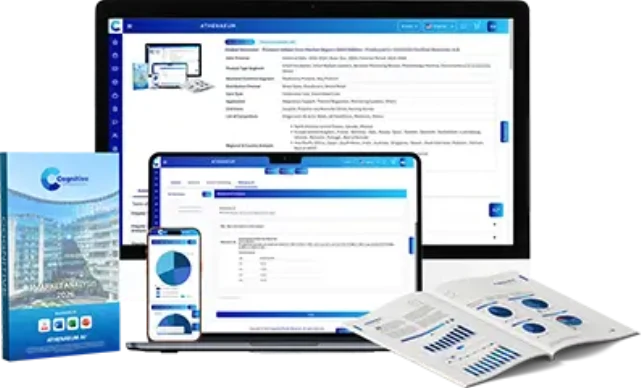
Athenaeum AI Dashboard
Our Proprietary Methodology
Cognitive Market Research and Consulting "The Full Truth" methodology — a rigorous triangulation process that combines primary research, secondary validation, and expert calibration. Implemented by Chidanand Bilagi and team for the Cobalt Market Analysis Market analysis.
Primary Intelligence Gathering
Direct interviews with 50+ industry stakeholders including manufacturers, distributors, end-users, and regulatory bodies across all six regions.
Secondary Data Triangulation
Cross-referencing against trade databases, customs records, financial filings, patent databases, and verified industry publications.
Expert Validation Protocol
Each data point undergoes validation by minimum two independent domain experts with 15+ years of industry experience.
Athenaeum AI Processing
Our proprietary AI platform aggregates, normalizes, and identifies patterns across 10,000+ data points to surface non-obvious insights.
Editorial & QA Review
Final review by senior analysts ensures accuracy, coherence, and actionability of all insights and recommendations.
Data Assurance Metrics
Analytical Coverage
To maintain the integrity of our proprietary methodology and protect our elite expert network, specific source disclosures are reserved for full-access partners. Our research framework is anchored by a 70:30 primary-to-secondary ratio, ensuring your strategy is driven by real-time market intelligence rather than recycled, publicly available, or AI-generated data. Every deliverable includes an exhaustive source directory and grants direct analyst access.
Sources from the Chemical & Materials Industry
The Three Pillars of End-to-End Market Research Services
We don't just hand over data. We partner with your team across three integrated service lines — each designed to give you decision-grade intelligence on the Cobalt Market Analysis market.
Market Survey
Structured primary research across both B2B and B2C channels. We design and execute custom surveys targeting manufacturers, distributors, procurement heads, and end-consumers in the cobalt market analysis ecosystem — validated by our global panel of 10,000+ industrial respondents.
- Buyer intent & sentiment analysis
- Purchase cycle mapping
- Price sensitivity research
- Channel preference profiling
- Competitive perception study
Customized Market Data & Reports
Choose from our ready-to-access 8th Edition report or commission a fully customized dataset tailored to your exact strategic questions. Cross-splits, custom geographies, proprietary segmentation — we build the intelligence asset your board actually needs.
- Ready syndicate report (250+ pages)
- Custom data scope & segmentation
- Excel quantitative models
- Board-ready PPT with key findings
- Secure cloud portal access
Strategic Consultation
Every survey and every report comes with dedicated analyst consultation. Our senior research team walks your leadership through findings, answers strategic questions in real-time, and helps translate data into your next board presentation or investment thesis.
- Dedicated analyst assigned to you
- Live walkthrough of findings
- Strategic Q&A sessions
- Go-to-market recommendations
- NDA-protected engagement
Customize This Report
Tell us the specific segments, regions, or companies you need — and we will tailor the deliverable to your requirements.