Blog Content
Introduction
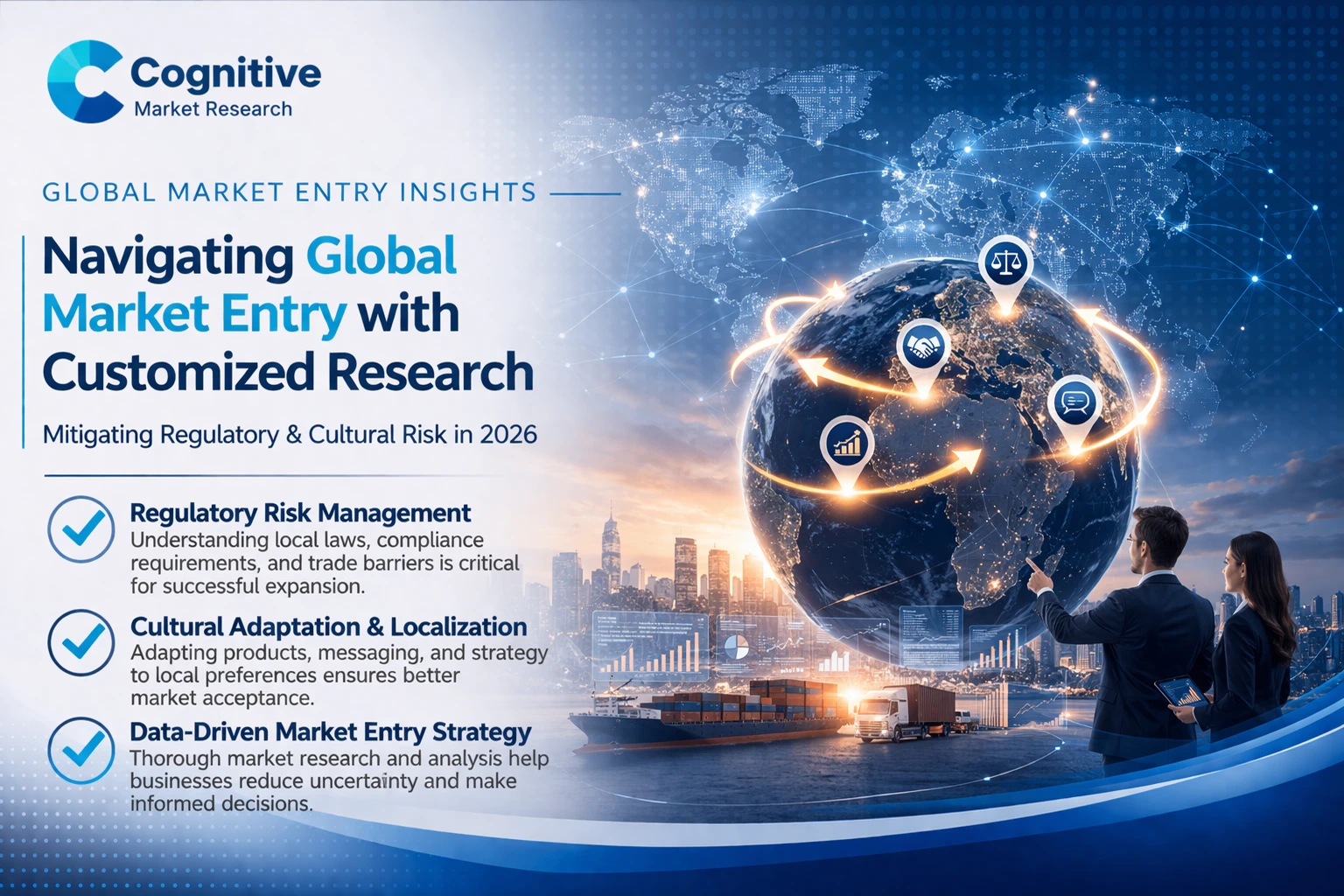
Moving into a new global market in 2026 feels a lot different than it did even five years ago. For manufacturers, the stakes have shifted. We’re seeing a world where trade blocs are tightening, supply chains are being rewritten, and one-size-fits-all expansion strategies are landing on the scrap heap. At Cognitive Market Research, we’ve spent the last nine years sitting across the table from leadership teams who realize that a single oversight in a new territory isn't just a hiccup it’s a multi-million dollar roadblock. To win today, you need more than just a data dump; you need a strategy that bridges the gap between high-level global trends and the grit of local reality.
The Regulatory Puzzle: It’s Not Just About Compliance Anymore
In 2026, the regulatory environment is moving at a breakneck pace. Whether it’s the latest iteration of Digital Product Passports in Europe or new carbon-border adjustments surfacing across Asia, keeping up has become a full-time job.
Most generic reports will tell you what the laws are today. But as analysts, our job is to tell you what they’ll look like eighteen months from now. We use a triangulation approach layering our own proprietary databases with premium paid sources and boots-on-the-ground primary research. This isn't just about checking boxes for a legal team; it’s about future-proofing your production lines so you don't have to re-tool your factory two years after a launch because a local mandate shifted.
Cultural Risk: Understanding the Unwritten Rules
If regulation is the visible hurdle, culture is the invisible one. For a B2B manufacturer, cultural risk doesn't usually mean an offensive ad campaign; it means a fundamental misunderstanding of how business actually gets done in a new region.
We’ve seen brilliant products fail because a company didn't understand local procurement habits or the specific hierarchy of decision-making in a foreign market. Our team at Cognitive digs into these nuances by talking directly to the people who matter: local distributors, site managers, and end-users. We identify the specific friction points—like lead-time expectations in Southeast Asia versus the rigid operational standards of the DACH region—so you can adjust your value proposition before you ever sign a contract.
Why Synthesis Beats Raw Data
In an era where everyone is drowning in information, the real value lies in knowing which pieces of data actually matter. We don't just hand over a survey and call it a day. We connect those field insights with secondary data to create a roadmap that actually works for your specific product line.
For our manufacturing clients, this means having a partner who stays in the trenches with you. Our multi-year data support ensures that as the market evolves, your strategy evolves with it. We treat research as an ongoing conversation, helping you pivot when the data suggests a change in direction is necessary.
Conclusion
Expanding a manufacturing footprint in 2026 is an exercise in managed bravery. It requires the courage to move, but the discipline to move with the right intelligence. At Cognitive Market Research, we take a problem-solving approach to consultation, ensuring that when you step into a new market, you aren’t guessing—you’re executing.
The most successful global players aren't necessarily the ones with the most resources; they’re the ones who took the time to map the terrain before they started the journey.