We value your privacy
We use cookies to improve your experience and analyze traffic. By continuing, you consent to our use of cookies under GDPR, CCPA and other applicable laws. Privacy Policy
Cookie preferences
Choose which categories of cookies you allow. Strictly necessary cookies are always on.
Strictly necessary
Required for core site functionality, security and your session. Always active.
Analytics
Help us understand how visitors use the site (e.g. Google Analytics) so we can improve it.
Marketing
Used to measure campaigns and show you relevant ads on other sites (e.g. LinkedIn, Google Ads).
The global Autopilot System Market size is USD 9.7 billion in 2024. The Autopilot System Market will show strongest growth with a compound annual growth rate (CAGR) of 6.4% from 2024 to 2031. This expansion can be attributed to an increase in the number of airline passengers. Download a free sample with data verified by Aarti Bagekari
Autopilot System Market Platform Segment Analysis
According to cognitive market research, in 2024, the airborne category held the majority of the market share. This is due to the availability of sophisticated autopilot systems for planes, airliners, and air taxis. Flight routes have expanded in response to developments in the aviation industry. Long-distance flights need constant monitoring and control by the pilots, which causes significant fatigue. Autopilot systems in airplanes let the pilot maintain accurate navigation control. The need for autopilot systems has increased in response to the growing necessity for reliable and precise navigation systems to allow aerial vehicles to travel safely. .
Airborne Autopilot System Market Analysis
XX
Airborne Market Size 2025
XX %
CAGR
Locked · Full data in paid report
Sea Autopilot System Market Analysis
XX
Sea Market Size 2025
XX %
CAGR
Locked · Full data in paid report
Subsea Autopilot System Market Analysis
XX
Subsea Market Size 2025
XX %
CAGR
Locked · Full data in paid report
Land-based Autopilot System Market Analysis
XX
Land-based Market Size 2025
XX %
CAGR
Locked · Full data in paid report
Market size by (Illustrative, 2025)
Share distribution (2025)
Disclaimer: The charts and graphs are for illustrative purposes only and do not represent actual market values. To access accurate quantitative data, please request a paid report or request free sample.
To learn more about market share and segmentation, request the free sample pages.
Competitor Analysis
Top Manufacturing Companies of Autopilot System:
Waymo LLC, Tesla, Aurora Innovation Inc., Motional, Inc., and Zoox, Inc. are the key players in the Autopilot Market
Waymo LLC
Waymo LLC, a subsidiary of Alphabet Inc., is a leading player in the autonomous driving technology sector, specifically focusing on the development and deployment of advanced autopilot systems. Established from the Google Self-Driving Car Project, Waymo has become synonymous with innovation in autonomous vehicle technology. In 2023, Waymo reported significant advancements in its operations, offering over 150,000 paid rides per week, totaling more than 1 million miles driven weekly across its commercial robotaxi services in cities like Phoenix, Arizona, Los Angeles, and San Francisco. Waymo's commitment to research and development has positioned it at the forefront of the autopilot system market, with a market share estimated at 18%. The company has successfully integrated cutting-edge technologies such as artificial intelligence (AI) and machine learning into its systems, enhancing safety and efficiency. Waymo's vehicles are equipped with state-of-the-art sensors and software that allow for real-time decision-making and navigation in complex urban environments. In 2023, Waymo expanded its service coverage by 45 square miles, incorporating new areas in Phoenix and launching services in Los Angeles, reflecting its aggressive growth strategy. The company has established partnerships with major automotive manufacturers, including Stellantis and Volvo, further solidifying its position in the market. Waymo's autonomous vehicles have undergone extensive testing, amassing over 20 million miles on public roads since inception. The company is also focused on sustainability, utilizing fully electric vehicles to reduce environmental impact while providing safe transportation solutions. Waymo's innovative approach has garnered recognition within the industry, earning accolades for its advancements in autonomous driving technology. Waymo's strategic collaborations and continuous investment in technology ensure that it remains a dominant force in the autopilot system market, driving forward the future of mobility with a commitment to safety, efficiency, and accessibility.
Tesla
Tesla, Inc. is a prominent player in the autopilot system market, recognized for its innovative approach to autonomous driving technology. In 2023, Tesla reported total revenues of $96.77 billion, with a significant portion attributed to its advanced driver-assistance system, known as Autopilot. The company holds a substantial market share of approximately 15% in the autopilot system sector, driven by its commitment to research and development and continuous software improvements. Tesla's Autopilot was first introduced in 2014 and has since evolved into one of the most recognized driver-assistance systems globally. The system utilizes a combination of cameras, ultrasonic sensors, and radar to provide features such as lane centering, adaptive cruise control, and automated lane changes. In 2023, Tesla sold over 1 million vehicles equipped with Autopilot, reflecting strong consumer demand for its advanced safety features. The company has integrated artificial intelligence (AI) and machine learning algorithms into its autopilot systems, enhancing real-time decision-making capabilities and overall vehicle performance. Tesla's vehicles are designed to receive over-the-air software updates, allowing for continuous improvement of the Autopilot features without requiring physical modifications. In recent developments, Tesla announced plans to expand its Full Self-Driving (FSD) beta program, which aims to enhance the capabilities of its autopilot system further. The FSD package includes features such as automatic city driving and traffic light recognition, showcasing Tesla's ambition to achieve full autonomy in the future. Tesla's commitment to sustainability is evident in its production of electric vehicles (EVs), which not only contribute to reducing carbon emissions but also incorporate advanced technologies that improve energy efficiency. In 2023, Tesla received accolades for its innovative use of AI in improving vehicle safety and performance, reinforcing its position as a leader in the autopilot system market.
Aurora Innovation Inc.
Founded in 2017 and headquartered in Pittsburgh, USA, Aurora Innovation Inc. is a leading player in the autonomous vehicle technology sector, specializing in the development of advanced autopilot systems. The company is recognized for its innovative approach to self-driving technology, focusing on creating safe and efficient solutions for passenger and freight transportation. Aurora’s unique selling proposition lies in its cutting-edge technology and strategic partnerships with major automotive manufacturers, including Toyota and Volvo. The company’s proprietary Aurora Driver platform integrates artificial intelligence (AI), machine learning, and sophisticated sensor technologies to enable vehicles to navigate complex urban environments safely and efficiently. In recent developments, Aurora has made significant strides in its testing programs, successfully completing over 5 million miles of road testing across various terrains and conditions. The company has also launched pilot programs in key cities, demonstrating its commitment to bringing autonomous vehicles to market. In 2023, Aurora announced a partnership with a leading logistics provider to develop autonomous delivery solutions, showcasing its versatility beyond passenger transport.
Motional, Inc.
Motional, Inc. is a leading player in the autonomous driving technology sector, specializing in the development of advanced autopilot systems for various applications, including passenger vehicles and commercial transport. Formed as a joint venture between Aptiv and Lyft, Motional is headquartered in Las Vegas, Nevada, and has established itself as a key innovator in the autonomous vehicle market. The company holds an estimated market share of 8% in the autopilot system sector, driven by its commitment to research and development and strategic partnerships with major automotive manufacturers. Motional's autopilot technology is built on a robust platform that integrates cutting-edge sensors, artificial intelligence (AI), and machine learning algorithms to enable safe and efficient autonomous driving. The company has successfully deployed its self-driving vehicles in urban environments, providing ride-hailing services that enhance mobility options for consumers. In recent developments, Motional announced a partnership with Uber to expand its autonomous ride-hailing services, further solidifying its position in the market. The company has also made significant investments in safety features and real-time data analytics to improve the performance and reliability of its autopilot systems.
Zoox, Inc
Zoox, Inc., a subsidiary of Amazon, is a pioneering player in the autonomous vehicle sector, specifically focusing on the development of purpose-built robotaxis. Headquartered in Foster City, California, Zoox is recognized for its innovative approach to self-driving technology, aiming to redefine urban mobility. In 2023, the company began rolling out its unique pill-shaped robotaxis in San Francisco and Las Vegas, marking a significant milestone in its operational strategy. In 2023, Zoox reported total revenues of approximately $500 million, with a notable focus on its autonomous driving systems. The company holds an estimated market share of 4% in the autopilot system market, driven by its commitment to research and development and strategic partnerships within the industry. The design of Zoox's robotaxi is revolutionary; it features a symmetrical and bidirectional layout without traditional manual controls such as a steering wheel or pedals. This innovative vehicle design enhances passenger experience by providing a spacious interior that encourages social interaction. Each vehicle is equipped with advanced sensors, including lidar and cameras, enabling it to navigate complex urban environments safely.
What Growth Strategies Can Help New Entrants Succeed in the Autopilot System Market?
Development of Artificial Intelligence and Machine Learning as Key Focus Areas for New Entrants in the Autopilot System Market
Entering the autopilot system market requires new entrants to strategically focus on the development of Artificial Intelligence (AI) and Machine Learning (ML) technologies to gain a competitive edge. These technologies are crucial for enhancing the performance, safety, and reliability of autonomous driving systems. By prioritizing AI and ML, companies can leverage vast amounts of data collected from real-world driving scenarios to improve decision-making algorithms and optimize vehicle behavior. New entrants should invest in developing advanced algorithms that enable vehicles to learn from their environments, adapt to changing conditions, and make real-time decisions. This capability is essential for navigating complex urban landscapes and ensuring passenger safety. Additionally, incorporating AI-driven predictive analytics can enhance system efficiency by anticipating potential hazards and optimizing route planning, thereby improving overall user experience.
Sourcing high-quality data is critical for training AI and ML models effectively. New players should focus on establishing partnerships with data providers or utilizing simulation technologies to create diverse datasets that reflect various driving conditions. This approach will help in building robust models that can generalize well across different environments. Targeting regions with rapidly growing interest in autonomous technology, such as North America and parts of Asia-Pacific, can provide new entrants with significant market opportunities. Establishing local partnerships with automotive manufacturers and technology firms can facilitate market penetration and enhance brand visibility.
Furthermore, focusing on the commercial applications of autopilot systems, such as ride-hailing services and logistics, presents substantial growth potential. These segments are increasingly adopting autonomous technologies to improve operational efficiency and reduce costs.By emphasizing innovation in AI and ML capabilities, alongside strategic partnerships and a focus on commercial applications, new entrants can effectively position themselves in the autopilot system market. This approach will allow them to compete successfully against established players while contributing to the advancement of autonomous driving technologies.
Conclusion
Click any bar or cell to request the full company profile
Top Companies (In no particular order)
2022 (A)
2023 (A)
2024 (A)
2025 (A)
Honeywell International
•••
•••
•••
•••
Garmin Ltd.
•••
•••
•••
•••
Collins Aerospace (Raytheon Technologies)
•••
•••
•••
•••
Genesys Aerosystems (Moog Inc.)
•••
•••
•••
•••
Safran Group
•••
•••
•••
•••
Thales Group
•••
•••
•••
•••
Raymarine (FLIR Systems)
•••
•••
•••
•••
Navico (Simrad
•••
•••
•••
•••
B&G
•••
•••
•••
•••
Lowrance brands)
•••
•••
•••
•••
Cobham Limited
•••
•••
•••
•••
Trimble Inc.
•••
•••
•••
•••
Fugro N.V.
•••
•••
•••
•••
Marine Technologies LLC
•••
•••
•••
•••
Becker Avionics
•••
•••
•••
•••
UAV Navigation
•••
•••
•••
•••
Micropilot
•••
•••
•••
•••
Dynon Avionics
•••
•••
•••
•••
Others
•••
•••
•••
•••
We Provide Regional Breakdown of this Companies and Company specific to any Country, Region, Product/ service as well. We cover market share analysis for publicly listed companies as well as privately held companies, subject to data availability.
According to Cognitive Market Research, the global Autopilot System Market size is USD 9.7 billion in 2024 and will expand at a compound annual growth rate (CAGR) of 6.4% from 2024 to 2031.
Introduction of the Autopilot System Market
Autopilot systems are advanced driving assistance systems (ADAS) that can automatically operate and steer a vehicle with little or no driver input. Rising desire for automatic safety features, stringent car safety laws, and breakthroughs in technologies such as Al (Artificial Intelligence) and computer vision are all important drivers of the autopilot system industry. The autopilot system market is expected to expand significantly over the next decade, driven by rising demand for automation and advanced driver support systems in commercial vehicles and aircraft. The increasing desire for improved safety and comfort features is a major development driver, as autopilot systems take over some critical vehicle operations and provide convenience to drivers and pilots.
Analyst Conclusion
Our study will explain complete manufacturing process along with major raw materials required to manufacture end-product. This report helps to make effective decisions determining product position and will assist you to understand opportunities and threats around the globe.
The Autopilot System Market Analysis is witnessing significant growth in the near future.
In 2023, the Airborne
segment accounted for a notable share of the Autopilot System Market Analysis.
Research Associate at Cognitive Market Research and Consulting
Driven by a passion for transforming complex digital and business data into actionable market intelligence, Aarti Bagekari focuses her research expertise on the Services & Software and Internet & Communication sectors. Her professional interests lie in analyzing evolving technology ecosystems, digital business models, software innovation, communication infrastructure, and emerging trends that are reshaping the global digital economy.
By leveraging a combination of primary and secondary research methodologies, Aarti develops comprehensive market perspectives that enable organizations to make informed strategic decisions in highly dynamic and competitive environments. Her work involves engaging with industry experts, technology providers, service operators, and key stakeholders while conducting extensive analysis of market data, industry developments, regulatory landscapes, and competitive dynamics. This balanced research approach allows her to uncover meaningful market patterns and identify opportunities that support long-term business growth.
Aarti possesses strong capabilities in market sizing and forecasting, competitive benchmarking, customer and stakeholder research, technology trend analysis, and strategic market assessment. She regularly evaluates developments across software solutions, cloud computing, digital services, telecommunications, internet platforms, enterprise technologies, and next-generation communication networks. Her ability to synthesize large volumes of information into clear and actionable insights helps organizations better understand market shifts, customer expectations, and emerging business opportunities.
At Cognitive Market Research & Consulting, Aarti contributes to market research reports, custom consulting engagements, and survey-based studies that support technology vendors, service providers, investors, and enterprise decision-makers. Her analytical mindset, attention to detail, and commitment to research excellence enable clients to navigate rapidly evolving digital markets, strengthen competitive positioning, and develop sustainable growth strategies in an increasingly connected world.
Autopilot System Market Analysis market size and growth rate is provided in the report covering 2021-2025 historical and 2025-2033 forecast data.
Major factors including drivers, restraints, opportunities and challenges are analyzed with detailed insights.
Top manufacturers Honeywell International, Garmin Ltd., Collins Aerospace (Raytheon Technologies), Genesys Aerosystems (Moog Inc.), Safran Group, Thales Group, Raymarine (FLIR Systems), Navico (Simrad, B&G, Lowrance brands), Cobham Limited, Trimble Inc., Fugro N.V., Marine Technologies LLC, Becker Avionics, UAV Navigation, Micropilot, Dynon Avionics, Others and others are profiled in the report.
Segments include Platform, Component and additional sub-segments.
Regional analysis covers all major markets. The report identifies the dominant region and provides country-level data.
Sample pages can be obtained on demand from the website. 24/7 chat support and direct call services are available.
★ Reviews
Rate this report
Autopilot System Market Analysis — Table of Contents
Disclaimer:
This is just a redacted sample pages of the actual deliverable report and only for representative purposes
Charts/Graphs/Numbers/data are only for Representative purposes and do not depict actual statistics.
The table of Contents differs according to the user License selection. Current Displayed TOC is for the Corporate User License Report Edition. TOC Customization options: Add or Remove section/s Or chapter/s from the report.
Specific Tables, Graphs, Sections, and Chapters can be ordered at a discounted price.
If applicable; On Request Volume Data will also be provided (at an Additional Cost).
12.14.2 AI-Driven Transformation of Industry Value Chain
12.14.3 Evolution of Business Models & Revenue Streams
12.14.4 AI-Driven Product, Service & Innovation Transformation
12.14.5 Customer Behavior, AI Adoption & Future Market Evolution
Chapter 13. TOP 10 Country Analysis
13.1 Country 1
13.2 Country 2
13.3 Country 3
13.4 Country 4
13.5 Country 5
13.6 Country 6
13.7 Country 7
13.8 Country 8
13.9 Country 9
13.10 Country 10
Chapter 14. Research Findings
14.1 Key Takeaways
14.2 Analyst Point of View
14.3 Assumptions and Acronyms
Chapter 15. Research Methodology and Sources
15.1 Primary Data Collection
15.1.1 Steps for Primary Data Collection
15.1.1.1 Identification of KOL
15.1.2 Backward Integration
15.1.3 Forward Integration
15.1.4 How Primary Research Help Us
15.1.5 Modes of Primary Research
15.2 Secondary Research
15.2.1 How Secondary Research Help Us
15.2.2 Sources of Secondary Research
15.3 Data Validation
15.3.1 Data Triangulation
15.4 Data Representation
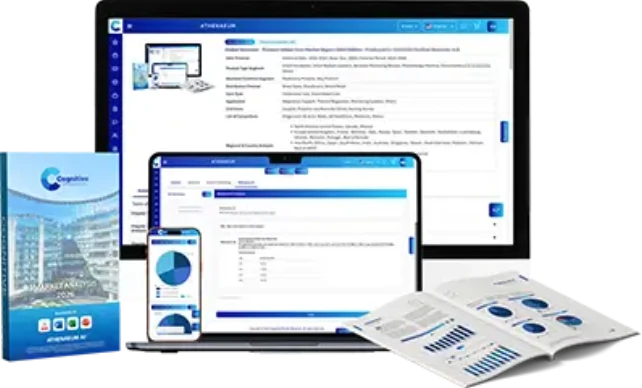
Athenaeum AI Dashboard
Research Framework · 70:30 Primary:Secondary
Our Proprietary Methodology
Cognitive Market Research and Consulting "The Full Truth" methodology — a rigorous triangulation process that combines primary research, secondary validation, and expert calibration. Implemented by Aarti Bagekari and team for the Autopilot System Market Analysis Market analysis.
01
Primary Intelligence Gathering
Direct interviews with 50+ industry stakeholders including manufacturers, distributors, end-users, and regulatory bodies across all six regions.
02
Secondary Data Triangulation
Cross-referencing against trade databases, customs records, financial filings, patent databases, and verified industry publications.
03
Expert Validation Protocol
Each data point undergoes validation by minimum two independent domain experts with 15+ years of industry experience.
04
Athenaeum AI Processing
Our proprietary AI platform aggregates, normalizes, and identifies patterns across 10,000+ data points to surface non-obvious insights.
05
Editorial & QA Review
Final review by senior analysts ensures accuracy, coherence, and actionability of all insights and recommendations.
To maintain the integrity of our proprietary methodology and protect our elite expert network, specific source disclosures are reserved for full-access partners. Our research framework is anchored by a 70:30 primary-to-secondary ratio, ensuring your strategy is driven by real-time market intelligence rather than recycled, publicly available, or AI-generated data. Every deliverable includes an exhaustive source directory and grants direct analyst access.
The autopilot system market is witnessing substantial growth, fueled by rising demand for advanced driver-assistance systems (ADAS), increasing emphasis on road safety, and advancements in autonomous vehicle technologies.
The Three Pillars of End-to-End Market Research Services
We don't just hand over data. We partner with your team across three integrated service lines — each designed to give you decision-grade intelligence on the Autopilot System Market Analysis market.
Service 01
Market Survey
B2BB2C
Structured primary research across both B2B and B2C channels. We design and execute custom surveys targeting manufacturers, distributors, procurement heads, and end-consumers in the autopilot system market analysis ecosystem — validated by our global panel of 10,000+ industrial respondents.
What's Included
Buyer intent & sentiment analysis
Purchase cycle mapping
Price sensitivity research
Channel preference profiling
Competitive perception study
Most Requested
Service 02
Customized Market Data & Reports
CustomReady Report
Choose from our ready-to-access 8th Edition report or commission a fully customized dataset tailored to your exact strategic questions. Cross-splits, custom geographies, proprietary segmentation — we build the intelligence asset your board actually needs.
What's Included
Ready syndicate report
Custom data scope & segmentation
Excel quantitative models
Board-ready PPT with key findings
Secure cloud portal access
Service 03
Strategic Consultation
With SurveyWith Report
Every survey and every report comes with dedicated analyst consultation. Our senior research team walks your leadership through findings, answers strategic questions in real-time, and helps translate data into your next board presentation or investment thesis.
Tell us the specific segments, regions, or companies you need — and we will tailor the deliverable to your requirements.
Why Trust Us
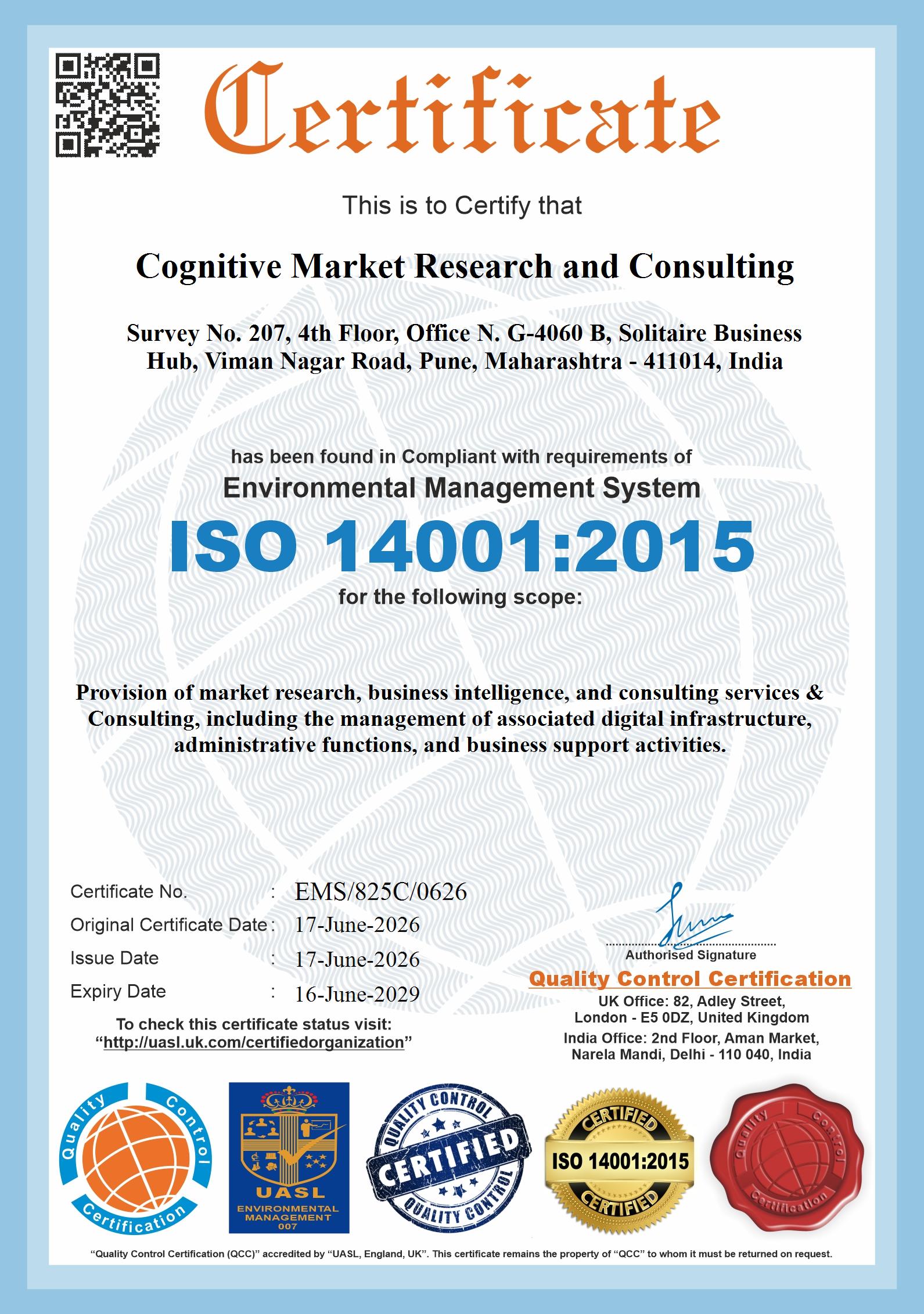
What these certifications mean to usA market figure is only as reliable as the system that produced it. That is why our accreditations cover the whole chain, not just the research step. ESOMAR and MRSI membership binds us to the professional codes that govern how respondents are recruited and how findings may be represented. ISO 20252 governs the research process itself; ISO 9001 and our quality control certification govern how consistently we repeat it. ISO 27001 and ISO 27701, alongside our GDPR, CCPA and DPDP compliance, govern what happens to your brief and your data once it reaches us; because a confidential scope is often more sensitive than the deliverable. ISO 14001, our D-U-N-S registration, Chamber of Commerce membership and DMCA protection speak to how the company itself is run and how its work is safeguarded.Our Clutch and Trustpilot profiles are deliberately listed next to them. They are the only signals on this page we do not issue ourselves, and they are the ones we would check first if we were you.
Our Customer Service Representative, Nicolas Shaw, never tired of our endless questions and requests for additional information even beyond the scope of ou…