Article
Introduction to the Private Cloud Services Market
The Private Cloud Services market is witnessing strong growth as enterprises increasingly seek secure, scalable, and customizable cloud environments to meet their IT infrastructure needs. Unlike public cloud models, private cloud services offer organizations greater control over data, enhanced security, and the ability to tailor solutions to specific operational requirements. These advantages have made private cloud solutions especially attractive to businesses in highly regulated sectors such as finance, healthcare, and government. According to Cognitive Market Research, the Private Cloud Services market is projected to rise significantly from USD 126,241.8 million in 2024 to USD 266,699.3 million by 2032, growing at a healthy compound annual growth rate (CAGR) of 9.80%. This expansion reflects the growing demand for reliable and compliant IT architectures, as well as the shift toward hybrid and multi-cloud strategies. A number of drivers are fueling this market's momentum. Enterprises are seeking ways to modernize legacy IT systems while ensuring data sovereignty and minimizing latency. Private cloud services provide the agility of cloud computing without compromising security, making them a preferred choice for mission-critical workloads. Additionally, as data volumes grow and regulations surrounding data governance become more stringent, private cloud deployments enable organizations to stay compliant with local and international data protection laws. The increasing adoption of virtualization technologies, containerized applications, and DevOps practices is also enhancing the appeal of private cloud setups by providing a more efficient and automated infrastructure environment. Moreover, large enterprises are embracing private cloud as part of broader digital transformation initiatives to improve business continuity, reduce operational costs, and achieve faster time-to-market.
Top Companies Operating in the Private Cloud Services Industry Worldwide
- Microsoft Azure
- Amazon Web Services (AWS)
- Google Cloud Platform (GCP)
- VMware (Broadcom)
- IBM Cloud
- Oracle Cloud Infrastructure
- Cisco Systems
- Hewlett Packard Enterprise
- Dell Technologies
- Alibaba Cloud
Criteria for Comparing Companies in the Private Cloud Services Market
Cognitive Market Research evaluates companies in the private cloud services market based on several key factors that highlight their competitive positioning and performance in the industry. In the Private Cloud Services market, providers are typically assessed based on their technological capabilities, deployment flexibility, and compliance with security and data protection standards. Leading players offer comprehensive service portfolios that include Infrastructure-as-a-Service (IaaS), Platform-as-a-Service (PaaS), and managed private cloud solutions. Companies are also evaluated on their ability to integrate seamlessly with existing enterprise systems and support a range of workloads, including enterprise applications, data analytics, and virtualization environments. The quality of service-level agreements (SLAs), uptime guarantees, and disaster recovery capabilities are also critical factors when choosing a provider. Another important consideration is customization and scalability. Enterprises often require tailored solutions that align with specific operational or regulatory requirements. Vendors that provide configurable infrastructure, advanced resource management, and dedicated support for compliance standards such as HIPAA, GDPR, or ISO/IEC certifications are better positioned to meet client expectations. Additionally, the ease of management through centralized dashboards, automated provisioning, and real-time monitoring tools contributes to the overall value proposition of a private cloud service. Companies are often compared based on customer support, geographic presence, and the strength of their partner ecosystems. Providers with a global footprint and strong partnerships with hardware vendors, system integrators, and software providers can offer more robust and comprehensive solutions. The ability to support hybrid cloud models where private cloud infrastructure is integrated with public cloud service is increasingly critical as enterprises adopt more complex IT strategies. Vendors who continue to invest in innovation, especially in areas like AI-driven infrastructure management and software-defined networking, are expected to lead the market in the coming years.
Top Manufacturing Companies of Private Cloud Services:
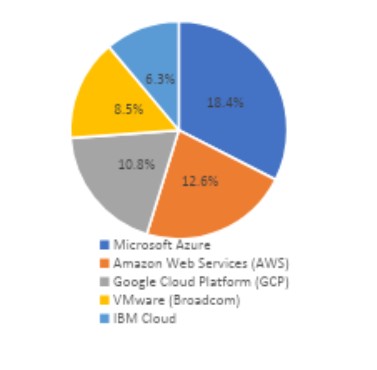
Microsoft Azure, Amazon Web Services (AWS), Google Cloud Platform (GCP), VMware (Broadcom), and IBM Cloudare the key players in the Private Cloud Services Market
Microsoft Azure
Microsoft Azure holds the leading position in the private cloud services market, commanding a substantial 18.4% share. The company has successfully carved out this leadership role by delivering a robust suite of hybrid and private cloud solutions tailored to the evolving needs of enterprises. Azure's private cloud offerings, such as Azure Stack Hub, Azure Stack HCI, and Azure Arc, allow businesses to deploy Azure services in their own data centers while maintaining centralized management and security policies.
Amazon Web Services (AWS)
Amazon Web Services (AWS) secures a strong 12.6% market share in the private cloud services segment, leveraging its well-established public cloud foundation and deep technical expertise. AWS has increasingly focused on hybrid and private cloud solutions in response to enterprise demand for more secure and localized computing options.
Google Cloud Platform (GCP)
Google Cloud Platform (GCP) commands 10.8% of the private cloud services market, propelled by its emphasis on modern development frameworks, data analytics, and open cloud ecosystems. GCP’s private cloud capabilities are centered around Anthos, a hybrid and multicloud application management platform that enables customers to build, deploy, and manage workloads across on-premises, private, and multiple public cloud environments.
VMware (Broadcom)
VMware, now operating under Broadcom’s ownership, holds 8.5% of the private cloud services market and is widely regarded as a foundational player in the hybrid and private cloud landscape. VMware’s reputation is built on decades of leadership in server virtualization, which remains central to many enterprises' IT architectures. Solutions such as VMware Cloud Foundation, vSphere, and Tanzu Kubernetes Grid enable organizations to deploy flexible and secure private cloud environments that are highly compatible with their existing workloads and operational practices.
IBM Cloud
IBM Cloud captures a 6.3% share of the private cloud services market, with a strong focus on enterprise-grade capabilities, regulatory compliance, and hybrid cloud integration. IBM’s private cloud services are deeply integrated with Red Hat OpenShift, which provides a container-based platform that supports cloud-native development in secure, isolated environments. IBM Cloud Satellite extends these capabilities across on-premises, edge, and multicloud environments, offering flexibility and control over where applications and data reside especially crucial for sectors governed by stringent data sovereignty laws.
Potential Threats to Top Five Players in the Private Cloud Services Market
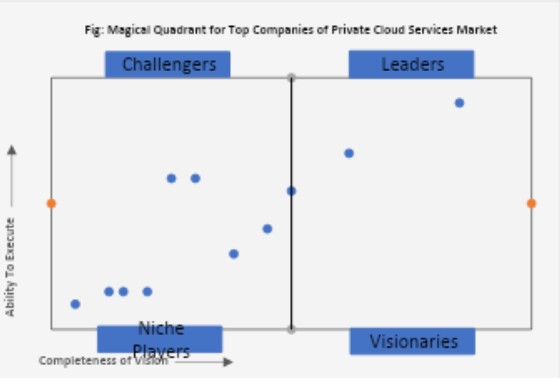
CMR found that the private cloud services market is undergoing rapid evolution, with several emerging players, including Oracle Cloud Infrastructure, Cisco Systems, Hewlett Packard Enterprise, Dell Technologies, and Alibaba Cloud, becoming formidable competitors to the established market leaders. Oracle Cloud Infrastructure, known for its robust and scalable cloud computing services, provides high-performance infrastructure services that cater to enterprises seeking to optimize workloads and applications. With a strong focus on AI, security, and hybrid cloud solutions, Oracle’s offerings position it as a credible threat to incumbent cloud service providers. Its aggressive pricing strategy and deep integration with Oracle’s enterprise software suite make it an attractive choice for organizations already using Oracle products, potentially disrupting existing market dynamics. Cisco Systems, traditionally recognized for its network hardware, has leveraged its expertise to offer private cloud solutions that seamlessly integrate with its networking hardware and security offerings. Cisco's entry into the private cloud space is backed by its deep understanding of network management, security, and data center infrastructure, which enhances its competitive position in the market. The company’s focus on hybrid cloud solutions and edge computing enables it to meet the growing demand for flexible, secure, and efficient cloud environments across industries. This makes Cisco an increasingly relevant player for businesses looking for high-performance, integrated cloud solutions. Hewlett Packard Enterprise (HPE), with its hybrid IT approach, continues to solidify its position in the private cloud market. HPE’s innovations in cloud infrastructure, such as its GreenLake platform, allow businesses to manage their cloud and on-premises workloads with greater flexibility and cost-efficiency. As enterprises continue to demand greater control over their data, HPE’s offerings, with their emphasis on security and compliance, pose a growing challenge to other established players in the private cloud sector. HPE's ability to provide both hardware and software solutions makes it an integrated solution provider, enhancing its competitiveness in an increasingly fragmented market.
Dell Technologies, a key player in the IT infrastructure domain, has expanded its portfolio to include private cloud solutions that provide businesses with highly scalable, secure, and cost-effective cloud platforms. Dell’s VxRail platform, designed in collaboration with VMware, enables businesses to integrate private cloud solutions seamlessly into their existing IT environments. Dell's robust portfolio of hardware, software, and services makes it a strong contender in the market, offering enterprises the flexibility they need to transition to the cloud while maintaining high levels of security and compliance. Alibaba Cloud, one of the leading cloud providers in Asia, is rapidly growing its presence in the private cloud services market. With its global expansion strategy, Alibaba Cloud is gaining ground in key markets outside China. Alibaba's focus on artificial intelligence, big data, and high-performance computing strengthens its position as a competitive force in private cloud services. Its deep understanding of both global and regional cloud markets positions it to challenge established players, particularly in Asia-Pacific and emerging markets. These emerging companies are leveraging cutting-edge technologies, strong R&D efforts, and strategic expansions into new regions to challenge the dominance of traditional private cloud providers. Their emphasis on security, flexibility, and innovation, combined with strategic pricing and service models, positions them as credible threats capable of reshaping the competitive landscape in the private cloud services market.
Conclusion:
Embracing Innovation and Sustainability to Propel Growth in the Private Cloud Services Market. The private cloud services market is on track for significant growth, driven by the increasing need for scalable, secure, and flexible cloud solutions. Projected to grow from USD 126,241.8 million in 2024 to USD 266,699.3 million by 2032, the market presents substantial opportunities for both established players and emerging competitors. Major players such as Oracle, Cisco, HPE, Dell Technologies, and Alibaba Cloud are continuing to innovate and expand their offerings to meet the evolving demands of businesses seeking private cloud solutions. These companies are focusing heavily on security, hybrid cloud offerings, AI integration, and operational flexibility, which strengthens their positions in the market. However, emerging players like Oracle Cloud Infrastructure, Cisco Systems, Hewlett Packard Enterprise, Dell Technologies, and Alibaba Cloud are proving to be significant competitors, with their technological advancements, strategic regional expansions, and focus on sustainable solutions. As these companies continue to challenge the traditional players, new entrants must focus on areas such as technological innovation, cost-efficiency, sustainability, and targeted market strategies to carve out a niche in the competitive private cloud market. By responding to the growing demand for flexibility, security, and sustainability, businesses in the private cloud services market can continue to thrive and contribute to shaping the future of cloud computing. As the market continues to evolve, collaboration between emerging players, governments, and industry leaders will be key to overcoming challenges, driving technological innovation, and expanding market reach. By prioritizing innovation, customer-centric solutions, and sustainable practices, players in the private cloud services market can capture significant market share while addressing global demands for enhanced cloud services.

 X
X
Article Details
-
Author Vinayak Bali
-
Published 02 Jun 2025
-
Last Updated 16 Jun 2025
-
Reading Time~3 minutes
Related Reports
Get a Custom Report
Interested in a similar analysis for your market? Our experts can deliver a customized report.
Contact Our ExpertsMore Articles
Explore all published articles across 30+ industry verticals.
View All Articles