Article
Introduction to the Chopping Board Industry
The global Chopping Board market is growing steadily, supported by evolving consumer lifestyles, increased home cooking trends, and rising demand for kitchen hygiene and food safety solutions. According to Cognitive Market Research, the Chopping Board market is valued at USD 3,051.8 million in 2024 and is projected to reach USD 5,165.7 million by 2032, growing at a CAGR of 6.80%. Chopping boards are essential kitchen tools used for food preparation, available in various materials including plastic, wood, bamboo, glass, and composite types. These products are widely used in residential kitchens, commercial foodservice establishments, and institutional catering, making them an indispensable component of the modern culinary landscape. Key factors driving market growth include the rising number of foodservice outlets, increased consumer interest in home-cooked meals, and a growing awareness of cross-contamination prevention in kitchens. As consumers become more health-conscious and concerned about foodborne illnesses, the demand for hygienic, easy-to-clean chopping boards is increasing. Technological innovations in anti-microbial materials, non-slip surface designs, and dishwasher-safe products are enhancing functionality and user convenience. Furthermore, manufacturers are expanding their offerings to include multipurpose boards, color-coded options for different food categories, and eco-friendly alternatives made from sustainable bamboo or recycled plastic. Prominent companies such as Joseph Joseph, OXO, and Epicurean are focusing on design aesthetics, product safety, and durable construction to capture a larger share of the growing market.
The market is showing strong traction across North America and Europe due to high consumer spending on kitchen tools, growing culinary culture, and rising home renovation activities. Simultaneously, Asia-Pacific is emerging as a high-growth region, fueled by increasing urbanization, expanding middle-class income groups, and demand for quality kitchenware. The trend of gifting premium kitchen accessories and the influence of social media and cooking shows are also positively impacting consumer purchase behavior. As the market matures, manufacturers are focusing on innovation in form, function, and sustainability to align with evolving consumer expectations. Continued product development, attractive branding, and deeper penetration into emerging markets are expected to drive long-term growth in the Chopping Board industry.
Top Companies Operating in the Waterproof Clothing Industry Worldwide
- John Boos & Co.
- Epicurean
- Joseph Joseph
- Totally Bamboo
- Catskill Craftsmen
- BergHOFF
- Zeller Present
- Madeira
- ETAC
- Adeco
Criteria for Comparing Companies in the Chopping Board Market
Cognitive Market Research evaluates companies in the Chopping Board market based on several core criteria that highlight their product leadership, innovation capabilities, and strategic positioning. Revenue and market share are key indicators of a company’s strength and ability to attract a broad customer base, reflecting successful distribution networks and strong retail or e-commerce performance. Companies with consistent revenue growth are generally those that have diversified offerings catering to both domestic and commercial users across global markets. Product range is another critical factor companies that manufacture a variety of chopping boards using different materials, sizes, ergonomic designs, and safety features are better equipped to address diverse customer preferences. Material innovation and functional design play a major role in differentiating leading brands. Firms investing in antibacterial surfaces, durable and scratch-resistant materials, reversible boards, and easy-grip designs are better positioned to capture premium market segments. Additionally, sustainability is becoming increasingly important. Brands that offer chopping boards made from renewable resources, recycled content, or biodegradable materials are gaining favor among environmentally conscious consumers. Companies with clear sustainability commitments and certifications are also viewed more favorably in mature markets such as the U.S., Canada, Germany, and the U.K.
Geographic reach and retail presence are crucial for ensuring consistent product availability and consumer trust. Leading players with distribution through big-box retailers, kitchen specialty stores, and online platforms are able to maintain a strong market presence and capitalize on seasonal demand. R&D investment and design innovation are equally vital companies that continuously enhance usability, aesthetics, and safety features are more likely to retain customer loyalty and attract new users. Collaborations with chefs, cooking influencers, and houseware designers can also boost brand visibility and credibility. Companies such as Joseph Joseph, IKEA, Totally Bamboo, and Neoflam stand out for their product innovation, sustainable practices, and strong global footprint. By analyzing these aspects financial performance, product innovation, sustainability, distribution strength, and strategic collaborations—one can identify which companies are best positioned to lead and grow within the competitive Chopping Board market.
Top Manufacturing Companies of Chopping Board:
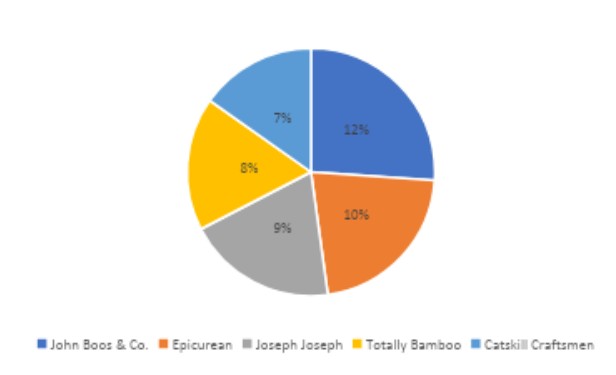
John Boos & Co., Epicurean, Joseph Joseph, Totally Bamboo, and Catskill Craftsmen are the key players in the Chopping Board Market
John Boos & Co.
John Boos & Co. holds a commanding 12% share of the global chopping board market, renowned for its premium-quality wooden cutting boards that combine durability, craftsmanship, and aesthetic appeal. Established over 130 years ago in the United States, John Boos has built a legacy by manufacturing chopping boards made primarily from hardwoods such as maple, cherry, and walnut. These boards are highly favored by professional chefs, culinary institutions, and home cooks for their robustness, knife-friendly surfaces, and resistance to warping and cracking. The company’s product line includes a wide variety of chopping boards in different sizes, thicknesses, and finishes, ranging from traditional butcher blocks to specialized prep boards.
Epicurean
Epicurean commands a notable 10% share in the chopping board market, recognized for its innovative approach to sustainable and eco-friendly kitchen products. The company specializes in crafting chopping boards made from rich, composite wood fiber materials bonded with resin, offering an environmentally responsible alternative to traditional hardwood boards. Epicurean boards are celebrated for their durability, lightweight design, and dishwasher-safe convenience, making them highly appealing to health-conscious and sustainability-minded consumers. Epicurean’s chopping boards combine functionality with style, featuring smooth surfaces that resist cracking and warping, while being gentle on knives. Their product range spans various sizes and thicknesses, suitable for chopping, slicing, and serving.
Joseph Joseph
Joseph Joseph holds a 9% market share in the chopping board segment, known for its contemporary, space-saving, and multifunctional kitchen tools that combine design ingenuity with practicality. The company’s chopping boards are distinguished by their modern aesthetics, vibrant colors, and integrated features such as non-slip edges, juice grooves, and color-coded sets designed to prevent cross-contamination between food types. These innovations appeal strongly to urban consumers and small households seeking efficient and hygienic kitchen solutions.
Totally Bamboo
Totally Bamboo commands an 8% share of the global chopping board market, specializing in eco-friendly bamboo cutting boards that combine natural beauty with strength and sustainability. Bamboo’s fast-growing nature and renewability make Totally Bamboo’s products appealing to environmentally conscious consumers seeking durable yet green kitchen solutions. The company offers a broad assortment of chopping boards in various shapes and sizes, featuring smooth, knife-friendly surfaces and natural antimicrobial properties.
Catskill Craftsmen
Catskill Craftsmen holds a 7% share of the chopping board market, known for its handcrafted wooden cutting boards that emphasize traditional craftsmanship and American-made quality. The company produces boards from select hardwoods such as maple, cherry, and walnut, focusing on creating durable, aesthetically pleasing products that cater to both professional chefs and home cooks. Catskill Craftsmen’s cutting boards are prized for their thick, sturdy construction, fine finishes, and resistance to warping, making them reliable kitchen tools built to last.
Potential Threats to Top Five Players in the Chopping Board Market
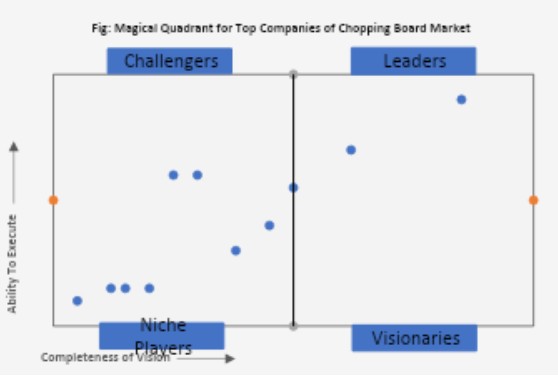
CMR found that a shift as emerging players like BergHOFF, Zeller Present, Madeira, ETAC, and Adeco challenge the market dominance of long-established brands. These companies are gaining ground by leveraging innovation in design, materials, and sustainability key factors that influence modern consumer preferences. BergHOFF, a Belgium-based brand known for its contemporary kitchenware, offers aesthetically refined and functional chopping boards made from bamboo, acacia, and composite materials. Their global presence, particularly in Europe and North America, and attention to eco-friendly packaging and product innovation make them a serious contender to traditional players. Zeller Present, a German company specializing in home accessories, has capitalized on its ability to integrate functionality with design. Offering a wide range of chopping boards in glass, plastic, and wood, Zeller Present emphasizes durability, easy maintenance, and space-saving features. Its diverse distribution network across retail and e-commerce platforms allows it to tap into both the premium and budget-conscious segments. Madeira, headquartered in the United States, stands out with its focus on premium hardwood chopping boards that are sustainably sourced. Their attention to craftsmanship, paired with eco-conscious branding, positions them well among environmentally aware consumers and high-end kitchen retailers.
ETAC, although traditionally associated with ergonomic products and aids for daily living, is gradually making inroads into kitchen solutions with a focus on accessibility and inclusive design. Their chopping boards are tailored to meet the needs of seniors and individuals with limited dexterity, opening new market segments often overlooked by mainstream players. Adeco, another emerging name in the market, has built a niche around lightweight, anti-bacterial, and multi-functional boards catering to both domestic and commercial users. Their innovation in integrating non-slip surfaces and modern aesthetics has helped capture attention in crowded markets. These emerging companies, through a blend of utility, innovation, and sustainable practices, are creating strong competitive pressure and redefining product expectations in the chopping board industry.
Conclusion
Sustainable Materials and Inclusive Design to Define the Future of the Chopping Board Market
With an anticipated growth from USD 3,051.8 million in 2024 to USD 5,165.7 million by 2032, the chopping board market is evolving quickly under the influence of consumer trends centered around sustainability, functionality, and aesthetics. Leading players continue to innovate with product lines that align with modern kitchen needs, but emerging companies like BergHOFF, Zeller Present, Madeira, ETAC, and Adeco are reshaping the competitive landscape. Their agility in design, ability to address niche demands, and commitment to sustainability are turning them into formidable threats to legacy brands. The increasing consumer demand for multifunctional and space-saving kitchen tools is expanding the scope for innovation. Moreover, with greater emphasis on hygiene and food safety, antimicrobial and dishwasher-safe designs are becoming standard expectations. Environmental responsibility remains a dominant theme, as consumers lean toward brands that offer eco-friendly materials, ethical sourcing, and reduced plastic use. These developments are encouraging companies both new and established to rethink their value propositions. Moving forward, the chopping board market will likely witness deeper integration of smart features, modularity, and personalized aesthetics to meet changing culinary habits. Partnerships between design studios, culinary influencers, and home goods retailers will play a key role in accelerating this transformation. For emerging players, aligning with these trends and maintaining flexibility in manufacturing and distribution strategies will be key to carving out meaningful market share. Ultimately, the brands that can combine performance, sustainability, and inclusive design in a compelling narrative will lead the next wave of growth in the global chopping board market.
 X
X
Article Details
-
Author Sneha Mali
-
Published 04 Jul 2025
-
Last Updated 04 Jul 2025
-
Reading Time~3 minutes
Related Reports
Get a Custom Report
Interested in a similar analysis for your market? Our experts can deliver a customized report.
Contact Our ExpertsMore Articles
Explore all published articles across 30+ industry verticals.
View All Articles